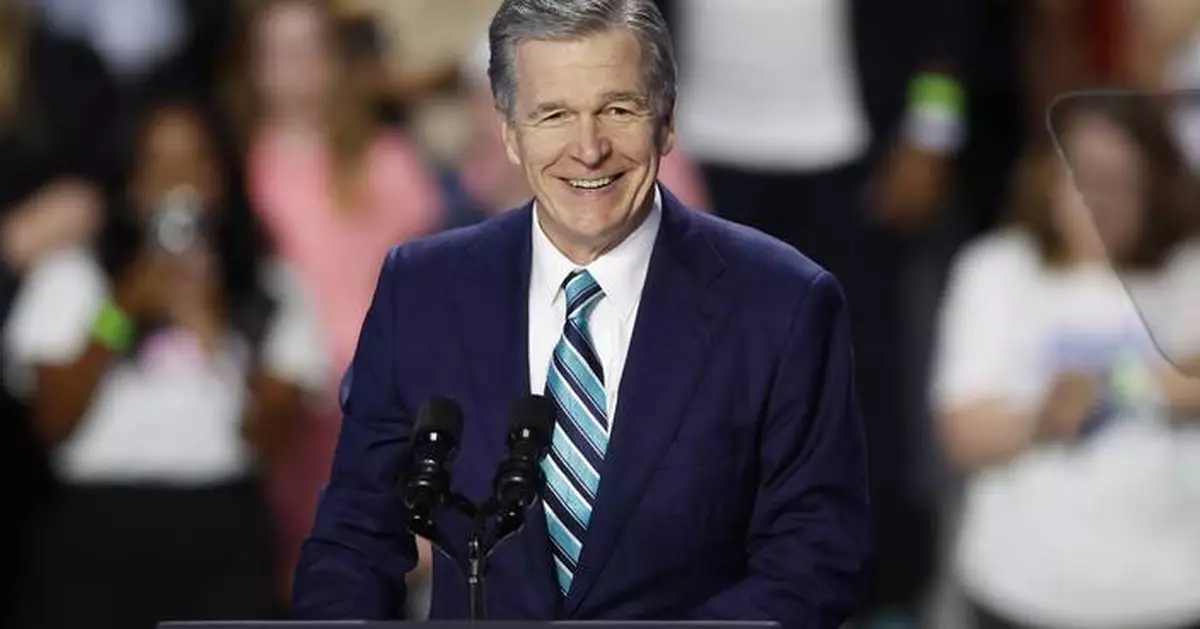
RALEIGH, N.C. (AP) — Democrats still in the dumps over last year's elections have found cause for optimism in North Carolina, where former Gov. Roy Cooper jumped into the race for that state's newly open seat with a vow to address voters' persistent concerns about making ends meet.
Even Republicans quietly note that Cooper’s candidacy makes their job of holding the seat more difficult and expensive. Cooper had raised $2.6 million for his campaign between his Monday launch and Tuesday, and more than $900,000 toward allied groups.
Republicans, meanwhile, are hardly ceding the economic populist ground. In announcing his candidacy for the Senate on Thursday, Republican National Committee Chair Michael Whatley credited President Donald Trump with fulfilling campaign promises to working Americans and painted Cooper as a puppet of the left.
Still, Cooper’s opening message that he hears the worries of working families has given Democrats in North Carolina and beyond a sense that they can reclaim their place as the party that champions the middle class. They think it's a message that could help them pick up a Senate seat, and possibly more, in next year's midterm elections, which in recent years have typically favored the party out of power.
“I’m Roy Cooper. And I know that today, for too many Americans, the middle class feels like a distant dream,” the former governor said in a video announcing his candidacy. “Meanwhile, the biggest corporations and the richest Americans have grabbed unimaginable wealth at your expense. It’s time for that to change.”
Cooper's plainspoken appeal may represent just the latest effort by Democrats to find their way back to power, but it has some thinking they've finally found their footing after last year's resounding losses.
“I think it would do us all a lot of good to take a close look at his example,” said Larry Grisolano, a Chicago-based Democratic media strategist and former adviser to President Barack Obama.
Whatley, a former North Carolina GOP chairman and close Trump ally, used his Thursday announcement that he was entering the race to hail the president as the true champion of the middle class. He said Trump had already fulfilled promises to end taxes on tips and overtime and said Cooper was out of step with North Carolinians.
“Six months in, it's pretty clear to see, America is back,” Whatley said. “A healthy, robust economy, safe kids and communities and a strong America. These are the North Carolina values that I will champion if elected.”
Still, the decision by Cooper, who held statewide office for 24 years and has never lost an election, makes North Carolina a potential bright spot in a midterm election cycle when Democrats must net four seats to retake the majority — and when most of the 2026 Senate contests are in states Trump won comfortably last November.
State Rep. Cynthia Ball threw up a hand in excitement when asked Monday at the North Carolina Legislative Building about Cooper’s announcement.
“Everyone I’ve spoken to was really hoping that he was going to run,” said the Raleigh Democrat.
Democratic legislators hope having Cooper’s name at the top of the ballot will encourage higher turnout and help them in downballot races. While Republicans have controlled both General Assembly chambers since 2011, Democrats managed last fall to end the GOP’s veto-proof majority, if only by a single seat.
Republican strategists familiar with the national Senate landscape have said privately that Cooper poses a formidable threat.
The Senate Leadership Fund, a GOP super PAC affiliated with Senate Majority Leader John Thune, wasted no time in challenging Cooper's portrayal of a common-sense advocate for working people.
“Roy Cooper masquerades as a moderate,” the narrator in the 30-second spot says. “But he's just another radical, D.C. liberal in disguise.”
Cooper, a former state legislator who served four terms as attorney general before he became governor, has never held an office in Washington. Still, Whatley was quick to link Cooper to national progressive figures such as New York Rep. Alexandria Ocasio-Cortez, former Vice President Kamala Harris and Vermont Sen. Bernie Sanders.
Whatley accused Cooper of failing to address illegal immigration and of supporting liberal gender ideology. He echoed the themes raised in the Senate Leadership Fund ad, which noted Cooper's vetoes in the Republican-led legislature of measures popular with conservatives, such as banning gender-affirming health care for minors and requiring county sheriffs to cooperate with federal immigration officials.
“Roy Cooper may pretend to be different than the radical extremists,” Whatley said. “But he is all-in on their agenda.”
Cooper first won the governorship in 2016, while Trump was carrying the state in his first White House bid. Four years later, they both carried the state again.
Cooper, who grew up in a small town roughly 50 miles or 80 kilometers east of Raleigh, has long declined requests that he seek federal office. He “understands rural North Carolina,” veteran North Carolina strategist Thomas Mills said. “And while he’s not going to win it, he knows how to talk to those folks.”
As with most Democrats, Cooper's winning coalition includes the state's largest cities and suburbs. But he has long made enough inroads in other areas to win.
“He actually listens to what voters are trying to tell us, instead of us trying to explain to them how they should think and feel,” said state Sen. Michael Garrett, a Greensboro Democrat.
In his video announcement, Cooper tried to turn the populist appeal Trump made to voters on checkbook issues against the party in power, casting himself as the Washington outsider. Senior Cooper strategist Morgan Jackson said the message represents a shift and will take work to drive home with voters.
“Part of the challenge Democrats had in 2024 is we were not addressing directly the issues people were concerned about today,”
Jackson said. “We have to acknowledge what people are going through right now and what they are feeling, that he hears you and understands what you feel.”
Pat Dennis, president of American Bridge 21st Century, a group that conducts research for an initiative called the Working Class Project, said Cooper struck a tone that other Democrats should try to match.
“His focus on affordability and his outsider status really hits a lot of the notes these folks are interested in,” Dennis said. “I do think it's a model, especially his focus on affordability.”
“We can attack Republicans all day long, but unless we have candidates who can really embody that message, we're not going to be able to take back power.”
Beaumont reported from Des Moines, Iowa.
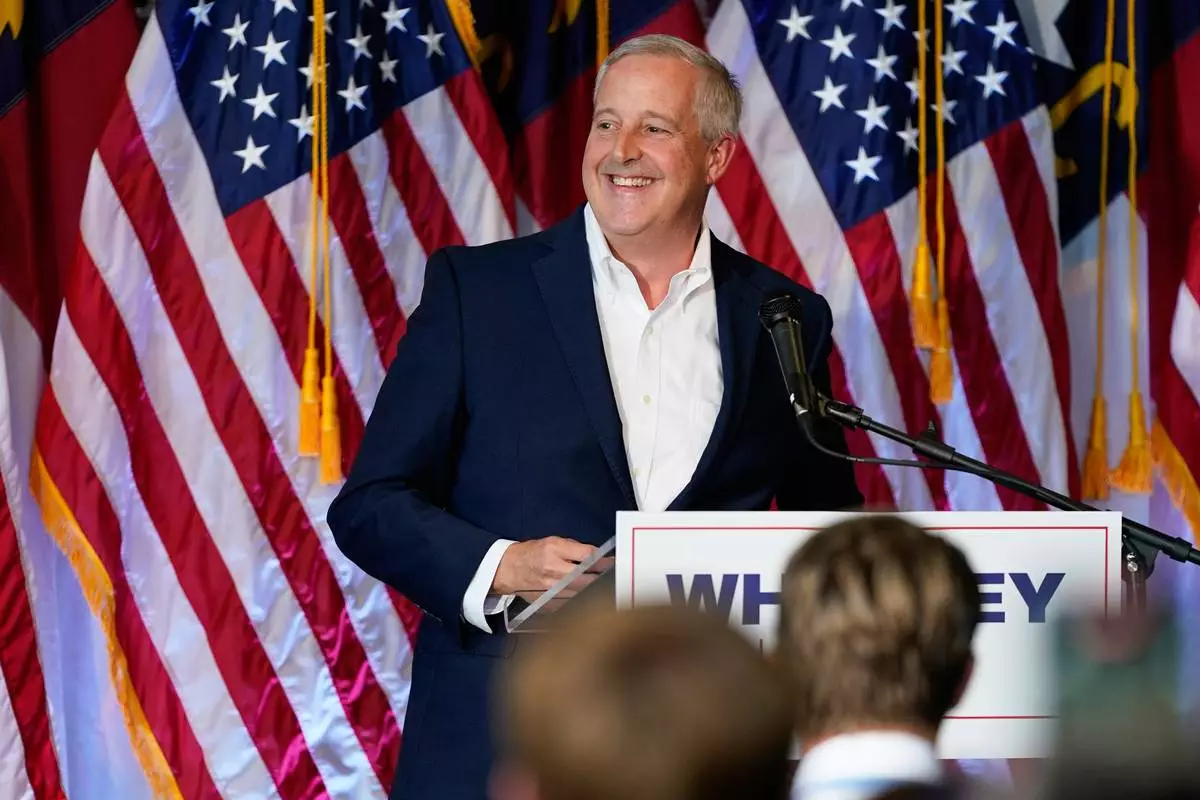
Republican National Committee Chairman Michael Whatley speaks during his campaign launch event for North Carolina's open U.S. Senate seat, Thursday, July 31, 2025, in Gastonia, N.C. (AP Photo/Erik Verduzco)
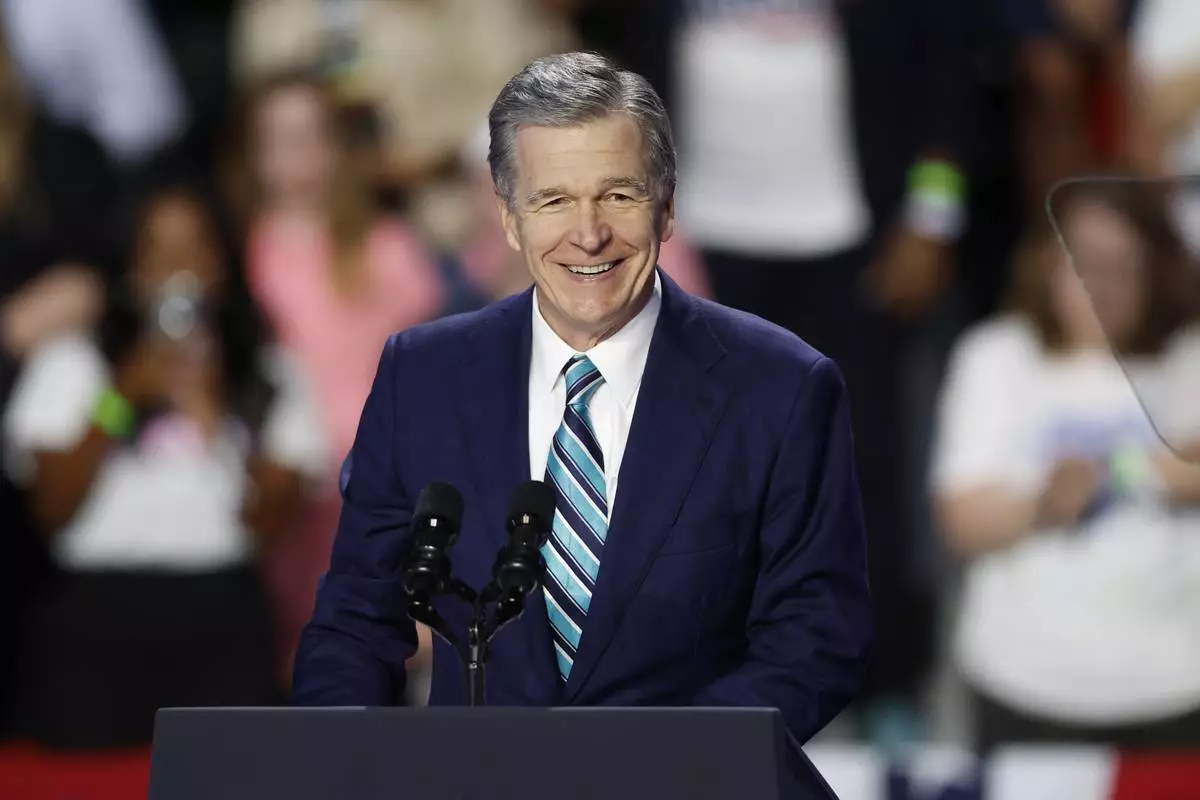
FILE - North Carolina Gov. Roy Cooper speaks at a campaign event in Charlotte, N.C., Sept. 12, 2024. (AP Photo/Nell Redmond, File)