Update on mosquito-borne diseases, dengue fever and chikungunya fever
The Centre for Health Protection (CHP) of the Department of Health today (August 1) reported the latest number of dengue fever (DF) cases and updated the latest situation of chikungunya fever (CF). Due to the increase in temperature and rainfall in summer, mosquito infestation might be aggravated in Hong Kong. In addition, members of the public travel more frequently during summer holidays to regions where mosquito-borne diseases are endemic. As a result, the risks of imported cases and local transmission of mosquito-borne diseases increase.
Dengue fever
From July 25 to yesterday (July 31), the CHP recorded three imported DF cases. The patients had travelled to India, the Philippines and Thailand respectively during the incubation periods.
As of yesterday, 36 imported DF cases have been recorded so far this year. A total of 161 cases of DF were recorded in 2024, including 156 imported and five local cases. In 2023, 62 imported cases of DF were recorded.
According to the World Health Organization (WHO), the global incidence of DF has markedly increased over the past two decades, posing a substantial public health challenge. In 2023, over 6.5 million cases and more than 7 300 dengue-related deaths were reported in over 80 countries/territories. In 2024, the WHO recorded over 14 million cases, which was a record number.
DF is prevalent in many neighbouring tourist destinations. Indonesia, Malaysia, Thailand and Vietnam have each recorded over 20 000 cases so far this year. Singapore has also recorded over 3 000 cases.Meanwhile, according to the Guangdong Provincial Center for Disease Control and Prevention, Guangdong Province has recorded a total of 308 locally infected cases so far this year. A total of 102 cases were recorded in a week between July 21 and 27, with the highest number of cases recorded in Guangzhou, Yunfu, Foshan and Zhongshan.
Detailed information on the latest DF situation in Hong Kong, as well as neighbouring and overseas countries and areas, has been uploaded to the CHPwebsite.
Chikungunya fever
From 2016 to 2019, between one and 11 CF cases were recorded in Hong Kong each year, all of which were imported cases. There have been no CF cases in Hong Kong since 2020.
According to the WHO, CF cases have been recorded in more than 110 countries/regions. As of early June this year, over 220 000 cases had been reported in 14 countries/regions worldwide (including the Mainland, Taiwan and Singapore which are popular tourist destinations for Hong Kong citizens). Of these cases, about 80 were fatal. Moreover, according to the information from the Foshan health authority, as of July 30 there were over 6 500 cases. The majority of cases (5 660 cases) were in Shunde District. All cases were mild, with no severe or fatal cases. As well, confirmed cases were also recorded in other cities in Guangdong Province recently. Regarding Macao, six imported cases of CF were recorded since mid-July, and four of them travelled to Foshan city during the incubation periods.
Guangdong, Hong Kong and Macao have been carrying out joint prevention and control of communicable disease involving the three places in accordance with the well-established liaison and communication mechanism. The CHP will continue to work closely with the health authorities in Guangdong Province and Macao, and will take appropriate preventive and control measures according to risk assessment to prevent the spread of CF in Hong Kong and protect public health.
"Members of the public are advised to maintain strict environmental hygiene, mosquito control and personal protective measures both locally and when travelling outside of Hong Kong. Eliminating mosquito breeding sites and avoiding mosquito bites are the most effective measures to protect against mosquito-borne diseases. Members of the public returning from areas affected by mosquito-borne diseases should apply insect repellent for 14 days upon arrival in Hong Kong. Members of the public should closely observe personal health conditions, in particular symptoms such as fever, joint pain and rash. If they feel unwell, they should seek medical advice promptly and provide their travel details to the doctor for clinical diagnosis and arrange appropriate testing based on an individual patient's condition. Members of the public are urged not to self-medicate, particularly with aspirin or non-steroidal anti-inflammatory drugs (such as ibuprofen), as these drugs may cause serious side effects, for example increasing the risk of haemorrhage," said the Head of the Communicable Disease Branch of the CHP, Dr Albert Au.
The CHP held the first online live seminar yesterday (July 31), to provide the latest information and health advice on CF, and respond to related enquiries from the public. The CHP will hold the second online seminar next week on its Facebook page to talk about anti-mosquito measures and mosquito proliferation. Details will be announced later on the CHP's social media accounts. Members of public are welcome to attend.
The CHP has issued letters to all schools and institutions (including residential care homes for the elderly and residential care homes for persons with disabilities) in Hong Kong to provide them with the latest epidemiological information and remind operators to adopt preventive measures to avoid mosquito bites.
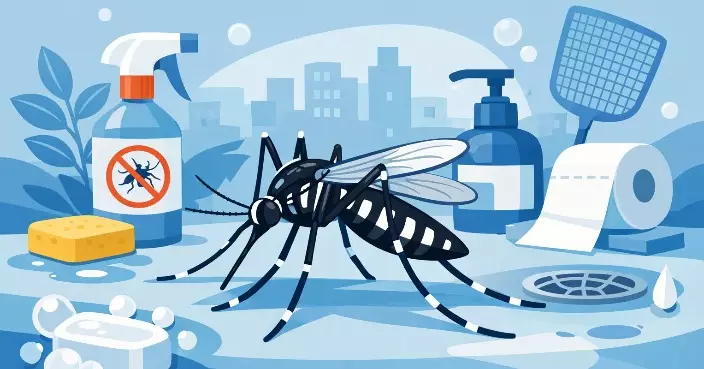
Members of the public are also reminded to take heed of the following advice on mosquito control:
- Thoroughly check all gully traps, roof gutters, surface channels and drains to prevent blockage;
- Scrub and clean drains and surface channels with an alkaline detergent compound at least once a week to remove any deposited mosquito eggs;
- Properly dispose of refuse, such as soft drink cans, empty bottles and boxesin covered litter containers;
- Completely change the water of flowers and plants at least once a week. The use of saucers should be avoided if possible;
- Level irregular ground surfaces before the rainy season;
- Install mosquito screens on windows and doors if necessary, or use mosquito screens or nets in indoor areas;
- Avoid staying in shrubby areas; and
- Take personal protective measures such as wearing light-coloured long-sleeved clothes and trousers, and apply insect repellent containing DEET to clothing or uncovered areas of the body when doing outdoor activities.
The public should call 1823 in case of mosquito problems and may visit the following pages for more information: the DF page of theCHPand theTravel Health Service, the chikungunya fever page of theCHPand theTravel Health Service, the latestTravel Health News,tips for using insect repellents, and the CHPFacebook Page,Instagram Account andYouTube Channel.