Skip to Content Facebook Feature Image

Q2 profits at Exxon Mobil and Chevron dip to lowest level in 4 years on subdued energy prices

Business

Q2 profits at Exxon Mobil and Chevron dip to lowest level in 4 years on subdued energy prices
Business

Business

Q2 profits at Exxon Mobil and Chevron dip to lowest level in 4 years on subdued energy prices

2025-08-01 20:34 Last Updated At:20:40

NEW YORK (AP) — Exxon Mobil’s second-quarter profit dropped to the lowest level in four years and sales fell as oil prices slumped as OPEC+ ramped up production.

The Texas oil driller still topped Wall Street profit expectations Friday and shares rose slightly before the opening bell, even with global markets falling on the erratic trade polices of the U.S.

The price for a barrel of U.S. benchmark crude has remained below $70 for most of the year and in May, it was well below $60.

Exxon earned $7.08 billion, or $1.64 per share, for the period ended June 30. A year earlier it earned $9.24 billion, or $2.14 per share.

That was better than Wall Street expected, but Exxon does not adjust its reported results based on one-time events such as asset sales. Analysts surveyed by Zacks Investment Research were calling for earnings of $1.49 per share.

“We achieved our highest second-quarter Upstream production since the merger of Exxon and Mobil more than 25 years ago," Chairman and CEO Darren Woods said, referring to the company's exploration and production operations.

Exxon offset lower prices by ramping up production as well. Second-quarter net production was 4.6 million oil-equivalent barrels per day. That was an increase of 79,000 oil-equivalent barrels per day when compared with the first quarter.

Revenue fell to $81.51 billion from $93.06 billion, missing the $82.82 billion that Wall Street was looking for.

Chevron Corp. reported a second-quarter profit of $2.49 billion, or $1.45 per share. Removing one-time costs, earnings were $1.77 per share.

That was also a four-year low for the second quarter, but it too beat Wall Street profit expectations and missed revenue expectations by industry analysts.

Analysts surveyed by Zacks Investment Research expected Chevron per-share earnings of $1.70.

Quarterly revenue for Chevron, which scored a critical ruling in Paris last month that gave it the go-ahead for a $53 billion acquisition of Hess, was $44.82 billion.

The company said that Permian Basin production increased to 1 million barrels of oil equivalent per day in the quarter. U.S. net oil-equivalent production was up 123,000 barrels per day from a year earlier.

In July eight members of the OPEC+ alliance of oil exporting countries said that they will boost production by 548,000 barrels per day in August in a decision that could further reduce gas prices this year. They cited a “steady global economic outlook” and low oil inventories.

Oil prices spiked sharply in June during the bloody, 12-day conflict between Israel and Iran but then tumbled back down as the U.S. helped broker a peace deal after dropping bombs on three of Iran’s key nuclear sites.
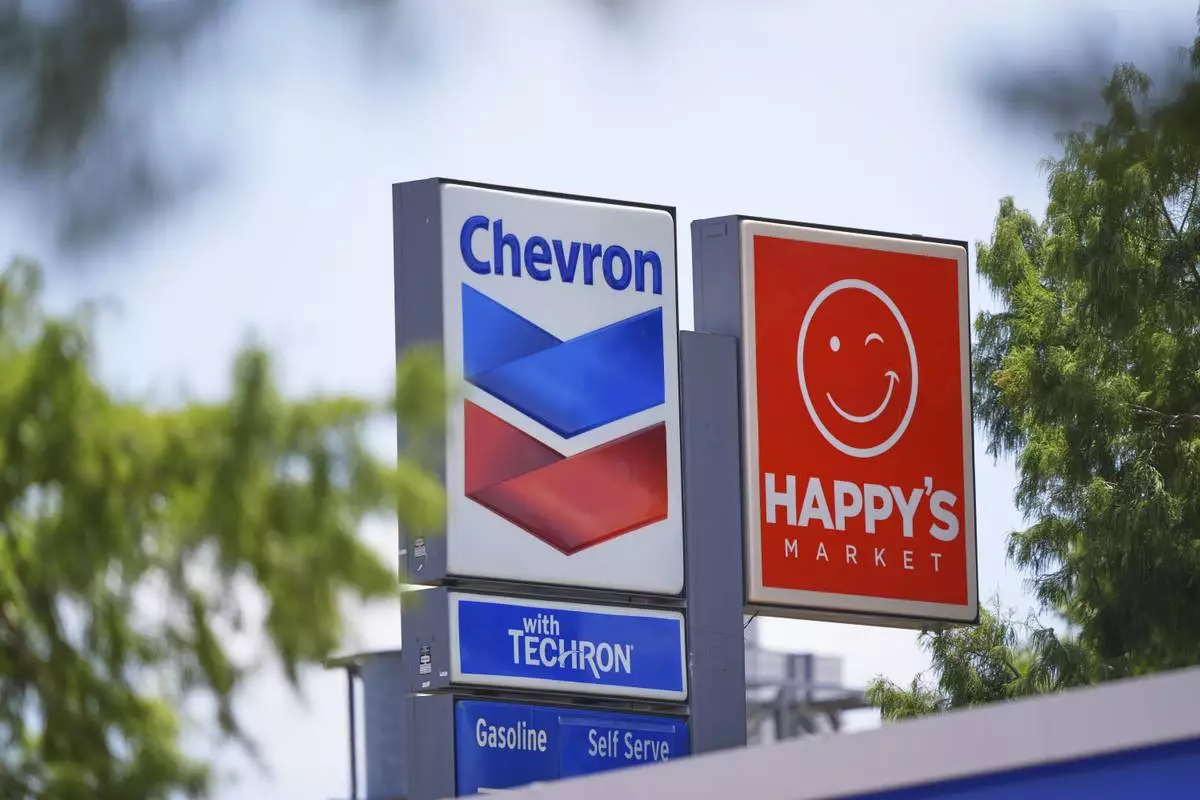
Chevron and Happy's Market signs are shown in Dallas, Tuesday, July 29, 2025. (AP Photo/LM Otero)
Chevron and Happy's Market signs are shown in Dallas, Tuesday, July 29, 2025. (AP Photo/LM Otero)

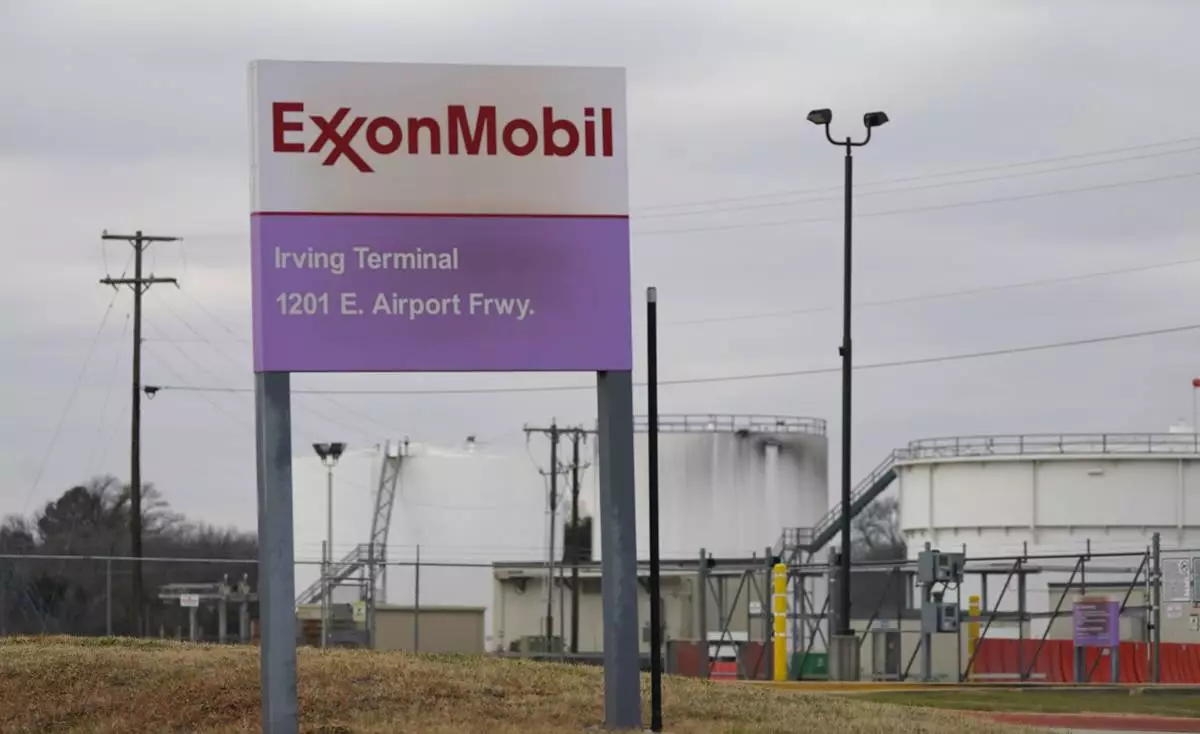
File - A sign marks the entrance to an ExxonMobil fuel storage and distribution facility in Irving, Texas, Jan. 25, 2023. Exxon Mobil reports earnings on Friday, Oct. 27, 2023 (AP Photo/LM Otero, File)

File - A sign marks the entrance to an ExxonMobil fuel storage and distribution facility in Irving, Texas, Jan. 25, 2023. Exxon Mobil reports earnings on Friday, Oct. 27, 2023 (AP Photo/LM Otero, File)

FRANKFURT, Germany (AP) — Germany's troubled economy returned to modest growth last year after two years of falling output, official figures showed, as hopes rise that government spending on bridges, rail lines and defense may help end years of stagnation.

The expansion in gross domestic product of 0.2% for 2025 was fueled by stronger consumer and government spending while exports sagged under the weight of more restrictive U.S. trade policy under President Donald Trump, the German Federal Statistical Office said on Thursday.

That follows shrinkage of 0.5% in 2024 and 0.9% in 2023.

“Germany’s export business faced strong headwinds owing to higher U.S. tariffs, the appreciation of the euro and increased competition from China,” statistical office head Ruth Brand said in a statement accompanying the statistical release.

Expectations have risen for Germany to finally see stronger growth this year as the government under Chancellor Friedrich Merz implements plans to increase spending on infrastructure to make up for years of underinvestment. Meanwhile defense spending is rising due to a perceived higher level of threat from Russia after its invasion of Ukraine.

Germany has endured a period of extended stagnation following the COVID-19 pandemic. Higher energy costs following the war in Ukraine and increasing competition from China in key German specialties such as autos and industrial machinery have held back an economy that is heavily focused on exports. Then came Trump's imposition of higher tariffs, or import taxes, on goods from the European Union. The slow growth has also exposed long-term structural issues such as excessive bureaucracy and lack of skilled labor. A stronger euro has also made exports less competitive on price.

A group of leading economists has predicted 0.9% growth for this year but said that forecast could be at risk if the increase in government spending is unleashed more slowly than expected.

The German economy grew 0.2% in the last three months of 2025, according to available preliminary data.

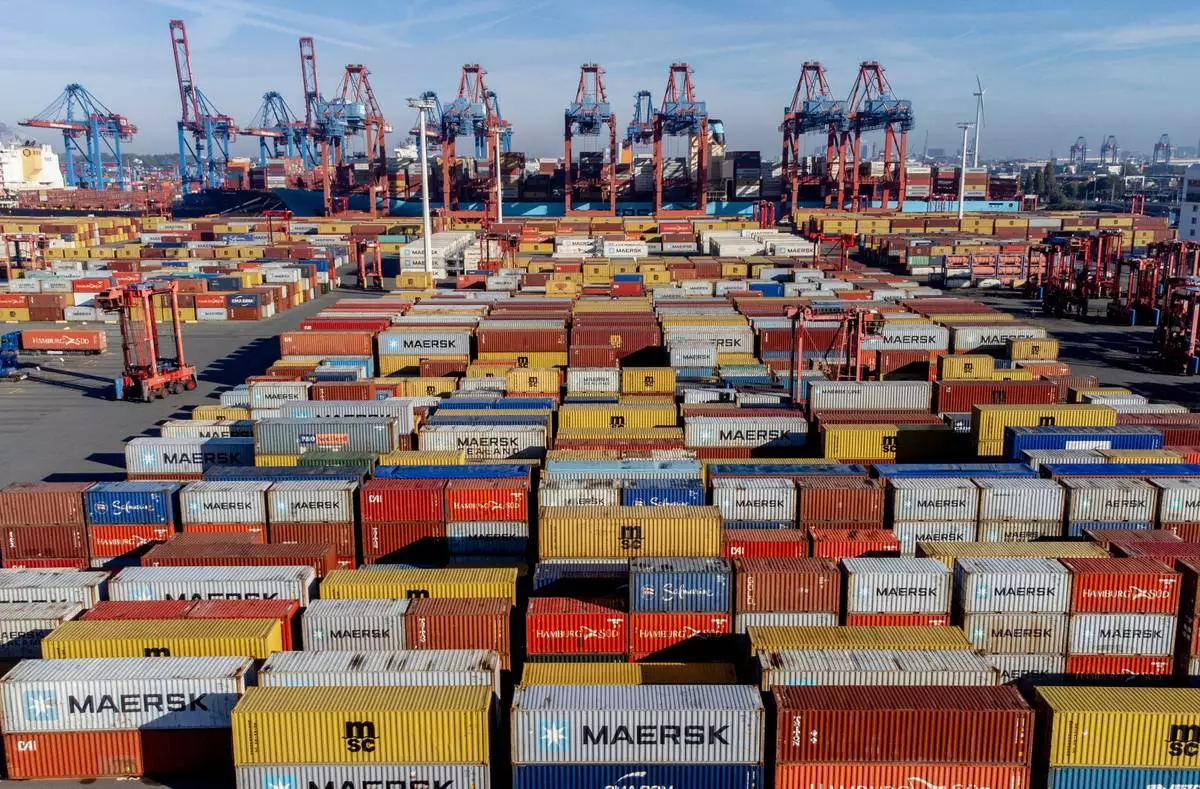
FILE - Containers are piled up in the harbor in Hamburg, Germany, on Oct. 26, 2022. (AP Photo/Michael Probst, file)

FILE - Containers are piled up in the harbor in Hamburg, Germany, on Oct. 26, 2022. (AP Photo/Michael Probst, file)

Recommended Articles