BUDAPEST, Hungary (AP) — The liberal mayor of Hungary's capital was questioned by police Friday over accusations of helping organize an LGBTQ+ Pride event that the country's right-wing populist government had sought to ban.
The Pride march in Budapest on June 28 was the largest event of its kind in the country's history, according to organizers, despite Prime Minister Viktor Orbán's government earlier passing an anti-LGBTQ+ law that banned such events.
Budapest Mayor Gergely Karácsony arrived at Hungary's National Bureau of Investigation Friday morning where a crowd of around 200 of his supporters had gathered. Before entering the investigators' headquarters under police escort, he told supporters that freedom for Hungarian society was at stake.
“A month ago at Budapest Pride, very, very many of us told the whole world that neither freedom nor love can be banned in Budapest,” Karácsony said. “And if it cannot be banned, then it cannot be punished.”
Orbán's ruling party in March passed the contentious anti-LGBTQ+ law, which banned Pride events and allowed authorities to use facial recognition tools to identify those attending the festivities.
Despite the threat of heavy fines, participants proceeded with June's Pride march in an open rebuke of Orbán's government. Organizers said that some 300,000 people participated.
The government's move to ban Pride was its latest action against LGBTQ+ people.
Orbán's party has passed other legislation — including a 2021 law barring all content depicting homosexuality to minors under 18 — that rights groups and European politicians have decried as repressive against sexual minorities and compared to similar restrictions in Russia.
Orbán and his party have insisted Pride, a celebration of LGBTQ+ visibility and struggle for equal rights, was a violation of children’s rights to moral and spiritual development. A recent constitutional amendment declared these rights took precedence over other fundamental protections including the right to peacefully assemble.
While Hungarian authorities maintained that the Pride march had taken place illegally, they announced in July they would not press charges against attendees but said investigations were ongoing against the organizers.
One of the organizers, Budapest Pride President Viktória Radványi — who has not been summoned for police questioning — said at the gathering outside the investigators' headquarters Friday that Karácsony had demonstrated “courage and very strong morals” for helping organize Pride.
Radványi said Karácsony had showed that "being a mayor is not just about arranging public transportation and making sure that the lights turn on on the street at night. It also means that when your citizens’ fundamental rights are attacked, you have to stand up and protect them.”
Karácsony on Friday emerged from the investigators' headquarters after having been inside for a little more than an hour. Speaking to reporters, he said he had been formally accused of organizing a prohibited event but that he had declined to respond to police questions.
Orbán’s government, he said, had been weakened by its failed efforts to ban Pride.
“Until now, they’ve only been able to understand the language of force,” Karácsony said. “This force is weakened now and no longer has any effect over people’s thinking.”
Addressing the crowd, Karácsony said the “fateful” national elections expected next spring would be a chance to “take Hungary back onto the European path.”
“We want to live in a country where freedom is not for the holders of power to do what they want, but for all our compatriots,” he said.
He added that so many people had defied the government to participate in Pride “because we know exactly that either we are all free together, or none of us are.”
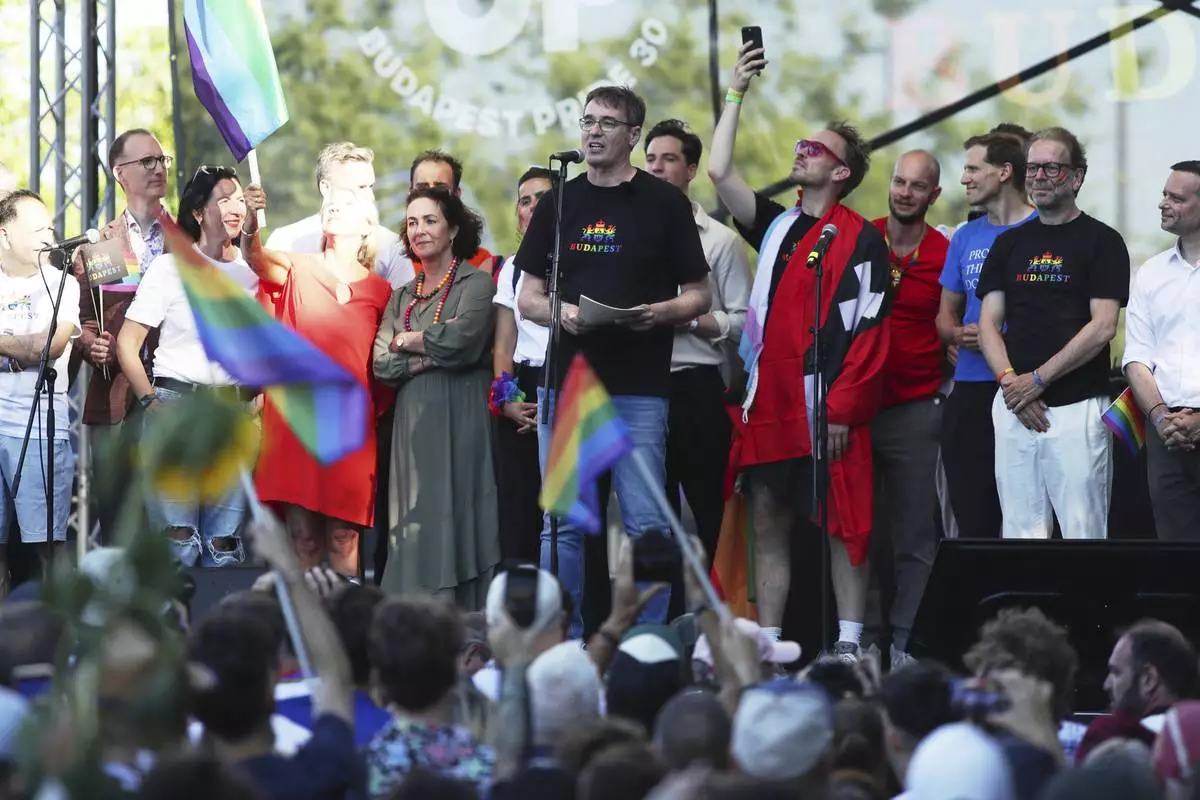
FILE - Budapest mayor Gergely Karacsony, center, addresses participants in the Pride march in Budapest, Hungary, Saturday, June 28, 2025. (AP Photo/Rudolf Karancsi, File)
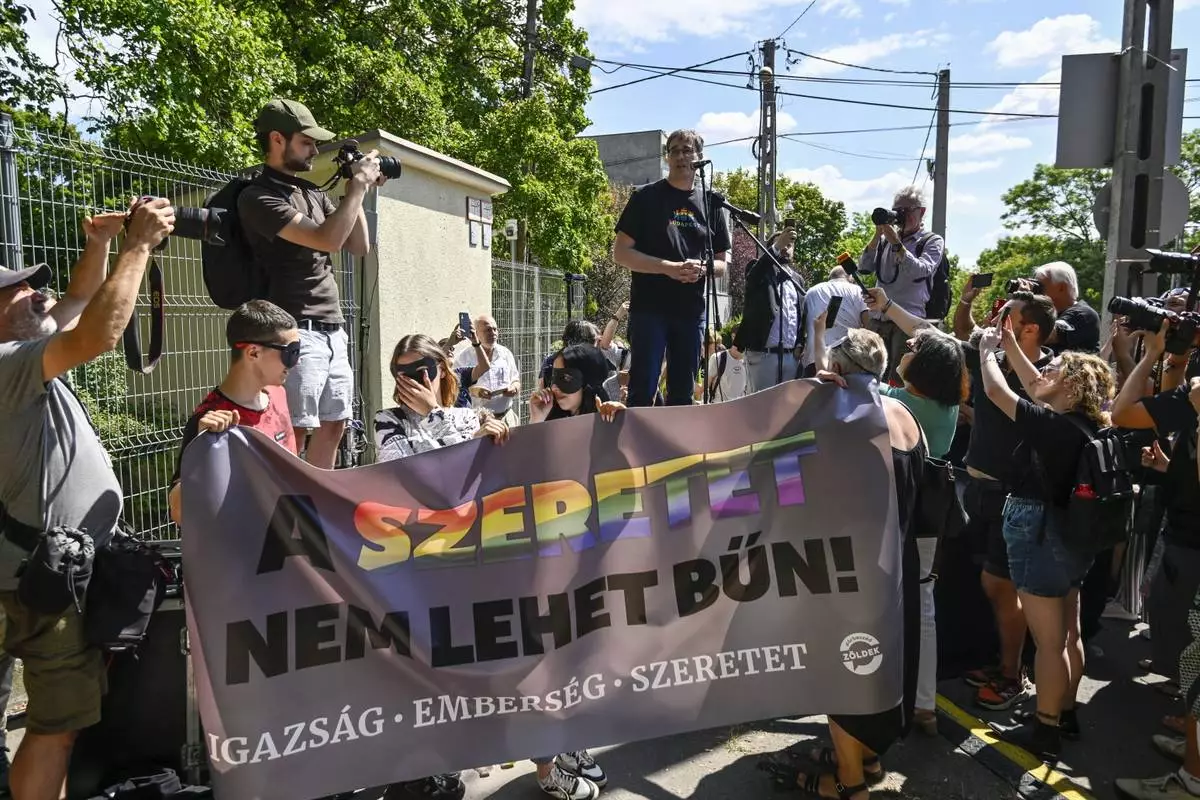
Budapest Mayor Gergely Karacsony, center, speaks to the media in front of the National Investigation Bureau in Budapest, Hungary, Friday, Aug. 1, 2025. (Tamas Purger/MTI via AP)
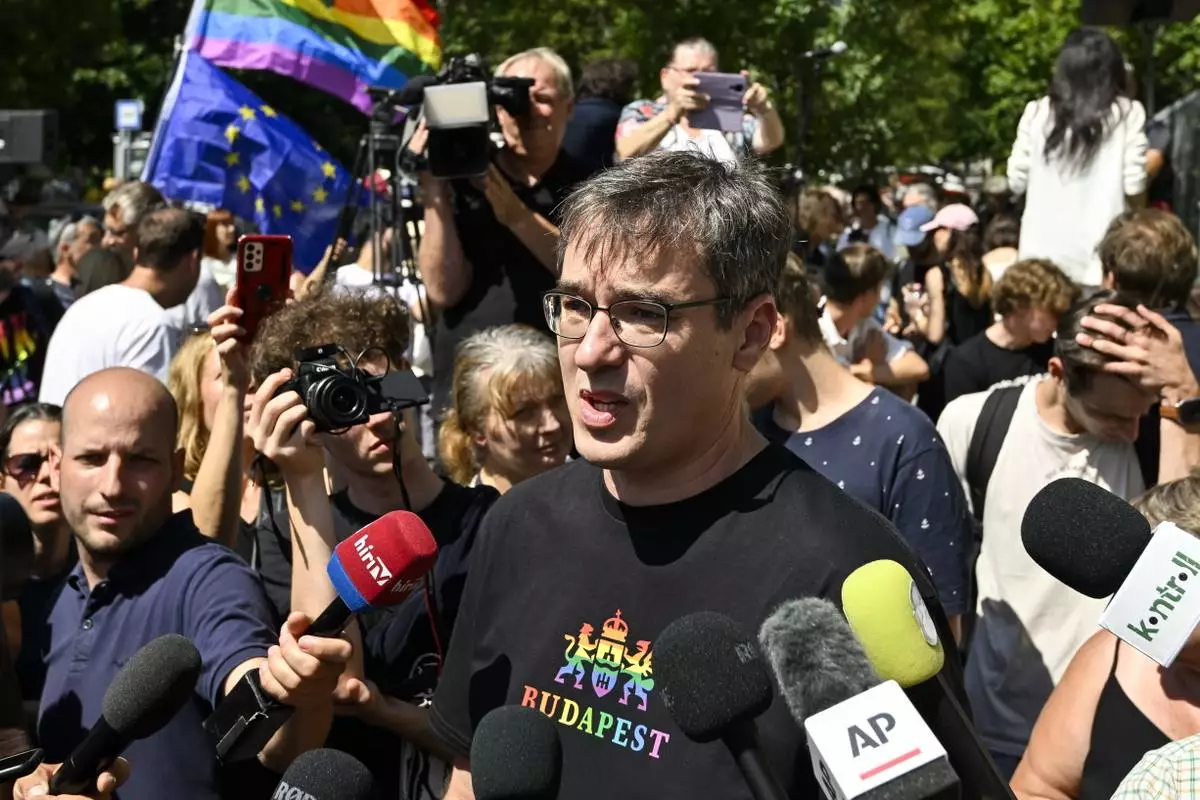
Budapest Mayor Gergely Karacsony speaks to the media in front of the National Investigation Bureau in Budapest, Hungary, Friday, Aug. 1, 2025. (Tamas Purger/MTI via AP)