Delayed treatments, canceled doctor visits, skipped prescriptions. Losing insurance is bad for your health.
The Congressional Budget Office forecasts that the U.S. uninsured population will grow by 10 million in 2034, due to the tax and spending bill signed into law by President Donald Trump.
And, thanks to a natural experiment nearly two decades ago, researchers can forecast what that will mean for patient care. Among the problems they predict will develop as a direct result of these people losing coverage:
— About 2.5 million people may no longer have a personal doctor.
— About 1.6 million patients will take on medical debt.
— The lack of care may cause nearly 22,000 deaths annually.
“There’s really no questioning the basic reality that you can’t take health care away from 10 million people without causing many preventable deaths,” said Dr. Adam Gaffney, lead researcher on a team that explored the new law’s impact.
Here’s a deeper look at the research and challenges that could develop.
It will become harder for many people to enroll in Medicaid or individual insurance plans and then stay covered. Medicaid is a state and federally funded program that covers care for people with low incomes.
States will have to verify every six months whether someone remains eligible for Medicaid. That could cause coverage lapses for people with incomes that fluctuate or for those who move and miss renewal paperwork.
Many also are expected to lose coverage as states require Medicaid recipients to work, volunteer or go to school unless exempted.
Enrollment in Medicaid has swelled in recent years. Republicans are cutting back in part to help fund tax breaks and pay for other priorities like border security. They also say they are trying to root out waste and fraud by rightsizing Medicaid for the population it was initially designed to serve — mainly pregnant women, the disabled and children.
People covered through the Affordable Care Act’s individual insurance marketplaces also will see shorter enrollment windows and no more automatic renewals.
Gaffney, of Harvard Medical School, and other researchers looked to past studies to measure how many people would experience detrimental effects, like going without prescriptions, from the upcoming changes. Gaffney updated the published analysis, which was originally based on the House version of the bill, at the AP’s request.
One study in particular was critical for their work: In 2008, Oregon offered a rare opportunity to compare groups of people enrolled in Medicaid with those who were not.
After a four-year period of frozen enrollment due to budget limitations, the state determined it could enroll 10,000 more people in Medicaid. It used a lottery system to make the selection amid high demand.
That gave researchers a chance to follow people who got coverage and those who did not, similar to how scientists testing a new drug might compare patients taking it to those given a placebo.
“This is a gold standard research design because it replicates a randomized-controlled trial,” said Christine Eibner, a senior economist at RAND Corp. who was not involved in the study.
Applying results from that study and other research to the recent CBO estimate allowed Gaffney and other researchers to estimate specific effects of losing coverage.
“By taking coverage away, we are putting patients in a terrible position,” said Gaffney, a former president of Physicians for a National Health Program.
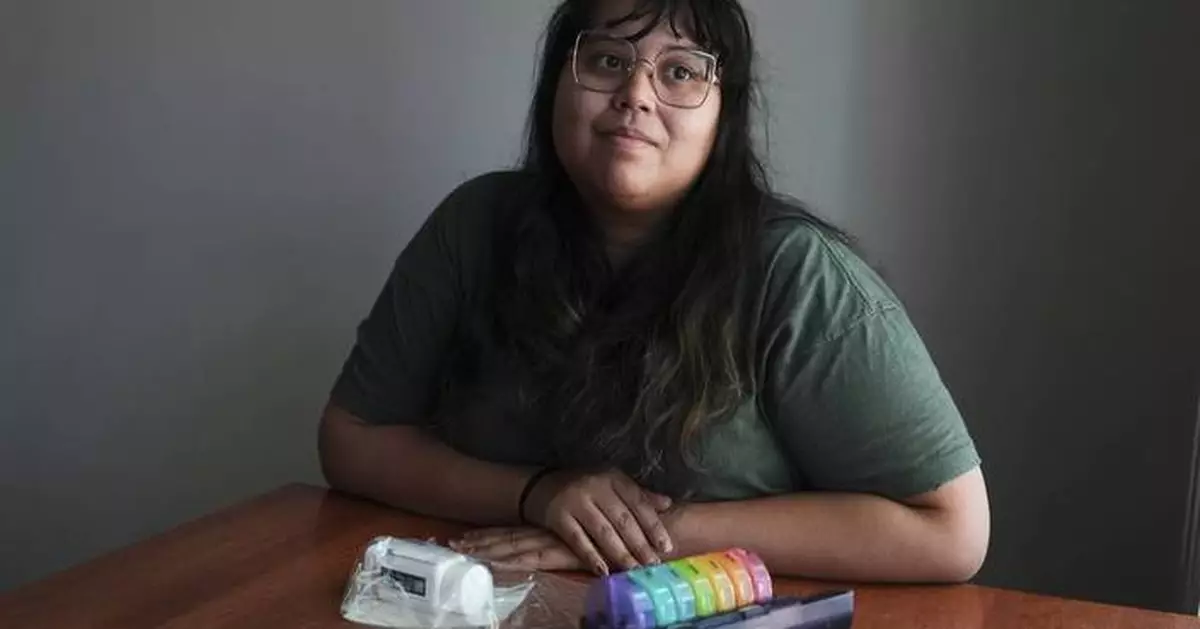
Amanda Schlesier went four days without her cancer treatment Calquence this spring and wound up in a local emergency room, delirious with pain.
The leukemia patient worries about what might happen if she stops treatment again for a longer stretch because she’s lost Medicaid.
“God forbid I forget to fill out a page of documentation, and suddenly I lose access to my medication or my doctors or any of the treatment that I’ve been going through,” the 33-year-old Farmington Hills, Michigan, resident said.
People can still receive care when they don’t have coverage, but important steps often are delayed, said Dr. Gwen Nichols, chief medical officer of The Leukemia & Lymphoma Society.
Patients may be able to visit a doctor, but they would have to line up coverage or help before they can receive expensive chemotherapy. Diagnosis also may be delayed. Meanwhile, the patient’s cancer continues to grow.
“It’s a ticking time bomb,” Nichols said.
The first thing patients often ditch when they lose coverage are screenings designed to catch health problems before they become serious, said Dr. Jen Brull, president of the American Academy of Family Physicians.
That could mean patients skip tests for high cholesterol, which can contribute to heart disease, or colonoscopies that detect cancer. Researchers forecast that a half million fewer women will have gotten a mammogram within the past year by 2034.
When patients struggle financially and lose coverage, they focus on things like keeping a place to live and food on their table, said Brull, a Fort Collins, Colorado, physician.
“Seeing a doctor because you don’t want to get sick feels like a much lower priority,” Brull said.
Patients start taking financial hits at all ends of care when they lose coverage.
They may have to pay up front or start a payment plan before they receive care, said Erin Bradshaw, an executive vice president with the nonprofit Patient Advocate Foundation, which helps people with medical bills.
Anyone with an outstanding balance will have to pay it before the next appointment.
Financial assistance may be available, but patients don’t always know about it. Getting help also may take time and require the submission of tax returns, pay stubs or some validation that the patient no longer has coverage.
Bradshaw said letters stating that a patient has lost Medicaid sometimes arrive a couple months after the fact. That can contribute to treatment delays or missed medication doses.
Some patients also try to avoid financial stress by skipping care. Schlesier said she delayed seeing a doctor when she first felt symptoms of her cancer returning because she had no coverage at the time.
If prescriptions are too expensive, patients may simply not get them or split the doses to stretch the medicine.
For Thomas Harper, it’s a question of priorities.
“Sometimes you have to make a choice, how well do you want to eat this week versus taking your medicine,” he said.
The West Monroe, Louisiana, truck driver has around $300 a month in prescriptions as he deals with diabetes and recovers from non-Hodgkin lymphoma, a type of blood cancer.
Harper, 57, recently returned to work. That meant he lost Medicaid, which covered more of his prescription costs. He’s balancing buying his meds with shopping for healthy food that keeps his blood sugar in check and builds his immune system.
“I’ll survive, but I know there’s people out there that cannot survive without Medicaid,” he said.
AP video journalist Laura Bargfeld contributed to this report.
The Associated Press Health and Science Department receives support from the Howard Hughes Medical Institute’s Science and Educational Media Group. The AP is solely responsible for all content.
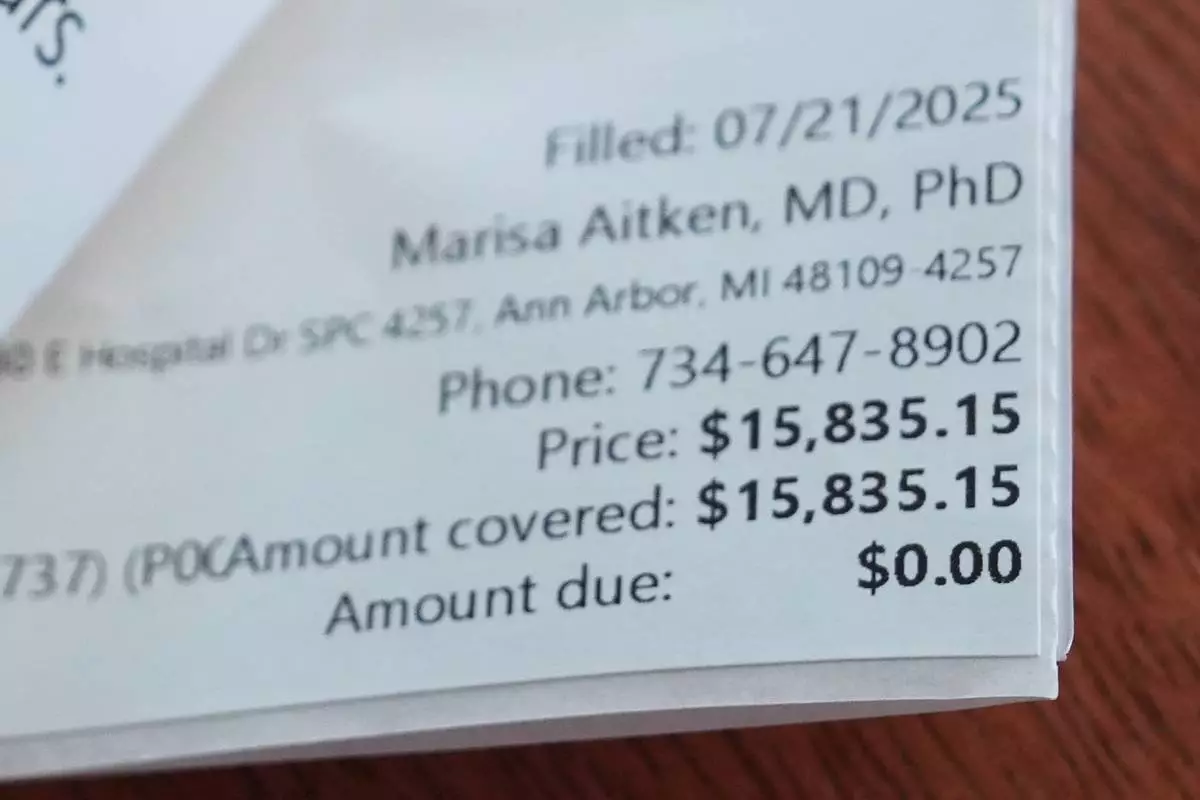
The price for a bottle of 60 tablets of Amanda Schlesier's prescription chemotherapy pill, Calquence, is printed on a pharmacy statement in Farmington Hills, Mich., Wednesday, July 23, 2025. (AP Photo/Paul Sancya)
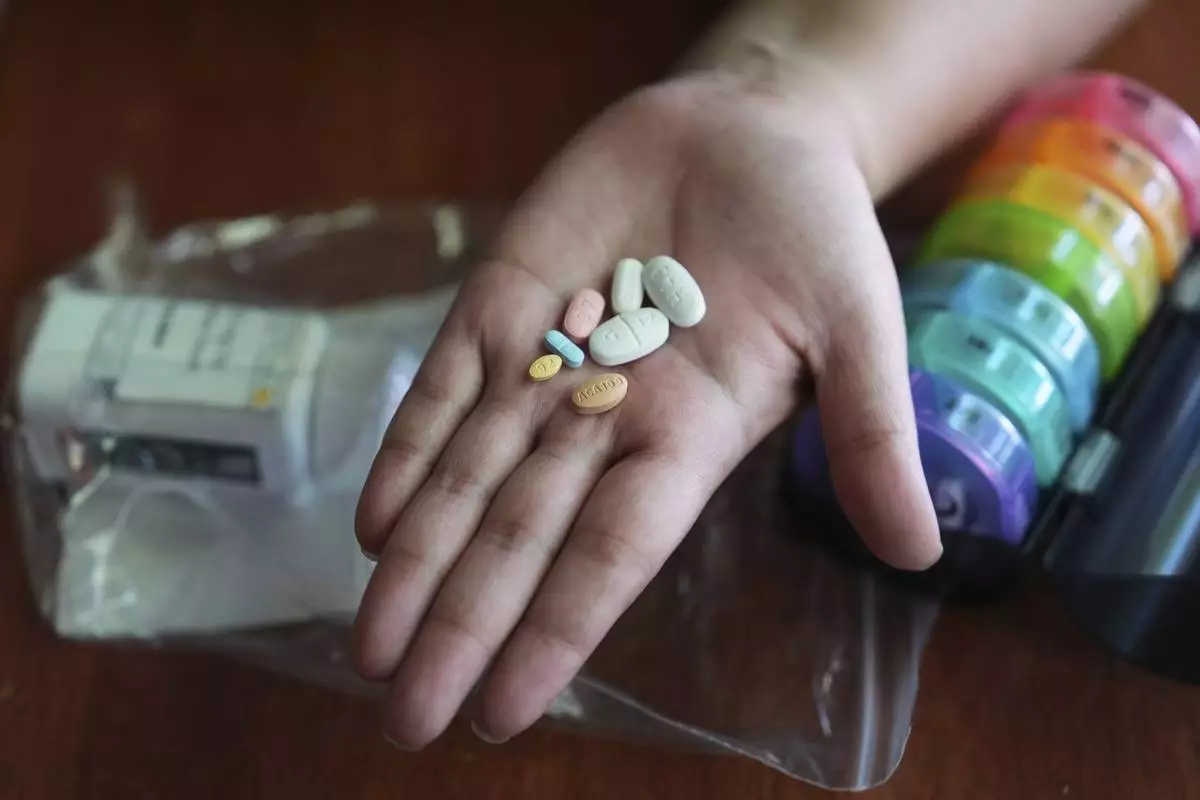
Amanda Schlesier holds her prescription medication, including a chemotherapy pill, Calquence, foreground, in Farmington Hills, Mich., Wednesday, July 23, 2025. (AP Photo/Paul Sancya)
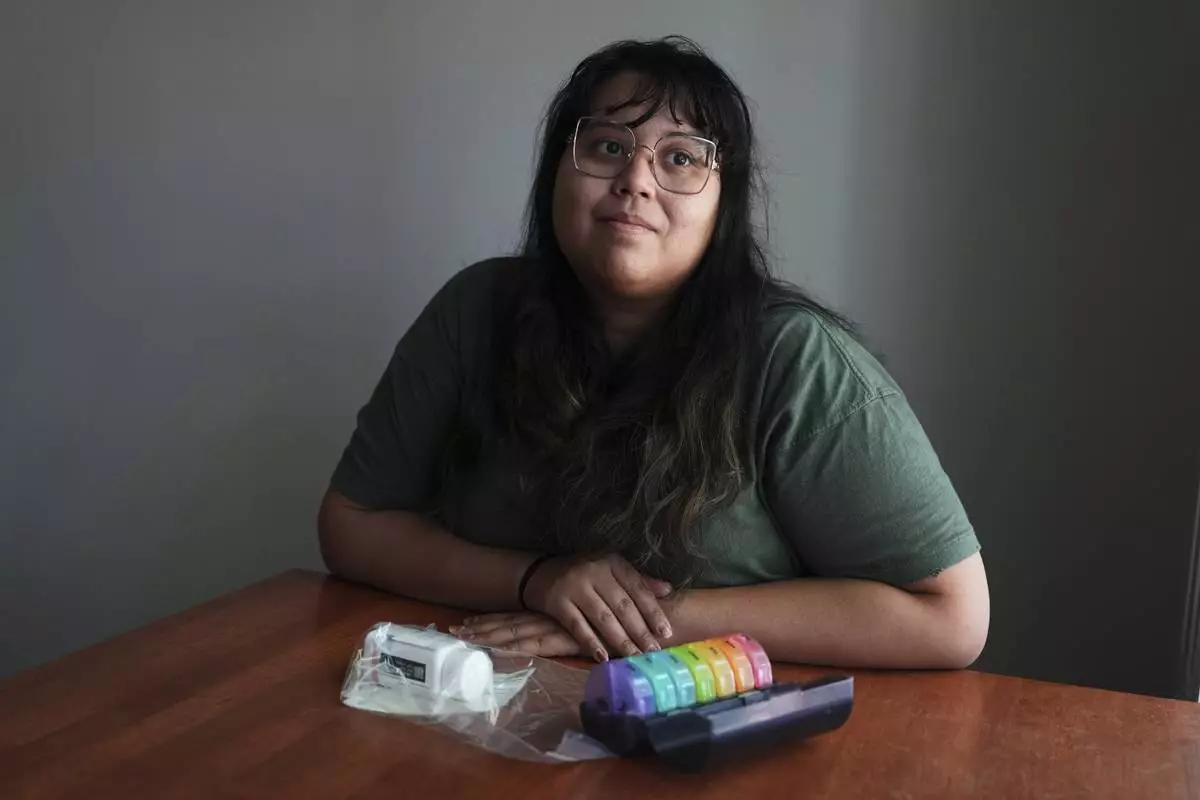
Amanda Schlesier sits for a portrait with her prescriptions, including her chemotherapy pill, Calquence, in Farmington Hills, Mich., Wednesday, July 23, 2025. (AP Photo/Paul Sancya)