TAMPA, Fla.--(BUSINESS WIRE)--Aug 1, 2025--
From the icy waters of the Pacific Northwest to the heart of Tampa Bay, a new adventure awaits. Today, The Florida Aquarium celebrated the grand opening of The Tide Pool — one of the only cold-water touch habitats on Florida’s west coast. The Tide Pool is a 60-foot-long, 4,000-gallon, cold-water touch habitat that invites guests to discover, touch, and connect with more than 200 marine invertebrates —quadrupling the animals from the previous No Bone Zone exhibit.
This press release features multimedia. View the full release here: https://www.businesswire.com/news/home/20250801106949/en/
Kept at a cool 50 degrees to replicate Pacific Northwest coastal waters, this immersive exhibit offers visitors the opportunity to feel the texture of a red bat star, check out the striking colors of the ochre sea star, and watch the spot prawns in action—all in an environment that looks and sounds like a Pacific coastline.
“ The Tide Pool is a spectacular new addition that brings the spirit of discovery to life,” said Roger Germann, President & CEO of The Florida Aquarium. “For the past 30 years, we’ve inspired people to care about marine life. With The Tide Pool, we’re creating a rare opportunity to interact with incredible cold-water species not found in Florida—offering the kind of hands-on experience that ignites curiosity and can spark a lifelong commitment to conservation, especially in our youngest visitors.”
CLICKHERETO DOWNLOAD BROADCAST QUALITY VIDEO & SOUND + PHOTOS OF THE TIDE POOL & ANIMALS
Courtesy: The Florida Aquarium
Built in six expansive segments and featuring a state-of-the-art wave action system, the exhibit delivers a multi-sensory experience. Projected wave effects and a 16-channel surround sound system bring the tide to life with the roar of crashing surf and the calls of seabirds. A custom mural by artist Curtis Stokes shifts from sunset to starlight and sunrise under UV-reactive lighting, creating a stunning, ever-changing backdrop for exploration.
“Every element of The Tide Pool is designed to immerse our guests in the diversity and resilience of life in these coastal habitats,” said Tim Binder, Senior Vice President of Animal Care & Health at The Florida Aquarium. “It’s a rare opportunity for our community to engage directly with cold-water marine life and gain a deeper appreciation for their unique adaptations—sparking both curiosity and a lasting commitment to ocean conservation.”
Meet Some of The Tide Pool’s Animals
The Tide Pool Key Highlights
Part of a Bold Vision for Tampa Bay
The Tide Pool is the latest milestone in The Florida Aquarium’s historic $45 million expansion, following the opening of the MORPH’D gallery presented by PAR in 2023. Upcoming plans include the arrival of puffins in late 2026-early 2027, and the debut of a California sea lion habitat, the first of its kind on Florida’s west coast, along with a new habitat for the African penguins, both in late 2027-early 2028.
These expansion plans are made possible through community support, including a $15 million Community Redevelopment Area (CRA) investment and The Tide Pool exhibit supporters Robert R. Sharp & Family and Marvin L. & Betsy Holloway. Together, they are helping The Florida Aquarium elevate its shared purpose through conservation, education, and world-class animal care.
About The Florida Aquarium
This year marks the 30th anniversary of The Florida Aquarium, a cornerstone of Tampa Bay’s transformation into a globally recognized destination. Since opening in 1995, this 501c (3) nonprofit organization has been dedicated to environmental stewardship through purpose-driven conservation, research, education, and outreach programs. Welcoming more than a million guests annually, The Florida Aquarium provides world-class experiences that inspire action to protect marine wildlife. Home to a diverse array of aquatic and terrestrial animals, the Aquarium is committed to exceptional animal care and fostering a deeper connection to the ocean through immersive exhibits. Driven by a commitment to saving marine wildlife, The Florida Aquarium remains a world-renowned leader in groundbreaking research and rescue efforts that help restore Florida’s coral reefs and sea turtle populations. For more information, visit flaquarium.org and follow on X (Twitter), Instagram, Facebook, YouTube and LinkedIn.
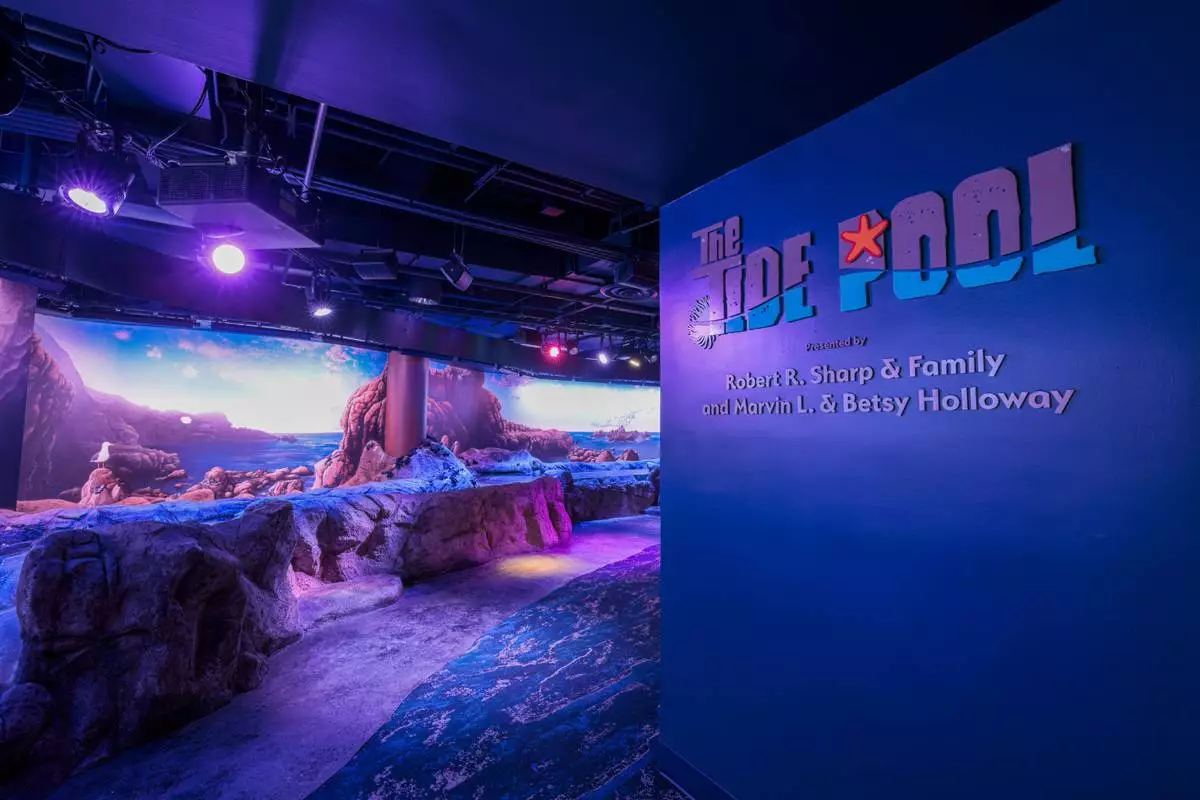
The Florida Aquarium unveils it's newest exhibit- The Tide Pool
The risk of a catastrophic explosion at a damaged chemical tank in Southern California has been eliminated following a close overnight inspection that confirmed a crack in the tank relieved pressure and cooled the chemical, authorities said Monday.
Officials said crews conducted tank temperature checks at night to reduce risks to firefighters, avoiding daytime operations when heat from the tank made conditions around it most dangerous. The overnight mission allowed crews to verify the crack and confirm temperatures were falling, Orange County Fire Authority division chief Craig Covey said Monday morning.
Covey said the results of overnight evaluation of the tank — that the temperature inside had dropped and that pressure had been released — was “incredibly positive news.”
However, evacuation orders remained in place for about 50,000 people in Garden Grove, California, located south of Los Angeles.
Covey said falling temperatures and the release of pressure from the tank were allowing officials to “turn the corner on this incident” after days of concern about a possible explosion.
There has been no chemical leak as of early Monday, but the Orange County Fire Authority said the risk to public safety is “ongoing.”'
After the tank overheated Thursday and began venting vapors, firefighters have repeatedly sprayed the tank with water in an attempt to cool the chemical inside, methyl methacrylate, which is used to make plastic parts.
The tank's interior reached 100 degrees (37.7 Celsius) Sunday, an increase of 10 degrees Fahrenheit (5.5 Celsius) since Saturday, according to Democratic state Sen. Tom Umberg. On Monday, Covey said the temperature fell to 93 degrees F (33.9 degrees C).
Gov. Gavin Newsom declared a state of emergency Saturday and said he asked President Donald Trump to issue an emergency declaration to bolster federal support for local and state officials.
The tank at GKN Aerospace Transparency Systems, which makes parts for commercial and military aircraft, holds 6,000 to 7,000 gallons (22,700 to 26,500 liters) of methyl methacrylate used to make plastic parts.
The first goal of firefighters was to cool off the chemical inside the tank to prevent a leak or explosion.
Drones were monitoring temperatures at 10-minute intervals to watch for any spikes. Containment barriers were set up to prevent the chemical from getting into storm drains or reaching creeks or the nearby ocean in the event of a spill, Covey said earlier.
As the interior temperature rises, methyl methacrylate converts from a liquid to a gas and increases the pressure, according to Purdue University engineering professor Andrew Whelton, who had said earlier that the crack could mean product or pressure is being released, reducing the chance of explosion.
“Think of a soda can. If you leave it in a hot car it can explode,” Whelton said. “But if you put a hole in the can, the product is released and the can itself doesn’t explode.”
An explosion that could spread the chemical over a broad area and send shrapnel flying would be the worst-case scenario, he said.
Aerial photos taken by The Associated Press showed streets in the area were empty Sunday, while several evacuation shelters were open. At a high school in neighboring La Palma, people slept in cars or on mats and sleeping bags on the asphalt.
Garden Grove is next to Anaheim, home to Disneyland’s two theme parks, which were not under evacuation orders. Park officials said they were monitoring the situation.
Exposure to methyl methacrylate can cause serious respiratory problems, neurological problems and irritation to the skin, eyes and throat, according to fact sheets about the chemical.
Whelton said if an explosion occurs, it will be crucial to conduct detailed air monitoring specifically for methyl methacrylate and not just generic tests for volatile organic compounds as officials did after a 2023 train derailment in East Palestine, Ohio, which released more than 115,000 gallons (435,000 liters) of vinyl chloride after officials blew open five tank cars and burned the chemical.
Orange County health officials said the chemical is easy to smell and people may notice it over a large area without being harmed.
Some Garden Grove residents filed a class-action federal lawsuit Saturday against GKN Aerospace Transparency Systems, which operates the facility where the tank is located. Lawyers for the residents argued that regardless of what happens, property values in the surrounding community are sure to be impacted.
GKN Aerospace did not comment on the lawsuit but has apologized to residents and businesses forced to evacuate. It said Sunday it was “working around the clock to mitigate the risk of a leak.”
GKN Aerospace agreed in 2025 to pay state regulators more than $900,000 to settle violations involving recordkeeping, permitting issues and nitrogen oxide emissions, according to a report on the South Coast Air Quality Management District website.
Associated Press journalist Ethan Swope in Garden Grove, California, contributed to this report.
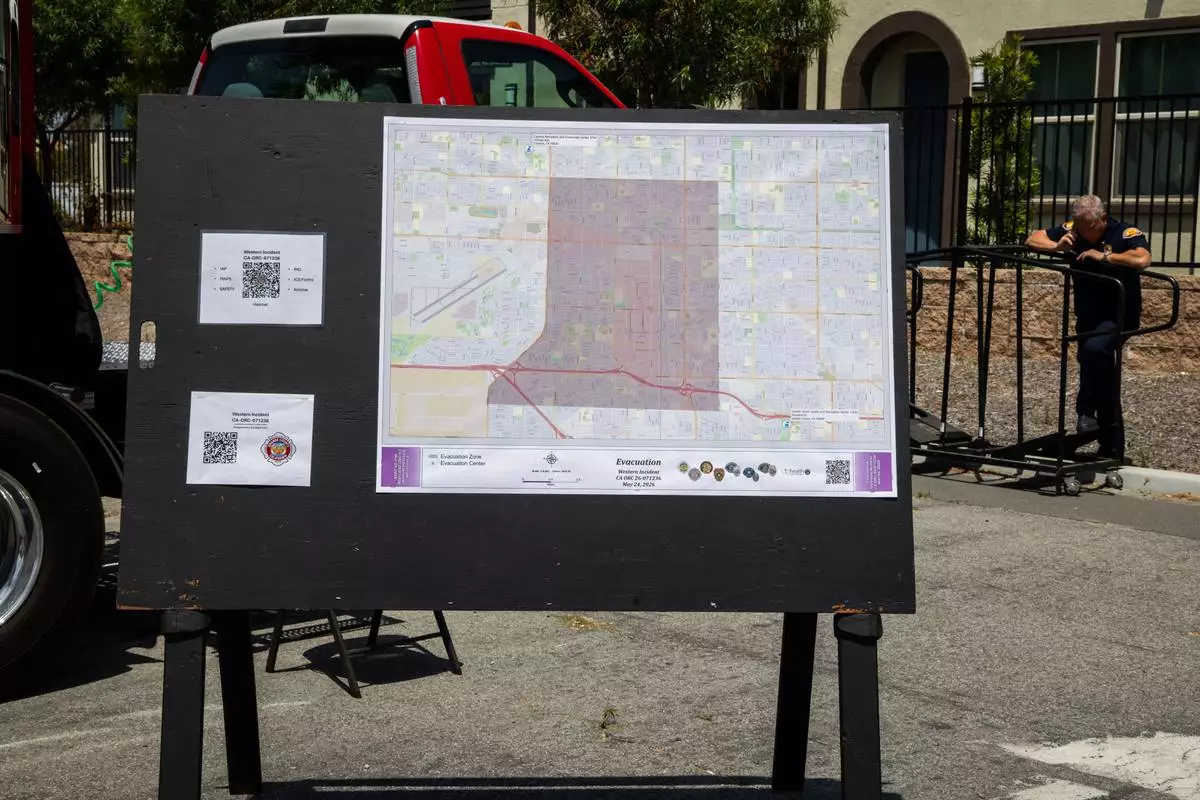
An evacuation map is displayed at the incident command post at the Los Alamitos Race Course in Cypress, Calif., on Sunday, May 24, 2026. (AP Photo/Ethan Swope)
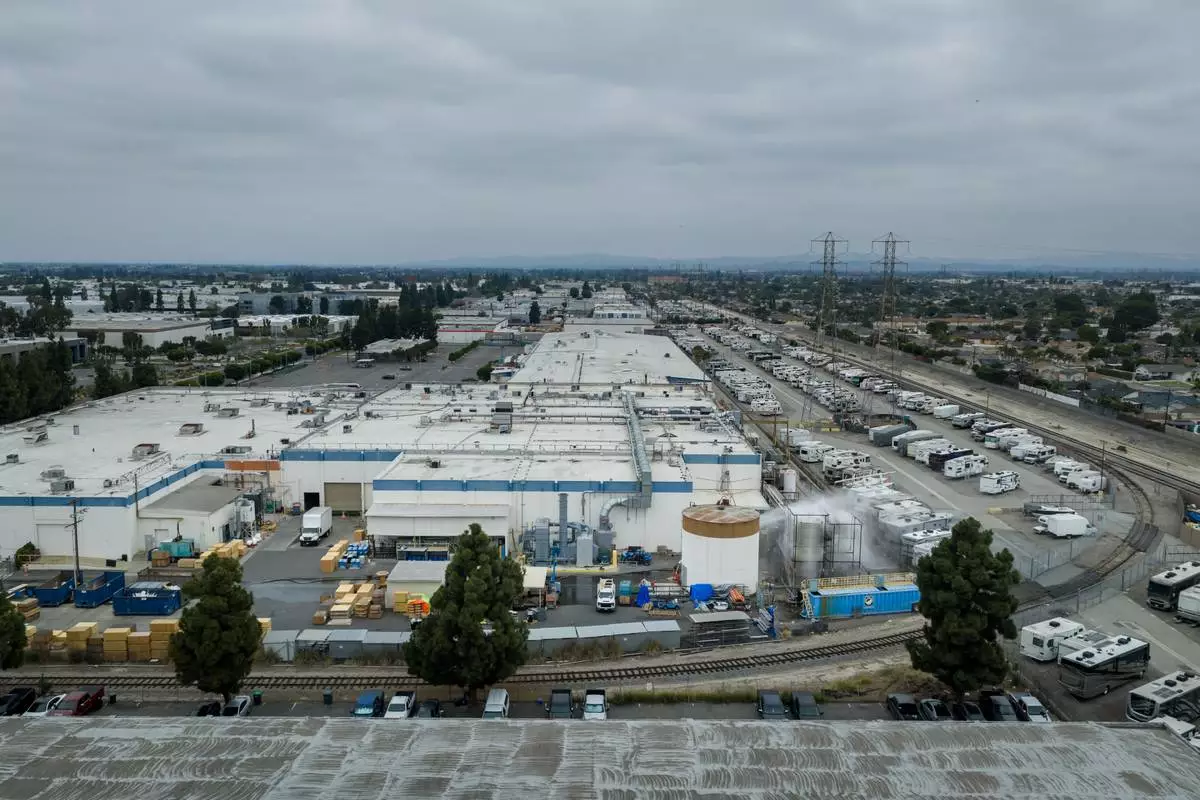
Water is sprayed on a damaged tank at GKN Aerospace in Garden Grove, Calif., on Sunday, May 24, 2026, after the tank containing a chemical used to make plastic parts overheated Thursday. (AP Photo/Ethan Swope)

The streets remain empty in Garden Grove, Calif., on Sunday, May 24, 2026, after a storage tank containing a chemical used to make plastic parts overheated Thursday at an aerospace plastics facility. (AP Photo/Ethan Swope)

Emergency personnel work at the incident command post at the Los Alamitos Race Course Sunday, May 24, 2026, in Cypress, Calif. (AP Photo/Ethan Swope)
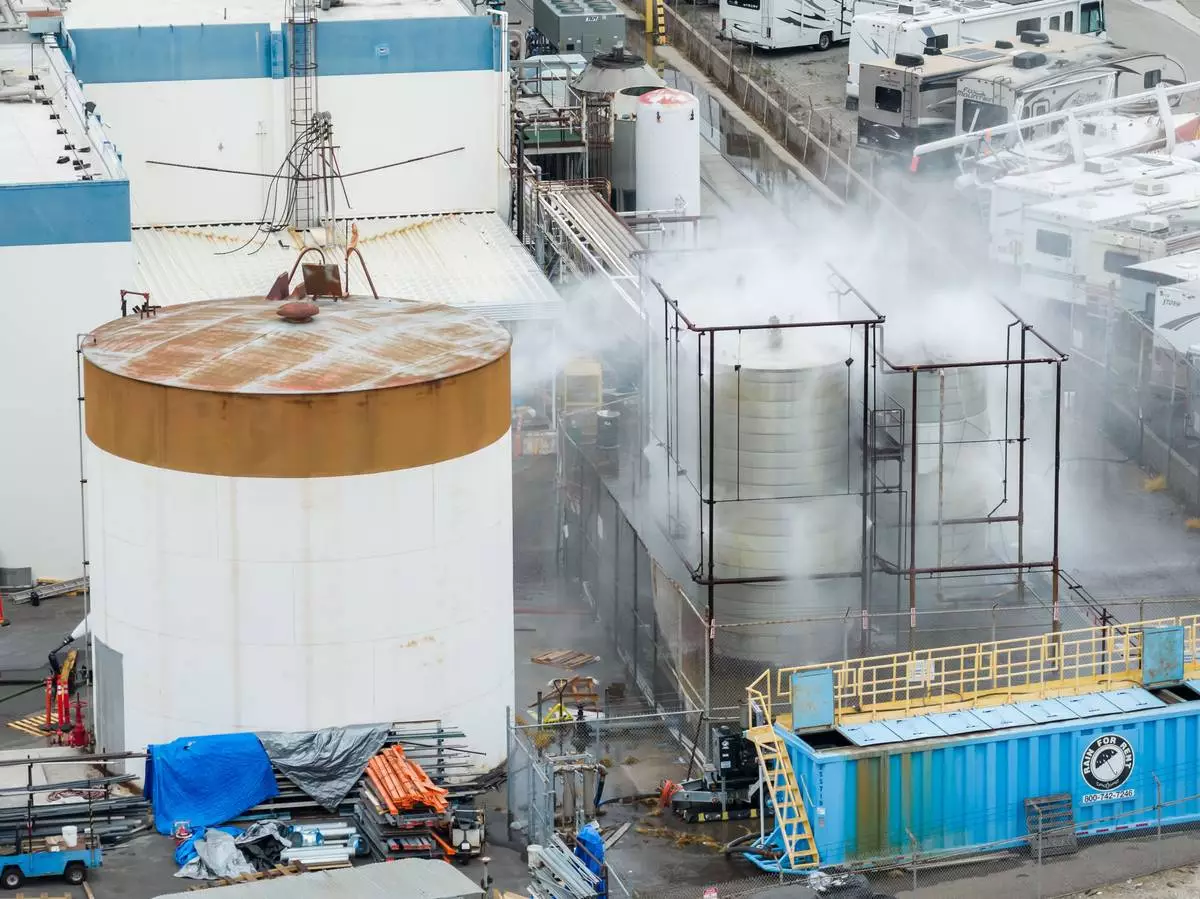
Water is sprayed on a damaged tank at GKN Aerospace in Garden Grove, Calif., on Sunday, May 24, 2026, after the tank containing a chemical used to make plastic parts overheated Thursday. (AP Photo/Ethan Swope)