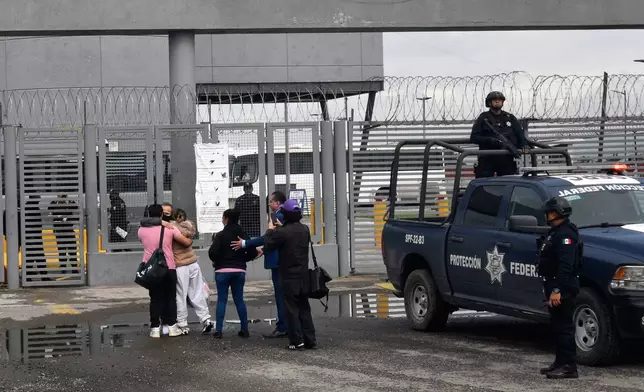
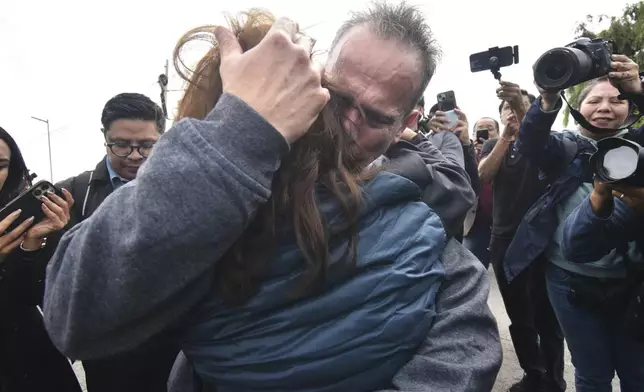
MEXICO CITY (AP) — The alleged leader of an infamous Mexican kidnapping ring walked out of a maximum security prison after nearly 20 years Friday, hours after a judge said there wasn’t sufficient evidence to support the charges holding him.
Interior Secretary Rosa Icela Rodríguez on Friday rattled off a list of appeals, injunctions and complaints filed over the years of Israel Vallarta’s imprisonment in a case that never arrived at a verdict.
Click to Gallery
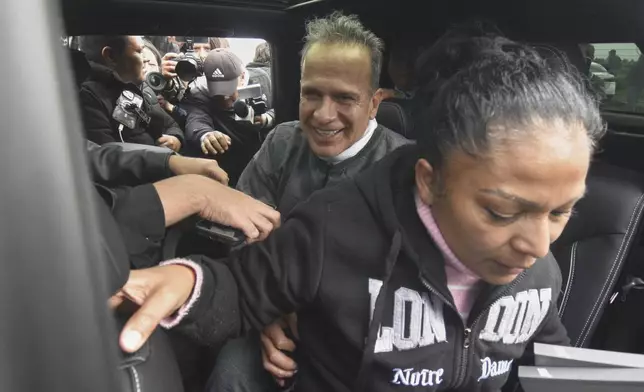
Israel Vallarta smiles as he gets inside a vehicle to leave Altiplano maximum security prison after a judge ordered his release in Almoloya, near Mexico City, Friday, Aug. 1, 2025. Vallarta served almost 20 years behind bars for being the leader of a kidnapping ring, before a judge ruled on Thursday that the evidence didn't support the charges against him. (AP Photo/Haaron Alvarez)
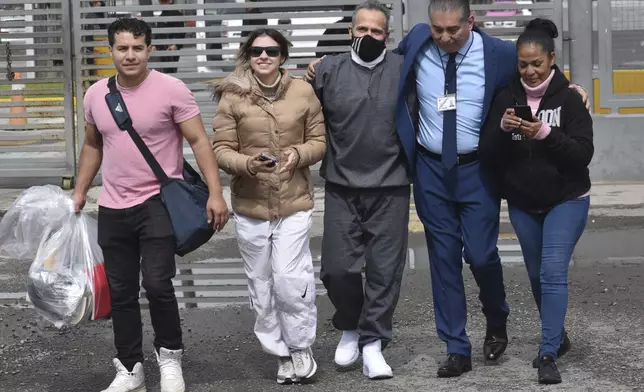
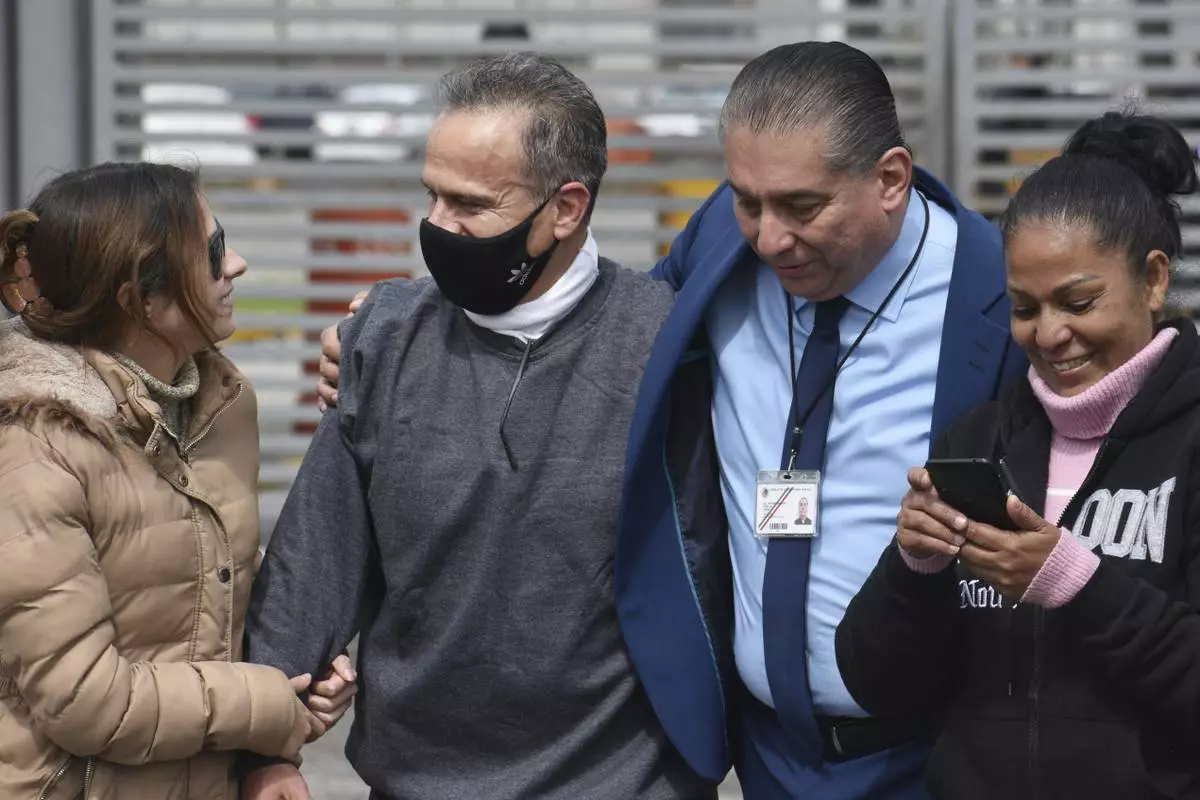
Israel Vallarta, center, leaves Altiplano maximum security prison surrounded by family and his lawyer after a judge ordered his release in Almoloya, near Mexico City, Friday, Aug. 1, 2025. Vallarta served almost 20 years behind bars for being the leader of a kidnapping ring before a judge ruled on Thursday that the evidence didn't support the charges against him. (AP Photo/Haaron Alvarez)
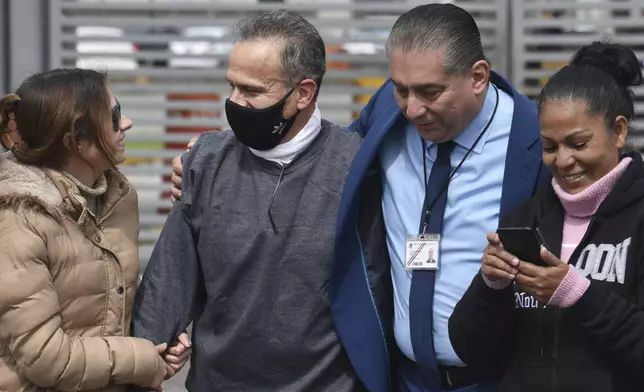
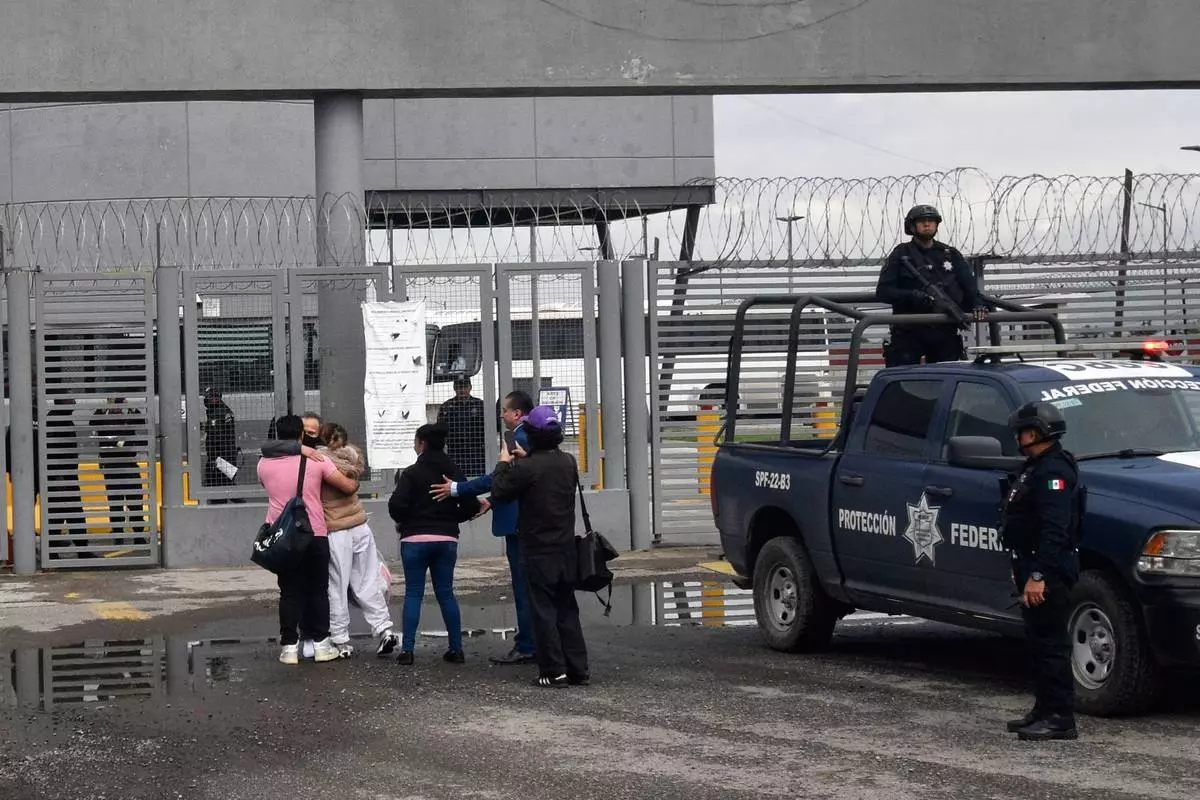
Israel Vallarta, second from left, leaves Altiplano maximum security prison after a judge ordered his release in Almoloya, near Mexico City, Friday, Aug. 1, 2025. Vallarta served almost 20 years behind bars for being the leader of a kidnapping ring before a judge ruled on Thursday that the evidence didn't support the charges against him. (AP Photo/Haaron Alvarez)
Israel Vallarta, second from left, facing camera, gets hugs from his family as he leaves Altiplano maximum security prison after a judge ordered his release in Almoloya, near Mexico City, Friday, Aug. 1, 2025. Vallarta served almost 20 years behind bars for being the leader of an kidnapping ring before a judge ruled on Thursday that the evidence didn't support the charges against him. (AP Photo/Haaron Alvarez)
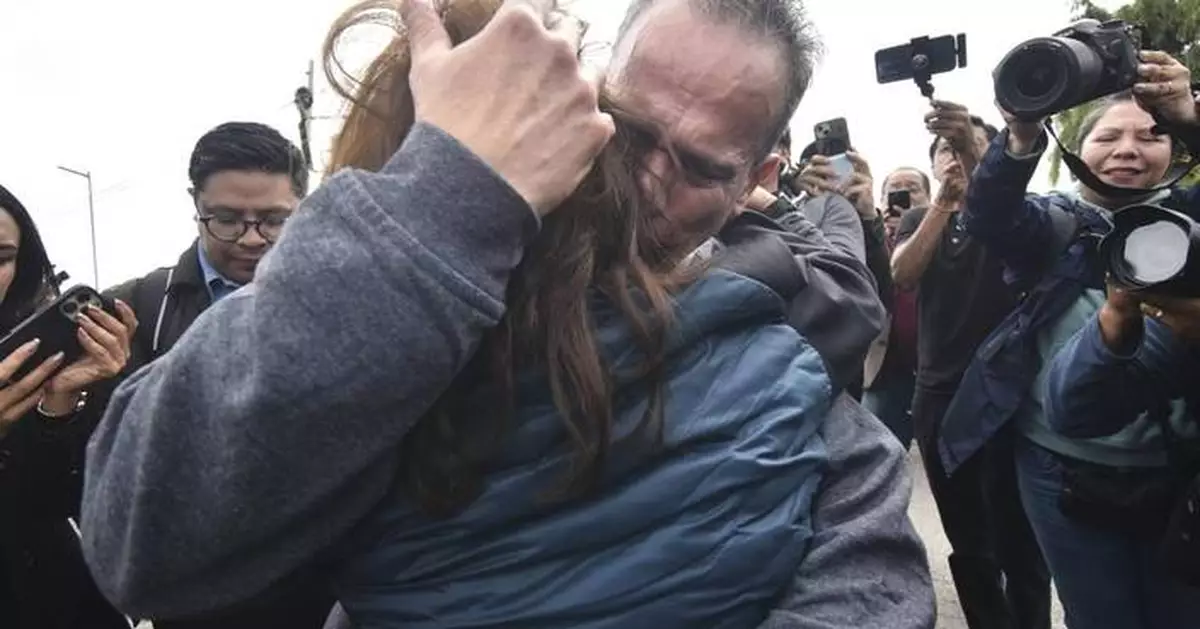
Israel Vallarta hugs his family as he leaves Altiplano maximum security prison after a judge ordered his release in Almoloya, near Mexico City, Friday, Aug. 1, 2025. Vallarta served almost 20 years behind bars for being the leader of a kidnapping ring before a judge ruled on Thursday that the evidence didn't support the charges against him. (AP Photo/Haaron Alvarez)
Vallarta had been charged with organized crime and kidnapping, but a judge tossed those out Thursday.
The Attorney General’s Office did not immediately respond as to whether it would appeal.
Vallarta was arrested in 2005, along with his girlfriend French citizen Florence Cassez.
Cassez was eventually convicted and sentenced to 60 years on charges of aiding a kidnapping ring, in a case that soured relations between Paris and Mexico City.
She acknowledged living with Vallarta at a ranch where kidnap victims were being held, but professed her innocence, saying she was unaware of their presence. One victim identified her as a kidnapper, but by voice only rather than by sight.
A day after Cassez was arrested, police had forced her to take part in a staged raid on the ranch purportedly to rescue hostages and arrest suspects. It was covered by the media and broadcast on television.
In January 2013 the Supreme Court overturned Cassez’s conviction due to procedural and rights violations. She was released and became a cause celebre in France.
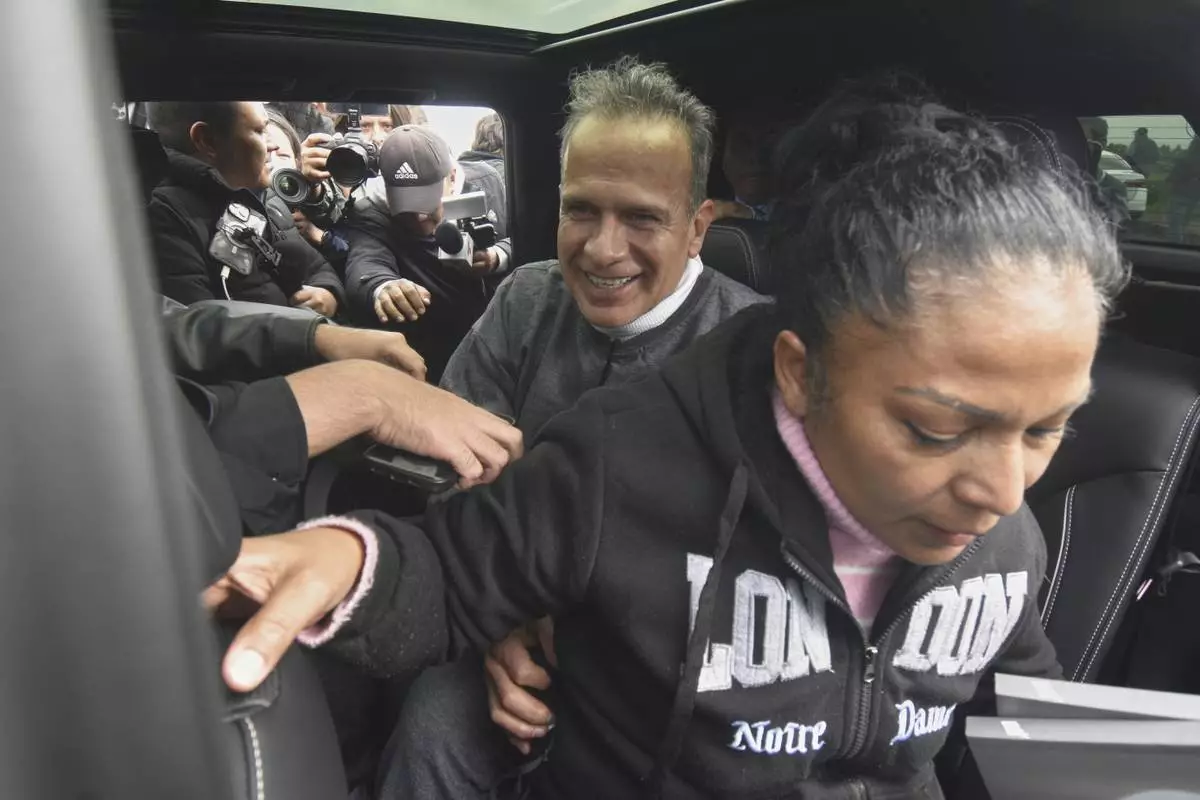
Israel Vallarta smiles as he gets inside a vehicle to leave Altiplano maximum security prison after a judge ordered his release in Almoloya, near Mexico City, Friday, Aug. 1, 2025. Vallarta served almost 20 years behind bars for being the leader of a kidnapping ring, before a judge ruled on Thursday that the evidence didn't support the charges against him. (AP Photo/Haaron Alvarez)
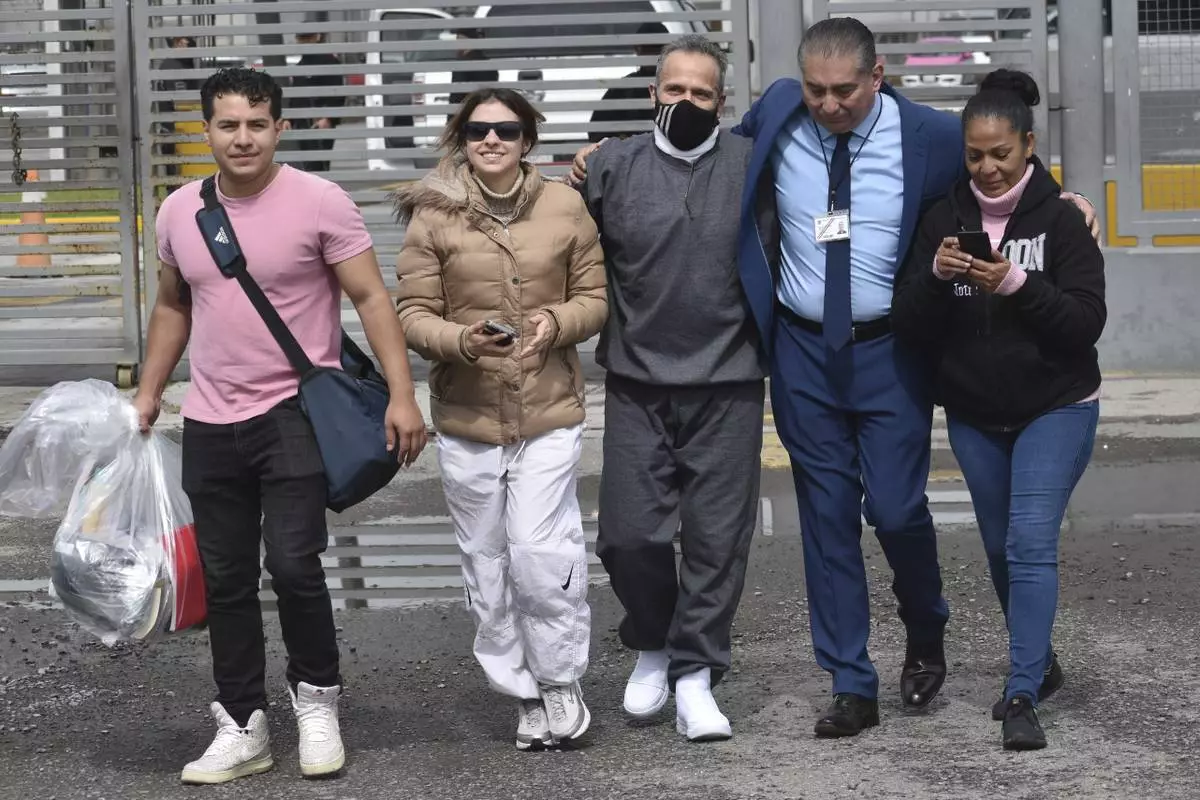
Israel Vallarta, center, leaves Altiplano maximum security prison surrounded by family and his lawyer after a judge ordered his release in Almoloya, near Mexico City, Friday, Aug. 1, 2025. Vallarta served almost 20 years behind bars for being the leader of a kidnapping ring before a judge ruled on Thursday that the evidence didn't support the charges against him. (AP Photo/Haaron Alvarez)
Israel Vallarta, second from left, leaves Altiplano maximum security prison after a judge ordered his release in Almoloya, near Mexico City, Friday, Aug. 1, 2025. Vallarta served almost 20 years behind bars for being the leader of a kidnapping ring before a judge ruled on Thursday that the evidence didn't support the charges against him. (AP Photo/Haaron Alvarez)
Israel Vallarta, second from left, facing camera, gets hugs from his family as he leaves Altiplano maximum security prison after a judge ordered his release in Almoloya, near Mexico City, Friday, Aug. 1, 2025. Vallarta served almost 20 years behind bars for being the leader of an kidnapping ring before a judge ruled on Thursday that the evidence didn't support the charges against him. (AP Photo/Haaron Alvarez)
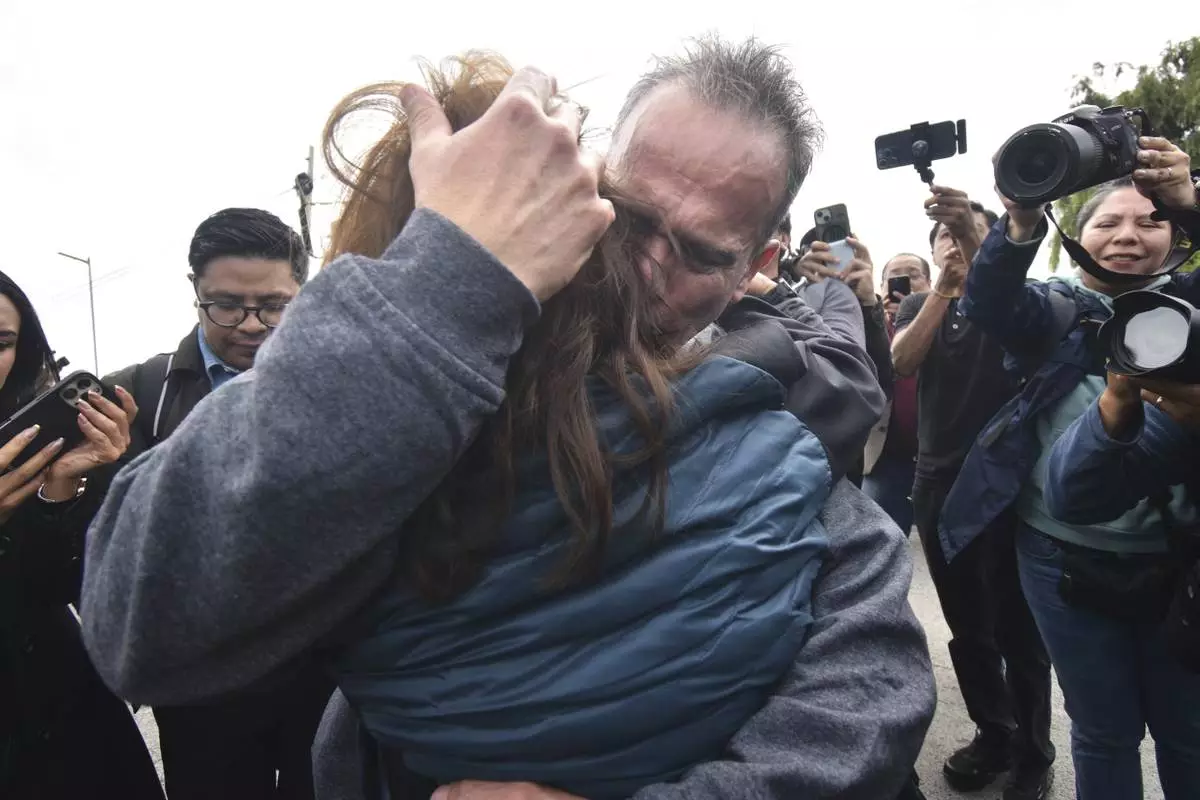
Israel Vallarta hugs his family as he leaves Altiplano maximum security prison after a judge ordered his release in Almoloya, near Mexico City, Friday, Aug. 1, 2025. Vallarta served almost 20 years behind bars for being the leader of a kidnapping ring before a judge ruled on Thursday that the evidence didn't support the charges against him. (AP Photo/Haaron Alvarez)
CARACAS, Venezuela (AP) — Venezuela’s acting President Delcy Rodríguez used her first state of the union message Thursday to advocate for opening the crucial state-run oil industry to more foreign investment following the Trump administration's pledge to seize control of Venezuelan crude sales.
For the first time, Rodríguez laid out a vision for Venezuela’s new political reality — one that challenges her government’s most deeply rooted beliefs less than two weeks after the United States captured and toppled former President Nicolás Maduro.
Under pressure from the U.S. to cooperate with its plans for reshaping Venezuela’s sanctioned oil industry, Maduro's former vice president declared that a “new policy is being formed in Venezuela."
She urged the foreign diplomats in attendance to tell investors abroad about the changes and called on lawmakers to approve oil sector reforms that would secure foreign firms' access to Venezuela’s vast reserves.
“Venezuela, in free trade relations with the world, can sell the products of its energy industry,” she said.
The Trump administration has said it plans to control future oil export revenues to ensure it benefits the Venezuelan people.
In that vein, Rodríguez described cash from the oil sales flowing into two sovereign wealth funds, one to support crisis-stricken health services and another to bolster public infrastructure, much of which was built under Maduro’s predecessor, Hugo Chávez, and has since deteriorated.
These days the country's hospitals are so poorly equipped that patients are asked to provide supplies needed for their care, from syringes to surgical screws.
While Rodríguez criticized the U.S. capture of Maduro and referred to a “stain on our relations," she also promoted the resumption of diplomacy between the historic adversaries. Her succinct, 44-minute speech and mollifying tone marked a dramatic contrast to her predecessors' fiery rants against U.S. imperialism that often went on for hours.
“Let us not be afraid of diplomacy,” Rodriguez. “I ask that politics not be transformed, that it not begin with hatred and intolerance.”
The day before, she gave a 4-minute briefing to the media to say her government would continue releasing prisoners detained under Maduro's harsh rule. But human rights groups have verified just a fraction of the releases that she claimed took place.
Rodríguez appears to be threading a needle.
A portrait of Maduro and his wife, Cilia Flores, was displayed next to her as she spoke. She called for the U.S. government to "respect the dignity" of Maduro, who is being held in a Brooklyn jail after pleading not guilty to drug-trafficking charges. She portrayed herself as defending Venezuela's sovereignty even as the country warmed up to the U.S. with dizzying speed.
“If one day, as acting president, I have to go to Washington, I will do so standing up, walking, not being dragged," she said. "I'll go standing tall ... never crawling.”
Rodríguez delivered her speech as Venezuela's Nobel Prize-winning opposition leader María Corina Machado was the one in Washington to meet President Donald Trump.
Since Maduro's ouster, Trump has frozen Machado out of discussions about the nation's political fate while embracing Rodríguez, praising Maduro’s long-time loyalist as a “terrific person” after holding his first known phone call with her on Wednesday.
Machado, whose party is considered to have won the tumultuous 2024 presidential elections despite Maduro's claims of victory, said she presented her Nobel Peace Prize medal to Trump during their closed-door conversation.
Emerging from the White House afterward, she greeted dozens of cheering supporters. "We can count on President Trump,” she told them, without elaborating.
Her role in Venezuelan politics remains uncertain as Rodríguez’s government has been effectively relieved of having to hold elections for the foreseeable future.
Machado’s meeting with Trump received no coverage in Venezuela.
The country's state-run TV still pumps out a steady stream of pro-government images, including various statements from Iranian and Russian officials decrying “U.S. aggression" and wall-to-wall coverage of state-orchestrated rallies demanding Maduro's return.
Crowds of teachers on Thursday marched through the streets of Venezuela’s capital, Caracas, carrying posters condemning the U.S. for “kidnapping” Maduro and chanting slogans in support of the government. National police wearing riot gear were everywhere. Pro-government graffiti scrawled across city walls read: “To doubt is to betray."
“They've kept the same anti-imperialist rhetoric going, but more moderated," said David Smilde, a Venezuela expert at Tulane University who has studied Venezuela for 30 years. “Their idea is to give Trump everything he wants economically, but stay the course politically."
On the streets of central Caracas, most Venezuelans going about their days declined to be interviewed about their opinions, fearful of government reprisals as Maduro's security apparatus remains intact. Others were simply at a loss of what to say about their country's strange new reality in which the U.S. claims to call the shots.
“It’s a complete sea of uncertainty, and the only one who now has the power to make decisions is the United States government,” said Pablo Rojas, 28, a music producer.
He said he was following Trump's meeting with Machado closely "to see if she takes a leadership position, if they consider her ready to lead the country or be a candidate." He shook his head in puzzlement. “It’s impossible to know what will happen.”
Associated Press writers Isabel DeBre in Buenos Aires, Argentina, and Megan Janetsky in Mexico City contributed to this report.
Follow AP’s coverage of Latin America and the Caribbean at https://apnews.com/hub/latin-america
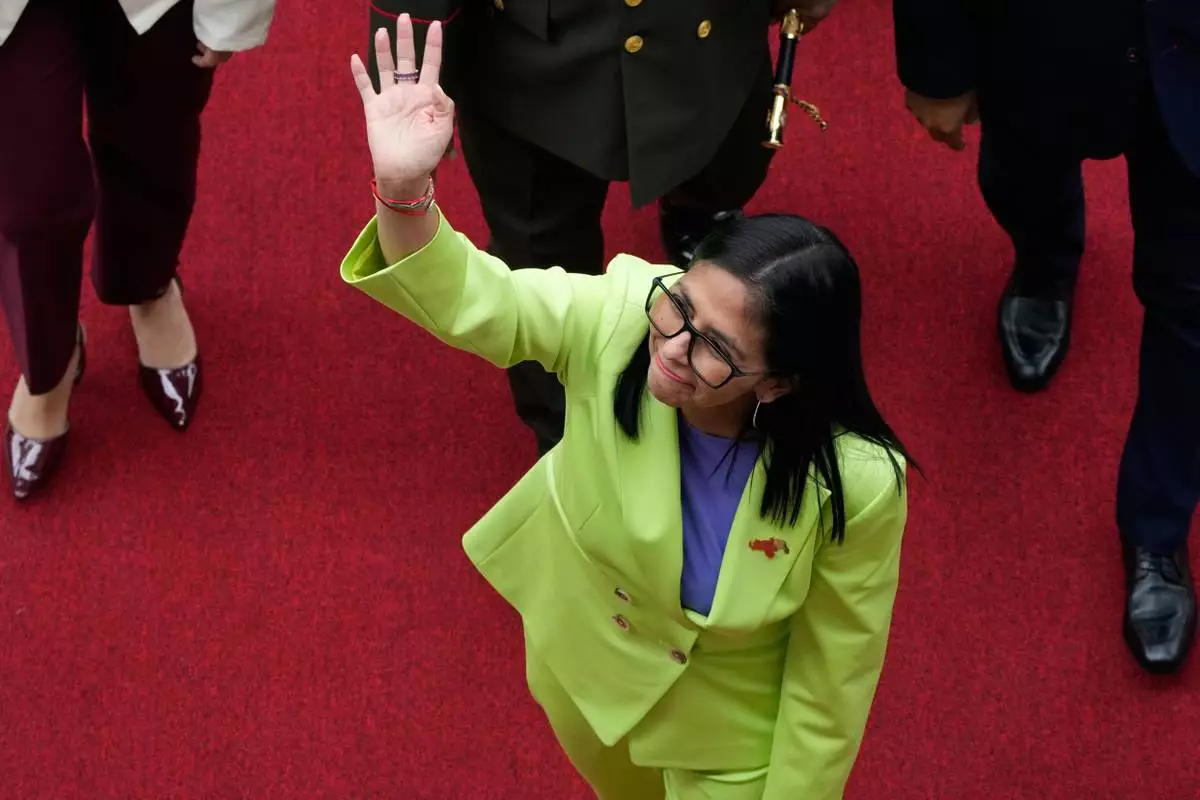
Venezuela's acting President Delcy Rodriguez arrives at the National Assembly in Caracas, Venezuela, Thursday, Jan. 15, 2026. (AP Photo/Ariana Cubillos)
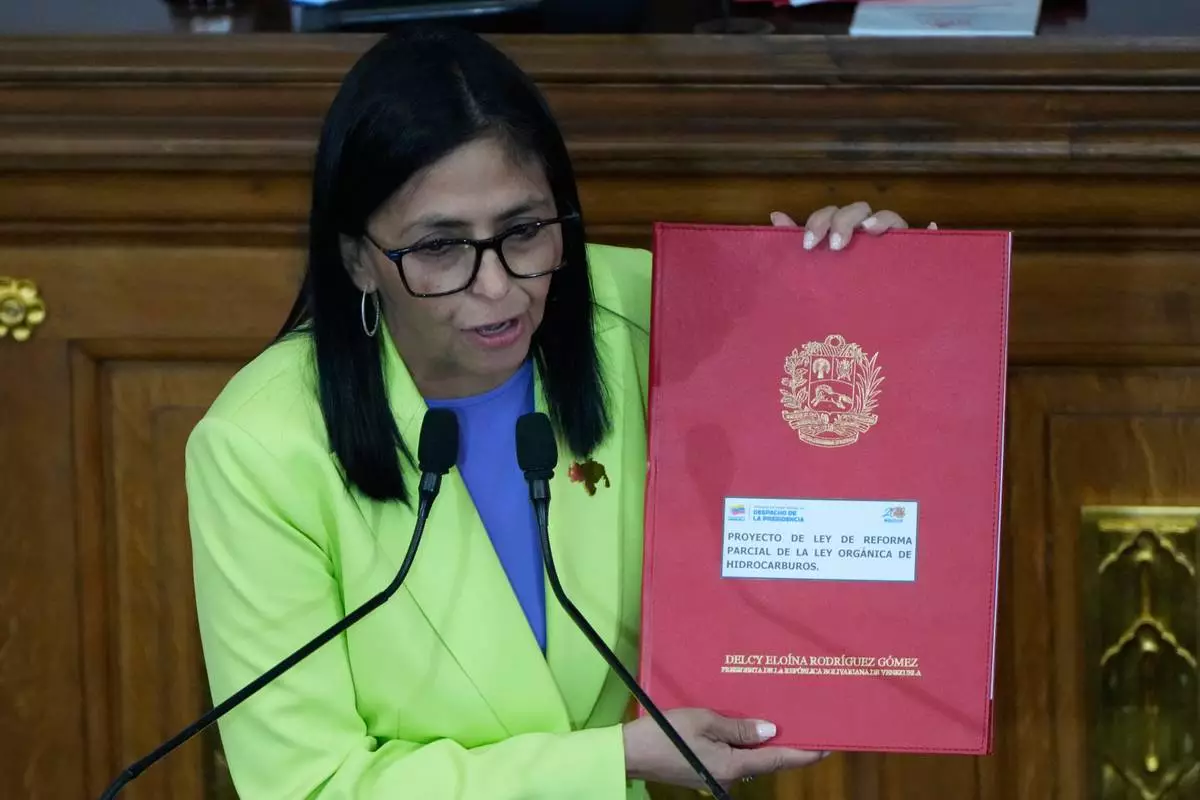
Venezuela's acting President Delcy Rodriguez delivers her first state of the union address at the National Assembly in Caracas, Venezuela, Thursday, Jan. 15, 2026. (AP Photo/Ariana Cubillos)
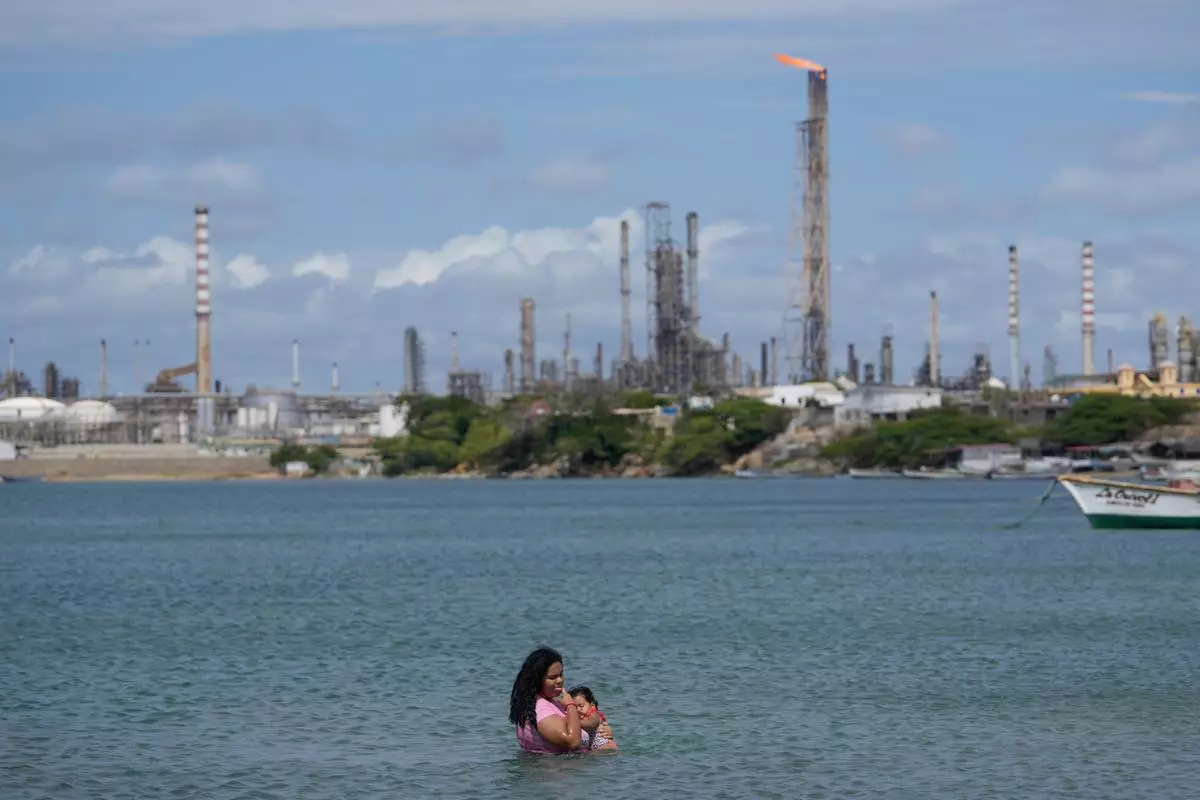
Ceylis Mendez and her daughter Zoe cool off in the Gulf of Venezuela in front of the Cardon oil refinery off the shore of Punta Cardon, Venezuela, Wednesday, Jan. 14, 2026. (AP Photo/Matias Delacroix)
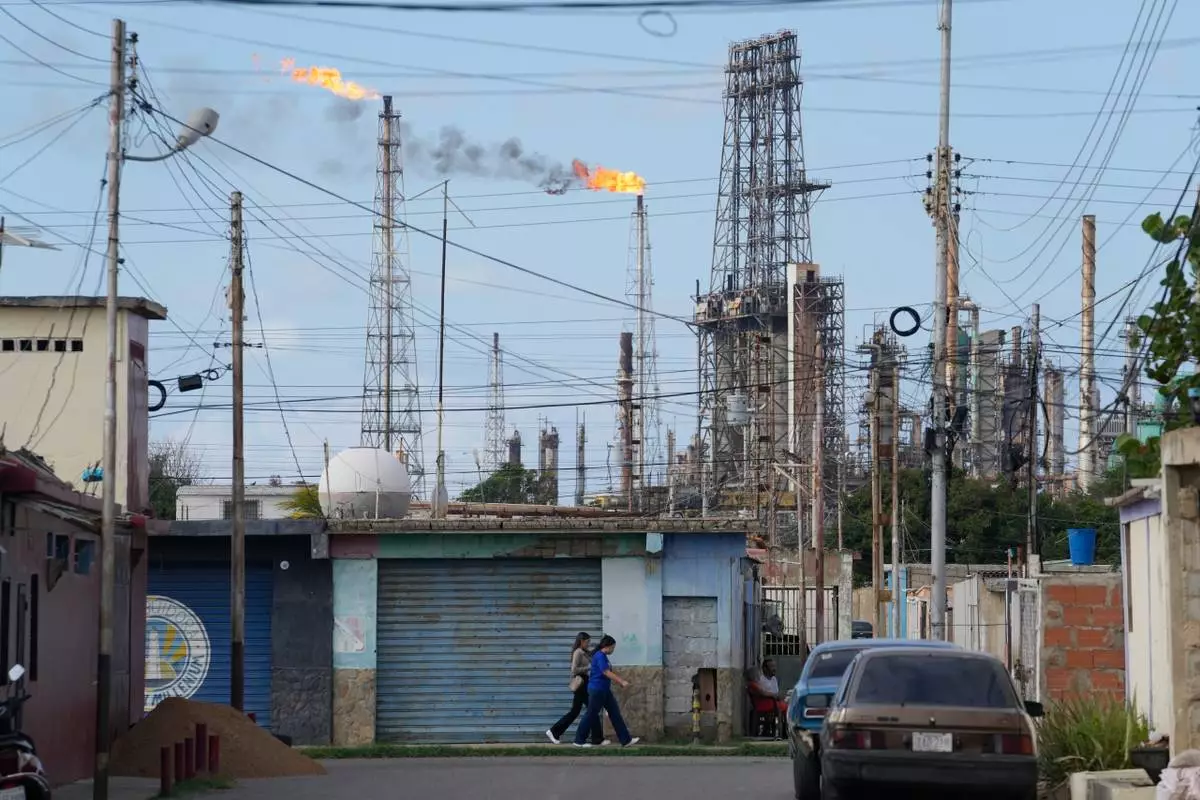
Flames rise from flare stacks at the Amuay refinery in Los Taques, Venezuela, Wednesday, Jan. 14, 2026. (AP Photo/Matias Delacroix)
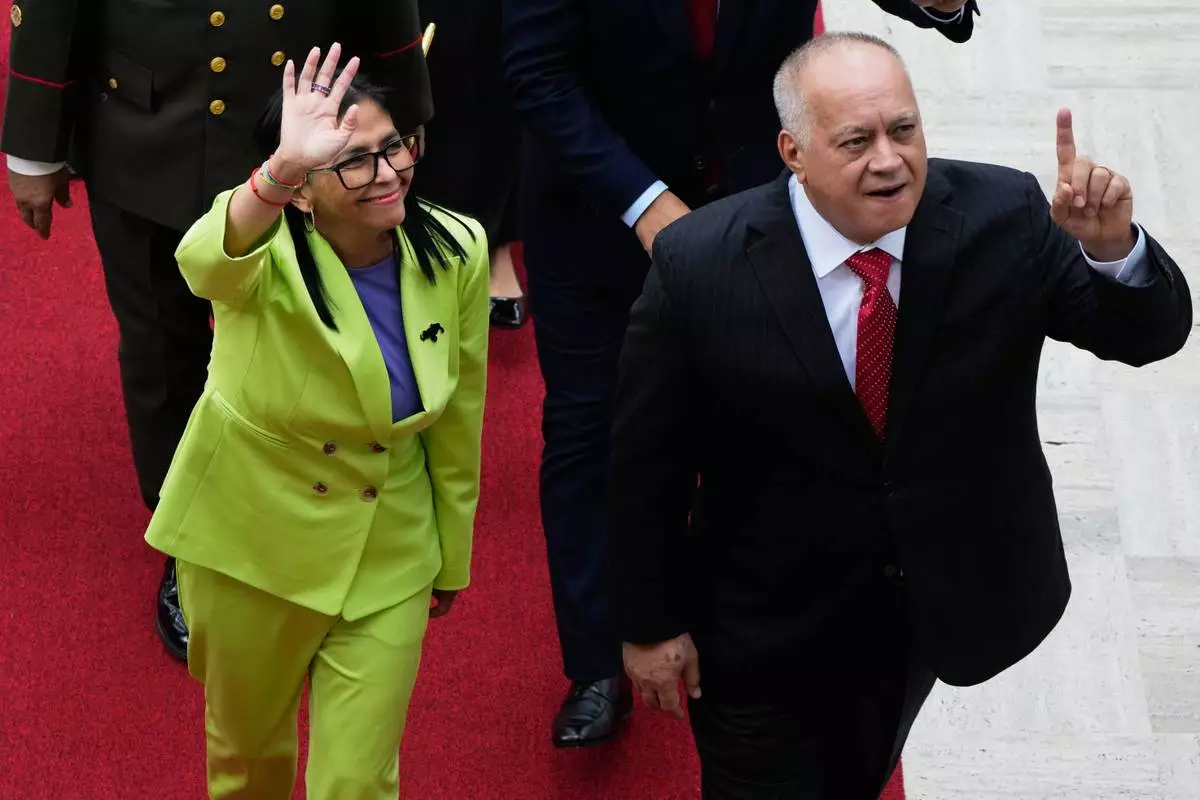
Venezuela's acting President Delcy Rodriguez, left, and Interior Minister Diosdado Cabello arrive at the National Assembly in Caracas, Venezuela, Thursday, Jan. 15, 2026. (AP Photo/Ariana Cubillos)
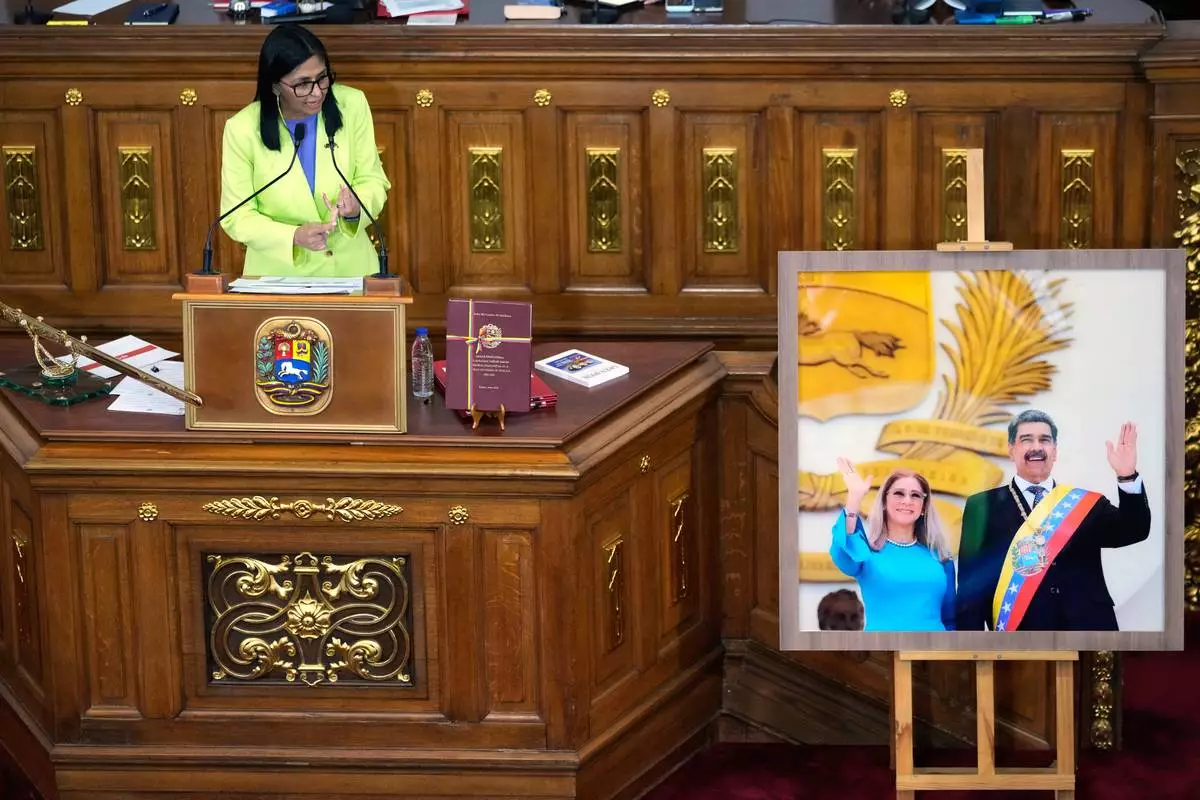
Venezuela's acting President Delcy Rodriguez addresses lawmakers next to a picture of former President Nicolas Maduro and his wife Cilia Flores, at the National Assembly in Caracas, Venezuela, Thursday, Jan. 15, 2026. (AP Photo/Ariana Cubillos)
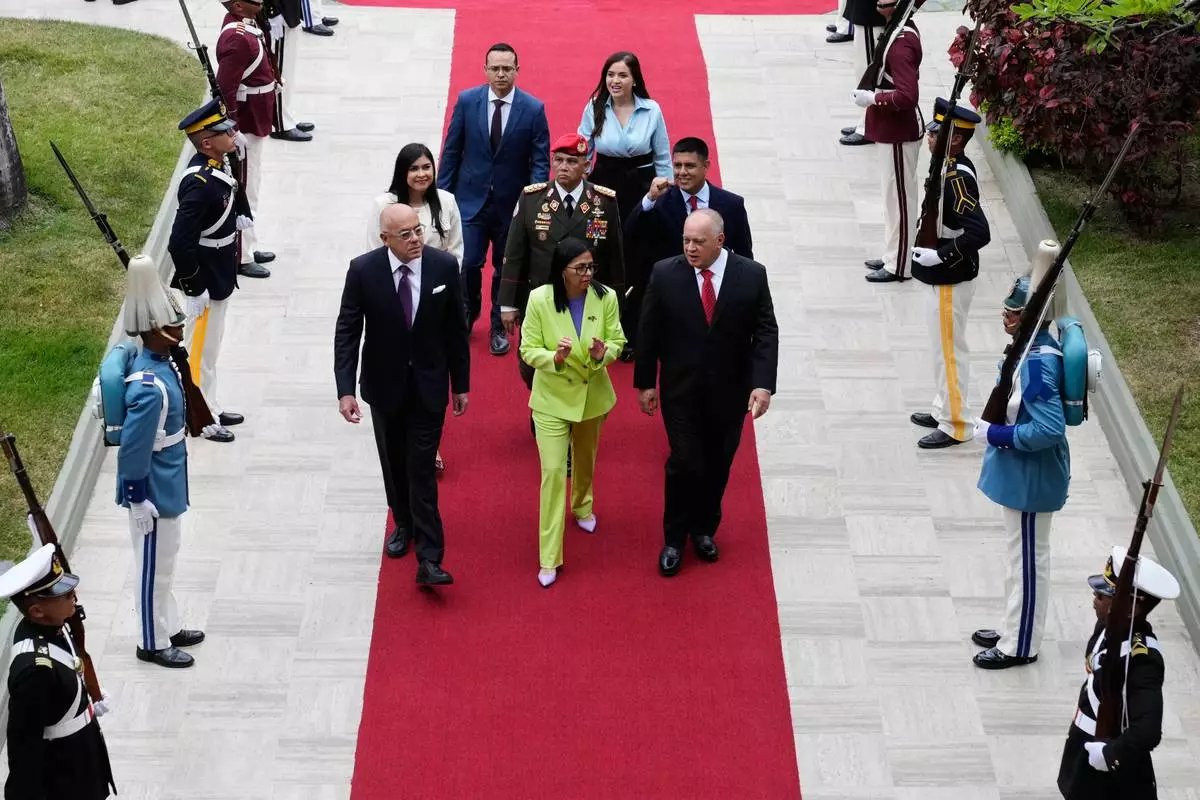
Venezuela's acting President Delcy Rodriguez, center, her brother National Assembly President, Jorge Rodriguez, left, and Interior Minister Diosdado Cabello arrive at the National Assembly in Caracas, Venezuela, Thursday, Jan. 15, 2026. (AP Photo/Ariana Cubillos)
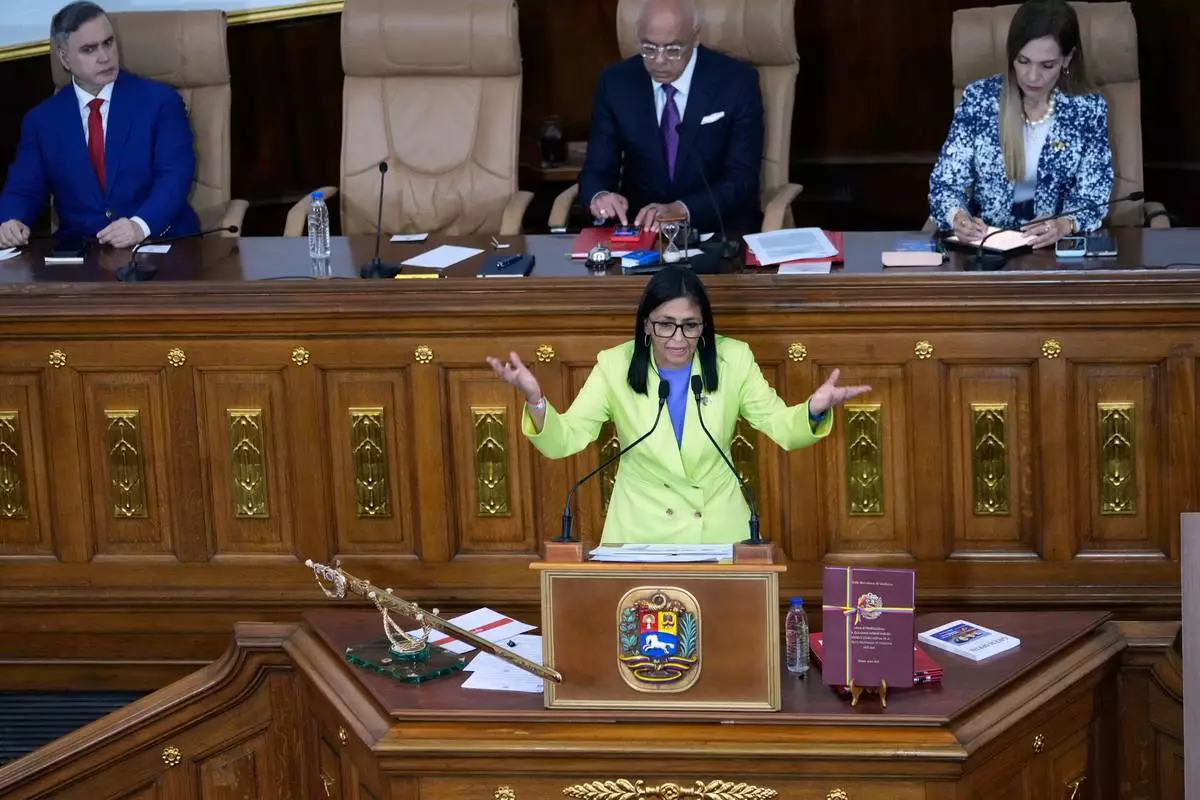
Venezuela's acting President Delcy Rodriguez addresses the National Assembly in Caracas, Venezuela, Thursday, Jan. 15, 2026. (AP Photo/Ariana Cubillos)
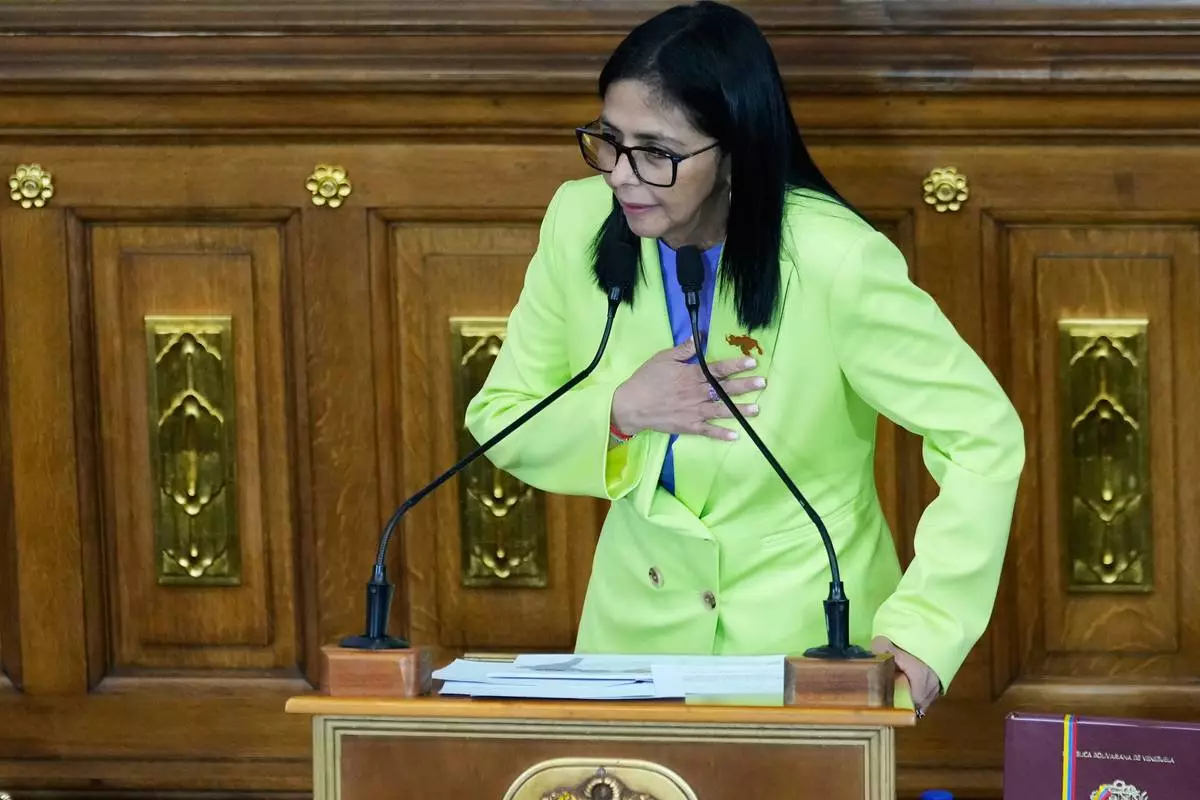
Venezuela's acting President Delcy Rodriguez addresses the National Assembly in Caracas, Venezuela, Thursday, Jan. 15, 2026. (AP Photo/Ariana Cubillos)
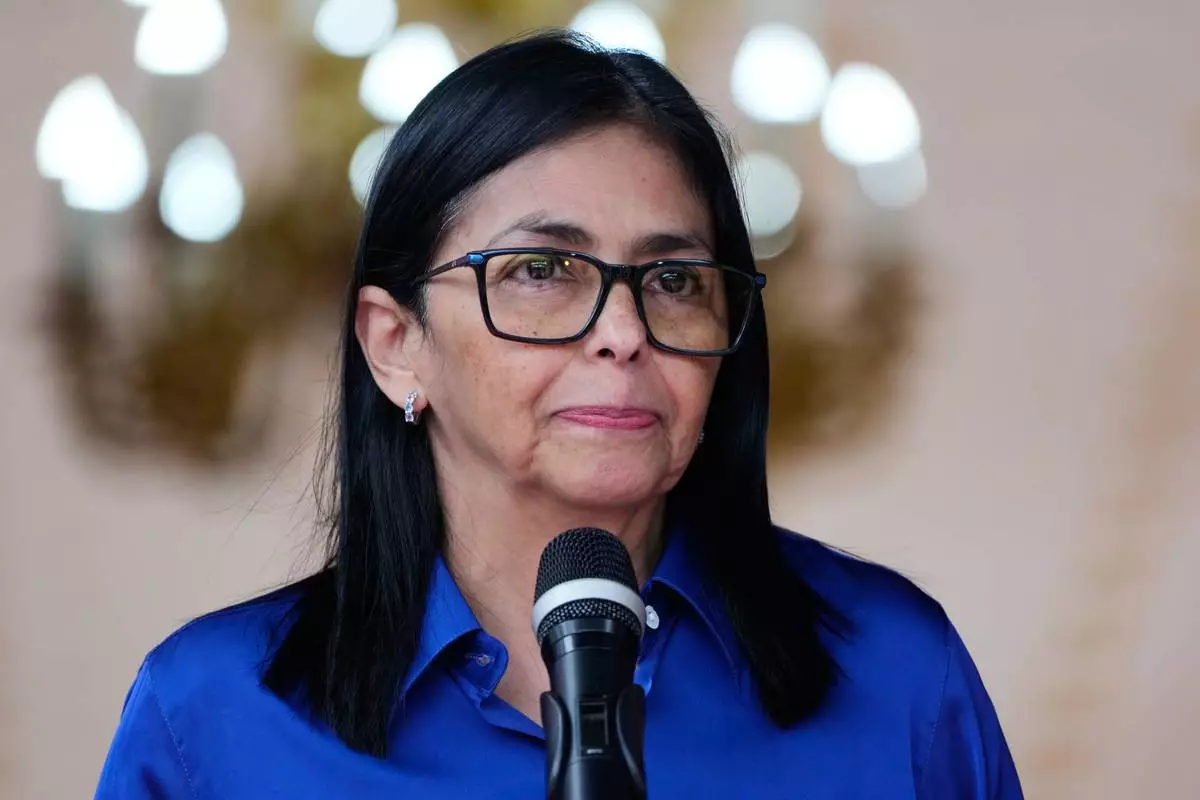
Venezuela's acting President Delcy Rodriguez makes a statement to the press at Miraflores presidential palace in Caracas, Venezuela, Wednesday, Jan. 14, 2026. (AP Photo/Ariana Cubillos)
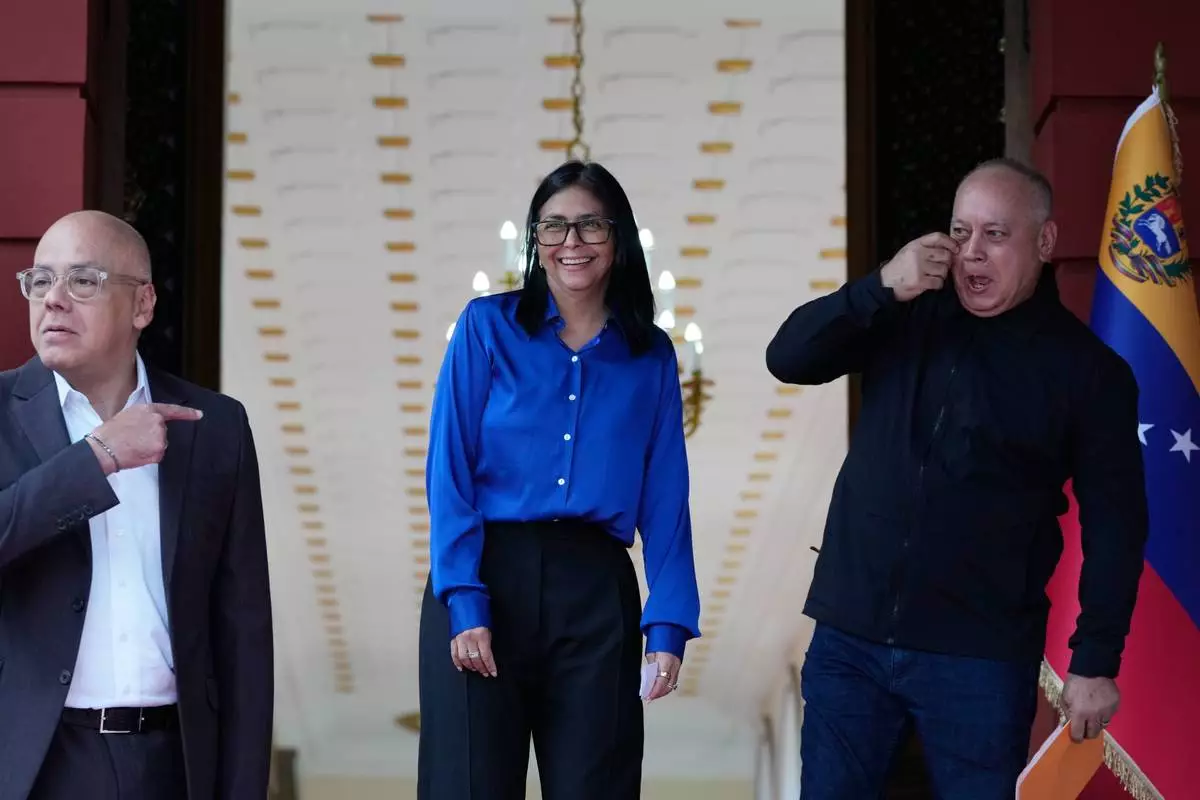
Venezuela's acting President Delcy Rodriguez, center, smiles flanked by Interior Minister Diosdado Cabello, right, and National Assembly President Jorge Rodriguez after making a statement to the press at Miraflores presidential palace in Caracas, Venezuela, Wednesday, Jan. 14, 2026. (AP Photo/Ariana Cubillos)