Scientific Committee on Vector-borne Diseases releases consensus statement on prevention and control of chikungunya fever
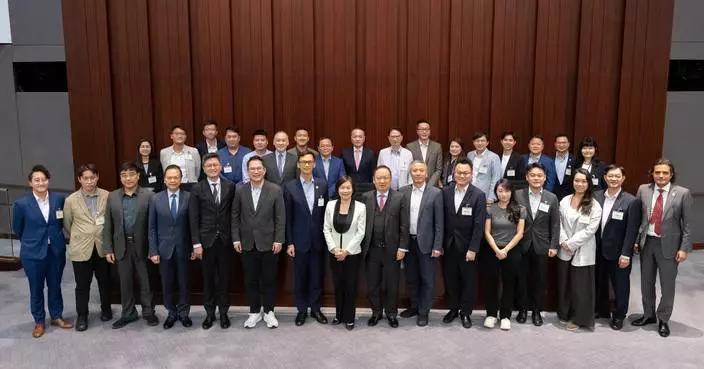
In response to the recent spike in chikungunya fever (CF) cases in multiple regions worldwide, the Scientific Committee on Vector-borne Diseases (SCVBD) under the Centre for Health Protection (CHP) of the Department of Health convened a meeting today (August 4) to review the recent epidemiological data and corresponding prevention and control strategies for CF in Hong Kong. The SCVBD noted that the Government has already implemented a series of preventive measures against CF.
The consensus statement by the SCVBD provided a risk assessment for Hong Kong and recommended ongoing measures for the Government to mitigate the risk of CF imported cases and potential local transmission.
Risk assessment
CF is caused by the chikungunya virus and is mainly transmitted by Aedes mosquitoes. According to the World Health Organization (WHO), CF cases have been recorded in more than 110 countries/regions. As of early June this year, over 220 000 cases had been reported in 14 countries/regions worldwide. Of these cases, about 80 were fatal. CF is endemic in parts of Asia, with concurrent circulation alongside dengue and Zika viruses. Since the end of June this year, there were over 7 000 cases recorded in Foshan City, Guangdong Province, with majority of cases occurring in Shunde District. All cases were mild, with no severe or fatal cases.
A total of one CF case has been recorded in Hong Kong this year, which is an imported case. No local cases have been recorded. Due to the increase in temperature and rainfall in summer, mosquito infestation might be aggravated in Hong Kong. In addition, members of the public travel more frequently during summer holidays to regions where mosquito-borne diseases are endemic. As a result, Hong Kong has a high risk of occurrence of importation of CF cases again, leading to the potential risk of local transmission.
Recommended measures
The SCVBD endorsed the following ongoing and corresponding preventive and control measures implemented by the Government:
 Enhanced Surveillance: maintain close monitoring of global and neighbouring regions' CF situations, including keeping abreast of the latest situation of CF through the communicable disease notification mechanism between Guangdong, Hong Kong and Macao. Continue to update doctors and hospitals on the latest epidemiological information and remind healthcare professionals to remain vigilant.
Laboratory testing: enhance local testing capabilities to ensure rapid diagnosis of suspected cases.
Vector surveillance and control: departments to collaborate with relevant sectors to strengthen vector surveillance and mosquito control during the summer. Pay attention to high risk spots and follow-up. The Government should also explore the latest development of mosquito control methods.
Case investigation and control measures: conduct prompt epidemiological investigations and vector surveys upon case detection; arrange patients to be admitted to hospital to receive treatment in mosquito-free environments.
Port health measures and travel advice: maintain inspections at boundary control points for vector control and environmental hygiene; maintain close liaison with industry stakeholders and provide health advice to them; strengthen health education for outgoing and returning travellers to affected areas.
Risk communication and publicity: disseminate information on CF and preventive measures through different channels, and provide schools and institutions with guidance on anti-mosquito measures.
Vaccine effectiveness monitoring: there is so far insufficient scientific evidence on efficacy and safety of existing CF vaccines. The Government should monitor the latest recommendations from the WHO and overseas health authorities.
Enhanced Surveillance: maintain close monitoring of global and neighbouring regions' CF situations, including keeping abreast of the latest situation of CF through the communicable disease notification mechanism between Guangdong, Hong Kong and Macao. Continue to update doctors and hospitals on the latest epidemiological information and remind healthcare professionals to remain vigilant.
Laboratory testing: enhance local testing capabilities to ensure rapid diagnosis of suspected cases.
Vector surveillance and control: departments to collaborate with relevant sectors to strengthen vector surveillance and mosquito control during the summer. Pay attention to high risk spots and follow-up. The Government should also explore the latest development of mosquito control methods.
Case investigation and control measures: conduct prompt epidemiological investigations and vector surveys upon case detection; arrange patients to be admitted to hospital to receive treatment in mosquito-free environments.
Port health measures and travel advice: maintain inspections at boundary control points for vector control and environmental hygiene; maintain close liaison with industry stakeholders and provide health advice to them; strengthen health education for outgoing and returning travellers to affected areas.
Risk communication and publicity: disseminate information on CF and preventive measures through different channels, and provide schools and institutions with guidance on anti-mosquito measures.
Vaccine effectiveness monitoring: there is so far insufficient scientific evidence on efficacy and safety of existing CF vaccines. The Government should monitor the latest recommendations from the WHO and overseas health authorities.
The SCVBD affirmed that Hong Kong's multi-pronged approach on emergency preparedness has effectively prevented local CF transmission to date. Sustained implementation of these measures is crucial to address the importation risk.
The consensus statement of the SCVBD has been uploaded to the CHP website.
Source: AI-found images
Hong Kong Customs detects two dangerous drugs cases and seizes suspected drugs worth about $7.95 million
Hong Kong Customs detected two dangerous drugs cases in Tseung Kwan O and Hong Kong International Airport respectively yesterday (May 21) and today (May 22), and seized a total of about 21.8 kilograms of assorted drugs with a total estimated market value of about $7.95 million. Two men and one woman, aged between 38 and 49, were arrested.
In the first case, Customs officers intercepted a 48-year-old man and a 49-year-old woman in Tseung Kwan O during an anti-narcotics operation yesterday afternoon. About 3.8kg of suspected drugs, including ketamine, methamphetamine, etomidate capsules, psilocybin mushrooms, MDMA and a batch of suspected drug packaging paraphernalia were found in their residence in the same district. They were then arrested.
In the second case, a 38-year-old male passenger arrived in Hong Kong from Amsterdam, the Netherlands, today. During customs clearance, Customs officers found about 18kg of suspected ketamine inside his check-in suitcase and 33 sticks of duty-not-paid cigarette inside his carry-on baggage. The man was subsequently arrested.
The arrested man and woman in the first case have been jointly charged with one count of trafficking in a dangerous drug and one count of possession of apparatus fit and intended for the inhalation of a dangerous drug. The case will be brought up at the Kwun Tong Magistrates' Courts tomorrow (May 23), while an investigation is ongoing for the second case.
Customs will continue to step up enforcement against drug trafficking activities through intelligence analysis. The department also reminds members of the public to stay alert and not participate in drug trafficking activities for monetary return. They must not accept hiring or delegation from another party to carry controlled items into and out of Hong Kong. They are also reminded not to carry unknown items for other people.
Customs will continue to apply a risk assessment approach and focus on selecting passengers from high-risk regions for clearance to combat transnational drug trafficking activities.
Under the Dangerous Drugs Ordinance, trafficking in a dangerous drug is a serious offence. The maximum penalty upon conviction is a fine of $5 million and life imprisonment.
Under the Dutiable Commodities Ordinance, cigarettes are dutiable goods to which the DCO applies. Any person who imports, deals with, possesses, sells or buys illicit cigarettes commits an offence. The maximum penalty upon conviction is a fine of $2 million and imprisonment for seven years.
Members of the public may report any suspected drug trafficking activities to Customs' 24-hour hotline 182 8080 or its dedicated crime-reporting email account (crimereport@customs.gov.hk) or online form (eform.cefs.gov.hk/form/ced002).
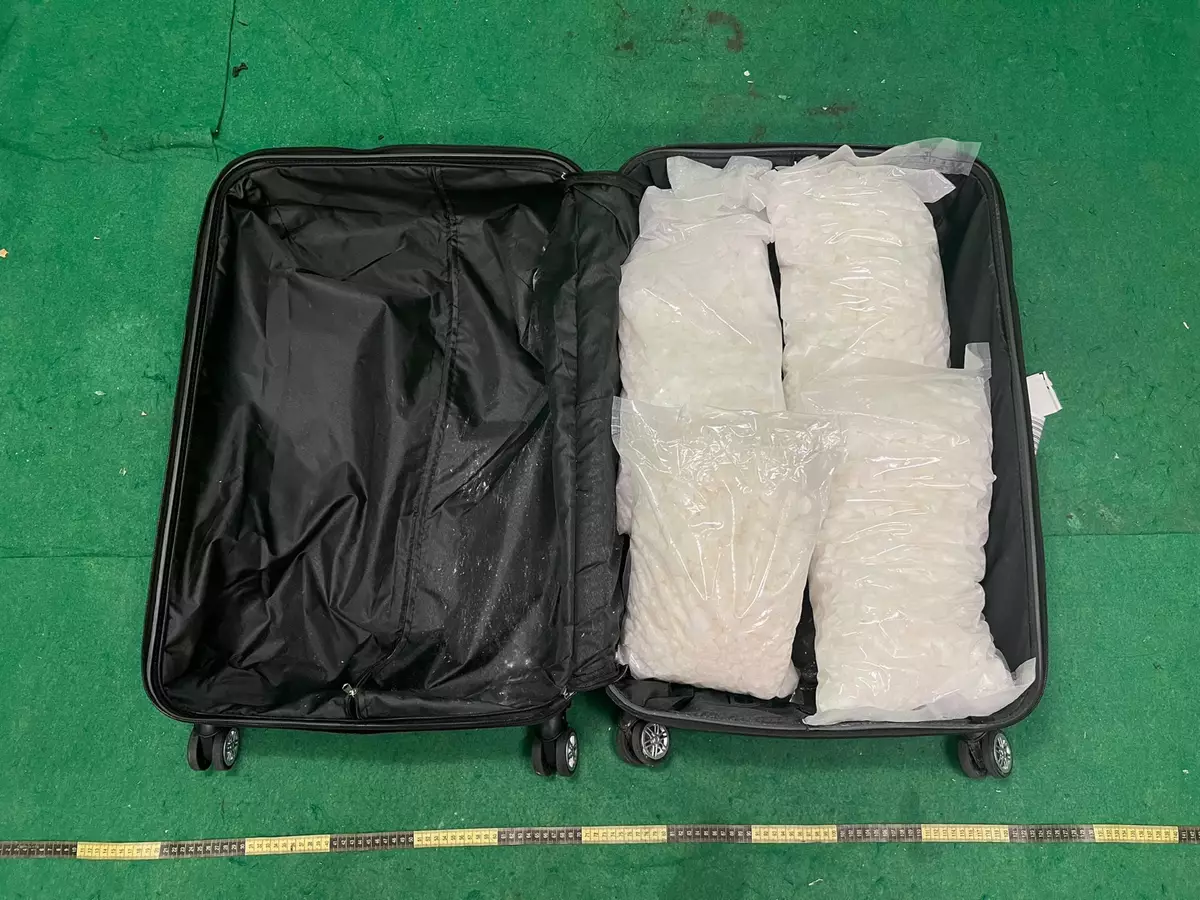
Hong Kong Customs detects two dangerous drugs cases and seizes suspected drugs worth about $7.95 million Source: HKSAR Government Press Releases
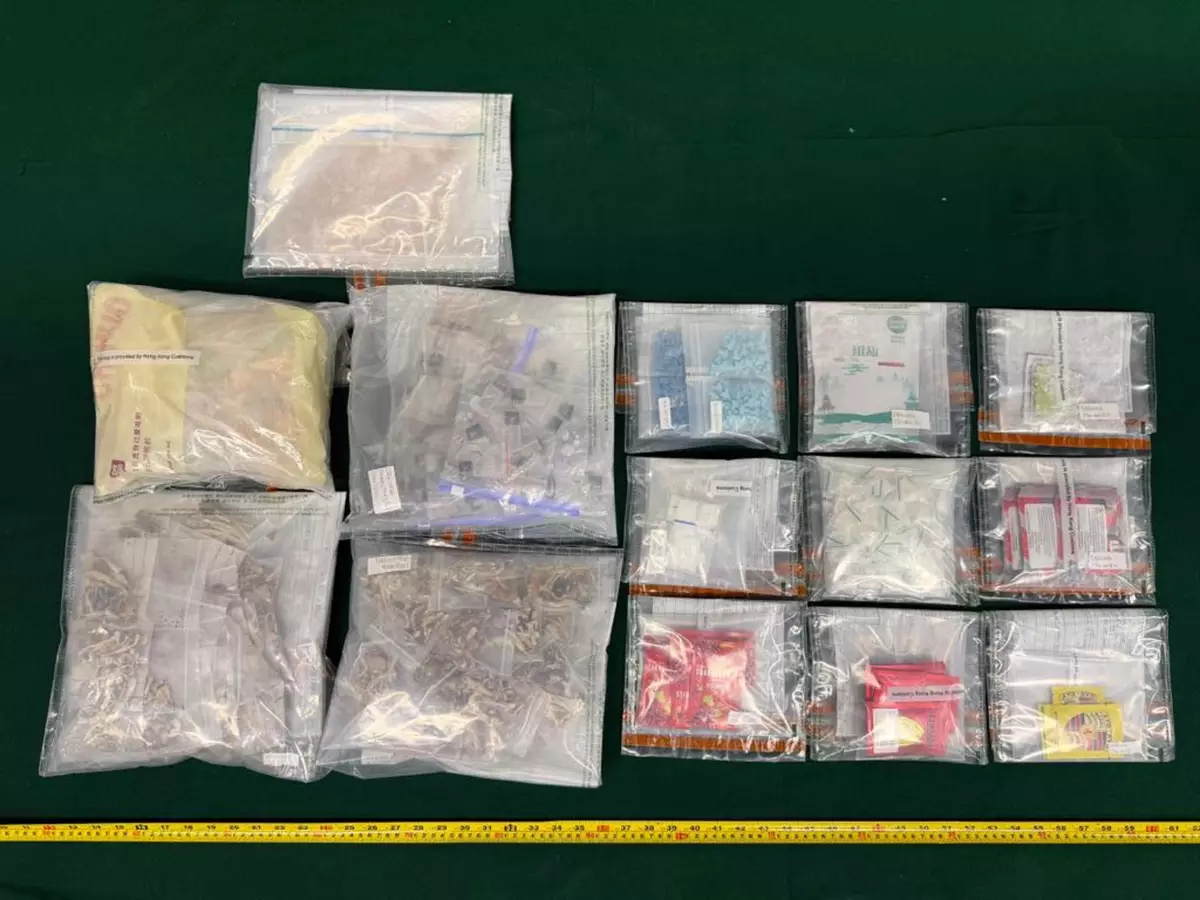
Hong Kong Customs detects two dangerous drugs cases and seizes suspected drugs worth about $7.95 million Source: HKSAR Government Press Releases