KIGALI, Rwanda (AP) — Rwanda on Tuesday became the third African nation to agree to accept deportees from the United States under the Trump administration's plans to send migrants to countries they have no ties with to get them off American soil.
Rwandan government spokesperson Yolande Makolo told The Associated Press in a statement that the East African country would accept up to 250 deportees from the U.S., with "the ability to approve each individual proposed for resettlement” under the agreement.
Makolo didn't provide a timeline for any deportees to arrive in Rwanda or say if they would arrive at once or in several batches. She said details were still being worked out.
The State Department said the U.S. “works with Rwanda on a range of mutual priorities” but wouldn't comment on details of the deportation deal and what it called diplomatic conversations with other governments.
The U.S. sent 13 men it described as dangerous criminals who were in the U.S. illegally to South Sudan and Eswatini in Africa last month and has said it is seeking more agreements with African nations. It said those deportees' home countries refused to take them back.
The U.S. has also deported hundreds of Venezuelans and others to Costa Rica, Panama and El Salvador under President Donald Trump’s plans to expel people who he says entered the U.S. illegally.
In March, using an 18th-century wartime law, the U.S. deported more than 200 Venezuelan immigrants to El Salvador, where they were immediately transferred to a mega-prison known as the Terrorism Confinement Center, or CECOT, which was built to hold alleged gang members. Human rights groups have documented hundreds of deaths as well as cases of torture inside its walls.
Rwanda attracted international attention and some outrage when it struck a deal in 2022 with the U.K. to accept migrants who had arrived in the U.K. to seek asylum. Under that proposed deal, their claims would have been processed in Rwanda and, if successful, they would have stayed there.
The contentious agreement was criticized by rights groups and others as being unethical and unworkable and was ultimately scrapped when Britain's new Labour government took over. Britain’s Supreme Court ruled in 2023 that the deal was unlawful because Rwanda was not a safe third country for migrants.
The Trump administration has come under scrutiny for the African countries it has entered into secretive deals with to take deportees. It sent eight men from South Sudan, Cuba, Laos, Mexico, Myanmar and Vietnam to South Sudan in early July after a U.S. Supreme Court ruling cleared the way for their deportations.
They were held for weeks in a converted shipping container at an American military base in Djibouti as the legal battle over their deportations played out. South Sudan, which is tipping toward civil war, has declined to say where the men are being held or what their fate is.
The U.S. also deported five men who are citizens of Vietnam, Jamaica, Cuba, Yemen and Laos to the southern African kingdom of Eswatini, where the government said they will be held in solitary confinement in prison for an undetermined period of time.
A human rights lawyer in Eswatini said the men are being denied access to legal representation there and has taken authorities to court. Eswatini is Africa's last absolute monarchy, and the king rules over government and political parties are effectively banned.
Both South Sudan and Eswatini have declined to give details of their agreements with the U.S.
Rwanda, a relatively small country of some 15 million people, has long stood out on the continent for its recovery from a genocide that killed over 800,000 people in 1994. It has promoted itself under longtime President Paul Kagame as an example of stability and development, but human rights groups allege there are also deadly crackdowns on any perceived dissent against Kagame, who has been president for 25 years.
Government spokesperson Makolo said the agreement with the U.S. was Rwanda doing its part to help with international migration issues because “our societal values are founded on reintegration and rehabilitation.”
“Those approved (for resettlement in Rwanda) will be provided with workforce training, healthcare, and accommodation support to jumpstart their lives in Rwanda, giving them the opportunity to contribute to one of the fastest-growing economies in the world over the last decade,” she said. There were no details about whether Rwanda had received anything in return for taking the deportees.
Gonzaga Muganwa, a Rwandan political analyst, said “appeasing President Trump pays.”
“This agreement enhances Rwanda’s strategic interest of having good relationships with the Trump administration,” he said.
The U.K. government estimated that its failed migration deal with Rwanda cost around $900 million in public money, including approximately $300 million in payments to Rwanda, which said it was not obligated to refund the money when the agreement fell apart.
Imray reported from Cape Town, South Africa.
AP Africa news: https://apnews.com/hub/africa
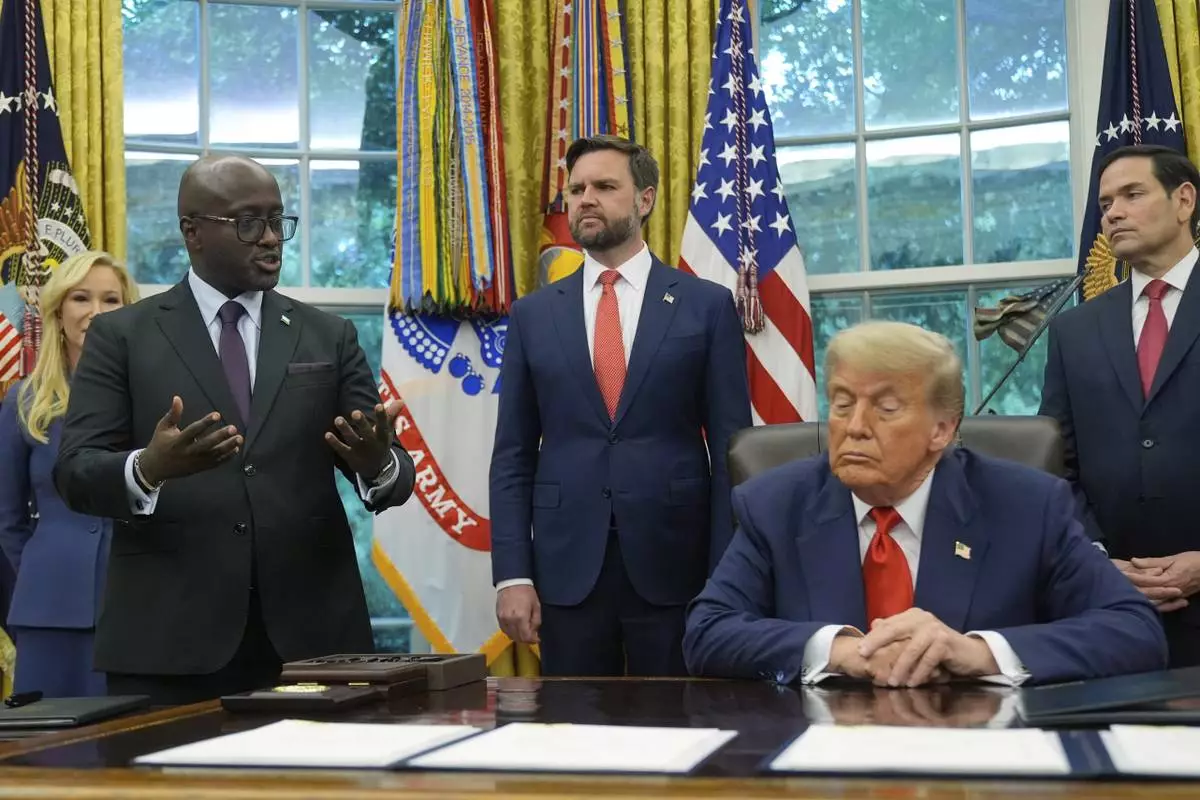
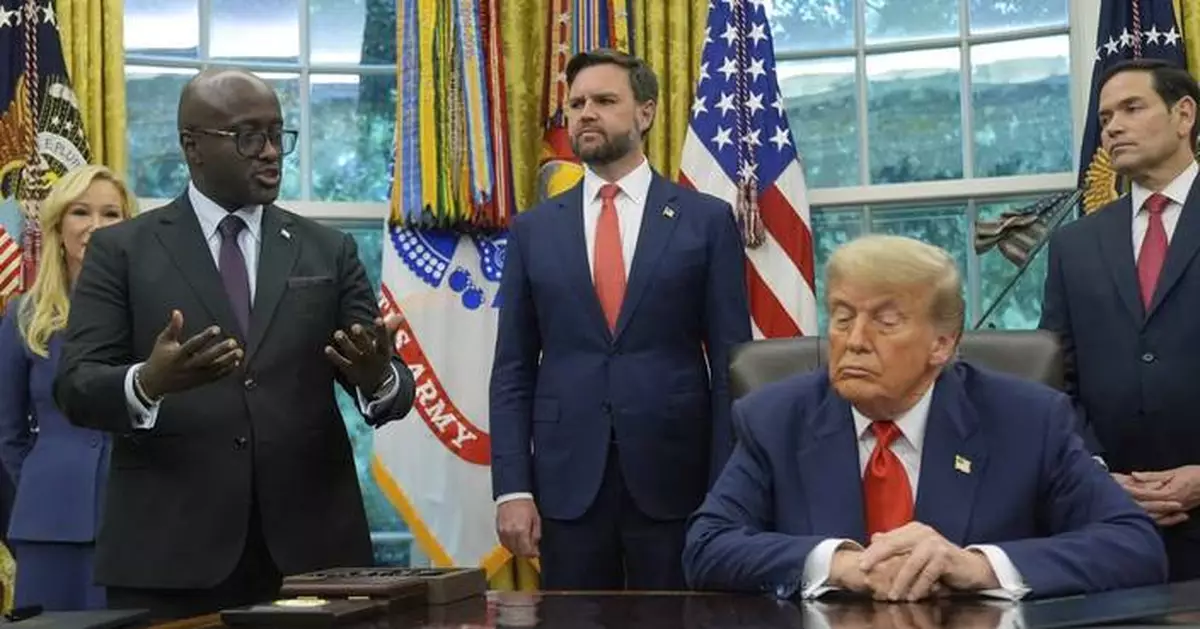
FILE -President Donald Trump listens as Rwanda's Foreign Minister Olivier Nduhungirehe speaks during a event with Congo's Foreign Minister Therese Kayikwamba Wagner, June 27, 2025, in the Oval Office at the White House in Washington, as Vice President JD Vance and Secretary of State Marco Rubio, watch. (AP Photo/Manuel Balce Ceneta), File)
BERLIN (AP) — Standing on an open truck making its way through Berlin, Anahita Safarnejad turned to the crowd of Iranian protesters marching behind her and took the microphone.
“No more dictatorship in Iran, the mullahs must go!” she shouted. Hundreds of voices echoed her slogan with the same sense of urgency and desperation.
Across Europe, thousands of exiled Iranians have taken to the streets to shout out their rage at the government of the Islamic Republic which has cracked down on protests in their homeland, reportedly killing thousands of people.
Women have taken a prominent role in organizing the protests abroad, raising their voices against the theocratic government that discriminates against them.
But beyond the anger, there’s also a sense of fear and paralysis. Iran's government has been shutting down the internet and limiting phone calls for days, making it nearly impossible for Iranians in the diaspora to find out if their families back home are safe.
Safarnejad, 34, fled Iran seven years ago. She came to Berlin to study theater but now works in a bar when she's not attending one of the almost-daily protests in the German capital.
Since the demonstrations broke out in Iran in late December, Safarnejad said she's been living in two different realities that are almost impossible to combine. The easygoing hipster life of her new hometown is a jarring contrast to the bloody protests in Iran that she's been following every minute she doesn't have to work, glued to her phone for the latest updates.
While she was initially almost euphoric that the current uprising would finally bring freedom to Iran and she'd be able to go back home, her sense of hope has turned into horror.
Safarnejad hasn't spoken to her brother, also a protester, since communications with Iran were cut off. She's been scouring video on social media showing piles of dead bodies to see if he's among the corpses.
“I'm desperate and don't know how to keep going anymore,” she cried, tears rolling down her cheeks, as she spoke to The Associated Press during Wednesday's Berlin protest.
“I can’t really switch off. I can’t really stop reading the news either," she added, her voice breaking. “Because I’m waiting all the time for the internet to be available so I can get some answers from my family.”
The young woman's horror is felt by many of the more than 300,000 Iranians living in Germany — one of the biggest exile communities in Europe and similar in numbers to France and Britain. Many of them still have family ties to their homeland, even if they left decades ago.
Mehregan Maroufi's Persian cafe and bookstore in Berlin has become a place of solace for Iranians to share their grief without many words — because they know they are all living through the same nightmare.
Maroufi, the daughter of the late Iranian author Abbas Maroufi, welcomes Iranians and everyone else at the Hedayat Cafe, where she serves Persian tea with sweets such as chocolate cake topped with barberries. She lends an ear to anyone who has to get worries off their chest.
“For some, the emotions are still too high and too strong, so to speak, and it’s impossible to talk," the 44-year-old says, adding that she, too, had to force herself to open the cafe on some mornings because the violent images coming out of Iran sucked away all her energy.
“But at least you can find compatriots here. You can talk to a little, and that helps,” she said.
She says she's been listening to and learning from the convictions her fellow Iranians express when they talk about their dreams of an Iran after Supreme Leader Ayatollah Ali Khamenei that — due to the uprising — now seems closer that ever before.
While most in the diaspora agree that the theocracy has to be toppled, ideas of what a new Iran should look like differ widely.
Adeleh Tavakoli, 62, joined a demonstration outside Britain’s Parliament in London earlier this week. She hasn't been back to Iran in 17 years but has spent decades protesting from afar against the Islamic Republic.
But with the latest wave of protests, she hopes that the Iran’s exiled Crown Prince Reza Pahlavi, the son of the shah ousted by the Islamic Revolution in 1979, will return to power. If he does, she said, she has her bag packed and is ready to get on the first flight.
“For 47 years, our country has been captured by a terrorist regime,” she said. “We’ve been the voice of Iran. All we want is our freedom and to get rid of this horrible dictatorship.”
For Maral Salmassi, who came to Germany as a child in the 1980s, history explains the calls by exiled Iranians for Pahlavi to lead the country.
“As an Iranian, as someone who comes from this culture and knows its culture and history, I can only say that we have had kings and queens for thousands of years. It is our culture," said Salmassi. She is the chairwoman and founder of the Zera Institute think tank in Berlin, which researches democracy, radicalization and extremism.
She added that Iranians make up a multi-ethnic country and "to bring them all together again, we need a constitutional monarchy that symbolically and traditionally represents our identity and reunites everyone ... and then a democratic, federal parliament where everyone is represented equally.”
However, not everyone is convinced by Pahlavi. Maryam Nejatipur, 32, who also joined the protest in Berlin, thinks her country should avoid a cult of personality.
“We don’t need something like Khamenei again. We don’t need one person,” to lead us, she said, as she burnt a portrait of the Ayatollah and used the flames to light a cigarette — an act that's become a symbol of Iranian resistance.
Safarnejad, who led the recent Berlin protest, agrees.
“I don’t belong to the left, I’m not a liberal, I’m not a monarchist,” she stressed. “I’ve been there for women’s rights, I’m for human rights, I’m for freedom.”
Fanny Brodersen and Ebrahim Noroozi, in Berlin, and Brian Melley in London contributed reporting.
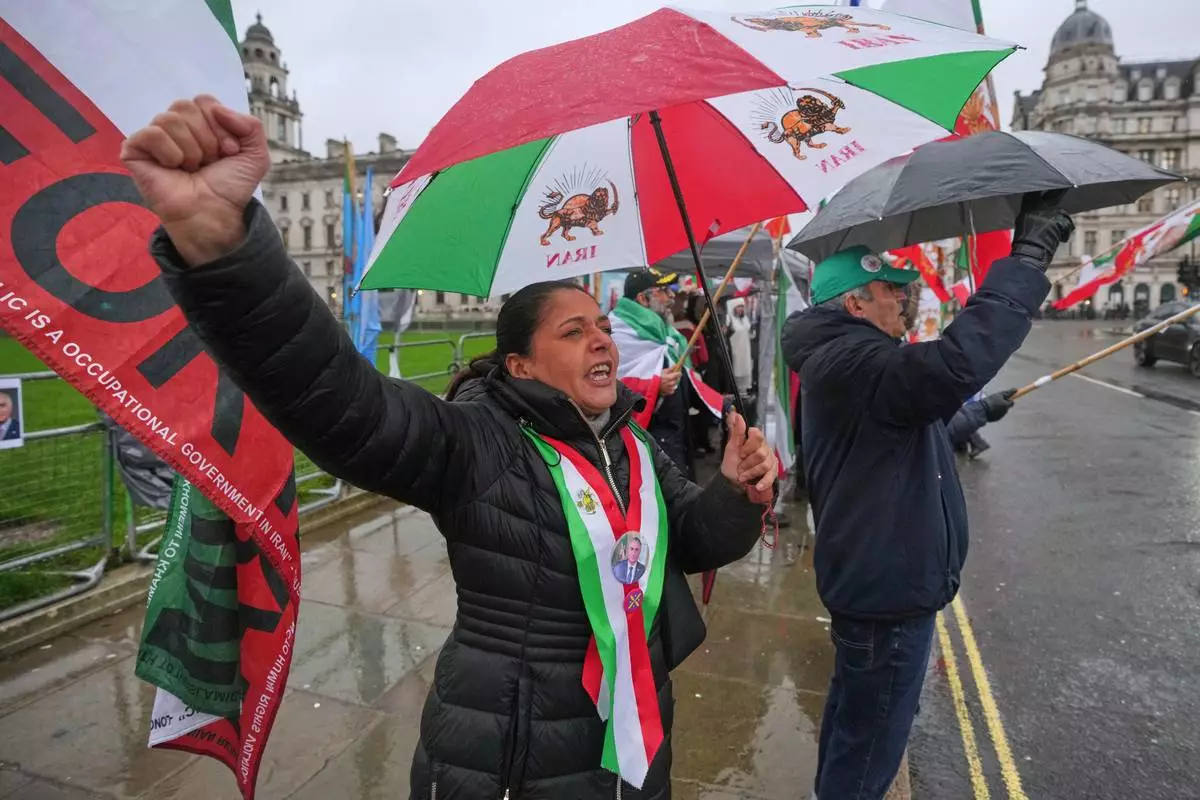
Protester Adeleh Tavakoli, left, demonstrates outside the House of Parliament, in London, Tuesday, Jan. 13, 2026. (AP Photo/Kin Cheung)
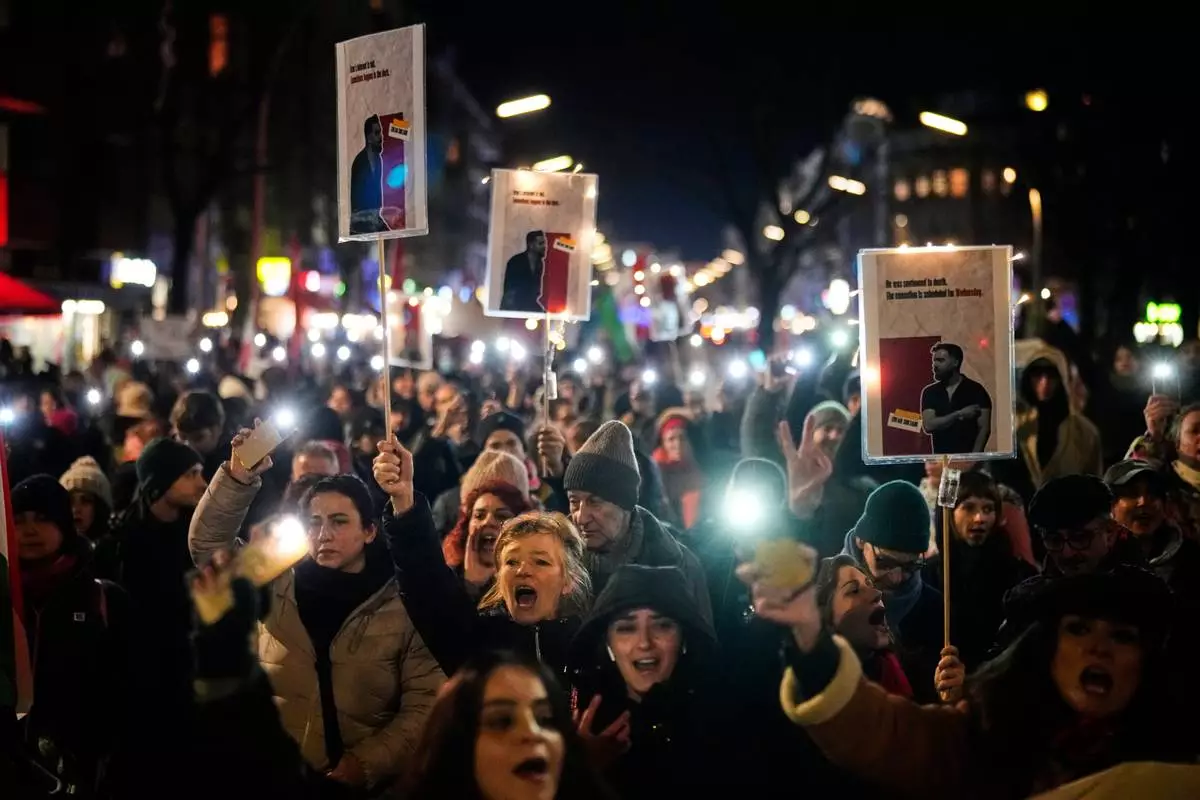
People take part in a rally in support of anti-government protests in Iran, Berlin Germany, Wednesday, June 14, 2026. (AP Photo/Ebrahim Noroozi)
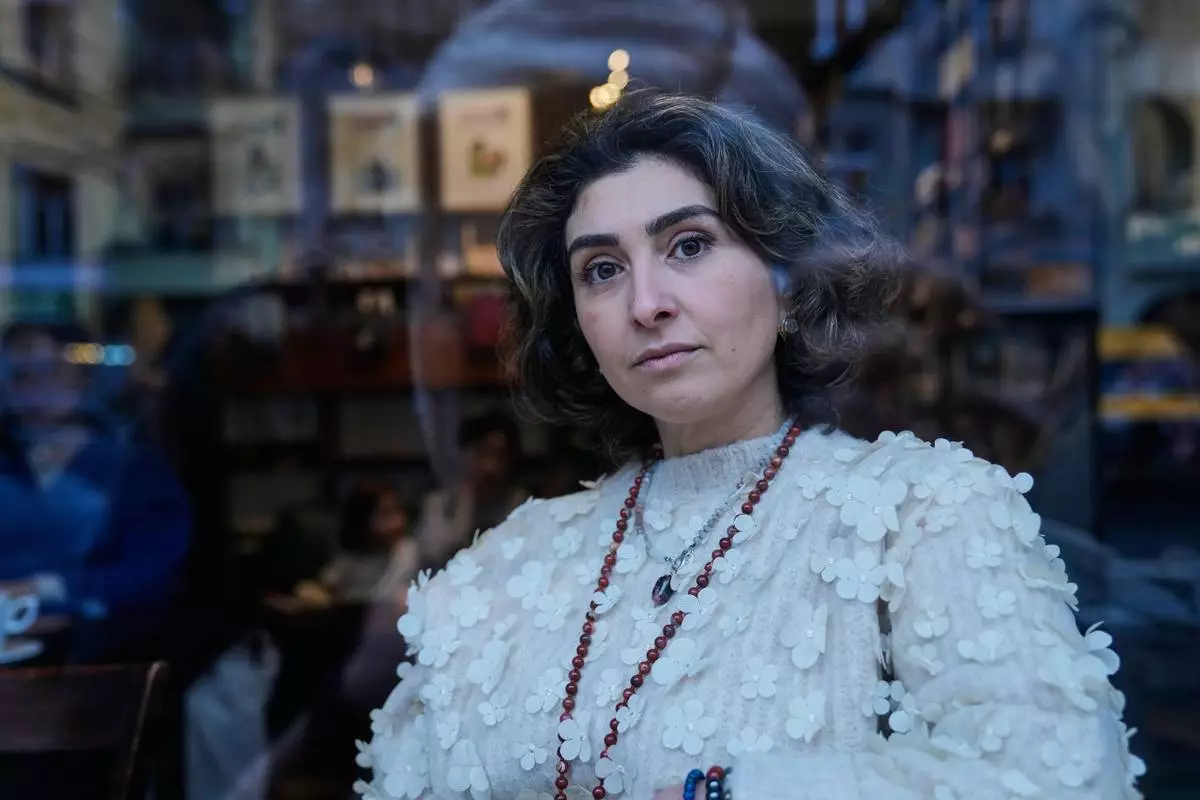
Iranian Mehregan Maroufi poses for a photo before an interview with the Associated Press in her cafe in Berlin, Germany, Thursday, Jan. 15, 2026. (AP Photo/Ebrahim Noroozi)
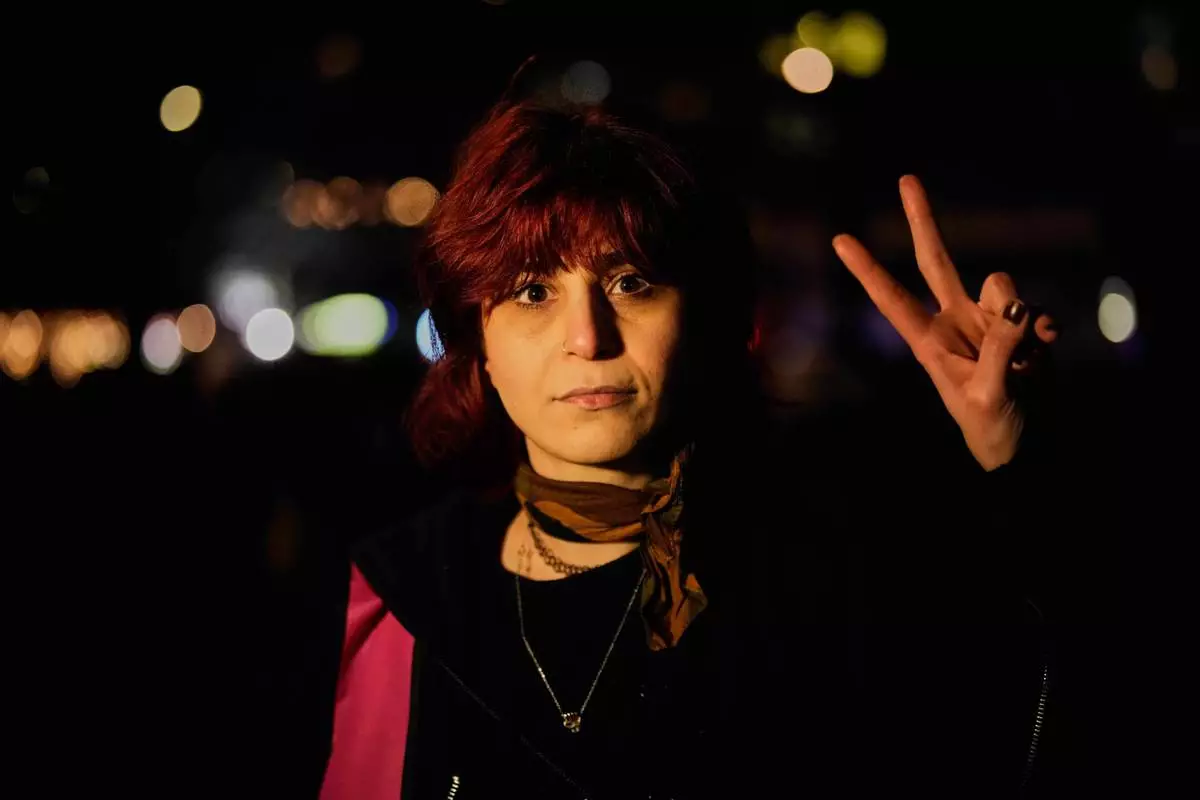
Iranian Maryam Nejatipur 32, poses for a photo after a demonstration in support of the nationwide mass protests in Iran against the government, in Berlin, Germany, Wednesday, Jan. 14, 2026. (AP Photo/Ebrahim Noroozi)
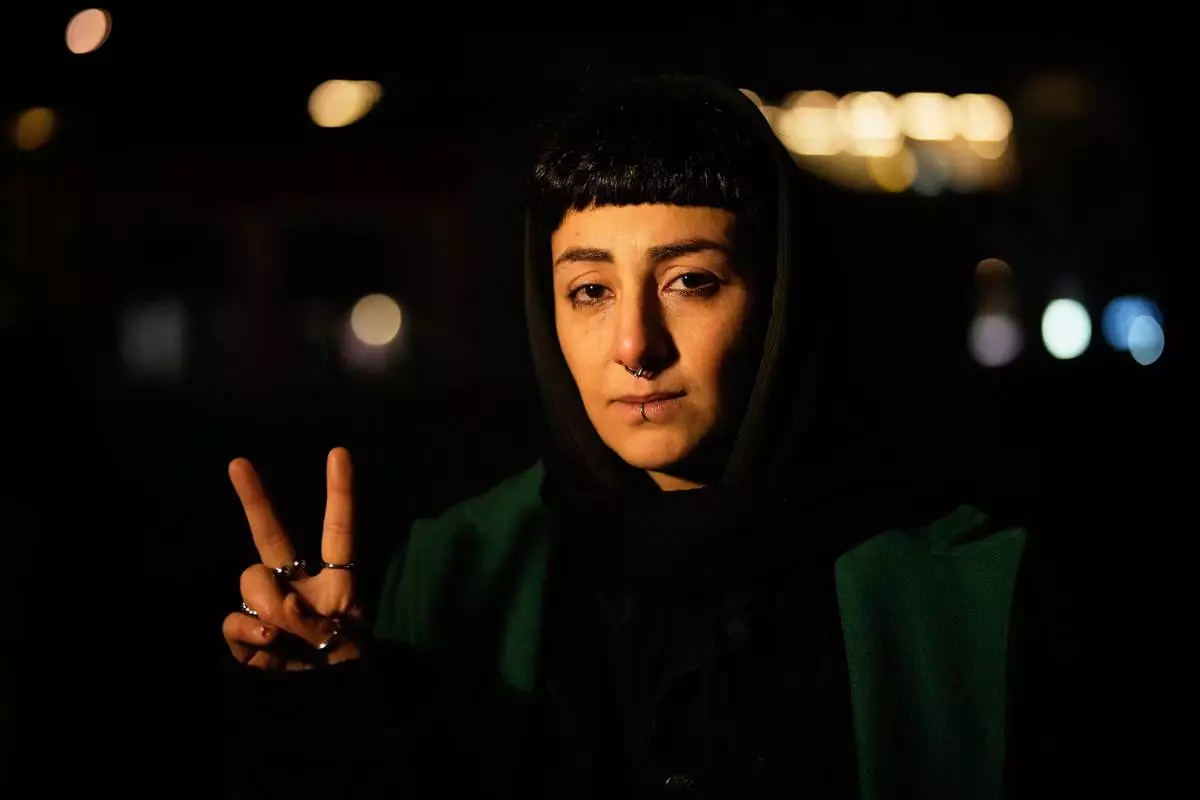
Iranian Anahita Safarnejad, 34, poses for a photo after a demonstration in support of the nationwide mass protests in Iran against the government, in Berlin, Germany, Wednesday, Jan. 14, 2026. (AP Photo/Ebrahim Noroozi)