An enduring image from the new movie “Weapons” comes early: The sight of elementary school students running out of their homes and onto the suburban grass, moving like flying birds with their arms out, to a song by George Harrison.
Except this is happening at night — at 2:17 a.m., to be precise — and there's no glee from the kids. Just running. And the Harrison song being played isn't the cheerful “Here Comes the Sun.” It's “Beware the Darkness.” Welcome back to another outing by director-writer Zach Cregger, a modern thriller master.
“Weapons” is his sophomore effort and it's more ambitious than his first, “Barbarian.” It's told in chapters from the perspective of various interweaving characters — like a horror version of Paul Thomas Anderson’s “Magnolia” — and explores the ripple effects from a tragic event. But it often lags and slackens on its way to a gruesome end, with a reliance on sorcery that seems like a cop-out.
“This is a true story,” says a child narrator at the start of the movie, only for that technique to disappear shortly afterward. “A lot of people die in a lot of weird ways.” Indeed: There's some fork stabbings, an assault with a vegetable peeler and one victim takes so many headbutts that his skull caves in.
The event at the movie's heart is the disappearance of 17 third-graders from a single class in the middle of the night in the leafy town of Maybrook, Illinois. Ring cameras catch them opening their front doors and rushing out, not to be seen again. Only one child from the class showed up the next day at school.
Everyone is baffled and frustrated. Did the kids plan it together? Were they sent a coded message via a video game or social media? Why was one child from the class seemingly spared? And does the teacher know more than what she's letting on?
Julia Garner, who plays the teacher, offers us a fascinating, spiky character, prone to pity parties and self-righteous outbursts. She's also seductive and manipulative and growing reliant on booze to cope with the suspicions leveled at her. At one point, someone scrawls the word “witch” on her Toyota. The town will soon know what that word really means.
Garner — who is doing double duty this summer as the Silver Surfer in “Fantastic Four: First Steps,” wow, quite a range — is warned to stay away from the case but refuses, doing her own stakeouts and trying to speak to the only surviving classmate. “We are the only ones left,” she says.
Cregger being Cregger, there are lots of misdirections, paranoia and an almost existential sense of humor, usually mocking horror movie conventions (and, in this case, the movie “Willow”). In “Weapons,” he also nicely shows the quiet resilience of kids and their ability to face daily horrors and keep going, trying to help those they love despite creepy awfulness.
The upset parents are represented by Josh Brolin's broken father, whose son was one of the 17 who fled. He sleeps in his son's room, wracked by guilt that he couldn't protect someone so dear. He soon will join forces with the teacher to uncover the secret of what made the children run.
They will also collide into a local drug user/low-level criminal, played superbly by Austin Abrams, whose bumbling, comic relief is welcome. Amy Madigan is unrecognizable and utterly mesmerizing as an oddball aunt of the surviving boy, a splendid Cary Christopher.
“Weapons” is best before the final third, when we learn of an outside force that may have triggered all this misery. Cregger seemed to be on more solid footing mocking suburban life, showing the savagery below the mowed grass pleasantries, the quiet desperation inside marriages and the corruption of small-town police departments.
If “Barbarian” came out of left field three years ago and heralded an exciting new voice in filmmaking, “Weapons” doesn't disappoint but it doesn't have the advantage of surprise. It will, at the very least, make you feel a little dread when the clock hits 2:17 a.m.
“Weapons,” a Warner Bros. Pictures release hitting theaters Friday, is rated R for “strong bloody violence and grisly images, language throughout, some sexual content and drug use.” Running time: 128 minutes. Two and a half stars out of four.

Amy Madigan arrives at the premiere of "Weapons" on Thursday, July 31, 2025, at The United Theater on Broadway in Los Angeles. (Photo by Richard Shotwell/Invision/AP)

Josh Brolin arrives at the premiere of "Weapons" on Thursday, July 31, 2025, at The United Theater on Broadway in Los Angeles. (Photo by Richard Shotwell/Invision/AP)

Julia Garner arrives at the premiere of "Weapons" on Thursday, July 31, 2025, at The United Theater on Broadway in Los Angeles. (Photo by Richard Shotwell/Invision/AP)
In parched southern Texas, a yearslong drought has depleted Corpus Christi's water reserves so gravely that the city is scrambling to prevent a shortage that could force painful cutbacks for residents and hobble the refineries and petrochemical plants in a major energy port.
Experts said the city didn't expect such a bad drought, and new sources of reliable water didn't arrive as expected. Those problems arose as the city increased its water sales to big industrial customers.
“We just have not kept up with water supply and water infrastructure like we should have. And it's decades in the making,” said Peter Zanoni, the city manager since 2019.
Corpus Christi, a city of about 317,000 people that also supplies water to nearby counties, is closely tied to its oil and gas industry. The region makes everyday essentials like fuel and steel and ships them to the world.
Zanoni said it is highly unlikely the city will run out of water, but without significant rainfall or new sources, residents may face forced cutbacks and industry may have to do with less. At a time when the Iran war is already raising gas prices, the shortage is hitting an area that produces 5% of the U.S. gasoline supply.
Droughts are common, but this one has dragged on for most of the past seven years. Key reservoirs are at their lowest point ever. The quickest fix is different weather.
“We are actively praying for a hurricane,” former city council member David Loeb said, half in jest. Loeb doesn't want anyone injured, but after wrestling with previous droughts in his time on the council, he feels the lack of rain acutely.
The drought isn't expected to lift by summer, leaving officials scrambling to tap more groundwater to avoid an emergency.
After the last drought in the early 2010s, the city approved a pipeline extension to bring in more water from the Colorado River and promoted conservation. In the years that followed, water use actually fell. The city, seeing opportunity, added a petrochemical plant and steel mill to its long list of industrial customers.
City officials had allowed for drought in their calculations — just not this kind of drought, Zanoni said. It has hit especially hard because reservoirs never fully recharged after the last one.
And it's come at a bad time.
After many years, the pipeline extension finally delivered its full capacity only last year. Meanwhile, discussion of building a desalination plant that would remove salt from seawater — a potentially drought-proof solution recommended in 2016 — bogged down over concerns about costs as high as $1.3 billion and environmental impact.
“If the then-city council had followed through on that, we would have had that plant up and running by now,” Zanoni said.
Corpus Christi has followed its long-established plan for reducing water use. Stage 1 seeks voluntary actions from citizens like taking shorter showers and limiting how often they can water. Currently, the city is in Stage 3, which means pauses on many outdoor water uses.
Many residents are angry that they can’t water their lawns, that their bills are set to rise sharply and that they may face fines, said Isabel Araiza, co-founder of a grassroots group active on water issues. Some don’t feel industry will be asked to share in the pain, she said.
The city's drought plan allows for charging residents and businesses extra if they use lots of water. But big industry, which Zanoni says consumes as much as 60% of the city's water, can opt to pay a permanent surcharge to avoid the possibility of having a much larger fee added in times of drought.
Araiza calls it a bad system. Once industry pays the surcharge, she said, they have no incentive to conserve water.
The city has defended the system, saying in a statement that industry does not “get a pass on water conservation” or forced curtailment. The statement said the business surcharges have raised $6 million a year.
It is wrong to suggest industry isn’t helping, said Bob Paulison, executive director of the Coastal Bend Industry Association. Companies have stopped landscaping, they recycle water for essential cooling needs and they are looking for alternative water sources, he said.
The city hasn't imposed extra costs on anyone yet.
But Zanoni said water rates may eventually double as the city invests roughly $1 billion on infrastructure — costs that some argue will disproportionately benefit industry and make life for residents more expensive.
The city is in a water emergency when it has 180 days before water supply can't keep up with demand. Officials have run through different scenarios for getting new water and the drought easing, and have said an emergency could come as early as May, as late as October, or not at all.
The city has tapped into millions of gallons of new groundwater, and it hopes to get even more.
The biggest unknown is the Evangeline Groundwater Project, which involves a pipeline and about two dozen wells that could add enough water to head off an emergency. It still needs state approval but the city hopes water could be flowing as soon as November. New sources come with drawbacks – some have raised water quality concerns, and there are worries too much pumping could deplete groundwater.
If the city has to declare a water emergency, it would be able to more aggressively curtail water use – mandatory reductions that would apply evenly to all industry and residents. That is a sensitive decision and is likely to be a “knock-down drag-out bloodbath,” Loeb said.
Because residents on average have already reduced their water use, future mandatory cuts are likely to fall heavier on industry.
“It’ll be an unbelievable disaster,” said Don Roach, former assistant general manager of the San Patricio Municipal Water District that has lots of industrial customers in the area. “When you cut the cooling water off to most of these industries, they just have to shut down. There’s no other way around it.”
Paulison said companies that produce fuel, polymers, iron and steel “have the least amount of flexibility in just cutting water usage.” He added, however, that companies remain optimistic they can reduce usage, adapt and continue operations.
Zanoni said the city's plans should buy time to avert the worst.
“We are hoping we don’t get there, but we don’t work on hope,” he said.
The Associated Press receives support from the Walton Family Foundation for coverage of water and environmental policy. The AP is solely responsible for all content. For all of AP’s environmental coverage, visit https://apnews.com/hub/climate-and-environment
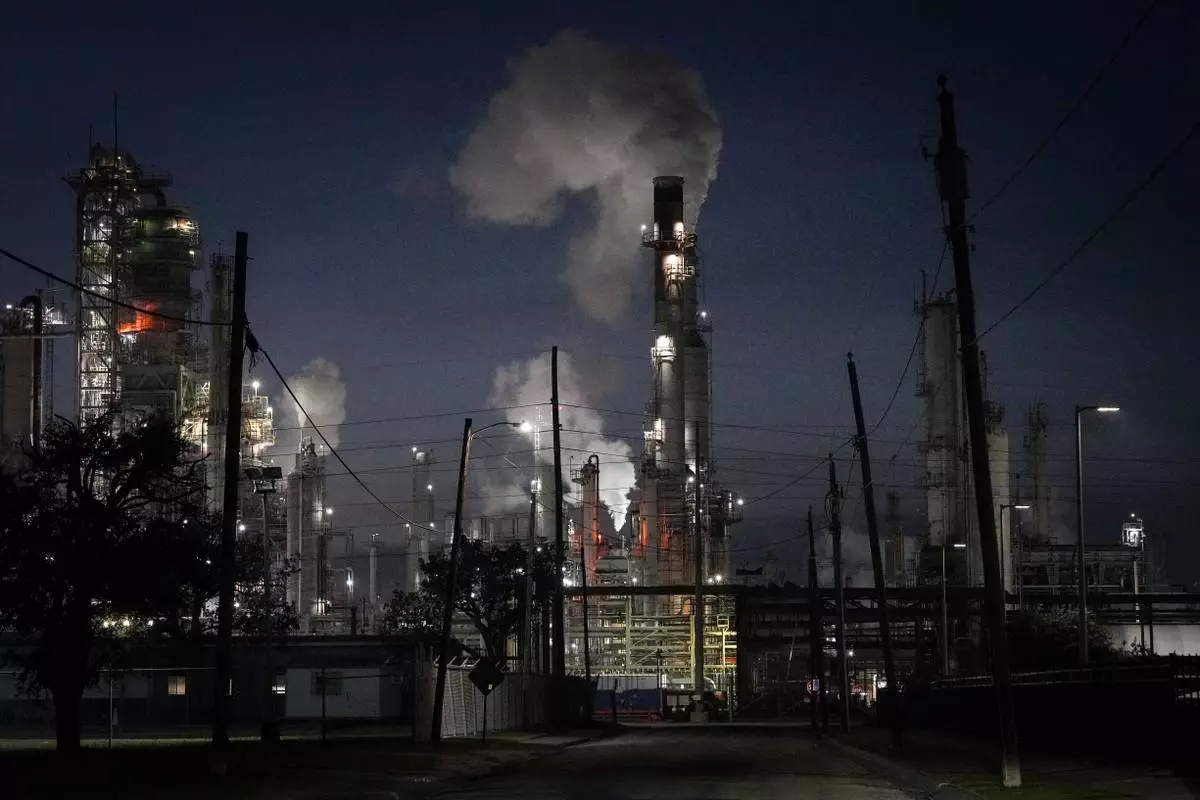
A Citgo oil refinery operates next to the Hillcrest neighborhood Thursday, Nov. 16, 2023, in Corpus Christi, Texas. (Jon Shapley/Houston Chronicle via AP)

A fishing boat works just offshore in the Corpus Christi Bay on Thursday, Nov. 16, 2023, in Corpus Christi, Texas. (Jon Shapley/Houston Chronicle via AP)
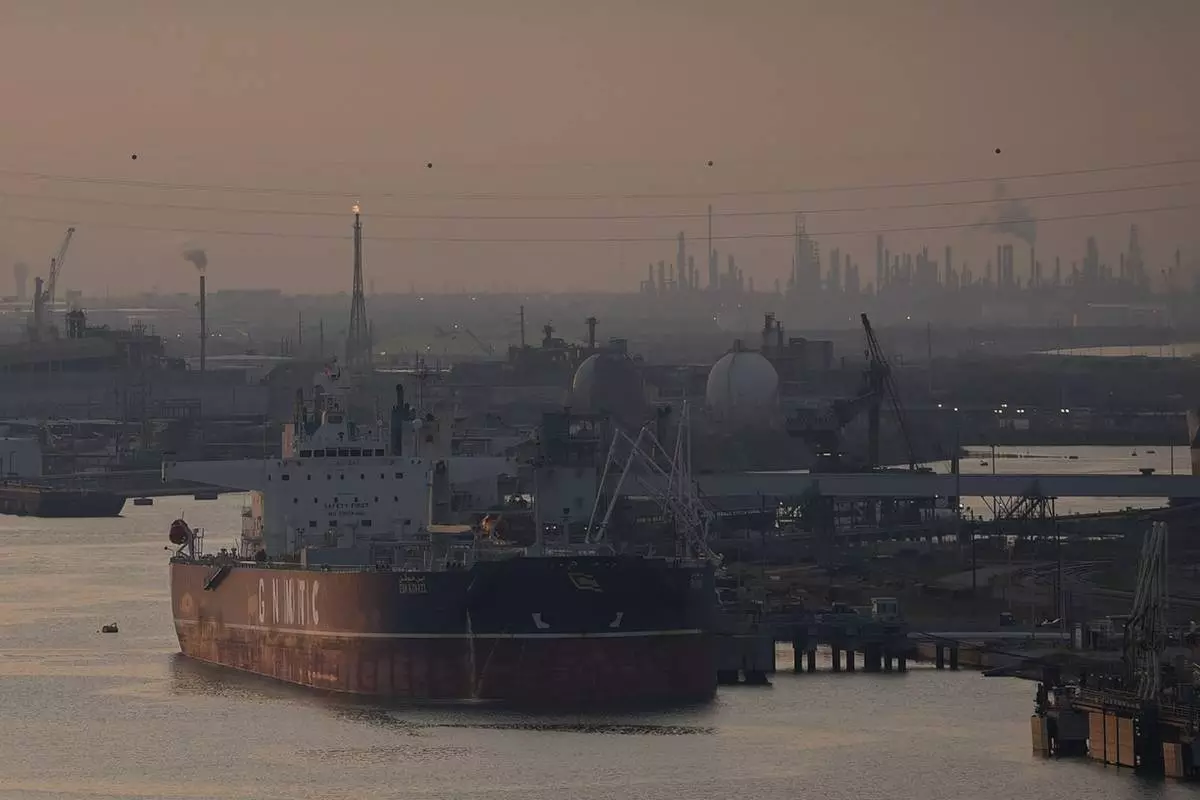
A ship is docked as the sun sets Thursday, Nov. 16, 2023, at the Port of Corpus Christi in Corpus Christi, Texas. (Jon Shapley/Houston Chronicle via AP)

A Port of Corpus Christi police officer guides a boat through the port Thursday, Nov. 16, 2023, in Corpus Christi, Texas. (Jon Shapley/Houston Chronicle via AP)
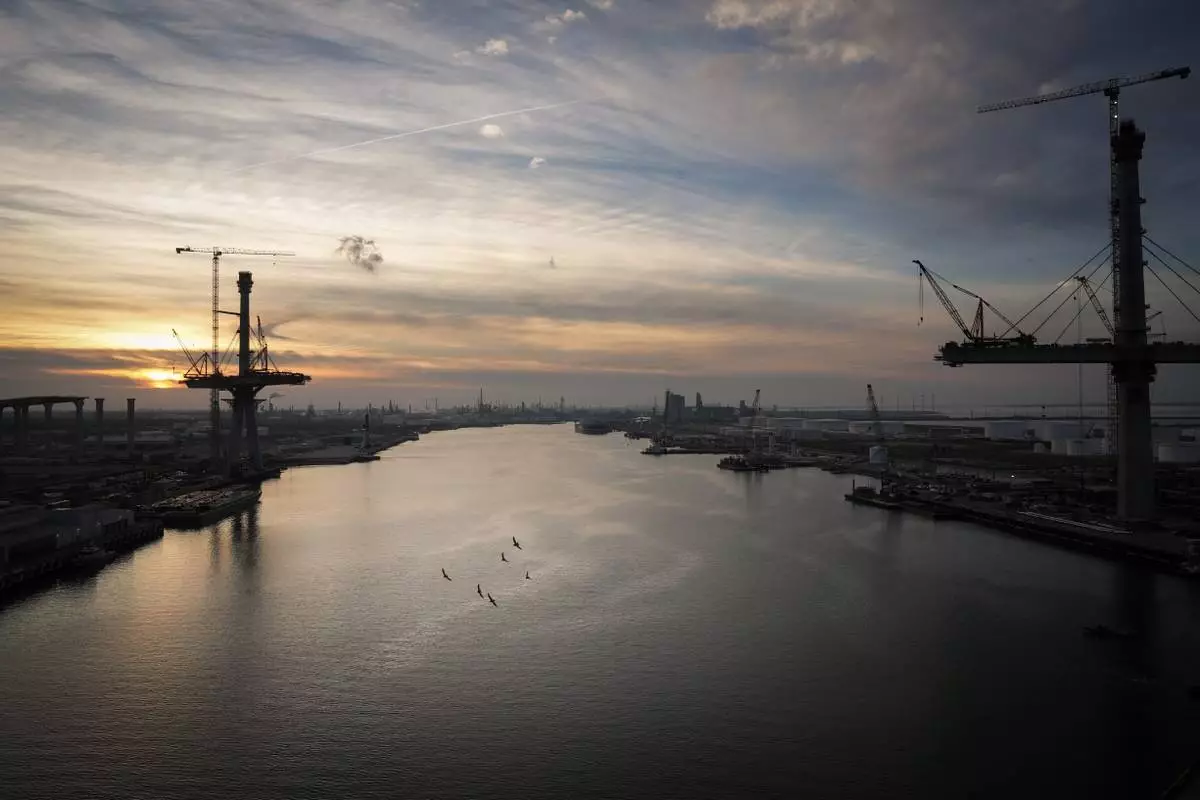
Birds fly over the Port of Corpus Christi as the sun sets Thursday, Nov. 16, 2023, in Corpus Christi, Texas. (Jon Shapley/Houston Chronicle via AP)
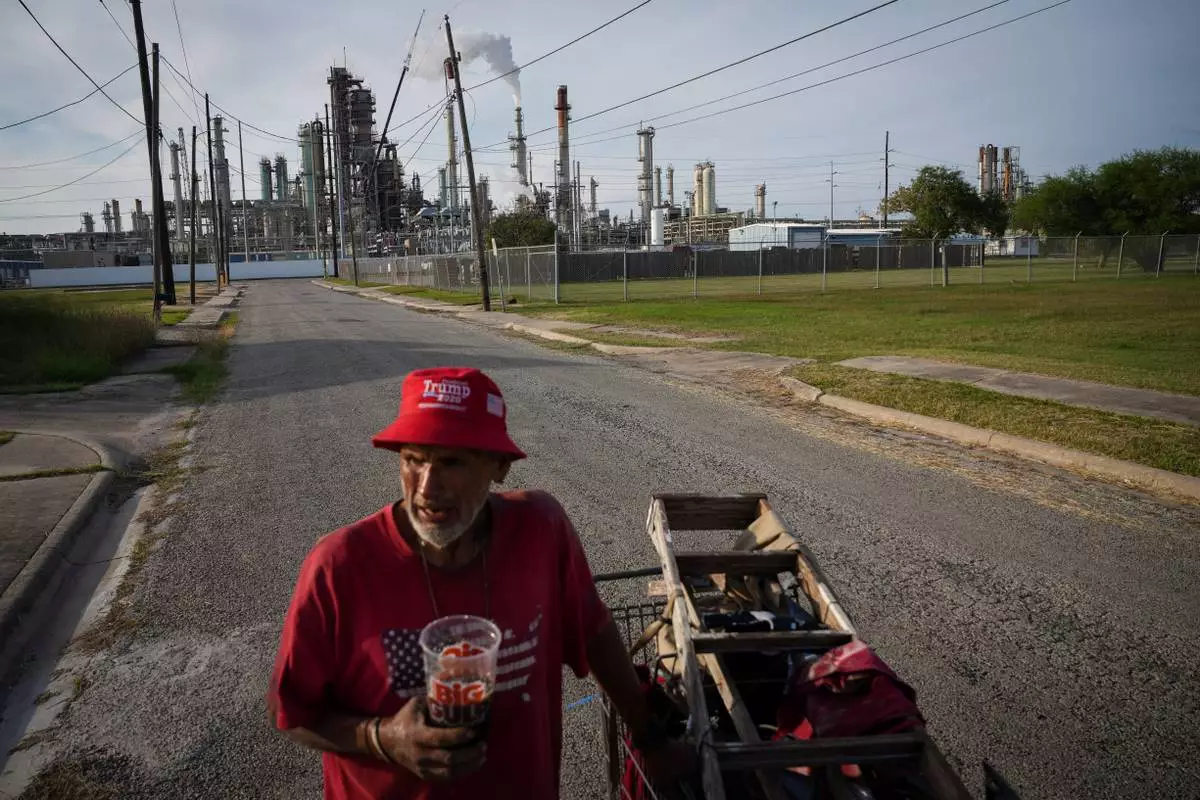
Gavino Rivera talks about the decline of the Hillcrest neighborhood Thursday, Nov. 16, 2023, as he gathers scrap metal near a Citgo oil refinery in Corpus Christi, Texas. (Jon Shapley/Houston Chronicle via AP)