TALLAHASSEE, Fla. (AP) — Six children are among 21 people who have E. coli or campylobacter infections after consuming raw milk from a farm in Florida, public health officials said.
Seven people have been hospitalized, and at least two of them are suffering severe complications, the Florida Department of Health said Monday. It did not specify if any of the six infected children under 10 are among those being treated in hospitals, nor how many people were infected by E. coli, campylobacter or both bacteria.
“Sanitation practices in this farm are of particular concern due to the number of cases,” reads the state advisory, which did not identify the farm linked to the cluster of infections in northeast and central Florida.
Raw milk appears to be gaining in popularity, despite years of warnings about the health risks of drinking unpasteurized products. The Food and Drug Administration and the Centers for Disease Control and Prevention say raw milk is one of the “riskiest” foods people can consume.
Raw milk is far more likely than pasteurized milk to cause illnesses and hospitalizations because of dangerous bacteria such as campylobacter, listeria, salmonella and E. coli, research shows. The infections can cause gastrointestinal illness, and in some cases may lead to serious complications, including a life-threatening form of kidney failure. Young children, the elderly, immunocompromised people and pregnant women are at greater risk of complications.
“We invented pasteurization for a reason,” said Keith Schneider, a food safety professor at the University of Florida. “It's maddening that this is happening.”
States have widely varying regulations regarding raw milk, with some allowing retail purchases in stores and others allowing sale only at farms. Some states allow “cowshares,” in which customers buy milk produced by designated animals, and some allow consumption only by farm owners, employees or “non-paying guests.”
In Florida, the sale and distribution of raw milk for human consumption is illegal, but retailers get around the ban by labeling their products as for pet or animal food only. Schneider called it a “wink, wink, nudge, nudge,” form of regulation.
“Everybody knows that they're selling it for human consumption,” Schneider said, adding that people getting sick — or even seriously ill — from drinking raw milk is “not a question of if, but when.”
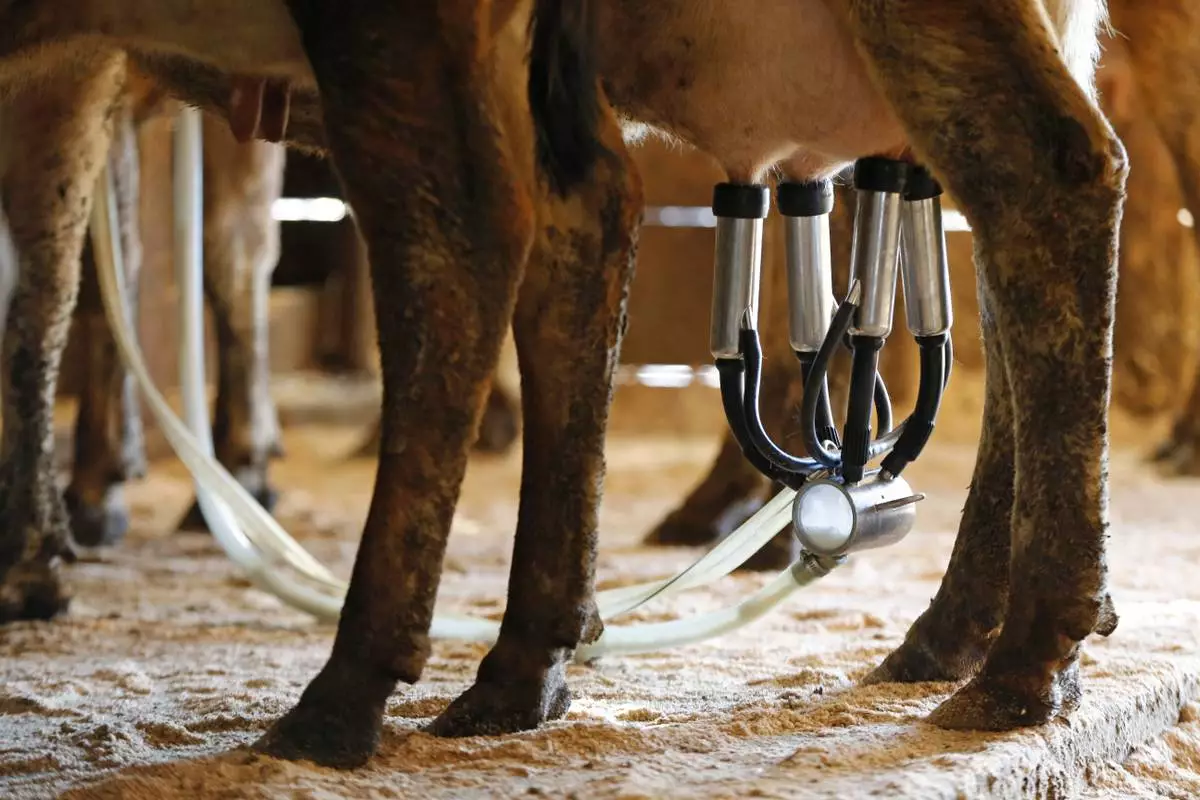
FILE - A dairy cow is milked at a farm in Newcastle, Maine, Tuesday, March 31, 2015. (AP Photo/Robert F. Bukaty, File)
The White House and a bipartisan group of governors are pressuring the operator of the mid-Atlantic power grid to take urgent steps to boost energy supply and curb price hikes, holding a Friday event aimed at addressing a rising concern among voters about the enormous amount of power used for artificial intelligence ahead of elections later this year.
The White House said its National Energy Dominance Council and the governors of several states, including Pennsylvania, Ohio and Virginia, want to try to compel PJM Interconnection to hold a power auction for tech companies to bid on contracts to build new power plants,
The Trump administration and governors will sign a statement of principles toward that end Friday. The plan was first reported by Bloomberg.
“Ensuring the American people have reliable and affordable electricity is one of President Trump’s top priorities, and this would deliver much-needed, long-term relief to the mid-Atlantic region," said Taylor Rogers, a White House spokeswoman.
Pennsylvania Gov. Josh Shapiro is expected to be at the White House, a person familiar with Shapiro’s plans said, speaking on condition of anonymity ahead of the announcement. Shapiro, a Democrat, made his participation in Friday’s event contingent on including a provision to extend a limit on wholesale electricity price increases for the region’s consumers, the person said.
But the operator of the grid won't be there. “PJM was not invited. Therefore we would not attend,” said spokesperson Jeff Shields.
It was not immediately clear whether President Donald Trump would attend the event, which was not listed on his public schedule.
Trump and the governors are under pressure to insulate consumers and businesses alike from the costs of feeding Big Tech’s energy-hungry data centers. Meanwhile, more Americans are falling behind on their electricity bills.
Consumer advocates say ratepayers in the mid-Atlantic electricity grid — which encompasses all or parts of 13 states stretching from New Jersey to Illinois, as well as Washington, D.C. — are already paying billions of dollars in higher bills to underwrite the cost to supply power to data centers, some of them built, some not.
However, they also say that the billions of dollars that consumers are paying isn’t resulting in the construction of new power plants necessary to meet the rising demand.
Pivotal contests in November will be decided by communities that are home to fast-rising electric bills or fights over who’s footing the bill for the data centers that underpin the explosion in demand for artificial intelligence. In parts of the country, data centers are coming online faster than power plants can be built and connected to the grid.
Electricity costs were a key issue in last year's elections for governor in New Jersey and Virginia, a data center hotspot, and in Georgia, where Democrats ousted two Republican incumbents for seats on the state’s utility regulatory commission. Voters in New Jersey, Virginia, California and New York City all cited economic concerns as the top issue, as Democrats and Republicans gird for a debate over affordability in the intensifying midterm battle to control Congress.
Gas and electric utilities sought or won rate increases of more that $34 billion in the first three quarters of 2025, consumer advocacy organization PowerLines reported. That was more than double the same period a year earlier.
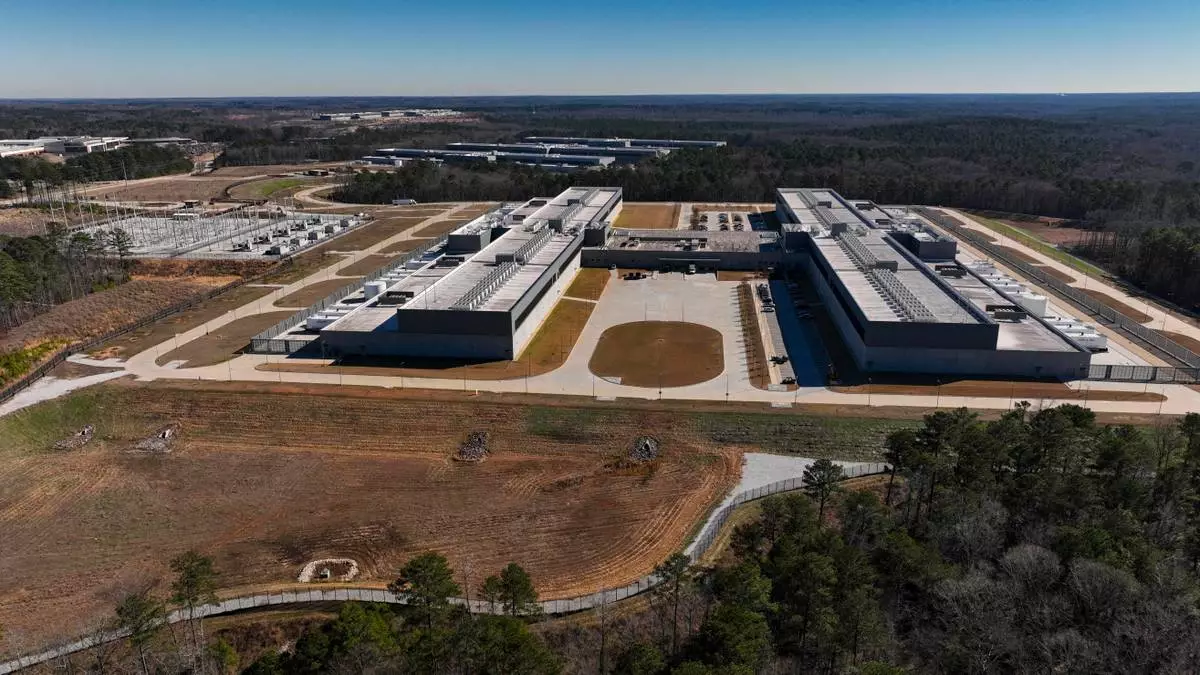
Meta's Stanton Springs Data Center is seen Tuesday, Jan. 13, 2026, in Newton County, East of Atlanta. (AP Photo/Mike Stewart)