Skip to Content Facebook Feature Image

UB Neurosurgery and Ambulatory Neurosurgery Center (ANSC™) in partnership with NOVA Neuro, Awarded First-of-Its-Kind Grant to Decode Brain Aneurysm Risk Powered by Artificial Intelligence

News

UB Neurosurgery and Ambulatory Neurosurgery Center (ANSC™) in partnership with NOVA Neuro, Awarded First-of-Its-Kind Grant to Decode Brain Aneurysm Risk Powered by Artificial Intelligence
News

News

UB Neurosurgery and Ambulatory Neurosurgery Center (ANSC™) in partnership with NOVA Neuro, Awarded First-of-Its-Kind Grant to Decode Brain Aneurysm Risk Powered by Artificial Intelligence

2025-08-06 03:49 Last Updated At:04:01

BUFFALO, N.Y.--(BUSINESS WIRE)--Aug 5, 2025--

In a historic fusion of cutting-edge, powerful artificial intelligence (AI), neurotechnology, and neuroscience, University at Buffalo Neurosurgery (UBNS) and ANSC™ has been awarded $144,500 grant to launch the world’s first multi-omics research initiative aimed at predicting the risk and rupture potential of intracranial aneurysms (IA) using artificial intelligence.

This press release features multimedia. View the full release here: https://www.businesswire.com/news/home/20250805021740/en/

NOVA Neuro, in partnership with UB Neurosurgery, ANSC™, and Prima Mente – a breakthrough precision multi-comics neuroscience company – has assembled a multidisciplinary team integrating clinical and molecular data using proprietary multimodal models powered by high-performance computing. This model will drive and accelerate predictive modelling developing the world’s first personalized aneurysm rupture risk assessment tool. Leveraging methodologies pioneered by world leaders in AI-driven precision biology and neural modeling, this project represents a new frontier in brain health prediction.

This is the first grant in the world to apply powerful AI to study brain aneurysms by analyzing a wide range of biological data, including genes, proteins, and other molecular information.

“This isn’t just research – it’s a movement to finally answer the question every family member of an aneurysm patient asks: ‘Am I at risk?’” explains Elad I. Levy, MD, MBA, FAANS, FACS, Chair of Neurosurgery at UBNS, ANSC™ Head of Research, Co-PI. “With an AI-driven, data-intensive approach, we hope to unlock the neurogenomics of rupture before it’s too late,” explains Rosalind Lai, MD, FAANS, UBNS Attending, Co-PI.

An estimated 6.5 million Americans (1 in 50), live with an unruptured brain aneurysm. Women are disproportionately affected, and the risk triples when a first-degree relative has had an aneurysm. Brain aneurysm ruptures lead to death in 50% of cases. No diagnostic tools exist to stratify risk using biological data. This project seeks to change that.

The Missy Project was founded by Mary and Enidio Magel after their 12-year-old daughter Marisa “Missy” Magel passed away suddenly while at summer camp. “Missy’s name and legacy lives on through this project, which has the potential to protect countless families from enduring the pain, we did. It’s a promise to her, and a hope for others,” said Mary Magel, Executive Director of The Missy Project and Missy’s mother.

“This incredible grant represents our deepest hope, to spare another family from what the Magel’s endured,” says Aimee C. de Gaetano, PhD (ABD), MPH, RD, Co-Founder NOVA Neuro, ANSC™ Emerging Technologies, Co-PI. “To honor her legacy, our goal is to name the predictive risk model after Missy.”

“For too long, families affected by brain aneurysms have lived in uncertainty, with no clear way to understand their risk to take preventive action. This research is a critical step toward changing that reality,” says Craig Kemper, MD, FAANS, FACS, Neurosurgeon, Sub-PI, Missy Project Medical Advisory Board Member.

This initiative sets a new precedent in how neurological conditions, like intracranial aneurysms, may be predicted. “For the first time, we have the ability to combine biological and clinical signals to model the hidden processes that drive aneurysm rupture,” said Ravi Solanki, CEO of Prima Mente. This collaboration has attracted significant attention from the international scientific community and investors for its bold convergence of AI, precision medicine, and compassionate neuroscience.

About UB Neurosurgery (UBNS) and ANSC™ global leader, pioneer in neurosurgical innovation, first full-service outpatient neurosurgery center, and clinical research leader. www.ubns.comhttps://atlassurgery.com/

About NOVA Neuro a division of Alts Ventures, advancing neurological conditions, brain health, and patient outcomes through data, discovery, cutting-edge innovation and disruptive technologies. www.novaneuro.care

About Prima Mente precision multi-omics neuroscience company integrating clinical and molecular data using AI and proprietary models. www.primamente.com

About The Missy Project national nonprofit raising awareness, promoting early detection of brain aneurysms. https://themissyproject.org
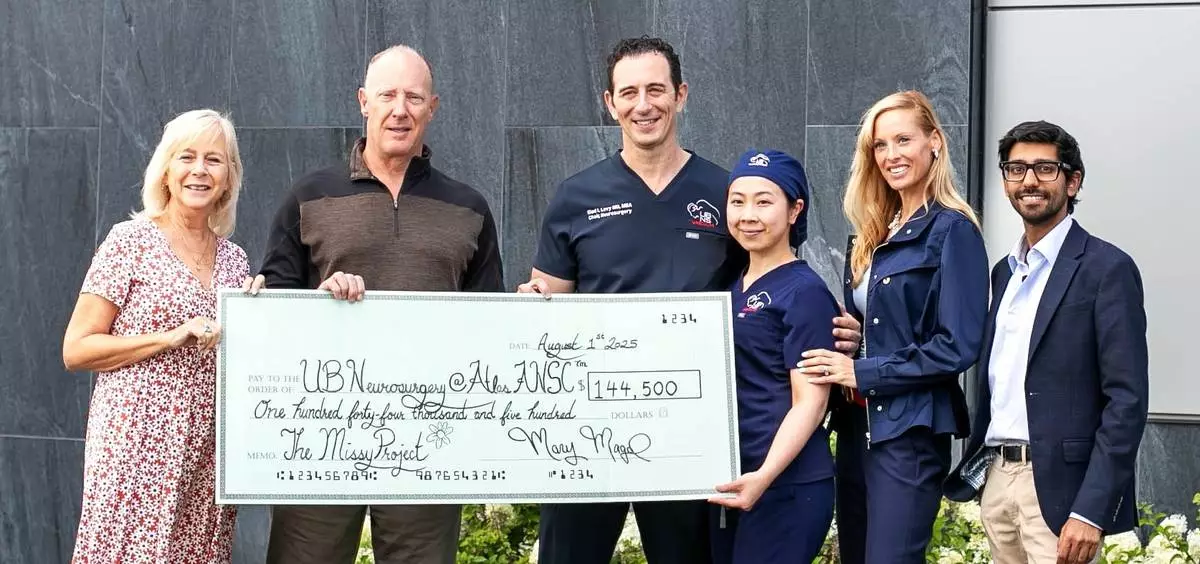
The Missy Project, UBNS & ANSC(TM), NOVA Neuro, & Prima Mente team. Left to right: Mary Magel, Craig Kemper MD, Elad I. Levy MD MBA, Rosalind Lai MD, Aimee DeGaetano PhD (ABD) MPH RD, Ravi Solanka PhD
The Missy Project, UBNS & ANSC(TM), NOVA Neuro, & Prima Mente team. Left to right: Mary Magel, Craig Kemper MD, Elad I. Levy MD MBA, Rosalind Lai MD, Aimee DeGaetano PhD (ABD) MPH RD, Ravi Solanka PhD
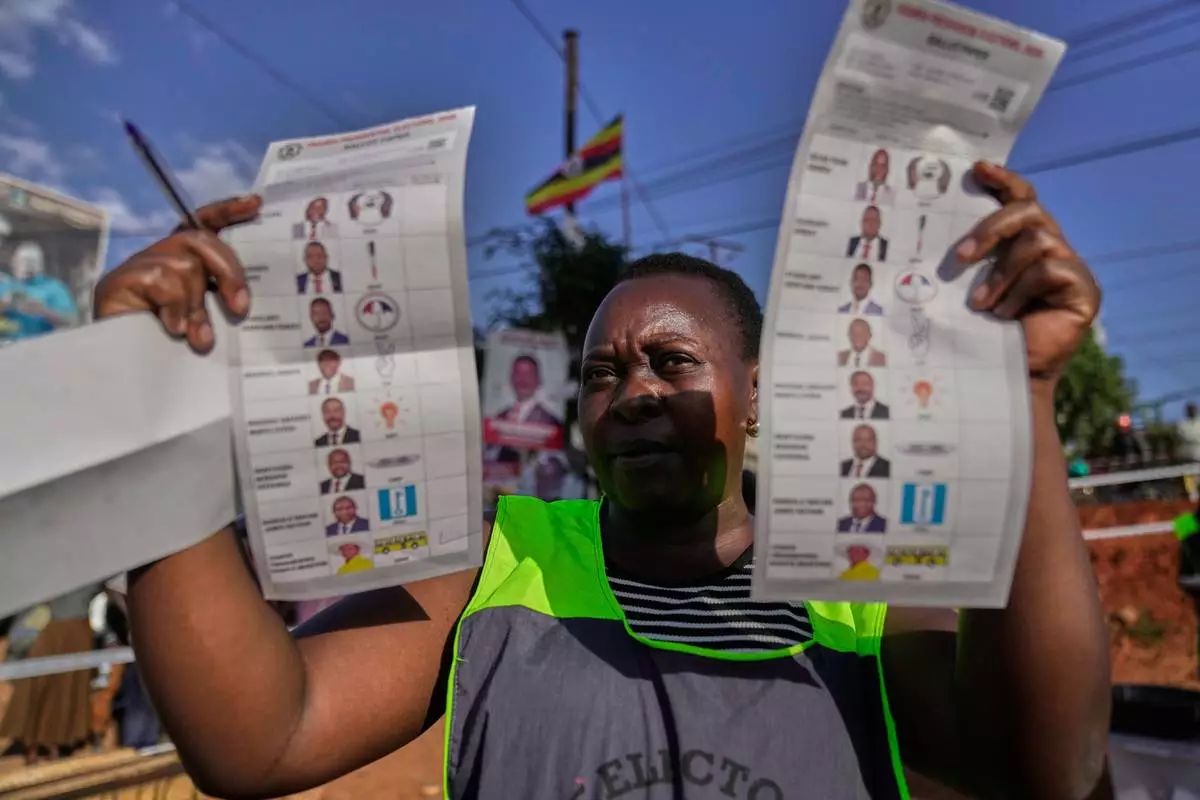
KAMPALA, Uganda (AP) — Vote counting was underway Friday in Uganda’s tense presidential election, which was held a day earlier amid an internet shutdown, voting delays and complaints by an opposition leader who said some of his polling agents had been detained by the authorities.

Opposition leader Bobi Wine said Thursday he was unable to leave his house and that his polling agents in rural areas were abducted before voting started, undermining his efforts to prevent electoral offenses such as ballot stuffing.

Wine is hoping to end President Yoweri Museveni's four-decade rule in an election during which the military was deployed and heavy security was posted outside his house near Kampala, the Ugandan capital, after the vote.

The musician-turned-politician wrote on X on Thursday that a senior party official in charge of the western region had been arrested, adding there was “massive ballot stuffing everywhere.”

Rural Uganda, especially the western part of the country, is a ruling-party stronghold, and the opposition would be disadvantaged by not having polling agents present during vote counting.

To try to improve his chances of winning, Wine had urged his supporters to “protect the vote” by having witnesses document alleged offenses at polling stations, in addition to deploying official polling agents.

Wine faced similar setbacks when he first ran for president five years ago. Museveni took 58% of the vote, while Wine got 35%, according to official results. Wine said at the time that the election had been rigged in favor of Museveni, who has spoken disparagingly of his rival.

Museveni, after voting on Thursday, said the opposition had infiltrated the 2021 election and defended the use of biometric machines as a way of securing the vote in this election.

Museveni has served the third-longest tenure of any African leader and is seeking to extend his rule into a fifth decade. The aging president’s authority has become increasingly dependent on the military, which is led by his son, Muhoozi Kainerugaba.

Uganda has not witnessed a peaceful transfer of presidential power since independence from British colonial rule six decades ago.

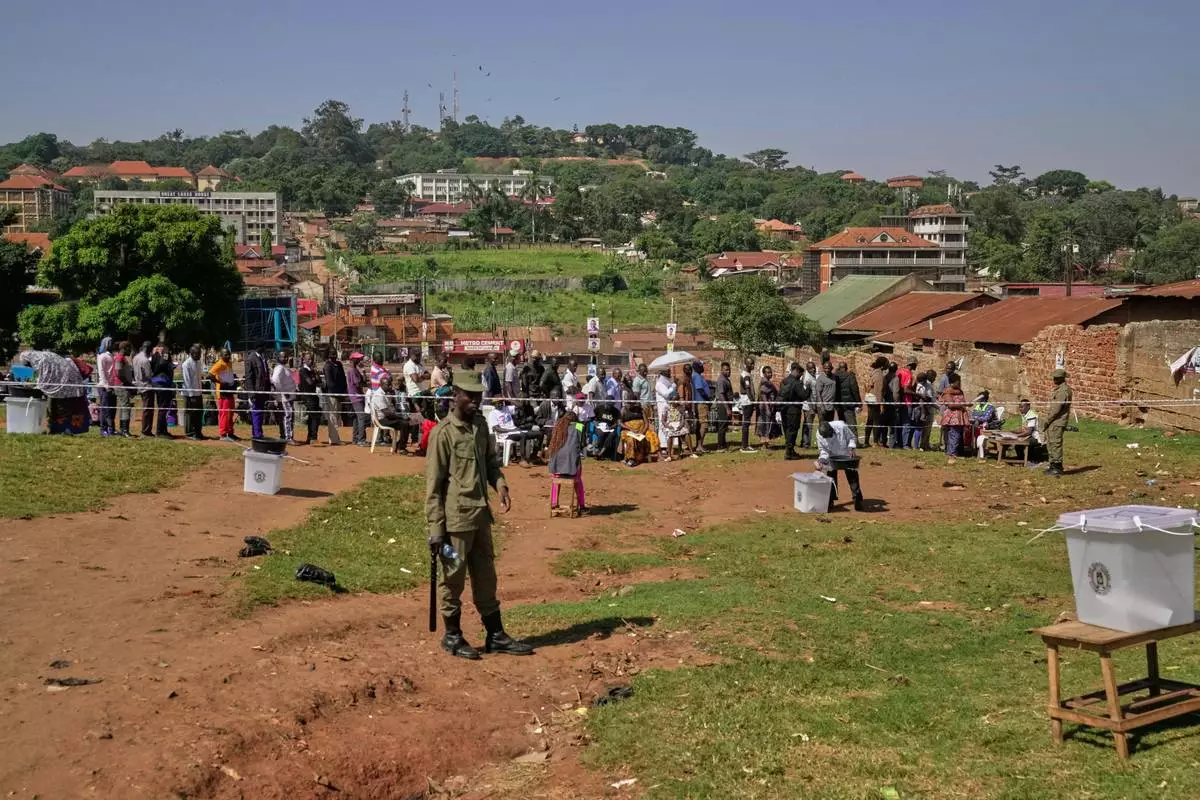
Voters line up to cast their ballots at a polling station, during the presidential election, in the capital, Kampala, Uganda, Thursday, Jan. 15, 2026. (AP Photo/Brian Inganga)

Voters line up to cast their ballots at a polling station, during the presidential election, in the capital, Kampala, Uganda, Thursday, Jan. 15, 2026. (AP Photo/Brian Inganga)

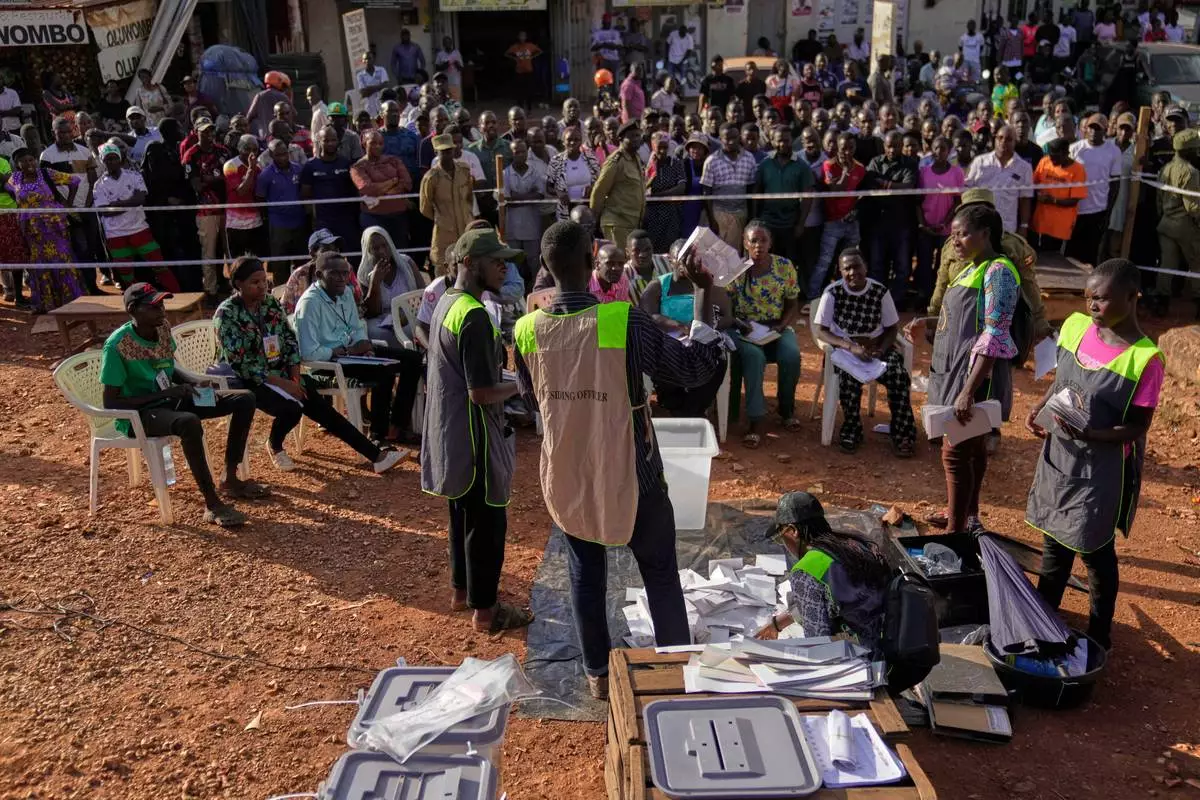
Election officials count ballots after the polls closed for the presidential election at a polling station in Kampala, Uganda, Thursday, Jan. 15, 2026. (AP Photo/Brian Inganga)

Election officials count ballots after the polls closed for the presidential election at a polling station in Kampala, Uganda, Thursday, Jan. 15, 2026. (AP Photo/Brian Inganga)

An election official holds up unmarked ballots during the vote count after polls closed for the presidential election, at a polling center in Kampala, Uganda, Thursday, Jan. 15, 2026. (AP Photo/Brian Inganga)

An election official holds up unmarked ballots during the vote count after polls closed for the presidential election, at a polling center in Kampala, Uganda, Thursday, Jan. 15, 2026. (AP Photo/Brian Inganga)

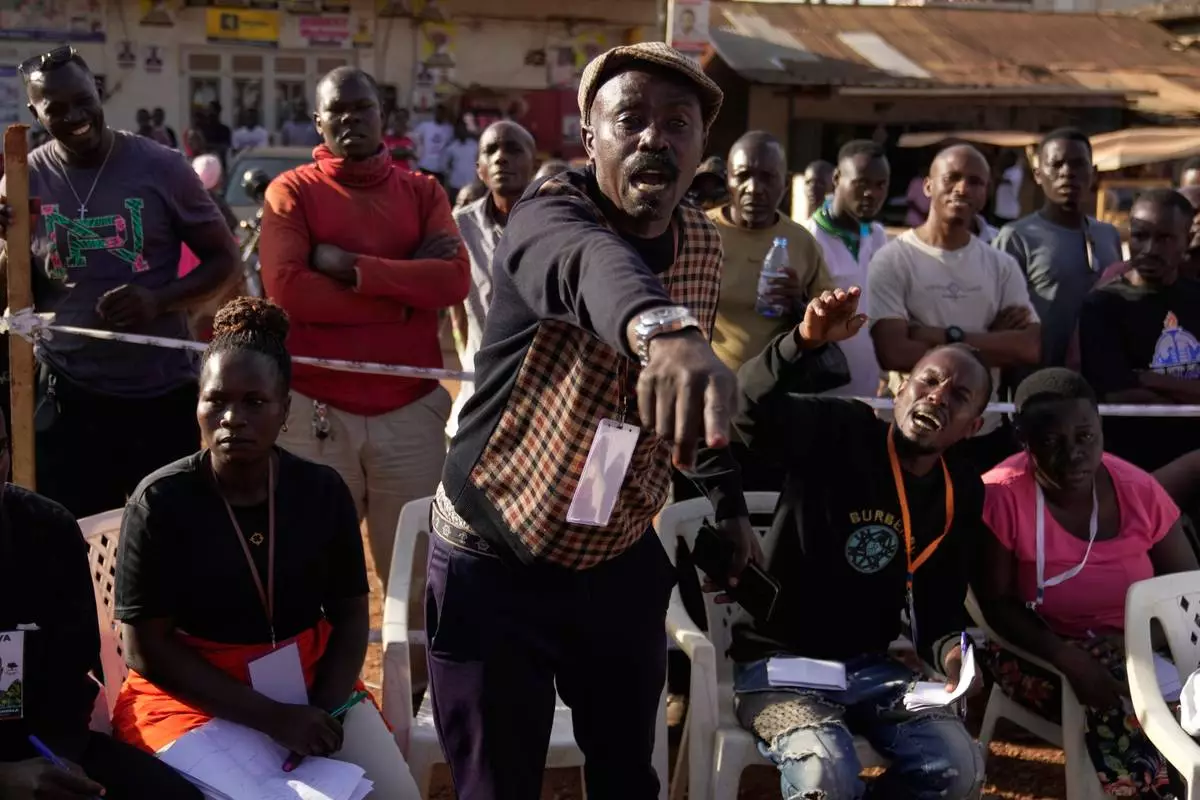
A political representative speaks as he works to observe and verify the counting of ballots after polls closed in the presidential election at a polling station in Kampala, Uganda, Thursday, Jan. 15, 2026. (AP Photo/Brian Inganga)

A political representative speaks as he works to observe and verify the counting of ballots after polls closed in the presidential election at a polling station in Kampala, Uganda, Thursday, Jan. 15, 2026. (AP Photo/Brian Inganga)

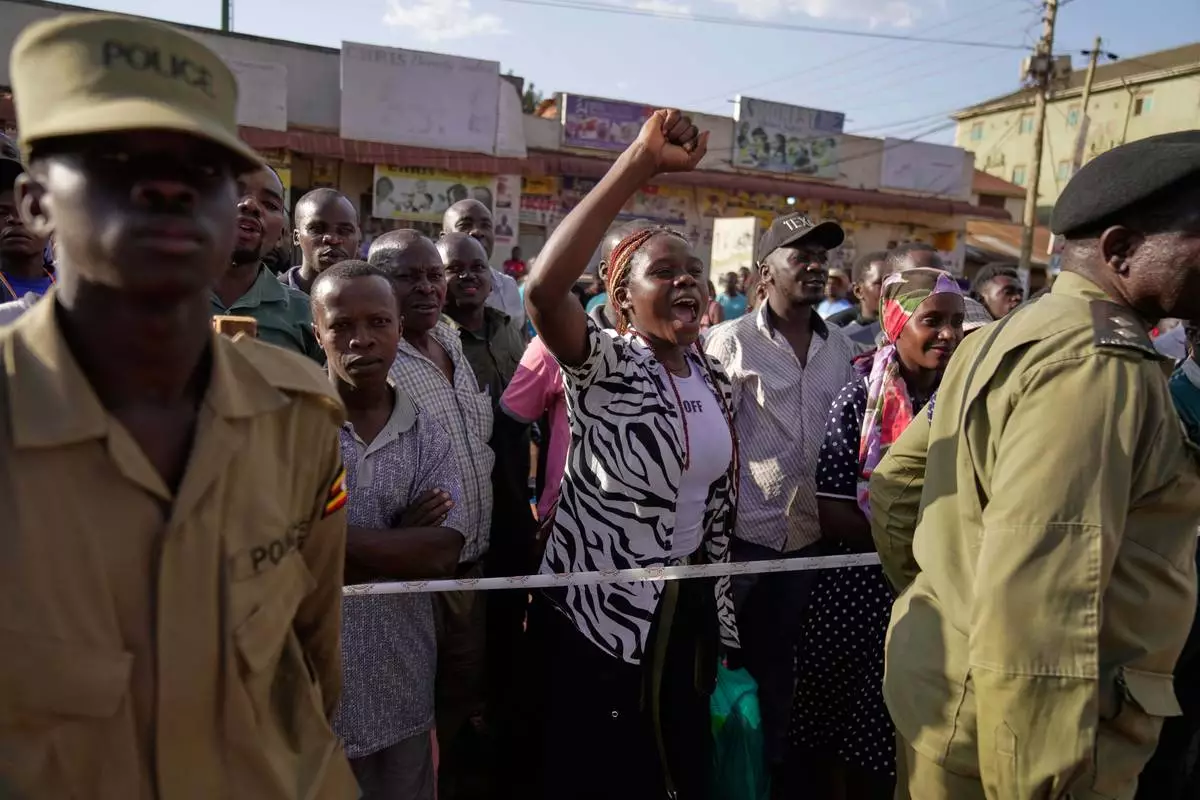
A supporter of leading opposition candidate Bobi Wine cheers while watching election officials count ballots, after polls closed at a polling station in Kampala, Uganda, Thursday, Jan. 15, 2026. (AP Photo/Brian Inganga)

A supporter of leading opposition candidate Bobi Wine cheers while watching election officials count ballots, after polls closed at a polling station in Kampala, Uganda, Thursday, Jan. 15, 2026. (AP Photo/Brian Inganga)

Recommended Articles