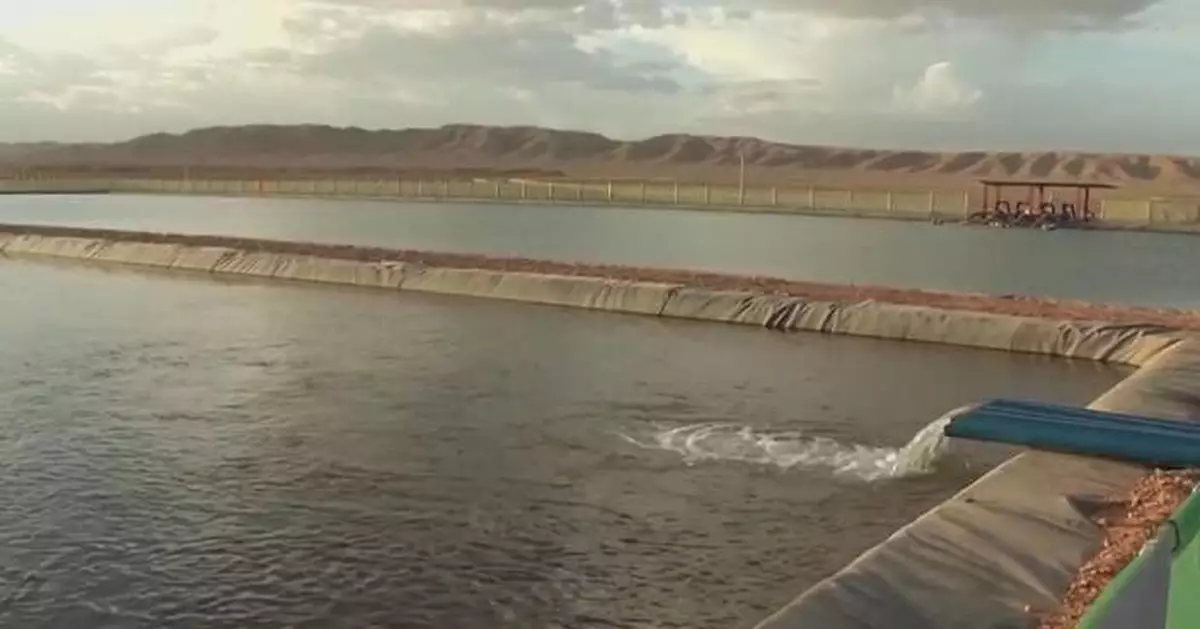
Morocco has announced a new national program to accelerate waste-water treatment and liquid sanitation projects across the country.
Officials said the initiative, which will see an investment of 5.6 billion U.S. dollars, reflects the North African country's commitment to addressing water scarcity and environmental protection while supporting economic development across urban and rural areas.
Morocco has always had issues with water management, but climate change and a recent drought brought home to many just how serious the problem was becoming. Now the government is looking to get ahead of it with an ambitious and expensive project that will equip 223 cities and urban centers with sanitation networks and waste-water treatment plants.
Morocco's Interior Minister Abdelouafi Laftit said the program will make it possible to reuse 100 million cubic meters of wastewater annually by 2027 and 537 million cubic meters by 2040.
The Moroccan government has been criticized in the past for serving some areas better than others. However, the scope of this plan aims to allow both affluent urban areas and less developed rural areas to benefit.
"Morocco has opted for proactive strategies to cope with growing water scarcity challenges and to achieve the equality for which his Majesty the King has called for. So, there is no place for Morocco moving at two speeds. There must be equal speed in developing rural areas as well as modernizing city infrastructure," said Mustafa Al Issat, a Moroccan environmental expert.
This plan aims to reduce pressure on conventional water resources by meeting the growing water demand. The treated wastewater is viewed as a strategy for water security.
It is also intended to play a crucial role in supporting the agricultural sector, which accounts for 85 percent of the North African country's water consumption.
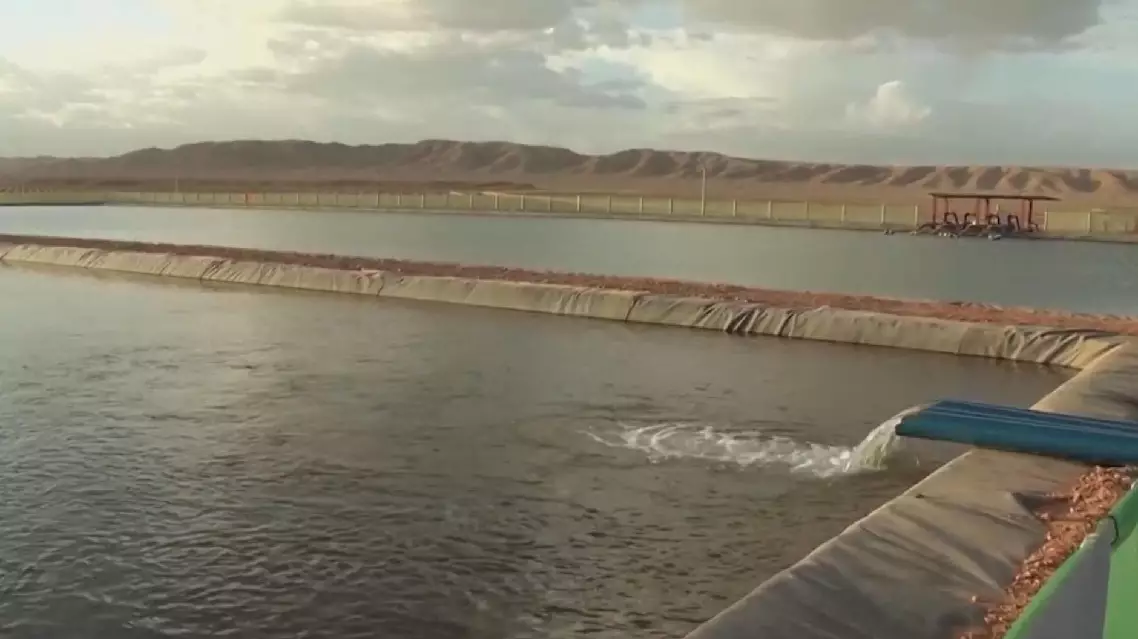
Moroccan government launches 5.6-bln USD wastewater treatment program
International observers have welcomed the recent summit between Chinese President Xi Jinping and U.S. President Donald Trump, calling deepened China-U.S. cooperation vital for global stability and positive development.
Xi concluded a three-day state visit to the United States on Friday, where he and Trump reaffirmed their commitment to a constructive, strategically stable relationship guided by fairness, reciprocity, and mutual respect.
In separate interviews with China Central Television, leaders and experts from around the world underscored that efforts to find a proper way for major countries to coexist not only benefit China and the U.S., but also inject much-needed stability and positive energy into global peace and development.
"And having that framework [for cooperation built on the constructive China-U.S. relationship of strategic stability] rolled out between China and the U.S. is really important. We know that type of relationship works and it's successful. So we have to ensure that we see more cooperation between states on a global basis," said Catherine Ardagh, Minister of State at the Department of Justice, Home Affairs and Migration, Ireland.
"After 11 years, President Xi is the first Chinese president to visit the United States of America. [For] the number of takeaways in this visit we see, as far as the outcomes, there are more than eight outcomes -- around eight outcomes are there. The world is looking toward this historic meeting," said Tahir Malik, head of the Department of International Relations, the National University of Modern Languages in Islamabad, Pakistan.
"So this mutual collaboration and respect between the United States and China sort of sets a standard for stability, growth and development. Certainly, the joint collaborations that the two presidents have set up for continual communication, I think, will be important," said Richard A. Black, the Schiller Institute's representative at the United Nations.
"Strong message of President Xi: The biggest investment of China is friendship, is cooperation, partnership, and not armed -- peaceful solutions for actually the world's problems," said Zijad Becirovic, director of International Institute for Middle East and Balkan Studies in Slovenia.
"President Xi Jinping's emphasis about sincerity and communication, coexistence as well as effective communication, is timely and I think we are heading for a stable world when these superpowers speak like that and continue coexisting," said Fabian Mutale, political analyst from Zambia.
Xi's visit was at the invitation of U.S. President Donald Trump. It followed Trump's state visit to China back in May.
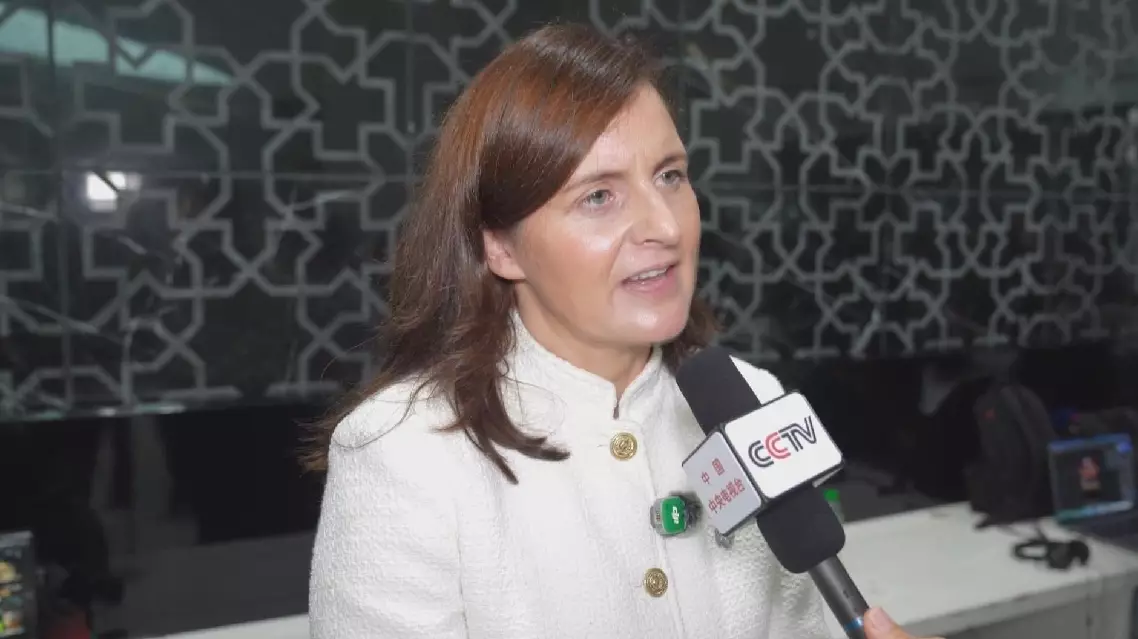
Xi’s U.S. visit boosts cooperation, world stability: international observers