Skip to Content Facebook Feature Image

Burnt offerings, whispering to mountains: Inside Bolivians' rituals for Mother Earth

ENT

Burnt offerings, whispering to mountains: Inside Bolivians' rituals for Mother Earth
ENT

ENT

Burnt offerings, whispering to mountains: Inside Bolivians' rituals for Mother Earth

2025-08-06 15:04 Last Updated At:15:11

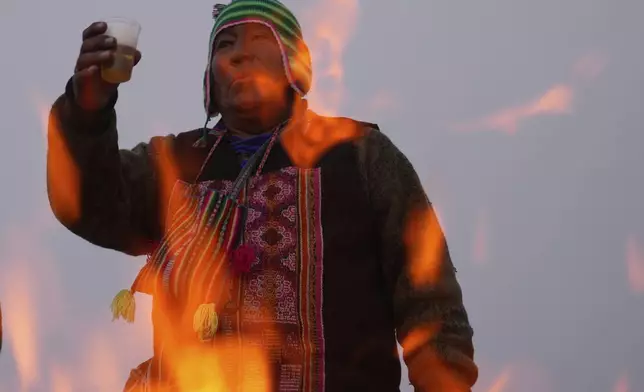
LA CUMBRE, Bolivia (AP) — Neyza Hurtado was 3 years old when she was struck by lightning. Forty years later, sitting next to a bonfire on a 13,700-foot (4,175-meter) mountain, her scarred forehead makes her proud.

“I am the lightning,” she said. “When it hit me, I became wise and a seer. That’s what we masters are.”

More Images
People burn offerings observing the month of Pachamama, or Mother Earth, performing an ancient tradition to ask for a good harvest, on La Cumbre, a mountain considered sacred on the outskirts of La Paz, Bolivia, Friday, Aug. 1, 2025. (AP Photo/Juan Karita)
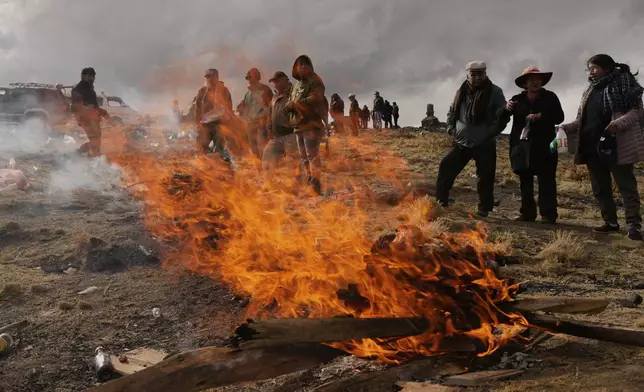
People burn offerings observing the month of Pachamama, or Mother Earth, performing an ancient tradition to ask for a good harvest, on La Cumbre, a mountain considered sacred on the outskirts of La Paz, Bolivia, Friday, Aug. 1, 2025. (AP Photo/Juan Karita)
People burn offerings observing the month of Pachamama, or Mother Earth, performing an ancient tradition to ask for a good harvest, on La Cumbre, a mountain considered sacred on the outskirts of La Paz, Bolivia, Friday, Aug. 1, 2025. (AP Photo/Juan Karita)

People burn offerings observing the month of Pachamama, or Mother Earth, performing an ancient tradition to ask for a good harvest, on La Cumbre, a mountain considered sacred on the outskirts of La Paz, Bolivia, Friday, Aug. 1, 2025. (AP Photo/Juan Karita)

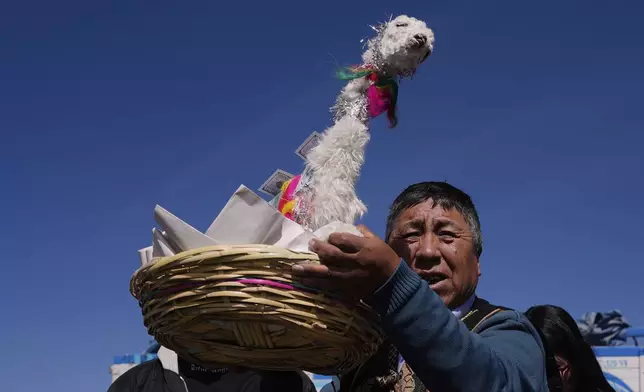
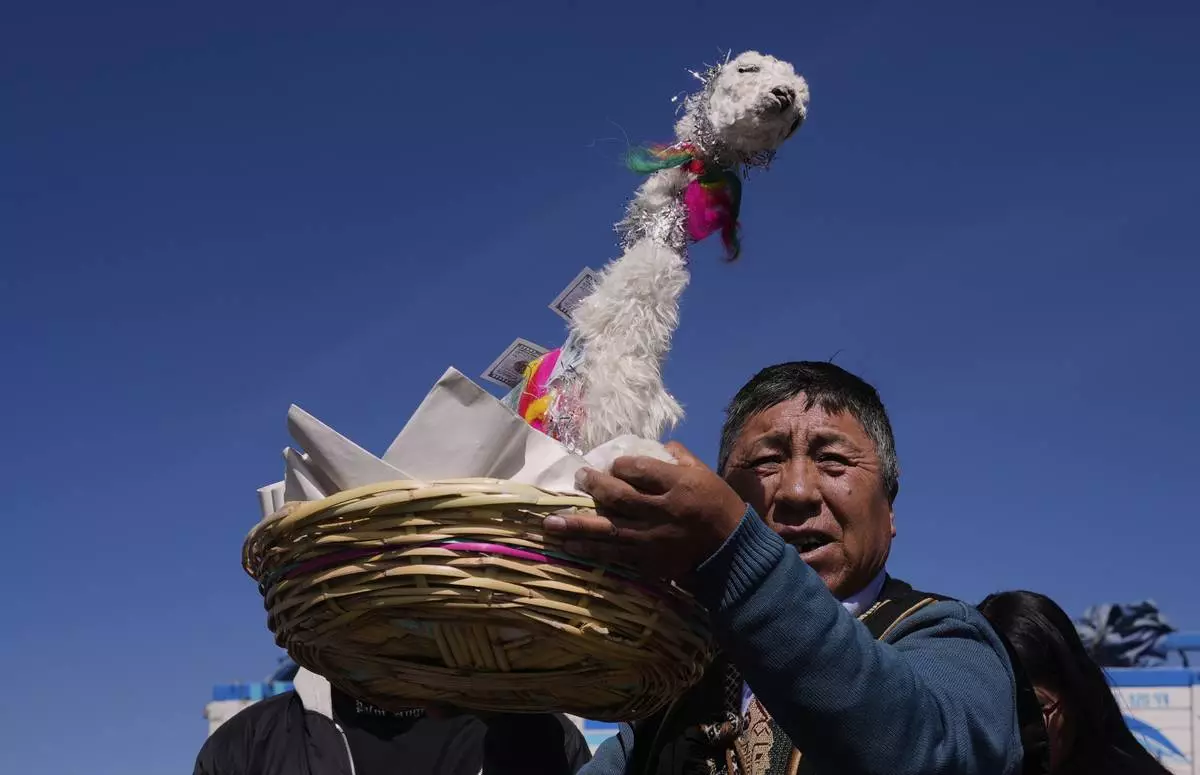
A spiritual leader holds a up a basket with a llama carcass to be burnt as an offering in observance of the month of Pachamama, or Mother Earth, performing an ancient tradition to ask for a good harvest, on the outskirts of La Paz, Bolivia, Friday, Aug. 1, 2025. (AP Photo/Juan Karita)
A spiritual leader holds a up a basket with a llama carcass to be burnt as an offering in observance of the month of Pachamama, or Mother Earth, performing an ancient tradition to ask for a good harvest, on the outskirts of La Paz, Bolivia, Friday, Aug. 1, 2025. (AP Photo/Juan Karita)
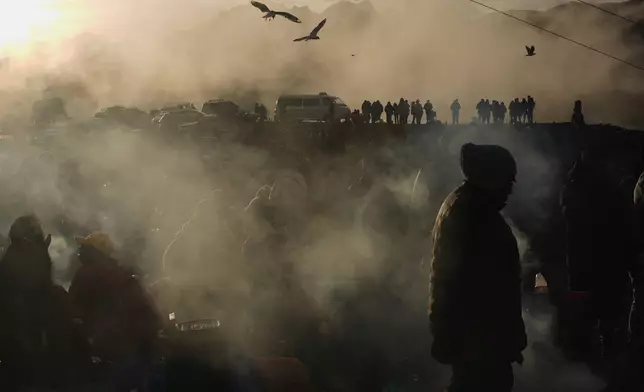
People gather on La Cumbre, a mountain considered sacred to burn offerings observing the month of Pachamama, or Mother Earth, performing an ancient tradition to ask for a good harvest, on the outskirts of La Paz, Bolivia, Friday, Aug. 1, 2025. (AP Photo/Juan Karita)

People gather on La Cumbre, a mountain considered sacred to burn offerings observing the month of Pachamama, or Mother Earth, performing an ancient tradition to ask for a good harvest, on the outskirts of La Paz, Bolivia, Friday, Aug. 1, 2025. (AP Photo/Juan Karita)

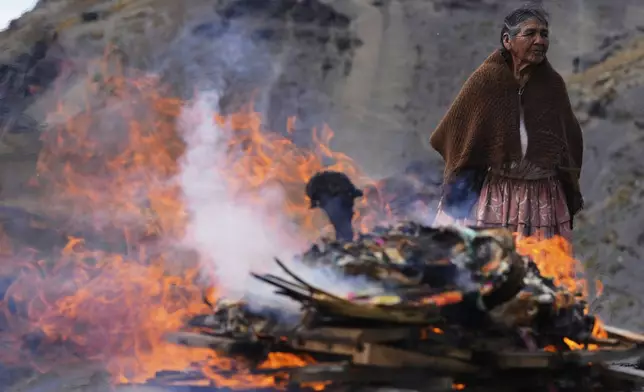
A woman burn offerings observing the month of Pachamama, or Mother Earth, performing an ancient tradition to ask for a good harvest, on La Cumbre, a mountain considered sacred on the outskirts of La Paz, Bolivia, Friday, Aug. 1, 2025. (AP Photo/Juan Karita)
A woman burn offerings observing the month of Pachamama, or Mother Earth, performing an ancient tradition to ask for a good harvest, on La Cumbre, a mountain considered sacred on the outskirts of La Paz, Bolivia, Friday, Aug. 1, 2025. (AP Photo/Juan Karita)
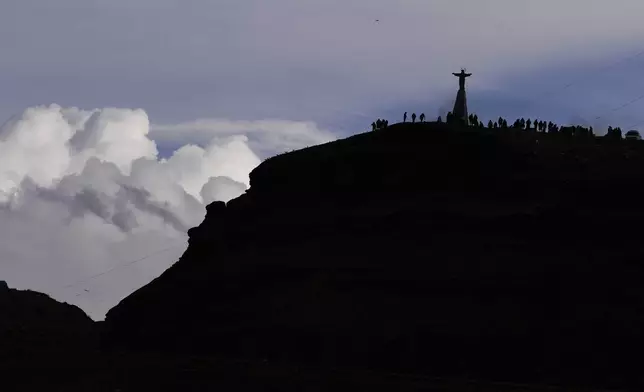
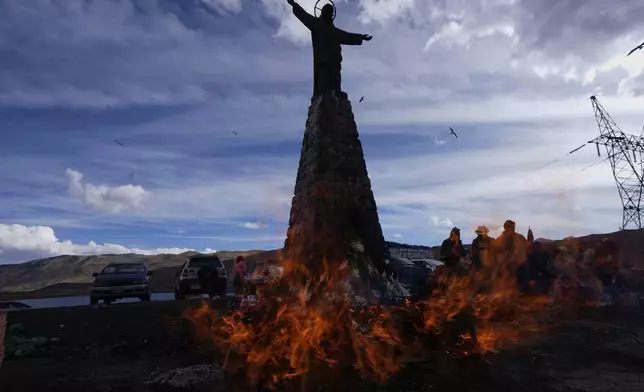
A statue of Jesus Christ towers over people burning offerings observing the month of Pachamama, or Mother Earth, performing an ancient tradition to ask for a good harvest, on La Cumbre, a mountain considered sacred on the outskirts of La Paz, Bolivia, Friday, Aug. 1, 2025. (AP Photo/Juan Karita)

A statue of Jesus Christ towers over people burning offerings observing the month of Pachamama, or Mother Earth, performing an ancient tradition to ask for a good harvest, on La Cumbre, a mountain considered sacred on the outskirts of La Paz, Bolivia, Friday, Aug. 1, 2025. (AP Photo/Juan Karita)

Spiritual leader Eusebio Huanca burns offerings observing the month of Pachamama, or Mother Earth, performing an ancient tradition to ask for a good harvest, on La Cumbre, a mountain considered sacred on the outskirts of La Paz, Bolivia, Friday, Aug. 1, 2025. (AP Photo/Juan Karita)

Spiritual leader Eusebio Huanca burns offerings observing the month of Pachamama, or Mother Earth, performing an ancient tradition to ask for a good harvest, on La Cumbre, a mountain considered sacred on the outskirts of La Paz, Bolivia, Friday, Aug. 1, 2025. (AP Photo/Juan Karita)

Hundreds of people in Bolivia hire Andean spiritual guides like Hurtado to perform rituals every August, the month of “Pachamama,” or Mother Earth, according to the worldview of the Aymara, an Indigenous people of the region.

Pachamama’s devotees believe that she awakens hungry and thirsty after the dry season. To honor her and express gratitude for her blessings, they make offerings at home, in their crop fields and on the peaks of Bolivian mountains.

“We come here every August to follow in the footsteps of our elders,” said Santos Monasterios, who hired Hurtado for a Pachamama ritual on a site called La Cumbre, about 8 miles (13 kilometers) from the capital city of La Paz. “We ask for good health and work.”

Offerings made to Pachamama are known as “mesitas” (or “little tables”). Depending on each family’s wishes, masters like Hurtado prepare one mesita per family or per person.

Mesitas are made of wooden logs. On top of them, each master places sweets, grains, coca leaves and small objects representing wealth, protection and good health. Occasionally, llama or piglet fetuses are also offered.

Once the mesita is ready, the spiritual guide sets it on fire and devotees douse their offerings with wine or beer, to quench Pachamama’s thirst.

“When you make this ritual, you feel relieved,” Monasterios said. “I believe in this, so I will keep sharing a drink with Pachamama.”

It can take up to three hours for a mesita to burn. Once the offerings have turned to ash, the devotees gather and solemnly bury the remains to become one with Mother Earth.

Carla Chumacero, who travelled to La Cumbre last week with her parents and a sister, requested four mesitas from her longtime spiritual guide.

“Mother Earth demands this from us, so we provide,” the 28-year-old said.

According to Chumacero, how they become aware of Pachamama’s needs is hard to explain. “We just know it; it’s a feeling,” she said. “Many people go through a lot — accidents, trouble within families — and that’s when we realize that we need to present her with something, because she has given us so much and she can take it back.”

María Ceballos, 34, did not inherit her devotion from her family, but from co-workers at the gold mine where she earns a living.

“We make offerings because our work is risky,” Ceballos said. “We use heavy machinery and we travel often, so we entrust ourselves to Pachamama.”

The exact origin of the Pachamama rituals is difficult to determine, but according to Bolivian anthropologist Milton Eyzaguirre, they are an ancestral tradition dating back to 6,000 B.C.

As the first South American settlers came into the region, they faced soil and climate conditions that differed from those in the northernmost parts of the planet, where winter begins in December. In Bolivia, as in other Southern Hemisphere countries, winter runs from June to September.

“Here, the cold weather is rather dry,” Eyzaguirre said. “Based on that, there is a particular behavior in relation to Pachamama.”

Mother Earth is believed to be asleep throughout August. Her devotees wish for her to regain her strength and bolster their sowing, which usually begins in October and November. A few months later, when the crops are harvested in February, further rituals are performed.

“These dates are key because it’s when the relationship between humans and Pachamama is reactivated,” Eyzaguirre said.

“Elsewhere it might be believed that the land is a consumer good,” he added. “But here there’s an equilibrium: You have to treat Pachamama because she will provide for you.”

August rituals honor not only Pachamama, but also the mountains or “apus,” considered protective spirits for the Aymara and Quechua people.

“Under the Andean perspective, all elements of nature have a soul,” Eyzaguirre said. “We call that ‘Ajayu,’ which means they have a spiritual component.”

For many Bolivians, wind, fire, and water are considered spirits, and the apus are perceived as ancestors. This is why many cemeteries are located in the highlands and why Pachamama rituals are performed at sites like La Cumbre.

“The apus protect us and keep an eye on us,” said Rosendo Choque, who has been a spiritual guide or “yatiri” for 40 years.

He, like Hurtado, said that only a few select people can do they job. Before becoming masters, it is essential that they acquire special skills and ask Pachamama’s permission to perform rituals in her honor.

“I acquired my knowledge little by little,” Choque said. “But I now have the permission to do this job and coca leaves speak to me.”

Hurtado said she mostly inherited her knowledge from her grandmother, who was also a yatiri and witnessed how she survived the lightning strike.

“For me, she is the holiest person, the one who made me what I am,” Hurtado said.

She said she finds comfort in helping her clients secure a good future, but her close relationship with Pachamama brings her the deepest joy.

“We respect her because she is Mother Earth,” Hurtado said. “We live in her.”

Associated Press religion coverage receives support through the AP’s collaboration with The Conversation US, with funding from Lilly Endowment Inc. The AP is solely responsible for this content.
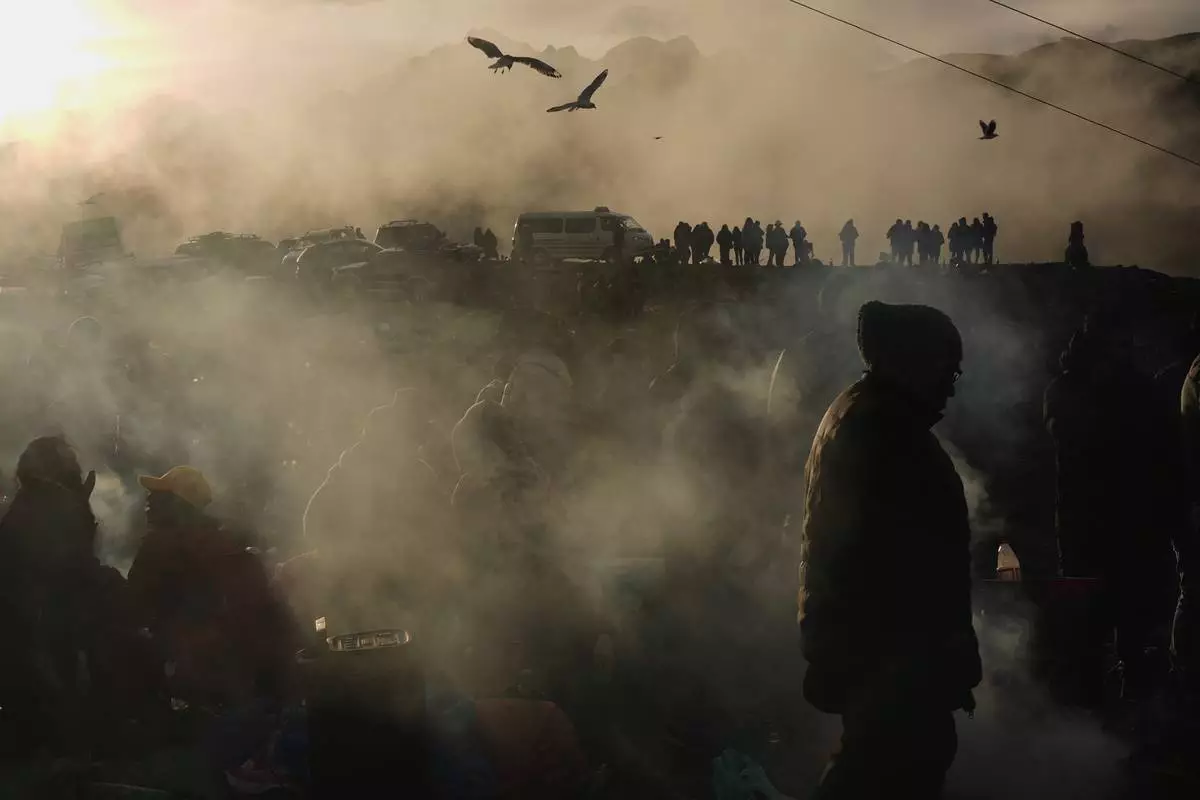
People burn offerings observing the month of Pachamama, or Mother Earth, performing an ancient tradition to ask for a good harvest, on La Cumbre, a mountain considered sacred on the outskirts of La Paz, Bolivia, Friday, Aug. 1, 2025. (AP Photo/Juan Karita)
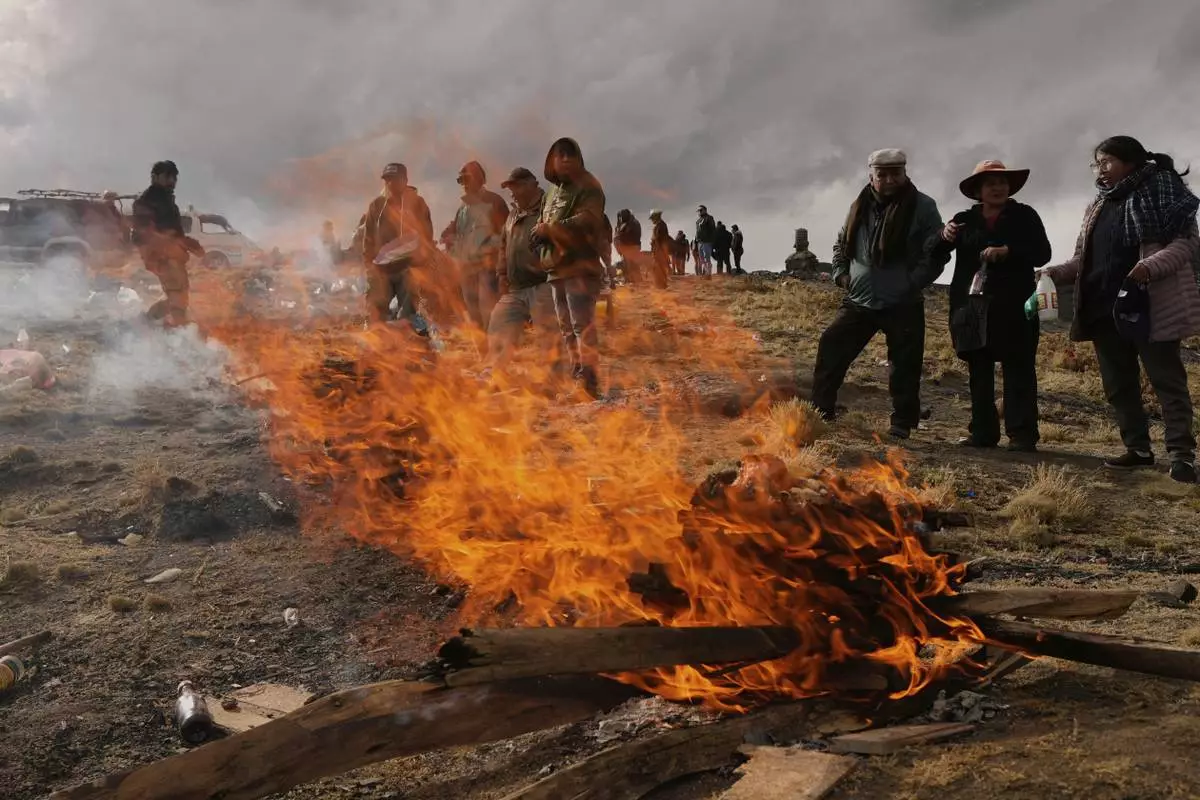
People burn offerings observing the month of Pachamama, or Mother Earth, performing an ancient tradition to ask for a good harvest, on La Cumbre, a mountain considered sacred on the outskirts of La Paz, Bolivia, Friday, Aug. 1, 2025. (AP Photo/Juan Karita)
People burn offerings observing the month of Pachamama, or Mother Earth, performing an ancient tradition to ask for a good harvest, on La Cumbre, a mountain considered sacred on the outskirts of La Paz, Bolivia, Friday, Aug. 1, 2025. (AP Photo/Juan Karita)

People burn offerings observing the month of Pachamama, or Mother Earth, performing an ancient tradition to ask for a good harvest, on La Cumbre, a mountain considered sacred on the outskirts of La Paz, Bolivia, Friday, Aug. 1, 2025. (AP Photo/Juan Karita)

A spiritual leader holds a up a basket with a llama carcass to be burnt as an offering in observance of the month of Pachamama, or Mother Earth, performing an ancient tradition to ask for a good harvest, on the outskirts of La Paz, Bolivia, Friday, Aug. 1, 2025. (AP Photo/Juan Karita)
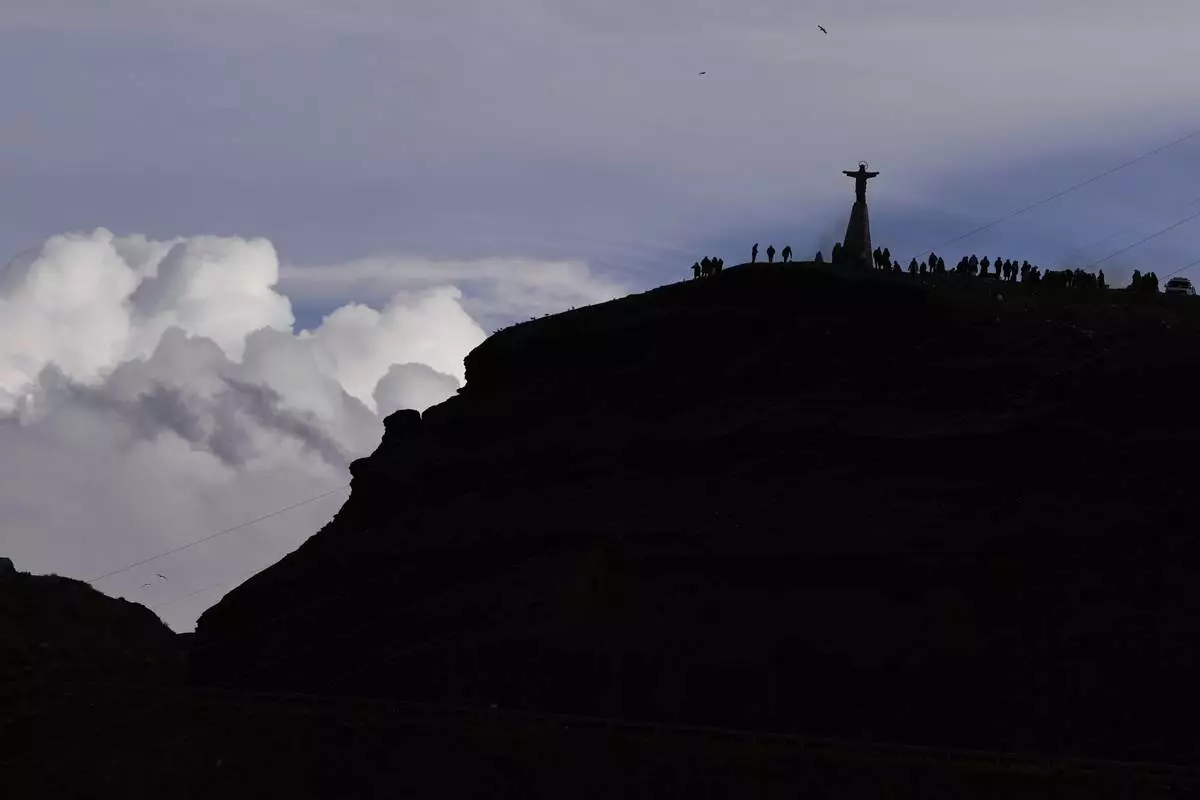
A spiritual leader holds a up a basket with a llama carcass to be burnt as an offering in observance of the month of Pachamama, or Mother Earth, performing an ancient tradition to ask for a good harvest, on the outskirts of La Paz, Bolivia, Friday, Aug. 1, 2025. (AP Photo/Juan Karita)
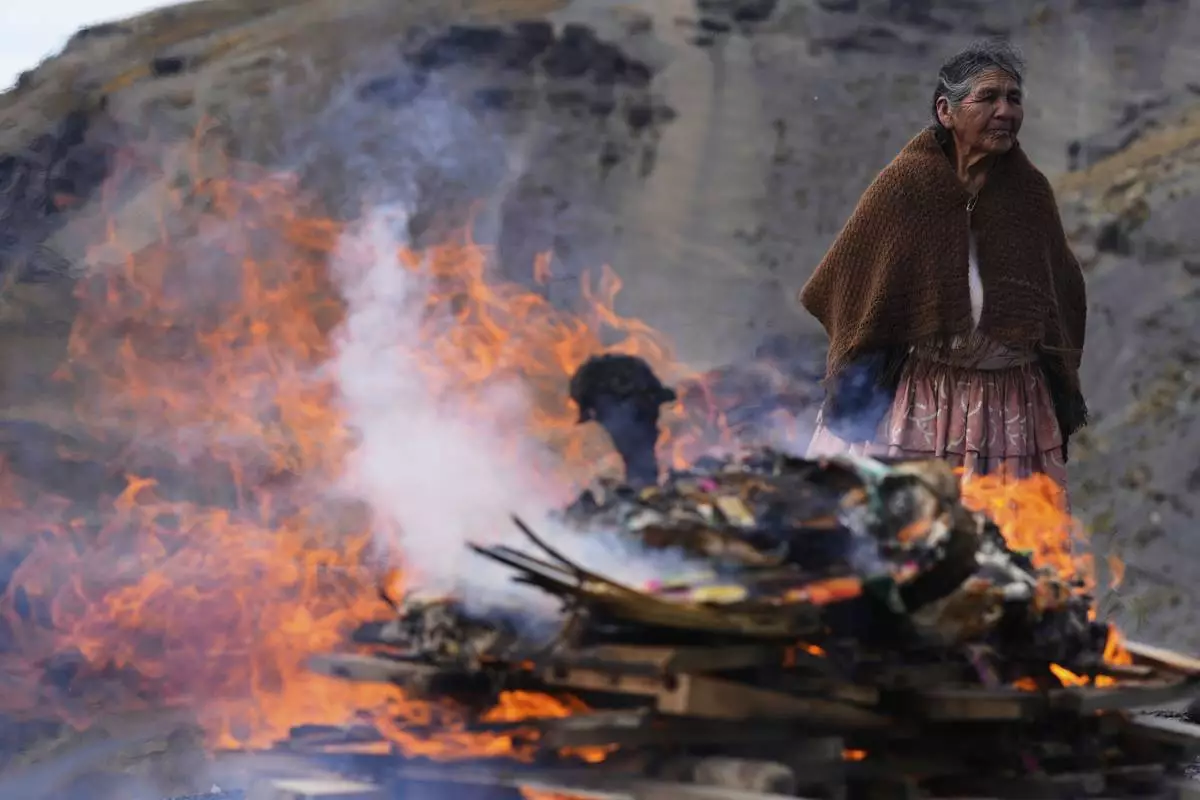
People gather on La Cumbre, a mountain considered sacred to burn offerings observing the month of Pachamama, or Mother Earth, performing an ancient tradition to ask for a good harvest, on the outskirts of La Paz, Bolivia, Friday, Aug. 1, 2025. (AP Photo/Juan Karita)

People gather on La Cumbre, a mountain considered sacred to burn offerings observing the month of Pachamama, or Mother Earth, performing an ancient tradition to ask for a good harvest, on the outskirts of La Paz, Bolivia, Friday, Aug. 1, 2025. (AP Photo/Juan Karita)

A woman burn offerings observing the month of Pachamama, or Mother Earth, performing an ancient tradition to ask for a good harvest, on La Cumbre, a mountain considered sacred on the outskirts of La Paz, Bolivia, Friday, Aug. 1, 2025. (AP Photo/Juan Karita)
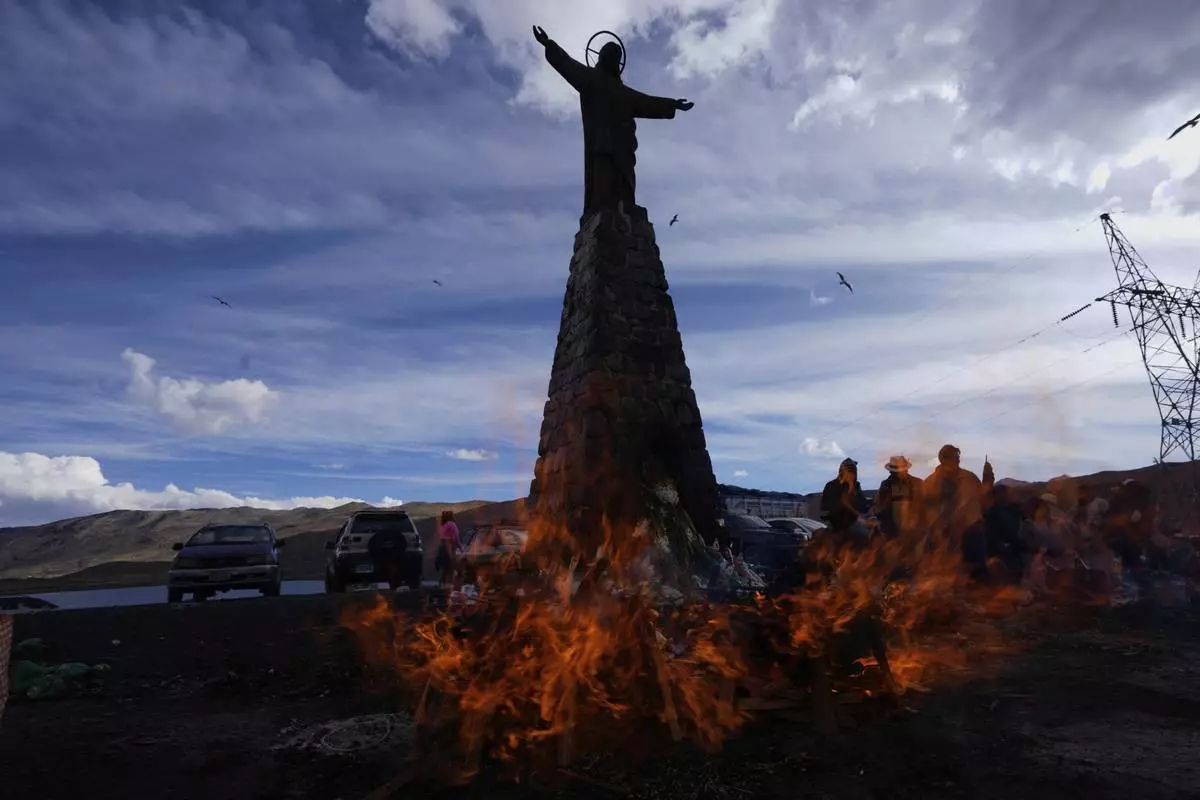
A woman burn offerings observing the month of Pachamama, or Mother Earth, performing an ancient tradition to ask for a good harvest, on La Cumbre, a mountain considered sacred on the outskirts of La Paz, Bolivia, Friday, Aug. 1, 2025. (AP Photo/Juan Karita)
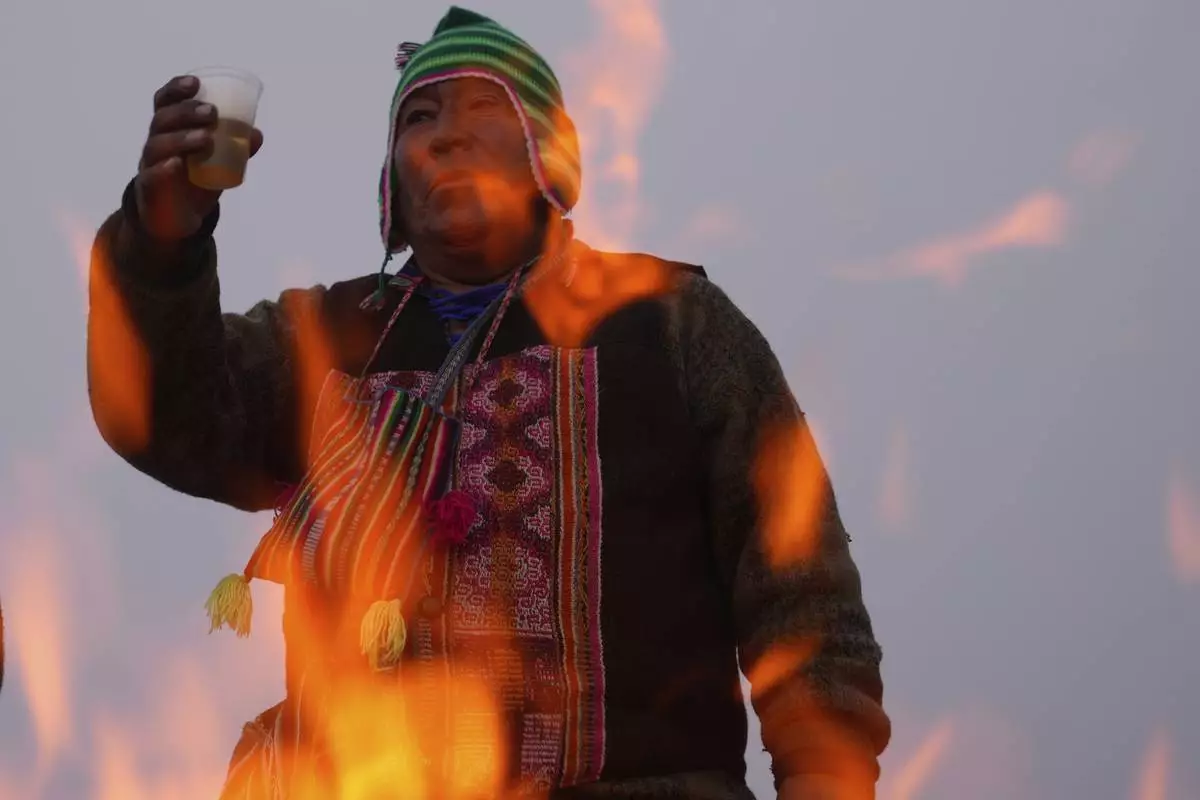
A statue of Jesus Christ towers over people burning offerings observing the month of Pachamama, or Mother Earth, performing an ancient tradition to ask for a good harvest, on La Cumbre, a mountain considered sacred on the outskirts of La Paz, Bolivia, Friday, Aug. 1, 2025. (AP Photo/Juan Karita)
A statue of Jesus Christ towers over people burning offerings observing the month of Pachamama, or Mother Earth, performing an ancient tradition to ask for a good harvest, on La Cumbre, a mountain considered sacred on the outskirts of La Paz, Bolivia, Friday, Aug. 1, 2025. (AP Photo/Juan Karita)
Spiritual leader Eusebio Huanca burns offerings observing the month of Pachamama, or Mother Earth, performing an ancient tradition to ask for a good harvest, on La Cumbre, a mountain considered sacred on the outskirts of La Paz, Bolivia, Friday, Aug. 1, 2025. (AP Photo/Juan Karita)

Spiritual leader Eusebio Huanca burns offerings observing the month of Pachamama, or Mother Earth, performing an ancient tradition to ask for a good harvest, on La Cumbre, a mountain considered sacred on the outskirts of La Paz, Bolivia, Friday, Aug. 1, 2025. (AP Photo/Juan Karita)

LOS ANGELES (AP) — A powerful winter storm swept across California on Wednesday, with heavy rain and gusty winds leading to evacuation warnings for mudslides in parts of Southern California, bringing near white-out snow conditions in the mountains and hazardous travel for millions of holiday drivers.

Forecasters said Southern California could see its wettest Christmas in years and warned about flash flooding. Areas scorched by January’s wildfires were under evacuation warnings, and Los Angeles County officials said Tuesday they were going door to door at about 380 especially vulnerable homes, ordering residents to evacuate because of the risk of landslides and debris flows.

The San Bernardino County Sheriff’s Department also issued an evacuation warning Wednesday morning for the community of Wrightwood, a mountain resort town in the San Gabriel Mountains about 80 miles (130 kilometers) northeast of Los Angeles, due to potential mud and debris flows from the storm.

Debris and mud flow was seen rushing down the road leading into Wrightwood in a social media video posted by county fire officials. Crews were working to evacuate some homes, the post said. County officials didn't immediately return questions about the evacuation.

Areas along the coast, including Malibu, were under flood warnings Wednesday, local officials said. Parts of Santa Barbara and Ventura counties were also watching for potential flooding. Other parts of Southern California were under wind and flood advisories. Further north, much of the Sacramento Valley and the San Francisco Bay Area were under a flood watch and high wind warning.

Early Wednesday morning, the Los Angeles Fire Department rescued a man trapped in a drainage tunnel in northwest LA that led down to a river.

Firefighters were able to get a ladder down through an opening, allowing the man to climb out, the fire department said. No injuries were reported, but the man is being evaluated.

In Monterey along the central coast, more than 5,000 people lost power Tuesday night due to a damaged power pole, according to Pacific Gas and Electric Co.

San Francisco and Los Angeles airports reported some minor flight delays Wednesday morning.

Conditions could worsen as multiple atmospheric rivers move across the state during one of the busiest travel weeks of the year. The storm in Los Angeles was expected to strengthen into Wednesday afternoon before tapering off later in the evening.

James Dangerfield, an 84-year-old Altadena resident, said his family and neighbor helped place sandbags in his backyard earlier this week. His neighborhood was under a flash flood warning as of Wednesday morning, but he wasn't too worried.

The street he lives on is on a hill, so most rain water flows away from them, he said. For now, he and his wife, Stephanie, planned on staying in the house and spending Christmas Eve with their two adult daughters and grandchildren.

“We’re just going to stay put and everybody will have to come to us. We’re not going to go anywhere," he said.

Southern California typically gets half an inch to 1 inch (1.3 to 2.5 centimeters) of rain this time of year, but this week many areas could see between 4 and 8 inches (10 to 20 centimeters), National Weather Service meteorologist Mike Wofford said. It could be even more in the mountains. Gusts could reach 60 to 80 mph (97 to 128 kph) in parts of the central coast.

Forecasters also warned that heavy snow and gusts were expected to create “near white-out conditions” in parts of the Sierra Nevada and make it “nearly impossible” to travel through the mountain passes. As of Wednesday morning, there was also a “considerable” avalanche risk around Lake Tahoe, according to the Sierra Avalanche Center, a nonprofit partnering with the U.S. Forest Service.

The National Weather Service said a winter storm warning would be in effect for the Greater Tahoe Region until Friday morning.

Atmospheric rivers transport moisture from the tropics to northern latitudes in long, narrow bands of water vapor that form over an ocean and flow through the sky.

Officials have taken steps to reduce the risk in and around the burn scars, with Los Angeles County installing K-rails, a type of barrier to help catch sliding debris from burned areas, as well as offering free sandbags to residents.

The storm has already caused damage in Northern California, where flash flooding led to water rescues and at least one death, authorities said.

The state has deployed emergency resources and first responders to several coastal and Southern California counties, and the California National Guard remains on standby.

Associated Press writers Sophie Austin in Sacramento and Jessica Hill in Las Vegas contributed to this report.

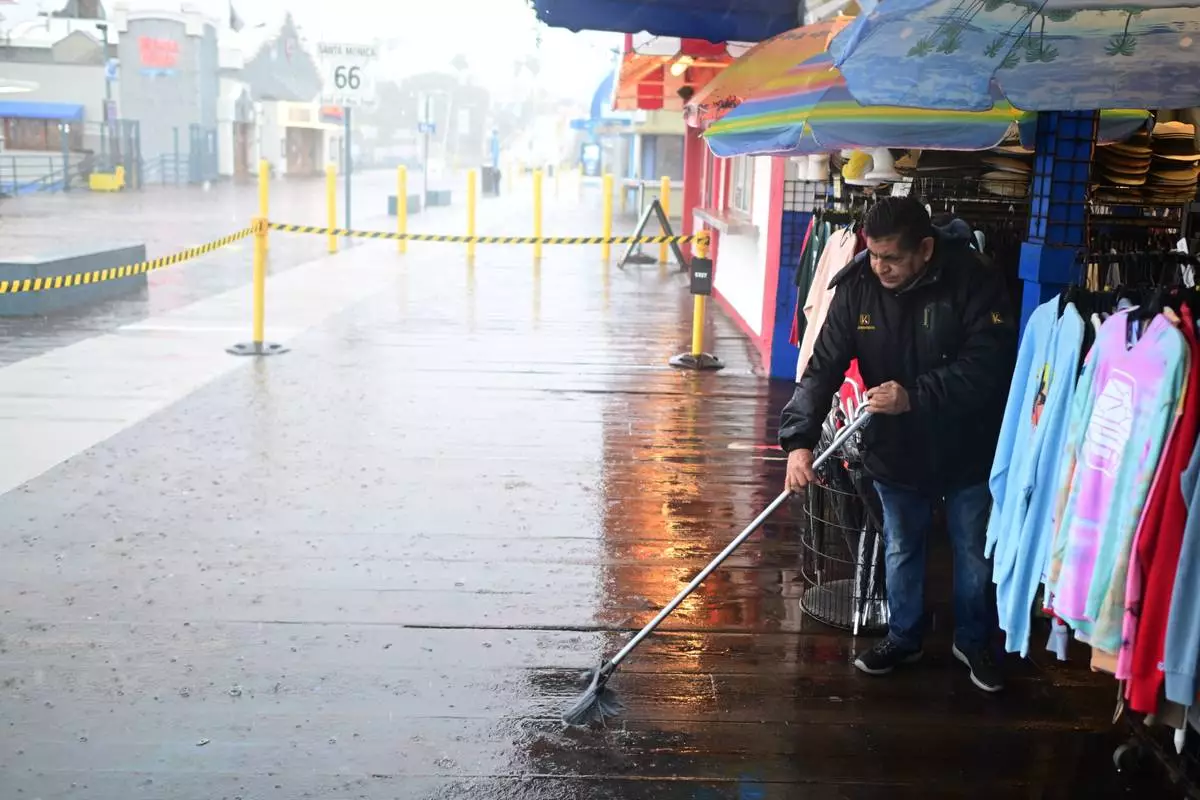
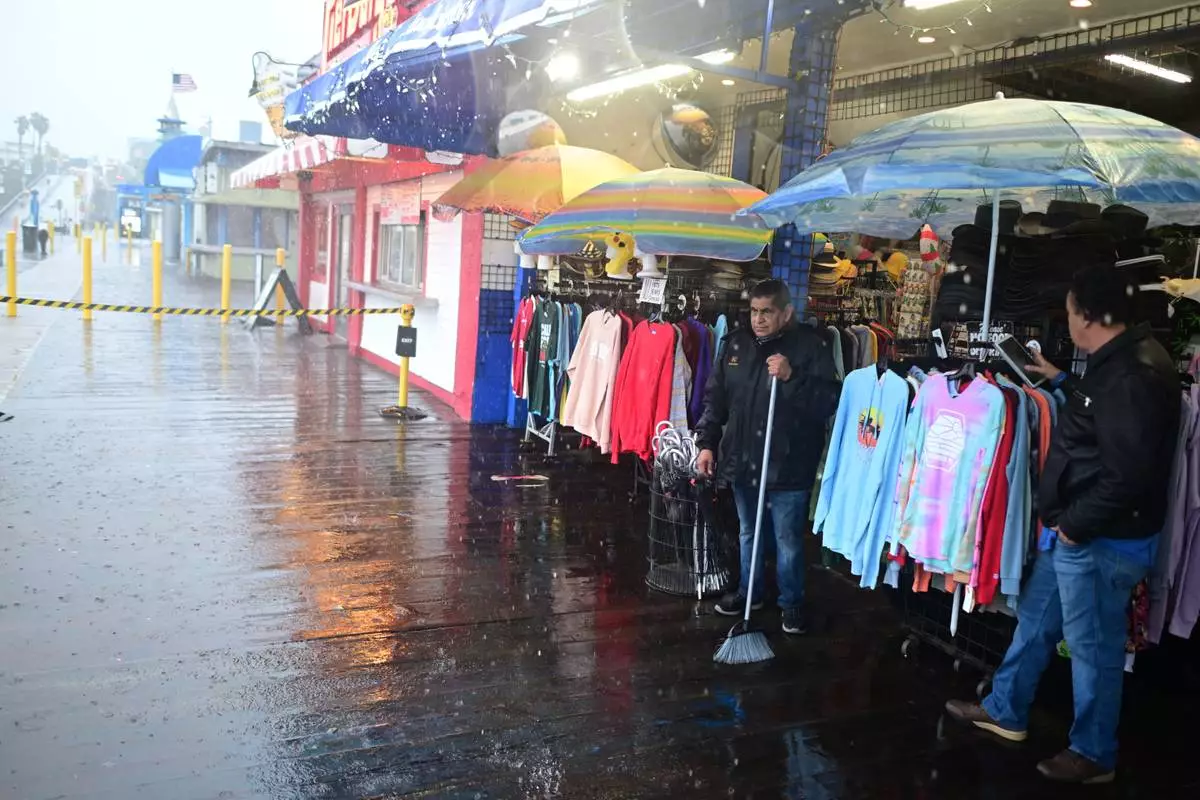
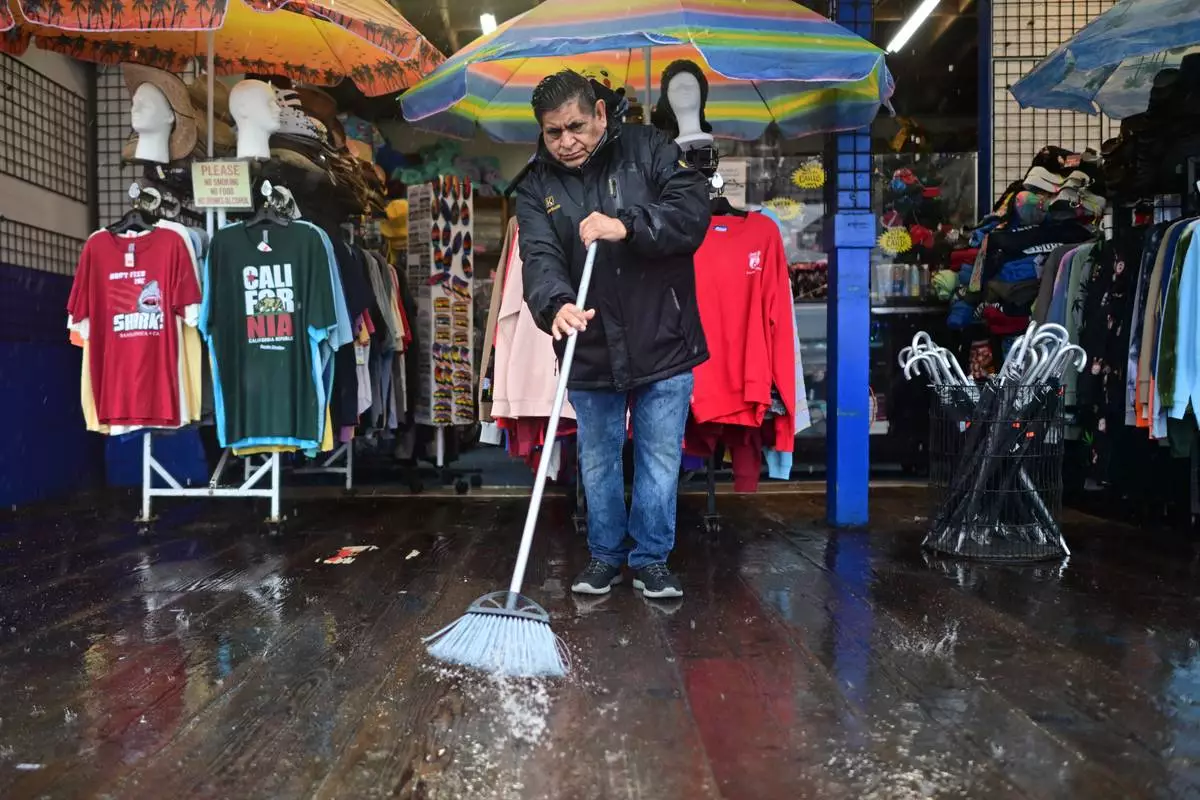
Miguel Lopez sweeps water from Marlene's Beachcomber on the Santa Monica pier Wednesday, Dec. 24, 2025, in Santa Monica, Calif. (AP Photo/Wally Skalij)

Miguel Lopez sweeps water from Marlene's Beachcomber on the Santa Monica pier Wednesday, Dec. 24, 2025, in Santa Monica, Calif. (AP Photo/Wally Skalij)

Miguel Lopez sweeps water from Marlene's Beachcomber on the Santa Monica pier Wednesday, Dec. 24, 2025, in Santa Monica, Calif. (AP Photo/Wally Skalij)

Miguel Lopez sweeps water from Marlene's Beachcomber on the Santa Monica pier Wednesday, Dec. 24, 2025, in Santa Monica, Calif. (AP Photo/Wally Skalij)

Miguel Lopez sweeps water from Marlene's Beachcomber on the Santa Monica pier Wednesday, Dec. 24, 2025, in Santa Monica, Calif. (AP Photo/Wally Skalij)

Miguel Lopez sweeps water from Marlene's Beachcomber on the Santa Monica pier Wednesday, Dec. 24, 2025, in Santa Monica, Calif. (AP Photo/Wally Skalij)

Miguel Lopez sweeps water from Marlene's Beachcomber on the Santa Monica pier Wednesday, Dec. 24, 2025, in Santa Monica, Calif. (AP Photo/Wally Skalij)

Miguel Lopez sweeps water from Marlene's Beachcomber on the Santa Monica pier Wednesday, Dec. 24, 2025, in Santa Monica, Calif. (AP Photo/Wally Skalij)

A tourist from China battles the rain on the Santa Monica pier Wednesday, Dec. 24, 2025, in Santa Monica, Calif. (AP Photo/Wally Skalij)

A tourist from China battles the rain on the Santa Monica pier Wednesday, Dec. 24, 2025, in Santa Monica, Calif. (AP Photo/Wally Skalij)

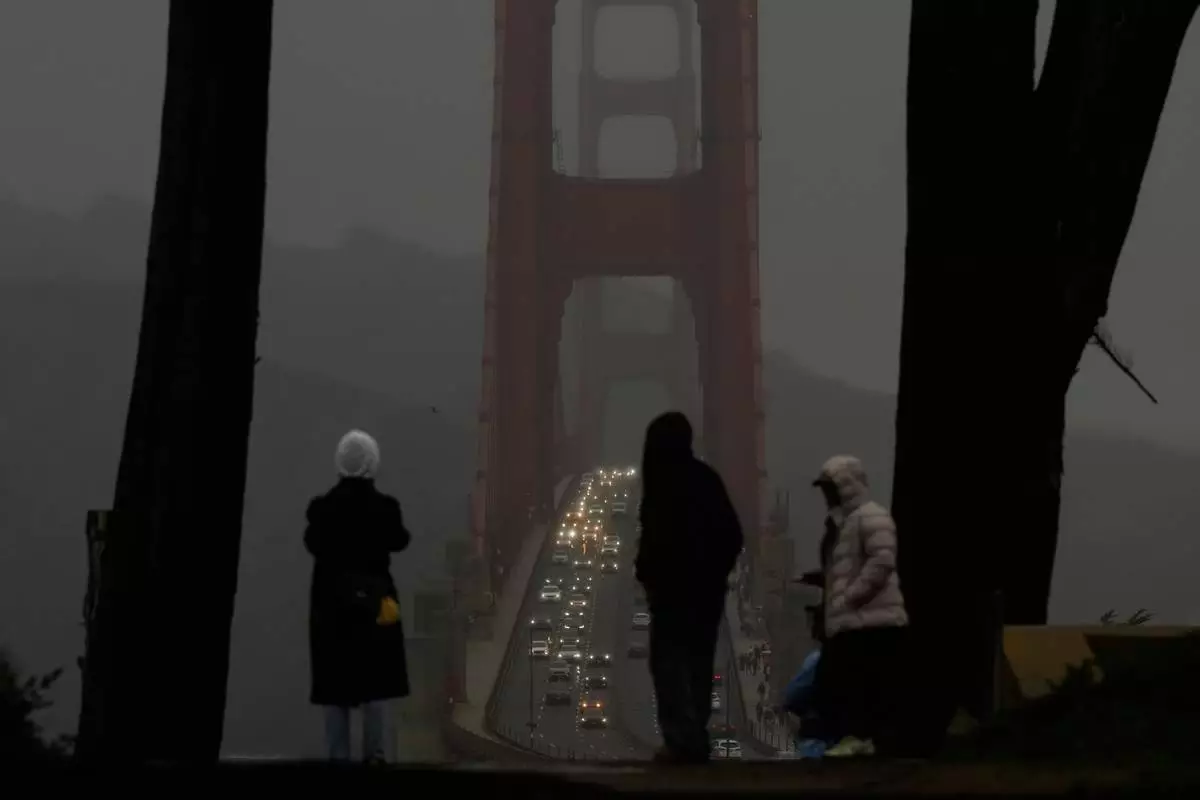
People look toward traffic on the Golden Gate Bridge from the Golden Gate Overlook in San Francisco, Tuesday, Dec. 23, 2025. (AP Photo/Jeff Chiu)

People look toward traffic on the Golden Gate Bridge from the Golden Gate Overlook in San Francisco, Tuesday, Dec. 23, 2025. (AP Photo/Jeff Chiu)

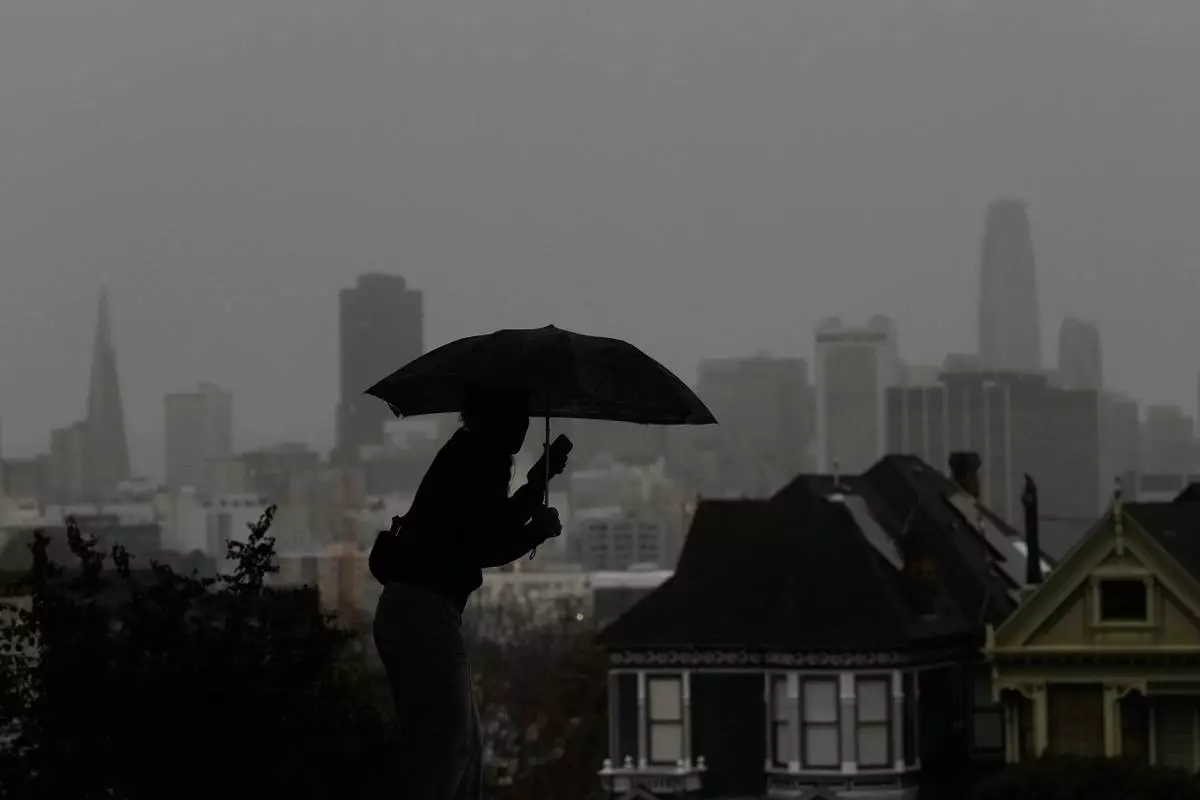
A pedestrian carries an umbrella while walking on a path at Alamo Square Park, in San Francisco, Tuesday, Dec. 23, 2025. (AP Photo/Jeff Chiu)

A pedestrian carries an umbrella while walking on a path at Alamo Square Park, in San Francisco, Tuesday, Dec. 23, 2025. (AP Photo/Jeff Chiu)

Recommended Articles