NEW YORK (AP) — The toll of wildfires is usually counted in acres burnt, property destroyed and lives lost to smoke and flames. But three studies published Wednesday suggest the cost to human health from the Maui and Los Angeles wildfires was substantially higher.
Two of the papers explore what happened after the Hawaii fire in August 2023 — one of the deadliest U.S. wildfires in a century. A third looks at the Los Angeles wildfires earlier this year.
The Maui fire was directly blamed for more than 100 deaths. But it also left 1 in 5 with lung damage and as many as half with symptoms of depression, the new research found. The month of the fire saw 13 suicide and overdose deaths, translating to nearly double the normal suicide and overdose death rates.
The study of the Los Angeles fires concluded that in addition to at least 30 deaths attributed to the fire, more than 400 other deaths could be blamed on the event, due to interruptions in health care and other factors.
The studies, published in two American Medical Association journals, add "a really important piece to the understanding of the true health risks from these extreme climatic events,” said Dr. Jonathan Patz, a University of Wisconsin environmental public health researcher who was not involved in the papers.
The results conform with existing understanding of the effects of extreme weather events, some experts said.
How to track the indirect impacts of disastrous events has been a continuing subject of academic research and even legislative proposals. There have been estimates of deaths caused by extreme heat, as well as research into the large-scale toll of wildfires driven by climate change.
“But this hones in, especially on (specific) fires,” Patz said.
One of the studies, co-led by Ruben Juarez of the University of Hawaii, looked at more than 1,100 adults six to 14 months after the Maui fire. It found lower lung function in people in areas close to the fire compared with those in lower-exposure areas. Overall, about 22% had below-normal lung function.
“It’s a stark reminder that wildfires can leave an invisible but lasting scar on respiratory health, long after the flames are gone,” Juarez said, in an email, noting that this Friday marks the two-year anniversary of the fire.
Patz called the finding “an important new contribution.”
Kristie Ebi of the University of Washington echoed that, noting that there is a growing understanding that wildfire smoke can be more toxic than standard air pollution.
“It’s not just leaves and branches and trees” that are burned, she said. “It’s buildings. It’s gasoline stations. It’s old houses that have asbestos in them. It’s automobiles. There are lots of components of wildfire smoke.”
She said the study suggests “this toxicity is affecting people's long-term lung function.”
Of course, the researchers don't know exactly how much smoke each person was exposed to, and other studies would need to be done to explore cause-and-effect, she added.
The study also found 40% saying their health had declined since the fires, with close to half talking about increased fatigue and weakness, eye irritation and lung-related symptoms.
Jonathan Purtle of New York University was the lead author of another study, which calculated rates of suicide and overdose deaths in Maui and Hawaii's four other counties. That research team found a 97% increase in suicides and overdose death rates on Maui during the month of the wildfires. The total number of suicide and overdose deaths was 13 that month — most of them suicides. That's a significant increase, Ebi said.
They also found a 46% increase in such deaths in all five counties, which may have been influenced by displaced Maui residents migrating to other islands, the authors said.
The increases did not last: Rates fells in the following months, the researchers found.
The third study was led by researchers in Finland. They used mathematical modeling to estimate that there were 440 more deaths in Los Angeles County from Jan. 5 to Feb. 1 than what would normally have been expected, and said those are related to the fires.
The Associated Press Health and Science Department receives support from the Howard Hughes Medical Institute’s Department of Science Education and the Robert Wood Johnson Foundation. The AP is solely responsible for all content.
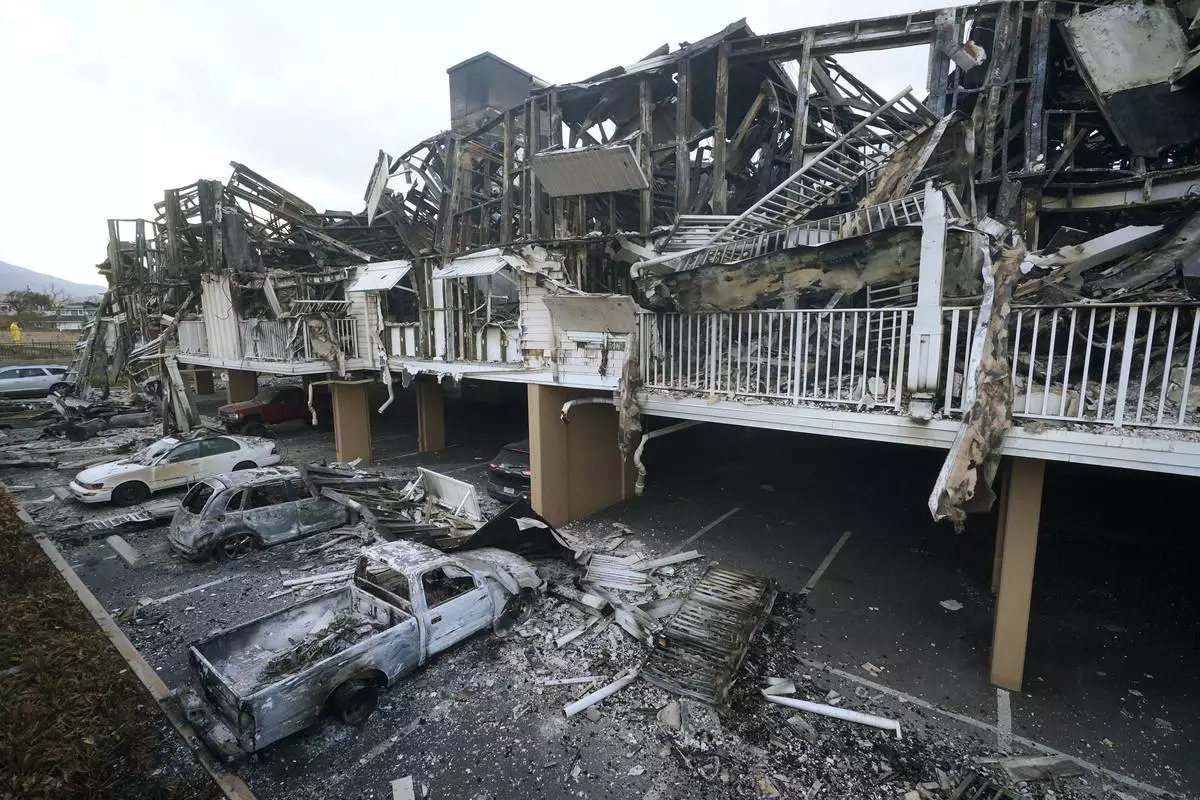
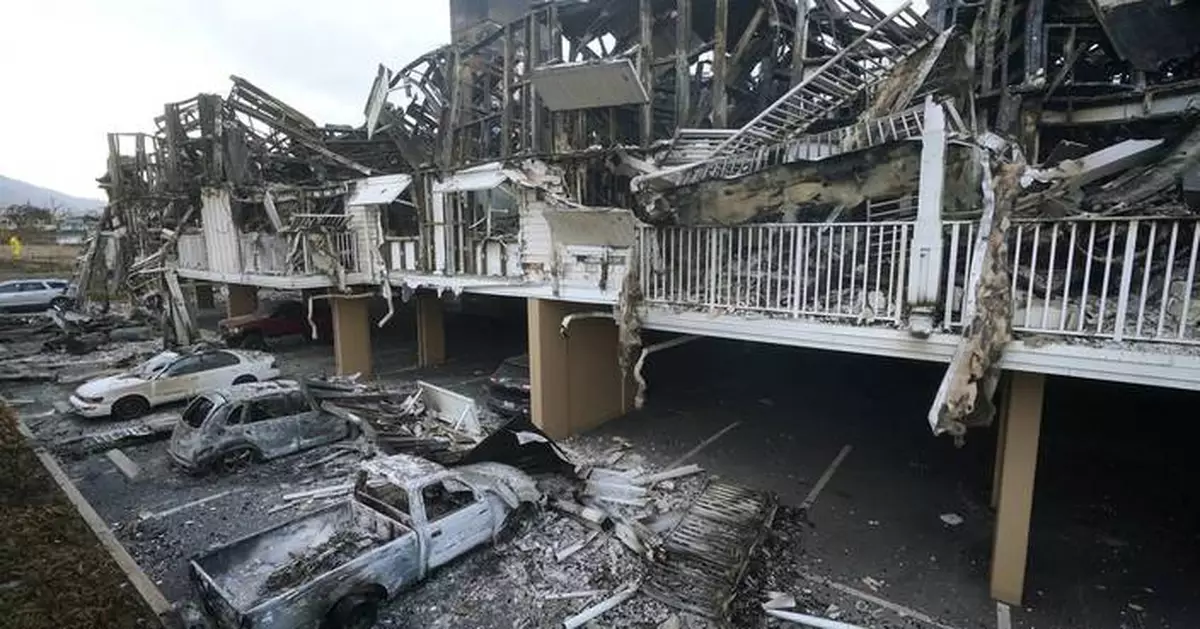
FILE - Damage from wildfires is seen in Lahaina, Hawaii, on Aug. 11, 2023 . (AP Photo/Rick Bowmer, File)
VATICAN CITY (AP) — In his most substantial critique of U.S., Russian and other military incursions in sovereign countries, Pope Leo XIV on Friday denounced how nations were using force to assert their dominion worldwide, “completely undermining” peace and the post-World War II international legal order.
“War is back in vogue and a zeal for war is spreading,” Leo told ambassadors from around the world who represent their countries’ interests at the Holy See.
Leo didn’t name individual countries that have resorted to force in his lengthy speech, the bulk of which he delivered in English in a break from the Vatican’s traditional diplomatic protocol of Italian and French. But his speech came amid the backdrop of the recent U.S. military operation in Venezuela to remove Nicolás Maduro from power, Russia's ongoing war in Ukraine and other conflicts.
The occasion was the pope’s annual audience with the Vatican diplomatic corps, which traditionally amounts to his yearly foreign policy address.
In his first such encounter, history’s first U.S.-born pope delivered much more than the traditional roundup of global hotspots. In a speech that touched on threats to religious freedom and the Catholic Church’s opposition to abortion and surrogacy, Leo lamented how the United Nations and multilateralism as a whole were increasingly under threat.
“A diplomacy that promotes dialogue and seeks consensus among all parties is being replaced by a diplomacy based on force, by either individuals or groups of allies,” he said. “The principle established after the Second World War, which prohibited nations from using force to violate the borders of others, has been completely undermined.”
“Instead, peace is sought through weapons as a condition for asserting one’s own dominion. This gravely threatens the rule of law, which is the foundation of all peaceful civil coexistence,” he said.
Leo did refer explicitly to tensions in Venezuela, calling for a peaceful political solution that keeps in mind the “common good of the peoples and not the defense of partisan interests.”
The U.S. military seized Maduro, the Venezuelan leader, in a surprise nighttime raid. The Trump administration is now seeking to control Venezuela’s oil resources and its government. The U.S. government has insisted Maduro's capture was legal, saying drug cartels operating from Venezuela amounted to unlawful combatants and that the U.S. is now in an “armed conflict” with them.
Analysts and some world leaders have condemned the Venezuela mission, warning that Maduro’s ouster could pave the way for more military interventions and a further erosion of the global legal order.
On Ukraine, Leo repeated his appeal for an immediate ceasefire and urgently called for the international community “not to waver in its commitment to pursuing just and lasting solutions that will protect the most vulnerable and restore hope to the afflicted peoples.”
On Gaza, Leo repeated the Holy See’s call for a two-state solution to the Israeli-Palestinian conflict and insisted on the Palestinians’ right to live in Gaza and the West Bank “in their own land.”
In other comments, Leo said the persecution of Christians around the world was “one of the most widespread human rights crises today,” affecting one in seven Christians globally. He cited religiously motivated violence in Bangladesh, Nigeria, the Sahel, Mozambique and Syria but said religious discrimination was also present in Europe and the Americas.
There, Christians “are sometimes restricted in their ability to proclaim the truths of the Gospel for political or ideological reasons, especially when they defend the dignity of the weakest, the unborn, refugees and migrants, or promote the family.”
Leo repeated the church’s opposition to abortion and euthanasia and expressed “deep concern” about projects to provide cross-border access to mothers seeking abortion.
He also described surrogacy as a threat to life and dignity. “By transforming gestation into a negotiable service, this violates the dignity both of the child, who is reduced to a product, and of the mother, exploiting her body and the generative process, and distorting the original relational calling of the family,” he said.
Associated Press religion coverage receives support through the AP’s collaboration with The Conversation US, with funding from Lilly Endowment Inc. The AP is solely responsible for this content.
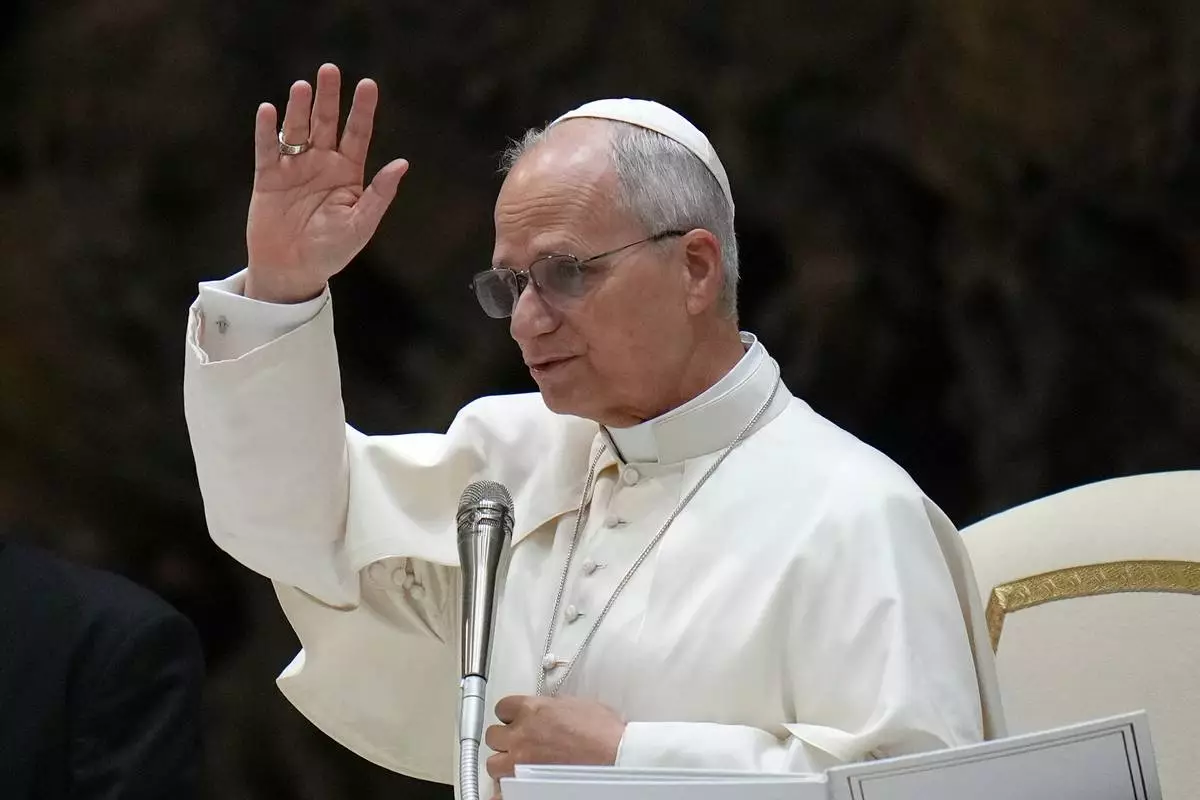
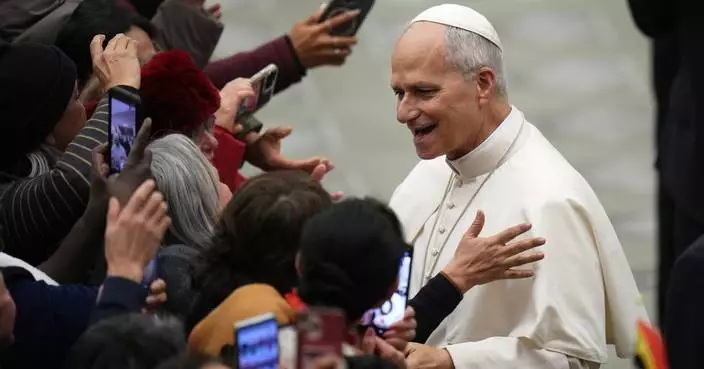
Pope Leo XIV holds his weekly general audience in the Paul VI Hall at the Vatican, Wednesday, Jan. 7, 2026. (AP Photo/Alessandra Tarantino)
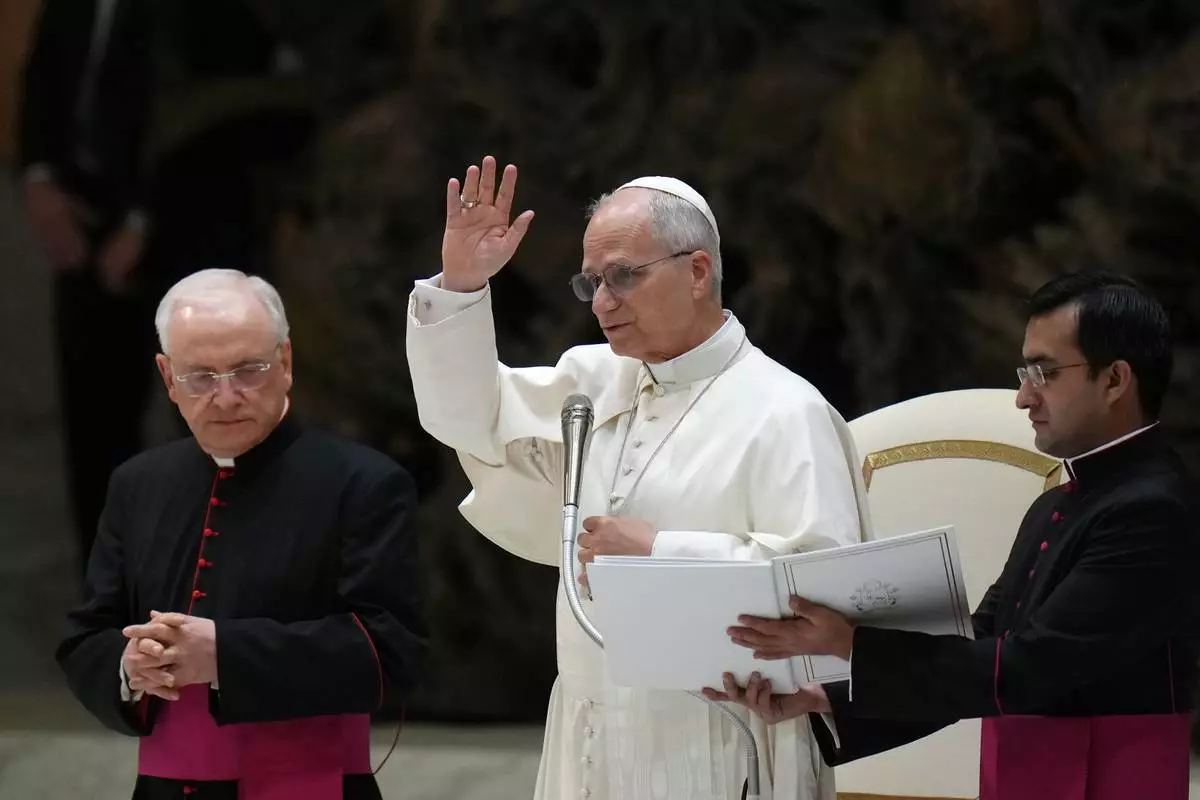
Pope Leo XIV holds his weekly general audience in the Paul VI Hall at the Vatican, Wednesday, Jan. 7, 2026. (AP Photo/Alessandra Tarantino)
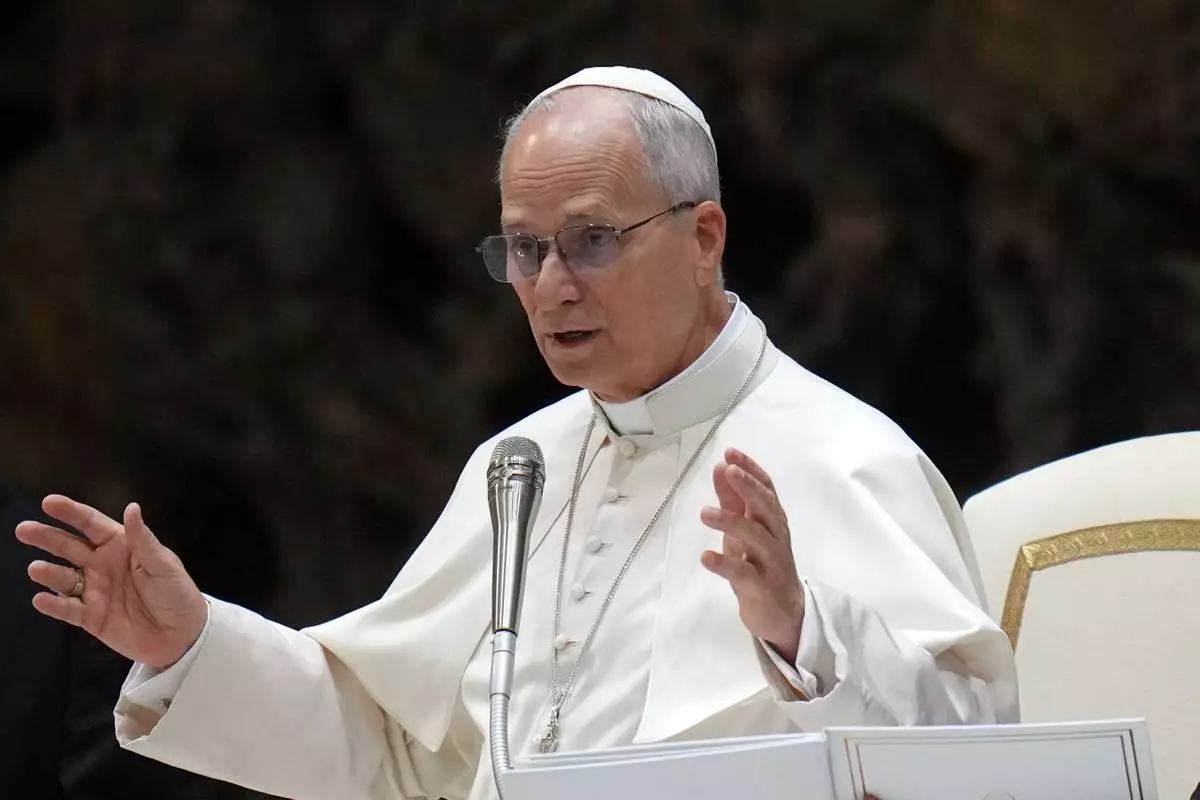
Pope Leo XIV holds his weekly general audience in the Paul VI Hall at the Vatican, Wednesday, Jan. 7, 2026. (AP Photo/Alessandra Tarantino)