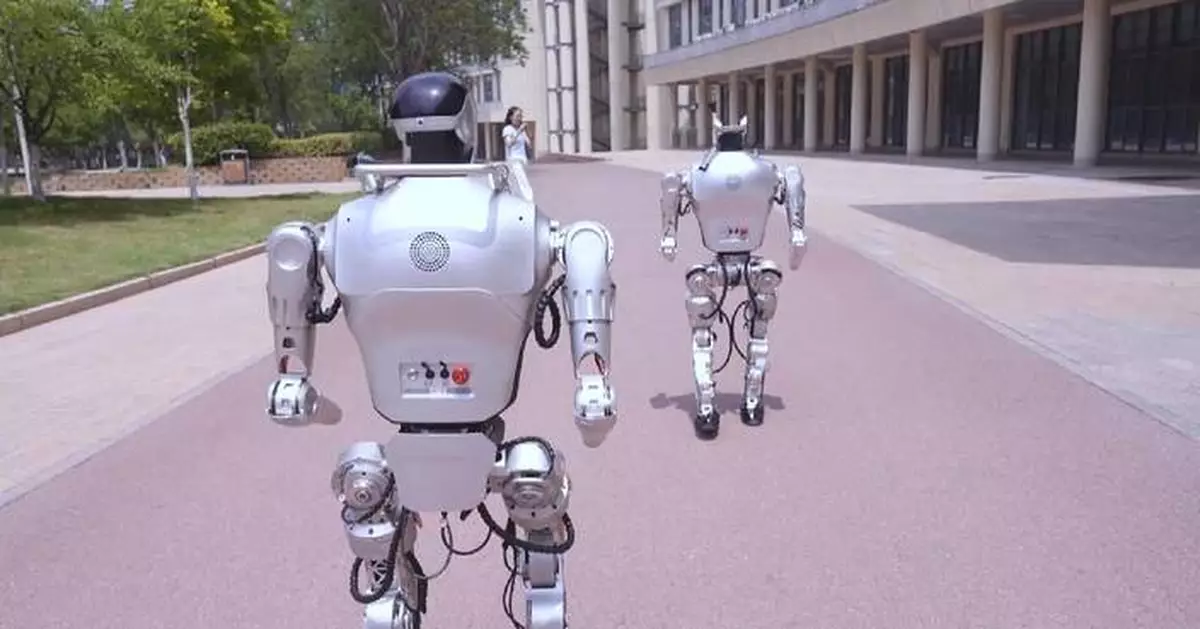
With the inaugural World Humanoid Robot Games approaching, Chinese teams are buzzing with excitement as they fine-tune their humanoid athletes for one of the Games' most challenging competitions -- the 4×100-meter relay race.
The Games, running from Aug 14-17 at Beijing's National Speed Skating Oval, will pit robots against each other in 26 events ranging from traditional sports to practical workplace tasks.
Among these events, the 4×100-meter relay race stands as one of the most challenging due to unpredictable factors, especially during baton exchanges.
In Jinan City, east China's Shandong Province, engineers at Yobotics -- an intelligent robotics company based in this city -- are training their competition robots.
The team has chosen to train their robots on the rubber running track within their company campus to simulate more authentic event conditions.
According to engineers, the 100-meter sprint is now routine for the company's E1 robots, so their current training focuses on perfecting the passing of the baton between two robots.
The 4×100-meter relay race will take place on a circular track consisting of nine lanes, with each lane measuring 1.22 meters in width.
According to the rules, a successful baton pass requires lateral body alignment between robots, which often leads to tripping or collisions.
"At high speeds, the critical factors are the operators' synergy and control precision. Even a 0.5mm over- or under-push could drastically impact performance. Operators must maintain steady hands, extensive robot familiarity, and adaptability to dynamic conditions," said Lu Na, an algorithm engineer from Yobotics.
The team is now working overtime to conduct performance tests, collect data and optimize parameters. With millions of data points accumulated, they aim to minimize contact during close-proximity relays, striving for a flawless baton pass.
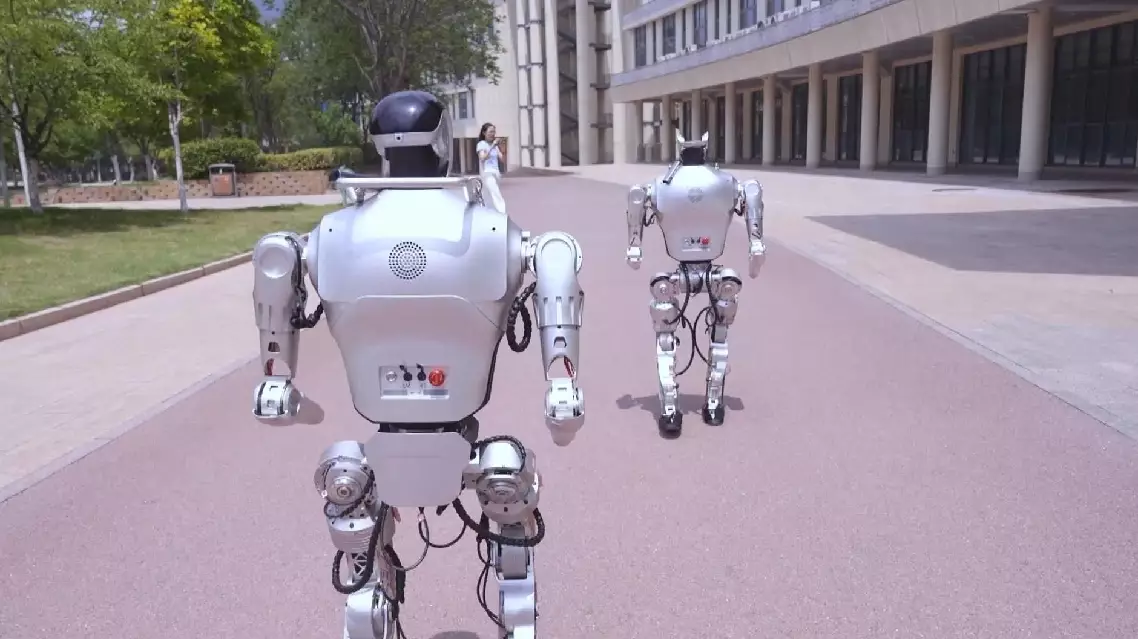
Chinese teams prepare for relay events at World Humanoid Robot Games