Housing Department responds to Ombudsman's direct investigation report
Regarding a report released by the Office of the Ombudsman today (August 7) on its direct investigation into "Housing Department's Management of Public Housing Estates: Air-conditioner Dripping", the Housing Department (HD) expressed appreciation to the Ombudsman for recognising the pro-active attitude and initiative of the Housing Authority/HD in implementing enhancement measures in managing water dripping from air-conditioners in public housing estates to continuously improve the effectiveness of estate management.
The HD has implemented multiple measures to address the issue of water dripping from air-conditioners in public housing estates. These include the launching of the Installation Programme of Condensation Drain-pipe for Air-conditioners in 2006 to put in place condensation drain pipes in public rental housing (PRH) flats to facilitate the discharge of condensation water from air-conditioners. Since 2008, water dripping from air-conditioners has been included in the Marking Scheme for Estate Management Enforcement in Public Housing Estates (Marking Scheme), with follow-up actions handled through daily patrols and inspections by special operation teams. In addition, the HD adopts information technology, including the trial use of the "Mobile Application System for Daily Patrol" which enables frontline security personnel and building supervisors to report cases of water dripping from air-conditioners in real time for swift follow-up actions. The HD is also actively exploring the use of professional technological equipment to assist in identifying the source of water dripping.
The number of complaints regarding water dripping from air-conditioners received by the HD has significantly decreased by 93 per cent, from approximately 18 900 cases in 2005 to an average of about 1 300 cases per year from 2022 to 2024, accounting for 0.16 per cent of about 800 000 PRH households and clearly reflecting that the effectiveness of the multiple measures implemented by the HD in the handling of cases for water dripping from air-conditioners.
The HD has further implemented enhanced measures in December 2024 by giving five days for concerned households to rectify any water dripping problem from their air-conditioners, failing which, action would be taken immediately under the Marking Scheme. Meanwhile, enforcement efficiency has been improved by allowing security supervisors in all public housing estates to issue "Notification Slips" to offending households on the spot. The HD will continue to strengthen staff training and supervision of outsourced property management companies.
Furthermore, the HD will continue to strengthen publicity and education for PRH households through various channels, reminding residents to regularly maintain and repair air-conditioners. Since households sometimes may not be aware of water dripping from their air-conditioners, the HD encourages affected individuals to provide information and work together to identify the source of water dripping.
"We would like to thank the Ombudsman for the affirmation and recognition of our efforts, and appreciate its valuable views on the current mechanisms and measures. We accept the relevant recommendations and will continue to streamline our workflow, thereby ensuring such cases can be detected and addressed promptly," an HD spokesman said.

Source: AI-found images
Government implements multiple measures to promote smart, green and modern logistics development
The Transport and Logistics Bureau (TLB) announced today (January 16) the implementation of various measures, including the formal rollout of the Port Community System (PCS) and Environmental, Social and Governance (ESG) Data Collection Tools, as well as the release of the findings of the planning study on the development of a modern logistics cluster in Hung Shui Kiu/Ha Tsuen New Development Area (HSK/HT NDA), with a view to promoting the smart, green, sustainable and modern development of Hong Kong's logistics industry through a multipronged approach.
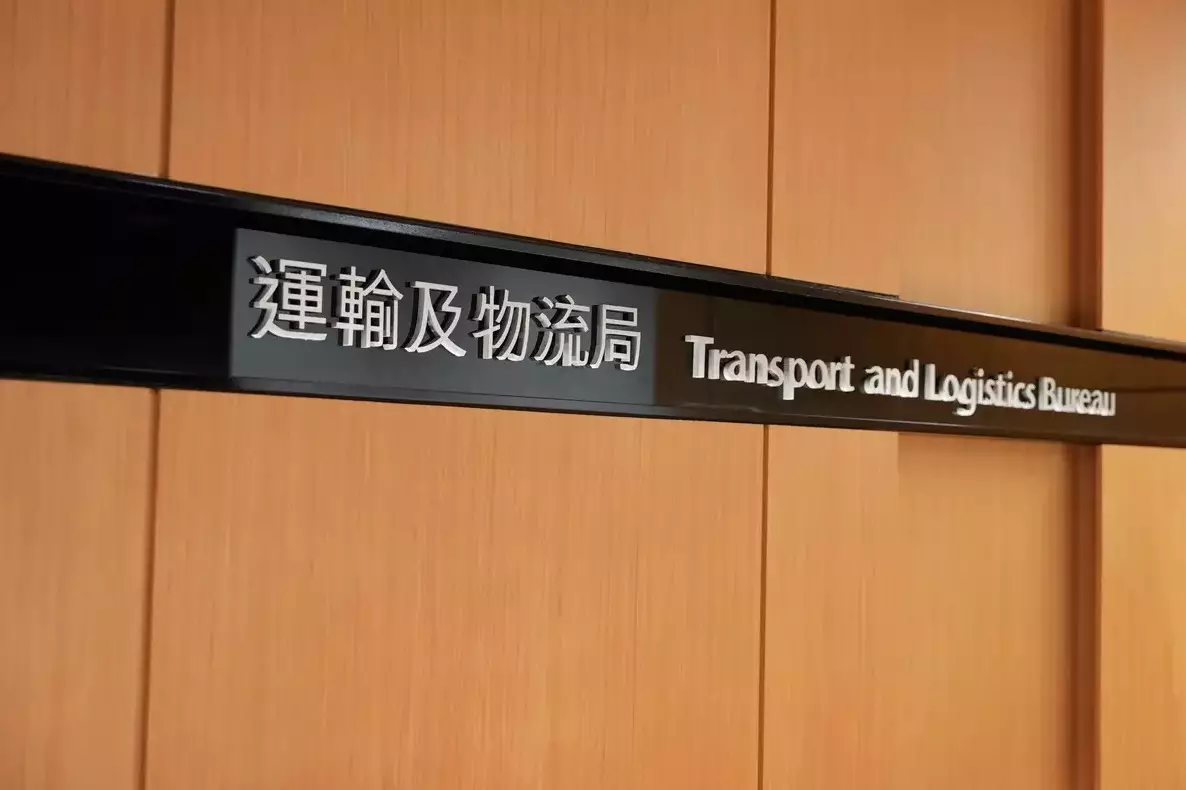
The Transport and Logistics Bureau (TLB), Photo by Bastille Post
The Secretary of Transport and Logistics, Ms Mable Chan, said, "Our country has long been providing solid backing for Hong Kong's maritime development. The Recommendations for Formulating the 15th Five-Year Plan (FYP) recently promulgated have clearly stated the objective of consolidating and enhancing Hong Kong's status as an international maritime centre. The Outline Development Plan for the Guangdong-Hong Kong-Macao Greater Bay Area also mentioned the active implementation of various measures to promote Hong Kong's maritime development. Since the Action Plan on the Modern Logistics Development (the Action Plan) has been promulgated for two years, with the full co-operation of the industry, we have completely implemented all action measures and been leading the Hong Kong logistics industry's transition towards high technology adoption and sustainable growth, thereby enhancing the industry's international competitiveness. We will continue to follow the guidance of the Recommendations for Formulating the 15th FYP, leverage Hong Kong's unique advantages of enjoying strong support of the motherland and being closely connected to the world to maintain our position as the region's leading international logistics hub, thereby better integrating into and serving the overall national development."
The logistics industry is one of the pillar industries of Hong Kong. To promote the sustainable and high-quality development of the industry, the Government promulgated the Action Plan in 2023, which formulated eight strategies and 24 action measures to assist the industry in embracing the new era of smart, green and modern logistics. Apart from a number of subsidy schemes to assist the industry in upgrading their operations by adopting smart and green logistics solutions and taking relevant training courses, as well as release land parcels to meet the industry's demand for premium logistics sites in the short to medium term, the Government is also working at full steam to build the new image of modern logistics as "smart, innovative, high-end" and reach out to young people on campus through the Curriculum on Logistics Industry and internship scheme, among others in order to attract young people to join the industry. Externally, on one hand, we commenced logistics co-operation with Guangxi, Chongqing and Chengdu with a view to exploring new cargo sources for Hong Kong. On the other hand, we enhanced overseas promotions to explore business opportunities together with the industry in Belt and Road countries.
PCS
In terms of smart logistics, the PCS, a critical digital infrastructure developed by the Government with over $200 million in funding, was formally rolled out today. It marks a significant milestone for the digital transformation of Hong Kong's port and logistics development.
The system provides one-stop, round-the-clock, real-time cargo tracking and links up sea, land, and air transport networks, thereby holistically enhancing the transparency, efficiency and interconnectivity of the logistics chain. Apart from its core function of real-time cargo tracking, the system will also offer value-added electronic services such as the "One-Data-Multiple-Declarations" function. By facilitating cargo import and export declarations by the industry, the system will provide one-stop services for local logistics and trading companies, thereby supporting the upgrading of the industry.
At today's PCS rollout ceremony, the TLB also signed a tripartite Memorandum of Understanding with the Logistics and Supply Chain MultiTech R&D Centre and a local logistics start-up company, FUNDel, to accelerate the connection between the PCS and data platforms of the logistics industry, as well as study the utilisation of the trusted cargo flow data on the PCS to help financial institutions assess trade finance applications filed by relevant logistics small and medium-sized enterprises (SMEs), thereby supporting the sustainable development of the logistics industry.
Findings of the planning study on the development of Hung Shui Kiu/Ha Tsuen modern logistics cluster
The findings of the planning study on the development of a modern logistics cluster in the HSK/HT NDA were also announced today. To address the industry's long-term demand for logistics sites, the Government proposed to develop modern logistics clusters in the HSK/HT NDA. The relevant planning study commenced in March 2024 and was completed at the end of 2025.
After conducting a comprehensive consultation with the trade and considering comments from various stakeholders, the study suggests that the logistics cluster should adopt three major development directions, namely be "enterprise-oriented", have a "market-enabling environment" and an "innovative approach to drive industry development". It also suggests measures such as providing tailor-made entry terms for anchor enterprises and increasing the flexibility of development modes, with a view to ensuring the development of the logistics cluster meets the trends and demands of the market.
The TLB plans to invite the industry to submit expressions of interest for the first logistics cluster site this year, and will draw up the relevant land lease terms and development mode after taking into account the intents of the industry to ensure that they keep pace with industry's development needs.
The Study Report has been uploaded to the website of the planning study on the development of a modern logistics cluster in HSK/HT NDA (www.lc-hskht.hk).
ESG Data Collection Tools
ESG is a new international development trend for the logistics trade. Further to the Government's announcement of the Roadmap for ESG Development for Logistics Industry in June 2025 which has outlined a clear way forward for adopting ESG by logistics SMEs, the TLB today further released a set of ESG Data Collection Tools (the Toolkit) tailored for logistics SMEs, with a view to assisting them in taking the first step towards putting ESG into practice.
The Toolkit includes a user-friendly data collection template, a data dictionary and a user manual. It aims to equip SMEs with the ability to collect and record ESG data early and use the collected data to prepare ESG data reports that fulfil international ESG disclosure requirements. In the long run, logistics SMEs may even utilise the data for reviewing and improving their ESG performance, thereby helping to build up Hong Kong logistics industry's sustainability credentials and enhance its competitiveness. Interested companies may register at the ESG Resource Centre on the website of Hong Kong Logistics Development Council (www.logisticshk.gov.hk/en/ESG/ESG_collection.php) to obtain the Toolkit for free.
The TLB will continue to closely liaise and co-operate with the industry, and further consolidate and enhance Hong Kong's status as an international logistics hub through various policies and measures. The Government will also ensure that the logistics industry will maintain its edge in the international market and drive the development of trading and maritime industries at the same time by seizing the enormous opportunities brought by national and regional development, thereby promoting the high-quality development of Hong Kong's economy.

The future development of a modern logistics cluster in Hung Shui Kiu/Ha Tsuen New Development Area (HSK/HT NDA), Photo source: the official website of the Lands Department