Skip to Content Facebook Feature Image

Harvard scientists say research could be set back years after funding freeze

ENT

Harvard scientists say research could be set back years after funding freeze
ENT

ENT

Harvard scientists say research could be set back years after funding freeze

2025-08-07 20:53 Last Updated At:21:00

CAMBRIDGE, Mass. (AP) — Harvard University professor Alberto Ascherio's research is literally frozen.

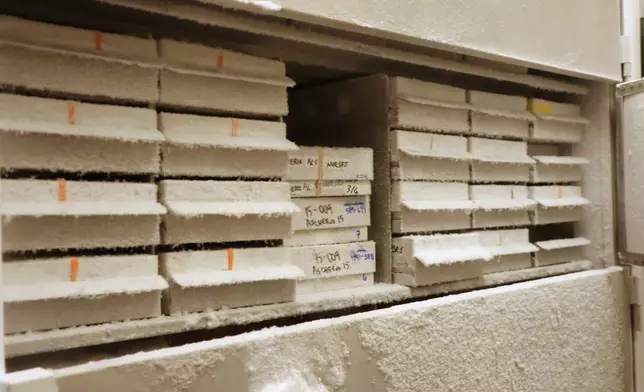
Collected from millions of U.S. soldiers over two decades using millions of dollars from taxpayers, the epidemiology and nutrition scientist has blood samples stored in liquid nitrogen freezers within the university’s T.H. Chan School of Public Health.

More Images
Blood samples used by Harvard University professor Alberto Ascherio to study the cause of neurodegenerative diseases are stored in a freezer at the university's T.H. Chan School of Public Health on Tuesday, Aug. 5, 2025 in Boston. (AP Photo/Leah Willingham)
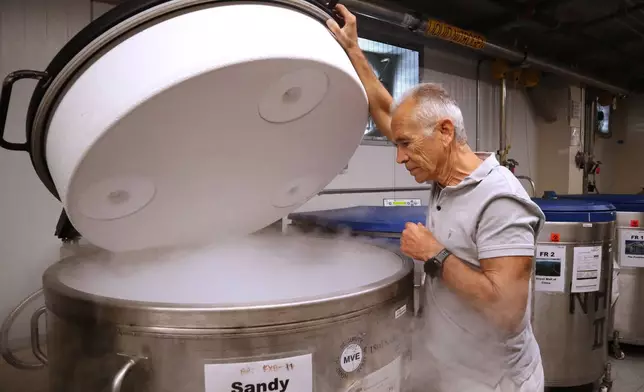
Blood samples used by Harvard University professor Alberto Ascherio to study the cause of neurodegenerative diseases are stored in a freezer at the university's T.H. Chan School of Public Health on Tuesday, Aug. 5, 2025 in Boston. (AP Photo/Leah Willingham)
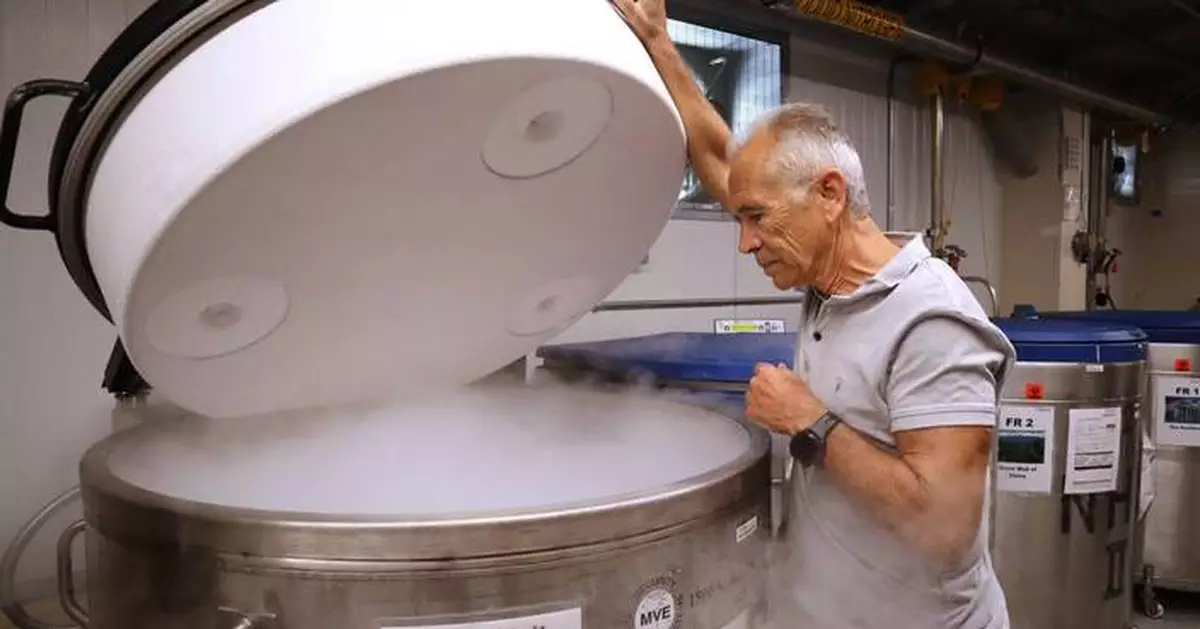
Harvard University professor Alberto Ascherio opens a liquid nitrogen freezer used to store blood samples used for research at the university's T.H. Chan School of Public Health on Tuesday, Aug. 5, 2025 in Boston. (AP Photo/Leah Willingham)

Harvard University professor Alberto Ascherio opens a liquid nitrogen freezer used to store blood samples used for research at the university's T.H. Chan School of Public Health on Tuesday, Aug. 5, 2025 in Boston. (AP Photo/Leah Willingham)

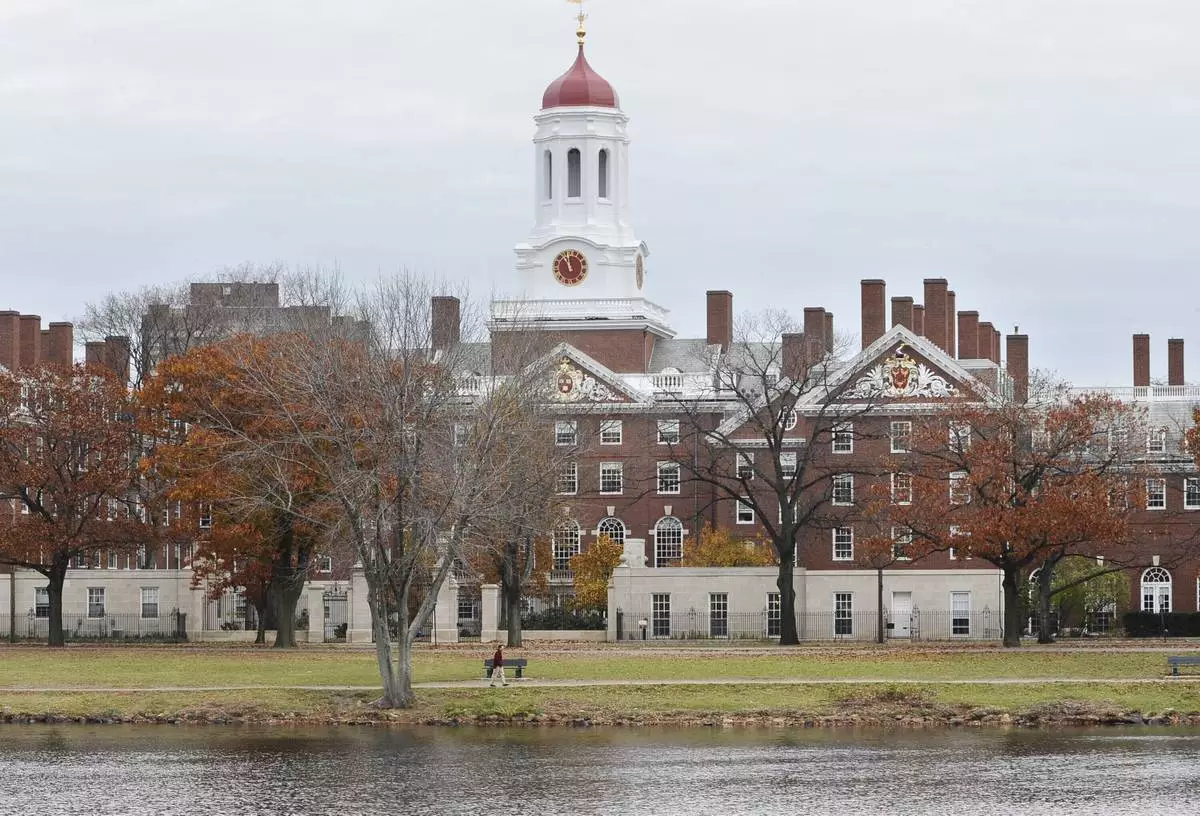
FILE - This Nov. 13, 2008 file photo shows the campus of Harvard University in Cambridge, Mass. (AP Photo/Lisa Poole, File)

FILE - This Nov. 13, 2008 file photo shows the campus of Harvard University in Cambridge, Mass. (AP Photo/Lisa Poole, File)

Blood samples used by Harvard University professor Alberto Ascherio to study the cause of neurodegenerative diseases are stored in a freezer at the university's T.H. Chan School of Public Health on Tuesday, Aug. 5, 2025 in Boston. (AP Photo/Leah Willingham)

Blood samples used by Harvard University professor Alberto Ascherio to study the cause of neurodegenerative diseases are stored in a freezer at the university's T.H. Chan School of Public Health on Tuesday, Aug. 5, 2025 in Boston. (AP Photo/Leah Willingham)

Harvard University professor Alberto Ascherio opens a liquid nitrogen freezer used to store blood samples used for research at the university's T.H. Chan School of Public Health on Tuesday, Aug. 5, 2025 in Boston. (AP Photo/Leah Willingham)

Harvard University professor Alberto Ascherio opens a liquid nitrogen freezer used to store blood samples used for research at the university's T.H. Chan School of Public Health on Tuesday, Aug. 5, 2025 in Boston. (AP Photo/Leah Willingham)

The samples are key to his award-winning research, which seeks a cure to multiple sclerosis and other neurodegenerative diseases. But for months, Ascherio has been unable to work with the samples because he lost $7 million in federal research funding, a casualty of Harvard's fight with the Trump administration.

“It's like we have been creating a state-of-the-art telescope to explore the universe, and now we don’t have money to launch it,” said Ascherio. “We built everything and now we are ready to use it to make a new discovery that could impact millions of people in the world and then, 'Poof. You're being cut off.'”

The loss of an estimated $2.6 billion in federal funding at Harvard has meant that some of the world's most prominent researchers are laying off young researchers. They are shelving years or even decades of research, into everything from opioid addiction to cancer.

And despite Harvard's lawsuits against the administration, and settlement talks between the warring parties, researchers are confronting the fact that some of their work may never resume.

The funding cuts are part of a monthslong battle that the Trump administration has waged against some the country's top universities including Columbia, Brown and Northwestern. The administration has taken a particularly aggressive stance against Harvard, freezing funding after the country's oldest university rejected a series of government demands issued by a federal antisemitism task force.

The government had demanded sweeping changes at Harvard related to campus protests, academics and admissions — meant to address government accusations that the university had become a hotbed of liberalism and tolerated anti-Jewish harassment.

Harvard responded by filing a federal lawsuit, accusing the Trump administration of waging a retaliation campaign against the university. In the lawsuit, it laid out reforms it had taken to address antisemitism but also vowed not to “surrender its independence or relinquish its constitutional rights.”

“Make no mistake: Harvard rejects antisemitism and discrimination in all of its forms and is actively making structural reforms to eradicate antisemitism on campus," the university said in its legal complaint. “But rather than engage with Harvard regarding those ongoing efforts, the Government announced a sweeping freeze of funding for medical, scientific, technological, and other research that has nothing at all to do with antisemitism.”

The Trump administration denies the cuts were made in retaliation, saying the grants were under review even before the demands were sent in April. It argues the government has wide discretion to cancel federal contracts for policy reasons.

The funding cuts have left Harvard's research community in a state of shock, feeling as if they are being unfairly targeted in a fight has nothing to do with them. Some have been forced to shutter labs or scramble to find nongovernment funding to replace lost money.

In May, Harvard announced that it would put up at least $250 million of its own money to continue research efforts, but university President Alan Garber warned of “difficult decisions and sacrifices” ahead.

Ascherio said the university was able to pull together funding to pay his researchers’ salaries until next June. But he’s still been left without resources needed to fund critical research tasks, like lab work. Even a year's delay can put his research back five years, he said.

“It’s really devastating,” agreed Rita Hamad, the director of the Social Policies for Health Equity Research Center at Harvard, who had three multiyear grants totaling $10 million canceled by the Trump administration. The grants funded research into the impact of school segregation on heart health, how pandemic-era policies in over 250 counties affected mental health, and the role of neighborhood factors in dementia.

At the School of Public Health, where Hamad is based, 190 grants have been terminated, affecting roughly 130 scientists.

“Just thinking about all the knowledge that’s not going to be gained or that is going to be actively lost," Hamad said. She expects significant layoffs on her team if the funding freeze continues for a few more months. "It’s all just a mixture of frustration and anger and sadness all the time, every day."

John Quackenbush, a professor of computational biology and bioinformatics at the School of Public Health, has spent the past few months enduring cuts on multiple fronts.

In April, a multimillion dollar grant was not renewed, jeopardizing a study into the role sex plays in disease. In May, he lost about $1.2 million in federal funding for in the coming year due to the Harvard freeze. Four departmental grants worth $24 million that funded training of doctoral students also were canceled as part of the fight with the Trump administration, Quackenbush said.

“I’m in a position where I have to really think about, ‘Can I revive this research?’” he said. “Can I restart these programs even if Harvard and the Trump administration reached some kind of settlement? If they do reach a settlement, how quickly can the funding be turned back on? Can it be turned back on?”

The researchers all agreed that the funding cuts have little or nothing to do with the university's fight against antisemitism. Some, however, argue changes at Harvard were long overdue and pressure from the Trump administration was necessary.

Bertha Madras, a Harvard psychobiologist who lost funding to create a free, parent-focused training to prevent teen opioid overdose and drug use, said she’s happy to see the culling of what she called “politically motivated social science studies.”

Madras said pressure from the White House has catalyzed much-needed reform at the university, where several programs of study have “really gone off the wall in terms of being shaped by orthodoxy that is not representative of the country as a whole.”

But Madras, who served on the President’s Commission on Opioids during Trump’s first term, said holding scientists’ research funding hostage as a bargaining chip doesn’t make sense.

“I don’t know if reform would have happened without the president of the United States pointing the bony finger at Harvard," she said. “But sacrificing science is problematic, and it’s very worrisome because it is one of the major pillars of strength of the country.”

Quackenbush and other Harvard researchers argue the cuts are part of a larger attack on science by the Trump administration that puts the country's reputation as the global research leader at risk. Support for students and post-doctoral fellows has been slashed, visas for foreign scholars threatened, and new guidelines and funding cuts at the NIH will make it much more difficult to get federal funding in the future, they said. It also will be difficult to replace federal funding with money from the private sector.

“We’re all sort of moving toward this future in which this 80-year partnership between the government and the universities is going to be jeopardized,” Quackenbush said. “We’re going to face real challenges in continuing to lead the world in scientific excellence.”

Blood samples used by Harvard University professor Alberto Ascherio to study the cause of neurodegenerative diseases are stored in a freezer at the university's T.H. Chan School of Public Health on Tuesday, Aug. 5, 2025 in Boston. (AP Photo/Leah Willingham)

Blood samples used by Harvard University professor Alberto Ascherio to study the cause of neurodegenerative diseases are stored in a freezer at the university's T.H. Chan School of Public Health on Tuesday, Aug. 5, 2025 in Boston. (AP Photo/Leah Willingham)
Harvard University professor Alberto Ascherio opens a liquid nitrogen freezer used to store blood samples used for research at the university's T.H. Chan School of Public Health on Tuesday, Aug. 5, 2025 in Boston. (AP Photo/Leah Willingham)
Harvard University professor Alberto Ascherio opens a liquid nitrogen freezer used to store blood samples used for research at the university's T.H. Chan School of Public Health on Tuesday, Aug. 5, 2025 in Boston. (AP Photo/Leah Willingham)
FILE - This Nov. 13, 2008 file photo shows the campus of Harvard University in Cambridge, Mass. (AP Photo/Lisa Poole, File)

FILE - This Nov. 13, 2008 file photo shows the campus of Harvard University in Cambridge, Mass. (AP Photo/Lisa Poole, File)

Blood samples used by Harvard University professor Alberto Ascherio to study the cause of neurodegenerative diseases are stored in a freezer at the university's T.H. Chan School of Public Health on Tuesday, Aug. 5, 2025 in Boston. (AP Photo/Leah Willingham)
Blood samples used by Harvard University professor Alberto Ascherio to study the cause of neurodegenerative diseases are stored in a freezer at the university's T.H. Chan School of Public Health on Tuesday, Aug. 5, 2025 in Boston. (AP Photo/Leah Willingham)
Harvard University professor Alberto Ascherio opens a liquid nitrogen freezer used to store blood samples used for research at the university's T.H. Chan School of Public Health on Tuesday, Aug. 5, 2025 in Boston. (AP Photo/Leah Willingham)
Harvard University professor Alberto Ascherio opens a liquid nitrogen freezer used to store blood samples used for research at the university's T.H. Chan School of Public Health on Tuesday, Aug. 5, 2025 in Boston. (AP Photo/Leah Willingham)
The NFL’s final weekend of the regular season features a winner-take-all game between the Ravens-Steelers and a fight for the NFC’s No. 1 seed between the Seahawks-49ers.

There’s also the Panthers-Buccaneers matchup that will decide the NFC South, though it could take 21 hours more to determine the division champion.

Twelve of the 14 playoff spots have been secured and four teams are vying for the final two. Four division champions have been settled and only the Packers have locked up a seed, so they have little to play for in their final game.

Pro Picks breaks down all the games:

Line: Cowboys minus 3 1/2

Dak Prescott and the Cowboys aim to avoid a losing record. Dallas hasn’t has had consecutive losing seasons in 23 years and Prescott has never had a losing season when healthy. The Giants cost themselves the No. 1 pick by beating the Raiders. They can’t afford to drop further in the draft order.

BEST BET: COWBOYS: 30-20

Line: Buccaneers minus 2 1/2

The Panthers secure the division with a win or tie. The Buccaneers need to win and the Falcons have to beat or tie the Saints on Sunday for Tampa to clinch its fifth straight division title. The Bucs have lost four in a row, eight of 10 and are struggling in all phases.

UPSET SPECIAL: PANTHERS: 24-20

Line: Seahawks minus 1 1/2

The winner earns the NFC’s No. 1 seed, a first-round bye and home-field advantage throughout the playoffs. The 49ers beat Seattle on the road in Week 1. Sam Darnold was in the same spot last season with the Vikings and struggled mightily in a 31-9 loss. Brock Purdy is 6-0 since returning from a toe injury.

49ERS: 23-22

Line: Falcons minus 3 1/2

Tyler Shough has led the Saints to four straight wins and is 5-3 as a starter. Kirk Cousins, Bijan Robinson and the Falcons are coming off an impressive win over the Rams on Monday night. Atlanta beat New Orleans 24-10 in Week 12.

FALCONS: 24-21

Line: Bengals minus 7 1/2

Myles Garrett stills needs a sack to pass Michael Strahan and T.J. Watt for the NFL’s single-season record. Joe Burrow and the Bengals are wrapping up another disappointing season.

BENGALS: 23-17

Line: Vikings minus 7

The Packers are locked into the NFC’s No. 7 seed and should rest their starters for the playoffs. The Vikings have won four in a row and are playing for a winning record instead of worrying about draft positioning.

VIKINGS: 24-13

Line: Jaguars minus 12 1/2

Cam Ward has eight touchdowns and only one interception in the past four games, a bright spot in a lost season for Tennessee. Trevor Lawrence and the Jaguars need a win to secure the AFC South in rookie coach Liam Coen’s first season.

JAGUARS: 27-12

Line: Texans minus 10 1/2

Riley Leonard will start over Philip Rivers, who went 0-3 in his remarkable comeback, and the Colts have gone from 7-1 to out of the playoffs. The Texans need a victory and loss by the Jaguars to lock up their third straight division crown.

TEXANS: 23-14

Line: Bills minus 7

Another disastrous season for the Jets mercifully comes to a close. Josh Allen and the Bills are heading to the playoffs. They’ll be the No. 5, 6 or 7 seed and it would make sense for coach Sean McDermott to rest some players.

BILLS: 20-16

Line: Bears minus 3

The Lions have gone from 15-1 to out of the playoffs. It’s a bitter ending for a team that entered the season with Super Bowl aspirations. They’re playing for a winning record. Caleb Williams and the NFC North champion Bears are heading to the playoffs. A victory secures the No. 2 seed, which means at least two home playoff games if they beat Green Bay in the first round.

BEARS: 27-23

Line: Broncos minus 12 1/2

Trey Lance will start while Justin Herbert rests as the Chargers prepare for the playoffs. Bo Nix and the Broncos are playing for the No. 1 seed.

BRONCOS: 26-13

Line: Chiefs minus 5 1/2

Chris Oladokun played well in his first career start and the going-nowhere Chiefs gave Denver a tough battle on Christmas. The Raiders are playing for the No. 1 overall pick and know they can’t afford to mess that up.

CHIEFS: 25-12

Line: Rams minus 7 1/2

The Cardinals are heading toward a difficult offseason. The Rams are going to the playoffs but two straight losses took them out of contention for the No. 1 seed and they’ll be either No. 5 or No. 6. If the 49ers beat the Seahawks on Saturday night, the Rams will be locked into the sixth spot and could choose to rest their starters. If the Seahawks win, the Rams would secure the No. 5 seed with a victory.

RAMS: 24-17

Line: Patriots minus 10 1/2

Quinn Ewers played well in his second start to earn his first career win and the Dolphins are 5-2 in the past seven games. Drake Maye and the Patriots have a chance to secure the AFC’s No. 1 seed if they win and the Broncos lose.

PATRIOTS: 31-17

Line: Eagles minus 4

Hard to believe the Commanders and Eagles played in the NFC title game. Washington closes a dismal season. Philadelphia needs a win and loss or tie by the Bears to get the No. 2 seed. The Eagles were the NFC’s No. 2 seed last year when they won the Super Bowl. They’re likely resting their key starters.

EAGLES: 23-16

Line: Ravens minus 3 1/2

Tyler Huntley and Derrick Henry with a crucial assist from the Browns saved Baltimore’s season. Lamar Jackson could be back to for this matchup to determine the AFC North champion. It could be Aaron Rodgers’ last game in the NFL and Mike Tomlin’s last in Pittsburgh.

RAVENS: 24-23

Last week: Straight up: 7-9. Against spread: 7-8-1.

Overall: Straight up: 176-79-1. Against spread: 134-114-8.

Prime time: Straight up: 32-23-1. Against spread: 25-31.

Best Bet: Straight up: 12-5. Against spread: 8-8-1.

Upset Special: Straight up: 13-4. Against spread: 13-4.

Pro Picks is a weekly column where AP Pro Football Writer Rob Maaddi shares his picks for upcoming games. For all previous Pro Picks, head here.

AP NFL: https://apnews.com/hub/nfl

San Francisco 49ers running back Christian McCaffrey (23) runs toward the end zone to score against the Chicago Bears during the first half of an NFL football game in Santa Clara, Calif., Sunday, Dec. 28, 2025. (AP Photo/Eakin Howard)

San Francisco 49ers running back Christian McCaffrey (23) runs toward the end zone to score against the Chicago Bears during the first half of an NFL football game in Santa Clara, Calif., Sunday, Dec. 28, 2025. (AP Photo/Eakin Howard)

Baltimore Ravens running back Derrick Henry (22) runs the ball toward the end zone to score a touchdown against the Green Bay Packers during the second half of an NFL football game, Saturday, Dec. 27, 2025, in Green Bay, Wis. (AP Photo/Matt Ludtke)

Baltimore Ravens running back Derrick Henry (22) runs the ball toward the end zone to score a touchdown against the Green Bay Packers during the second half of an NFL football game, Saturday, Dec. 27, 2025, in Green Bay, Wis. (AP Photo/Matt Ludtke)

Carolina Panthers quarterback Bryce Young passes against the Seattle Seahawks during the second half of an NFL football game, Sunday, Dec. 28, 2025, in Charlotte, N.C. (AP Photo/Jacob Kupferman)

Carolina Panthers quarterback Bryce Young passes against the Seattle Seahawks during the second half of an NFL football game, Sunday, Dec. 28, 2025, in Charlotte, N.C. (AP Photo/Jacob Kupferman)

Recommended Articles