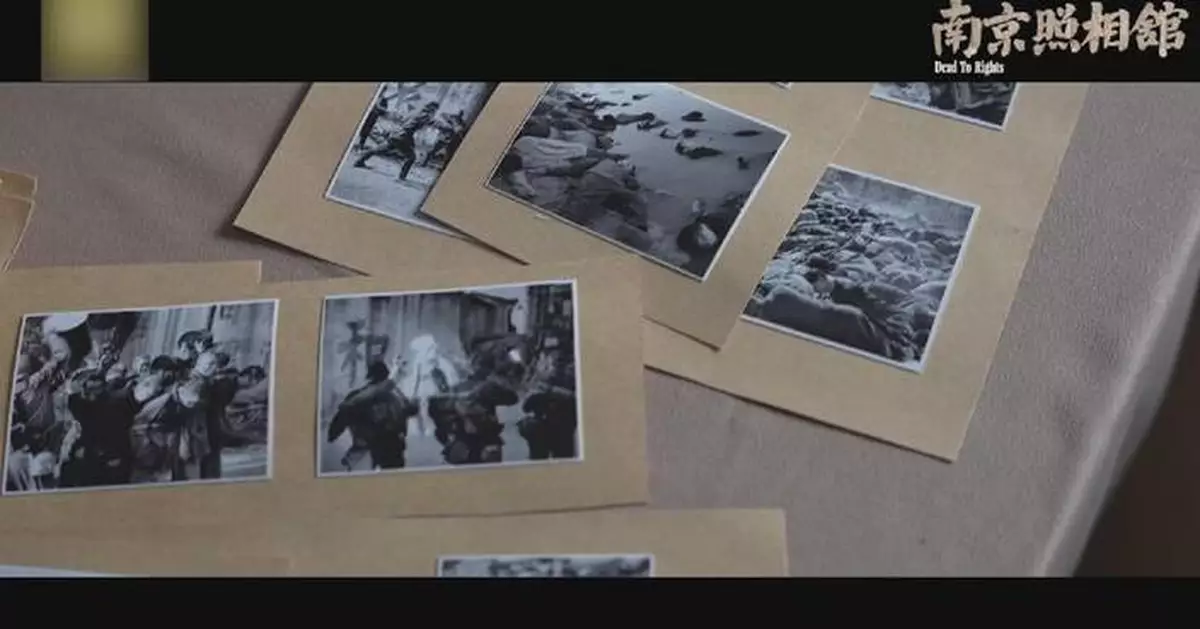
The production team of the critically-acclaimed Chinese wartime film "Dead to Rights" prioritized authenticity in the process of their creation, recreating many scenes of Nanjing City in the 1930s with great realism based on historical photographs and exposing the horrifying war crimes committed by the Japanese aggressors.
This year marks the 80th anniversary of the victory in the Chinese People's War of Resistance against Japanese Aggression and the World Anti-Fascist War. On Sept. 3, China will hold a grand military parade to commemorate these milestones. Against this backdrop, "Dead to Rights" takes audiences back to one of the darkest and most overlooked chapter of World War II -- the Nanjing Massacre.
The film centers on a group of Chinese civilians who take refuge in a photography studio during the Japanese aggressors' brutal occupation of Nanjing in December 1937.
In a desperate attempt to stay alive, they are forced to assist a Japanese military photographer in developing film, only to discover that the negatives contain damning evidence of atrocities committed by Japanese forces across the city. They secretly keep the negatives and risk their lives to deliver them to the outside world, hoping that the truth would be revealed.
In a recent interview with the China Global Television Network (CGTN), the cast and crew of the film recalled the creation process and details that made the film more realistic.
Shen Ao, director of the film, said that many "friendly photos" shot by Japanese soldiers with Chinese children during the historical event were shown to the audience for the first time in the film.
Photo themselves were a record of beautiful moments and a reflection of human nature, but after the Japanese troops captured the city of Nanjing, such "friendly photos" became their weapons of propaganda and tools for bragging, he said.
"This is very sad and distressing. We collected lots of materials, including photos of the massacre, which were almost 100 percent restored in the film. If you really look into those historic recordings and documents, you will find them rather horrifying and disturbing. It was far more brutal than what we presented in the film. We extracted some of the most common crimes from those photos," said Shen.
The precisely replicated scenes in the film have provided the cast a better condition to immerse themselves in the roles they play.
"Our art group worked with the director and used these photos of unforgettable moments in history to piece together and replicate the scenes in the film's script," said Li Anjie, production designer of the film.
"I reached a consensus with the director that we replicate the scenes in the film based on logic and historical accuracy, in order to evoke a direct sense of reality that captured authenticity in every scene," said Wang Tianxing, photography director of the film.
Shen said that relying on old photographs, the production team replicated them to the same scale as the original Nanjing landmarks, city walls, and streets and alleys, to make the audience feel as if they were seeing the entire city.
"The scene where A Chang falls after being stabbed was presented in a full scene. We wanted to use the ruins to convey a broken land in the aftermath of the war," said Shen.
"And when you finally reach the city walls, you naturally have a flash back to all the scenes," said Liu Haoran, the actor who played the role of Su Liuchang in the film.
Shen said that the production team tried every efforts to replicate historical scenes from every detail, such as the brick from the city wall that squadron leader Song held up at the end of the film, which was replicated from the Memorial Hall of the Victims in Nanjing Massacre by Japanese Invaders.
"We referred to one photo that shows Gongyuan Street during the 1930s. In those days, the street almost encompassed the life of a Nanjing citizen. They graduated, got married, and raised their children there. After finishing all these things, they leave an imprint on the street in one way or another. The street witnessed the entire lives of the citizens of Nanjing. This photo studio witnessed the lives of the people of Nanjing unfold," he said.
The Nanjing Massacre took place when Japanese troops captured the then-Chinese capital on Dec. 13, 1937. Over the course of six weeks, they killed approximately 300,000 Chinese civilians and unarmed soldiers in one of the most barbaric episodes of World War II.
The Chinese People's War of Resistance Against Japanese Aggression was fought from 1931 to 1945. It was the first to break out and the longest-running campaign in the World Anti-Fascist War. The war resulted in over 35 million Chinese military and civilian casualties.
After a grueling 14 years of tenacious resistance, the Chinese people achieved a great victory in the war against Japanese aggression, which also signaled the complete triumph of the global war against fascism.
The film has maintained its dominance at China's summer box office, grossing over 1.8 billion yuan (about 251 million U.S. dollars) as of Wednesday, since it hit cinemas on July 25.
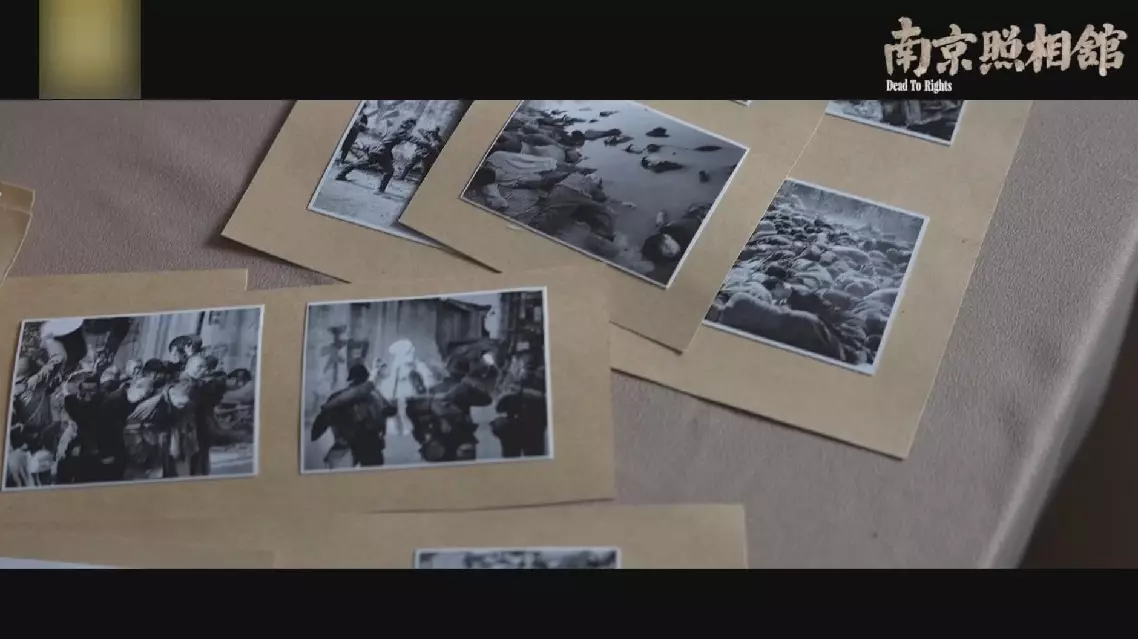
Production team of wartime film 'Dead to Rights' prioritizes authenticity in creation