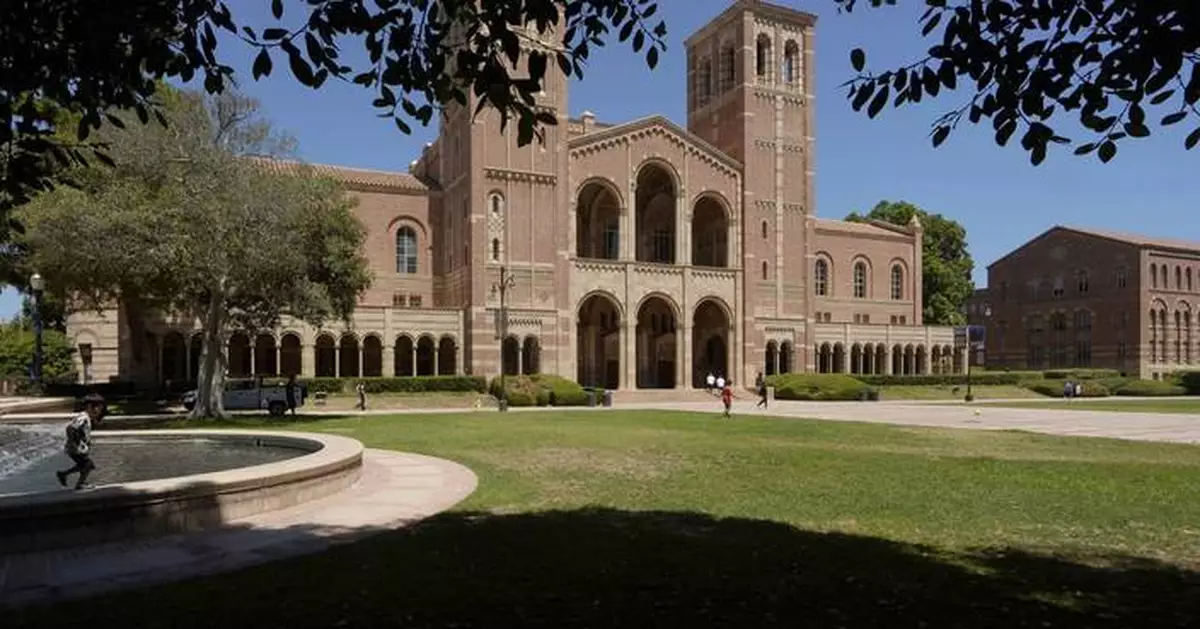
Skip to Content Facebook Feature Image

Trump administration seeks $1 billion settlement from UCLA, a White House official says

News

Trump administration seeks $1 billion settlement from UCLA, a White House official says
News

News

Trump administration seeks $1 billion settlement from UCLA, a White House official says

2025-08-09 08:09 Last Updated At:08:20

The Trump administration is seeking a $1 billion settlement from the University of California, Los Angeles, a White House official said Friday, after the Department of Justice accused the school of antisemitism and other civil rights violations.

UCLA is the first public university to be targeted by a widespread funding freeze over allegations of civil rights violations related to antisemitism and affirmative action.

President Donald Trump's administration has frozen or paused federal funding over similar allegations against elite private colleges. In recent weeks, the administration has struck deals with Brown University for $50 million and Columbia University for $221 million but has explored larger settlements, such as in its ongoing battle with Harvard University.

The White House official did not detail any additional demands the administration has made to UCLA or elaborate on the settlement amount. The person was not authorized to speak publicly about the request and spoke on condition of anonymity.

The Trump administration had suspended $584 million in federal grants for UCLA, the university said this week. On July 29, the Department of Justice’s Civil Rights Division issued a finding that UCLA violated the equal protection clause of the Fourteenth Amendment and Title VI of the Civil Rights Act of 1964 “by acting with deliberate indifference in creating a hostile educational environment for Jewish and Israeli students.”

The university had drawn widespread criticism for how it handled dispersing an encampment of Israel-Hamas war protesters in 2024. One night, counterprotesters attacked the encampment, throwing traffic cones and firing pepper spray, with fighting that continued for hours, injuring more than a dozen people, before police stepped in. The next day, after hundreds defied orders to leave, more than 200 people were arrested. Later, Jewish students said demonstrators in encampments blocked them from getting to class.

The University of California’s president, James B. Milliken, said Friday the university had “just received” a document from the Department of Justice and would review it. He said the size of the proposed settlement would “devastate” the University of California, whose campuses are viewed as some of the top public colleges in the nation.

“Earlier this week, we offered to engage in good faith dialogue with the Department to protect the University and its critical research mission,” said Milliken, who started as president last week. “As a public university, we are stewards of taxpayer resources and a payment of this scale would completely devastate our country’s greatest public university system as well as inflict great harm on our students and all Californians.”

California Gov. Gavin Newsom on Friday accused Trump of trying to silence academic freedom in his attack on such a prestigious public university system.

“He has threatened us through extortion with a billion-dollar fine unless we do his bidding,” Newsom told reporters. Apparently referencing the settlements with Columbia and Brown, he added: “We will not be like some of those other institutions that have followed a different path.”

The $1 billion demand in the UCLA settlement is linked to Newsom’s status as one of Trump’s most outspoken foes, said Peter McDonough, vice president and general counsel at the American Council on Education, an association of college presidents.

“Anyone who thinks this appalling demand is not blatantly political and ideological has their head in the sand,“ McDonough said. “Of course it’s influenced by the fact that UCLA sits within the California system and the California system sits within the state of California.”

The Trump administration has used its control of federal funding to push for reforms at elite colleges that the president decries as overrun by liberalism and antisemitism. The administration also has launched investigations into diversity, equity and inclusion efforts, saying they discriminate against white and Asian American students.

Last month, Columbia University agreed to pay $200 million as part of a settlement to resolve investigations into the government’s allegations that the school violated federal antidiscrimination laws. The agreement also restored more than $400 million in research grants.

The Trump administration is using its deal with Columbia as a template for other universities, with financial penalties that are now seen as an expectation. For instance, the administration is pressing for a deal that would require Harvard to pay far more than Columbia's $200 million. Harvard leaders have been negotiating with the White House even as they battle in court to regain access to billions in federal research funding terminated by the Trump administration.

UCLA has already reached one settlement about the 2024 protests. The university agreed last week to pay $6 million to settle a lawsuit from three Jewish students and a Jewish professor who argued the university violated their civil rights by allowing pro-Palestinian protesters to block their access to classes and other areas on campus in 2024.

UCLA initially had argued that it had no legal responsibility over the issue because protesters, not the university, blocked Jewish students’ access to areas. The university also worked with law enforcement to thwart attempts to set up new protest camps.

But in a preliminary injunction a year earlier, U.S. District Judge Mark Scarsi disagreed and ordered UCLA to create a plan to protect Jewish students on campus. The University of California has since created systemwide campus guidelines on protests, with an Office of Campus and Community Safety at UCLA.

As part of the settlement, UCLA said it will contribute $2.3 million to eight organizations that combat antisemitism and support the university’s Jewish community. UCLA Chancellor Julio Frenk, whose Jewish father and grandparents fled Nazi Germany to Mexico and whose wife is the daughter of a Holocaust survivor, also launched an initiative to combat antisemitism and anti-Israeli bias.

AP writer Julie Watson contributed to this report.
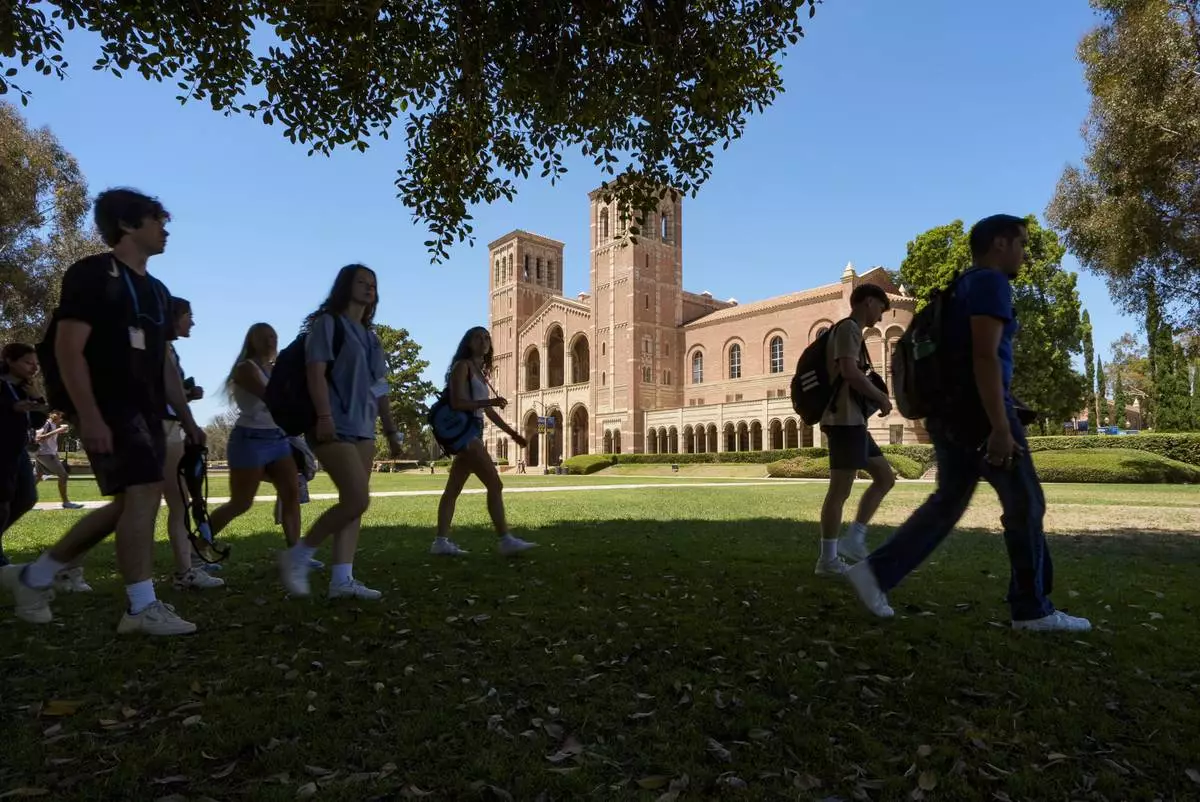
FILE - Students walk past Royce Hall at the University of California, Los Angeles, campus in Los Angeles, Aug. 15, 2024. (AP Photo/Damian Dovarganes, File)
FILE - Students walk past Royce Hall at the University of California, Los Angeles, campus in Los Angeles, Aug. 15, 2024. (AP Photo/Damian Dovarganes, File)

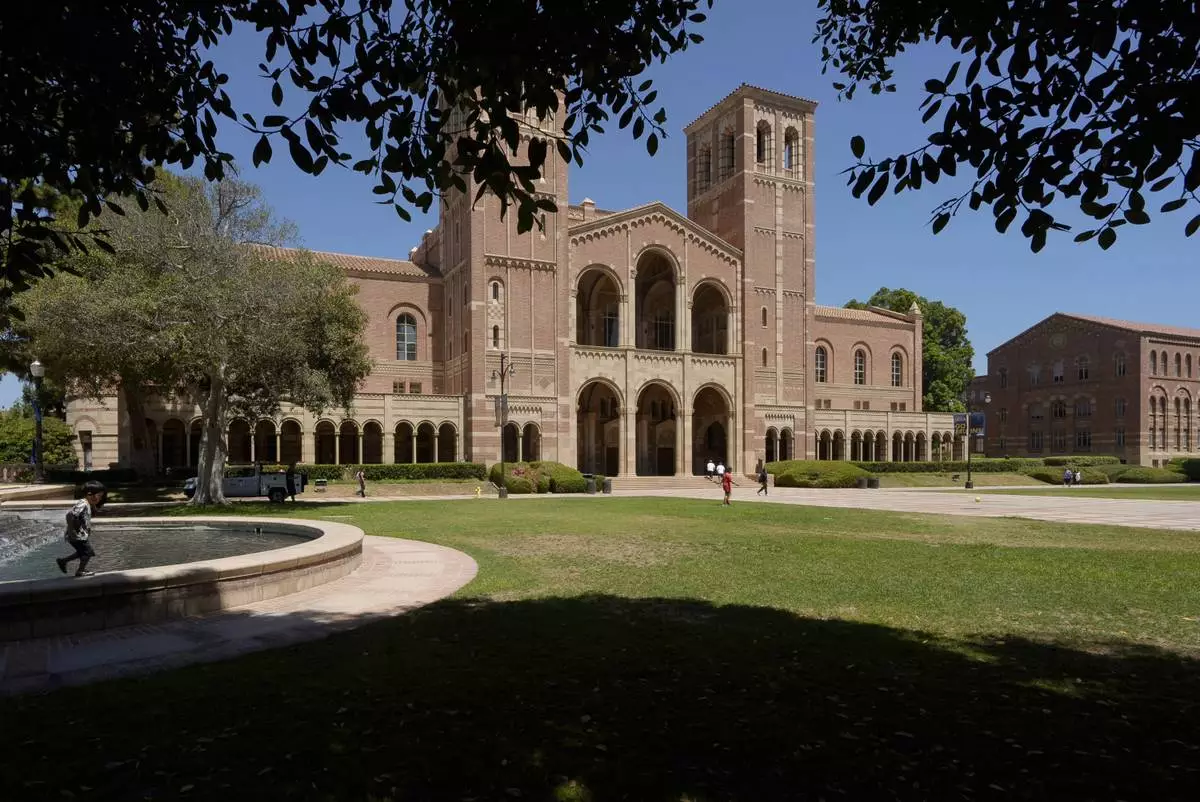
FILE - Children play outside Royce Hall at the University of California, Los Angeles, campus in Los Angeles, Aug. 15, 2024. (AP Photo/Damian Dovarganes, File)
FILE - Children play outside Royce Hall at the University of California, Los Angeles, campus in Los Angeles, Aug. 15, 2024. (AP Photo/Damian Dovarganes, File)
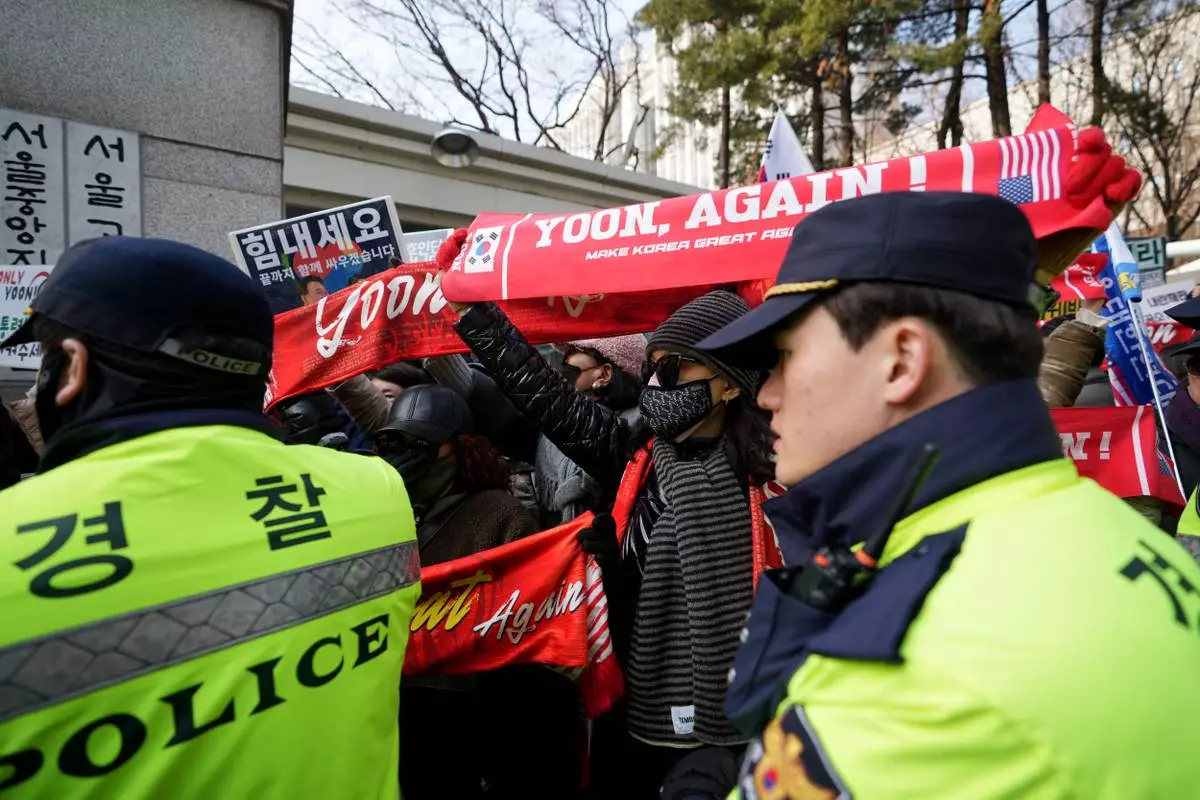
SEOUL, South Korea (AP) — A South Korean court sentenced former President Yoon Suk Yeol to five years in prison Friday in the first verdict from eight criminal trials over the martial law debacle that forced him out of office and other allegations.

Yoon was impeached, arrested and dismissed as president after his short-lived imposition of martial law in December 2024 triggered huge public protests calling for his ouster.

The most significant criminal charge against him alleges that his martial law enforcement amounted to a rebellion, An independent counsel has requested the death sentence over that charge, and the Seoul Central District Court will decide on that in a ruling on Feb. 19.

Yoon has maintained he didn’t intend to place the country under military rule for an extended period, saying his decree was only meant to inform the people about the danger of the liberal-controlled parliament obstructing his agenda. But investigators have viewed Yoon’s decree as an attempt to bolster and prolong his rule, charging him with rebellion, abuse of power and other criminal offenses.

In Friday’s case, the Seoul court sentenced Yoon for defying attempts to detain him and fabricating the martial law proclamation. He was also sentenced for sidestepping a legally mandated full Cabinet meeting, which deprived some Cabinet members who were not convened of their rights to deliberate on his decree.

Judge Baek Dae-hyun said in the televised ruling that imposing “a heavy punishment” was necessary because Yoon hasn’t shown remorse and has only repeated “hard-to-comprehend excuses.” The judge also said restoring legal systems damaged by Yoon’s action was necessary.

Yoon’s defense team said they will appeal the ruling, which they believe was “politicized” and reflected “the unliberal arguments by the independent counsel.” Yoon’s defense team argued the ruling “oversimplified the boundary between the exercise of the president’s constitutional powers and criminal liability.”

Park SungBae, a lawyer who specializes in criminal law, said there is little chance the court would decide Yoon should face the death penalty in the rebellion case. He said the court will likely issue a life sentence or a sentence of 30 years or more in prison.

South Korea has maintained a de facto moratorium on executions since 1997 and courts rarely hand down death sentences. Park said the court would take into account that Yoon’s decree didn’t cause casualties and didn’t last long, although Yoon hasn’t shown genuine remorse for his action.

South Korea has a history of pardoning former presidents who were jailed over diverse crimes in the name of promoting national unity. Those pardoned include strongman Chun Doo-hwan, who received the death penalty at a district court over his 1979 coup, the bloody 1980 crackdowns of pro-democracy protests that killed about 200 people, and other crimes.

Even if Yoon is spared the death penalty or life imprisonment at the rebellion trial, he may still face other prison sentences in the multiple smaller trials he faces.

Some observers say Yoon is likely retaining a defiant attitude in the ongoing trials to maintain his support base in the belief that he cannot avoid a lengthy sentence but could be pardoned in the future.

On the night of Dec. 3, 2024, Yoon abruptly declared martial law in a televised speech, saying he would eliminate “anti-state forces” and protect “the constitutional democratic order.” Yoon sent troops and police officers to encircle the National Assembly, but many apparently didn’t aggressively cordon off the area, allowing enough lawmakers to get into an assembly hall to vote down Yoon’s decree.

No major violence occurred, but Yoon's decree caused the biggest political crisis in South Korea in decades and rattled its diplomacy and financial markets. For many, his decree, the first of its kind in more than 40 years in South Korea, brought back harrowing memories of past dictatorships in the 1970s and 1980s, when military-backed leaders used martial law and emergency measures to deploy soldiers and tanks on the streets to suppress demonstrations.

After Yoon's ouster, his liberal rival Lee Jae Myung became president via a snap election last June. After taking office, Lee appointed three independent counsels to look into allegations involving Yoon, his wife and associates.

Yoon's other trials deal with charges like ordering drone flights over North Korea to deliberately inflame animosities to look for a pretext to declare martial law. Other charges accuse Yoon of manipulating the investigation into a marine’s drowning in 2023 and receiving free opinion surveys from an election broker in return for a political favor.

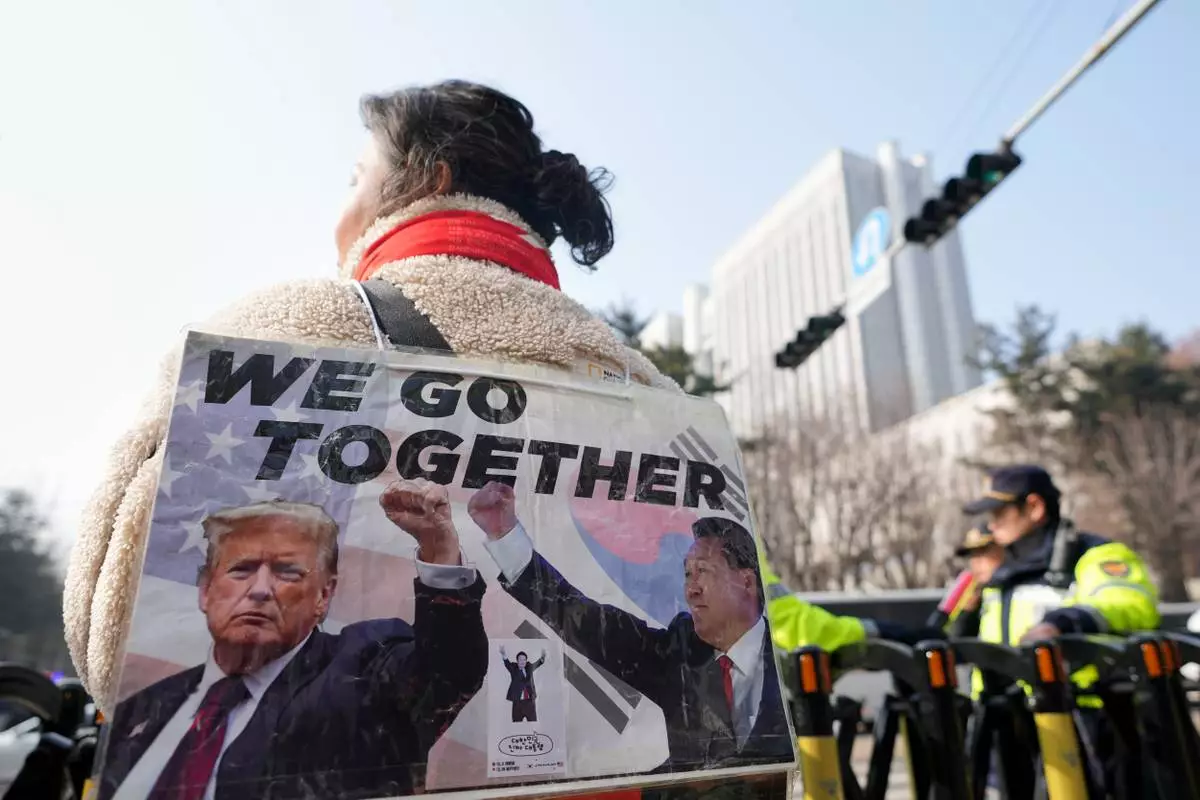
A supporter of former South Korean President Yoon Suk Yeol shouts slogans outside Seoul Central District Court, in Seoul, South Korea, Friday, Jan. 16, 2026. (AP Photo/Lee Jin-man)

A supporter of former South Korean President Yoon Suk Yeol shouts slogans outside Seoul Central District Court, in Seoul, South Korea, Friday, Jan. 16, 2026. (AP Photo/Lee Jin-man)

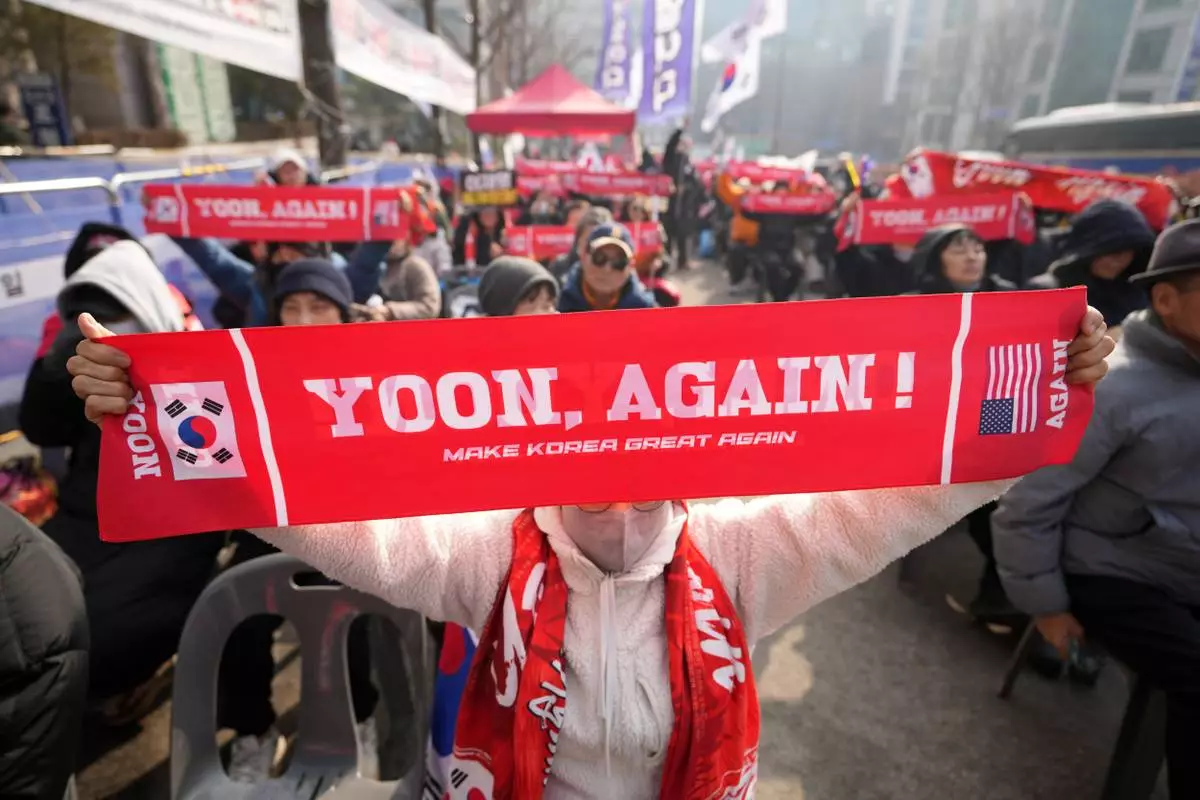
Supporters of former South Korean President Yoon Suk Yeol hold signs and flags outside Seoul Central District Court, in Seoul, South Korea, Friday, Jan. 16, 2026. (AP Photo/Lee Jin-man)

Supporters of former South Korean President Yoon Suk Yeol hold signs and flags outside Seoul Central District Court, in Seoul, South Korea, Friday, Jan. 16, 2026. (AP Photo/Lee Jin-man)

A supporter of former South Korean President Yoon Suk Yeol waits for a bus carrying former South Korean President Yoon Suk Yeol outside Seoul Central District Court, in Seoul, South Korea, Friday, Jan. 16, 2026. (AP Photo/Lee Jin-man)

A supporter of former South Korean President Yoon Suk Yeol waits for a bus carrying former South Korean President Yoon Suk Yeol outside Seoul Central District Court, in Seoul, South Korea, Friday, Jan. 16, 2026. (AP Photo/Lee Jin-man)

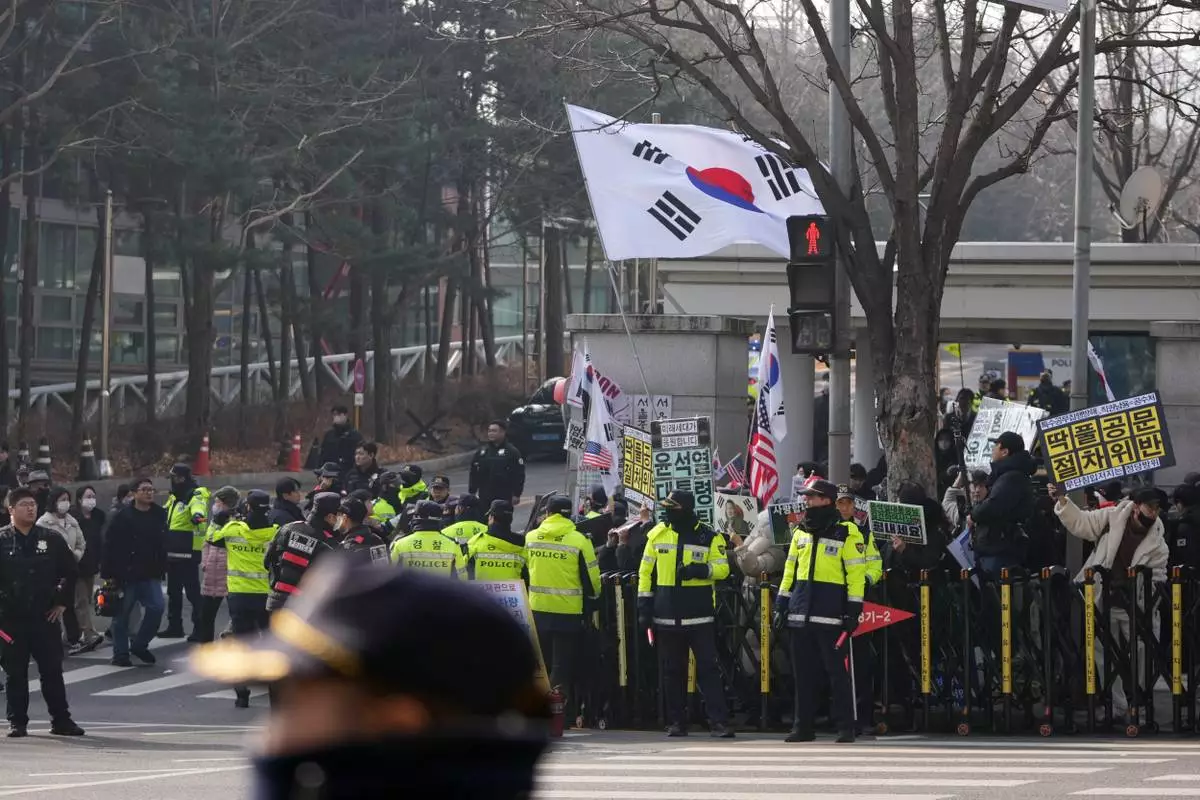
Supporters of former South Korean President Yoon Suk Yeol hold signs as police officers stand guard outside Seoul Central District Court, in Seoul, South Korea, Friday, Jan. 16, 2026. (AP Photo/Lee Jin-man)

Supporters of former South Korean President Yoon Suk Yeol hold signs as police officers stand guard outside Seoul Central District Court, in Seoul, South Korea, Friday, Jan. 16, 2026. (AP Photo/Lee Jin-man)

Supporters of former South Korean President Yoon Suk Yeol hold signs and flags outside Seoul Central District Court, in Seoul, South Korea, Friday, Jan. 16, 2026. (AP Photo/Lee Jin-man)

Supporters of former South Korean President Yoon Suk Yeol hold signs and flags outside Seoul Central District Court, in Seoul, South Korea, Friday, Jan. 16, 2026. (AP Photo/Lee Jin-man)

Supporters of former South Korean President Yoon Suk Yeol hold signs outside Seoul Central District Court, in Seoul, South Korea, Friday, Jan. 16, 2026. (AP Photo/Lee Jin-man)

Supporters of former South Korean President Yoon Suk Yeol hold signs outside Seoul Central District Court, in Seoul, South Korea, Friday, Jan. 16, 2026. (AP Photo/Lee Jin-man)

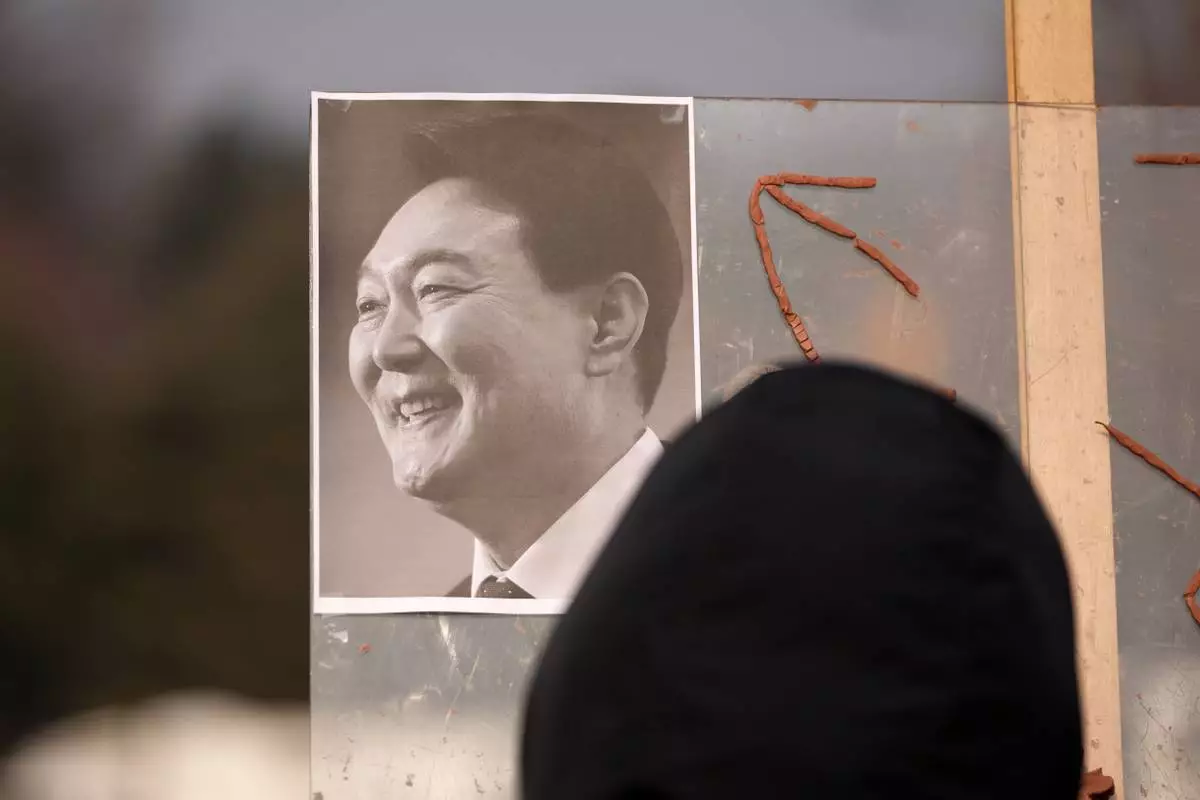
A picture of former South Korean President Yoon Suk Yeol is placed on a board as supporters gather outside Seoul Central District Court, in Seoul, South Korea, Friday, Jan. 16, 2026. (AP Photo/Lee Jin-man)

A picture of former South Korean President Yoon Suk Yeol is placed on a board as supporters gather outside Seoul Central District Court, in Seoul, South Korea, Friday, Jan. 16, 2026. (AP Photo/Lee Jin-man)

Recommended Articles