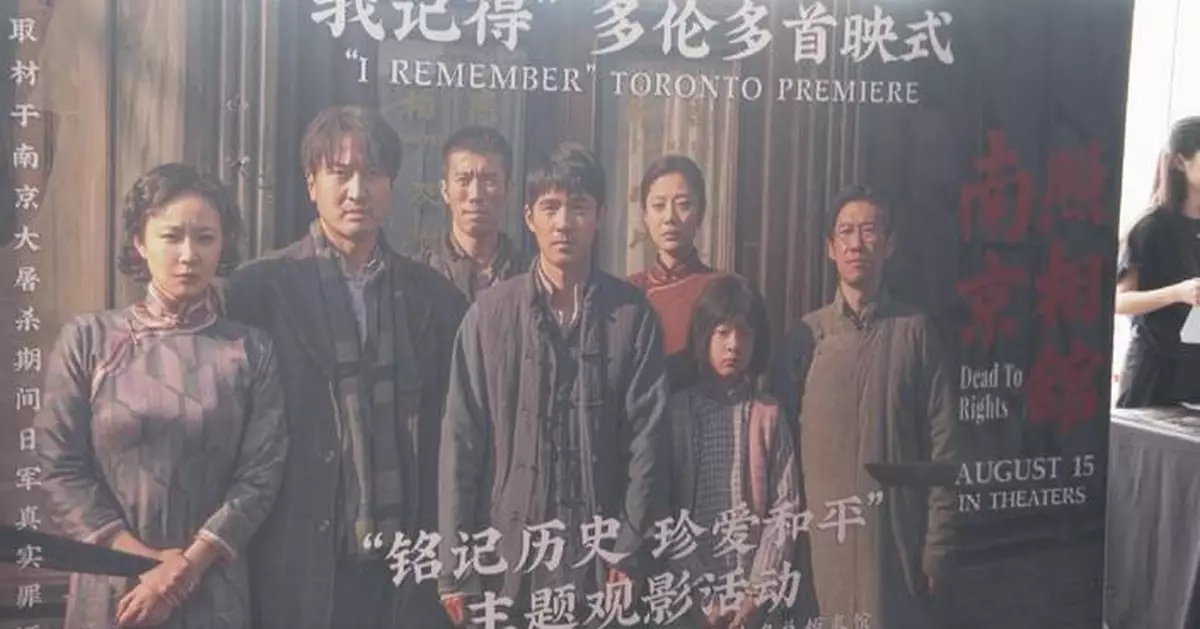
The Chinese wartime film "Dead To Rights" has left Canadian audiences deeply moved by its harrowing recreations of history and its poignant call for remembrance and peace。
The film, based on tragic events of the Nanjing Massacre during Japan's invasion of China, made its debut in various regions across Canada, including Ottawa, Toronto and Vancouver, on Thursday.
This year marks the 80th anniversary of the victory in the Chinese People's War of Resistance against Japanese Aggression and the World Anti-Fascist War. On Sept. 3, China will hold a grand military parade to commemorate these milestones. Against this backdrop, "Dead To Rights" takes audiences back to one of the darkest and most overlooked chapters of World War II -- the Nanjing Massacre.
The film centers on a group of Chinese civilians who take refuge in a photography studio during the Japanese aggressors' brutal occupation of Nanjing in December 1937.
In a desperate attempt to stay alive, they are forced to assist a Japanese military photographer in developing film, only to discover that the negatives contain damning evidence of atrocities committed by Japanese forces across the city. They secretly keep the negatives and risk their lives to deliver them to the outside world, hoping that the truth would be revealed.
Over 200 guests attended the premiere event held at the Cineplex Cinema in Markham City of Ontario, including Luo Weidong, Consul General of the Consulate General of China in Toronto.
In his remarks at the event, Luo said that based on real historical events, the film replicates the efforts made by ordinary Chinese people during wartime to preserve the truth of history.
The event was also attended by Michael Chen, deputy mayor of Markham, a suburb of Toronto. In his remarks to the audience, Chen said the film offers a glance into an important moment in history often overlooked in the Western world.
"I think today this movie is very meaningful, because it gives us opportunity, it gives the world opportunity, Canada and North America, to look at how brutal it was in Nanjing in 1937, December," the city official said.
Audience members at the premiere said they were horrified by the cruelty depicted in the film’s reenactments -- and surprised the events weren’t more widely known.
"First of all, I was shocked at the movie. It was so real, and sometimes it was actually hard to watch because of how intense the scenes were. I didn't know that this happened, and I feel a little guilty that as far as the history that we learned, we left out this episode of Nanjing, we left out the conflict between Japan and China. When it comes to the plight of China, it's just left out of our history books, so this is one of the first time that I've ever encountered scenes like this," said John Reynolds, a Toronto resident.
For some viewers of Chinese descent, the film's depictions were particularly heart-wrenching.
"I cried from beginning to the end, and the tears just [wouldn't stop]. Even now, when I think of those scenes, my tears start flowing again," said a moviegoer.
"Many textbooks in countries other than China have erased and concealed this part of history, but it is deeply engraved in the hearts of Chinese people and many righteous individuals. We hope that more people from different ethnic backgrounds can watch this film, so that people can remember history and cherish peace," said Qian Hua, chairwoman of the Chinese Benevolent Association of Vancouver.
The film will be officially hit the screens of about 30 cinemas across major cities in Canada.
The Nanjing Massacre took place when Japanese troops captured the then-Chinese capital on Dec. 13, 1937. Over the course of six weeks, they killed approximately 300,000 Chinese civilians and unarmed soldiers in one of the most barbaric episodes of World War II.
The Chinese People's War of Resistance Against Japanese Aggression was fought from 1931 to 1945. It was the first to break out and the longest-running campaign in the World Anti-Fascist War. The war resulted in over 35 million Chinese military and civilian casualties.
After a grueling 14 years of tenacious resistance, the Chinese people achieved a great victory in the war against Japanese aggression, which also signaled the complete triumph of the global war against fascism.
The film has maintained its dominance at China's summer box office, grossing over 1.8 billion yuan (about 251 million U.S. dollars) as of Wednesday, since it hit cinemas on July 25.
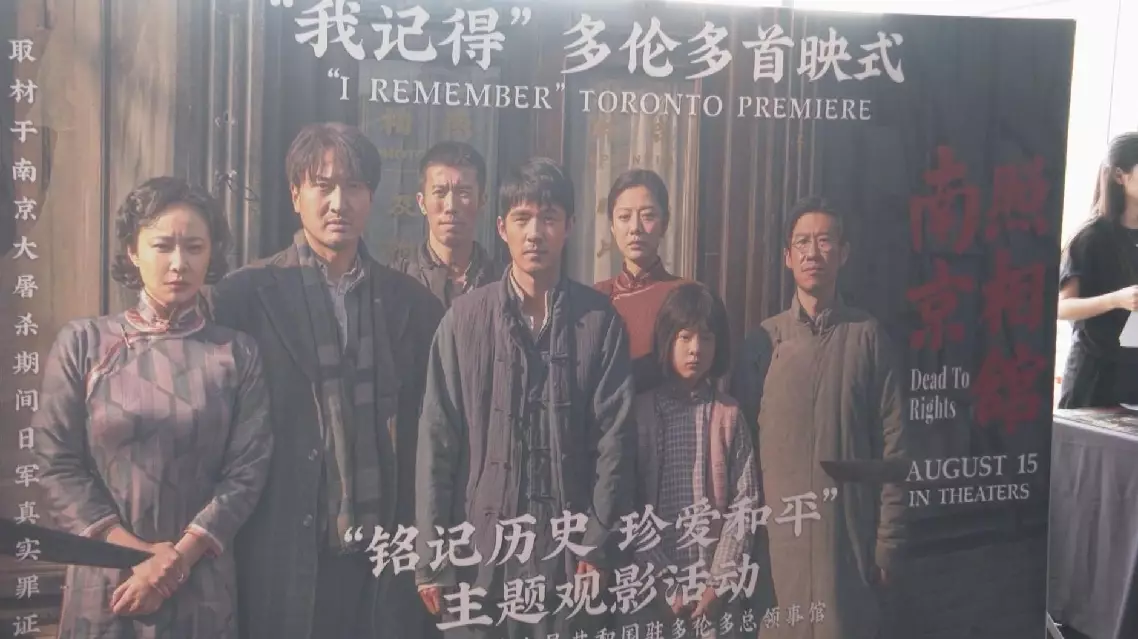
Chinese wartime epic "Dead To Rights" moves Canadian viewers to reflect on history
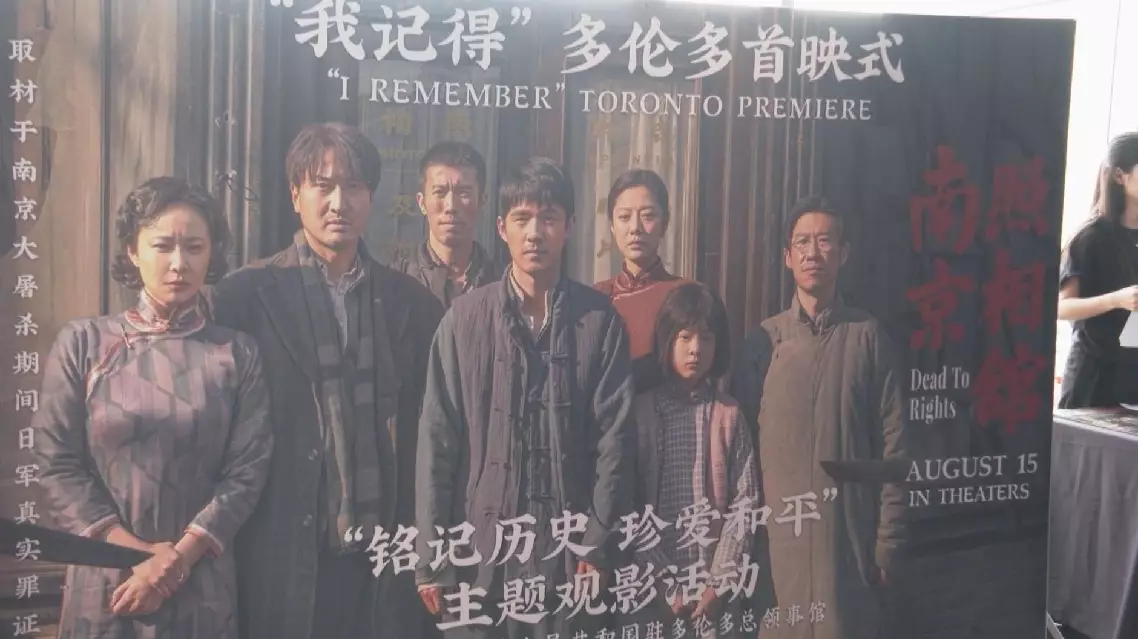
Chinese wartime epic "Dead To Rights" moves Canadian viewers to reflect on history