The monastic life is moving into a new stage thanks to national support and thoughtful plan for development in southwest China's Xizang Autonomous Region.
At the Tashilhunpo Monastery, one of the six great Gelugpa institutions and the historic seat of the Panchen Lamas, ancient spiritual traditions are not just preserved, but are thriving in harmony with the modern world.
Founded in the mid-15th century, the Tashilhunpo Monastery stands as a cornerstone of religion, culture, and knowledge in the region.
Inside the esoteric college, a clear bell signals the start of sutra chanting, summoning rows of monks whose chants reverberate through centuries-old walls. In the monastery's debate courtyard, monks engage in lively debates, exchanging sharp logic and gestures. The air echoes with clapping and spirited voices.
While these traditions remain, modern comforts have found their way into monastic life.
Inside one monk's quarters, the kitchen is fully equipped with modern appliances. Yet in the corner, an old relic still tells the story of how life here has changed over time.
"We used to cook noodles using these clay stoves with charcoal underneath. Now, we just use this stove here," said Lobsang Tenzin, a monk.
In his bright, open room, a full electric tea set takes center stage. As he prepares tea for guests, he shares his collection of assorted tea leaves and deep passion for tea culture.
"Back in 2010, I went to a tea house with some friends, and that's when I really got into brewing tea. Life in the dorms is a lot easier now. Before, we had to boil water outside. After we got running water and electricity, I bought this electric tea brewing set in 2011," said Lobsang Tenzin.
He showed videos of tea-making he follows online. Sometimes, he even records and shares his own tea-making videos from time to time.
"Nowadays, our living standards are much better. Besides studying Buddhist teachings, we also learn modern subjects like foreign languages, technology, and the internet," said Thondrup Tashi, a monk.
Right next to the monastery gates stands Tashilhunpo Tibetan Medical Hospital, a vital institution with over 370 years of history. Once a modest clinic, it has undergone significant upgrades in recent years. These improvements have transformed the hospital into a modern facility serving both monks and the local community.
"It used to be a pretty basic clinic with limited equipment. But with policy support, the hospital has expanded its facilities and added many modern, advanced medical devices. Nowadays, monks only pay a small fee for CT scans, but for most treatments, medications, routine check-ups, even their annual physicals, they get free care through the national health insurance," said Tashi Sangdrup, director of Tashilhunpo Tibetan Medical Hospital.
Over the past decade, the Tashilhunpo Monastery has installed new drainage and fire safety systems, including sprinklers and alarms in every main hall.
The spacious, well-maintained entrance plaza now welcomes a steady stream of worshipers and visitors from across the globe, all drawn to the monastery's enduring spirit as it embraces the future.
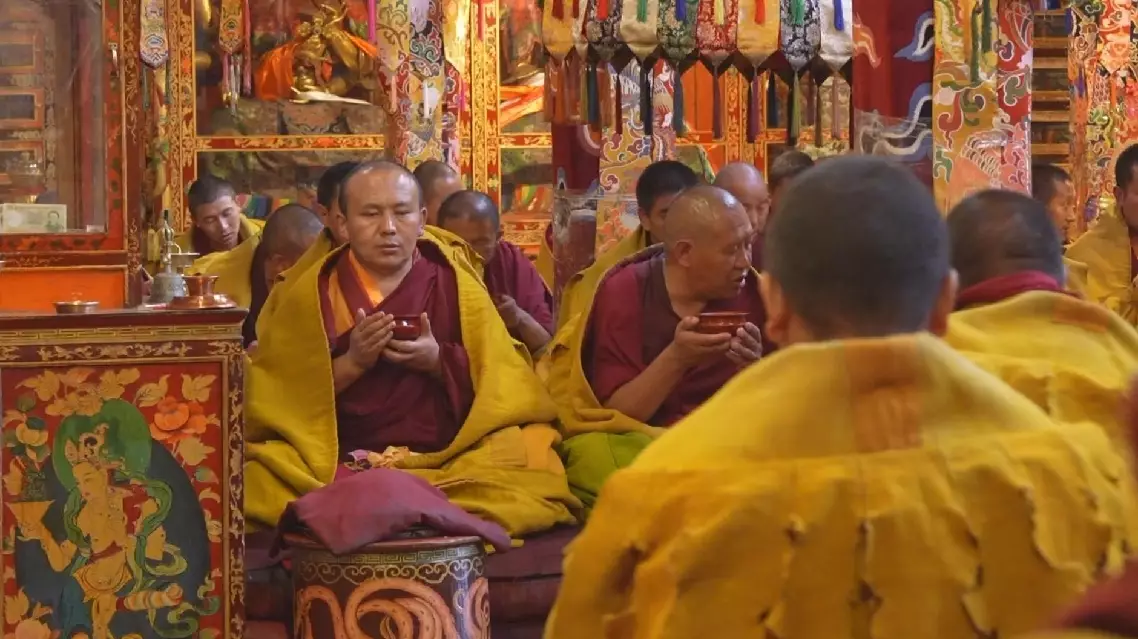
Monastic life transformed with modernity in Xizang