Yan'an, a modest city in northwest China's Shaanxi Province, shone as a beacon, guiding the course of Chinese people's resistance against Japanese aggression as it hosted the then headquarters of the Communist Party of China (CPC) more than eight decades ago.
To mark the 80th anniversary of the victory in the Chinese People's War of Resistance Against Japanese Aggression and the World Anti-Fascist War, China Global Television Network (CGTN) is airing a 25-part series titled "Resolve and Resilience: The Main Eastern Battlefield of World War II," featuring pivotal battles and heroic stories from China's resistance against the Japanese aggression.
In 1935, after the Long March, the Red Army reached northern Shaanxi and set up a revolutionary base in Yan'an. Two years later, full-scale war against Japan erupted.
At a critical turning point, the CPC adopted a different strategy, fighting behind enemy lines through guerrilla warfare. Yan'an soon became the command center of this resistance.
Here, late Chairman Mao Zedong and other CPC leaders held key strategic meetings that laid the foundation for the national united front against Japanese aggression. Faced with a powerful enemy and vast frontlines, Mao penned "On Protracted War", providing a clear roadmap for China's resistance.
"After arriving in Yan'an, the Communist Party took the lead in building the united front, pushing for both full-scale and protracted resistance. Japan's rapid invasion threatened not only China, but also extended into the Pacific and impacted Europe. China's persistence on the Eastern Front tied down major Japanese forces, relieving pressure on Allied Forces elsewhere. It had a profound global impact," said Liu Ni, director of Yan'an Revolutionary Memorial Hall.
As the war of resistance reached a stalemate, Japanese forces intensified "mopping-up" operations. At the same time, Nationalist suspicion fractured the united front, bringing military encirclement and an economic blockade. In Yan'an, material shortages hit unprecedented levels, and the question became urgent -- how to survive in the midst of crisis.
In the spring of 1941, the 359th Brigade, led by Commander Wang Zhen, marched into Nanniwan. With rifles in one hand and hoes in the other, they turned the wilderness into farmland.
"What made things really tough was the severe lack of supplies. With no shelter, they built huts from branches or dug caves into hillsides. When food ran out, they foraged for wild plants or walked miles for grain. Working the rock-hard soil with worn hoes left their hands blistered and calloused," said Li Qian, narrator of Nanniwan Large Scale Production Exhibition Hall.
In these harsh conditions, they overcame every obstacle, inspiring those around them. Productive work eased the burden on local communities and strengthened bonds between soldiers and civilians. Within a few years, they not only achieved self-sufficiency in grain but produced a surplus, contributing to the border region's grain reserves and securing vital supplies for the war effort.
Amid war and hardship, Yan'an became a cradle of self-reliance and resilience, inspiring hope nationwide and attracting attention from around the world.
In 1936, American journalist Edgar Snow became the first Western reporter to reach the city. His book "Red Star Over China" offered a rare glimpse of the Communist-led resistance. Returning several times, he documented sweeping changes from free public education and cooperatives to elected local governments and state-run industries in the city.
"In leading this national war, the Chinese Communist Party wasn't just fighting to defeat an enemy -- it was aiming to break down the old order and build a new kind of nation. The Shaanxi-Gansu-Ningxia Border Region became a testing ground for that vision, where the Party began putting its ideas into practice -- across politics, the economy, culture, and more," Liu said.
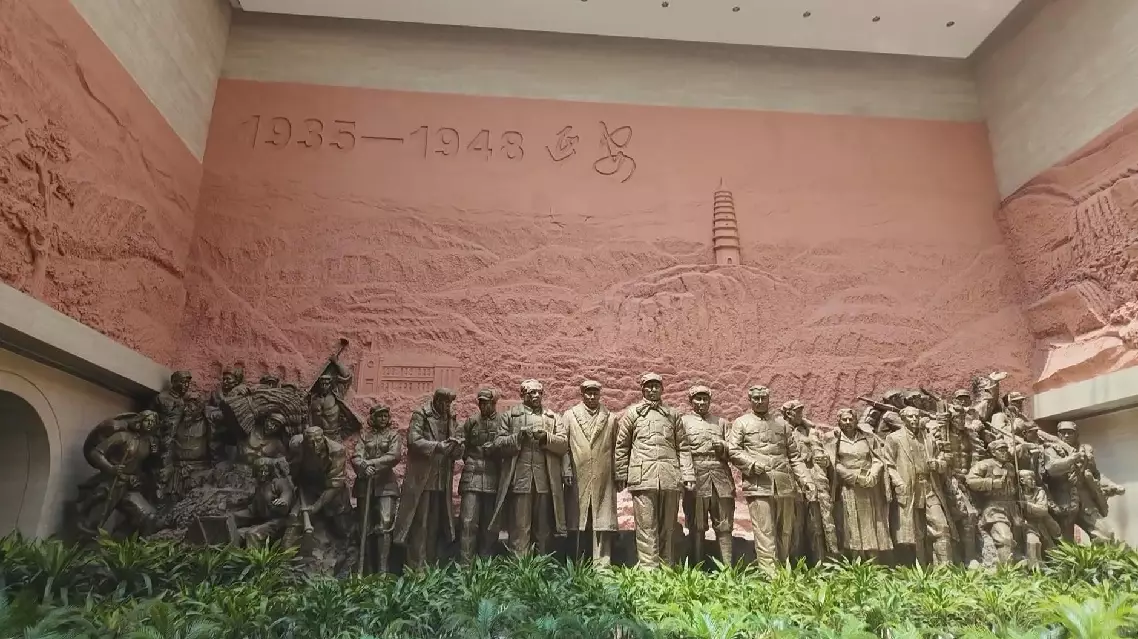
Yan'an shines as beacon of faith in China’s resistance war against Japanese aggression