WASHINGTON (AP) — President Donald Trump took unprecedented steps toward federalizing Washington, D.C. on Monday, saying it's needed to fight crime even as city leaders pointed to data showing violence is down.
He took command of the police department and deployed the National Guard under laws and Constitutional powers that give the federal government more sway over the nation's capital than other cities. Its historically majority Black population wasn't electing its own city council and mayor until 1973, when Republican President Richard Nixon signed the Home Rule Act.
The measure still left significant power to the president and Congress, though no president has exercised the police powers before.
The Constitution calls for the creation of the District of Columbia to serve as the federal seat of power under the jurisdiction of Congress rather than any state.
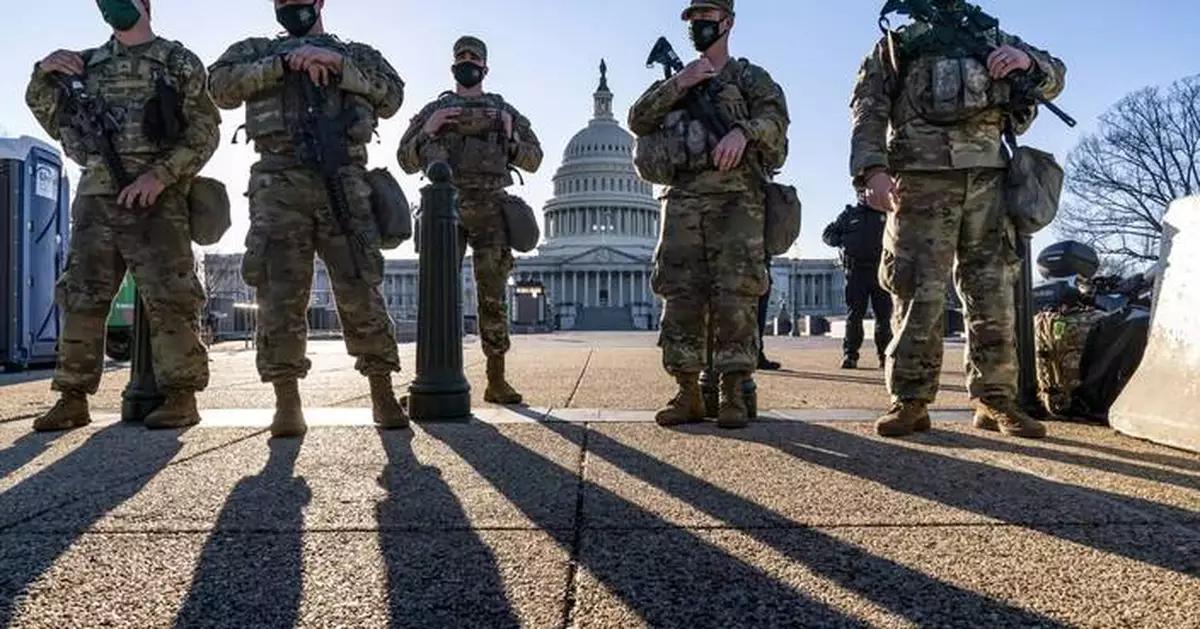
While the Home Rule Act allowed for greater local control, the president can still call up the National Guard in Washington. His administration did it during Black Lives Matter protests in 2020, when members were later faulted for flying a helicopter too low over a crowd. The Guard was called out again during Trump's first term on Jan. 6, 2021, when his supporters overran the Capitol.
Trump’s second-term moves in Washington come as the legal battle continues over his deployment of the National Guard in another Democratic-led city, Los Angeles, despite the objections of Gov. Gavin Newsom.
His authority is less clear there, but an appeals court has so far refused to intervene. A lower-court judge was starting a trial Monday to determine whether the deployment violated another federal law.
Section 740 of the Home Rule Act allows for the president to take over Washington's Metropolitan Police Department for 48 hours, with possible extensions to 30 days, during times of emergencies. No president has done so before, said Monica Hopkins, executive director of the ACLU of Washington.
Trump cited a number of recent high-profile incidents, including the killing of a 21-year-old congressional intern and the beating of a DOGE staffer during an attempted carjacking.
“This is liberation day in D.C. and we’re going to take our Capitol back,” the president said.
The Democratic mayor of D.C., Muriel Bowser, called the takeover “unprecedented." She said that violent crime overall in Washington has decreased to a 30-year low, after a rise in 2023. Carjackings, for example, dropped about 50% in 2024, and are down again this year. More than half of those arrested, however, are juveniles, and the extent of those punishments is a point of contention for the Trump administration.
It wasn’t immediately clear how long the takeover might last or exactly what it might mean. It could also face challenges in court.
Congress still has power over things like the budget and laws passed by the city council, but would have to repeal the Home Rule Act to expand federal power in the district.
It's something a few Republican lawmakers have pushed to do, but such an overhaul would almost certainly run into steep resistance from most Democrats, making it difficult to achieve.
The law is specific to D.C., and doesn’t affect other communities around the U.S. referred to as having their own “home rule” powers in relationship to their state governments.
Hopkins said Trump's moves in Washington could foreshadow similar tactics in other cities. “That should alarm everyone," she said, “not just in Washington.”
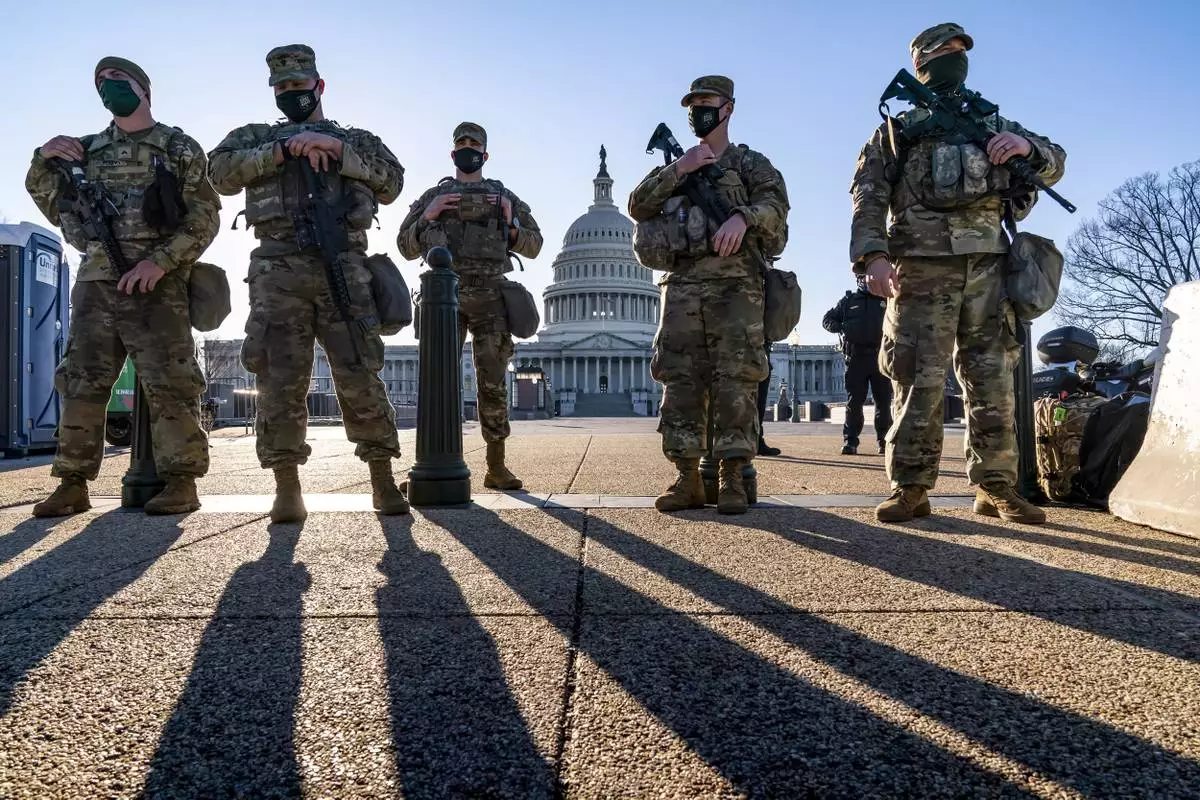
FILE - National Guard troops and the U.S. Capitol Police keep watch as heightened security remains in effect around the Capitol grounds in Washington, March 3, 2021. (AP Photo/J. Scott Applewhite, File)