Skip to Content Facebook Feature Image

ZAP Surgical Celebrates 5,000th Patient Treated Globally with ZAP-X® Gyroscopic Radiosurgery® Platform

News

ZAP Surgical Celebrates 5,000th Patient Treated Globally with ZAP-X® Gyroscopic Radiosurgery® Platform
News

News

ZAP Surgical Celebrates 5,000th Patient Treated Globally with ZAP-X® Gyroscopic Radiosurgery® Platform

2025-08-12 19:17 Last Updated At:19:40

SAN CARLOS, Calif.--(BUSINESS WIRE)--Aug 12, 2025--

ZAP Surgical Systems, Inc., a global leader in non-invasive robotic brain surgery, today announced the treatment of the 5,000th patient using its ZAP-X ® Gyroscopic Radiosurgery ® platform — a major milestone reflecting the platform’s rapid worldwide adoption.

More Images

Located in a prominent, high-visibility area within the hospital, the vault-free ZAP-X serves as a signature service for Jersey Shore University Medical Center.

Located in a prominent, high-visibility area within the hospital, the vault-free ZAP-X serves as a signature service for Jersey Shore University Medical Center.

Christopher Czerwinski, joined by the Jersey Shore University Medical Center clinical team, following his successful treatment for a cavernous sinus meningioma using the ZAP-X® Gyroscopic Radiosurgery® platform.

Christopher Czerwinski, joined by the Jersey Shore University Medical Center clinical team, following his successful treatment for a cavernous sinus meningioma using the ZAP-X® Gyroscopic Radiosurgery® platform.

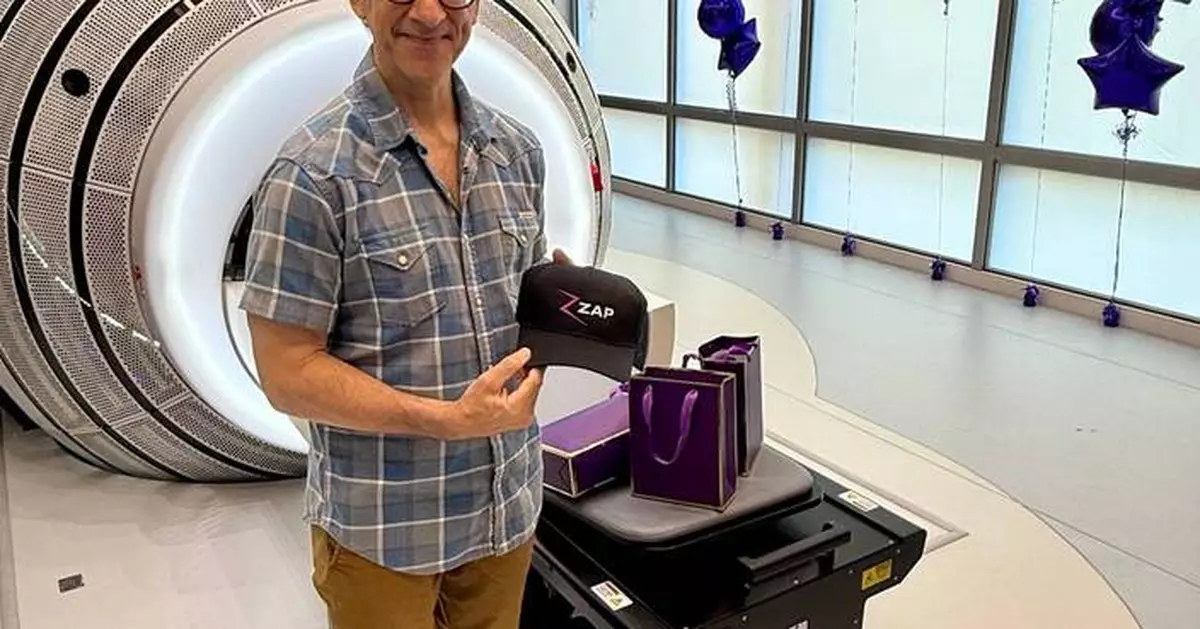
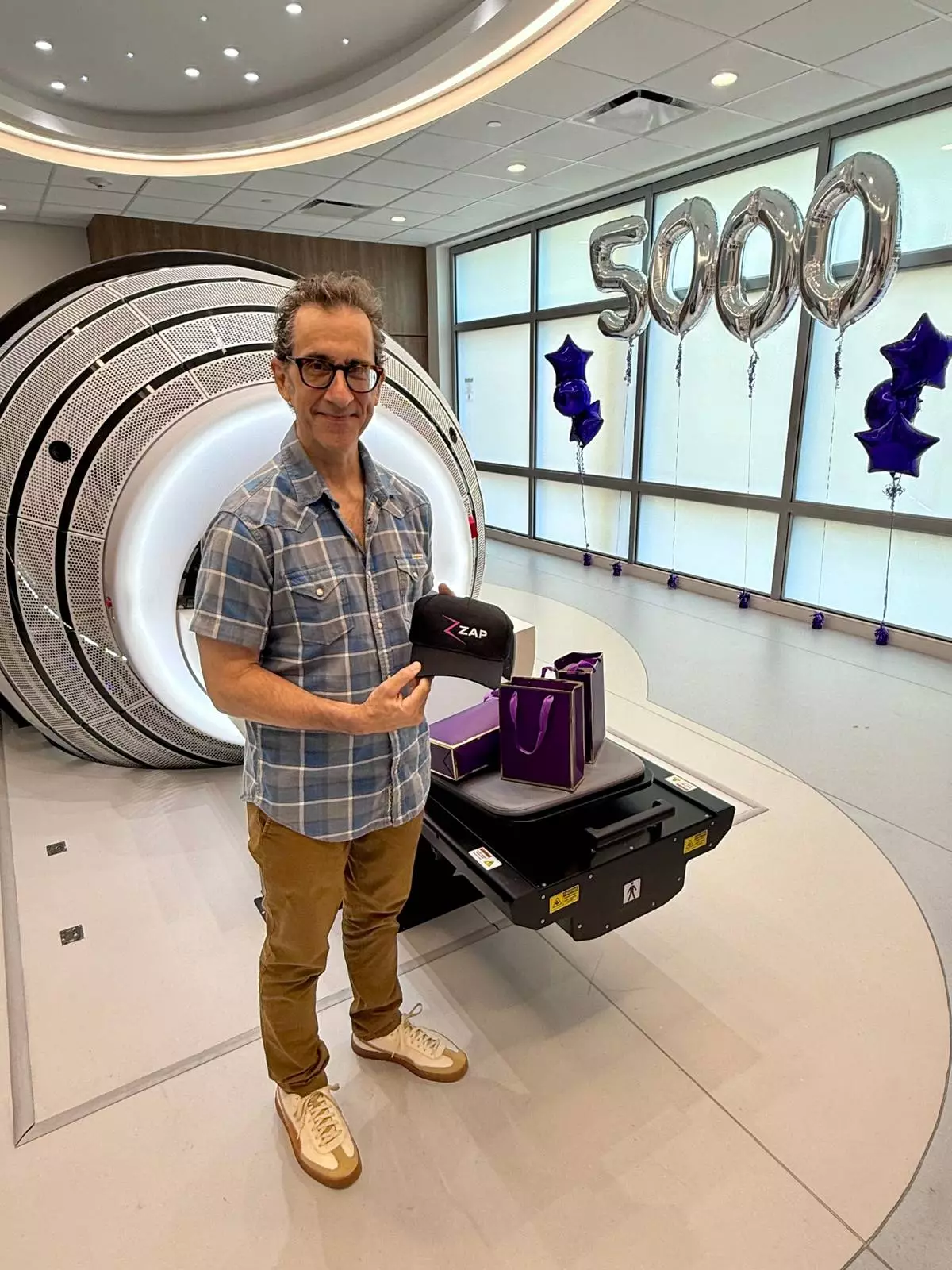
Christopher Czerwinski celebrates completion of his treatment with the ZAP-X® Gyroscopic Radiosurgery® platform at Jersey Shore University Medical Center.

Christopher Czerwinski celebrates completion of his treatment with the ZAP-X® Gyroscopic Radiosurgery® platform at Jersey Shore University Medical Center.

This press release features multimedia. View the full release here: https://www.businesswire.com/news/home/20250812189929/en/

The case was performed at Hackensack Meridian Neuroscience Institute at Jersey Shore University Medical Center in Neptune, New Jersey. The patient, Christopher Czerwinski, a 64-year-old Trauma & ICU Nurse, was treated for a right-sided cavernous sinus meningioma. Mr. Czerwinski first noticed diplopia (double vision) nearly two years ago, with symptoms peaking in April 2025 while on vacation at Disney World with his wife — where he humorously recalls seeing two Cinderella castles. An ophthalmologist subsequently referred him for further testing, which led to an MRI and diagnosis. His condition was originally managed with prism glasses and contact lenses.

Mr. Czerwinski ultimately selected Jersey Shore University Medical Center for his radiosurgical care due to the capabilities of the ZAP-X platform and the proven expertise of the medical team. Mr. Czerwinski underwent ZAP-X treatment and tolerated the procedure exceptionally well, resuming his active lifestyle immediately thereafter.

“Stereotactic radiosurgery continues to redefine how we manage challenging cranial conditions,” said Shabbar F. Danish, M.D., FAANS, chair of Neurosurgery, Hackensack Meridian Neuroscience Institute at Jersey Shore University Medical Center and professor of Neurosurgery, Hackensack Meridian School of Medicine. “With the precision and versatility of ZAP-X, we were able to deliver focused treatment while minimizing exposure to surrounding critical structures. Mr. Czerwinski’s case is a prime example of how we can address complex tumors while preserving quality of life.”

An avid runner and budding pianist, Mr. Czerwinski also enjoys photography, working out with his wife, and spending time with friends and family. As a healthcare provider himself, he expressed deep appreciation for the compassionate care he received and the non-invasive nature of the ZAP-X procedure.

“I’m pleased our clinical experts have enabled the communities we serve to receive this advanced procedure at our academic medical center, without the need to travel far from home,” said Vito Buccellato, MPA, LNHA, president and chief hospital executive of Jersey Shore University Medical Center.

The ZAP-X platform represents a new frontier in cranial radiosurgery. By employing gyroscopic beam delivery, ZAP-X can direct radiation from thousands of angles to concentrate dose on the tumor while sparing healthy brain tissue and helping protect nearby organs at risk, such as the optic nerves and brainstem. The procedure is painless, incisionless, and often completed in a single outpatient session — without the need for anesthesia or hospital admission.

“The treatment of our 5,000th patient not only represents a numerical milestone, but a reaffirmation of our mission to make brain radiosurgery safer, smarter, and more accessible,” said John R. Adler, M.D., founder and CEO of ZAP Surgical, and Emeritus Dorothy & TK Chan Professor of Neurosurgery and Radiation Oncology at Stanford University.

ZAP-X is the first and only dedicated cranial SRS platform that does not require radioactive Cobalt-60. Instead, it uses a modern linear accelerator to generate radiation, eliminating the safety, storage, and regulatory challenges associated with isotope-based systems. Furthermore, ZAP-X is the only vault-free solution in its category, thereby allowing installation in clinical settings with interior and exterior facing windows.

“We recruited experts in their fields, Dr. Shabbar Danish and Dr. Timothy Chen, in part so that we could add to the available, leading-edge treatment technologies at Jersey Shore and HMH,” said Kenneth N. Sable, M.D., MBA, FACEP, president, Acute Hospital Division, Hackensack Meridian Health. “I’m thrilled that the 5,000th patient to receive ZAP-X treatment is from our local community.”

For information about Jersey Shore University Medical Center’s ZAP-X program, visit www.hackensackmeridianhealth.org/en/services/neurosciences/gyroscopic-radiosurgery-integrated-with-magnetic-resonance-imaging.

About ZAP Surgical Systems, Inc.

ZAP Surgical Systems, Inc. designs and manufactures the ZAP-X ® Gyroscopic Radiosurgery ® platform. ZAP was founded in 2014 by Dr. John R. Adler, Emeritus Dorothy & TK Chan Professor of Neurosurgery and Radiation Oncology at Stanford University. Dr. Adler is also renowned as the inventor of the CyberKnife ® system and founder of Accuray, Inc. The ZAP-X platform incorporates a unique vault-free design that typically eliminates the need for costly shielded treatment rooms. ZAP-X also utilizes a modern linear accelerator to eliminate legacy use of Cobalt-60. Learn more at www.zapsurgical.com and follow us on LinkedIn.

ABOUT HACKENSACK MERIDIAN HEALTH

Hackensack Meridian Health is a leading not-for-profit health care organization and New Jersey’s largest, most comprehensive, and integrated health network. Our network includes 18 hospitals, more than 500 patient care locations, and a complete range of services from innovative research and life-enhancing care to lifesaving air medical transportation. Our 38,000 team members and 7,000 physicians are committed to the health and well-being of the communities we serve, making Hackensack Meridian Health a distinguished leader in healthcare philanthropy.

Hackensack University Medical Center is the first-ever New Jersey hospital to be ranked a Top 20 hospital in the nation. It is also ranked #1 in New Jersey and the New York metro area by U.S. News & World Report, 2025-26. Hackensack Meridian Health is proud to be home to New Jersey’s #1 children’s hospital and the state’s only nationally-ranked cancer center, the John Theurer Cancer Center. To learn more, visit www.hackensackmeridianhealth.org.
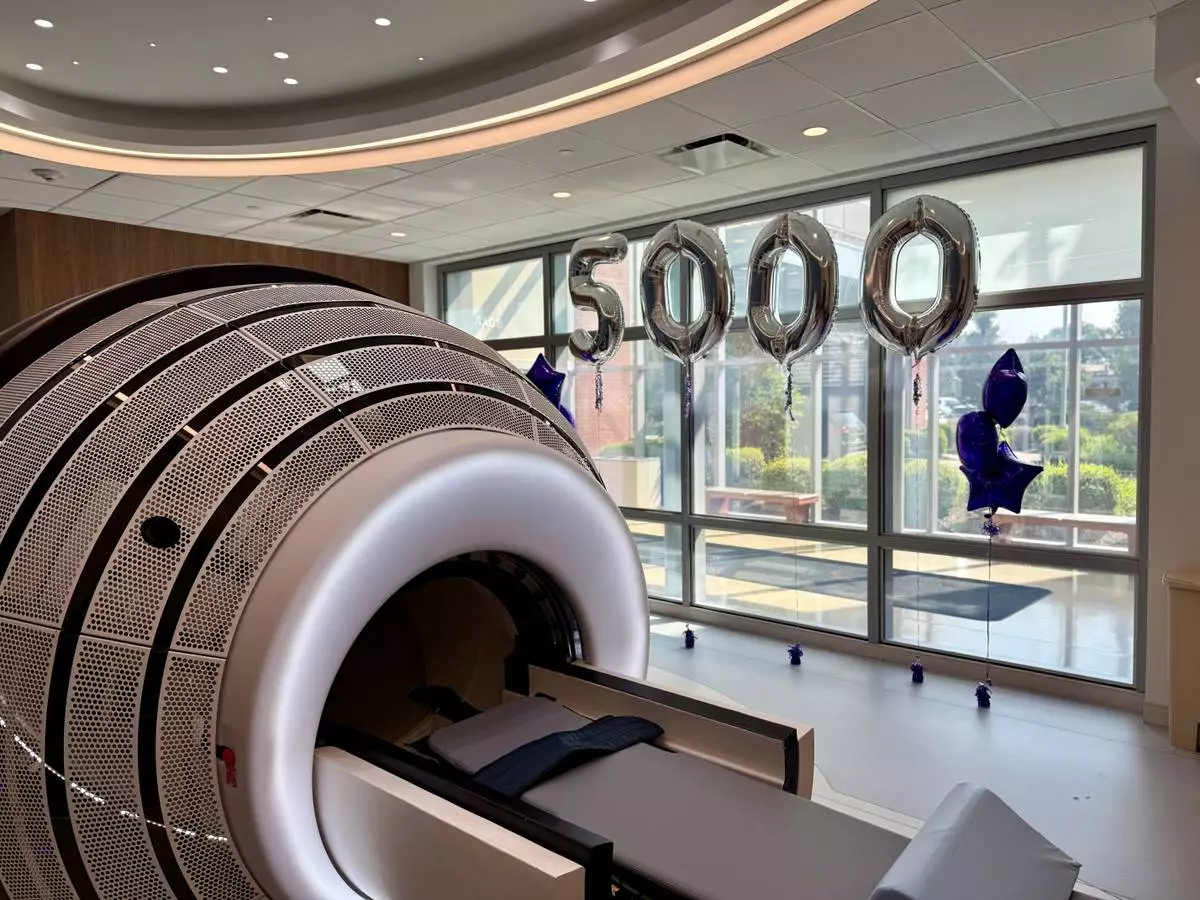
Located in a prominent, high-visibility area within the hospital, the vault-free ZAP-X serves as a signature service for Jersey Shore University Medical Center.

Located in a prominent, high-visibility area within the hospital, the vault-free ZAP-X serves as a signature service for Jersey Shore University Medical Center.

Christopher Czerwinski, joined by the Jersey Shore University Medical Center clinical team, following his successful treatment for a cavernous sinus meningioma using the ZAP-X® Gyroscopic Radiosurgery® platform.
Christopher Czerwinski, joined by the Jersey Shore University Medical Center clinical team, following his successful treatment for a cavernous sinus meningioma using the ZAP-X® Gyroscopic Radiosurgery® platform.

Christopher Czerwinski celebrates completion of his treatment with the ZAP-X® Gyroscopic Radiosurgery® platform at Jersey Shore University Medical Center.


Christopher Czerwinski celebrates completion of his treatment with the ZAP-X® Gyroscopic Radiosurgery® platform at Jersey Shore University Medical Center.

SEOUL, South Korea (AP) — A South Korean court sentenced former President Yoon Suk Yeol to five years in prison Friday in the first verdict from eight criminal trials over the martial law debacle that forced him out of office and other allegations.

Yoon was impeached, arrested and dismissed as president after his short-lived imposition of martial law in December 2024 triggered huge public protests calling for his ouster.

The most significant criminal charge against him alleges that his martial law enforcement amounted to a rebellion, An independent counsel has requested the death sentence over that charge, and the Seoul Central District Court will decide on that in a ruling on Feb. 19.

Yoon has maintained he didn’t intend to place the country under military rule for an extended period, saying his decree was only meant to inform the people about the danger of the liberal-controlled parliament obstructing his agenda. But investigators have viewed Yoon’s decree as an attempt to bolster and prolong his rule, charging him with rebellion, abuse of power and other criminal offenses.

In Friday’s case, the Seoul court sentenced Yoon for defying attempts to detain him and fabricating the martial law proclamation. He was also sentenced for sidestepping a legally mandated full Cabinet meeting, which deprived some Cabinet members who were not convened of their rights to deliberate on his decree.

Judge Baek Dae-hyun said in the televised ruling that imposing “a heavy punishment” was necessary because Yoon hasn’t shown remorse and has only repeated “hard-to-comprehend excuses.” The judge also said restoring legal systems damaged by Yoon’s action was necessary.

Yoon’s defense team said they will appeal the ruling, which they believe was “politicized” and reflected “the unliberal arguments by the independent counsel.” Yoon’s defense team argued the ruling “oversimplified the boundary between the exercise of the president’s constitutional powers and criminal liability.”

Park SungBae, a lawyer who specializes in criminal law, said there is little chance the court would decide Yoon should face the death penalty in the rebellion case. He said the court will likely issue a life sentence or a sentence of 30 years or more in prison.

South Korea has maintained a de facto moratorium on executions since 1997 and courts rarely hand down death sentences. Park said the court would take into account that Yoon’s decree didn’t cause casualties and didn’t last long, although Yoon hasn’t shown genuine remorse for his action.

South Korea has a history of pardoning former presidents who were jailed over diverse crimes in the name of promoting national unity. Those pardoned include strongman Chun Doo-hwan, who received the death penalty at a district court over his 1979 coup, the bloody 1980 crackdowns of pro-democracy protests that killed about 200 people, and other crimes.

Even if Yoon is spared the death penalty or life imprisonment at the rebellion trial, he may still face other prison sentences in the multiple smaller trials he faces.

Some observers say Yoon is likely retaining a defiant attitude in the ongoing trials to maintain his support base in the belief that he cannot avoid a lengthy sentence but could be pardoned in the future.

On the night of Dec. 3, 2024, Yoon abruptly declared martial law in a televised speech, saying he would eliminate “anti-state forces” and protect “the constitutional democratic order.” Yoon sent troops and police officers to encircle the National Assembly, but many apparently didn’t aggressively cordon off the area, allowing enough lawmakers to get into an assembly hall to vote down Yoon’s decree.

No major violence occurred, but Yoon's decree caused the biggest political crisis in South Korea in decades and rattled its diplomacy and financial markets. For many, his decree, the first of its kind in more than 40 years in South Korea, brought back harrowing memories of past dictatorships in the 1970s and 1980s, when military-backed leaders used martial law and emergency measures to deploy soldiers and tanks on the streets to suppress demonstrations.

After Yoon's ouster, his liberal rival Lee Jae Myung became president via a snap election last June. After taking office, Lee appointed three independent counsels to look into allegations involving Yoon, his wife and associates.

Yoon's other trials deal with charges like ordering drone flights over North Korea to deliberately inflame animosities to look for a pretext to declare martial law. Other charges accuse Yoon of manipulating the investigation into a marine’s drowning in 2023 and receiving free opinion surveys from an election broker in return for a political favor.

A supporter of former South Korean President Yoon Suk Yeol shouts slogans outside Seoul Central District Court, in Seoul, South Korea, Friday, Jan. 16, 2026. (AP Photo/Lee Jin-man)

A supporter of former South Korean President Yoon Suk Yeol shouts slogans outside Seoul Central District Court, in Seoul, South Korea, Friday, Jan. 16, 2026. (AP Photo/Lee Jin-man)

Supporters of former South Korean President Yoon Suk Yeol hold signs and flags outside Seoul Central District Court, in Seoul, South Korea, Friday, Jan. 16, 2026. (AP Photo/Lee Jin-man)

Supporters of former South Korean President Yoon Suk Yeol hold signs and flags outside Seoul Central District Court, in Seoul, South Korea, Friday, Jan. 16, 2026. (AP Photo/Lee Jin-man)

A supporter of former South Korean President Yoon Suk Yeol waits for a bus carrying former South Korean President Yoon Suk Yeol outside Seoul Central District Court, in Seoul, South Korea, Friday, Jan. 16, 2026. (AP Photo/Lee Jin-man)

A supporter of former South Korean President Yoon Suk Yeol waits for a bus carrying former South Korean President Yoon Suk Yeol outside Seoul Central District Court, in Seoul, South Korea, Friday, Jan. 16, 2026. (AP Photo/Lee Jin-man)

Supporters of former South Korean President Yoon Suk Yeol hold signs as police officers stand guard outside Seoul Central District Court, in Seoul, South Korea, Friday, Jan. 16, 2026. (AP Photo/Lee Jin-man)

Supporters of former South Korean President Yoon Suk Yeol hold signs as police officers stand guard outside Seoul Central District Court, in Seoul, South Korea, Friday, Jan. 16, 2026. (AP Photo/Lee Jin-man)

Supporters of former South Korean President Yoon Suk Yeol hold signs and flags outside Seoul Central District Court, in Seoul, South Korea, Friday, Jan. 16, 2026. (AP Photo/Lee Jin-man)

Supporters of former South Korean President Yoon Suk Yeol hold signs and flags outside Seoul Central District Court, in Seoul, South Korea, Friday, Jan. 16, 2026. (AP Photo/Lee Jin-man)

Supporters of former South Korean President Yoon Suk Yeol hold signs outside Seoul Central District Court, in Seoul, South Korea, Friday, Jan. 16, 2026. (AP Photo/Lee Jin-man)

Supporters of former South Korean President Yoon Suk Yeol hold signs outside Seoul Central District Court, in Seoul, South Korea, Friday, Jan. 16, 2026. (AP Photo/Lee Jin-man)

A picture of former South Korean President Yoon Suk Yeol is placed on a board as supporters gather outside Seoul Central District Court, in Seoul, South Korea, Friday, Jan. 16, 2026. (AP Photo/Lee Jin-man)

A picture of former South Korean President Yoon Suk Yeol is placed on a board as supporters gather outside Seoul Central District Court, in Seoul, South Korea, Friday, Jan. 16, 2026. (AP Photo/Lee Jin-man)

Recommended Articles