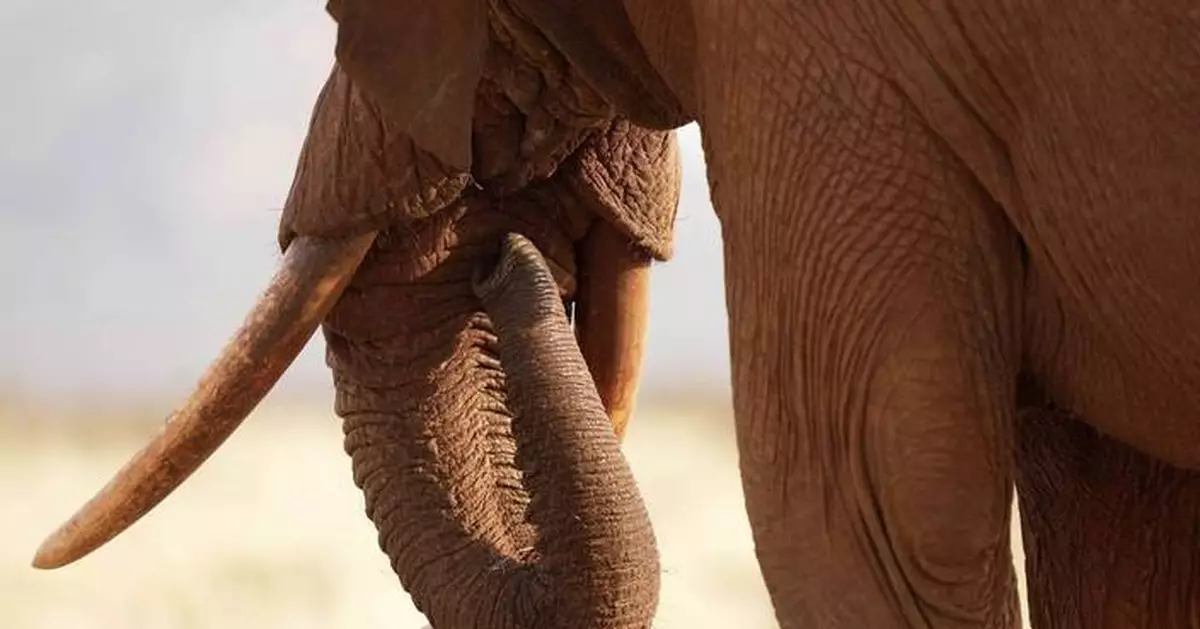
BELA-BELA, South Africa (AP) — Tuesday is World Elephant Day. Here are five things to know about the largest land animals on our planet.
There are three species of elephants: the African savanna or bush elephant, the African forest elephant and the Asian elephant. The African savanna elephant and the Asian elephant are listed as endangered by the International Union for Conservation of Nature. The forest elephant is critically endangered.
The easiest way to tell the difference among the species is the ears. African elephants have larger ears that are shaped, conveniently, like the African continent. African elephants also have two finger-like prehensile extensions at the tips of their trunks to grip things with, while Asian elephants have one.
The African savanna elephant is the biggest of the three species and the largest land animal on Earth. Adult males weigh around 5,000 to 6,000 kilograms, which is 11,000 to 13,000 pounds — or about six tons. Savanna elephants already weigh about 120 kilograms — 265 pounds — when they're born, heavier than your average NFL player.
There are around 150,000 muscles in an elephant's trunk, making it an “incredible piece of equipment,” according to Sean Hensman, an elephant specialist at the Adventures with Elephants sanctuary in South Africa. Because their trunks have no bones, elephants can curl or twist them in all sorts of directions, and even make them shorter or longer. They use them to suck up water to blow into their mouths and to pick up food, or just about anything else they need to do.
Elephants can't jump. That's because of the enormous weight they are carrying. Elephants need at least three feet on the ground at any one time in order to move. They can, however, stand on their back legs if they need to reach food like fruits or leaves high on a tree.
One of the most popular presumptions is that elephants have an incredible memory. That is true, Hensman said. They have a huge temporal lobe — the part of the brain that controls memory. Elephants need a good memory of the locations of numerous food and water sources to survive in some of the harshest climates.
AP Africa news: https://apnews.com/hub/africa
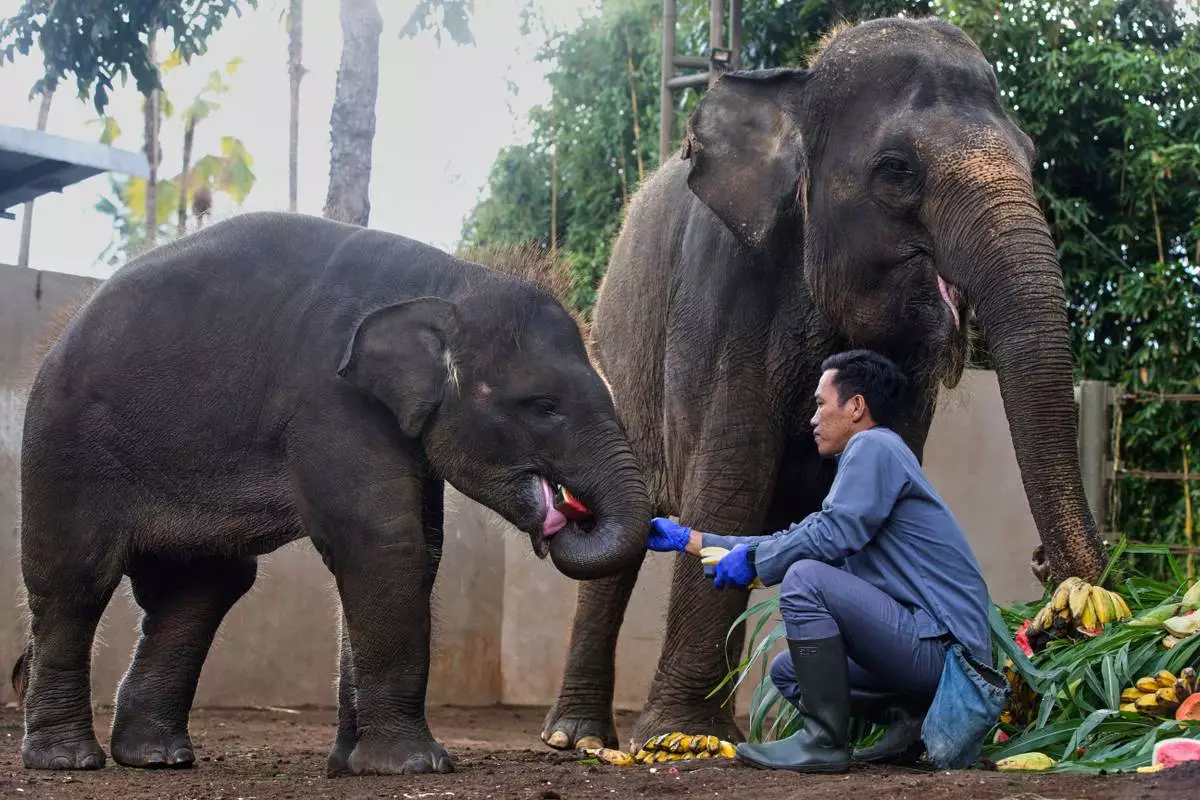
A keeper gives a watermelon to 21-month-old Sumatran elephant Kama as its mother Nurhayati looks on during a special feeding session to celebrate the World Elephant Day at Bali Zoo, in Gianyar, Bali, Indonesia on Tuesday, Aug. 12, 2025. (AP Photo/Firdia Lisnawati)
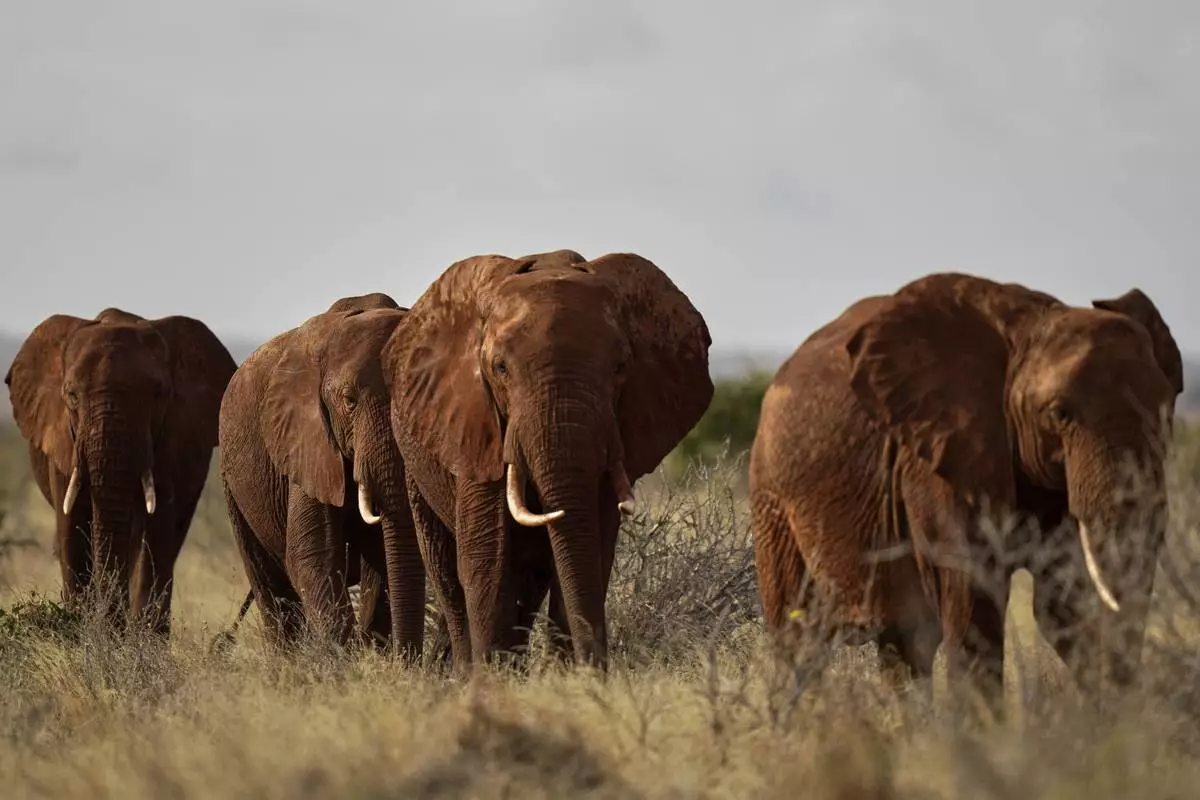
Elephants roam in Tsavo West National Park, near Voi town in Taita-Taveta County, Kenya, on Aug. 7, 2025. (AP Photo/Brian Inganga)
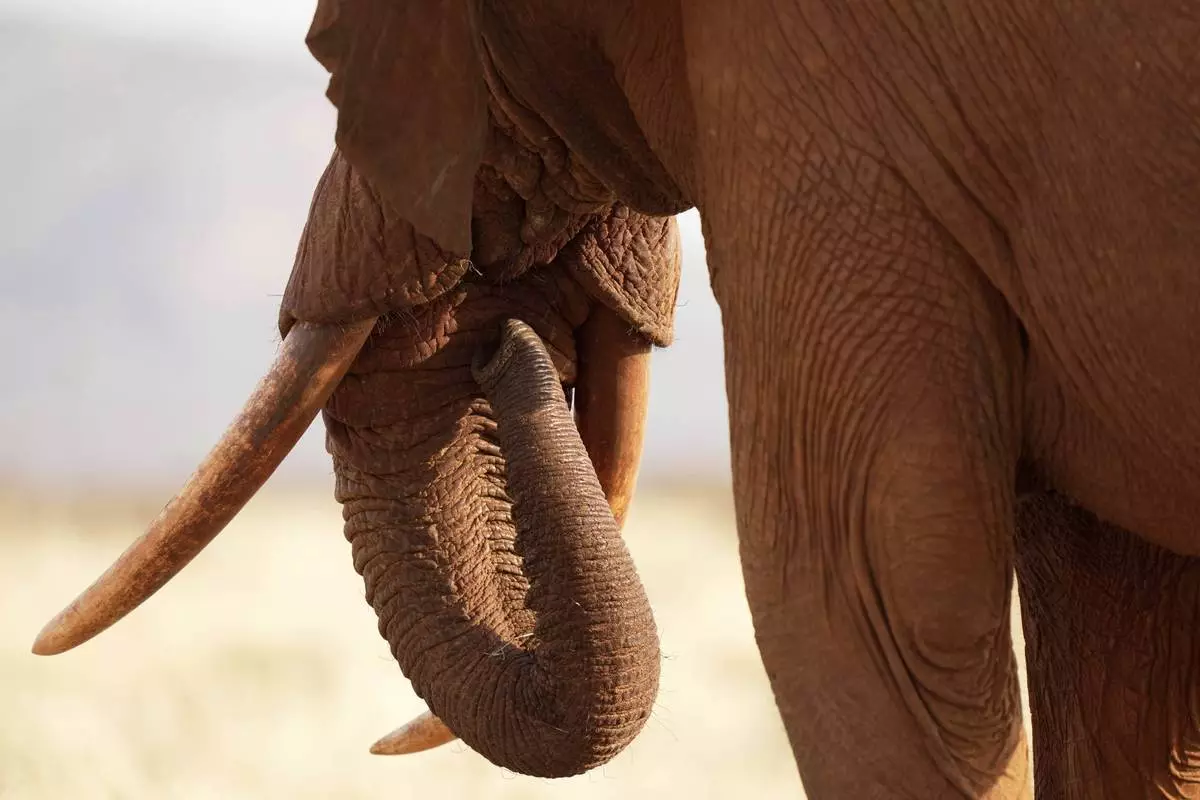
An elephant eats grass in Tsavo-East National Park, near Voi town, Taita-Taveta County, Kenya, on Aug. 7, 2025. (AP Photo/Brian Inganga)
ATLANTA (AP) — Hundreds of flights were canceled or delayed Tuesday, one day after powerful storms swept across the eastern half of the country and upended air travel in a cross-section of cities. Travelers have been facing additional jams at airport security checkpoints as a partial government shutdown strains screener staffing.
The disruptions come at an already challenging time for air travel, in part because the shutdown that began Feb. 14 has pressured staffing at some security checkpoints. At the same time, airports are crowded with spring break travelers and fans heading to March Madness games, the annual NCAA men’s and women’s college basketball tournaments.
More than 750 flights scheduled to fly into, out of or within the U.S. have been called off as of early Tuesday, and about 1,300 were delayed, according to flight-tracking site FlightAware.
Flight delays and cancellations piled up Monday at some of the nation’s largest airports, including those in New York, Chicago and Atlanta. The storm system that dumped heavy snow across the Midwest raced toward the East Coast with high winds reaching gusts near 50 mph (80 km) in parts of New York, the National Weather Service said.
Kelly Price, who was trying to get home to Colorado after a family vacation in Orlando, Florida, said her Sunday night flight wasn’t canceled until early Monday.
“By that time the only place for us to sleep was the airport floor. So we’re all tired and frustrated,” she said, adding that the soonest she and her family could book another flight doesn’t leave until Tuesday afternoon.
The nationwide cancellations on Monday included about 600 in and out of Chicago O’Hare International, more than 470 at Atlanta’s Hartsfield-Jackson International and over 450 at LaGuardia Airport in New York City, according to FlightAware.
Citing severe weather, the Federal Aviation Administration ordered ground stops at Hartsfield-Jackson and Charlotte Douglas International Airport and ground delays at JFK and Newark Liberty International Airport.
Danielle Cash found herself stranded in St. Louis on Sunday while trying to get home to Tampa, Florida, after a weekend girls’ trip to Las Vegas. Now she’s spending several hundred dollars more than planned on a hotel room in a snowy city she wasn’t dressed for.
“It was 80 degrees in Tampa when I left and then going to Vegas," she said. “And it was 90 degrees in the desert.”
Cash said she’s now booked on a flight that will take her to Tennessee before finally returning to Tampa by Tuesday afternoon.
The storms unfolded just as airport security screeners missed their first full paycheck over the weekend. The current partial government shutdown affects only the Department of Homeland Security, which includes the Transportation Security Administration.
Democrats in Congress have said Homeland Security won’t get funded until new restrictions are placed on federal immigration operations following the fatal shootings of Alex Pretti and Renee Good in Minneapolis earlier this year.
It is the third shutdown in less than a year to leave TSA workers temporarily without pay. Once the government reopens, employees will have to wait for back pay.
Some airports have reported longer security lines because of staffing shortages as more TSA workers take on second jobs, can’t afford gas to get to work or leave the profession altogether. Homeland Security has said more than 300 TSA agents have quit since the start of the shutdown.
TSA union leaders in Atlanta held a news conference Monday outside Hartsfield-Jackson, warning that air travelers could face increasingly long wait times as the shutdown continues. Even so, union leaders said, many officers are still reporting to work despite mounting financial strain.
Many TSA workers “are coping with eviction notices, vehicle repossessions, empty refrigerators and overdrawn bank accounts,” said Aaron Barker, a local leader with the American Federation of Government Employees. Supporters behind him held signs reading, “We want a paycheck, not a rain check.”
Travelers flying out of New Orleans on Sunday and Monday were advised to arrive at least three hours early “due to impacts from the federal government’s partial shutdown,” Louis Armstrong International Airport said on X. And the airport in Austin, Texas, shared a video on X taken at 5:30 a.m. local time showing the security line spilling out onto the sidewalk outside.
Back in Atlanta, Mel Stewart and his wife arrived four hours earlier than usual for their flight out of Hartsfield-Jackson to make up for longer TSA lines.
“I think it’s being politicized way too much — way too much,” Stewart said Monday of the shutdown. “And these people are working. They work hard, and for TSA people not to get paid, that’s silly.”
Yamat reported from Las Vegas. Associated Press reporters Margery A. Beck in Omaha, Nebraska, and Audrey McAvoy in Honolulu contributed to this report.
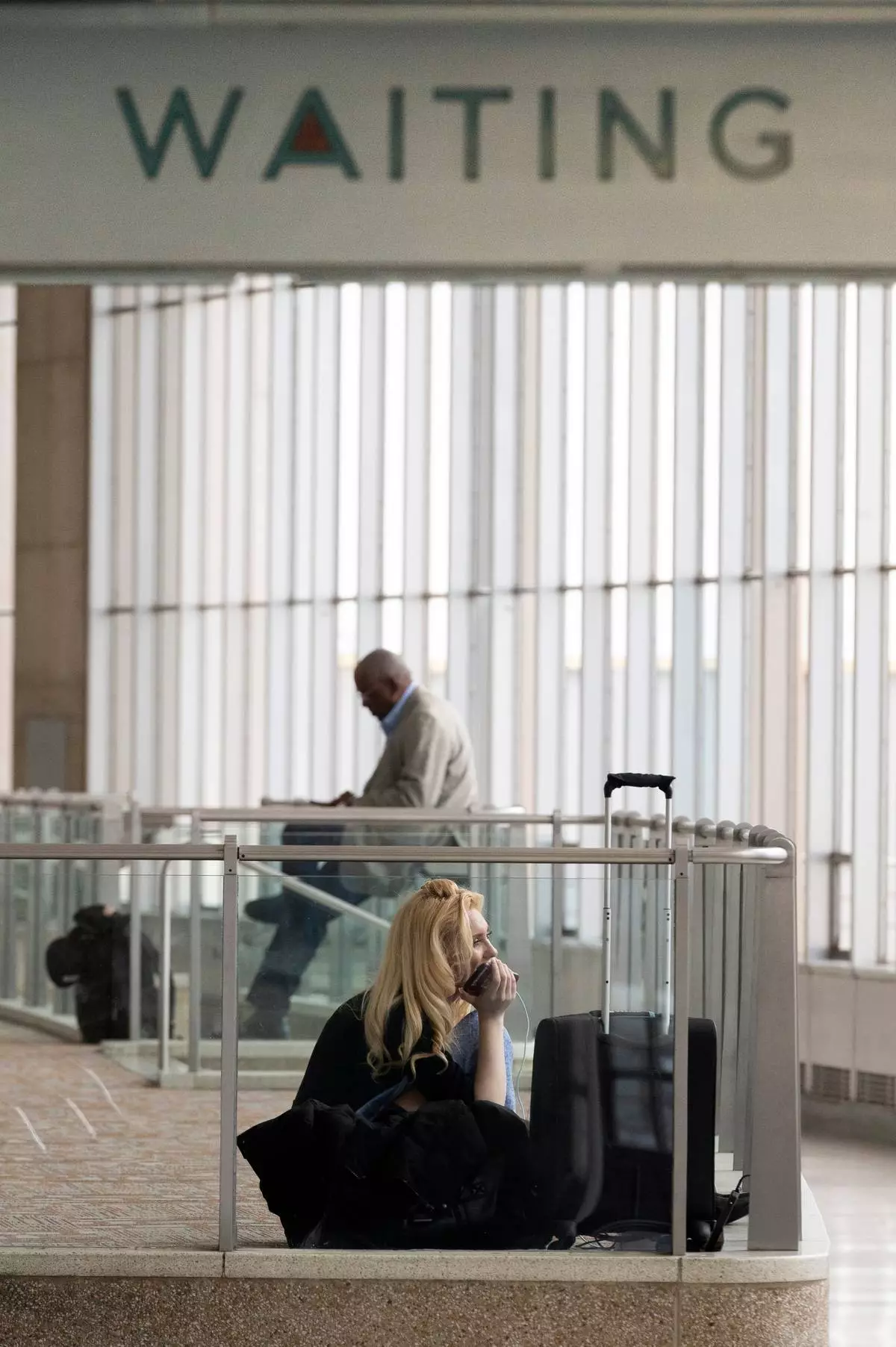
People wait in a departure terminal at Ronald Reagan National Airport, in Arlington, Va., Monday, March 16, 2026. (AP Photo/Cliff Owen)
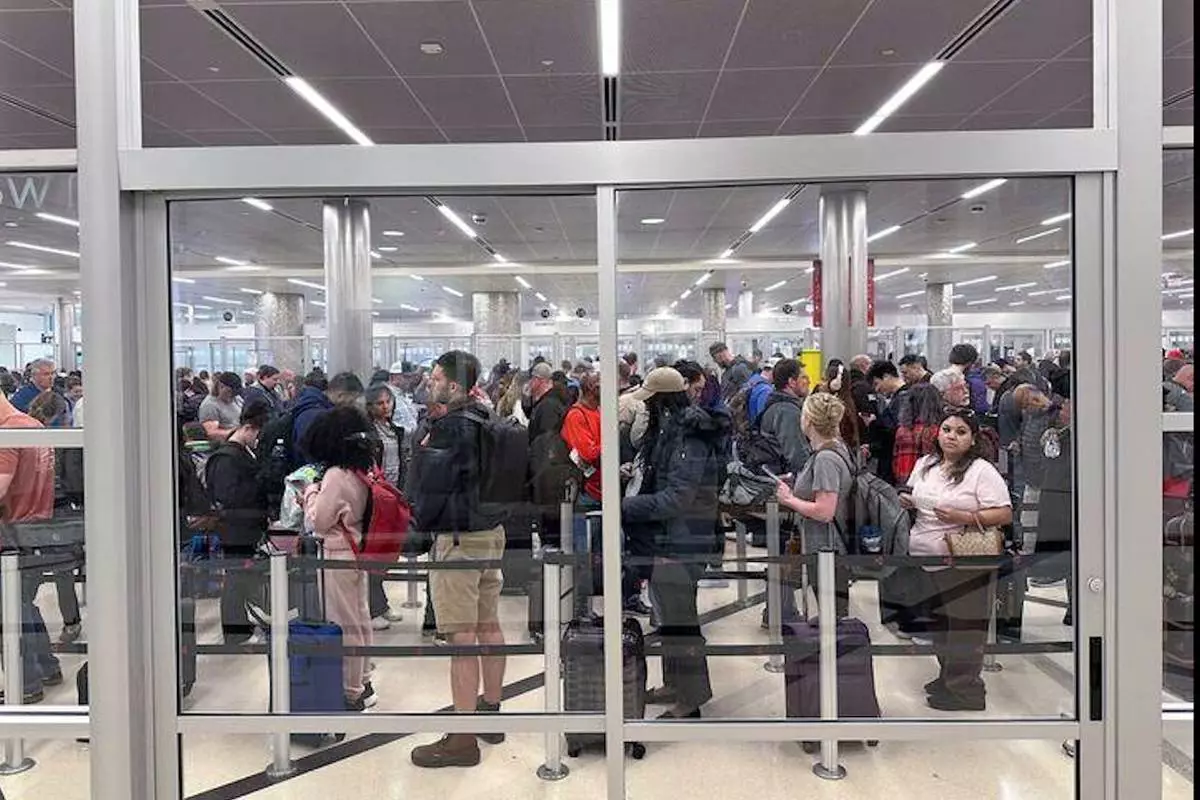
Travelers wait in line at a security checkpoint at Hartsfield-Jackson Atlanta International Airport on Monday, March 16, 2026. (AP Photo/Emilie Megnien)
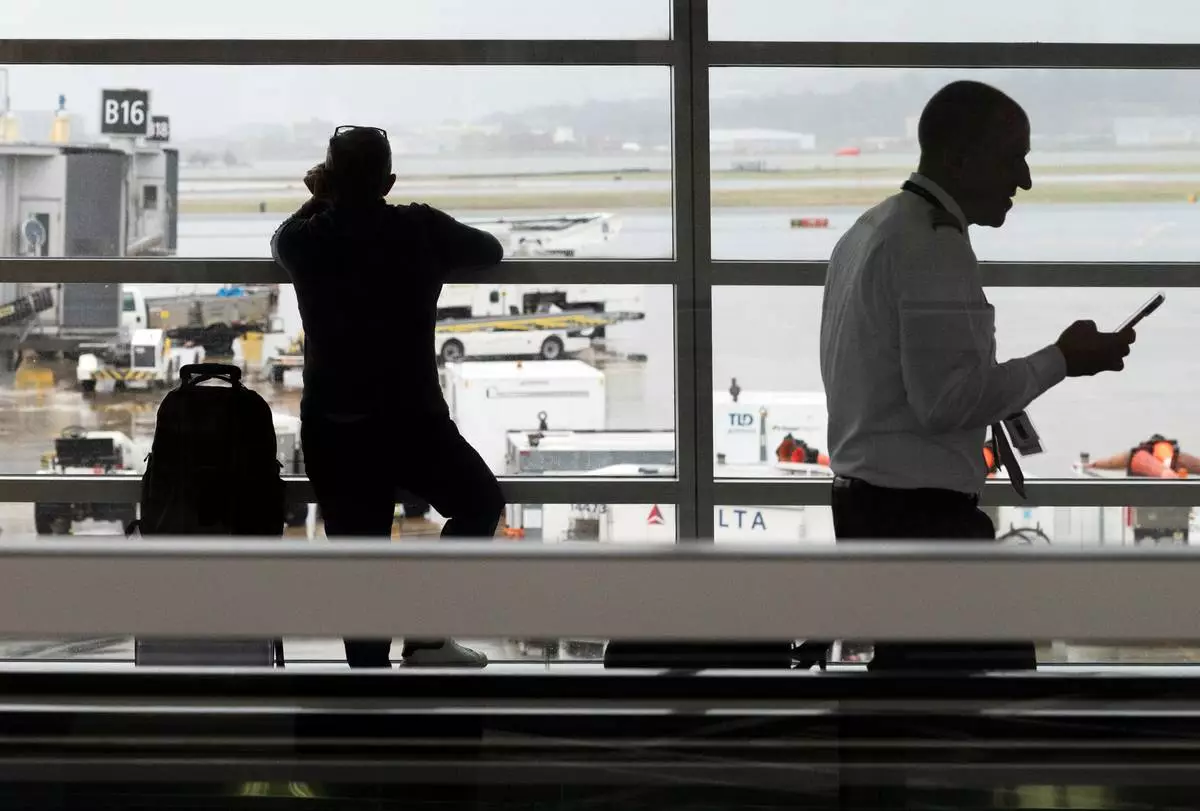
People wait in a departure terminal at Ronald Reagan National Airport, in Arlington, Va., Monday, March 16, 2026. (AP Photo/Cliff Owen)
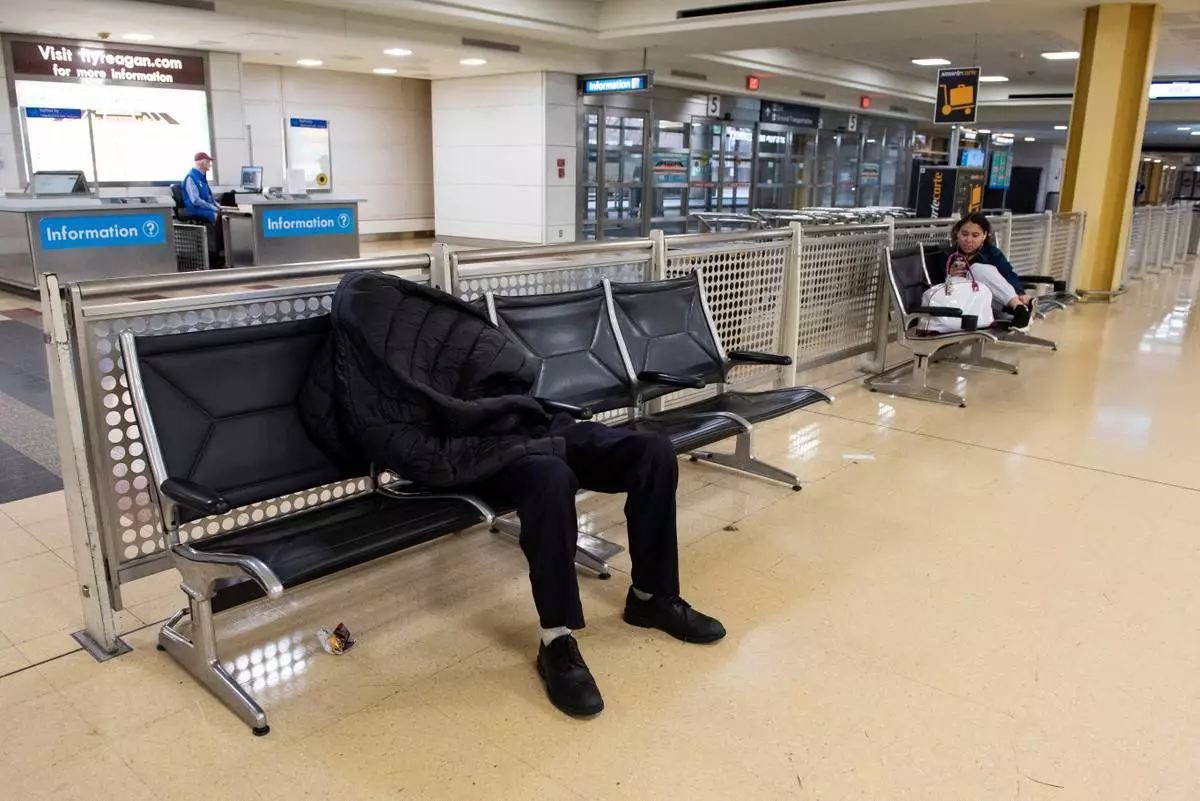
A man sleeps in the baggage claim area of Ronald Reagan National Airport, in Arlington, Va., Monday, March 16, 2026. (AP Photo/Cliff Owen)
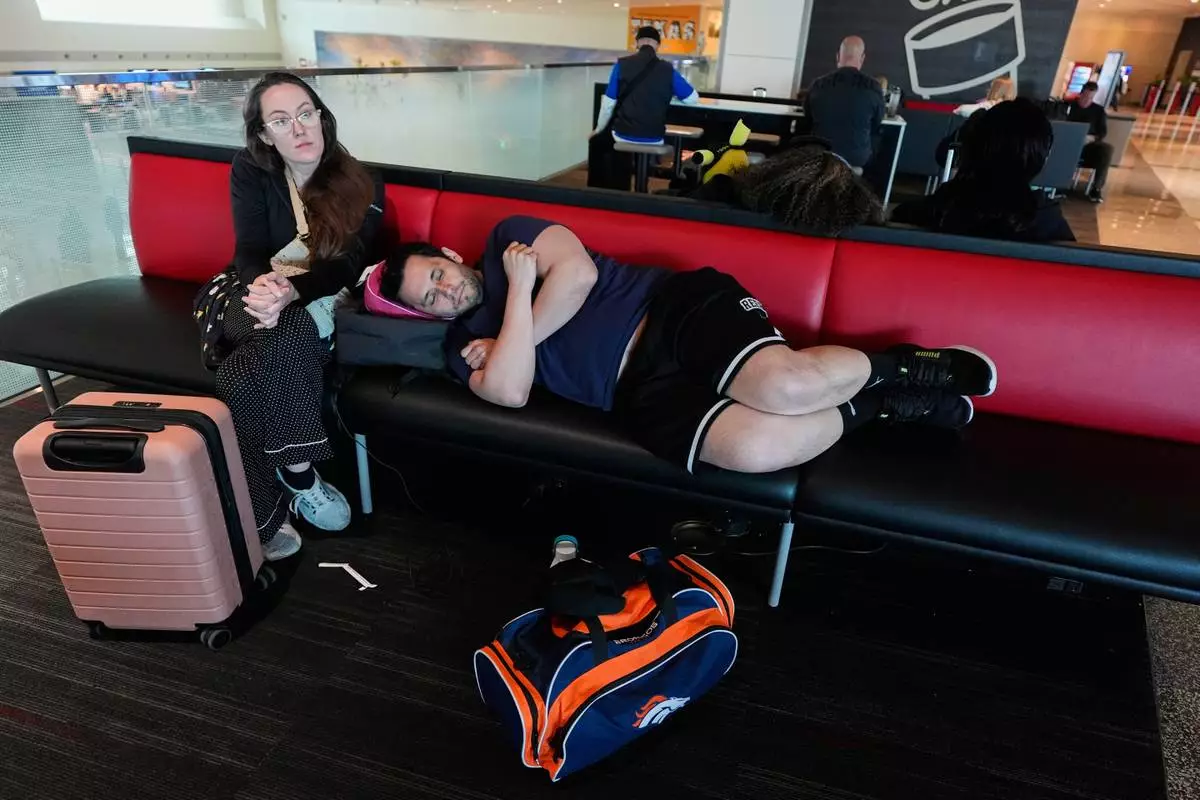
Jamie Sims left, and Carlos Serna, right, try to get some rest as they wait for their cancelled flight to El Paso, texas to be rescheduled at Love Field Airport in Dallas, Monday, March 16, 2026. (AP Photo/Tony Gutierrez)