Skip to Content Facebook Feature Image

Temporary barriers spared Alaska's capital from severe flooding. A long-term solution is elusive

News

Temporary barriers spared Alaska's capital from severe flooding. A long-term solution is elusive
News

News

Temporary barriers spared Alaska's capital from severe flooding. A long-term solution is elusive

2025-08-19 01:26 Last Updated At:01:30

The glacial flooding that sent residents of Alaska's capital city scrambling this week has become an annual ordeal for those who live along the picturesque river that winds from the nearby Mendenhall Glacier.

This year, a giant wall of reinforced sandbags erected with the help of the U.S. Army Corps of Engineers held back the worst of the flooding in Juneau, to residents' great relief. The damage was nothing like what happened the last two years, when flooding was rampant and some homes washed away.

But the wall is merely a temporary barrier. The effort to devise a permanent solution is complicated by what scientists don't yet know about how human-caused global warming will impact the yearly outbursts of water from an ice dam at the glacier. Juneau is just one of many communities around the globe struggling to engineer a way out of the worst damage from climate change.

“We can’t keep doing this,” said Ann Wilkinson Lind, who lives on the banks of the Mendenhall River. “We need a levee or some other permanent fix. ... This is an emergency situation that can’t take 10 years for this study and that study and every other study. It needs to be done now.”

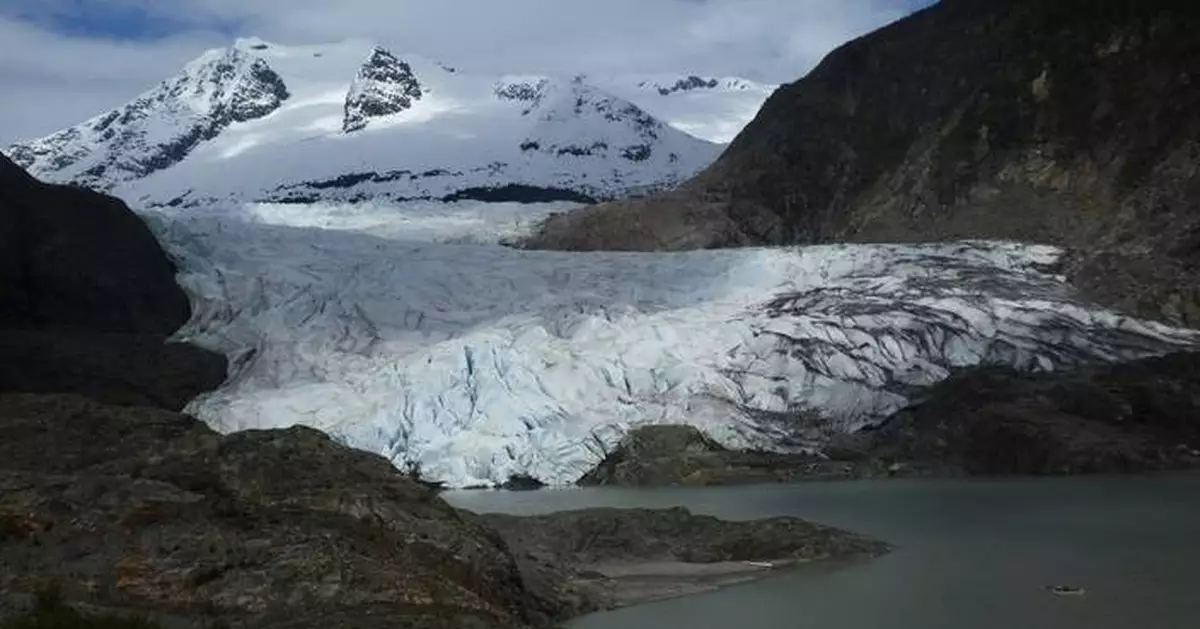
The Mendenhall Glacier is about 12 miles (19 kilometers) from Juneau, home to 30,000 people in southeast Alaska, and is a popular tourist attraction due to its proximity and easy access on walking trails. Homes on the city’s outskirts are within miles of Mendenhall Lake, which sits below the glacier, and many front the Mendenhall River.

The glacial outburst flooding from the Mendenhall is itself a phenomenon caused by climate change, which is thinning glaciers around the world. A glacier nearby retreated, leaving behind a large bowl — Suicide Basin — that fills each spring and summer with rainwater and snowmelt dammed by the Mendenhall.

When that water builds up enough pressure, it forces its way under or around the ice dam, enters Mendenhall Lake, and flows down the Mendenhall River toward Juneau. Flooding from the basin has been an annual concern since 2011 and has gotten worse, with new water-level records being set each of the last three years.

City officials responded this year by working with state, federal and tribal entities to install the temporary barrier along roughly 2.5 miles (4 kilometers) of riverbank. The 10,000 “Hesco” barriers are essentially giant, reinforced sandbags intended to protect more than 460 properties, said emergency manager Ryan O’Shaughnessy.

The Juneau Assembly required homeowners in the flood zone to cover 40% of the barrier's cost — about $6,300 each over 10 years. Additionally, a handful of homeowners were asked to chip in $50,000 toward reinforcing the river bank. About one-quarter of the residents formally objected, not enough to torpedo the project.

This week, some water seeped between the bastions or through pipes underneath them that are designed to allow water to drain from yards into the river. Valves in the pipes are supposed to prevent floodwater from entering. But officials uniformly called the project a success, while acknowledging that some homes were damaged and that the barrier needs to be further extended.

The barriers are designed to last for up to 10 years to allow time for a long-term solution. But questions abound.

The capacity of Suicide Basin seems to be growing, and scientists aren't sure what a worst-case flood might look like. They predict that within a few decades, the Mendenhall itself will retreat far enough that it no longer acts as a dam, eliminating the risk of a flood outburst from Suicide Basin. But the persistent melting could also form other glacially dammed lakes that could function in a similar way.

“There’s still a lot to be learned,” said Nate Rumsey, Juneau's engineering and public works deputy director. “We have to assume this will be an annual event for the next many, many years. Is something like a temporary, soil-filled basket levy the best we can do over that period of time? ... We’ve got to keep looking for a long-term solution.”

The Army Corps of Engineers has nearly $5 million set aside to begin working on a long-term solution, which for now largely consists of data collection.

“It’s like trying to solve a math problem when the variables are always changing,” Army Corps Brig. Gen. Clete Goetz said Thursday. “Seeing the problem is not the hard part. Engineering the solution is the challenge. That’s what we’re here for.”

This story has been updated to correct the spelling of Nate Rumsey's last name.

Johnson and Attanasio reported from Seattle. Rush reported from Portland, Oregon.
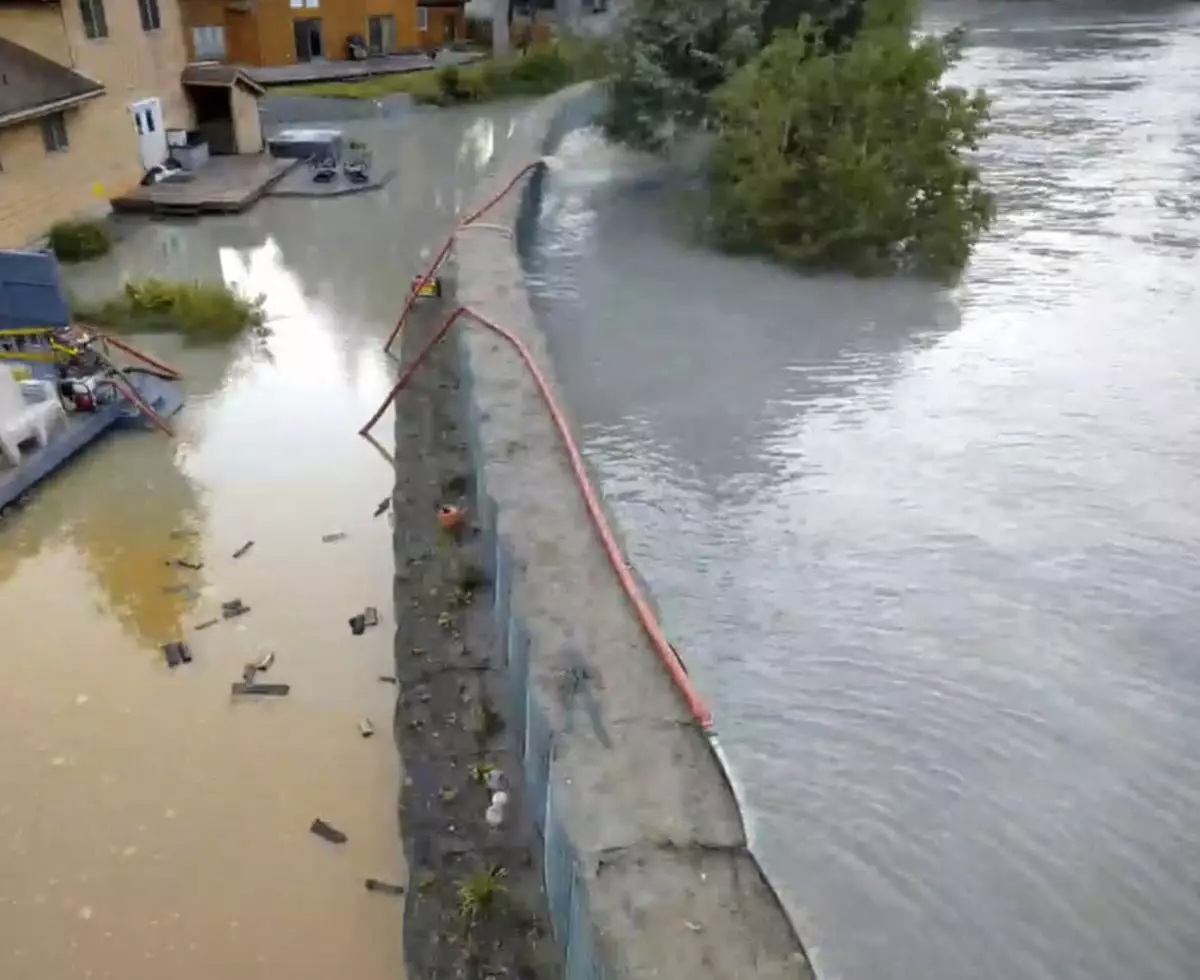
This drone image provided by the City and Borough of Juneau shows flooding from a release of water and snowmelt at Mendenhall Glacier covered some roads and threatened homes along the Mendenhall River in Juneau, Alaska on Wednesday, Aug. 13, 2025. (City and Borough of Juneau via AP)
This drone image provided by the City and Borough of Juneau shows flooding from a release of water and snowmelt at Mendenhall Glacier covered some roads and threatened homes along the Mendenhall River in Juneau, Alaska on Wednesday, Aug. 13, 2025. (City and Borough of Juneau via AP)

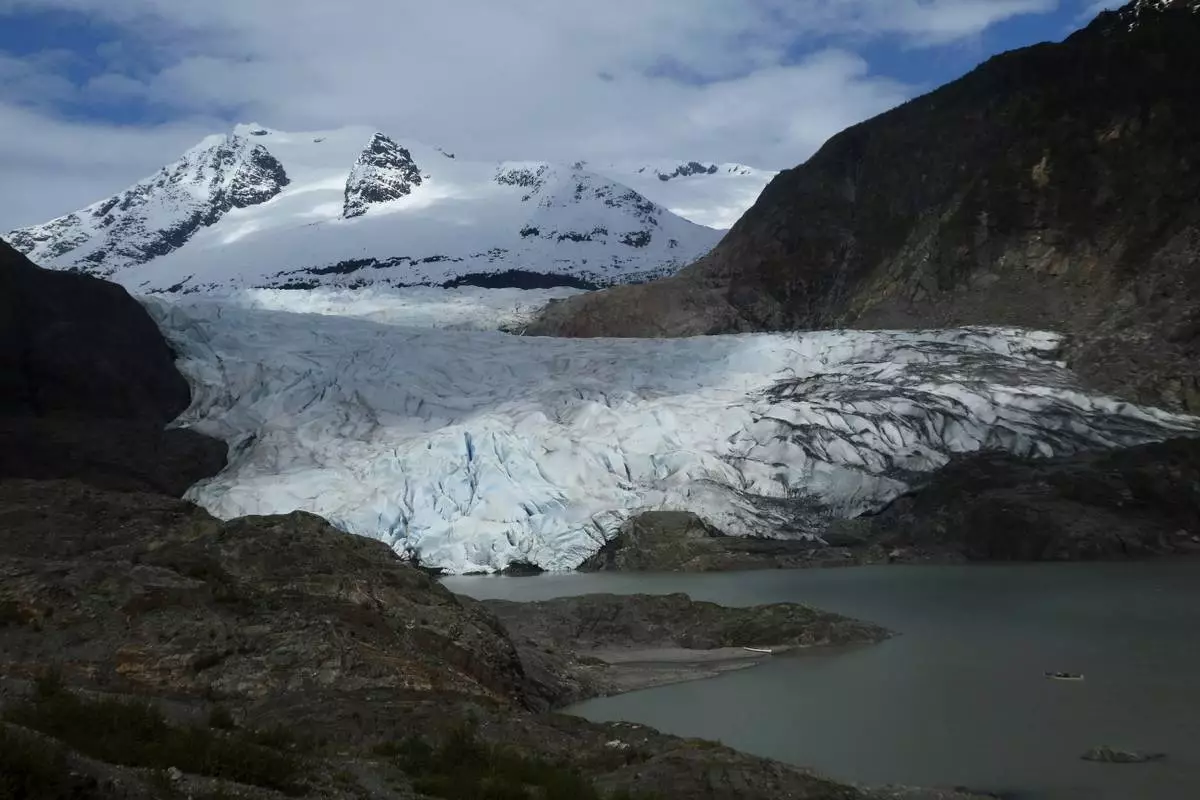
FILE - A canoe, bottom right, glides on Mendenhall Lake, in front of the Mendenhall Glacier, on Sunday, May 18, 2025, in Juneau, Alaska. (AP Photo/Becky Bohrer, File)

FILE - A canoe, bottom right, glides on Mendenhall Lake, in front of the Mendenhall Glacier, on Sunday, May 18, 2025, in Juneau, Alaska. (AP Photo/Becky Bohrer, File)

Iran's top judge hinted at fast trials and executions for those who were detained in nationwide protests against the country's theocracy, even as activists said Wednesday that the death toll rose to levels unseen in decades with at least 2,572 people killed so far.

Iran’s judiciary chief Gholamhossein Mohseni-Ejei made the comments about trials and executions in a video Tuesday, despite a warning from U.S. President Donald Trump that he would “take very strong action” if executions take place.

The U.S.-based Human Rights Activists News Agency said the number of dead climbed to at least 2,571 early Wednesday. The figure dwarfs the death toll from any other round of protest or unrest in Iran in decades and recalls the chaos surrounding the country’s 1979 Islamic Revolution.

After Trump was informed on the number of deaths, he warned Iran's leaders that he was terminating any negotiations and would “act accordingly.”

Details of the crackdown began emerging Tuesday as Iranians made phone calls abroad for the first time in days after authorities severed communications countrywide when the protests broke out.

Here is the latest:

Iranian state television said Wednesday’s mass funeral in Tehran would include 300 bodies of security force members and civilians. The funeral is expected to take place at Tehran University under heavy security.

The Human Rights Activists News Agency, which is tracking the death toll, said more than 2,550 people have been killed, 2,403 protesters and 147 government-affiliated.

Twelve children were killed, along with nine civilians it said were not taking part in protests. More than 18,100 people have been detained, the group said.

Gauging the demonstrations and the death toll from abroad has grown more difficult and The Associated Press has been unable to independently assess the toll given the communications being disrupted in the country.

Melanie Lidman contributed from Jerusalem.

Trump’s decision to impose a 25% tariff on countries that trade with Iran could impact India, an expert said, as New Delhi already faces existing 50% U.S. trade levies due its purchases of Russian oil.

Abhijit Mukhopadhyay, a senior economist at the Chintan Research Foundation in New Delhi, said the bigger risk is not India-Iran trade, but India’s access to the U.S. market as its exports to Iran are modest.

India mainly exports rice, tea, sugar, pharmaceuticals and electrical machinery to Iran, while importing dry fruits and chemical products. Textiles and garments, gems and jewelry and engineering goods are likely to be the most vulnerable sectors, he said.

Trump’s latest move also could affect India’s investments in Iran including the strategically important Chabahar port, which gives India a trade route to Afghanistan, Central Asia and Europe while bypassing Pakistan, Mukhopadhyay said.

Iran’s judiciary chief signals fast trials and executions for those detained in nationwide protests.

Gholamhossein Mohseni-Ejei made the comment in a video shared by Iranian state television on Wednesday.

He emphasized the need for swift action, saying delays would lessen the impact.

His remarks challenge Trump, who warned Iran about executions in an interview aired Tuesday.

Trump stated the U.S. would take strong action if Iran proceeded with executions. The situation highlights escalating tensions between the two countries over the handling of the protests.

Dozens of Pakistani students studying in Iran have returned home through a remote southwestern border crossing, a Pakistani immigration official said Wednesday.

Federal Investigation Agency spokesperson in Quetta city, Samina Raisani, said about 60 students crossed into Pakistan on Tuesday through Gabd border in Balochistan province with valid travel documents.

More students were expected to return through the same crossing later Wednesday, she said.

Mudassir Tipu, Pakistan’s ambassador to Iran, said Tuesday that Iranian universities had rescheduled exams and permitted international students to leave the country.

The satellite internet provider Starlink now offers free service in to people Iran who have access to the company's receivers, activists said Wednesday.

Mehdi Yahyanejad, a Los Angeles-based activist who helped get the units into Iran, told The Associated Press that the free service had started. Other activists also confirmed in messages online that the service was free.

Starlink has been the only way for Iranians to communicate with the outside world since authorities shut down the internet Thursday night as nationwide protests swelled and they began a bloody crackdown against demonstrators.

Starlink did not immediately acknowledge the decision.

This frame grab from videos taken between Jan. 9 and Jan. 11, 2026, and circulating on social media purportedly shows images from a morgue with dozens of bodies and mourners after crackdown on the outskirts of Iran's capital, in Kahrizak, Tehran Province. (UGC via AP)

This frame grab from videos taken between Jan. 9 and Jan. 11, 2026, and circulating on social media purportedly shows images from a morgue with dozens of bodies and mourners after crackdown on the outskirts of Iran's capital, in Kahrizak, Tehran Province. (UGC via AP)

Recommended Articles