Ziva Mann remembers how joyful and smiley her daughter was as a child — the family even gave her the nickname “Giggles.”
“She was just sunshine,” Mann said. That changed around second grade, when her joy began to fade. “She got sadder and sadder,” Mann recalled. “It was like watching someone disappear.”
Click to Gallery
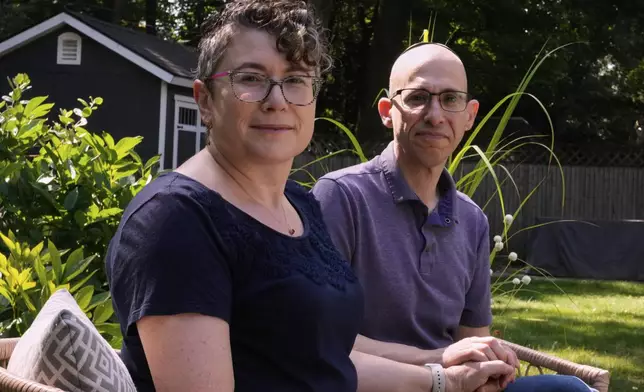
Ziva Mann and her husband Ezra, right, parents of a transgender child and members of a welcoming synagogue, pose in the backyard of their home, Wednesday, Aug. 13, 2025, in Newton, Mass. (AP Photo/Charles Krupa)
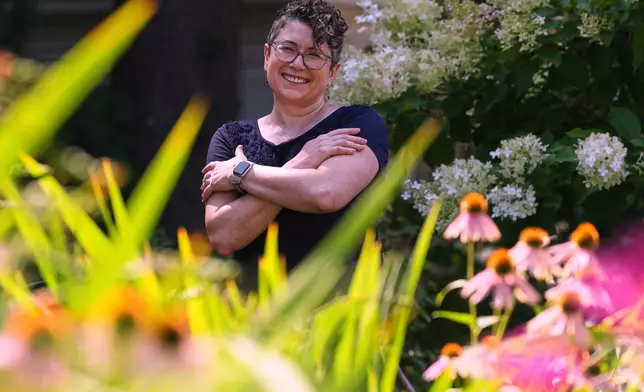
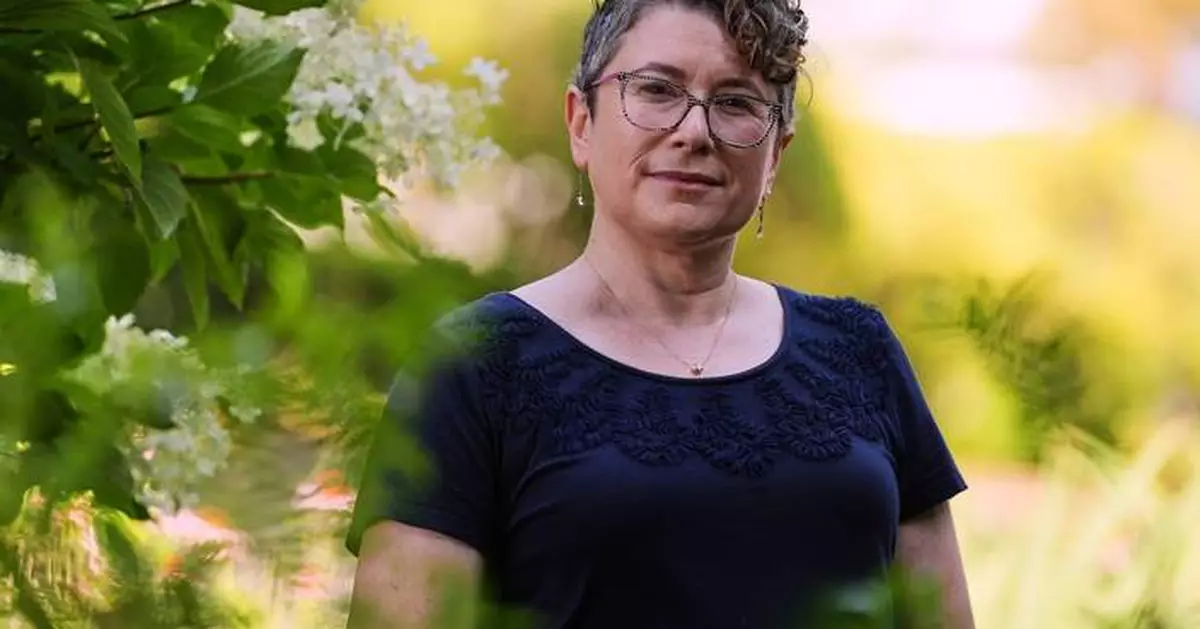
Ziva Mann, mother of a transgender child and member of a welcoming synagogue, poses in her garden, Wednesday, Aug. 13, 2025, in Newton, Mass. (AP Photo/Charles Krupa)
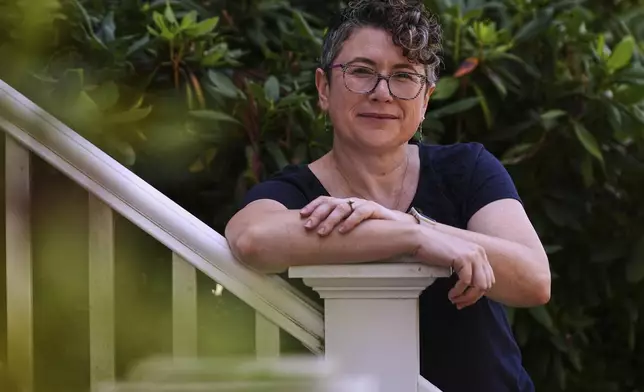
Ziva Mann, mother of a transgender child and member of a welcoming synagogue, poses outside her home, Wednesday, Aug. 13, 2025, in Newton, Mass. (AP Photo/Charles Krupa)
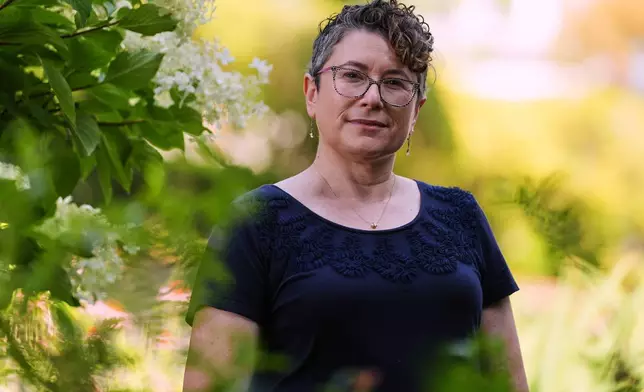
Ziva Mann, mother of a transgender child and member of a welcoming synagogue, poses in her garden, Wednesday, Aug. 13, 2025, in Newton, Mass. (AP Photo/Charles Krupa)
Mann later realized that her child’s growing sadness was connected to a struggle to reckon with her gender identity.
Her daughter came out as transgender at home in Massachusetts four years ago. “Mom, I’m a girl,” Mann remembers hearing her say. Though she was surprised by the news, she quickly came to admire her daughter’s bravery.
Since then, the family has striven to find the best ways to support Ellie within their modern Orthodox community, where tradition and strict gender roles shape daily life. They’ve managed to find emotional and spiritual resources close to home at a time when transgender rights are under attack nationwide.
Two of the three biggest branches of Judaism in the U.S. — Reform and Conservative — support the rights of transgender people, but it can still be challenging for trans youth to find an inclusive congregation.
Schools in Orthodox Jewish communities are typically divided by gender, and most synagogues have separate seating sections for men and women — sometimes on different floors.
“Orthodoxy today is just binary,” said Miryam Kabakov, co-founder and executive director of Eshel, an organization supporting LGBTQ+ people in Orthodox environments. “You’re either male or you’re female. So if a trans person is in between transitioning, very often they will be asked not to come to synagogue.”
She said even after someone has fully transitioned, rabbis should allow them to sit where they feel comfortable. But that acceptance is not guaranteed.
To connect parents and trans children with inclusive synagogues, Eshel developed a program called “Welcoming Shuls,” where people can confide in spiritual leaders who will treat them with respect.
According to Kabakov, about 300 rabbis and 160 families with trans members have joined their listings. Deslie Paneth is among them. She lives on Long Island and has traveled far to find support for Ollie, her transgender son.
“One night, I said to my husband ‘I need help, I don’t know how to navigate this,'” Paneth said. “Without Eshel, I don’t know how this would have turned out for any of us.”
Mann defines herself as modern Orthodox, meaning she strives to uphold Judaic law while embracing the values within her family.
“The only time we break the rules is to save someone’s life,” she said. “Because a life is more important than all of the rules.”
Respecting her daughter’s identity felt akin to saving her life, so Mann didn’t feel the need to talk to God about it. She said who her daughter is as a person mattered more than the gender she thought she had.
Mann has heard of families with trans children who were asked to leave their synagogue, but this didn’t happened to her. Before discussing Ellie's identity with other relatives, Mann reached out to her rabbi. He assured her that her daughter would be treated with dignity and respect.
“He offered us a blessing,” Mann said. “The strength, the love and the grace to parent a child who’s walking a difficult path.”
Mann feels lucky to have found support, both in religious spaces and among family members, which has helped Ellie be her joyful self again. Some Orthodox families have faced a tougher process.
Paneth recalled her son, before starting his transition around 2017, was deeply religious and they enjoyed sitting together at synagogue.
“He tells me still today that, especially around the holiday times, it hurts him that he can’t sit next to me in temple,” Paneth said. “He’s probably my child that has the strongest commitment to Judaism from an emotional connection."
A rabbi told Paneth that Ollie is welcome to come to services, but he would now be expected to sit among the men. This is part of the reason why Ollie has not returned to synagogue since his transition.
Ollie believes that his relationship with religion splintered as a student in an all-girls Orthodox Jewish high school. As he started raising questions about gender equality, none of the answers sufficed.
“I’m still convinced that if I wasn’t trans, I would still be a religious Jew,” the 27-year-old said.
He initially told his parents he was a lesbian. But since attending a secular college, making LGBTQ+ friends and feeling trapped during the pandemic, he decided to speak with them again. “If I was going to survive this, I had to come out with my parents as trans and start medically transitioning.”
He had top surgery in 2022 and soon after met his girlfriend at JQY, a program for Jewish LGBTQ+ teens. The couple now lives together in New York.
Ollie doesn’t think of himself as Orthodox, and says he would like to find a new path toward God. Paneth understands and still includes him in the Jewish holidays. Ollie appreciates it.
Because he first connected to God as a girl, it doesn’t feel natural to him to embrace traditions that are typical for Jewish men, like wearing a kippah.
“I don’t do any of the tasks that men do religiously because I’m the same person I always was,” he said. “Even though I look different, my relationship to God didn’t change.”
Kabakov said many LGBTQ+ Jews eventually decide to leave Orthodoxy, but for those who wish to remain, Eshel and some spiritual leaders offer support.
Rabbi Mike Moskowitz, who works at an LGBTQ+ synagogue in New York, thinks of his job as helping people understand how they can be their authentic selves and still feel accepted by their religion. “It’s not that Judaism is the problem,” he said. “Orthodoxy, the people, are the problem.”
The counseling he provides for trans children and their parents is specific to each person, but in general, he offers fresh interpretations of the Hebrew Bible.
“Those who want to be transphobic say the Bible says you can’t wear misgendered clothing,” Moskowitz said. “I think a response is that trans folks are not wearing misgendered clothing. They’re wearing gender-affirming clothing.”
He, like Kabakov, believes there’s a trend in Orthodoxy toward more inclusivity, but there’s more work to do.
“Discrimination is unholy,” he said. “Unity is coping through kindness and being able to replace the weight of oppression with the elevation of love.”
This story was first published on Aug. 16, 2025. It was updated on Aug. 19, 2025, to correct the name of the co-founder and executive director of Eshel. She is Miryam Kabakov, not Myriam Kabakov.
Associated Press religion coverage receives support through the AP’s collaboration with The Conversation US, with funding from Lilly Endowment Inc. The AP is solely responsible for this content.
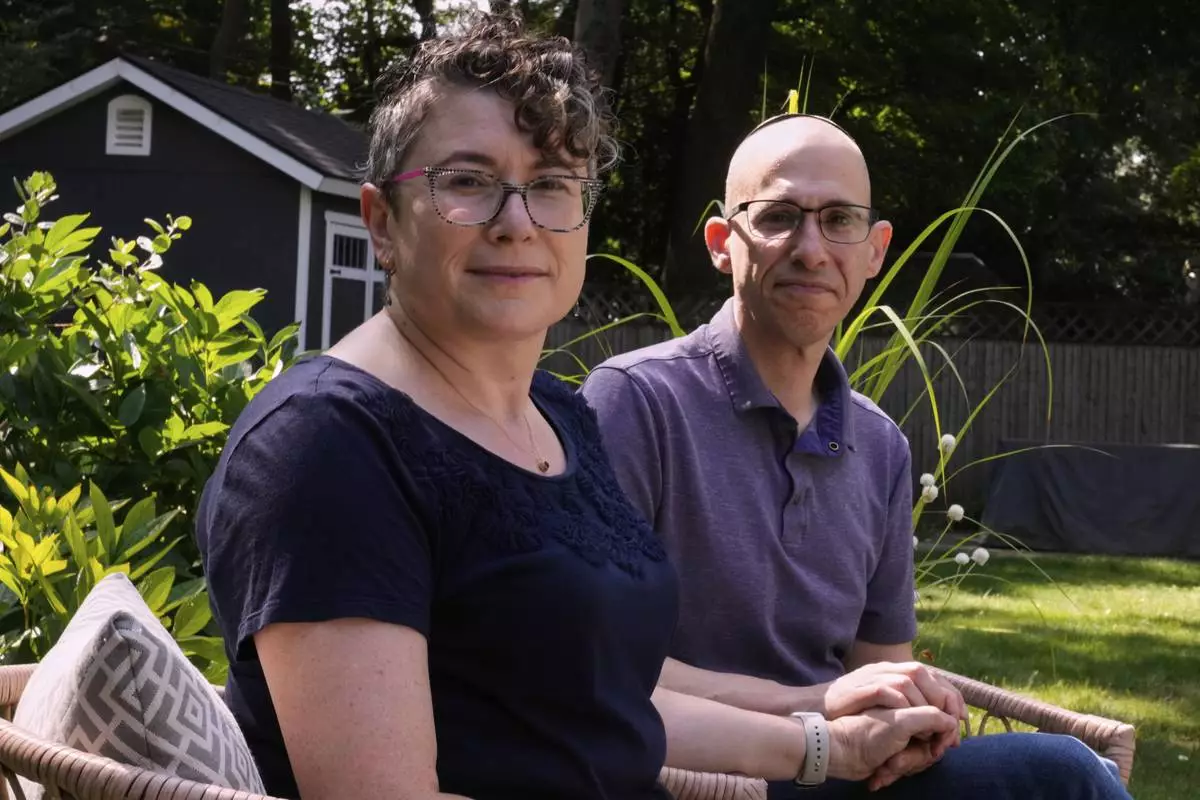
Ziva Mann and her husband Ezra, right, parents of a transgender child and members of a welcoming synagogue, pose in the backyard of their home, Wednesday, Aug. 13, 2025, in Newton, Mass. (AP Photo/Charles Krupa)
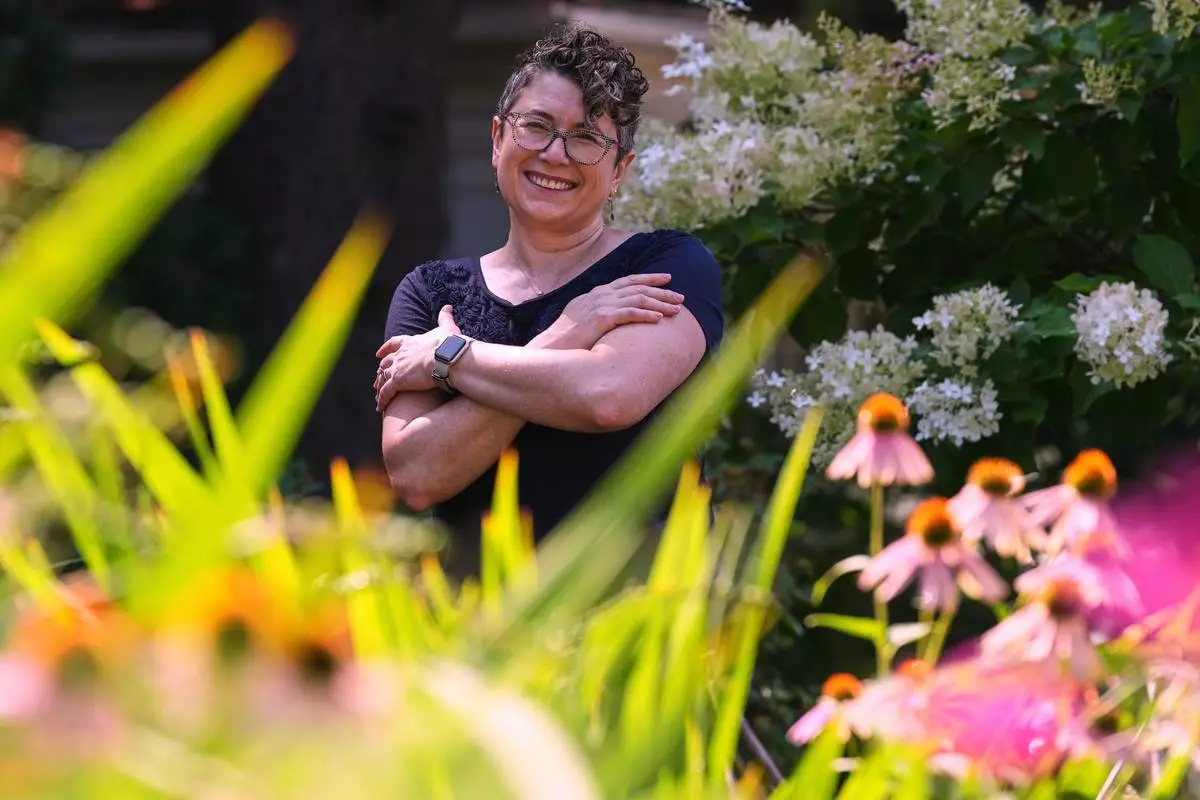
Ziva Mann, mother of a transgender child and member of a welcoming synagogue, poses in her garden, Wednesday, Aug. 13, 2025, in Newton, Mass. (AP Photo/Charles Krupa)
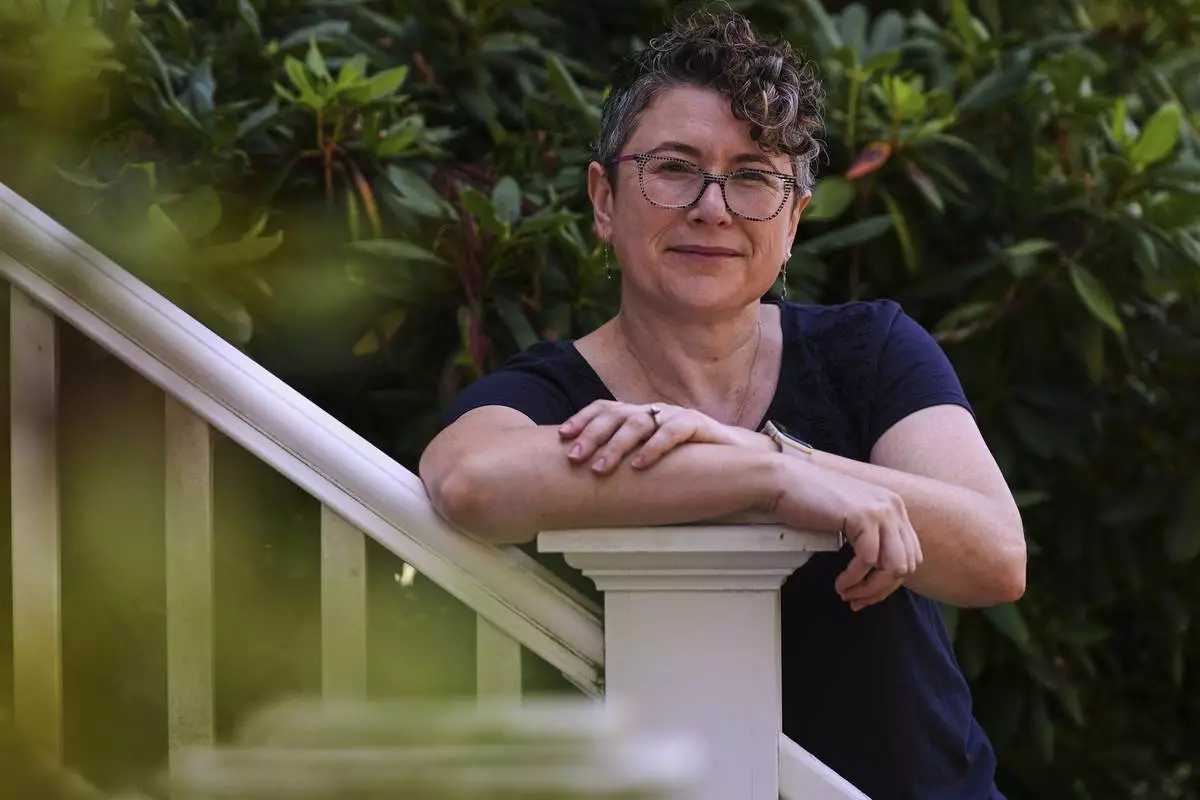
Ziva Mann, mother of a transgender child and member of a welcoming synagogue, poses outside her home, Wednesday, Aug. 13, 2025, in Newton, Mass. (AP Photo/Charles Krupa)
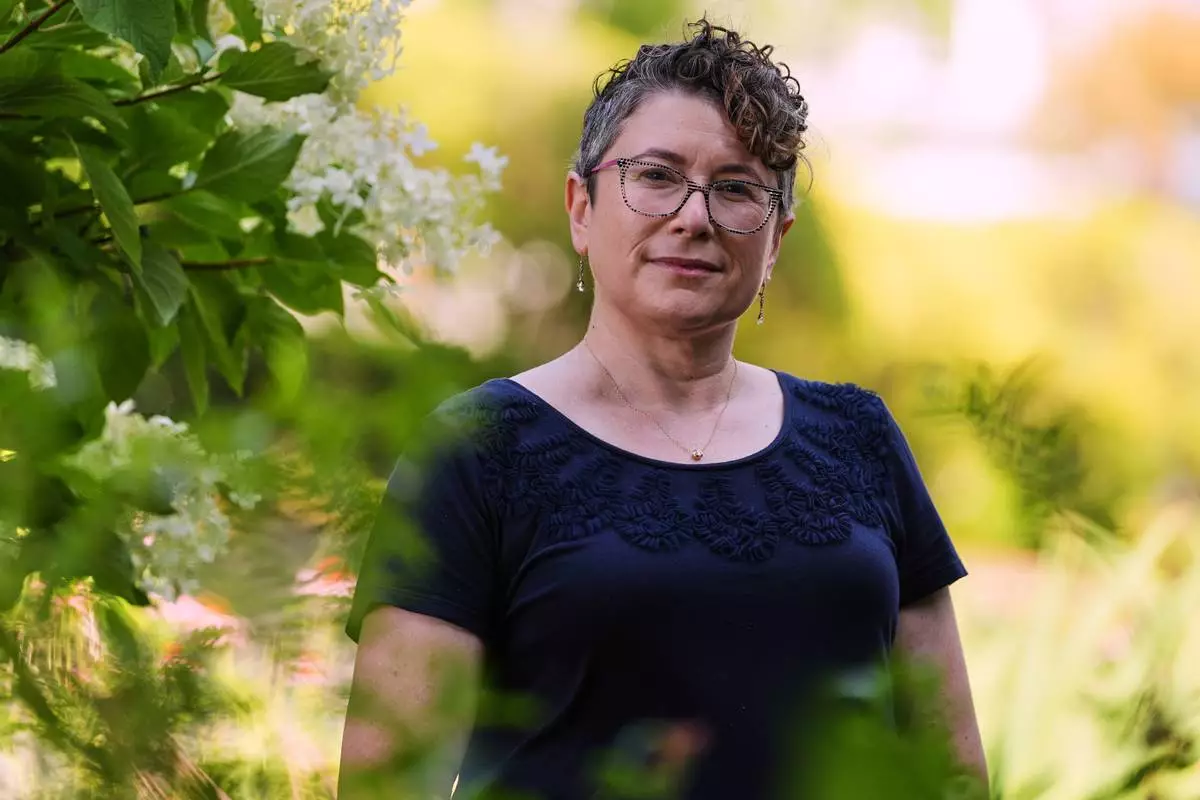
Ziva Mann, mother of a transgender child and member of a welcoming synagogue, poses in her garden, Wednesday, Aug. 13, 2025, in Newton, Mass. (AP Photo/Charles Krupa)