NEW YORK (AP) — Wall Street held near its record heights on Monday, ahead of a week likely to be dominated by updates from the head of the Federal Reserve and from some of the biggest U.S. retailers.
The S&P 500 barely budged and fell by less than 0.1%, coming off its first loss after setting an all-time high in three consecutive days. The Dow Jones Industrial Average slipped 33 points, or 0.1%, and the Nasdaq composite edged up by less than 0.1%.
Click to Gallery
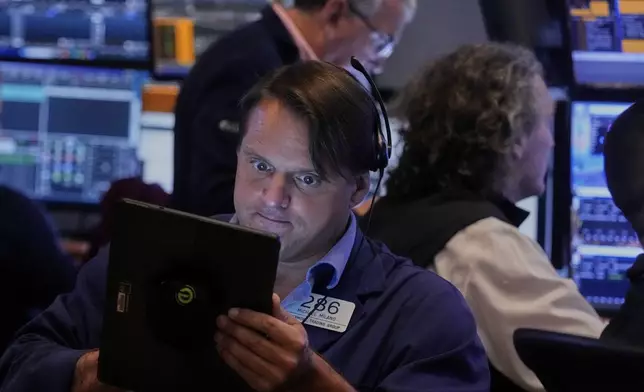
Trader Michael Milano left, works on the floor of the New York Stock Exchange, Monday, Aug. 18, 2025. (AP Photo/Richard Drew)
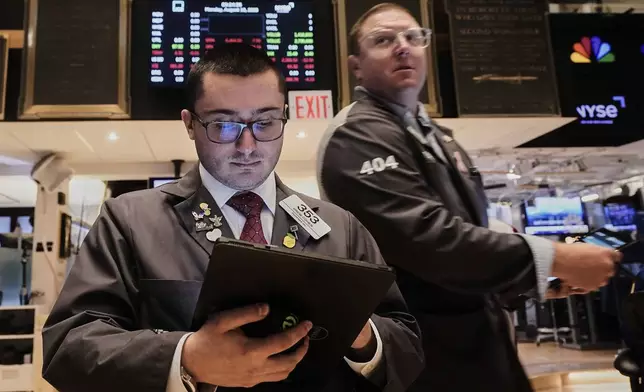
Traders Drew Cohen, left, and Ryan Falvey work on the floor of the New York Stock Exchange, Monday, Aug. 18, 2025. (AP Photo/Richard Drew)
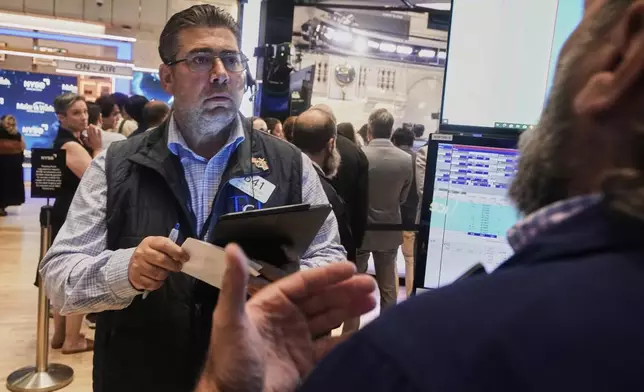
Trader Michael Capolino left, works on the floor of the New York Stock Exchange, Monday, Aug. 18, 2025. (AP Photo/Richard Drew)
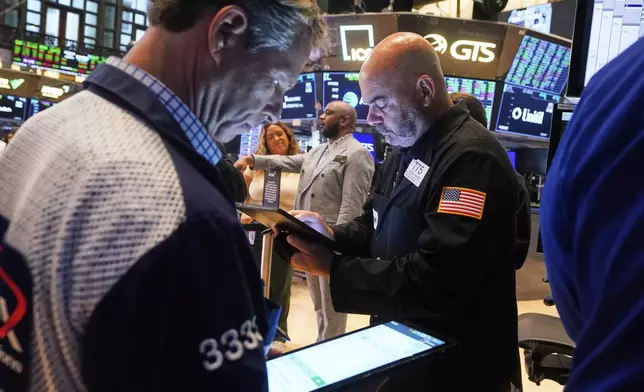
Traders Robert Charmak, left, and Fred Demarco work on the floor of the New York Stock Exchange, Friday, Aug. 15, 2025. (AP Photo/Richard Drew)
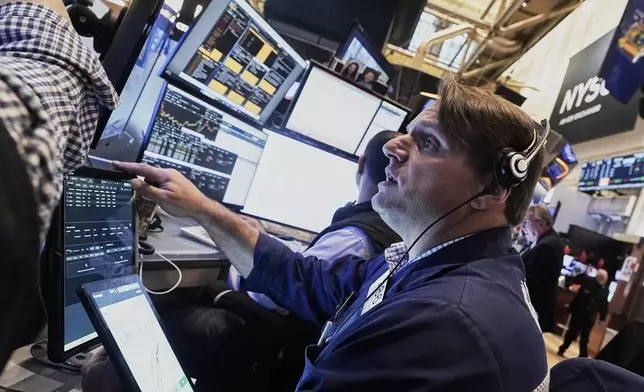
Trader Michael Milano works on the floor of the New York Stock Exchange, Friday, Aug. 15, 2025. (AP Photo/Richard Drew)
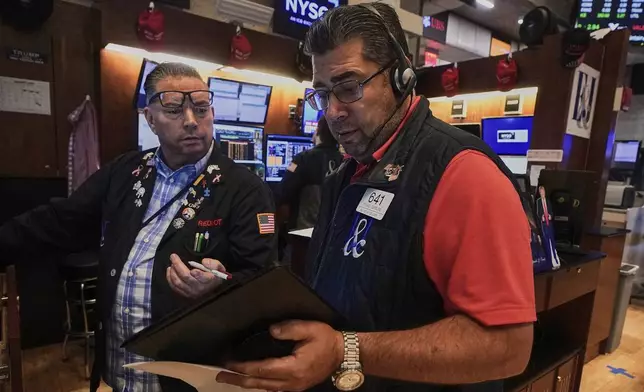
Traders Jonathan Mueller, left, and Michael Capolino work on the floor of the New York Stock Exchange, Friday, Aug. 15, 2025. (AP Photo/Richard Drew)

Currency traders watch monitors near a screen showing the Korea Composite Stock Price Index (KOSPI), left, and the foreign exchange rate between U.S. dollar and South Korean won, center, at the foreign exchange dealing room of the Hana Bank headquarters in Seoul, South Korea, Monday, Aug. 18, 2025. (AP Photo/Ahn Young-joon)

Currency traders watch monitors near a screen showing the Korea Composite Stock Price Index (KOSPI), left, and the foreign exchange rate between U.S. dollar and South Korean won at the foreign exchange dealing room of the Hana Bank headquarters in Seoul, South Korea, Monday, Aug. 18, 2025. (AP Photo/Ahn Young-joon)
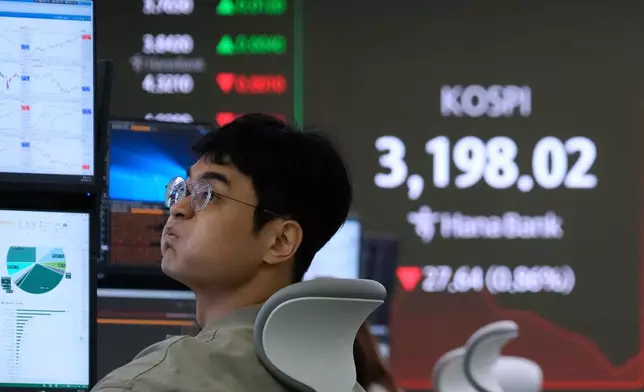
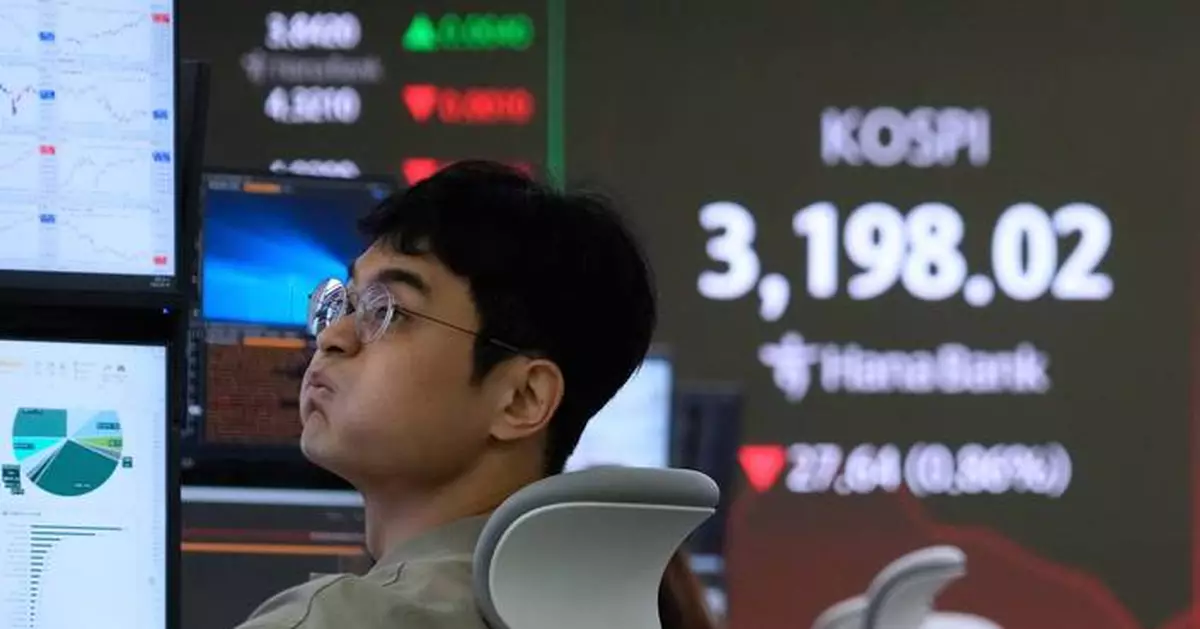
A currency trader watches monitors near a screen showing the Korea Composite Stock Price Index (KOSPI) at the foreign exchange dealing room of the Hana Bank headquarters in Seoul, South Korea, Monday, Aug. 18, 2025. (AP Photo/Ahn Young-joon)
Novo Nordisk’s stock that trades in the United States rose 3.7% after the Danish company said U.S. regulators approved its Wegovy drug as part of a treatment for a liver disease found in many overweight and obese people.
Soho House, a membership club with locations around the world, jumped 14.9% after announcing a deal where an investor group led by hotel-operator MCR would pay $9 in cash for its shares.
Several of the country’s largest retailers, meanwhile, were mixed ahead of their profit reports that are scheduled for later in the week. Home Depot, which will report on Tuesday, slipped 1.2%.
Target rose 1.9% ahead of its report on Wednesday, and Walmart added 0.7% before its report on Thursday.
They, along with companies like Estee Lauder and Ross Stores, could offer a look at how different types of U.S. households are holding up when the job market seems to have morphed into one where relatively few workers are getting fired but also hired.
Just like a small group of wealthy households are separating from the rest of the country, a handful of Big Tech companies are dominating the U.S. stock market, in part because of a boom in spending around artificial-intelligence technology.
This separation of “haves” and “have nots” in the stock market could be increasing the risk, with many companies potentially facing trouble if the economy stagnates and inflation is high, according to Lisa Shalett, chief investment officer at Morgan Stanley Wealth Management. The danger is that investors could look at how much the broad S&P 500 index has surged since its low point in April and “extrapolate the success of the few to the gains of the many.”
On Friday, the focus will swing to Jackson Hole, Wyoming, which has been the home in past years of many big policy announcements from the Federal Reserve. There, Fed Chair Jerome Powell will give a speech, and investors are hoping to hear how his mind has changed about interest rates since he said last month that he wanted to wait longer before cutting interest rates.
The fear at that time was that President Donald Trump’s tariffs could push inflation higher. Now, though, the bigger fear could be the slowing U.S. job market following a disappointingly weak report on employment that arrived just after the Fed’s last meeting.
The Fed’s twin jobs are to keep the job market healthy while also maintaining a lid on inflation, and helping one can often hurt the other in the short term. Lower rates can boost the economy by making it cheaper for U.S. households and businesses to borrow to buy houses, cars or equipment, for example, but they also risk worsening inflation.
Inflation updates since the Fed’s last meeting have come in mixed, further muddying the picture, but traders are nevertheless strongly expecting the Fed to cut its main interest rate for the first time this year at its next meeting in September. The hope is that Powell could give a nod to that.
Expectations for cuts to interest rates have pulled Treasury yields lower lately, and they largely remained there on Monday.
The yield on the 10-year Treasury held at 4.33%, where it was late Friday.
On Wall Street, the S&P 500 edged down 0.65 to 6,449.15. The Dow Jones Industrial Average slipped 34.30 to 44,911.82, and the Nasdaq composite added 6.80 to 21,629.77.
In stock markets abroad, indexes mostly fell in Europe in their first trading after Trump’s inconclusive summit meeting with Russian President Vladimir Putin on Friday about the war in Ukraine. Trump met with Ukrainian President Volodymyr Zelenskyy on Monday.
In Asia, indexes were mixed, with Japan’s Nikkei 225 rising 0.8% and South Korea’s Kospi falling 1.5%.
AP Business Writers Matt Ott and Elaine Kurtenbach contributed.
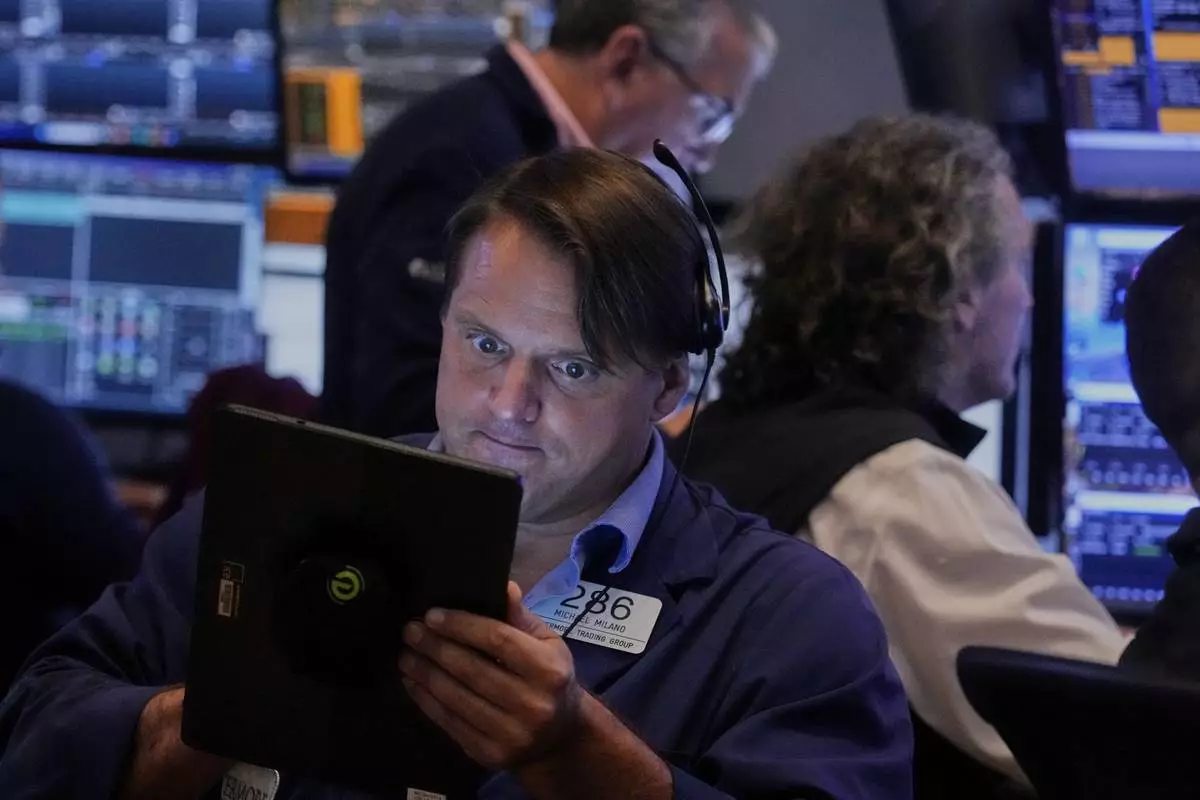
Trader Michael Milano left, works on the floor of the New York Stock Exchange, Monday, Aug. 18, 2025. (AP Photo/Richard Drew)
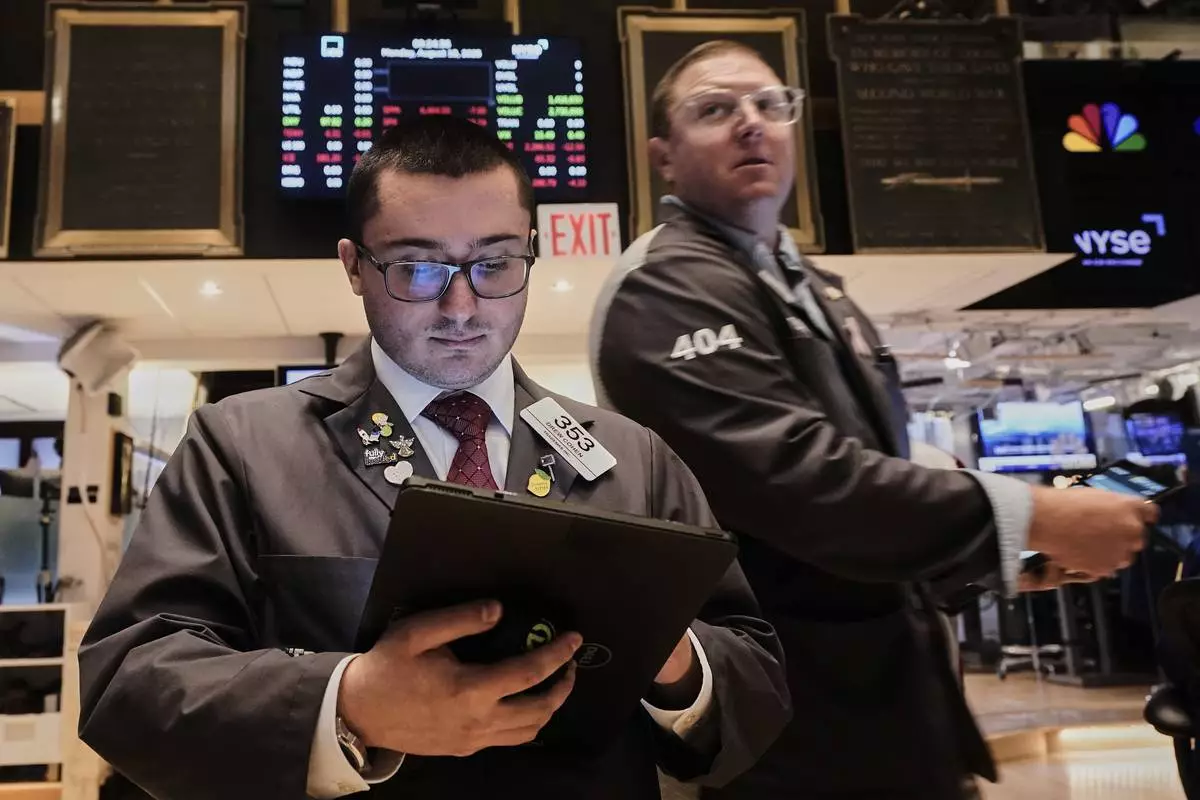
Traders Drew Cohen, left, and Ryan Falvey work on the floor of the New York Stock Exchange, Monday, Aug. 18, 2025. (AP Photo/Richard Drew)
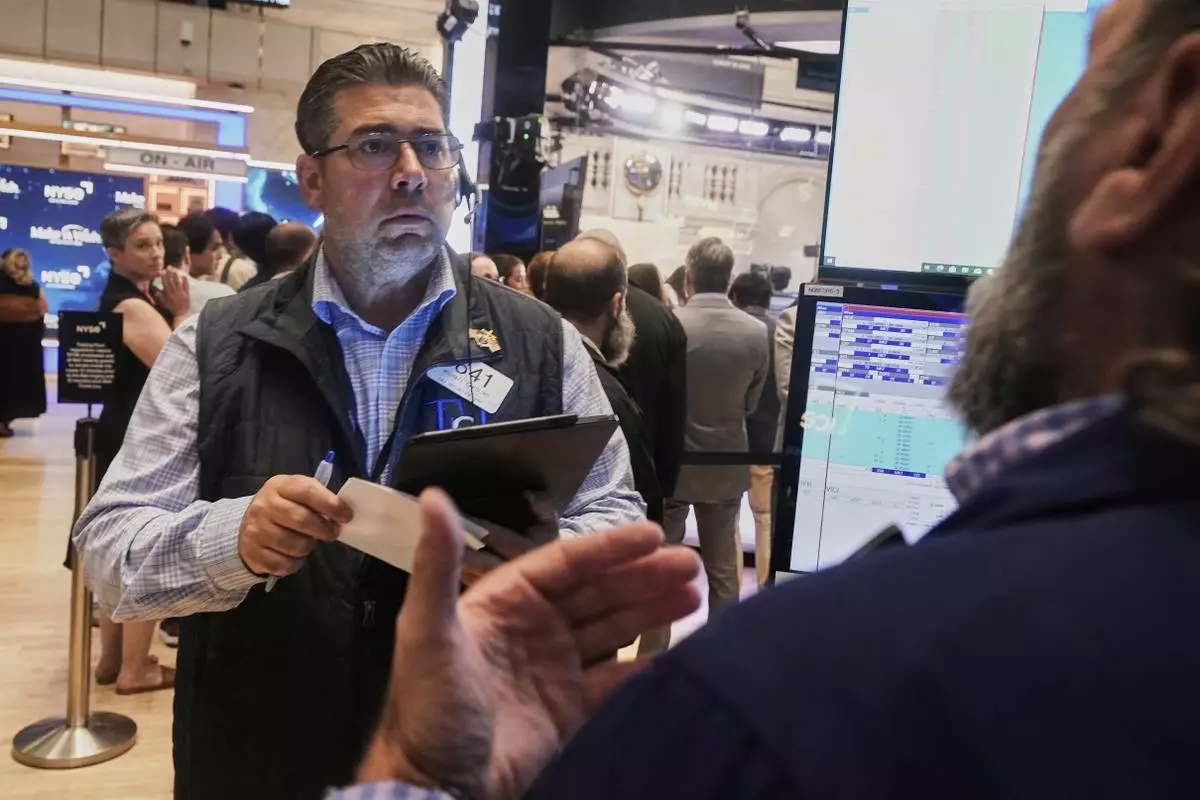
Trader Michael Capolino left, works on the floor of the New York Stock Exchange, Monday, Aug. 18, 2025. (AP Photo/Richard Drew)
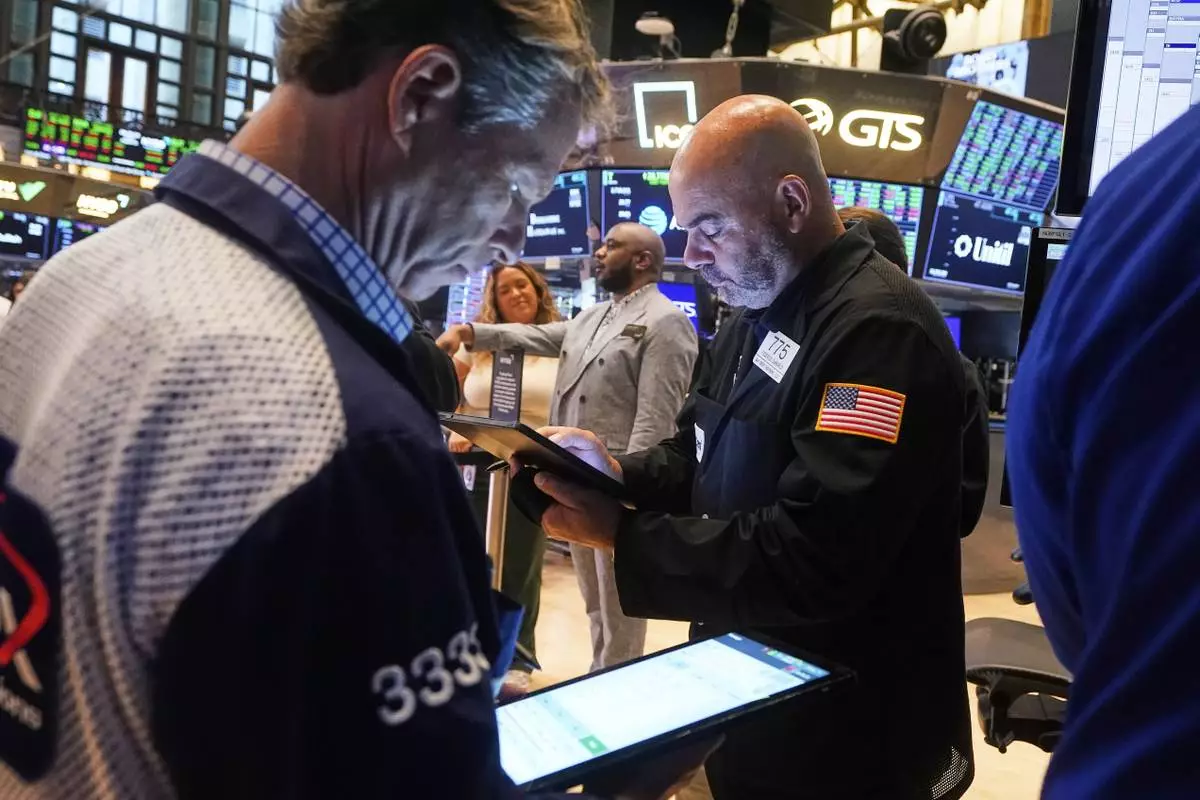
Traders Robert Charmak, left, and Fred Demarco work on the floor of the New York Stock Exchange, Friday, Aug. 15, 2025. (AP Photo/Richard Drew)
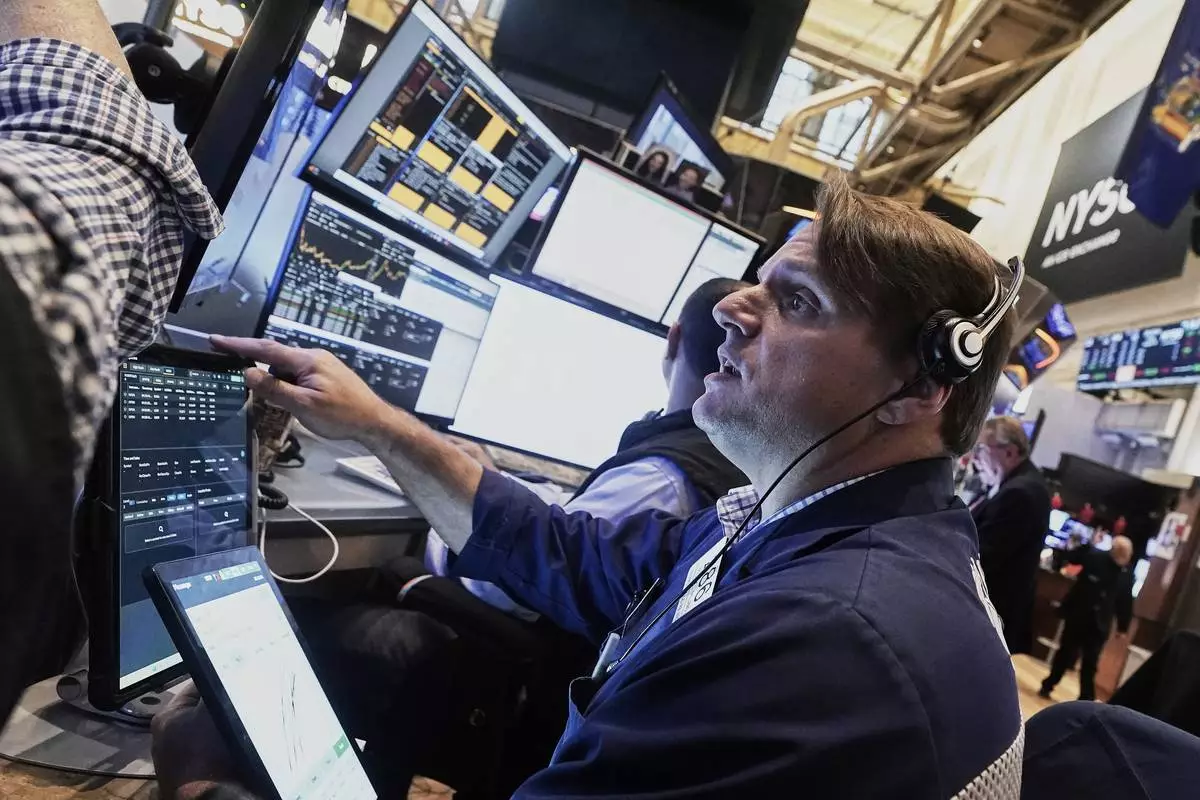
Trader Michael Milano works on the floor of the New York Stock Exchange, Friday, Aug. 15, 2025. (AP Photo/Richard Drew)
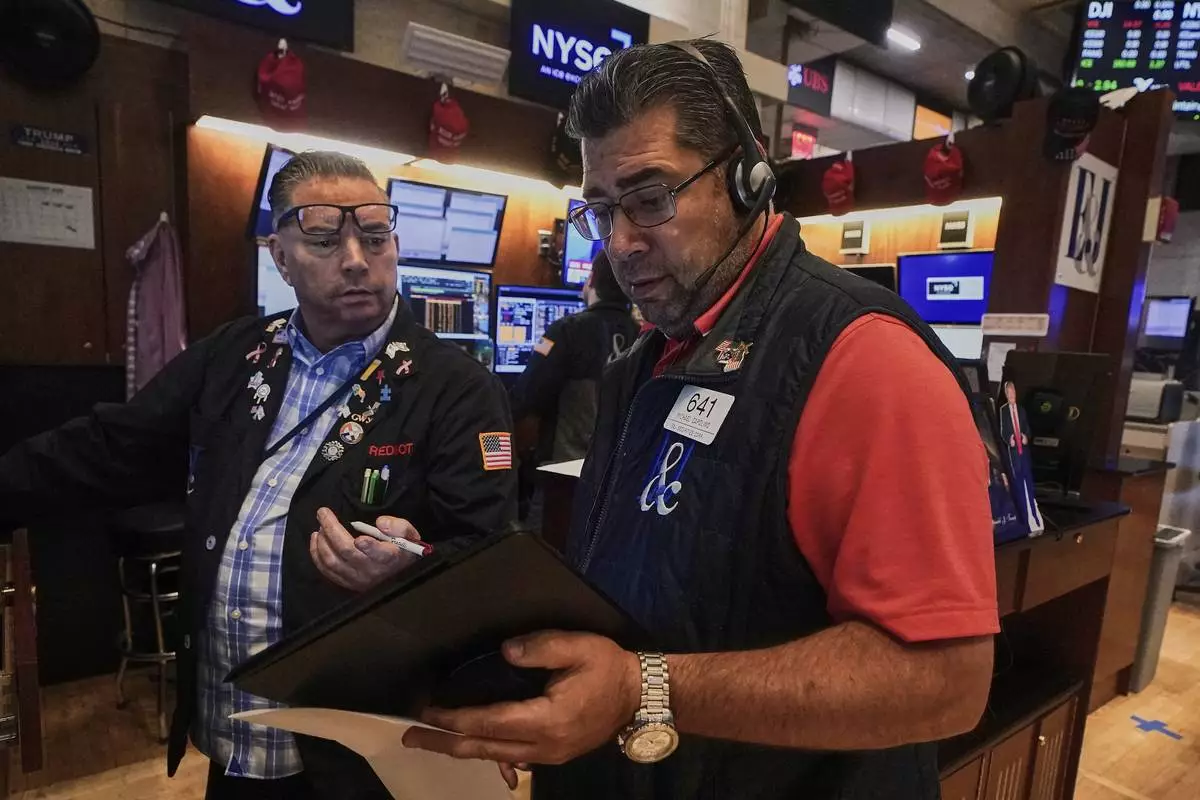
Traders Jonathan Mueller, left, and Michael Capolino work on the floor of the New York Stock Exchange, Friday, Aug. 15, 2025. (AP Photo/Richard Drew)
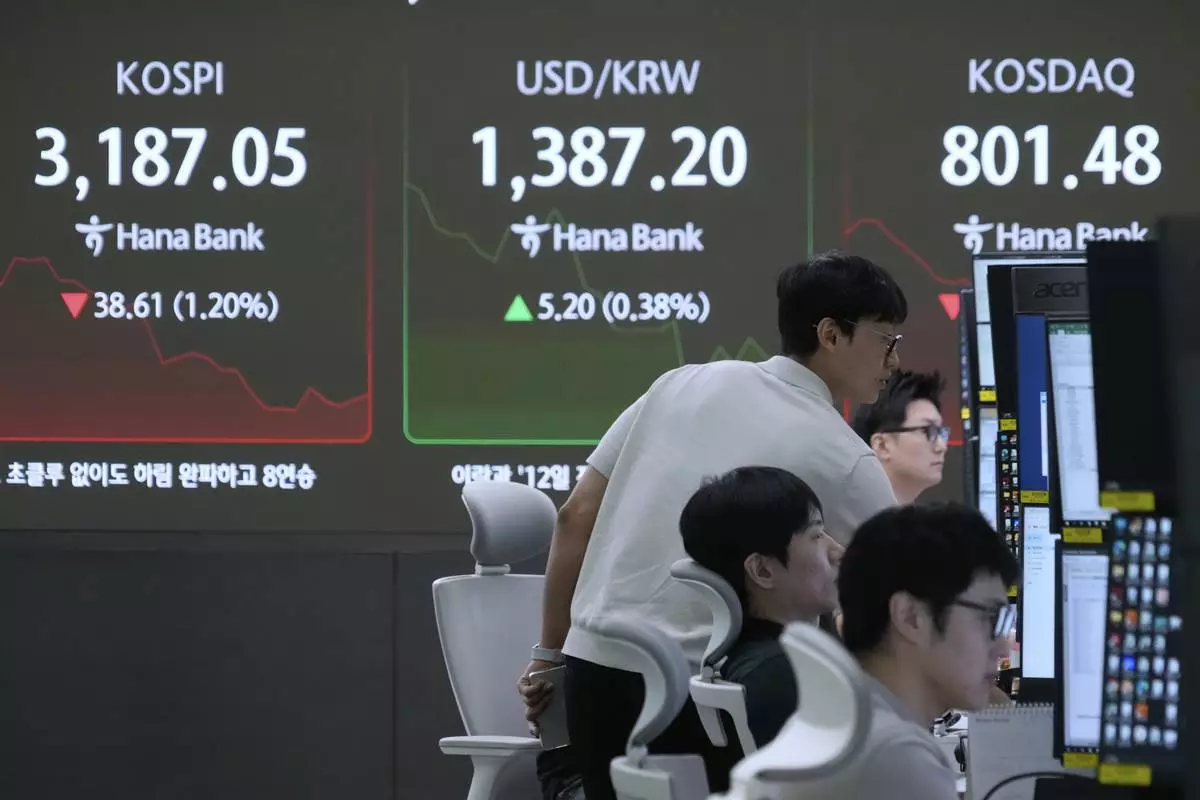
Currency traders watch monitors near a screen showing the Korea Composite Stock Price Index (KOSPI), left, and the foreign exchange rate between U.S. dollar and South Korean won, center, at the foreign exchange dealing room of the Hana Bank headquarters in Seoul, South Korea, Monday, Aug. 18, 2025. (AP Photo/Ahn Young-joon)

Currency traders watch monitors near a screen showing the Korea Composite Stock Price Index (KOSPI), left, and the foreign exchange rate between U.S. dollar and South Korean won at the foreign exchange dealing room of the Hana Bank headquarters in Seoul, South Korea, Monday, Aug. 18, 2025. (AP Photo/Ahn Young-joon)

A currency trader watches monitors near a screen showing the Korea Composite Stock Price Index (KOSPI) at the foreign exchange dealing room of the Hana Bank headquarters in Seoul, South Korea, Monday, Aug. 18, 2025. (AP Photo/Ahn Young-joon)