From flickering butter lamps to powering smart chicken farms and exporting clean energy, the electricity network in China's Xizang Autonomous Region has undergone a remarkable 60-year transformation, with its pioneering "electric sky roads" now supplying renewable power nationawide.
The electricity revolution in Xizang began in 1965 when Nagqu Hydropower Station's six generators first brought modern lighting to Lhasa, ending centuries of reliance on butter lamps.
"I came from the pastures in 1962. Back then, Lhasa's old town relied on candles or makeshift oil lamps, just half a bowl of water with oil floating on top. The light was so dim that you couldn't see the person across from you," recalled Tsewang Rinchen, former director of maintenance workshop of the power station.
Over the following decades, engineers overcame extreme altitudes to build transmission networks across the "roof of the world," initially connecting regional cities before integrating with the national power system in 2011.
The original Qinghai-Xizang power interconnection, initially developed to enhance local supply, is now undergoing expansion to share the region's abundant clean energy resources more widely.
This upgraded infrastructure forms part of four extraordinary engineering achievements that comprise the world's highest-altitude power network. These projects have delivered reliable electricity to previously disconnected communities while establishing Xizang as a significant contributor to China's renewable energy capacity.
In Qonggyai County of Shannan City, once plagued by blackouts, villagers like Tenzin Pema now enjoy stable electricity thanks to these grid improvements.
"This is our new house built in 2023. That's where we lived before, with just one light bulb. We dared not use appliances because unstable voltage would fry them. Now with steady supply of power, we've built this new home and bought everything, including fridge, washer and TV," she said.
What began as basic electrification has now grown into an economic lifeline for Xizang's rural areas. In Podrang Township of Shannan, the steady hum of automated equipment fills what is now Xizang's largest smart poultry farm, an operation impossible without the "electric sky roads" grid.
"Each coop holds 100,000 chickens and our facility totals one million. A half-hour blackout would kill every bird. We only built here in 2020 after confirming the grid reliability," said Zhang Bo, director of the poultry farm.
Behind Xizang's power milestones, from lighting homes to running factories, are the construction workers who braved high altitudes to string power lines across the plateau. Their work now powers a clean energy transition, with over 96 percent of Xizang's 10 million kW capacity coming from renewable sources.
"Back in 2013 when we first arrived here, there was almost no infrastructure, just a handful of families without proper homes. The work pushed us to our limits, and years later, we witnessed stable electricity supply for all the villages. It brought us joy to see the sea of lights from local households, a testament to our dedication," said one builder named Yue Dahong.
Since 2015, these transmission lines have delivered 16.3 billion kWh of clean electricity to multiple regions, turning Xizang's natural advantages into shared national resources while powering local prosperity.
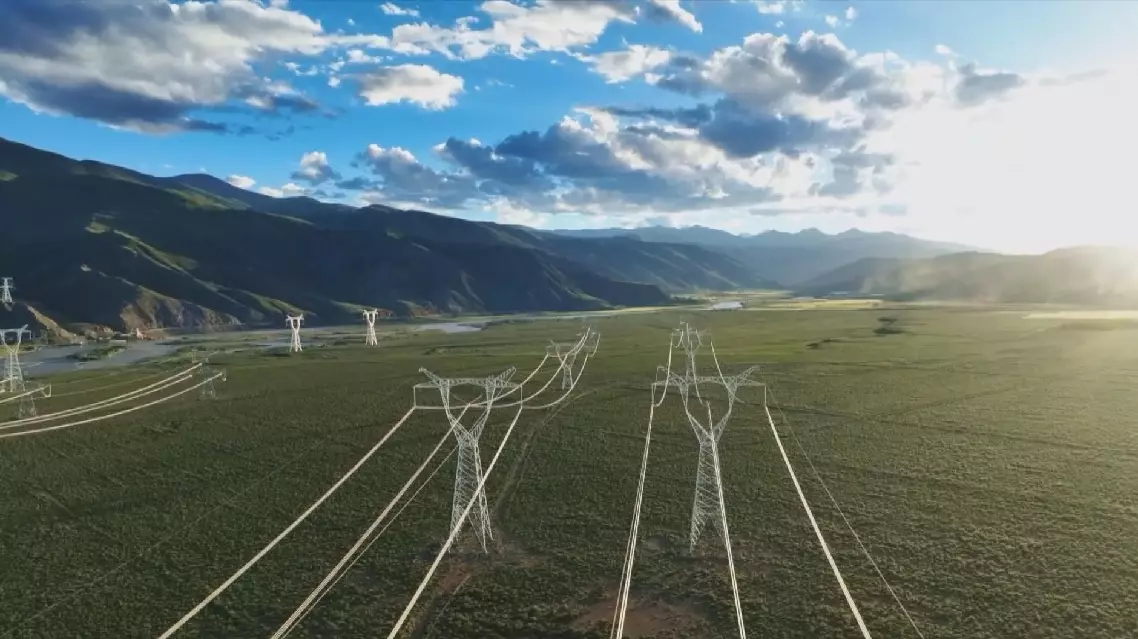
Transformation turns Xizang into key sending hub in China's west-to-east power transmission