Skip to Content Facebook Feature Image

CFS Reports 99.9% Food Safety in Summer Surveillance, Urges Vigilance Against Bacteria in Humid Conditions.

HK

CFS Reports 99.9% Food Safety in Summer Surveillance, Urges Vigilance Against Bacteria in Humid Conditions.
HK

HK

CFS Reports 99.9% Food Safety in Summer Surveillance, Urges Vigilance Against Bacteria in Humid Conditions.

2025-08-19 17:08 Last Updated At:17:23

CFS announces test results of Summer Food Surveillance Programme

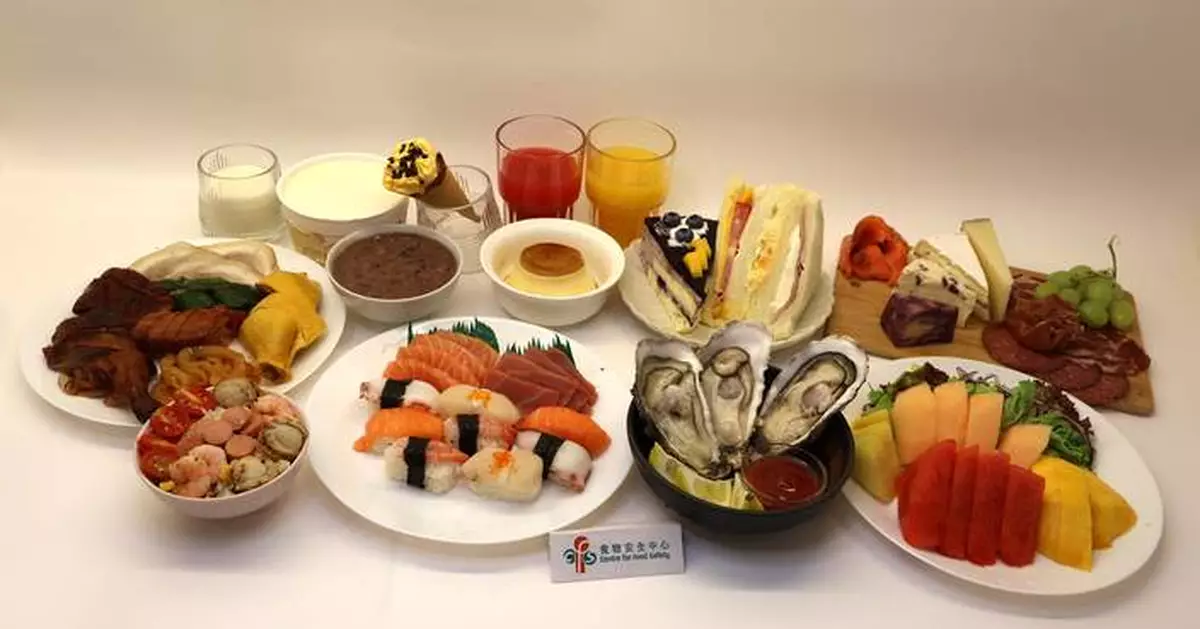
The Centre for Food Safety (CFS) of the Food and Environmental Hygiene Department (FEHD) today (August 19) released the findings of its Summer Food Surveillance Programme 2025. The results of about 2 270 food samples tested were satisfactory, except for three unsatisfactory samples that had been announced earlier. The overall satisfactory rate was 99.9 per cent. A CFS spokesman reminded members of the public to remain vigilant and pay more attention to food safety and environmental hygiene as the hot and humid climate of the long summer in Hong Kong facilitates the multiplication of bacteria.


The spokesman said, "The CFS collected about 2 270 samples from market stalls, restaurants, food factories, fresh provision shops, online vendors (including online retailers and online food delivery platforms) and others for tests."


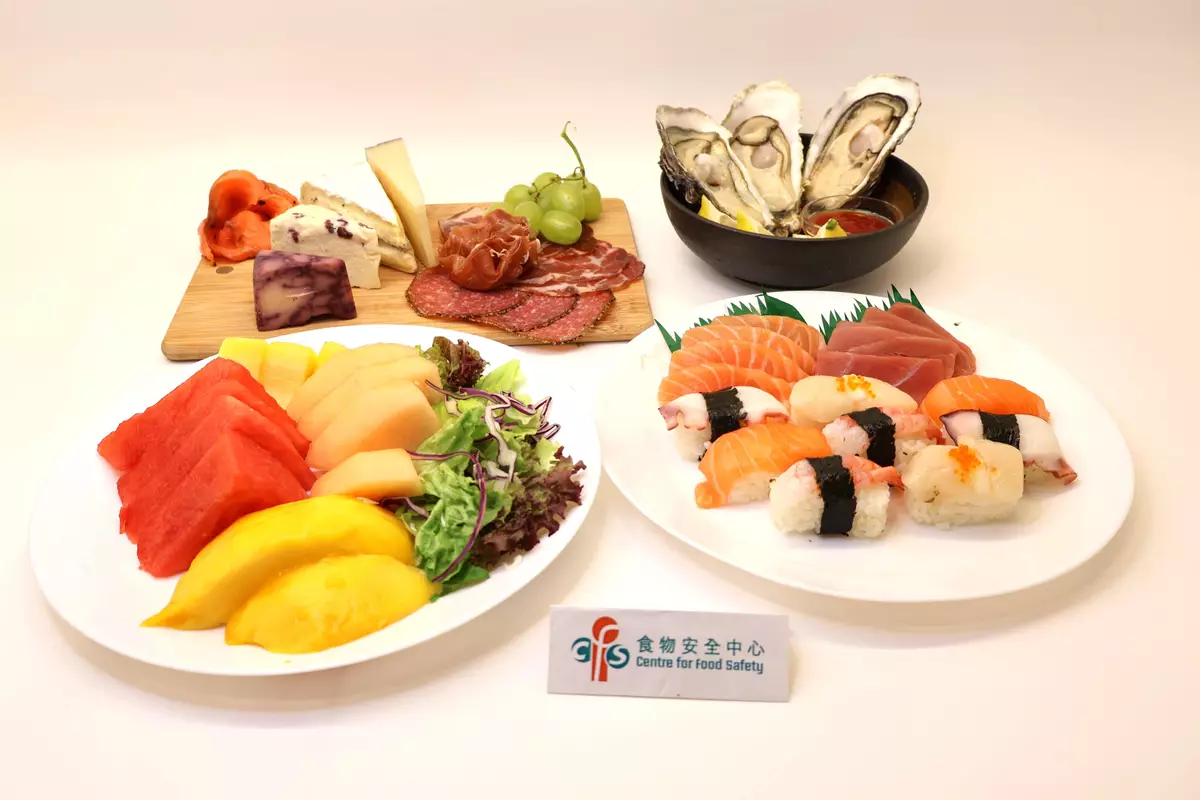
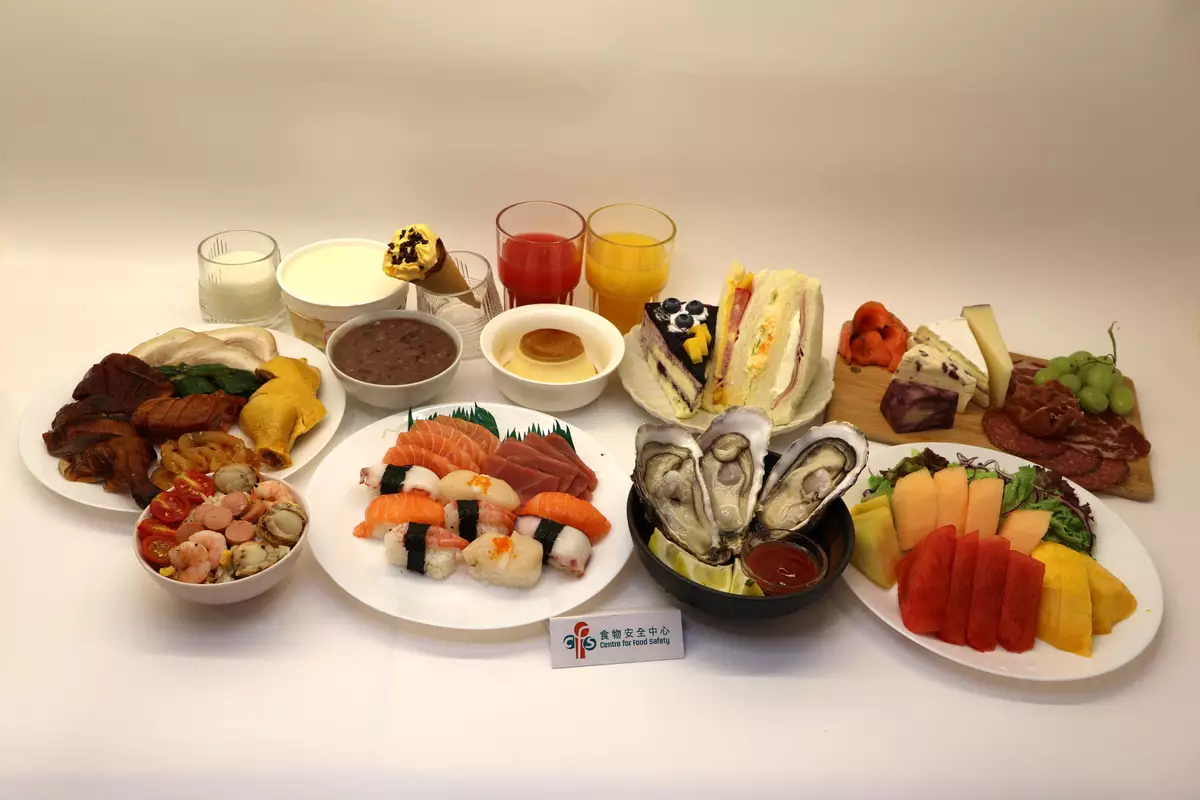
The samples comprised 547 samples of dairy products and frozen confections, 90 samples of cut fruit and salads, 129 samples of desserts and drinks, 57 samples of sandwiches, 163 samples of cold cuts or cooked meat products, 763 samples of aquatic products (such as sushi and sashimi, fish, crustaceans, molluscs and other edible aquatic animals) and 518 samples of other ready-to-eat foods.


The spokesman said that about 2 100 food samples were collected for microbiological tests, and about 170 samples for chemical tests. The results showed that except for two ice cream samples detected with coliform bacteria counts exceeding the legal limits and a frozen yoghurt sample detected with coliform bacteria and total bacterial counts exceeding the legal limits, the remaining samples were all satisfactory. The overall satisfactory rate was 99.9 per cent.


The CFS has announced the test results of the unsatisfactory samples and conducted follow-up actions, including instructing the vendors concerned to stop selling the relevant food and remove from shelves the affected products, and tracing the sources of the food items in question. The CFS has also arranged trade talks to remind food handlers to follow good hygiene practices when producing and storing frozen confections, and formulate food safety plans with reference to Hazard Analysis and Critical Control Point system to ensure food safety. The CFS appeals to the trade that when manufacturing frozen confections, they should maintain good personal and environmental hygiene, cleaning and disinfecting utensils and equipment regularly and thoroughly in accordance with the manufacturer's instructions, and properly store raw materials at appropriate temperatures to reduce the risk of food contamination.


The spokesman reminded members of the public in particular that raw or undercooked foods are high-risk foods as there is not any, or inadequate, heat treatment to eliminate the microorganisms present that can pose risks to human health. Raw or undercooked foods are also associated with the risk of contracting antimicrobial resistance (AMR) microorganisms. Although these AMR microorganisms may not cause illnesses, they may transfer their antibiotic resistance genes to other bacteria inside the human body, therefore affecting the effectiveness of the future use of antibiotics when needed. Susceptible populations such as pregnant women, young children, the elderly and people with weakened immunity (e.g. people with chronic diseases or those on antibiotics treatment, antacid and long-term steroids or drugs given to prevent transplant rejection) are of higher risk of being infected or having complications if they consume raw or undercooked foods due to their health status. They should therefore avoid eating raw and undercooked foods.

Members of the public should pay attention to food safety, especially in summer, and observe the following Five Keys to Food Safety in order to reduce the risk of foodborne diseases:

• choose (choose safe raw materials);

• clean (keep hands and utensils clean);

• separate (separate raw and cooked food);

• cook (cook thoroughly); and

• safe temperature (keep food at a safe temperature).

Members of the public are also reminded to dine out in licensed and hygienic restaurants. Food premises selling sushi and sashimi or other high-risk foods require a special permit. The public should patronise only those with relevant licences or permits issued by the FEHD.
CFS announces test results of Summer Food Surveillance Programme  Source: HKSAR Government Press Releases

CFS announces test results of Summer Food Surveillance Programme Source: HKSAR Government Press Releases
CFS announces test results of Summer Food Surveillance Programme  Source: HKSAR Government Press Releases

CFS announces test results of Summer Food Surveillance Programme Source: HKSAR Government Press Releases

Speech by CE at 2026 WAIC UP! Global Summit (with video)

Following is the video speech by the Chief Executive, Mr John Lee, at the 2026 WAIC UP! Global Summit today (January 16):

Distinguished guests, friends from the world of AI, ladies and gentlemen,

A very warm welcome to Hong Kong. It is a pleasure to join you today, at this year's WAIC UP! Global Summit.

A gathering that brings together top experts, industry pioneers and academic leaders, the WAIC UP! Global Summit is a platform under the renowned World Artificial Intelligence Conference. I'm glad to add that the Summit is held for the very first time in Hong Kong this year. The theme of this Summit, "WAKE UP MORE!", underscores the infinite possibilities of artificial intelligence. We must harness the power of AI, not just to innovate, but to build - to build more inclusive economies, more resilient communities, and a more sustainable future for all.

The Recommendations of the Central Committee of the Communist Party of China for Formulating the 15th Five-Year Plan for National Economic and Social Development supports Hong Kong's development into an international innovation and technology (I&T) centre, as well as an international hub for high-calibre talent.

Hong Kong is moving at full steam to develop into an international I&T centre. Central to this vision is our commitment to advancing the development of AI. Our approach is multifaceted, built upon the solid pillars of government investment, world-class research, strategic infrastructure, and a dynamic, open market.

Under the unique "one country, two systems" principle, Hong Kong is the only world city that converges both the China advantage and the global advantage. We are also the only city that counts as many as five universities in the world's top 100. Our institutions equip Hong Kong's next generation with the versatility and knowledge key for future development. They also bring together a world of academics, researchers and talent to contribute to our ever-growing research and innovation capabilities.

We reached a significant milestone in our innovation journey, just last month, with the official opening of the Hong Kong Park of the Hetao Shenzhen-Hong Kong Science and Technology Innovation Co-operation Zone. We will develop the Hong Kong Park into a world-class hub for technological innovation that connects the Mainland with the international community. It will become an important source for fostering and advancing new quality productive forces for China, our country.

Accelerating the flow of talent, data and capital, the Hong Kong Park will allow AI projects to rapidly progress from fundamental research in Hong Kong, to commercialisation and large-scale application in the broader market.

Last September, we launched the Frontier Technology Research Support Scheme to subsidise universities in attracting top-notch scientific researchers from the world in AI, and other fields, to come to Hong Kong to spearhead basic research in frontier technologies.

We have also earmarked HK$1 billion for the establishment of the Hong Kong AI Research and Development (R&D) Institute this year, to facilitate upstream AI R&D, the midstream and downstream R&D outcomes, and the expansion of use cases.

In addition, we have taken a concrete step within the HKSAR (Hong Kong Special Administrative Region) Government by establishing a new AI Efficacy Enhancement Team. More than just showcasing our resolve to AI development, this team has a clear mission - to co-ordinate all government departments in applying AI technology, and to explore process re-engineering and promote technological reform. This will significantly improve government efficacy to better meet public demands, through the important tool of AI.

Ladies and gentlemen, in this era of rapid technological transformation, Hong Kong is in a distinct position. With the robust rule of law, a welcoming business environment, and a vibrant multicultural setting, Hong Kong is the perfect incubator for scientific exploration and technological breakthroughs.

Let us leverage today's summit as a springboard for deeper partnerships. Together, we can pioneer the technologies, establish the standards, and forge the future we wish to see - an AI-empowered future that is equitable, sustainable, and prosperous for all.

I wish you all a most fruitful and inspiring summit. Thank you very much.

Source: AI-found images

Source: AI-found images

Recommended Articles