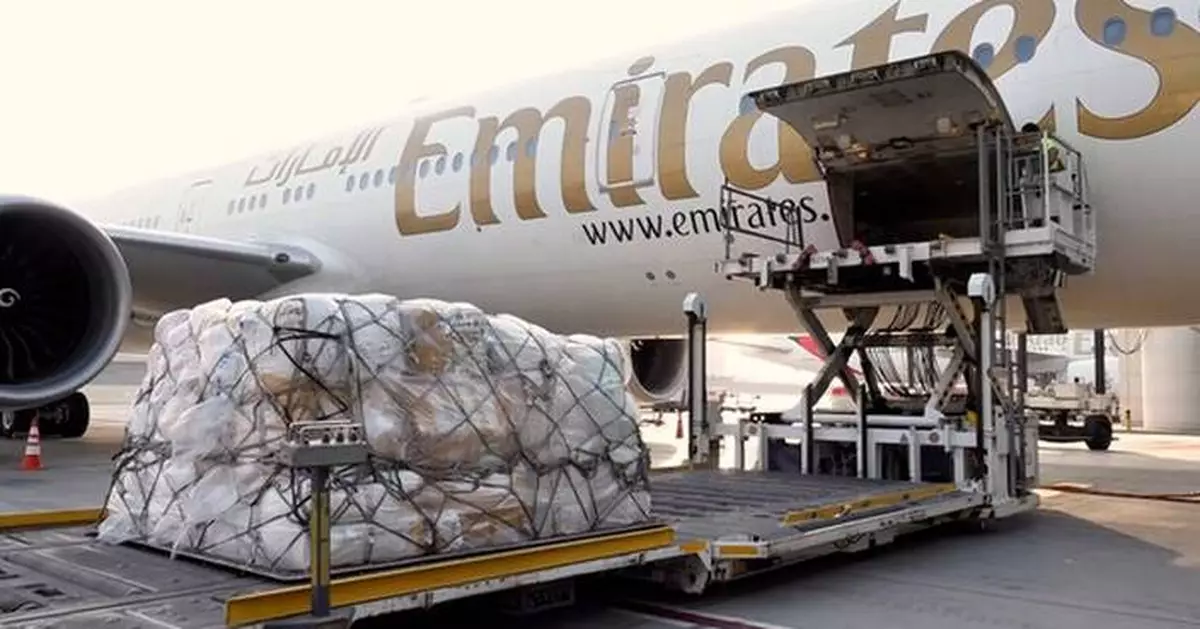
- 'Coming Together: The Dubai Humanitarian Story' provides behind-the-scenes look inside the heart of global disaster response facility
- Launches on World Humanitarian Day, 19 August 2025
- First six months of 2025 saw $48.8m humanitarian aid distributed from Dubai Humanitarian, reflected in its Humanitarian Logistics Databank
DUBAI, UAE, Aug. 19, 2025 /PRNewswire/ -- Dubai Humanitarian, the world's largest humanitarian logistics hub, has unveiled a new documentary, Coming Together: The Dubai Humanitarian Story - a gripping behind-the-scenes look at the premier disaster response facility. From devastating floods in Pakistan to the escalating conflict in Gaza, the film captures real-time coordination between United Nations agencies, international NGOs, and government partners. It reveals how Dubai Humanitarian's 150,000 sqm of warehouses - donated by the Ruler of Dubai, His Highness Sheikh Mohammed bin Rashid Al Maktoum - enable life-saving supplies like vaccines, health kits, and clean water to reach crisis zones within hours.
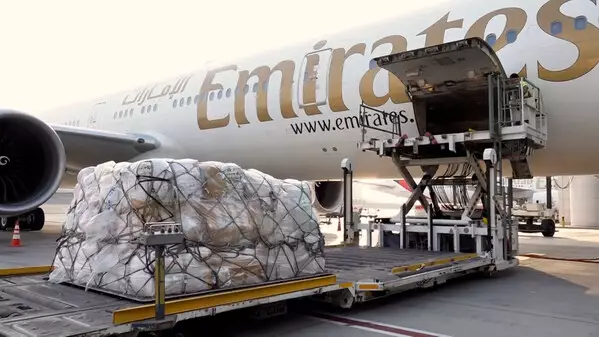
The documentary highlights the critical role of partners like - Dubai Customs, Emirates Airline, and UNHCR - whose close collaboration with aid agencies ensure relief efforts are swift, seamless, and scalable. Their combined expertise in customs clearance, logistics, and airlift capacity has proven vital in overcoming the most complex humanitarian challenges. It also underscores the human stories behind the headlines - of aid workers, customs officials, and airline crews working as one to deliver hope.
"Dubai Humanitarian is more than a logistics hub - it's a global lifeline," said Giuseppe Saba, CEO, Dubai Humanitarian, "This film shows what's possible when the world comes together."
Saba added: "2025 continues to bring extraordinary global challenges. Working alongside our UN partners and other relief organisations, in just the first half of the year Dubai Humanitarian facilitated the delivery of over $48million in aid to countries across the globe, with the need for shelter and health aid being particularly striking. We remain steadfast in our commitment to stand with our international humanitarian community in safeguarding the most vulnerable."
Head of UN OCHA UAE, Sajeda Shawa, said: "We need to make sure humanitarian aid is delivered based on humanitarian principles - with no discrimination and with equality. Being the voice of those who have no voice is not a luxury - it's a responsibility, an honour and a life calling."
This behind the scenes documentary premiers on World Humanitarian Day, 19 August, on the Dubai Humanitarian YouTube channel: https://www.youtube.com/watch?v=cjKME2Sj3-c.
Dubai Humanitarian aid in numbers (Jan to Jun 2025)
$48.8m
Aid worth $48,867,298 distributed from Dubai Humanitarian.
81
Aid sent to 81 countries.
$14m
Health Aid: This included $13,969,276 worth of health accessories, medical equipment, pharmaceutical items and more.
$1m
Water and Sanitation Aid: The demand for water and sanitation aid included $733,297 worth of water supply items, ranging from buckets and containers to Jerry Cans.
$15m
Shelter Aid: Almost a third of all aid was allocated to shelter. This included 937,377 pieces of camping and field equipment, from tents to winterisation kits
$208.1m
Stock value available at Dubai Humanitarian in June 2025.
25
During the first half of 2025, key moments included the 25th Dubai Humanitarian airlift for Gaza. The April operation delivered 56.8 metric tonnes of critical medical supplies worth over $1million (AED4.3million), provided by the World Health Organization (WHO), to El Arish Airport in Egypt.
Benefits of the Humanitarian Logistics Databank
- To countries in need of aid:
- Real-time analytics and 24/7/365 visibility of aid levels – daily updates provides accurate data, especially convenient across time zones and saves phone calls
- Enhanced co-ordination and faster identification of aid partners –countries requiring aid have access to detailed data, including which members from UN World Food Programme to UNICEF within Dubai Humanitarian have how much of each product, so they can approach them direct for support, knowing their current stock levels
- Real-time analytics and 24/7/365 visibility of aid levels – daily updates provides accurate data, especially convenient across time zones and saves phone calls
- To Dubai Humanitarian-based aid agencies:
- Prepare more effectively by anticipating aid demand – as aid flows can be tracked over time, through its ongoing AI backed data analysis, Dubai Humanitarian can advise aid agencies when demand will likely peak and aid levels will run low. For example, during the August monsoon season in Bangladesh, Dubai Humanitarian identified the higher annual demand for tents and blankets. Aid agencies at Dubai Humanitarian can then build up stocks ahead of time
- Avoid price spikes – By building up stock ahead of demand spikes, aid agencies can manage stocks more effectively and purchase aid ahead of price surges.
- Prepare more effectively by anticipating aid demand – as aid flows can be tracked over time, through its ongoing AI backed data analysis, Dubai Humanitarian can advise aid agencies when demand will likely peak and aid levels will run low. For example, during the August monsoon season in Bangladesh, Dubai Humanitarian identified the higher annual demand for tents and blankets. Aid agencies at Dubai Humanitarian can then build up stocks ahead of time
- To Dubai Humanitarian
- Anticipate storage needs - Dubai Humanitarian continually analyses its data to understand changing demand for different types of aid. By recognising the increase in health product demand in the early years of the databank, Dubai Humanitarian were able to expand its cold storage solutions and were then more prepared for the Covid-19 response as a result.
- Anticipate storage needs - Dubai Humanitarian continually analyses its data to understand changing demand for different types of aid. By recognising the increase in health product demand in the early years of the databank, Dubai Humanitarian were able to expand its cold storage solutions and were then more prepared for the Covid-19 response as a result.
- Global sustainability
- Reducing travel distances and carbon emissions - Due to Dubai's strategic geographic position on the path between Middle East, Asia and Africa, and Dubai Humanitarian being located only 10 minutes away from the Jebel Ali seaport and Al Maktoum airport, it enables the humanitarian community to reach, within 4-8 hours, two-thirds of the world population living in hazard-prone areas.
- Future view: locating local aid – As the databank grows to include up to 11 hubs, countries and organisations in need will be able to effectively locate their closest available aid, reducing travel time and emissions, with aid able to travel by road and sea rather than air.
- Reducing travel distances and carbon emissions - Due to Dubai's strategic geographic position on the path between Middle East, Asia and Africa, and Dubai Humanitarian being located only 10 minutes away from the Jebel Ali seaport and Al Maktoum airport, it enables the humanitarian community to reach, within 4-8 hours, two-thirds of the world population living in hazard-prone areas.
- Prepare more effectively by anticipating aid demand – as aid flows can be tracked over time, through its ongoing AI backed data analysis, Dubai Humanitarian can advise aid agencies when demand will likely peak and aid levels will run low. For example, during the August monsoon season in Bangladesh, Dubai Humanitarian identified the higher annual demand for tents and blankets. Aid agencies at Dubai Humanitarian can then build up stocks ahead of time
- Avoid price spikes – By building up stock ahead of demand spikes, aid agencies can manage stocks more effectively and purchase aid ahead of price surges.
- Anticipate storage needs - Dubai Humanitarian continually analyses its data to understand changing demand for different types of aid. By recognising the increase in health product demand in the early years of the databank, Dubai Humanitarian were able to expand its cold storage solutions and were then more prepared for the Covid-19 response as a result.
- Reducing travel distances and carbon emissions - Due to Dubai's strategic geographic position on the path between Middle East, Asia and Africa, and Dubai Humanitarian being located only 10 minutes away from the Jebel Ali seaport and Al Maktoum airport, it enables the humanitarian community to reach, within 4-8 hours, two-thirds of the world population living in hazard-prone areas.
- Future view: locating local aid – As the databank grows to include up to 11 hubs, countries and organisations in need will be able to effectively locate their closest available aid, reducing travel time and emissions, with aid able to travel by road and sea rather than air.
Interview opportunities or commentary:
Giuseppe Saba, CEO, Dubai Humanitarian
Giuseppe Saba is a leading logistics and support services expert. He is the founder of the United Nations Humanitarian Response Depot Network (UNHRD) and joined Dubai Humanitarian as CEO in 2017, leading the launch of the Humanitarian Logistics Databank in 2018.
Hanan Almarzooqi, Director of Operations & Humanitarian Initiatives, Dubai Humanitarian.
Images: https://we.tl/t-pvT6vEMYr6
** The press release content is from PR Newswire. Bastille Post is not involved in its creation. **
Dubai Humanitarian: Powerful New Documentary Reveals World's Largest Humanitarian Logistics Hub
Dubai Humanitarian: Powerful New Documentary Reveals World's Largest Humanitarian Logistics Hub