IRVINE, Calif.--(BUSINESS WIRE)--Aug 19, 2025--
Phoenix Energy One, LLC (“Phoenix Energy”), a leading energy company specializing in mineral rights acquisitions, oil production, and non-operating working interests across key U.S. basins, is pleased to announce Brody Greer Patton as the recipient of the 2025 Phoenix Energy Scholarship. Patton, an incoming Petroleum Engineering student at Texas Tech University, was selected for his exceptional academic record, passion for the energy industry, and desire to advance innovation in oil and gas.
This press release features multimedia. View the full release here: https://www.businesswire.com/news/home/20250819216892/en/
Raised in northeast Texas, Patton’s interest in the industry was sparked by a family legacy spanning several generations of oil and gas professionals. His scholarship essay touched on his formative experiences, from visits to oil museums and witnessing rigs on the Texas horizon to learning the value of hard work through FFA and 4-H. Patton expressed a strong commitment to developing engineering solutions that increase efficiency, reduce environmental impact, and prepare the industry for a sustainable future.
“Phoenix Energy’s scholarship is not just an investment in me, but is also an act of faith in the future,” said Patton. “Through their generous support, I will be able to join others at Texas Tech University in obtaining a quality education, mentorship, and experience that will position me to make a real and lasting difference. I aspire to not only improve how we extract and use energy, but also help shape the future of an industry. I am deeply grateful to Phoenix Energy for this honor.”
“Brody Patton’s story reflects both an appreciation for the oil and gas industry’s roots and a clear vision for its future,” said Adam Ferrari, Founder and CEO of Phoenix Energy. “His work ethic and commitment to responsible innovation are exactly what the Phoenix Energy Scholarship is meant to encourage. We’re proud to stand behind his academic journey, and we look forward to seeing the impact he will make as he helps lead the industry through its next chapter.”
The $15,000 Phoenix Energy Scholarship was created to support students with outstanding academic credentials pursuing careers in the oil and gas sector. By investing in the next generation of energy leaders, Phoenix Energy helps foster the innovation, technical expertise, and leadership necessary for the industry’s long-term success. The scholarship is one of three initiatives under Phoenix Energy’s FUEL (Fostering Unity, Empowering Leadership) Program, which reflects the company’s philanthropic mission to empower future innovators, support education, and promote sustainable growth in American energy production.
Patton plans to use the scholarship to fully immerse himself in Texas Tech’s petroleum engineering program, in which he aims to take advantage of hands-on training opportunities, research projects, and industry networking. His goal is to combine practical field experience with advanced technical knowledge to help the oil and gas industry adapt to evolving global challenges.
For more information about the Phoenix Energy Scholarship, visit phoenixenergyscholarship.com.

Brody Patton, 2025 Phoenix Energy Scholarship winner
WASHINGTON (AP) — The Trump administration proposed 25% tariffs on imports from Brazil, charging that the world’s 10th-biggest economy engages in trade practices that are “unreasonable’’ and that “burden or restrict U.S. commerce.’’
Brazil's President Luiz Inácio Lula da Silva said he received the decision “with indignation.” He also blamed the decision by the U.S. administration on his rival in October's elections, Sen. Flávio Bolsonaro, who visited Washington last week. The senator is the son of former President Jair Bolsonaro, once nicknamed “the Trump of the Tropics” by his allies.
The announcement late Monday came after an investigation by the Office of the U.S. Trade Representative, charging Brazil with lax anti-corruption enforcement and unfair tariffs of its own, among other things.
The U.S. has had a goods trade surplus with Brazil for years.
U.S Trade Representative Jamieson Greer said that he and President Donald Trump had “constructive’’ meetings with Lula and other Brazilian officials. But he said that “we continue to have substantial differences in resolving the issues identified in this investigation.’’
Lula on Tuesday cited other reasons for the punishing tariff proposal. For the first time he named an American official as a hurdle to his relations with Trump and once again he threatened to retaliate.
“I spoke to President Trump for three hours, and that Marco Rubio guy, the head of the State Department, he is anti-Latin American,” Lula said. “He is a deadly enemy of Cuba, a deadly enemy of many Latin American countries. I already told Trump that he does not like Brazil.”
The U.S. State Department did not immediately respond a request for comment from The Associated Press on Tuesday.
Brazil’s government said in a statement that its dialogue with American counterparts, which includes “personal involvement of Presidents Lula and Trump,” is being ”sabotaged by merely electoral and family matters” of the Bolsonaros.
It added that it hopes “the recommendations do not become effective tariffs.”
“But we stress we will adopt every measure that is capable of reducing the damage that might be caused to the national economy, to the jobs and the income of Brazilians,” the country's government said.
Last year, Trump had slapped Brazil with a 50% tariff, mainly to protest its prosecution of Jair Bolsonaro for trying to overturn his electoral defeat in 2022. His relationship with Lula seemed to have improved early May, when the Brazilian visited the White House.
But last week, the Trump administration designated two Brazilian gangs as terrorist organizations, after Sen. Bolsonaro's visit. Lula opposes the designation, which analysts say could bolster his political rival.
Greer’s office has scheduled a public hearing July 6 on the proposed tariffs.
Trade lawyer Ryan Majerus, a partner at King & Spalding, noted said that the administration’s plan excludes more than half of U.S. imports from Brazil, including aircraft and key minerals.
The Trump administration invoked Section 301 of the Trade Act of 1974 to launch the investigation into Brazil’s trade practices.
Sen. Bolsonaro travelled to meet officials in Washington last week in the wake of a scandal at home in which he admitted receiving funds from a disgraced banker. Another son, former lawmaker Eduardo Bolsonaro was also present.
“These sons of Bolsonaro can be worse than him. They are actually sell outs of our country, they went there to ask a foreign nation to meddle in Brazilian affairs,” Lula said in a speech to residents of the city of Catalao, south of capital Brasilia. “They are traitors.”
The U.S. Supreme Court ruled in February that Trump overstepped his authority by using a different law – the International Emergency Economic Powers Act (IEEPA) of 1977 – to impose sweeping tariffs on U.S. trading partners, including Brazil.
However, Section 301 tariffs have survived legal challenges, and the administration is likely to use that authority to impose other tariffs and to recoup some of the tax revenue lost when the Supreme Court rejected the IEEPA tariffs.
Brazil’s president said that during a visit to Washington early May, he handed Trump documents showing that the U.S. has a trade surplus with Brazil.
Documents published by the U.S. Trade Representative show that last year, U.S. exports to Brazil rose nearly 11% to $54.4 billion. Brazilian exports to the U.S. fell 5.7% to $39.9 billion, meaning the U.S. had a trade surplus of more than $14 billion.
The trade imbalance for services is more lopsided in favor of the U.S., with services exports in 2024 reaching $29.6 billion, quadruple the Brazilian services exports to the U.S.
“I am not going to cry about it,” Lula said. “If they (the U.S.) don’t want to buy from us, we will sell to someone else.”
China has been Brazil’s biggest trading partner for about a decade.
Mauricio Savarese reported from Sao Paulo.
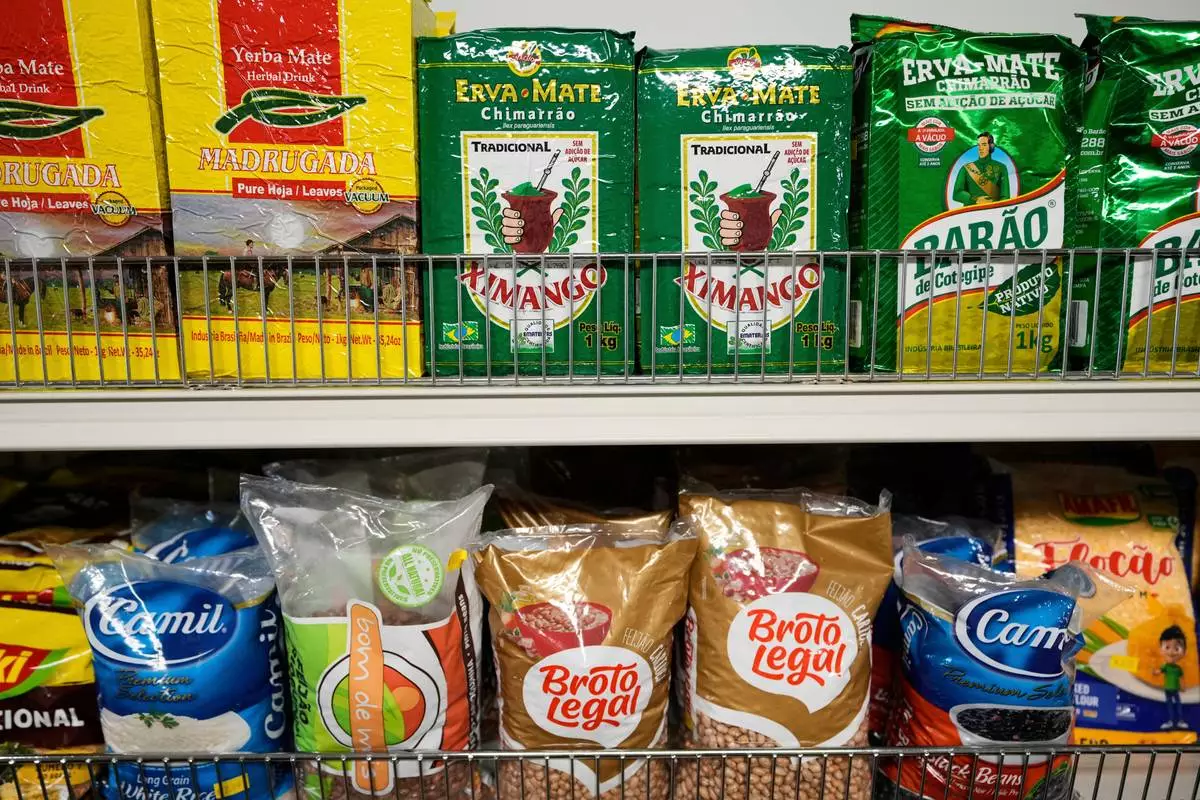
FILE - Goods imported from Brazil are displayed at Amazonia Brasil, a Brazilian goods store, in Newark, N.J., Aug. 7, 2025. (AP Photo/Seth Wenig, File)
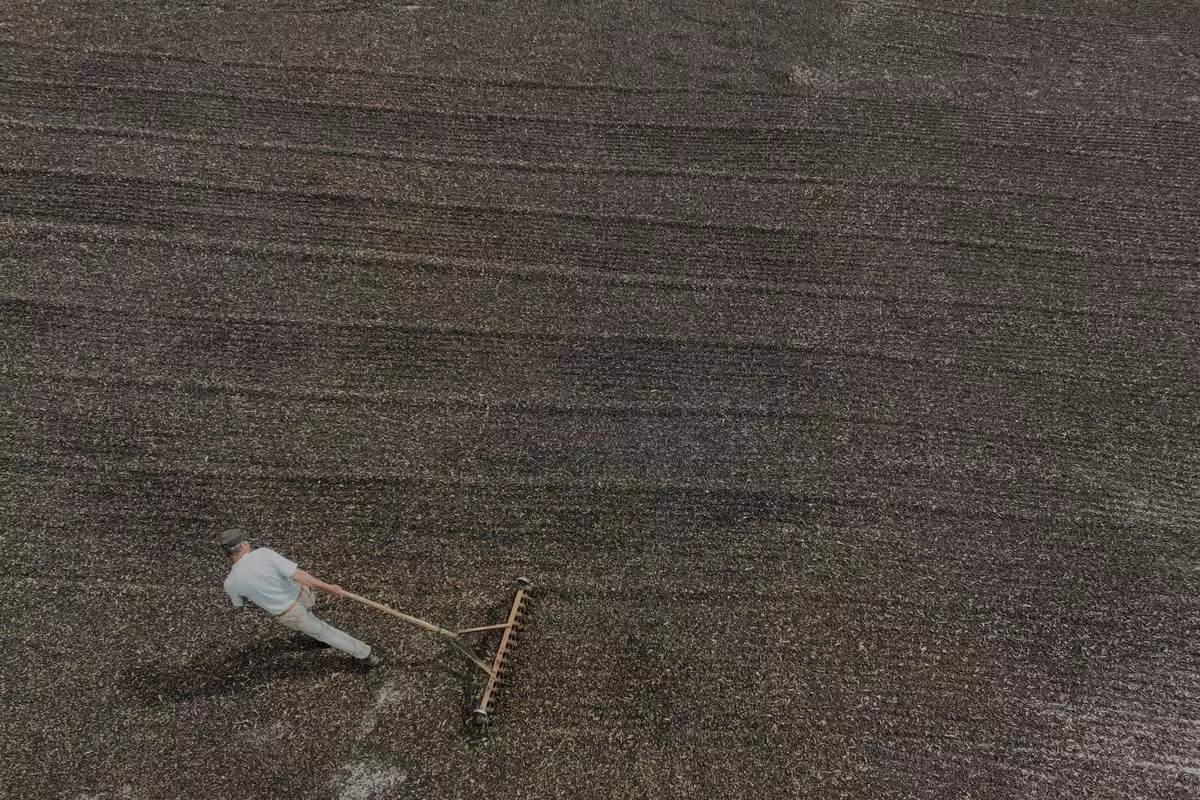
FILE - A farm employee processes coffee berries at Boa Esperanca farm in Braganca Paulista, Brazil, Aug. 4, 2025. (AP Photo/Andre Penner, File)