Sixty years after its founding in September 1965, southwest China's Xizang Autonomous Region stands today as a testament to profound change, as it shines as a symbol of prosperity, ecological balance and harmonious coexistence among its diverse ethnic groups and the environment.
During a historic visit to Xizang in 2021, Chinese President Xi Jinping witnessed the region's progress firsthand. His journey has now become a focal point for understanding the remarkable improvements in the lives of the people who call Xizang home.
In the remote Galai Village, nestled among the vast highlands, Dawa Gyaltsen and his wife were on a ladder, picking cherries in their front yard.
This was the same family that President Xi Jinping visited in July 2021. Their story exemplifies the tangible changes that have come to Xizang through application of the policies of the Communist Party of China (CPC).
When conducting the visit in 2021, Xi commented on the family's happiness, asking what their future aspirations were. In response, Dawa Gyaltsen expressed deep satisfaction with the improving living conditions and the policies that had transformed his life.
Xi encouraged him to keep current businesses in good performance and to well educate the next generation.
"A happy life is just like this, and the Party's policies are so favorable," he said.
Dawa Gyaltsen's home may have retained its original decor, but his life has improved considerably. Today, his two children excel at school, with the certificates of merits on their achievements proudly posted on the walls.
Galai, a picturesque village in Nyingchi, boasts over 1,000 peach trees, some dating back more than six centuries. Yet, it was only in recent years that rural tourism blossomed into a pillar industry, transforming local livelihoods.
In March and April, the busiest season, the village can receive about 300,000 tourist visits and generate an annual income of 14 million yuan (about 1.95 million U.S. dollars).
The growing tourism industry has created jobs and raised incomes to 200,000 to 300,000 yuan (27,870 to 41,800 U.S. dollars) per family each year.
Pemba, secretary of the CPC branch in Zhenba Village in Nyingchi, shared how rural revitalization efforts have been centered around developing local industries, such as peach farming and tourism. He emphasizes the importance of continuing to build on these foundations, while simultaneously protecting the region's unique ecological environment.
"Our rural revitalization has relied on developing local industries. Going forward, we will continue to build on this foundation to make them bigger and stronger. At the same time, our main focus will be on protecting the wild peach trees, along with protecting our ecological environment," he said.
This strategy of balancing economic development with environmental conservation is at the heart of Xizang's success.
The Yani National Wetland Park, located at the confluence of the Yarlung Zangbo River and the Nyang River in Nyingchi, is a key area for ecological preservation.
It was the first stop during President Xi's 2021 visit to Xizang, and it remains a symbol of the region's commitment to environmental sustainability.
"The Yarlung Zangbo River system forms a precious green area like a 'green lung'. However, its ecosystem is vulnerable. So we must protect it while trying to use it, with protection as the priority," Xi said.
The Yani National Wetland Park is a prime example of the Party's dedication to preserving Xizang's natural resources. The region's ecosystems are not only vital to local communities but also to the broader ecological health of the planet.
As Xi emphasized, setting clear urban growth boundaries and strict ecological protection red lines is essential for safeguarding the future of Xizang's environment.
Xi has long highlighted the importance of ethnic unity in Xizang.
In his 2021 remarks, Xi underscored that the 56 ethnic groups in China are part of a single Chinese national community.
"The 56 ethnic groups, together, form the single community of the Chinese nation. As long as we work together in coordination with one heart, well unite with each other, follow the leadership of the Communist Party of China, and stay committed to the path of socialism with Chinese characteristics, we will surely achieve the great goal of the great rejuvenation of the Chinese nation as planned," Xi said.
G.A. Somaratne, associate professor at the Center of Buddhist Studies under the University of Hong Kong, has hailed Xi's strategies, saying that by promoting cooperation and peaceful coexistence, his approach has also contributed to prosperity in other countries.
"His approach, I think, led people to sense that we need to cooperate, we need to live together and we need to live peacefully. So, he is bringing, also, prosperity to various nations, not only to Tibet (the Xizang region), actually," he said.
Xizang has embraced a path that intertwines ecological protection, cultural preservation and the well-being of its people.
In reflecting on the progress made over the past six decades, it is clear that the people of Xizang have forged a new chapter in their history. With continued implementation of the Party's policies, they are poised to continue flourishing, nurturing a future that blends modernity with the region's rich cultural heritage.
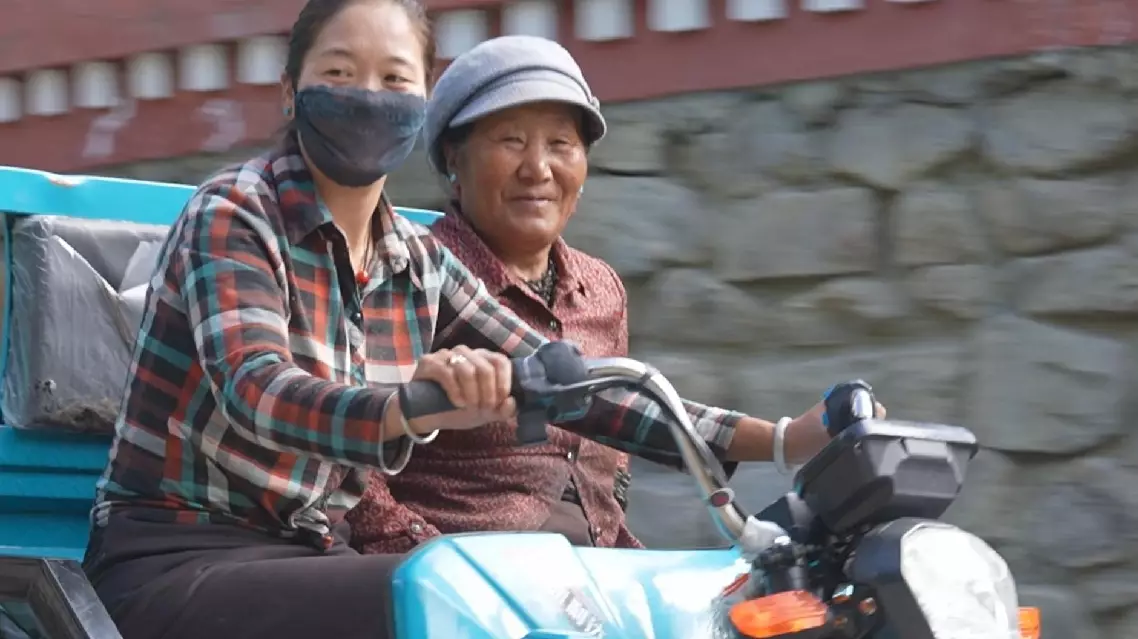
Xi's inspection drives efforts to improve livelihood in Xizang village