PHILADELPHIA (AP) — A medical museum in Philadelphia has redrawn its policies on the collection and display of human remains, limiting its acceptance of additional specimens and working to follow “evolving modern medical ethical standards” in how it handles the 6,500 organs, bones and other body parts in its collection.
The College of Physicians of Philadelphia, which owns the Mutter Museum, announced this week it is restricting the taking of photos and videos of human remains, allowing it only with the museum’s permission. Photography by the public will remain prohibited.
Click to Gallery
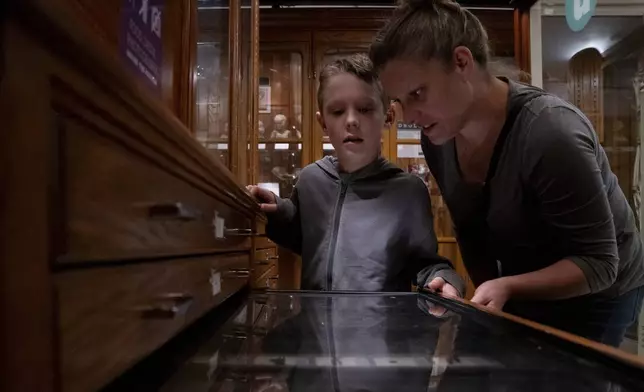
Lincoln Stollenwerk, 8, and Felice Leibowitz, 43, look at a display on objects swallowed by people at the Mütter Museum on Thursday, Aug. 21, 2025, in Philadelphia. (AP Photo/Mingson Lau)
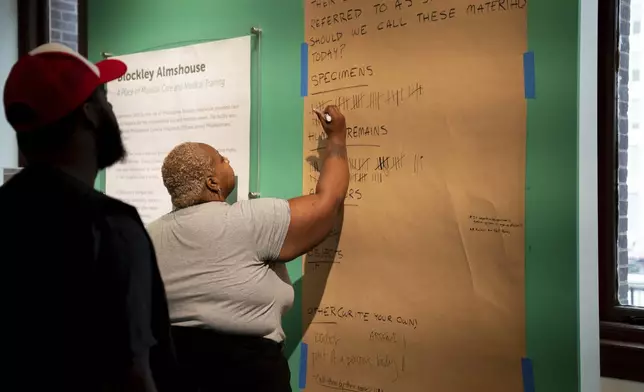
Markys Battle, 32, and Ashley Halton, 31, vote in a community feedback survey on the language surrounding items of human origin at the Mütter Museum on Thursday, Aug. 21, 2025, in Philadelphia. (AP Photo/Mingson Lau)
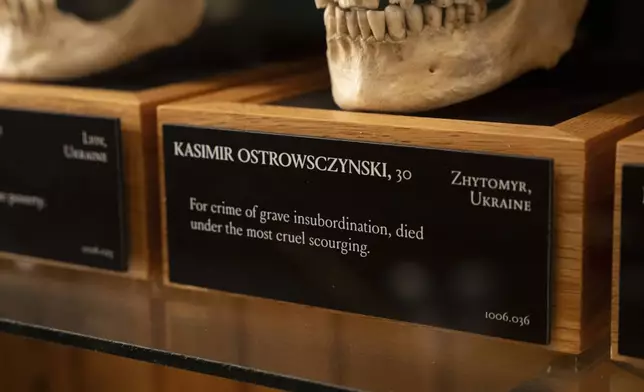
The skull of Kasimir Ostrowsczynski displayed at the Mütter Museum on Thursday, Aug. 21, 2025, in Philadelphia. (AP Photo/Mingson Lau)
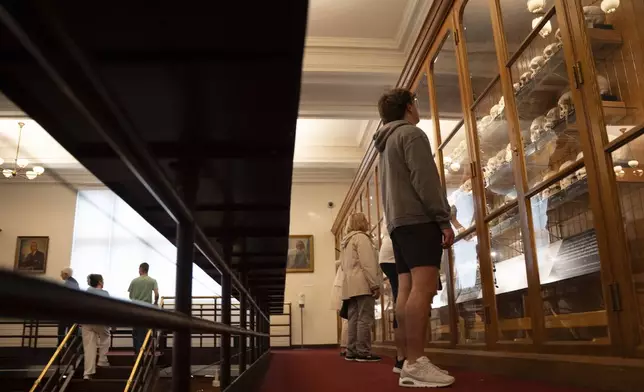
Visitors look at displays of human remains at the Mütter Museum on Thursday, Aug. 21, 2025, in Philadelphia. (AP Photo/Mingson Lau)
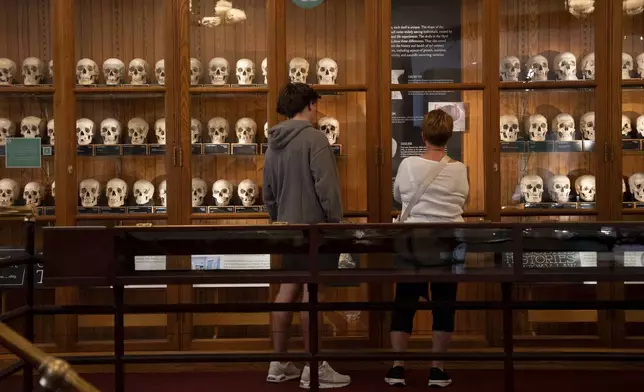
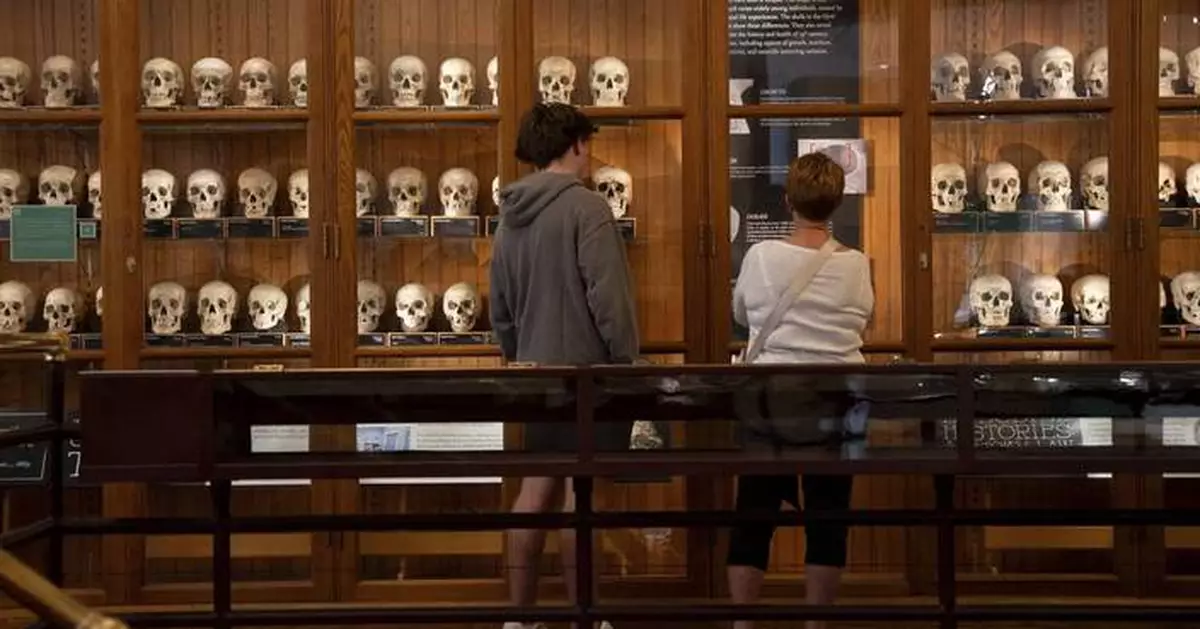
Milo Tivy, 16, and Shari Tivy, 75, look at a display of human skulls at the Mütter Museum on Thursday, Aug. 21, 2025, in Philadelphia. (AP Photo/Mingson Lau)
The museum “will allow photography as long as it sort of serves an educational purpose,” said Sara Ray, its director of interpretation and engagement. “But education itself is a pretty broad net that we're working through.”
The great majority of the remains were collected from about 1840 to about 1940, mostly from Philadelphia, largely body parts and organs that were considered to be helpful in medical education and taken during autopsies or surgery. Such collections were not uncommon among medical societies at a time when specimens were critical to understanding how the body is structured and how it works. But most of those museums are long gone.
The Mutter Museum said it is also working to “de-anonymize” its collection by looking into the personal histories of its human remains to figure out who they are, if possible, and to “do justice” in how it displays them and tells their stories. The goal is to exhibit them in the context of the history of medicine, bodily diversity and the tools and therapies used to treat them.
Museum researchers are using a variety of records to piece together those histories, focusing on where and when the remains were collected, but they are not employing DNA analysis. In some cases, the museum has information about the person that was recorded by the physician who collected the specimen.
“The goal is not finding an identity for finding an identity’s sake,” Ray said. “The goal is to find an identity so that we can build a richer biographical profile, through which we can then ask questions about the way that this person navigated the world. And so that’s going to look very different for every single specimen.”
The museum's new human remains policy says that many were “obtained in unacceptable circumstances including through force or duress” and may have been used for research or in displays that are now considered to be examples of scientific racism.
About 50 of its specimens are thought to be of Native American people. Since April 2024, nine remains have been repatriated to two tribes and one Native Hawaiian group.
The remains will not be lent out to other institutions, and research access to them must be approved by a group consisting of several top museum leaders. Research involving the collection tends to be about the history of medicine, not for purely biological study.
The policy changes follow a two-year review, designed to engage the public in planning for the museum's future. As a result, hundreds of the museum’s videos regarding items in the collection and on educational topics that were removed from YouTube in January 2023 are being restored to the streaming service after being reorganized, with out-of-date material removed.
The museum plans to “sharply limit” its future acquisition of human remains. It will consider accepting them from living primary donors or through a bequest but may decline such gifts.
Museum visitor Ashley Davis, 47, said Thursday she appreciated the museum’s efforts to educate guests on the difficulties people have endured and the lives they lived.
“I think it’s important to know where these come from. These were human beings,” Davis said.
The museum, which gets about 100,000 visitors annually, began as the collection of surgeon Dr. Thomas Dent Mutter, who in 1859 donated 1,700 objects and $30,000 to hire a curator and construct a fireproof building. His goal was to improve medical education. The collection now includes more than 35,000 objects with some half-million objects in the associated medical library.
Scolforo reported from Harrisburg, Pennsylvania.
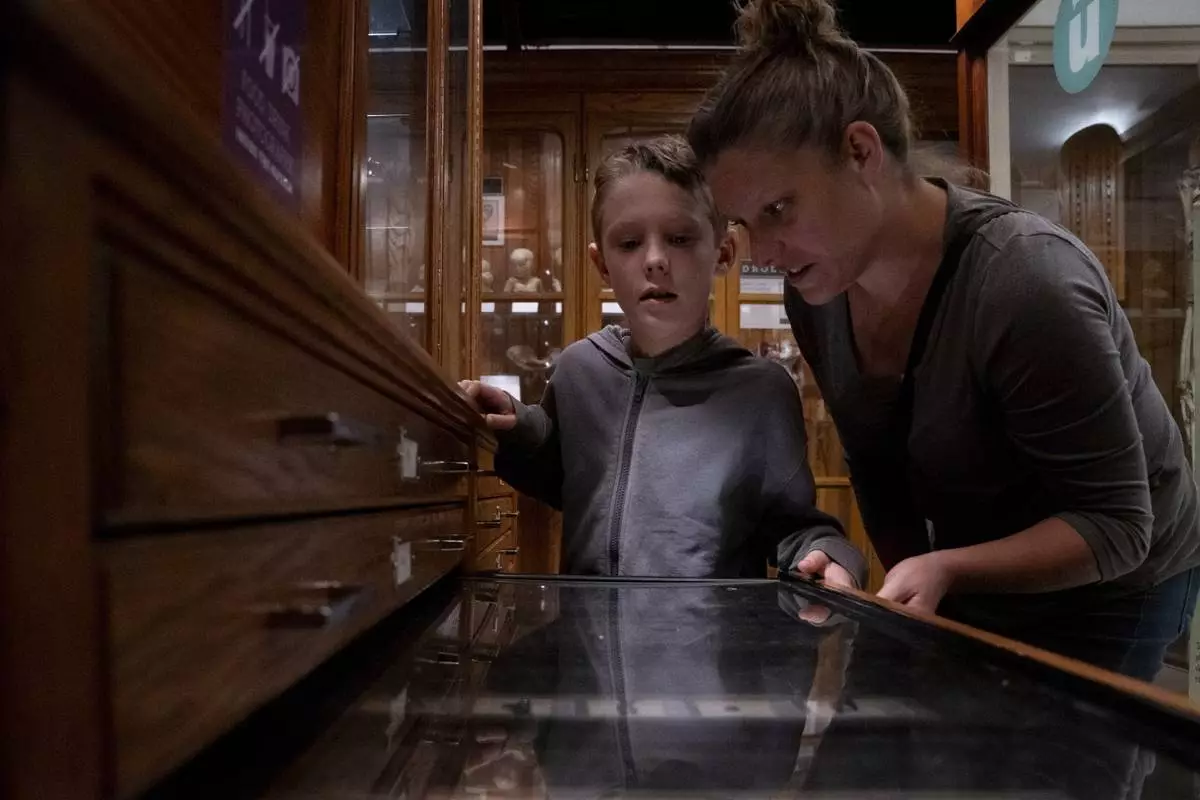
Lincoln Stollenwerk, 8, and Felice Leibowitz, 43, look at a display on objects swallowed by people at the Mütter Museum on Thursday, Aug. 21, 2025, in Philadelphia. (AP Photo/Mingson Lau)
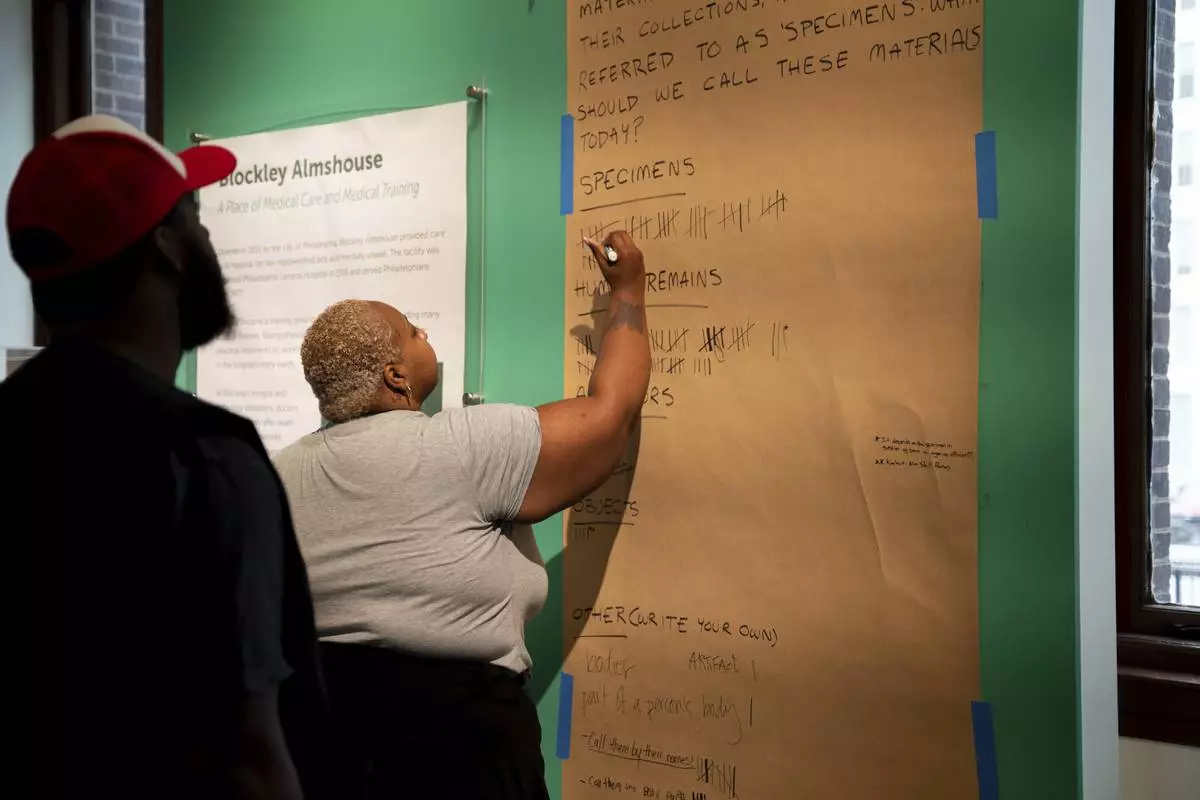
Markys Battle, 32, and Ashley Halton, 31, vote in a community feedback survey on the language surrounding items of human origin at the Mütter Museum on Thursday, Aug. 21, 2025, in Philadelphia. (AP Photo/Mingson Lau)

The skull of Kasimir Ostrowsczynski displayed at the Mütter Museum on Thursday, Aug. 21, 2025, in Philadelphia. (AP Photo/Mingson Lau)
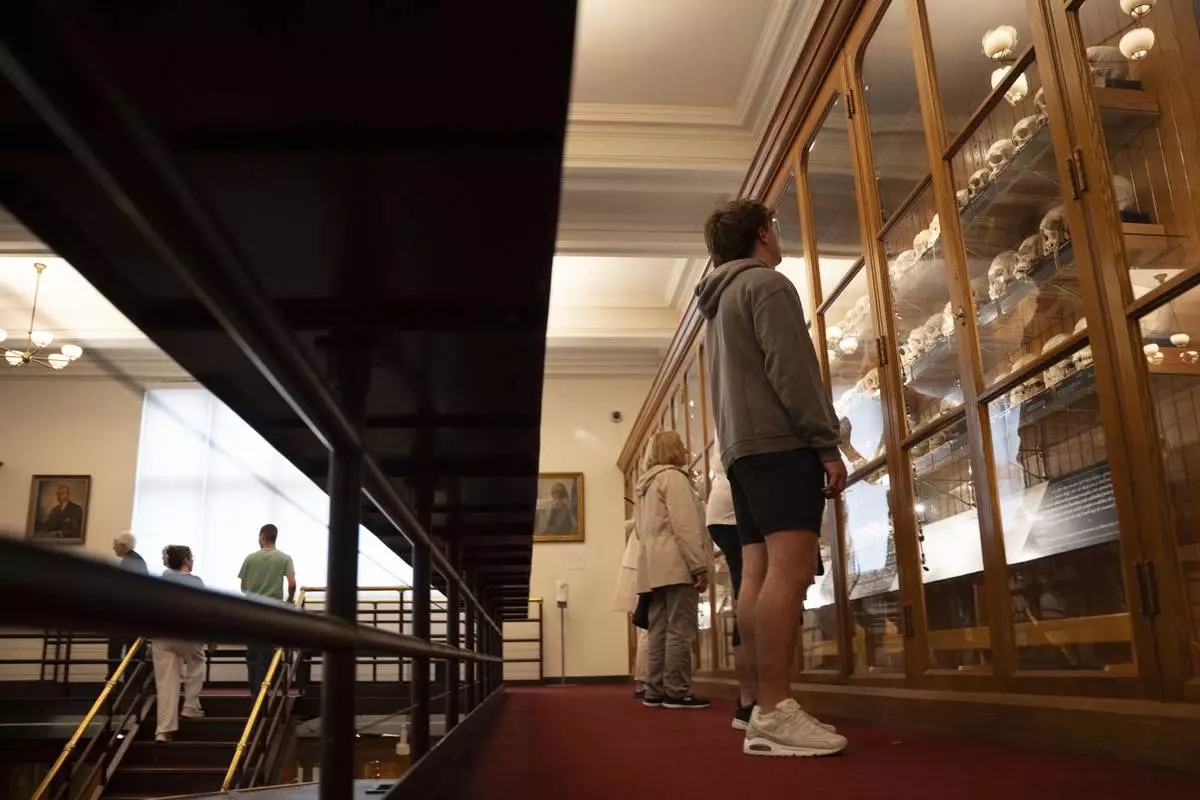
Visitors look at displays of human remains at the Mütter Museum on Thursday, Aug. 21, 2025, in Philadelphia. (AP Photo/Mingson Lau)
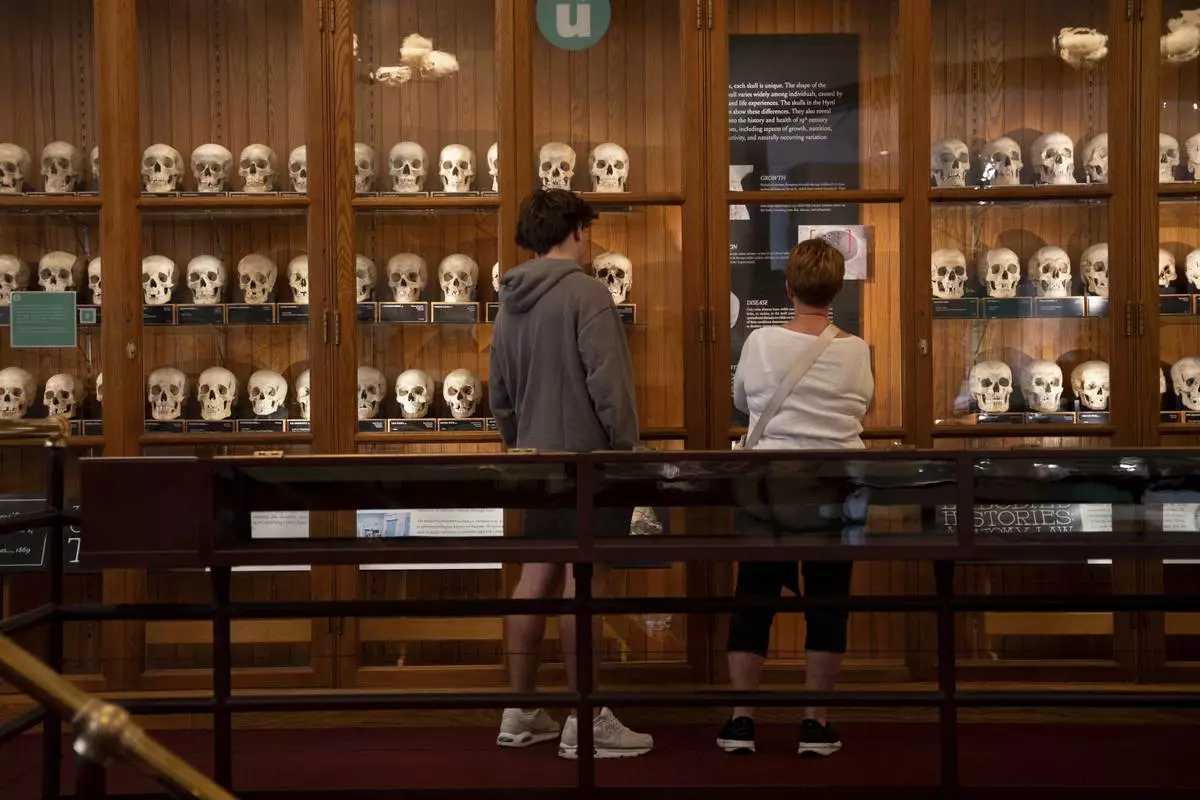
Milo Tivy, 16, and Shari Tivy, 75, look at a display of human skulls at the Mütter Museum on Thursday, Aug. 21, 2025, in Philadelphia. (AP Photo/Mingson Lau)