China's output of early rice rose 1.2 percent year on year to reach 28.52 million tonnes in 2025, laying a solid foundation for stabilizing annual grain production, the National Bureau of Statistics (NBS) said Friday.
Among the country's major grain producing provinces, Jiangxi, Hunan, and Guangdong achieved restorative growth with increases in early rice output this year after experiencing a decline in 2024 due to disasters.
Their early rice output grew by 2.4 percent, 1.8 percent, and 1.0 percent, respectively.
In addition, the yield of early rice per mu (about 0.067 hectares) this year has reached 400.8 kilograms, exceeding 400 kilograms for the first time and reflecting a 1.5 percent increase from the previous year.
This year, severe drought during the spring sowing season in some regions hampered the timely transplanting of early rice. Consequently, some farmers switched to other crops, leading to a slight reduction in the early rice sowing area.
However, thanks to a series of supportive policies introduced by the Chinese government, the total planting area for early rice in the country remained stable at 71.14 million mu (about 4.74 million hectares) despite earlier challenges. This is the sixth year in a row that the planting area has remained steady around 71 million mu.
Amid complex international environment and frequent extreme weather events around the world, China's early rice harvest has laid a solid foundation for stable grain production throughout the year, according to the NBS.
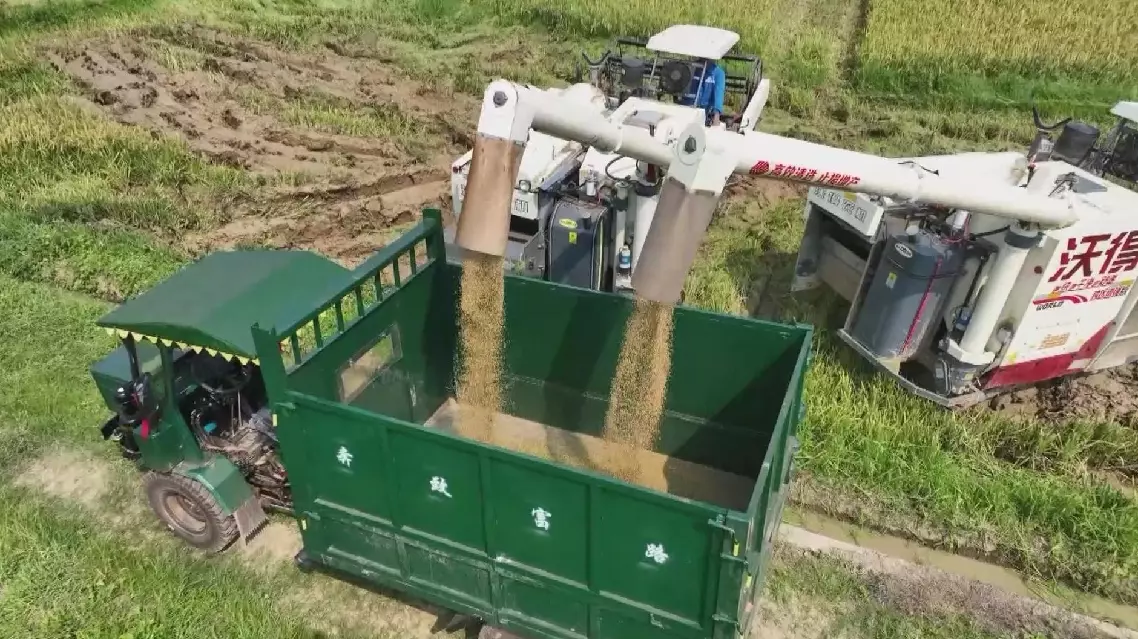
China achieves higher early rice output