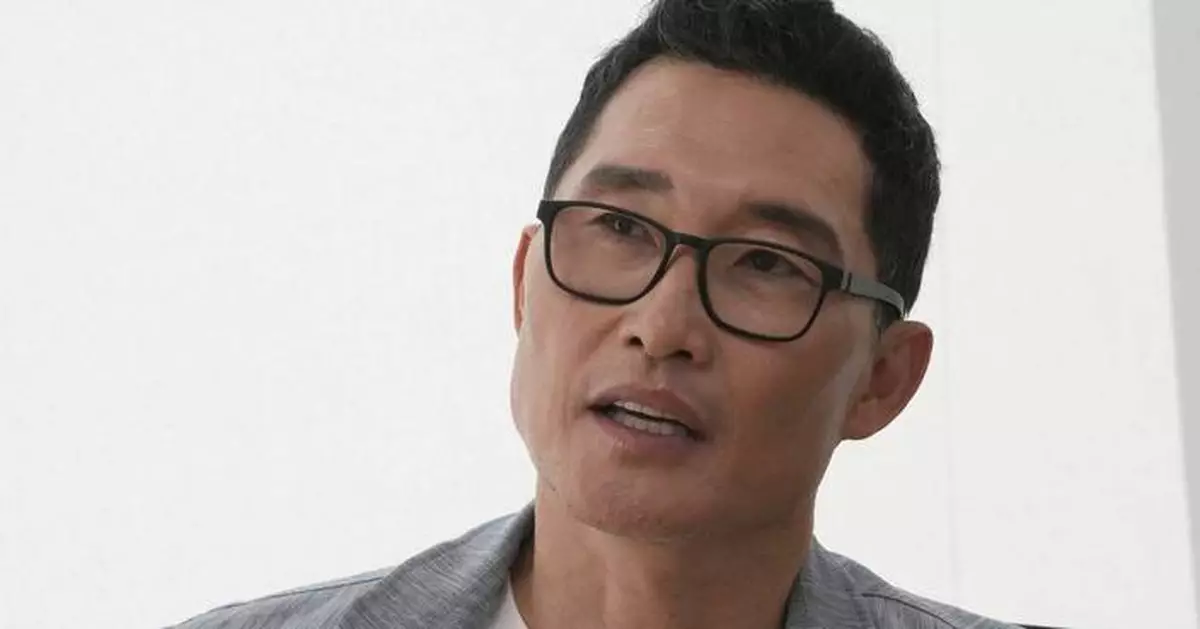
SEOUL, South Korea (AP) — After three decades in Hollywood, Daniel Dae Kim has done spy thrillers, sci-fi epics and medical dramas. But there’s one role that’s eluded the Korean American actor: romantic leading man. “I’m still waiting to play a romantic lead after all these years,” Kim says with a laugh.
His latest project, “Butterfly,” which features a star-studded cast including top Korean actors Kim Tae-hee and Park Hae-soo (“Squid Game”), follows a former U.S. intelligence operative in South Korea whose past catches up with him. It premiered on Amazon Prime in the U.S. and elsewhere earlier this month, but makes its Korean debut Friday.
In a recent interview with The Associated Press in Seoul, South Korea, Kim revealed one of his biggest regrets, reflected on cultural lessons from the Korea-U.S. co-production, and opened up about what it’s really like being the bridge between two cultures while pursuing his mission to tell stories “that haven’t been told yet.” The interview has been edited for clarity and brevity.
KIM: As an EP, I’m a job creator. I am a person responsible for a lot of people, and I will fight so much harder for others than I often fight for myself. When I feel like one of the cast, or one of the crew, or one of the writers is not being taken care of, I’m not afraid to talk to anybody and have a hard conversation.
KIM: Every day, there was something that needed to be translated literally through language but also working styles. In Korea, because it’s a more Confucian society, the hierarchy of departments is very clear. We had to learn to talk to the head of the department who would then talk to the staff, as opposed to if you have an issue with one of the staff, you go directly to the staff. This kind of thing was new to the Americans.
KIM: I think in 2007 I got a DUI when I was working on “Lost,” and I regret that night every day of my life. At the time, I felt so much shame, so much guilt, so much regret. I felt terrible to my parents, because that’s not the way I think they wanted me to be raised. I think with the right perspective, these things, these mistakes that you made can actually be helpful for your life because they can guide you in certain ways.
KIM: We’re already seeing it. If you look at what happened with Paramount and CBS News, we’re seeing a chilling effect on free speech and journalism and DEI. “DEI” is a bad word these days, but to me, DEI’s not a fad. The idea of inclusion is not something that’s a political trend. It’s my life. It’s what I’ve lived every decade I’ve been in this business.
KIM: I’m human, so everyone feels on certain days like, “Oh, this is too tough,” or on another day, “I can’t wait to do this.” But one of the reasons I think I act and produce is because I feel like there are a lot of stories to be told that haven’t been told yet, and one of those stories is a Korean American story.
KIM: I got so much criticism when I did “Lost” that I had to learn how to not take it so personally because it hurt a lot at the time. When I came to Korea when I was 18, cab drivers would give me such a hard time because I couldn’t speak fluent Korean. And they were like, “You’re Korean, your face is Korean, why don’t you speak Korean?” They had never thought about an immigrant experience from another country. But now Korea is so used to that kind of thing that people are much more understanding.
KIM: I have a lot of sympathy for actors who take stereotypical roles when they’re starting out because you need some way to break into the business. It’s much easier once you’re more successful and more established because you have more financial stability. It’s something that, if you’re not a person of color, or someone who’s a minority in the United States, you don’t have to think about. You don’t think about what this role means for the rest of a nation or an ethnicity. You just do what you’re drawn to, and that’s very liberating. I am lucky enough now where I can also make those same choices. But I don’t ever escape the fact that whatever I do will be watched and seen by so many people and judged through their own lens and filters.
KIM: I’m still waiting to play a romantic lead after all these years. I’ve never gotten the opportunity and it’s one of those interesting things because I look the way I do as an Asian American and Asian men were never considered handsome or sexy. That’s changing now though. I’m friends with Jimmy O. Yang and, a few years ago, he got to play a romantic lead in a rom-com. And I said to Jimmy like, “Who would have thought you, Jimmy, would have been the one to be the romantic lead?” But I was so happy for him because it meant that the way we were looking at Asian men was different.
Juwon Park is on X: https://x.com/juwonreports.

Korean-American actor Daniel Dae Kim speaks during an interview with The Associated Press at the Associated Press bureau in Seoul, South Korea, Tuesday, Aug. 19, 2025. (AP Photo/Ahn Young-joon)
The United States pulled off a daring rescue of two aviators whose fighter jet was shot down by Iran, plucking the pilot from behind enemy lines before setting off a complicated extraction of the second service member who hid deep in the mountains as Tehran called for Iranians to help capture him.
The CIA looked to throw off Iran’s government before the crew member was found, launching a deception campaign to spread word inside the Islamic Republic that it had already located him.
Even as President Donald Trump and other U.S. officials described an almost cinematic mission, rescuers faced major obstacles, including two Black Hawk helicopters coming under fire and problems with two transport planes that forced the U.S. military to blow them up.
“This is the first time in military memory that two U.S. Pilots have been rescued, separately, deep in Enemy Territory,” Trump wrote early Sunday on his Truth Social platform. “WE WILL NEVER LEAVE AN AMERICAN WARFIGHTER BEHIND!”
In a pair of social media posts, Trump said the operation over the weekend required the U.S. to remain completely silent to avoid jeopardizing the effort, even as the president and top members of his administration continuously monitored the airman’s location.
The White House and the Pentagon refused to publicly discuss details about the downed fighter jet for well over 24 hours after the initial crash, particularly about the first crew member rescued from the F-15E Strike Eagle— an effort that Trump later said took seven hours in broad daylight over Iran.
The United States and Iran's government then were both racing to find the second crew member, a weapons systems officer, whose location neither side knew.
The CIA spread word that the U.S. had found him and were moving him by ground to get him out of Iran, according to a senior Trump administration official who spoke on condition of anonymity to discuss details not yet made public.
The confusion allowed the CIA to uncover the location of the service member, who was hiding in a mountain crevice, the official said. The intelligence agency sent the coordinates to the Pentagon and the White House, where Trump ordered a rescue operation.
Meanwhile, an anchor on a channel affiliated with Iranian state television had been urging residents in the mountainous region of southwest Iran where the fighter jet went down to hand over any “enemy pilot” to police and promised a reward for anyone who did.
Trump said the American aviator was being “hunted down” by enemies who were “getting closer and closer by the hour.” The United States was monitoring his location continuously, he said.
At the right moment, Trump said, he directed the military to send dozens of heavily armed aircraft to rescue the crew member, who the president said is “seriously wounded” but will recover.
Iranian state media reported that airstrikes in southwestern Iran on Saturday killed at least three people and wounded others, in the same area where the missing American crew member was believed to be.
The American rescue mission ran into major challenges behind enemy lines. Iran’s joint military command claimed it struck two U.S. Black Hawk helicopters taking part in the operation.
A person familiar with the situation said the two helicopters were able to navigate to safe airspace, although it’s unclear if they landed or if crew members were injured. The person spoke on the condition of anonymity to discuss the sensitive information.
Two American transport planes also encountered a technical malfunction and additional aircraft were brought in to complete the rescue, according to a regional intelligence official briefed on the mission. The U.S. military blew up the transport planes, said the official, who spoke on condition of anonymity to discuss the covert mission.
Iran’s state television on Sunday aired a video showing what it claimed were parts of a U.S. aircraft shot down by Iranian forces, along with a photo of thick, black smoke rising. The broadcaster said Iran had shot down a transport plane and two helicopters that were part of the rescue operation.
Iran’s joint military command said the destroyed aircraft included two C-130 military transport aircraft and two Black Hawk helicopters in the province of Isfahan, where the rescue took place.
“The fact that we were able to pull off both of these operations, without a SINGLE American killed, or even wounded, just proves once again, that we have achieved overwhelming Air Dominance and Superiority over the Iranian skies,” Trump said on social media.
Trump, however, did not mention that a second military jet also went down the same day as the F-15E.
Iranian state media said Friday that a U.S. A-10 attack aircraft crashed after being struck by Iran’s defense forces.
A U.S. official, speaking on condition of anonymity to discuss a sensitive military situation, confirmed a second U.S. Air Force combat aircraft went down in the Middle East on Friday. The official provided no other details on what happened and no information on the status of the crew.
Kim and Lee reported from Washington, and Magdy from Cairo. Associated Press writers Lisa Mascaro and Konstantin Toropin in Washington, Farnoush Amiri in New York and Julia Frankel in Jerusalem contributed to this report.
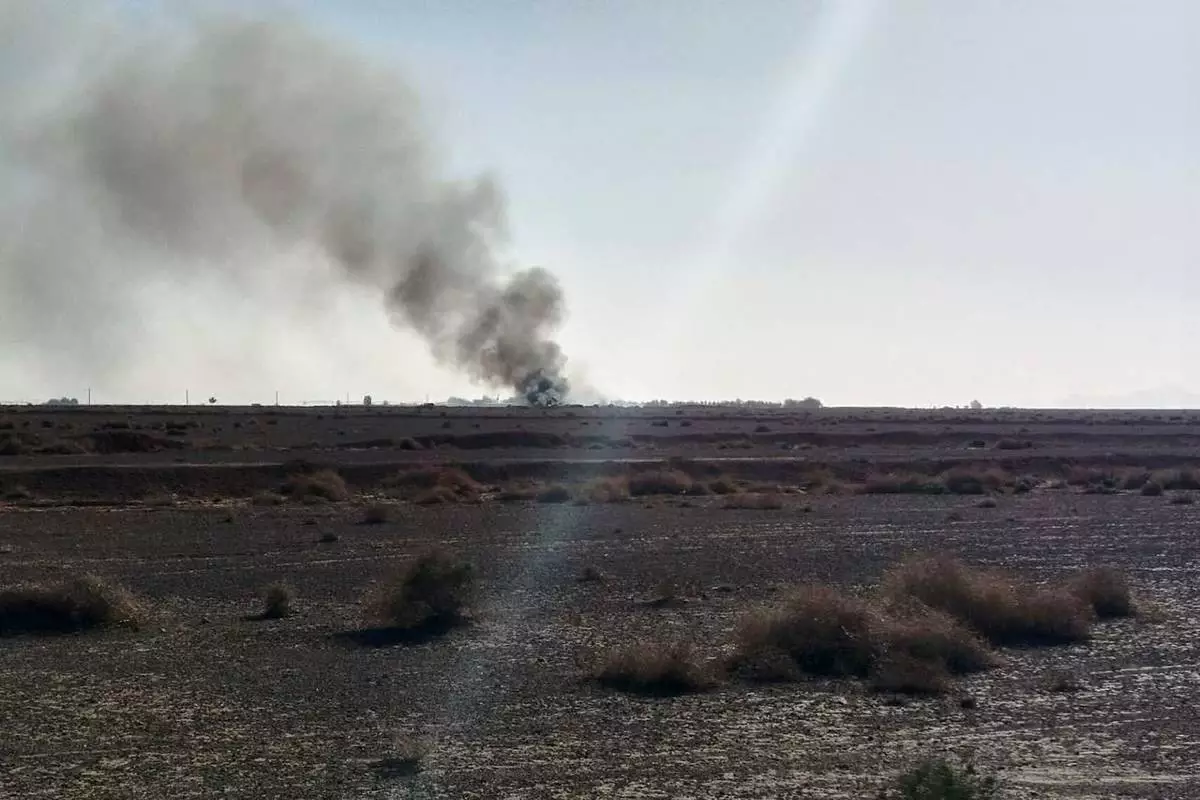
In this image provided by Sepahnews, the Iranian Revolutionary Guard's official website, black smoke rises into the air at what Iran's state TV claimed was the site where an American transport plane and two helicopters involved in a rescue operation were shot down, in Isfahan province, Iran, April, 2026. (Sepahnews via AP)
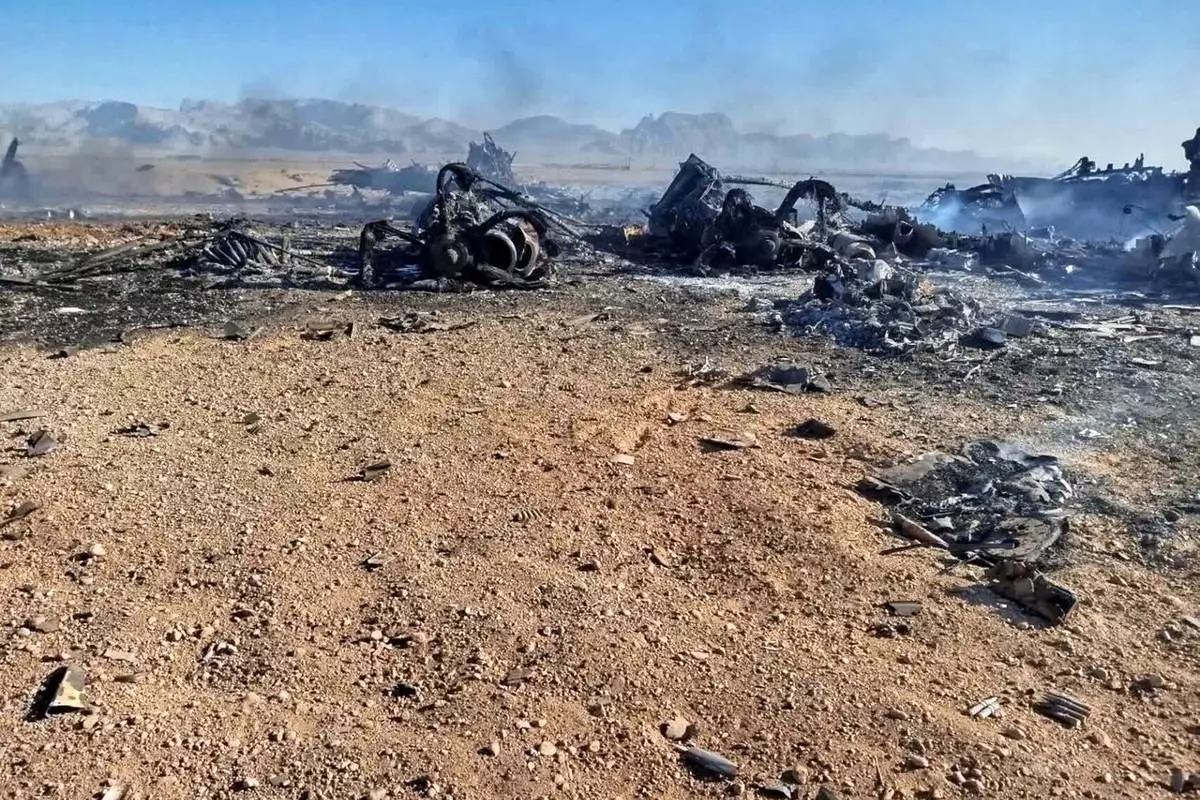
In this image provided by Sepahnews, the Iranian Revolutionary Guard's official website, wreckage is shown at what Iran's state TV claimed was the site of a downed American transport plane and two helicopters involved in a rescue operation, in Isfahan province, Iran, April, 2026. (Sepahnews via AP)
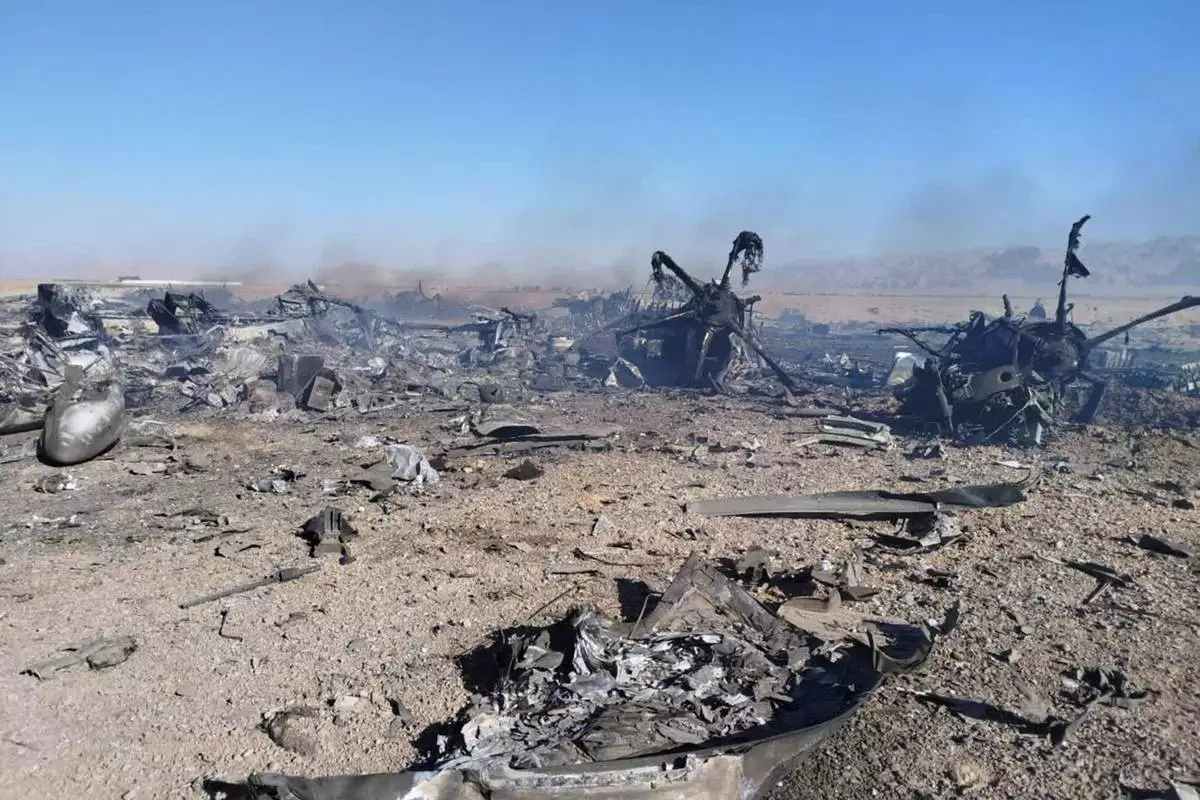
In this image provided by Sepahnews, the Iranian Revolutionary Guard's official website, wreckage is shown at what Iran's state TV claimed was the site of a downed American transport plane and two helicopters involved in a rescue operation, in Isfahan province, Iran, April, 2026. (Sepahnews via AP)