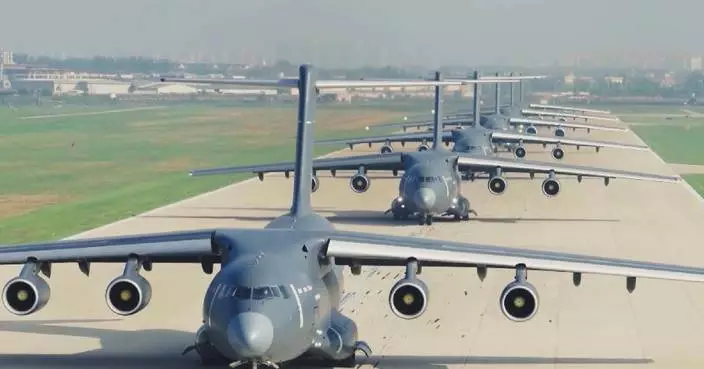
The Chinese People’s Liberation Army (PLA) ground force formation will demonstrate its solidarity, confidence, and imposing presence at the upcoming V-Day military parade.
Scheduled for Sept 3 in Tian'anmen Square of downtown Beijing, the military parade will mark the 80th anniversary of the victory in the Chinese People's War of Resistance Against Japanese Aggression and the World Anti-Fascist War.
The ground force was the first armed force established and led by the Communist Party of China (CPC). The PLA was founded with the ground force, built upon the ground force, and has its roots in the ground force.
In the formation, all soldiers were selected from honored units that made tremendous contributions during the War of Resistance.
"Among the marching formations, the ground force is the one most closely tied to the War of Resistance. Through these activities, the soldiers can unite in purpose and strength, forging the entire formation into one piece of steel and march with powerful and resounding steps across Tian’anmen Square to receive the review of President Xi and the people," said He Yongxue, leader of the PLA ground force formation.
Ma Rui serves as the flag bearer of the formation in this military parade. Having previously marched three times as an alignment soldier, he now carries greater responsibility than ever.
"I feel more confident and collected. Such feeling doesn't only come from our neat formation and imposing manner, which is a small part of the reason, but also, in a bigger picture, due to the development of our military in the past decade, which I've witnessed and experienced," Ma said.
As the first formation in this parade, they aim to showcase their heritage as successors of honored units.
"If war happens, are we able to win? I think this is a question that every soldier needs to think about. Although there isn't too much of a connection between going through a military parade and fighting a war, I believe they share the same essence, which is a battle against human physical limits and willpower," said Ma.
"Many years ago, what out forefathers went through was ten thousand times tougher than what we experienced. However, they showed optimism and resilience: even after facing failures and defeats, they still managed to get back on feet and charge forward again and again," said Wu Meikang, a soldier in the formation.
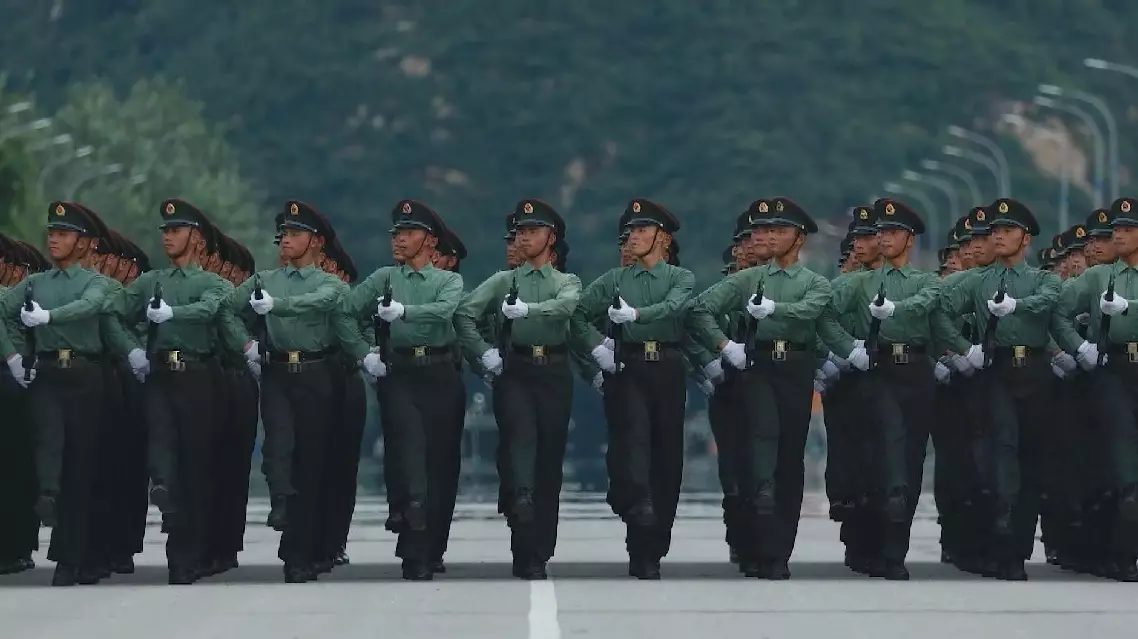
PLA ground force formation to demonstrate confident, imposing presence at upcoming military parade
A former television host from Taiwan, Zhai Xuan, has made a pivotal decision to leave mainstream broadcasting in order to create content that provides a better understanding of the Chinese mainland and cross-strait relations.
Zhai, a seasoned television host with over a decade of experience in Taiwan's media landscape, recently addressed an audience at an event in Beijing, where she revealed her complete transition into independent online media.
In her remarks, she articulated her aspiration to bridge what she perceives as a significant information gap between audiences on both sides of the Strait, highlighting her commitment to fostering a deeper understanding and connection through her new endeavors.
"I was really surprised by all the fake news. There were stories saying people on the mainland can't afford tea eggs or that they live in mud houses and in Taiwan, this was the main information many people received," said Zhai.
Zhai said she initially began producing online videos to challenge such perceptions while continuing her work as a television host.
In April 2025, she travelled to the mainland with her father to fulfill her late grandfather's wish to return to his hometown. The trip, which reunited family members separated since 1949, was recorded in a video series titled "Journey to Find Our Roots", drawing attention from viewers in both Taiwan and the mainland.
"Many people in Taiwan told me that after watching, they wanted to apply for a mainland travel permit immediately and go looking for their relatives. Some had long forgotten these things, but after seeing my story, they began thinking about their hometowns and family members they had never met and decided to search for their roots," Zhai shared her story at the event.
By mid-2025, Zhai said she began to feel increasing pressure amid rising political tensions and a tightening atmosphere around cross-Strait exchanges in Taiwan.
After more than 12 years in the industry, Zhai resigned from her position, believing it was the right thing to do.
"At that moment, I felt this was a major issue,not just for me, but for Chinese people on both sides of the Strait. If I backed down then, I wouldn’t be standing on the right side," said Zhai.
Since leaving television, Zhai has broadened her online programming to encompass a range of daily-life topics, including practical guidance on applying for a mainland travel permit and using commonly employed mobile applications, in addition to content that delves into historical memory and cultural connections across the Strait.
As the debate over cross-Strait relations continues in Taiwan, Zhai said she remains committed to her current path.
Former Taiwan TV host bridges cross-Strait divide via online media