DEIR AL-BALAH, Gaza Strip (AP) — Israel struck one of the main hospitals in the Gaza Strip on Monday and then hit the facility again as journalists and rescue workers rushed to the scene, killing at least 20 people and wounding scores more, local health workers said.
It was among the deadliest of multiple Israeli strikes that have hit both hospitals and journalists over the course of the 22-month war. The assault came as Israel plans to widen its offensive to heavily populated areas, vowing to destroy Hamas after its Oct. 7, 2023, attack.
Click to Gallery
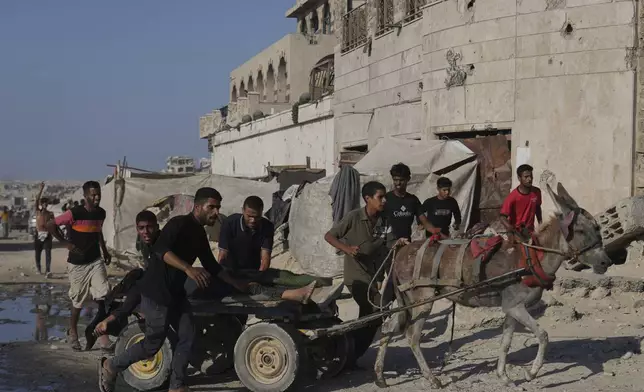
Palestinians transport a woman who was injured while trying to reach a humanitarian aid convoy in the outskirts of Beit Lahiya, as they move on a road in Gaza City, in the Gaza Strip, Sunday, Aug. 24, 2025. (AP Photo/Abdel Kareem Hana)
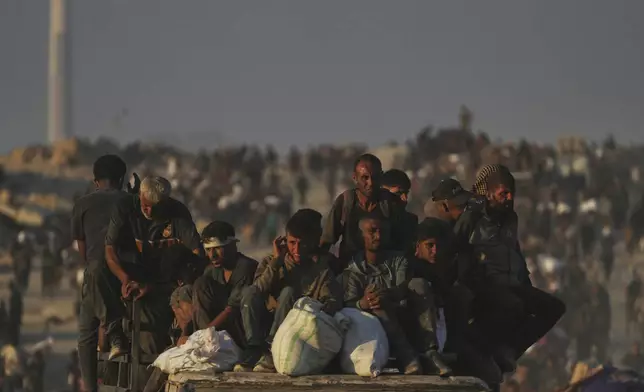
Palestinians carry sacks of flour unloaded from a humanitarian aid convoy that reached Gaza City from the northern Gaza Strip, Sunday, Aug. 24, 2025. (AP Photo/Abdel Kareem Hana)
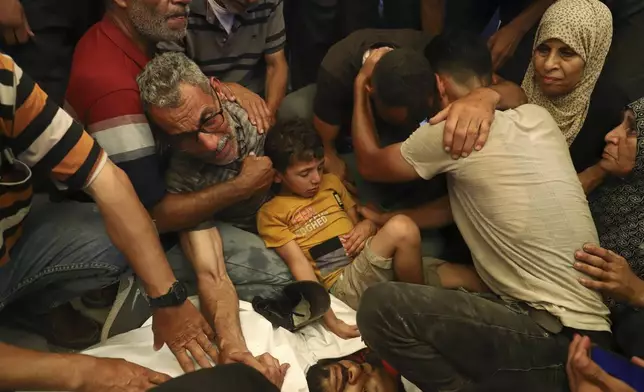
FILE - Ata Qasas, center left, mourns over the body of his son Rashad Qasas, who was killed while heading to an aid distribution hub, during his funeral in Rafah, southern Gaza Strip, Wednesday, June 11, 2025. (AP Photo/Mariam Dagga, File)
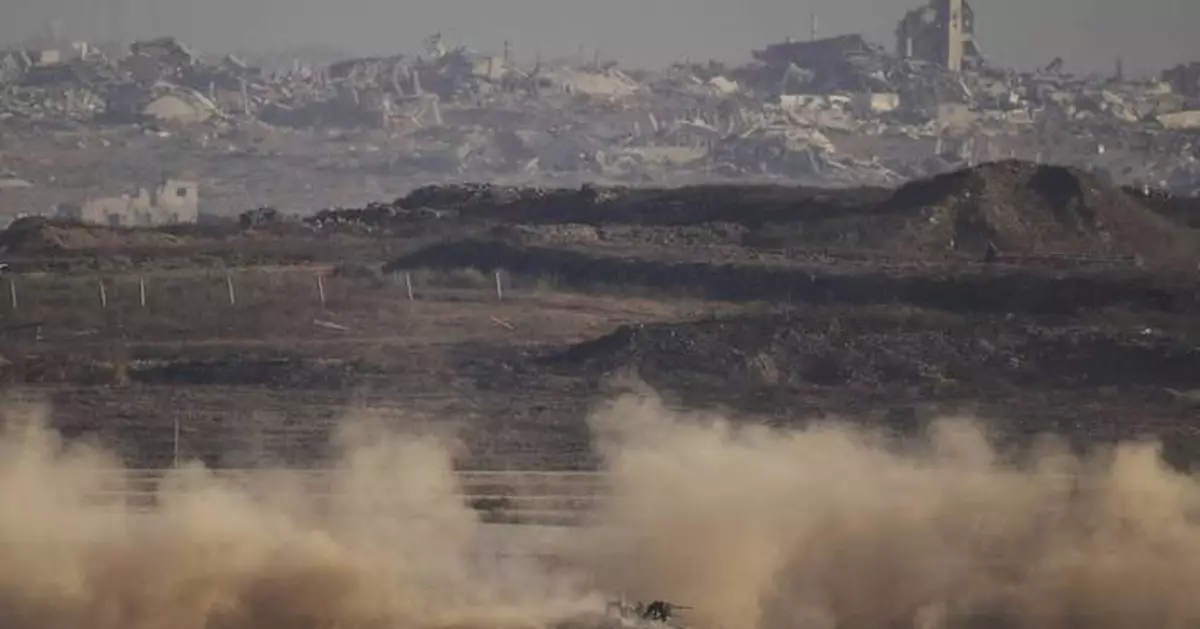
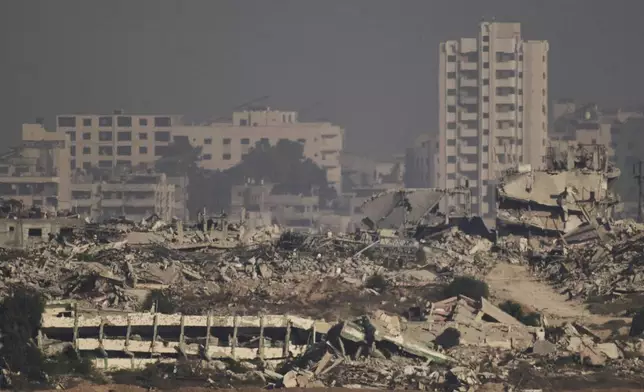
Buildings that were destroyed during Israeli ground and air operations stand in the northern Gaza Strip as seen from southern Israel, Monday, Aug. 25, 2025. (AP Photo/Leo Correa)
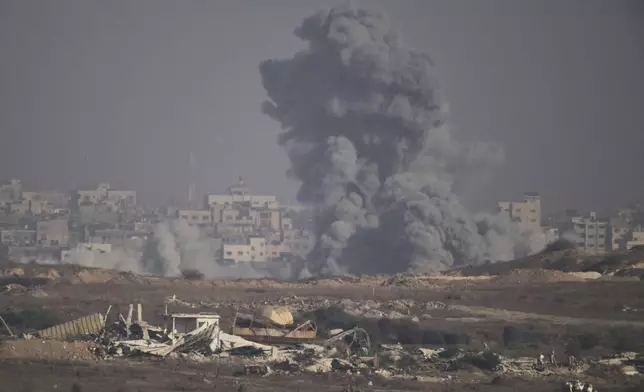
Smoke rises to the sky following an Israeli airstrike in the northern Gaza Strip as seen from southern Israel, Monday, Aug. 25, 2025. (AP Photo/Leo Correa)
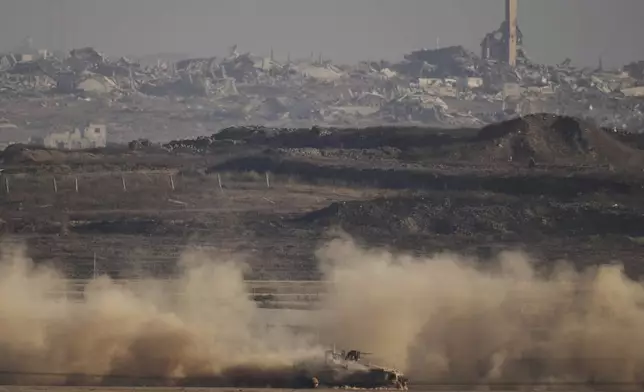
An Israeli armoured personnel carrier (APC) moves through the Israeli-Gaza border, as seen from southern Israel, Monday, Aug. 25, 2025. (AP Photo/Leo Correa)
Among the dead were five journalists, including 33-year-old Mariam Dagga, a visual journalist who worked for The Associated Press.
The Reuters news agency said one of its reporters was killed in the initial strike as he operated a live television shot on an upper floor of Khan Younis’ Nasser Hospital. Other journalists, including Dagga, and rescue workers wearing orange emergency vests then raced up an external stairwell to reach the site, only to be hit by the second strike.
Video shot from below by pan-Arab channel Al Ghad showed their last moments as they climbed the stairs past damaged walls, followed by a boom and a huge plume of smoke from the strike.
Israeli Prime Minister Benjamin Netanyahu’s office called the strike a “tragic mishap” and said the military was investigating. He did not elaborate on the nature of the mistake.
Israeli media reported that troops fired two artillery shells, targeting what they suspected was a Hamas surveillance camera on the roof. Reporters from different outlets had regularly set up live TV shots at that location.
The five journalists killed included journalists working for Al Jazeera, Reuters and Middle East Eye, a U.K.-based media outlet, most on a contractor or freelance basis.
Dagga regularly reported for multiple outlets from the hospital, including a recent story for the AP on doctors struggling to save children from starvation.
The AP and Reuters demanded an explanation in a joint letter to Israeli authorities.
“We are outraged that independent journalists were among the victims of this strike on the hospital, a location that is protected under international law,” it said. “These journalists were present in their professional capacity, doing critical work bearing witness.”
They also noted that Israel has barred international journalists from entering Gaza since the start of the war, outside of visits organized by the military.
Zaher al-Waheidi, head of the records department at the Gaza Health Ministry, said the initial strike hit an upper floor housing operating rooms and doctors’ residences, killing at least two people. The second strike, hitting the stairwell, killed another 18. Around 80 people were wounded, including many in the hospital’s courtyard, al-Waheidi said.
Brig. Gen. Effie Defrin, an Israeli military spokesman, said the army does not target civilians and had launched an internal investigation into the strikes. He accused Hamas of hiding among civilians but did not say whether Israel believed any militants were present during the strikes on the hospital.
Netanyahu’s statement said: “Israel deeply regrets the tragic mishap that occurred today at the Nasser Hospital in Gaza. Israel values the work of journalists, medical staff, and all civilians.”
Israel has killed 189 Palestinian journalists during its campaign in Gaza, including some who were directly targeted and others who were killed among other strike casualties, according to the Committee to Protect Journalists. More than 1,500 health workers have been killed, according to the U.N.
Israel’s “killing of journalists in Gaza continues while the world watches and fails to act firmly on the most horrific attacks the press has ever faced in recent history,” said Sara Qudah, CPJ regional director.
The Foreign Press Association, which represents international media in Israel and the Palestinian territories, called on Israel “to halt its abhorrent practice of targeting journalists.”
The U.N. secretary-general, along with Britain, France and others, condemned the attack. When asked about the strike, U.S. President Donald Trump initially said he was not aware of it before offering: “I’m not happy about it. I don’t want to see it.”
Trump later said he thought there might be a “conclusive ending” in Gaza in the coming weeks, without elaborating. It was not clear if he was referring to Israel’s coming offensive or to long-running ceasefire talks.
Israel has attacked hospitals multiple times throughout the war, asserting that Hamas embeds itself in and around the facilities, though Israeli officials rarely provide evidence. Hamas security personnel have been seen inside such facilities during the war, and parts of those sites have been off limits to the public.
The hospitals that remain open have been overwhelmed by the dead, wounded and now by increasing numbers of malnourished as parts of Gaza are experiencing famine.
A British doctor working on the floor that was hit said the second strike came before people could start evacuating from the first.
“Just absolute scenes of chaos, disbelief and fear,” the doctor said, describing people leaving trails of blood as they entered the ward. The hospital was already overwhelmed, with patients with IV drips lying on the floor in the corridors in stifling heat.
The doctor spoke on condition of anonymity in line with regulations from their organization to avoid reprisals from Israeli authorities.
“It leaves me in another state of shock that hospitals can be a target,” the doctor said.
Nasser Hospital has withstood raids and bombardment during the war. , with officials repeatedly noting critical shortages of supplies and staff.
A June strike on the hospital killed three people, according to the Health Ministry. The military said at the time that it targeted a Hamas command and control center. A March strike on its surgical unit days after Israel ended a ceasefire killed a Hamas official and a 16-year-old boy.
Al-Awda Hospital said Israeli gunfire killed six aid-seekers trying to reach a distribution point in central Gaza and wounded another 15.
The shootings were the latest in the Netzarim Corridor, a military zone where U.N. convoys have been overrun by looters and desperate crowds, and where people have been shot and killed while heading to sites run by the Gaza Humanitarian Foundation, an Israeli-backed American contractor.
The GHF denied that any shootings had occurred near its site. The Israeli military said it was not aware of any casualties from Israeli fire in that area.
Al-Awda said two Israeli strikes in central Gaza killed six Palestinians, including a child. Shifa Hospital in Gaza City said three Palestinians, including a child, were killed in a strike there.
The Health Ministry said Sunday that at least 62,686 Palestinians have been killed in the war. It does not distinguish between fighters and civilians but says around half have been women and children. The ministry is part of the Hamas-run government and staffed by medical professionals. The U.N. and independent experts consider it the most reliable source on war casualties. Israel disputes its figures but has not provided its own.
The war began when Hamas-led militants abducted 251 people and killed around 1,200 people, mostly civilians, in the 2023 attack. Most of the hostages have been released in ceasefires or other deals, but 50 remain in Gaza, with around 20 believed to be alive.
This story has been corrected to note that Israel has provided some evidence of militants operating in and around some of the hospitals it has raided. One misspelling of the journalist's name Dagga also has been corrected.
Magdy reported from Cairo, and Metz reported from Jerusalem. Associated Press writers Melanie Lidman in Jerusalem and Darlene Superville in Washington contributed to this report.
Follow AP’s war coverage at https://apnews.com/hub/israel-hamas-war
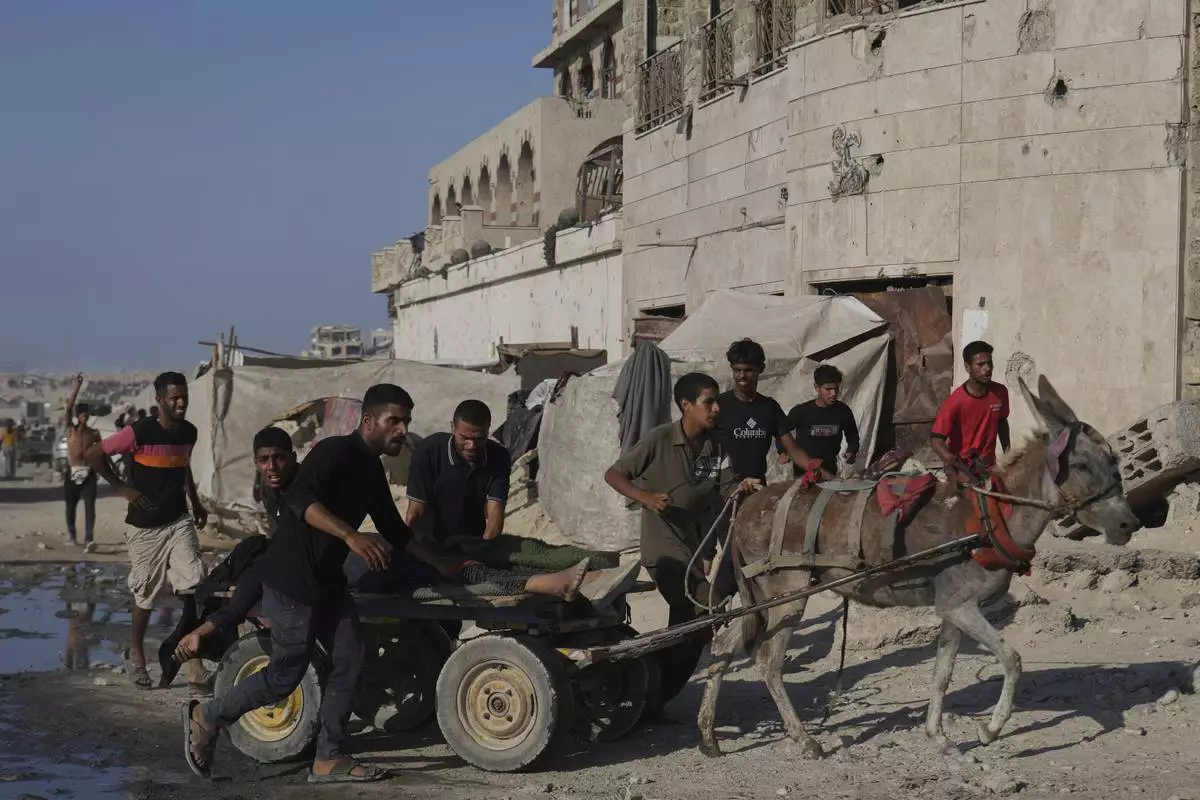
Palestinians transport a woman who was injured while trying to reach a humanitarian aid convoy in the outskirts of Beit Lahiya, as they move on a road in Gaza City, in the Gaza Strip, Sunday, Aug. 24, 2025. (AP Photo/Abdel Kareem Hana)
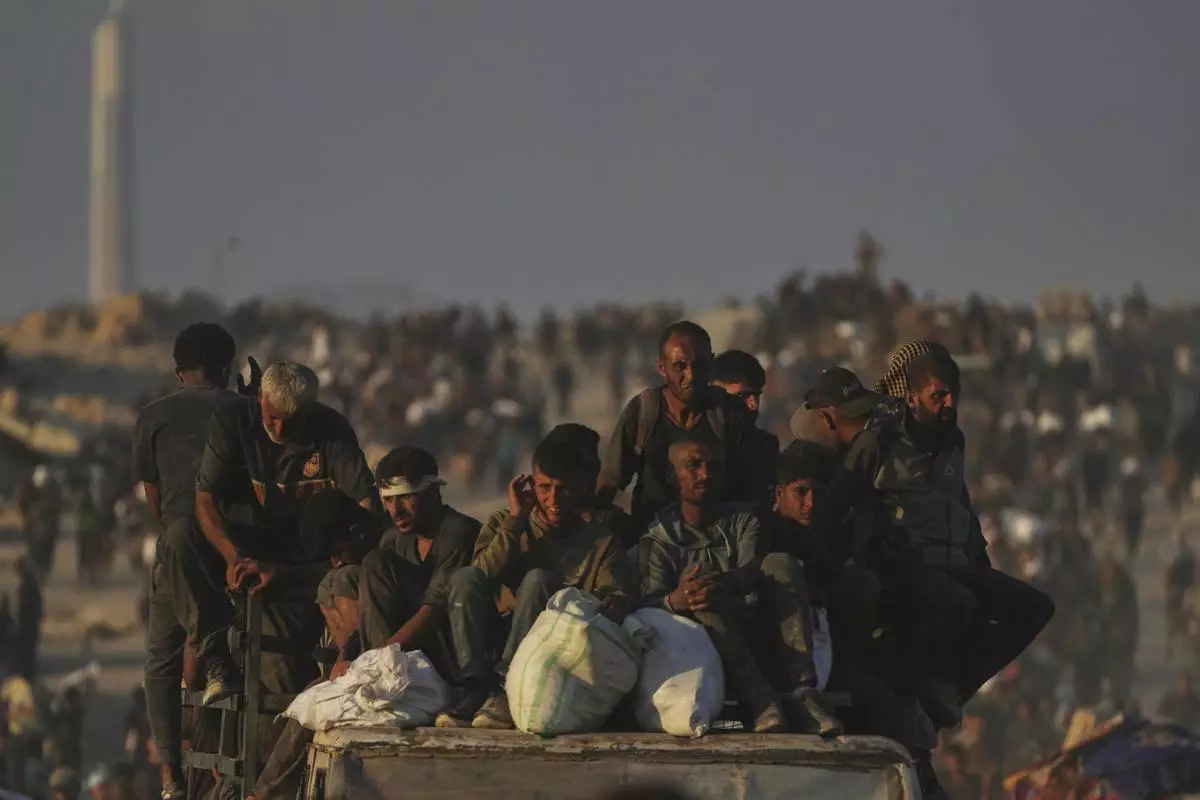
Palestinians carry sacks of flour unloaded from a humanitarian aid convoy that reached Gaza City from the northern Gaza Strip, Sunday, Aug. 24, 2025. (AP Photo/Abdel Kareem Hana)
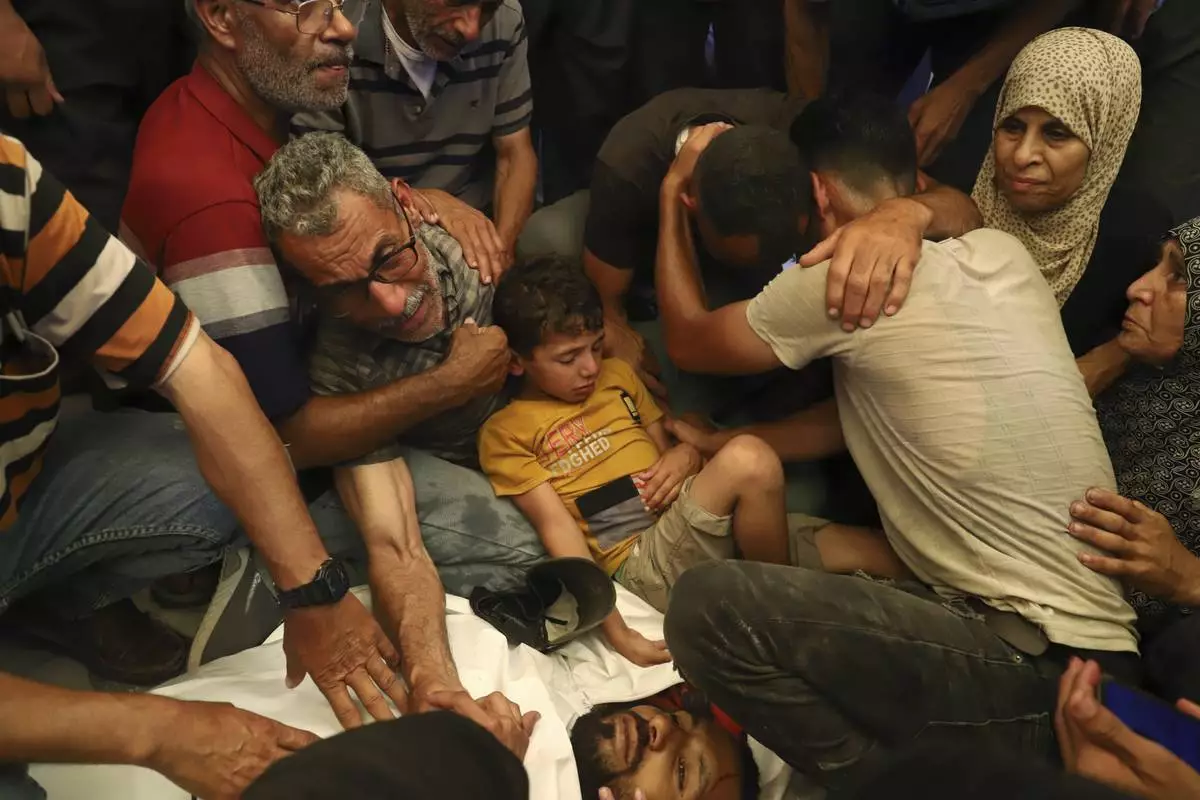
FILE - Ata Qasas, center left, mourns over the body of his son Rashad Qasas, who was killed while heading to an aid distribution hub, during his funeral in Rafah, southern Gaza Strip, Wednesday, June 11, 2025. (AP Photo/Mariam Dagga, File)
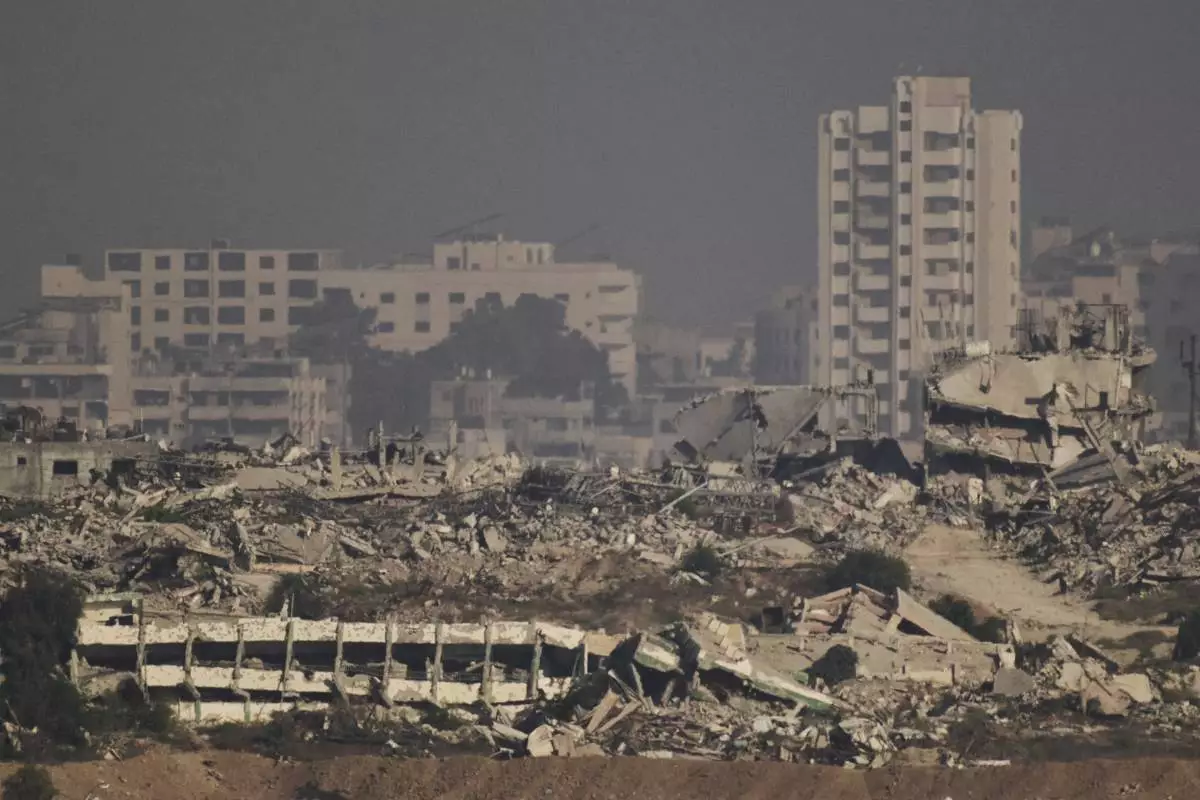
Buildings that were destroyed during Israeli ground and air operations stand in the northern Gaza Strip as seen from southern Israel, Monday, Aug. 25, 2025. (AP Photo/Leo Correa)
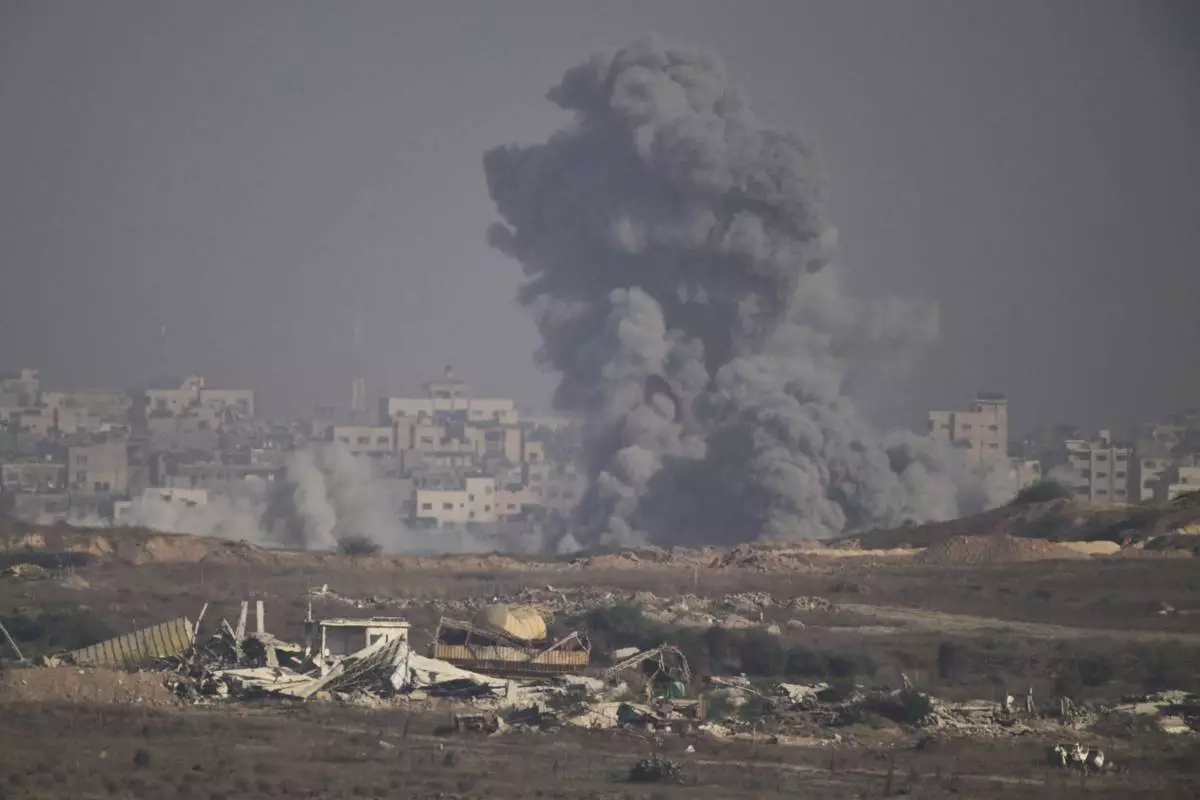
Smoke rises to the sky following an Israeli airstrike in the northern Gaza Strip as seen from southern Israel, Monday, Aug. 25, 2025. (AP Photo/Leo Correa)
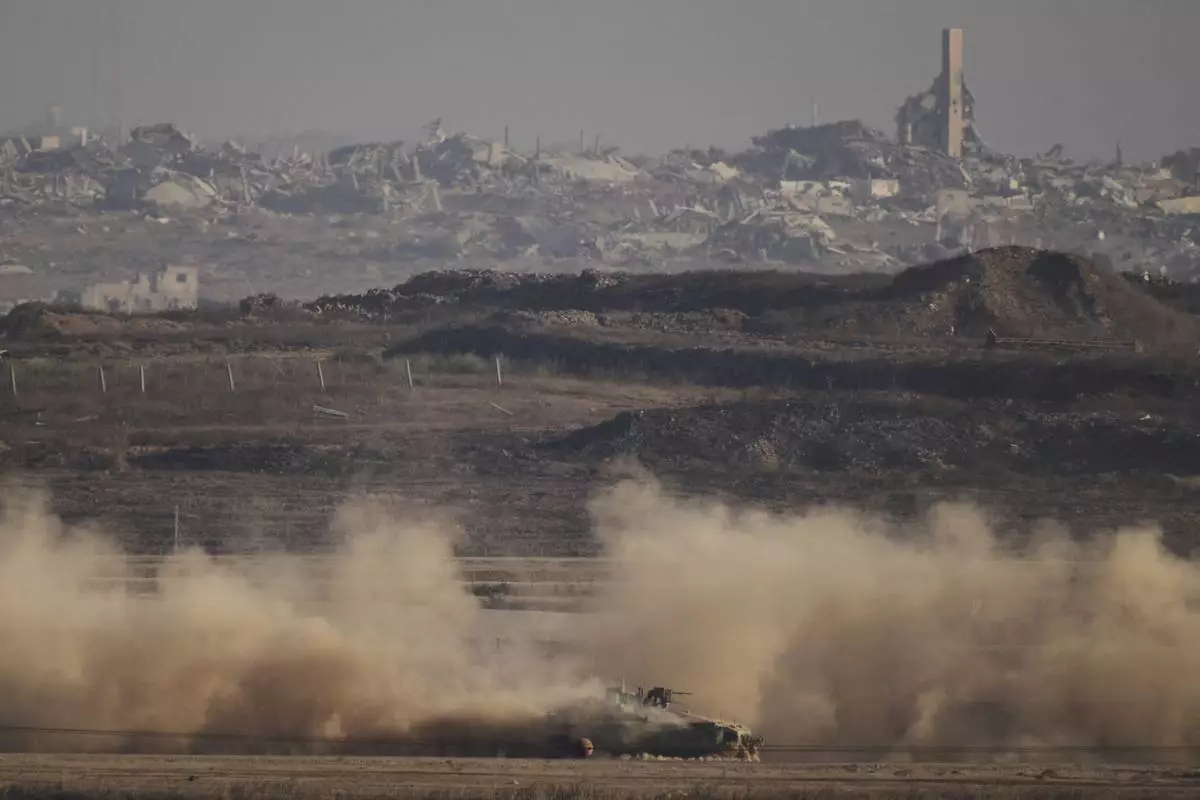
An Israeli armoured personnel carrier (APC) moves through the Israeli-Gaza border, as seen from southern Israel, Monday, Aug. 25, 2025. (AP Photo/Leo Correa)
Several Middle Eastern allies of the United States have urged the Trump administration to hold off on strikes against Iran for the government’s deadly crackdown on protesters, according to an Arab diplomat familiar with the matter.
Top officials from Egypt, Oman, Saudi Arabia and Qatar have raised concerns in the last 48 hours that a U.S. military intervention would shake the global economy and destabilize an already volatile region, said the diplomat who spoke on condition of anonymity to describe the sensitive conversations.
Oil prices fell Thursday as the markets appeared to take note of President Donald Trump’s shifting tone as a sign that he’s leaning away from attacking Iran after days of launching blistering threats at Tehran for its brutal crackdown.
Nevertheless, White House press secretary Karoline Leavitt on Thursday maintained that “all options remain on the table” for Trump as he deals with Iran.
Here's the latest:
Exiled Crown Prince Reza Pahlavi told reporters Friday in Washington that he still believes Trump’s promise that “help is on the way” for the Iranian people still stands despite lack of action by the U.S.
Asked if he’s lost faith in the U.S. president, Pahlavi said, “I believe the president is a man of his word. As I said before, how many days it may take? Who knows? Hopefully sooner than later. But as I said before, regardless of whether action is taken or not, we as Iranians have no choice to carry on the fight.”
There had been reports that Pahlavi met over the weekend with Trump’s envoy Steve Witkoff, but Pahlavi refused to discuss any meetings with U.S. officials, including whether he’ll directly meet Trump.
“I may put a tariff on countries if they don’t go along with Greenland,” the president said, without providing details. “We need Greenland for national security.”
Trump for months has insisted the U.S. should control Greenland, a self-governing territory that’s part of the kingdom of Denmark.
But he’d not previously mentioned using tariffs to try and force the issue.
European leaders have joined Denmark in saying the U.S. can’t control the world’s largest island.
The department’s Office for Civil Rights has opened fewer than 10 sexual violence investigations nationwide since it was hit by mass layoffs last March, according to internal data obtained by The Associated Press.
Previously, it had been opening dozens of such investigations a year.
The layoffs last year left half as many lawyers to investigate complaints of discrimination based on race, sex or disability in schools.
At the same time, the administration has doubled down on sexual discrimination cases of another kind. Trump officials have used Title IX, a 1972 gender-equality law, against schools that make accommodations for transgender students and athletes. The Office for Civil Rights has opened nearly 50 such investigations since Trump took office.
▶ Read more about Education Department sexual violence investigations
The president quickly turned his health care forum into a grievance session against Democrats and a bragging session on the votes he’s gotten in rural America.
“I’m all about the rural community. … We’re taking care of those great people,” he said, arguing that former President Barack Obama “didn’t care about the rural community, to be totally blunt.”
“The Democrats are so horrible toward the rural community,” Trump added. He asked voters to “remember ... in the midterms” that Democrats did not back his “Big Beautiful Bill” that included $10 billion for rural healthcare this year.
Trump effectively blamed Obama’s “Un-Affordable Care Act” for rural hospital closures and financial struggles. In truth, KFF has found that rural hospitals closed at a higher rate in states that did not expand Medicaid under Democrats’ 2010 health care overhaul than in states that did expand to take in more federal money.
“I actually want to keep you where you are, if you know the truth,” Trump told Kevin Hassett, the director of the National Economic Council.
Trump made the comment at a White House event on rural health, drawing laughter in the room. But it wasn’t clear the president himself was joking.
It comes as Trump is believed to be in final interviews with potential replacements for the Fed’s current chair, Jerome Powell, a frequently target of Trump’s public attacks.
“We don’t want to lose him Susie,” Trump said of Hassett to White House chief of staff Susie Wiles, who also at the health event. “We’ll see how it all works out.”
The White House is touting health care spending across small-town America intended to transform how care is delivered in places that have lost many hospitals and providers.
A look at some numbers:
That makes him the highest ranking U.S. official to visit the country following the U.S. military strike which captured former leader Nicolás Maduro.
Thursday’s meeting, first reported by The New York Times, was confirmed Friday by a U.S. government official who spoke on condition of anonymity because they weren’t authorized to discuss the matter publicly.
The official said the meeting in Caracas came at President Trump’s direction and was intended to demonstrate the U.S. desire for a better relationship with Venezuela. The official said Ratcliffe discussed potential economic collaboration with the U.S. and warned that Venezuela can never again allow the presence of American adversaries, including drug traffickers.
— David Klepper
As Attorney General Pam Bondi approaches her first year on the job, the firings of Justice Department attorneys have defined her turbulent tenure. The terminations and a larger voluntary exodus of lawyers have erased centuries of combined experience and left the department with fewer career employees to act as a bulwark for the rule of law at a time when President Trump, a Republican, is testing the limits of executive power by demanding prosecutions of his political enemies.
Interviews by The Associated Press of more than a half-dozen fired employees offer a snapshot of the toll throughout the department. The departures include lawyers who prosecuted violent attacks on police at the U.S. Capitol on Jan. 6, 2021, environmental, civil rights and ethics enforcers, counterterrorism prosecutors, immigration judges and attorneys who defend administration policies. They continued this week, when several prosecutors in Minnesota moved to resign amid turmoil over an investigation into the shooting of a woman by an Immigration and Customs Enforcement officer.
▶ Read more about firings at the Justice Department
The White House and a bipartisan group of governors are pressuring the operator of the mid-Atlantic power grid to take urgent steps to boost energy supply and curb price hikes, holding a Friday event aimed at addressing a rising concern among voters about the enormous amount of power used for artificial intelligence ahead of elections later this year.
The White House said its National Energy Dominance Council and the governors of several states, including Pennsylvania, Ohio and Virginia, want to try to compel PJM Interconnection to hold a power auction for tech companies to bid on contracts to build new power plants.
The Trump administration and governors will sign a statement of principles toward that end Friday.
▶ Read more about the administration and AI-driven power shortages
The Justice Department’s investigation into Federal Reserve Chair Jerome Powell has brought heightened attention to a key drama that will play out at the central bank in the coming months: Will Powell leave the Fed when his term as chair ends, or will he take the unusual step of remaining a governor?
Powell’s term as Fed chair ends May 15, but because of the central bank’s complex structure, he has a separate term as one of seven members of its governing board that lasts until January 31, 2028. Historically, nearly all Fed chairs have stepped down from the board when they’re no longer chair. But Powell could be the first in nearly 50 years to stay on as a governor.
Many Fed-watchers believe the criminal investigation into Powell’s testimony about cost overruns for Fed building renovations was intended to intimidate him out of taking that step. If Powell stays on the board, it would deny the White House a chance to gain a majority, undercutting the Trump administration’s efforts to seize greater control over what has for decades been an institution largely insulated from day-to-day politics.
▶ Read more about Federal Reserve Chair Jerome Powell
Trump on Thursday announced the outlines of a health care plan he wants Congress to take up as Republicans have faced increasing pressure to address rising health costs after lawmakers let subsidies expire.
The cornerstone is his proposal to send money directly to Americans for health savings accounts so they can handle insurance and health costs as they see fit. Democrats have rejected the idea as a paltry substitute for the tax credits that had helped lower monthly premiums for many people.
Trump’s plan also focuses on lowering drug prices and requiring insurers to be more upfront with the public about costs, revenues, rejected claims and wait times for care.
Trump has long been dogged by his lack of a comprehensive health care plan as he and Republicans have sought to unwind former President Barack Obama’s signature legislation, the Affordable Care Act. Trump was thwarted during his first term in trying to repeal and replace the law.
▶ Read more about Trump’s health care plan
Most American presidents aspire to the kind of greatness that prompts future generations to name important things in their honor.
Donald Trump isn’t leaving it to future generations.
As the first year of his second term wraps up, his Republican administration and allies have put his name on the U.S. Institute of Peace, the Kennedy Center performing arts venue and a new class of battleships.
That’s on top of the “Trump Accounts” for tax-deferred investments, the TrumpRx government website soon to offer direct sales of prescription drugs, the “Trump Gold Card” visa that costs at least $1 million and the Trump Route for International Peace and Prosperity, a transit corridor included in a deal his administration brokered between Armenia and Azerbaijan.
On Friday, he plans to attend a ceremony in Florida where local officials will dedicate a 4-mile (6-kilometer) stretch of road from the airport to his Mar-a-Lago estate in Palm Beach as President Donald J. Trump Boulevard.
▶ Read more about Trump’s renaming efforts
Nearly a year into his second term, Trump’s work on the economy hasn’t lived up to the expectations of many people in his own party, according to a new AP-NORC survey.
The poll from The Associated Press-NORC Center for Public Affairs Research finds a significant gap between the economic leadership Americans remembered from Trump’s first term and what they’ve gotten so far as he creates a stunning level of turmoil at home and abroad.
Just 16% of Republicans say Trump has helped “a lot” in addressing the cost of living, down from 49% in April 2024, when an AP-NORC poll asked Americans the same question about his first term.
At the same time, Republicans are overwhelmingly supportive of the president’s leadership on immigration — even if some don’t like his tactics.
There is little sign overall, though, that the Republican base is abandoning Trump. The vast majority of Republicans, about 8 in 10, approve of his job performance, compared with 4 in 10 for adults overall.
▶ Read more about the poll’s findings
Several Middle Eastern allies of the United States have urged the Trump administration to hold off on strikes against Iran for the government’s deadly crackdown on protesters, according to an Arab diplomat familiar with the matter.
Top officials from Egypt, Oman, Saudi Arabia and Qatar have raised concerns in the last 48 hours that a U.S. military intervention would shake the global economy and destabilize an already volatile region, said the diplomat who spoke on condition of anonymity to describe the sensitive conversations.
Oil prices fell on Thursday as the markets appeared to take note of President Donald Trump’s shifting tone as a sign that he’s leaning away from attacking Iran after days of launching blistering threats at Tehran for its brutal crackdown.
Nevertheless, White House press secretary Karoline Leavitt on Thursday maintained that “all options remain on the table” for Trump as he deals with Iran.
▶ Read more about Trump and Iran
— Matthew Lee, Aamer Madhani and Ben Finley
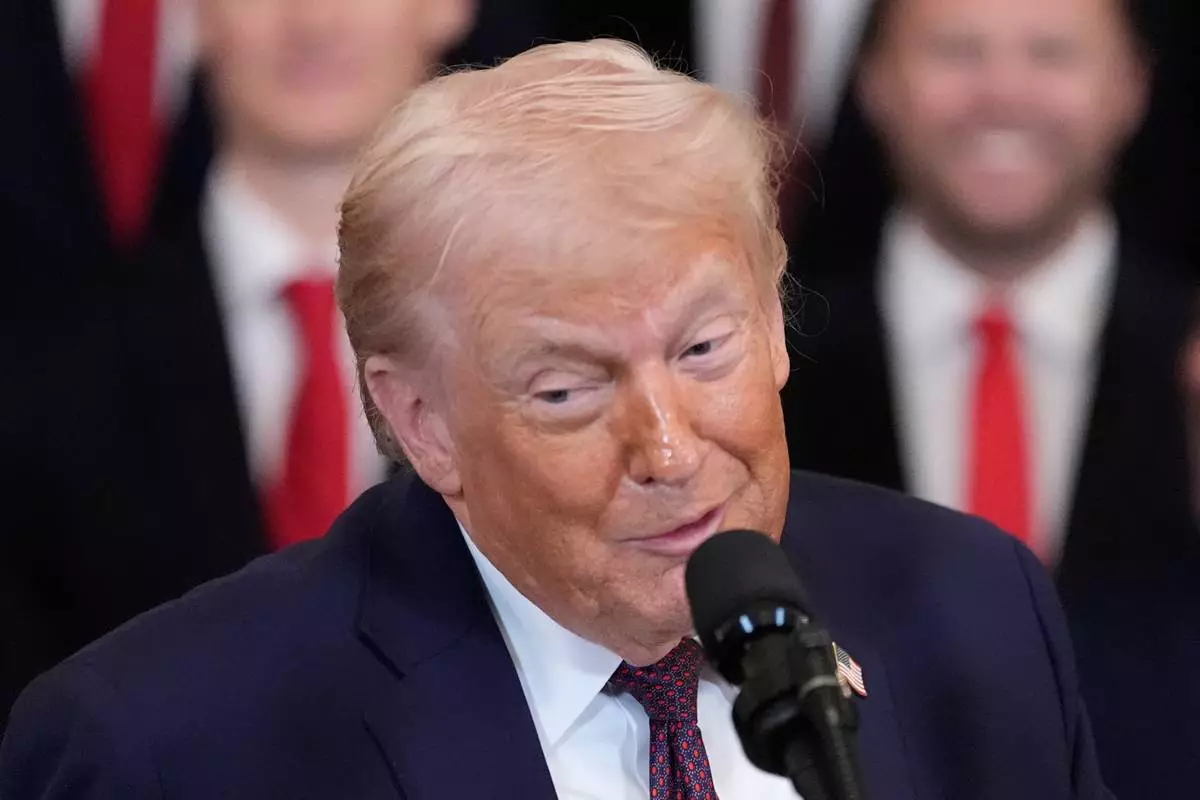
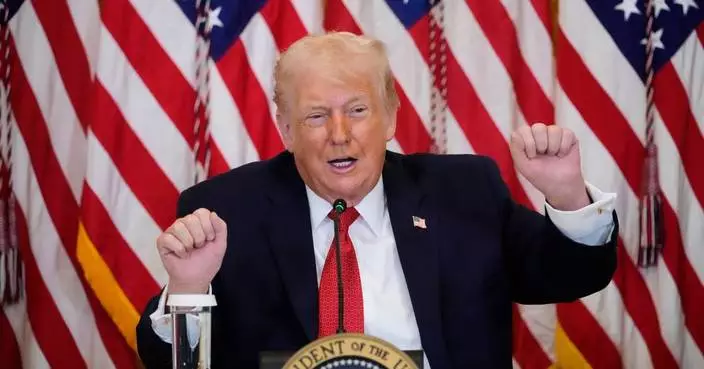
President Donald Trump speaks during an event to honor the 2025 Stanley Cup Champion Florida Panthers in the East Room of the White House, Thursday, Jan. 15, 2026, in Washington. (AP Photo/Alex Brandon)