Skip to Content Facebook Feature Image

Mariam Dagga, AP freelance journalist in Gaza, was killed by an Israeli strike

News

Mariam Dagga, AP freelance journalist in Gaza, was killed by an Israeli strike
News

News

Mariam Dagga, AP freelance journalist in Gaza, was killed by an Israeli strike

2025-08-26 03:54 Last Updated At:04:00

Mariam Dagga, a visual journalist who freelanced for The Associated Press and other news organizations and produced harrowing images of the war in Gaza, was killed Monday by an Israeli strike on a hospital. She was 33.

Through photographs and video, Dagga captured the lives of ordinary Palestinians facing extraordinary challenges: families displaced from homes, people crowding around aid trucks, mourners attending funerals and doctors treating wounded or malnourished children.

During the war, Dagga regularly based herself at Nasser Hospital in Khan Younis. She was among 20 people, including five journalists, killed there Monday by Israeli strikes, according to health officials and news organizations.

“She worked under incredibly difficult circumstances to bring stories from Gaza to the world, particularly coverage of the war’s impact on children," said Julie Pace, AP’s Executive Editor and Senior Vice President. "We are devastated by her death and urgently seeking more clarity on the strike.”

The Israel-Hamas war has been one of the deadliest conflicts for media workers, with at least 189 Palestinian journalists killed by Israeli fire in Gaza in the 22-month conflict, according to the Committee to Protect Journalists. Comparatively, 18 journalists have been killed so far in Russia’s war in Ukraine, according to the CPJ.

In an April interview with Eye on Palestine — a social media platform — Dagga appealed to the international community to protect journalists in Gaza and to help end the war. In a video message Sunday, one of her last social media posts, she warned that nowhere in Gaza was safe.

“Every place is dangerous, is hit by airstrikes ... In every home there is a story. In every home there is a detainee. In every home there is suffering.”

Born in Khan Younis, Dagga studied journalism and graduated from the Al-Aqsa University in Gaza. She began working as a journalist in 2015, and was among the few women visual journalists covering the war in Gaza.

She is survived by a 13-year-old son who moved at the start of the war to the United Arab Emirates to live with his father.

When she wasn't working, she was often on the phone with her son, who wanted to return to Khan Younis to be with her, she told colleagues. In her will, which Dagga had shared with a friend, she addressed her son directly: “Never forget me and remember that your mother did everything she could to make you happy, comfortable, and at ease.”

At her funeral Monday, relatives and colleagues caressed her cheeks through tears. Her body lay shrouded in white, a single red flower placed gently beside her face.

Before the war, she had given a kidney to her father, according to her sister, Nada Dagga.

Displaced from home, she was forced to move multiple times during the war, but she never stopped working.

“She was always ready,” said AP reporter Sarah El Deeb, who is based in Beirut. “Dagga stayed close to Nasser hospital and was able to see through the cruelty of the war with the skills and patience to report on its cost to the people of Gaza, its doctors, children and mothers,” she said.

For her recent coverage of malnourished children in Gaza, Dagga won an internal AP award recognizing the strongest work produced each week.

Dagga's editor at the Independent Arabia media outlet, Adhwan Alahmari, said she was among the most ethical, dedicated reporters and photographers. He called the strike a “flagrant violation of international laws.''

Wafaa Shurafa, AP’s senior producer in Gaza who worked with Dagga daily, said she never hesitated to help anyone. Dagga never complained despite the severe hardships she faced, was always quick with a laugh, and was deeply respected and loved by her colleagues, friends and family, Shurafa said.

Shurafa said that she missed a call from Dagga after the first strike hit the hospital on Monday. When she called back, Dagga didn't answer.

“I was nervous at first because she didn’t answer, I was super worried, I thought she was filming, but I never imagined she was killed," she said.

“She didn’t answer, and she never will again.”

This story has been corrected to reflect that at least 189 journalists have been killed in Gaza during the 22-month Israel-Hamas war.

Magdy reported from Cairo, Mednick reported from Tel Aviv, Israel. Brian Melley in London contributed to this story.

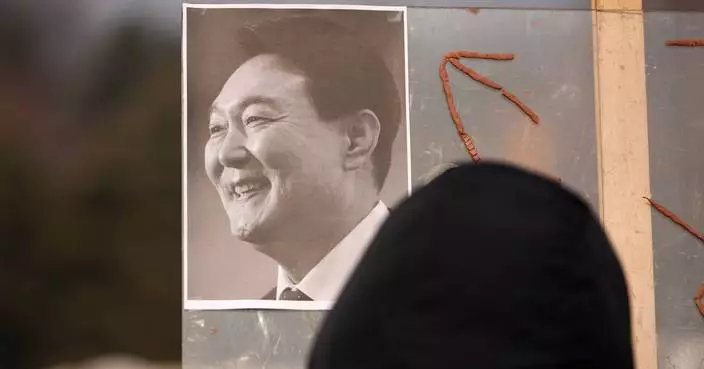
Freelance journalist Mariam Dagga, 33, who had been working with the Associated Press and other outlets during the Gaza war, poses for a portrait in Khan Younis, southern Gaza Strip, on June 14, 2024. She was among at least 19 people, including four journalists, killed Monday in Israeli strikes on Nasser Hospital in Khan Younis. (AP Photo/Jehad Alshrafi)
Freelance journalist Mariam Dagga, 33, who had been working with the Associated Press and other outlets during the Gaza war, poses for a portrait in Khan Younis, southern Gaza Strip, on June 14, 2024. She was among at least 19 people, including four journalists, killed Monday in Israeli strikes on Nasser Hospital in Khan Younis. (AP Photo/Jehad Alshrafi)

SAN FRANCISCO (AP) — Coach Steve Kerr spoke with Warriors forward Jonathan Kuminga during the morning shootaround Thursday about the player's situation being out of the rotation for more than a month now with expectations he will be traded before the deadline next month.

“We talked this morning and that’s all private,” Kerr said. “I will keep coaching him, he’ll be part of the team, he’ll be here. It is what it is.”

Kerr discounted any issues between them as being reason Kuminga has reportedly requested a trade from the team after not being used in the last 14 games since Dec. 18 and 17 of 18 — though he has been listed as injured for nine games this season.

“Our relationship is fine,” Kerr said before Golden State's 126-113 win over the New York Knicks. “There's not a whole lot I can say about the other stuff. It is what it is, difficult situation for everybody and part of this league, part of the job. We just keep moving forward.”

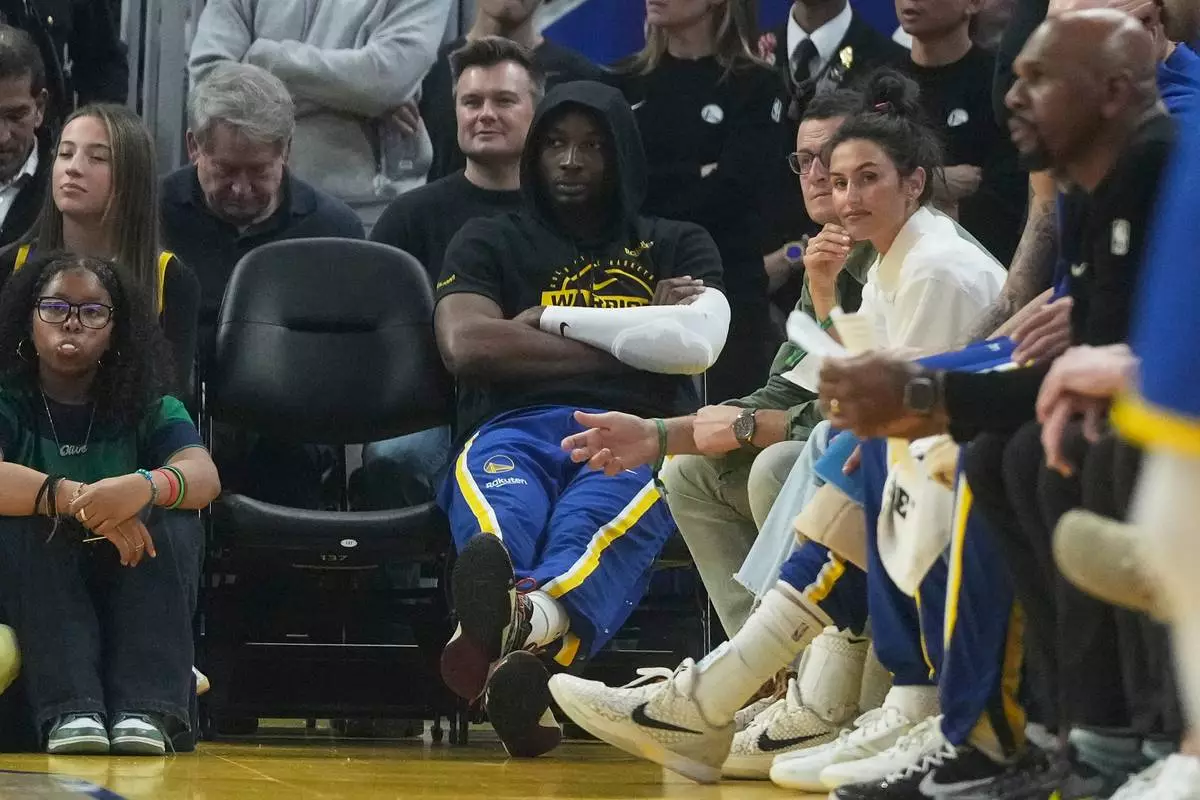
Kuminga has been training much of the time on his own, shooting on the Warriors’ practice floor out of the eyes of fans at Chase Center. He wears a black hood over his head on the end of the bench during games. Perhaps Kuminga and the Warriors weren't a great fit from Day 1 — not that it's his fault — and he might be eager to leave and start fresh elsewhere. If so, the Golden State brass might want to make sure he doesn't get hurt before trying to trade him.

Yet nobody has taken issue with his work ethic, at least not publicly. Kuminga, selected seventh overall in the 2021 draft, has been known to stay long after games shooting on the arena's main floor.

“It’s not a distraction at all. It’s a very unique situation but our job is just to keep playing, keep winning, it’ll resolve itself one way or the other,” Stephen Curry said.

The 23-year-old from the Democratic Republic of the Congo has appeared in just 18 games total with 13 starts, averaging 11.8 points, 6.2 rebounds and 2.6 assists.

On Sept. 30, he agreed to a two-year contract that could be worth up to $46.5 million if the team were to exercise its option for 2026-27. Kuminga had had a $7.9 million qualifying offer in hand since June 29 but was also weighing other options and he missed media day.

He has long had the support and confidence of teammates — like Jimmy Butler saying he has been having Kuminga over and continuing to encourage him.

“We love JK in this locker room, that's not going to change,” Butler said postgame. “If he happens to not be in here, we'll still rock with JK. I speak for everybody. We love the guy. I wish him the best here, I wish him the best wherever. It doesn't change. We don't listen to the noise, I hope he don't listen to the noise he keep coming here with a smile doing what he's supposed to do and being the ultimate pro.”

Kuminga missed much of last season with a right ankle injury. He averaged 15.3 points, 4.6 rebounds and 2.2 assists in 24.3 minutes over 47 games with 10 starts. He also scored 15.3 points per game over eight playoff games while shooting 48.4% from the floor and making 40% of his 3-point attempts. That included a career-best 30-point performance in Game 3 of the Western Conference semifinals against the Minnesota Timberwolves.

Kerr said the uncertainty around Kuminga's future “won't be a distraction.”

“Jonathan's a great young guy, his teammates like him,” Kerr said. "He's handling himself well.”

AP NBA: https://apnews.com/NBA

Golden State Warriors forward Jonathan Kuminga, middle, sits near the team bench during the first half of an NBA basketball game against the New York Knicks in San Francisco, Thursday, Jan. 15, 2026. (AP Photo/Jeff Chiu)

Golden State Warriors forward Jonathan Kuminga, middle, sits near the team bench during the first half of an NBA basketball game against the New York Knicks in San Francisco, Thursday, Jan. 15, 2026. (AP Photo/Jeff Chiu)

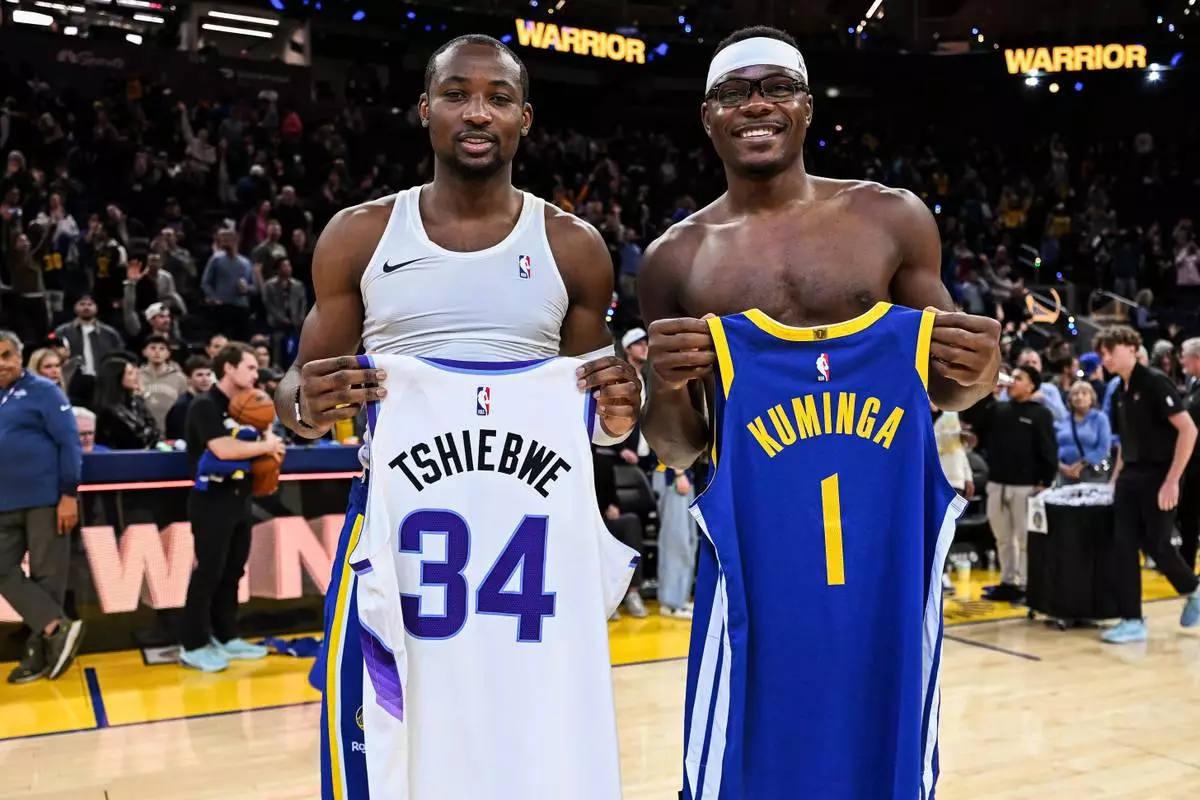
Golden State Warriors forward Jonathan Kuminga (1) and Utah Jazz center Oscar Tshiebwe (34) swap jerseys after the Warriors defeat the Jazz during an NBA basketball game, Saturday, Jan. 3, 2026, in San Francisco. (AP Photo/Justine Willard)

Golden State Warriors forward Jonathan Kuminga (1) and Utah Jazz center Oscar Tshiebwe (34) swap jerseys after the Warriors defeat the Jazz during an NBA basketball game, Saturday, Jan. 3, 2026, in San Francisco. (AP Photo/Justine Willard)

Recommended Articles