LA PAZ, Bolivia (AP) — Jorge “Tuto” Quiroga was once seen as a sideshow in Bolivia’s presidential races, his pleas for free markets and small government falling on deaf ears in a country dominated by budget-busting populism.
Now, after three failed presidential bids, the collapse of Bolivia’s long-ruling leftist party and a brazen campaign promising to rescue the nation from its worst economic crisis in decades, Bolivia's most right-wing candidate is one of two men headed to an unprecedented runoff election to lead this landlocked nation of 12 million.
In an interview Monday with The Associated Press, Quiroga vowed to reshape Bolivia’s state-directed economy into a capitalist order based on markets and private property.
“I am here to change everything, dramatically and radically,” Quiroga, 65, a regular on the think tank speaker circuit and industrial engineering graduate of Texas A&M University, said from his sleek apartment in Bolivia's capital of La Paz. “I will open Bolivia to the world and bring the world to Bolivia."
A former vice president who briefly held the presidency after then-President Hugo Banzer stepped down for health reasons in 2001, Quiroga faces off against another pro-business candidate, centrist Sen. Rodrigo Paz, on Oct. 19.
Quiroga's most drastic proposal involves transferring shares in Bolivia’s abundant minerals from the government to individual citizens, placing most of the economy in private hands and dismantling the key pillar of resource nationalism that has held sway here for almost two decades under the Movement Toward Socialism, or MAS, party.
“It’s about giving the people what belongs to them," Quiroga said of his plan to unleash what he called a “liberal ownership revolution." In what apparently amounts to a giant mutual fund for investment, the scheme entitles all Bolivian adults to stakes in the country’s vital lithium, iron and gas industries.
“If people tell you that’s right-wing or libertarian, let them say what they want," he said.
In explaining the plan, Ramiro Cavero, the head of Quiroga's economic team, rejected use of the term privatization — a hot-button word here ever since the Spanish exploited Bolivia’s silver deposits to fund its empire.
Strife over whether to nationalize Bolivia’s gas reserves even triggered bloody unrest and threats of secession by mineral-rich parts of the country in 2003, fueling the rise of firebrand coca-farming union leader Evo Morales, who nationalized the country’s key industries after becoming president.
But in recent years the state-run companies have become inefficient and unprofitable. The leftist government has struggled to attract foreign investment.
Cavero said the shares in state-owned companies would be doled out to individuals, not companies. Bolivians would be able to sell their shares to foreign firms, but not for several years.
Morales held power from 2006 until his 2019 ouster under pressure from the military following a disputed reelection to an unprecedented fourth term.
He is now holed up in Bolivia’s tropics, evading an arrest warrant on charges related to his sexual relationship with a 15-year-old girl.
Asked about the fate of his longtime political foe, Quiroga spoke carefully.
“There is no impunity for anyone,” he said. “I will apply the law in every square meter of Bolivia, at all times, to all people."
When pressed on whether he would ensure the arrest of Morales, he answered that “arrest warrants must be fulfilled for everyone.”
During the hourlong interview, Quiroga referred to Morales as a “big mouth,” “bully” and “greatest coward in Bolivia’s history.”
Underestimated by pollsters, Quiroga's challenger, Paz, surged from the bottom of the eight-candidate field to capture first place in the Aug. 17 elections.
His moderate tone and populist proposals like bonuses for mothers and better pensions for retirees have appealed to disillusioned MAS party voters at once desperate for change but wary of Quiroga’s tough austerity.
Quiroga, who served in as finance minister from 1992–1993 in the neoliberal government of Paz’s father, former President Jaime Paz Zamora, criticized his rival’s plans as vague and unrealistic.
“Their late rise meant that there was no real scrutiny of their proposals,” Quiroga said of Paz and his popular running mate, ex-police captain Edman Lara.
He questioned how Bolivia’s bankrupt government would cough up what he estimated to be the $4 billion needed to fund Paz's proposed pension increases. “You have to ask about profitability. ... Hyperinflation would explode.”
To halt Bolivia’s runaway inflation and replenish scarce U.S. dollar reserves, Quiroga said that his first order of business would be to secure a $12 billion bailout from the International Monetary Fund and other multinational lenders.
“That money is to save the financial system," he said.
The influx of cash, he added, would allow Bolivia to import badly needed fuel, alleviating the country’s crippling shortages.
After steering Bolivia out of the tailspin, Quiroga said he would lure foreign investors by slashing corporate and sales taxes and offering companies guarantees of international arbitration.
He promised to free up farmers’ access to credit, replace union-held land titles with individual, inheritable ownership rights and reduce state dominance of the gas and mining sectors to oversight roles.
“On Nov. 8 we'll begin by approving a new agricultural law, a new hydrocarbons law, a new mining law, a new lithium law,” he said, referring to the inauguration day.
After years in which leftist ideology determined Bolivia's allies and enemies, Quiroga pledged to reshape the country's foreign policy to maximize economic opportunities.
“In the region I will demand democracy and freedom, outside of it I will defend Bolivia’s interests,” he said.
Since Morales first entered office, relations with the United States have been hostile. His MAS party aligned itself with Russia, China and Iran on the international stage and Venezuela and Cuba in the region. Bolivia also severed ties with Israel in 2023 at the start of its war with Hamas in Gaza.
Quiroga said he would “get along with everyone." But he said he plans to distance Bolivia from Iran and withdraw his country's recognition of Venezuela’s autocratic President Nicolás Maduro as winner of last year's contested elections.
He briefly expressed hope for a free-trade agreement with the Trump administration, before coming down to earth.
"The answer will probably be no, because U.S. policy right now is more about raising tariffs,” he said. “I respect that.”
DeBre reported from Buenos Aires, Argentina.
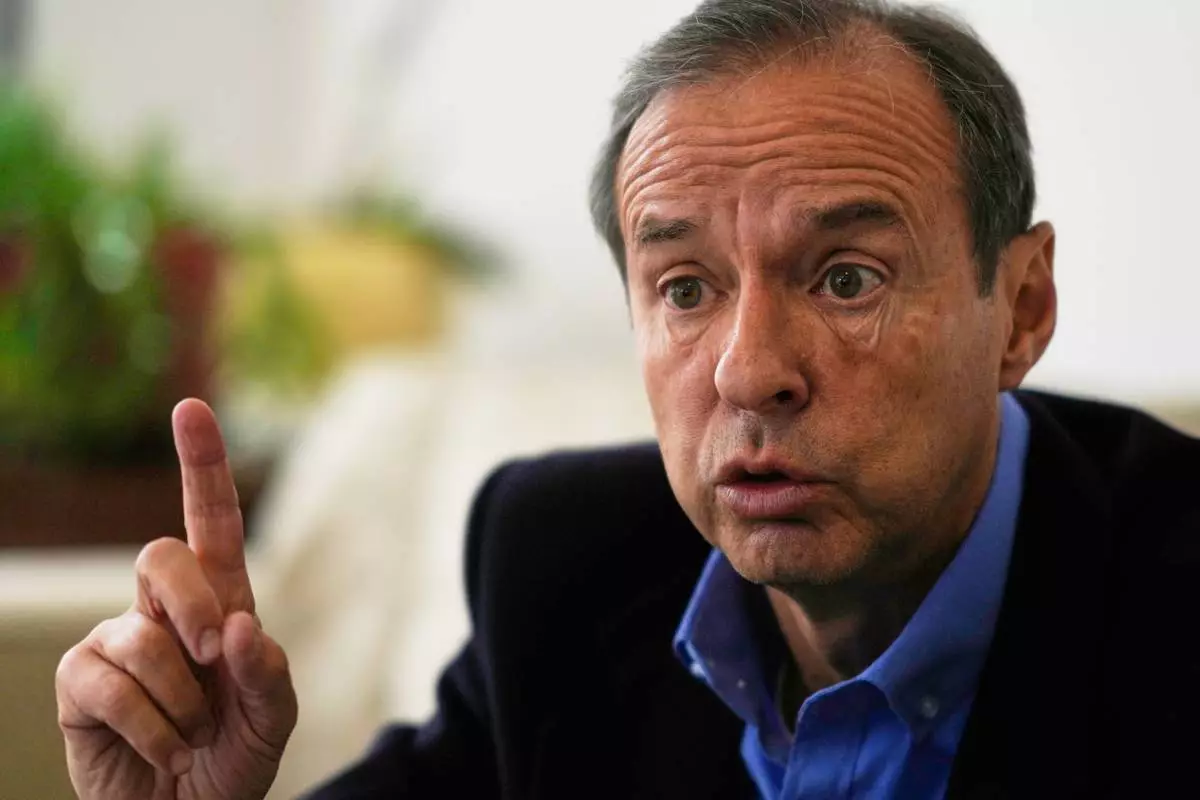
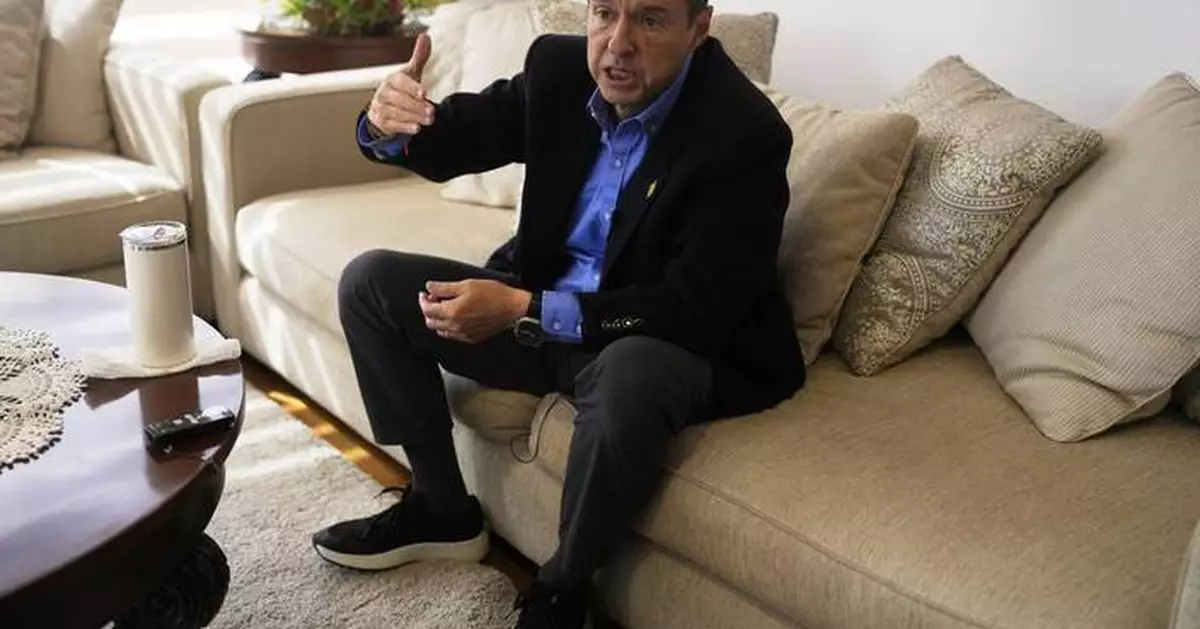
Presidential candidate Jorge "Tuto" Quiroga gives an interview in La Paz, Bolivia, Monday, Aug. 25, 2025. (AP Photo/Juan Karita)
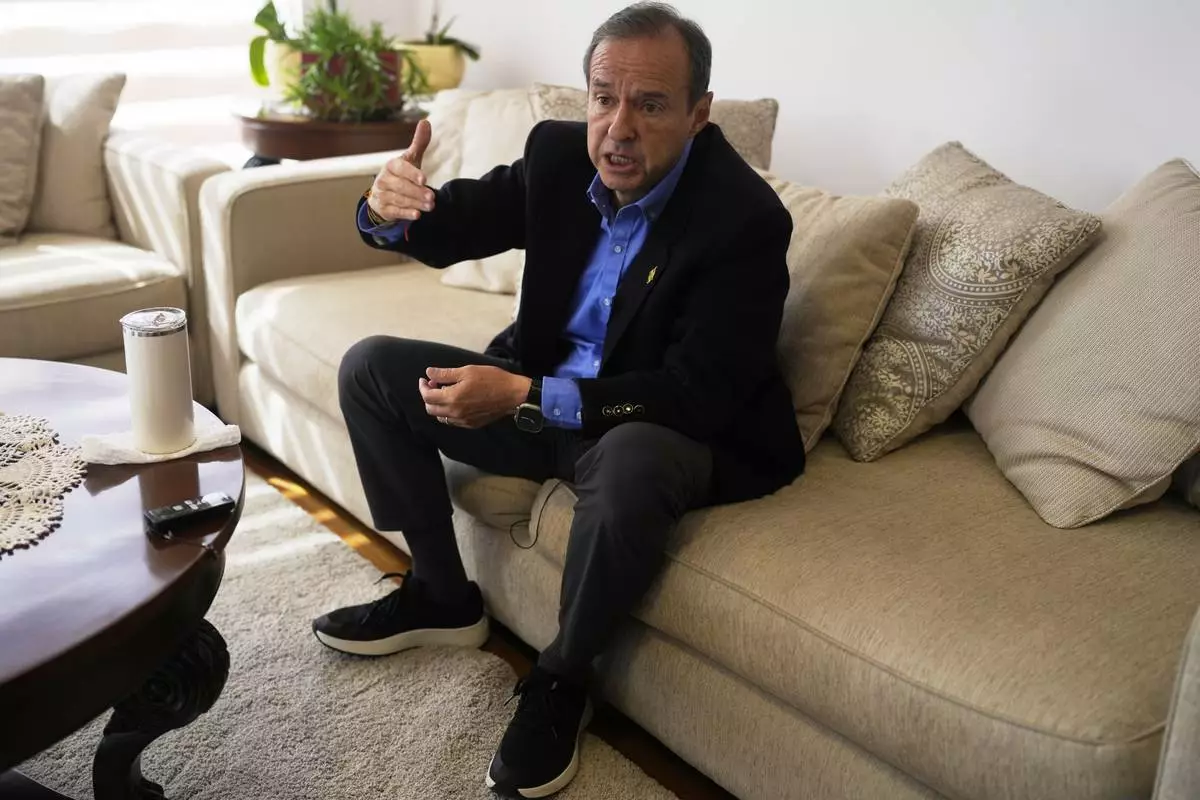
Presidential candidate Jorge "Tuto" Quiroga gives an interview in La Paz, Bolivia, Monday, Aug. 25, 2025. (AP Photo/Juan Karita)