Skip to Content Facebook Feature Image

Hong Kong Reports 180 New HIV Cases Amid Concerns Over Late Diagnosis Rates

HK

Hong Kong Reports 180 New HIV Cases Amid Concerns Over Late Diagnosis Rates
HK

HK

Hong Kong Reports 180 New HIV Cases Amid Concerns Over Late Diagnosis Rates

2025-08-26 14:30 Last Updated At:14:38

CHP announces local HIV/AIDS situation for first half of 2025

The Centre for Health Protection (CHP) of the Department of Health (DH) announced today (August 26) that a total of 180 new cases of Human Immunodeficiency Virus (HIV) infection and 47 new cases of Acquired Immunodeficiency Syndrome (AIDS) were reported in the first half of 2025 in Hong Kong. In response to the persistently high proportion of late presentation, the DH encouraged the public to undergo HIV antibody testing and to use condoms regularly and correctly to minimise the risk of HIV infection.

The 180 new HIV cases involve 140 men and 40 women aged between 20 and 75. Investigations revealed that over 95 per cent of the cases were infected through sexual contact, of which more than half (57 per cent) were acquired via homosexual or bisexual contact, and the rest were acquired via heterosexual contact. The number of new cases of HIV infection in Hong Kong has declined for the ninth consecutive year. Compared to the same period last year (185 cases), the number of new HIV cases has slightly decreased by 3 per cent. The cumulative total of locally reported HIV infections since 1984 is 12 583.

The new AIDS cases include 33 men and 14 women. Since 1985, a cumulative total of 2 604 AIDS cases has been reported in Hong Kong. The most common AIDS-defining illness was Pneumocystis pneumonia.

"The prevalence of HIV infection among the general public in Hong Kong remained at 0.1 per cent, well below the global average, and the number of new HIV cases recorded also continues to decline, demonstrating the effectiveness of AIDS control and prevention in Hong Kong," said the Consultant (Special Preventive Programme) of the Public Health Services Branch of the CHP of the DH, Dr Bonnie Wong.

"However, the proportion of late presenters rose from 48 per cent from the same period last year to 58 per cent, which warrants attention. In recent years, the proportion of late presenters has been as high as 40 to 60 per cent. The CHP has conducted in-depth analyses and found that the proportion of late presenters among high-risk populations (such as men who have sex with men and sex workers) was around 40 to 50 per cent, while there was an even higher proportion of late presenters up to 60 to 70 per cent among those who do not belong to high-risk populations. The CHP believed that those who do not belong to high-risk populations may have overlooked they still have the risk of HIV infection even though they do not have frequent high-risk sexual practices, leading to delayed testing and treatment," said Dr Wong.

Late presenters refer to individuals with a very low CD4 cells (one kind of immune cell) count (less than 200 cells/mm3) or those who have already progressed to AIDS at the time of HIV diagnosis. Late presentation indicates that these individuals were not diagnosed and put on treatment in a timely manner at an earlier stage of infection.

Late presentation can lead to an increased risk of opportunistic infections and malignancies, leading to a tenfold increase in mortality rate when compared with other people infected with HIV. In addition, as a result of an unsuppressed viral load, late presenters contribute to an increased risk of HIV transmission in the community.

"Sexual transmission remained the major mode of HIV transmission. Members of the public should use condoms consistently and properly to reduce the risk of acquiring HIV. Moreover, undergoing HIV antibody testing is also essential in AIDS control and prevention. For early detection of infection, people who have had sex should get HIV testing at least once to keep track of their health status, and that people with higher risk of infection (such as those who do not use condoms properly and injecting drug users) should undergo regular screening," said Dr Wong.

Members of the public can undergoHIV antibody testing through the following:
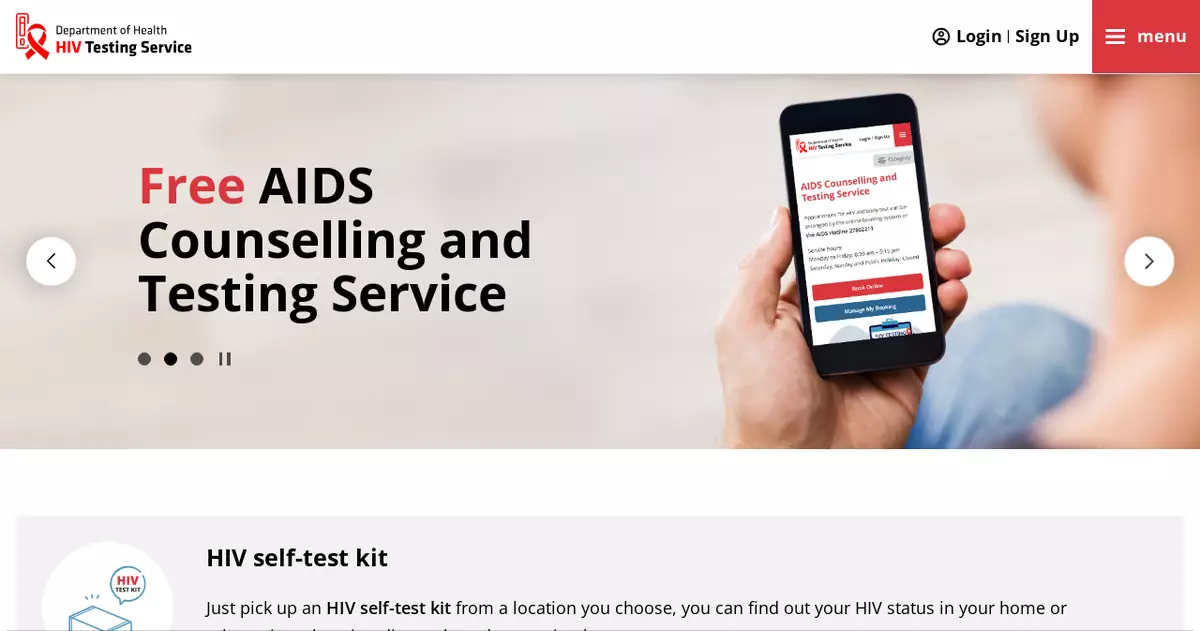
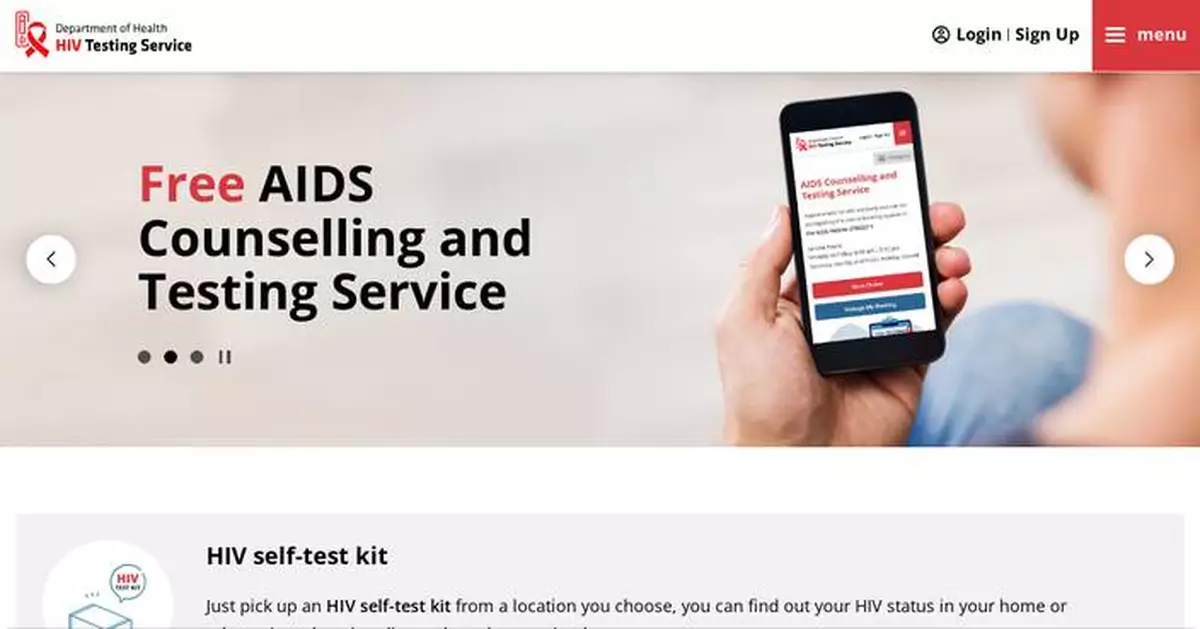
  • reserve a free, anonymous and confidential HIV antibody test by visiting the HIV Testing Service website (www.hivtest.gov.hk) or calling the AIDS Hotline (2780 2211); or
  • order HIV self-test kits (oral fluid-based or blood-based (finger prick) testing kits) on the HIV Testing Service website, and collect the self-test kits at the pick-up location chosen. There are various pick-up locations in Hong Kong.
  • Dr Wong stressed that HIV infection is a manageable chronic disease. People with HIV should seek specialist care and receive HIV treatment as soon as possible to achieve viral suppression and health restoration. Early HIV treatment with antiretroviral drugs can effectively prevent the progression to AIDS and other complications, increasing the chance of survival significantly. Moreover, those who achieve an undetectable level of virus in blood while on treatment will not transmit the virus through sex, i.e. Undetectable = Untransmittable (U=U).

    The public may visit the following pages for more information on prevention and control ofHIV/AIDS: the Virtual AIDS Office,the Red Ribbon Centre, theHIV Testing Service websiteand theGay Men HIV Information website.

    Source: AI-found images

    Source: AI-found images

    Seven persons arrested during anti-illegal worker operation

    The Immigration Department (ImmD) mounted an anti-illegal worker operation codenamed "Contribute" today (January 15).During the operation, ImmD Task Force officers raided premises under renovation in a newly built public housing estate in Sheung Shui district.A total of six suspected illegal workers and one suspected employer were arrested. Thearrested suspected illegal workers comprise six men, aged 22 to 41. Furthermore, one man, aged 45, suspected of employing the illegal workers, was also arrested. An investigation into the suspected employers is ongoing, and the possibility of further arrests is not ruled out.

    Apart from mounting the enforcement operation, ImmD officers and a promotional vehicle have been deployed to distribute "Don't Employ Illegal Workers" leaflets and convey the message in the estate.

    An ImmD spokesman said, "Any person who contravenes a condition of stay in force in respect of him or her shall be guilty of an offence. Also, visitors are not allowed to take employment in Hong Kong, whether paid or unpaid, without the permission of the Director of Immigration. Offenders are liable to prosecution and upon conviction face a maximum fine of $50,000 and up to two years' imprisonment. Aiders and abettors are also liable to prosecution and penalties."

    The spokesman stressed that it is a serious offence to employ people who are not lawfully employable. Under the Immigration Ordinance, the maximum penalty for an employer employing a person who is not lawfully employable, i.e. an illegal immigrant, a person who is the subject of a removal order or a deportation order, an overstayer or a person who was refused permission to land, has been significantly increased from a fine of $350,000 and three years' imprisonment to a fine of $500,000 and 10 years' imprisonment to reflect the gravity of such offences. The director, manager, secretary, partner, etc, of the company concerned may also bear criminal liability. The High Court has laid down sentencing guidelines that the employer of an illegal worker should be given an immediate custodial sentence.

    According to the court sentencing, employers must take all practicable steps to determine whether a person is lawfully employable prior to employment. Apart from inspecting a prospective employee's identity card, the employer has the explicit duty to make enquiries regarding the person and ensure that the answers would not cast any reasonable doubt concerning the lawful employability of the person. The court will not accept failure to do so as a defence in proceedings. It is also an offence if an employer fails to inspect the job seeker's valid travel document if the job seeker does not have a Hong Kong permanent identity card. Offenders are liable upon conviction to a maximum fine of $150,000 and to imprisonment for one year. In that connection, the spokesman would like to remind all employers not to defy the law by employing illegal workers. The ImmD will continue to take resolute enforcement action to combat such offences.

    Under the existing mechanism, the ImmD will, as a standard procedure, conduct an initial screening of vulnerable persons, including illegal workers, illegal immigrants, sex workers and foreign domestic helpers, who are arrested during any operation with a view to ascertaining whether they are trafficking in persons (TIP) and/or forced labour victims. When any TIP and/or forced labour indicator is revealed in the initial screening, the ImmD officers will conduct a full debriefing and identification by using a standardised checklist to ascertain the presence of TIP and/or forced labour elements. Identified TIP and/or forced labour victims will be provided with various forms of support and assistance, including urgent intervention, medical services, counselling, shelter or temporary accommodation and other supporting services. The ImmD calls on TIP and/or forced labour victims to report crimes to the relevant departments immediately.

    For reporting illegal employment activities, please call the dedicated hotline 3861 5000, by fax at 2824 1166, email to anti_crime@immd.gov.hk, or submit "Online Reporting of Immigration Offences" form at www.immd.gov.hk.

    Seven persons arrested during anti-illegal worker operation  Source: HKSAR Government Press Releases

    Seven persons arrested during anti-illegal worker operation Source: HKSAR Government Press Releases

    Seven persons arrested during anti-illegal worker operation  Source: HKSAR Government Press Releases

    Seven persons arrested during anti-illegal worker operation Source: HKSAR Government Press Releases

    Recommended Articles