Skip to Content Facebook Feature Image

Startup women’s leagues on the rise, fueled by popularity of women's sports. But will they last?

Sport

Startup women’s leagues on the rise, fueled by popularity of women's sports. But will they last?
Sport

Sport

Startup women’s leagues on the rise, fueled by popularity of women's sports. But will they last?

2025-08-26 21:59 Last Updated At:22:00

When Justine Siegal and Keith Stein envisioned the United States' first professional women's baseball league in 70 years, they wanted to do it right. So they examined the blueprints of successful women's leagues and studied the pitfalls that caused promising ventures to fail.

Their research helped shape the Women's Professional Baseball League, launching next year, the latest in a wave of ventures looking to capitalize on the unprecedented rise in popularity of women's sports.

More Images
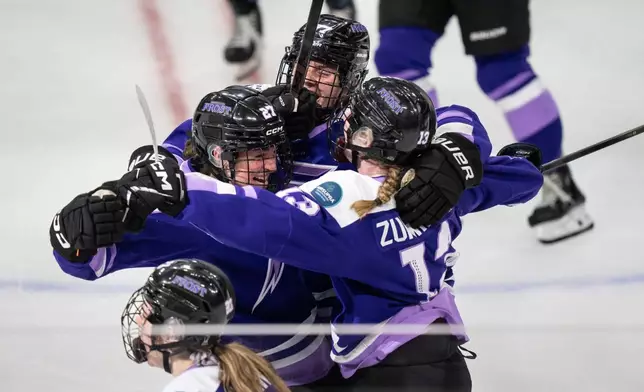
FILE - Minnesota Frost forward Taylor Heise (27), left, is surrounded by teammates, Minnesota Frost forward Britta Curl (77) and Minnesota Frost forward Grace Zumwinkle (13) after she scored the winning goal in overtime of the PWHL Walter Cup in St. Paul, Minn., Wednesday, May 14, 2025. (Renée Jones Schneider/Star Tribune via AP)
FILE - Minnesota Frost forward Taylor Heise (27), left, is surrounded by teammates, Minnesota Frost forward Britta Curl (77) and Minnesota Frost forward Grace Zumwinkle (13) after she scored the winning goal in overtime of the PWHL Walter Cup in St. Paul, Minn., Wednesday, May 14, 2025. (Renée Jones Schneider/Star Tribune via AP)

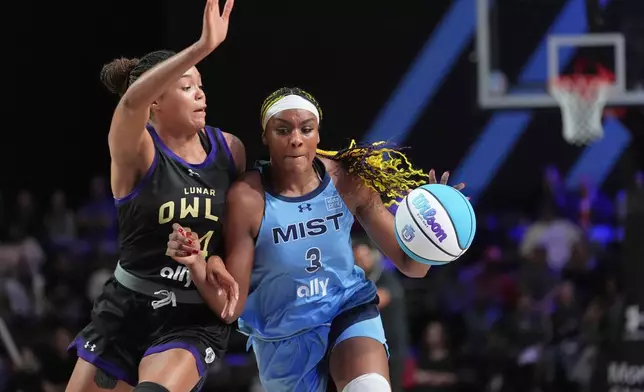
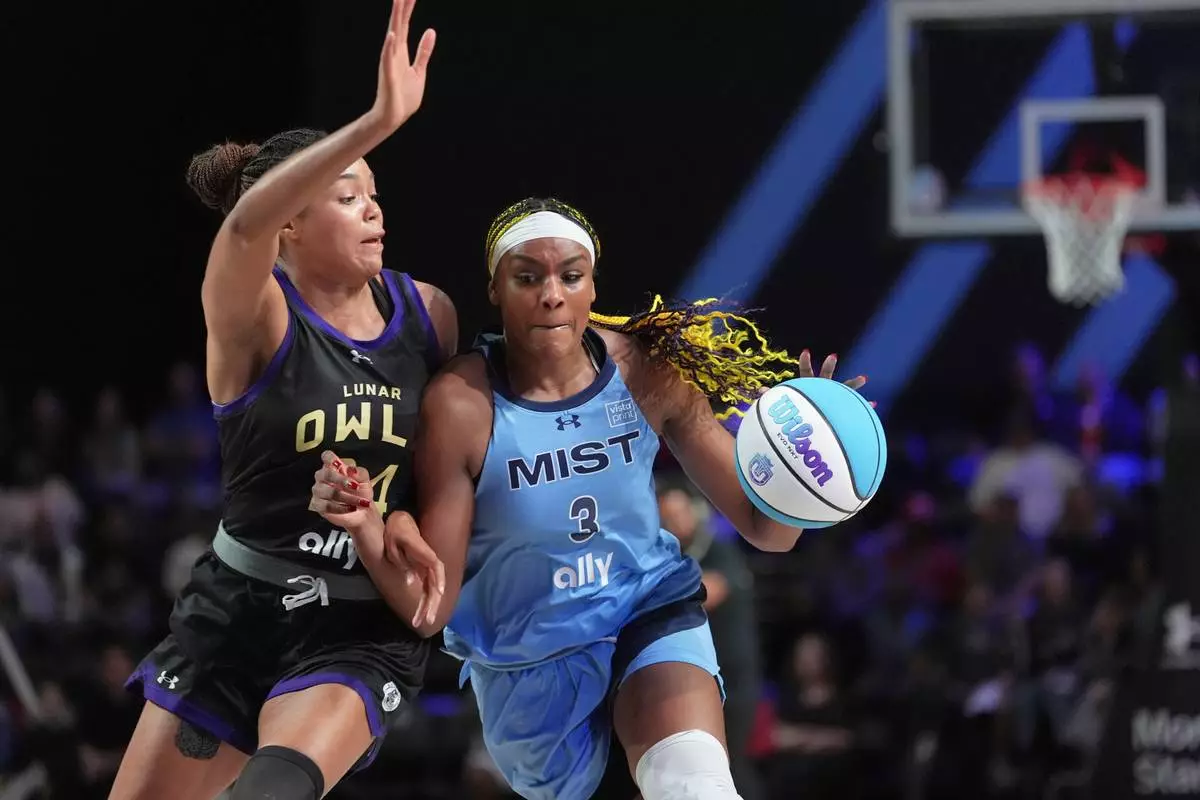
FILE - Aaliyah Edwards, right, drives past Napheesa Collier in the Unrivaled 1-on-1 basketball final, Friday, Feb. 14, 2025, in Medley, Fla. (AP Photo/Rebecca Blackwell, File)
FILE - Aaliyah Edwards, right, drives past Napheesa Collier in the Unrivaled 1-on-1 basketball final, Friday, Feb. 14, 2025, in Medley, Fla. (AP Photo/Rebecca Blackwell, File)

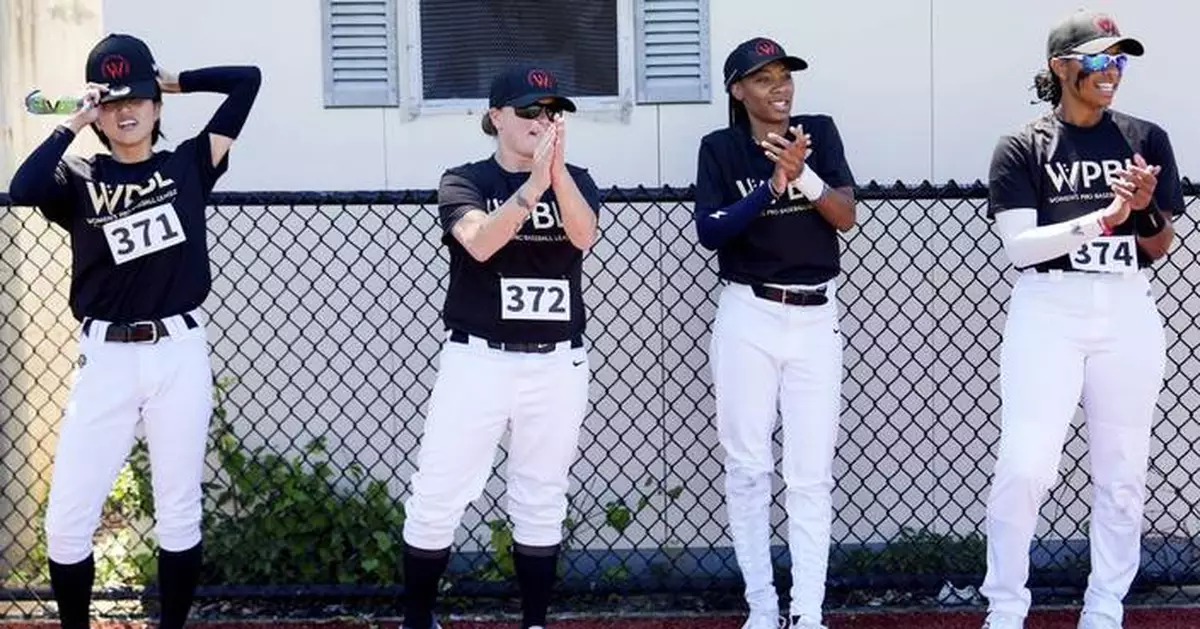
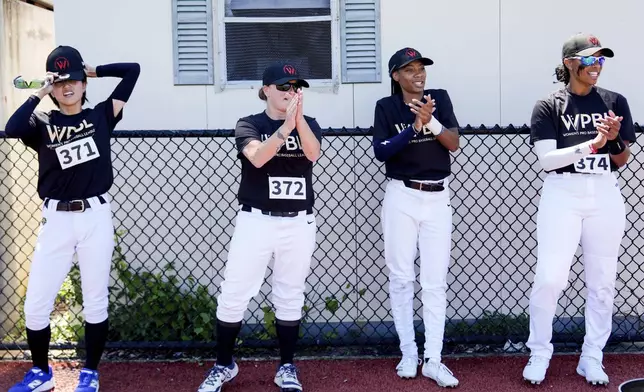
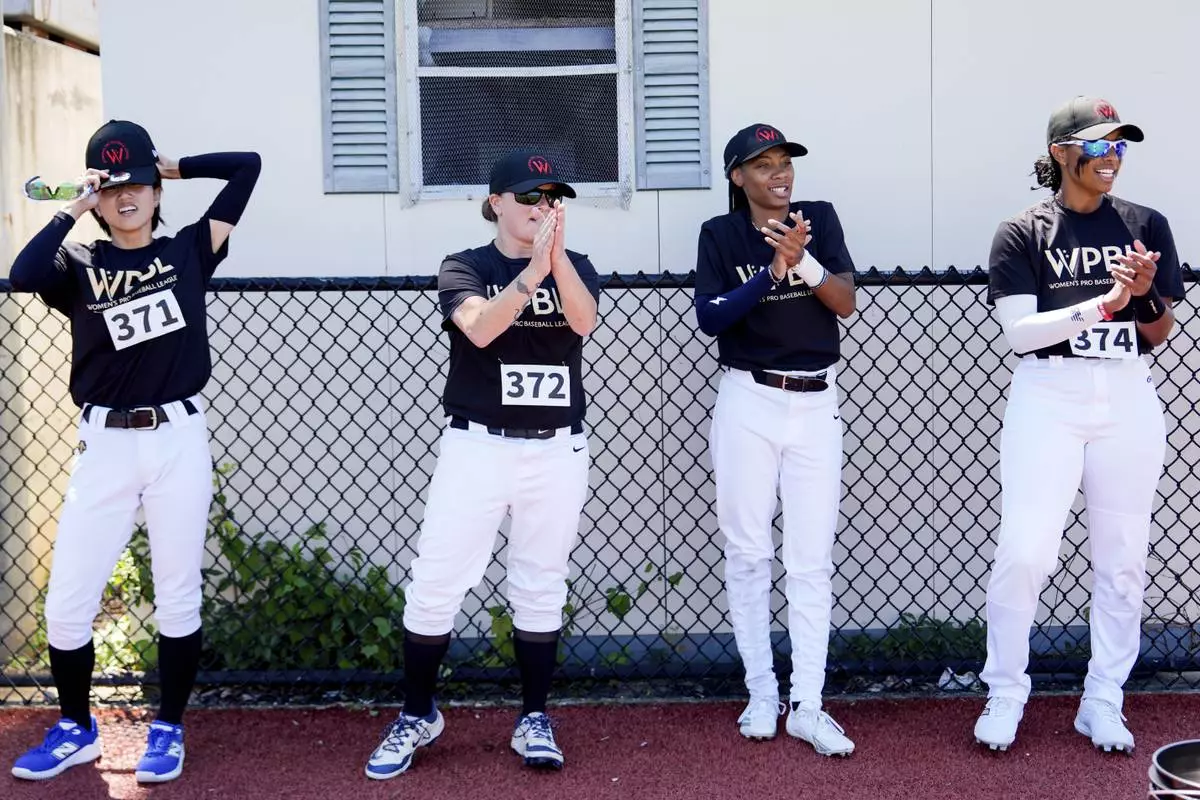
Mo'ne Davis, second from right, claps while watching other players drill during the first day of tryouts for the Women's Professional Baseball League, Friday, Aug. 22, 2025, at the Washington Nationals Youth Baseball Academy in Washington. (AP Photo/Julia Demaree Nikhinson)
Mo'ne Davis, second from right, claps while watching other players drill during the first day of tryouts for the Women's Professional Baseball League, Friday, Aug. 22, 2025, at the Washington Nationals Youth Baseball Academy in Washington. (AP Photo/Julia Demaree Nikhinson)

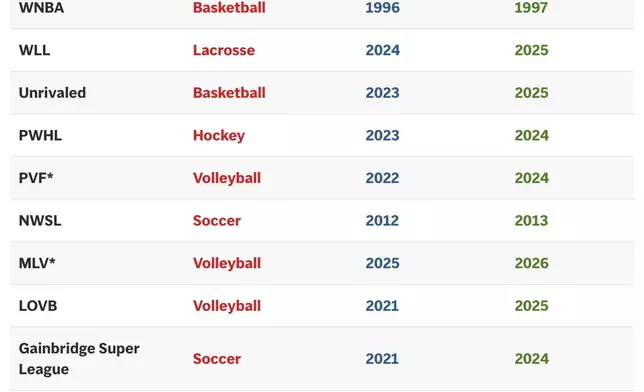
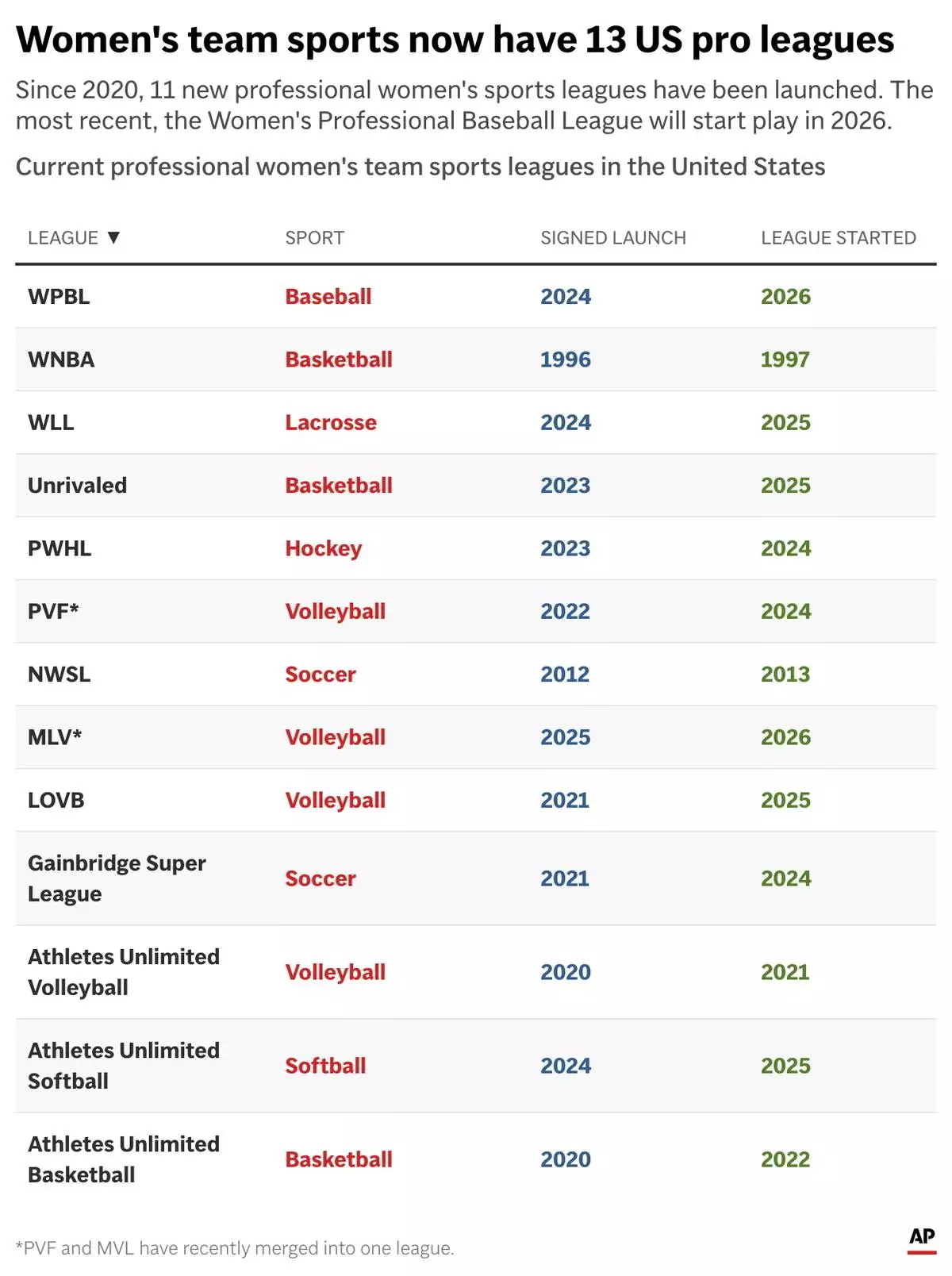
Graphic looks at current women's pro team sports leagues and when they launched.
Graphic looks at current women's pro team sports leagues and when they launched.

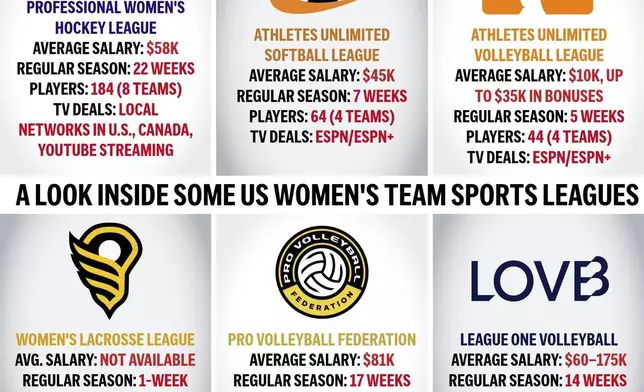
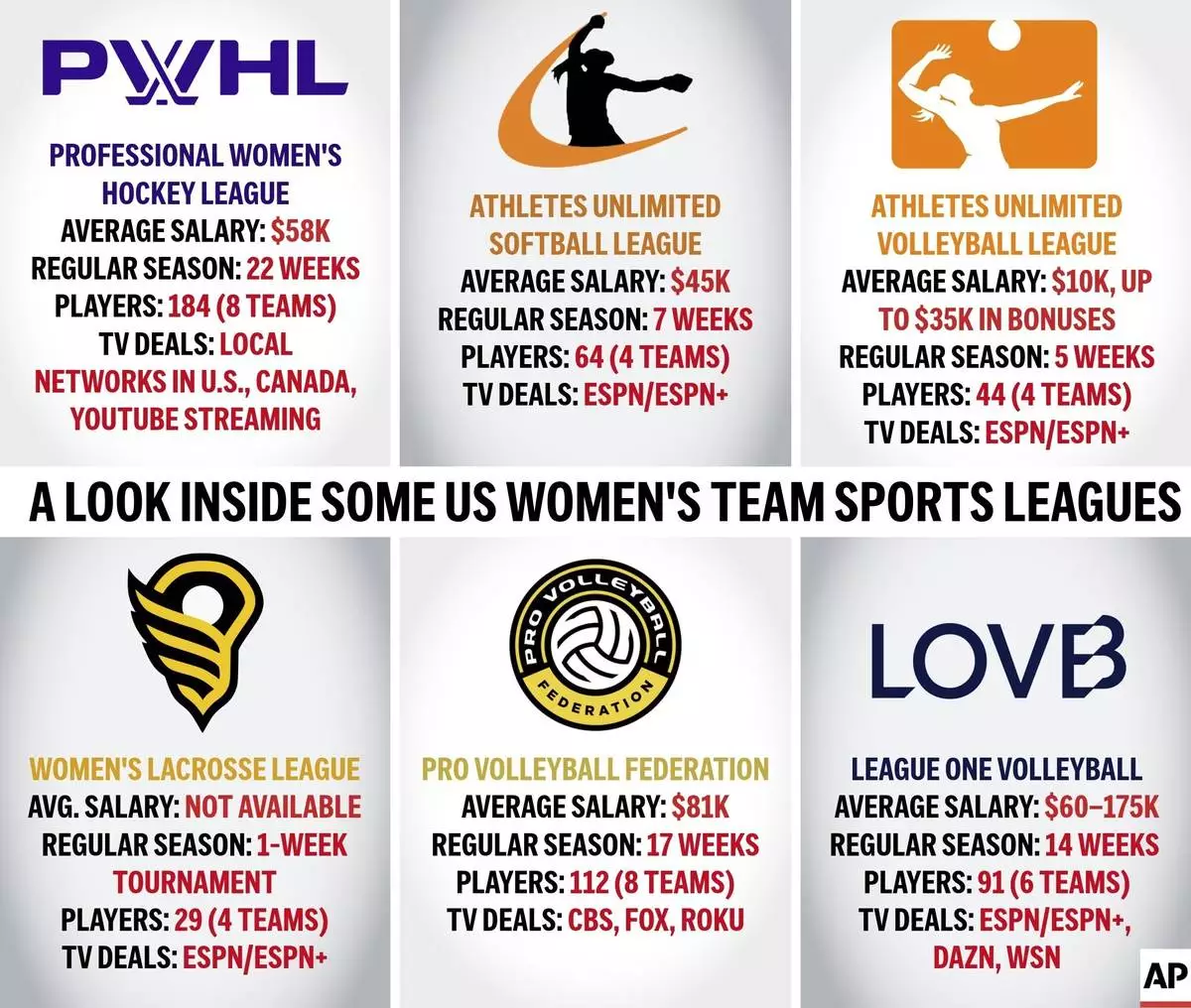
Graphic looks at some of the women's pro team sports leagues by the numbers.

Graphic looks at some of the women's pro team sports leagues by the numbers.

For such a startup to be sustainable and profitable, mainstream recognition is key. Good salaries and financial incentives may attract star players who could draw crowds and all-important TV deals. But analysts warn that exposure on television doesn’t guarantee success, and that a solid social media presence, strong branding and community development are imperative — along with a dose of good luck.

At least eight women’s pro leagues have launched in the past three years, including the WPBL, Unrivaled — a fast-paced 3-on-3 women's basketball league that debuted this year — and the Professional Women's Hockey League, seizing on rising viewership, bigger sponsorship deals and a fan base more eager than ever to support female athletes. Basketball is leading the surge, with college standouts like Caitlin Clark becoming household names and drawing record audiences for the WNBA.

“There is a pipeline of women from around the world who are at the elite level and ready to showcase their abilities,” said WPBL co-founder Siegal, the first woman to coach an MLB team, the Oakland Athletics, "and there’s a fan base ready to watch and ready to receive and cheer them on.”

Among the recent women's pro circuit additions are the PWHL, which wrapped up its second season in May, and soccer’s Gainbridge Super League, which debuted last August. Volleyball entered the spotlight in 2024 with the launch of the Professional Volleyball Federation and League One Volleyball.

Unrivaled, co-founded by WNBA stars Napheesa Collier and Breanna Stewart, finished its inaugural season with players' salaries averaging around $200,000 — the highest of any women’s pro league. Fan engagement was high, with more than 11.9 million viewers tuning in to watch the games on TNT and truTV, signaling its long-term viability.

“Our strategy was very simple. We knew we could find success if we had the top players playing,” said Unrivaled president Alex Bazzell, a basketball trainer and Collier’s husband.

“The pinnacle of women’s sports, both from an economic standpoint and a star power standpoint, is women’s basketball," Bazzell continued. ”So we had this inherent advantage from day one with the star power to activate social media and all the things that we needed.”

While Unrivaled was able to leverage its players' popularity to fuel its success, launching a women’s sports league has historically been an uphill climb. Leagues such as the WNBA and National Women's Soccer League have withstood years of hardship relative to their male counterparts.

The WNBA, whose players have negotiated charter flights in recent years and are currently seeking major salary boosts, began 29 years ago fighting for support and visibility.

“This is not an undertaking for the faint of heart,” said Ed Desser, who has advised the NFL, NBA and PGA Tour on media rights. “You have to not only have a bunch of things going for you, but also be fairly lucky. Because today, you’re not only competing with every existing sport, but you’re competing, from a media consumption standpoint, with libraries full of the best content TV and film ever created.”

The surge in popularity extends beyond the U.S., too. In Europe, women’s soccer is experiencing significant growth, highlighted by record crowds at this summer’s Women’s European Championship.

The environment for new women’s sports ventures is far more favorable today than it once was, said Risa Isard, director of research and insights for Parity, a women’s sports marketing platform.

The rise of streaming services has opened new pathways to reach fans directly, bypassing traditional broadcast limitations and giving emerging leagues a better shot at building devoted audiences. Isard said there’s also a wealth of data indicating women’s sports can deliver strong returns, proving “women’s sports can be good business."

Explosive growth in attendance and viewership in part led to the NWSL's $240 million, four-year media rights deal in 2023. The WNBA followed with an 11-year media rights deal in 2024, when the league had its best attendance in more than 20 years and saw viewership nearly triple from 2023.

Parity indicated in a June report that new leagues are gaining traction, particularly in regions with local teams.

The PWHL, made up of six teams with strong local followings in Minnesota and Canada, debuted in 2024 with record crowds and surpassed those numbers easily in Year 2. Attendance jumped by 27%, rising from 5,689 per outing over 85 games to 7,230 over 102 games, including playoffs. Part of the jump can be attributed to Toronto and Montreal playing in larger venues, as well as a nine-game neutral site schedule that combined to draw 123,601 fans.

And investors are taking notice.

League One Volleyball, branded as LOVB and pronounced “LOVE," secured more than $100 million in funding from private equity and individuals, including Olympic skier Lindsey Vonn and NBA star Kevin Durant.

There were some hiccups during LOVB's debut season this year, including with athlete logistics and broadcast production. Jordan Larson, a volleyball star and co-owner of LOVB Nebraska, said patience is key as the league works through early challenges, especially given there's no established blueprint for success for pro women's volleyball in the U.S.

“I think there is a hope and grace that we can get from people that are trying to buy in and invest,” Larson said, "that we’re trying to make this the best product we can. And I have no doubt that there is interest and that there’s love for the game and that it will only continue to grow."

The sustainability of any new league depends on whether it can stand out in a crowded entertainment market, said John Kosner, who runs a digital and sports consultancy.

Kosner emphasized the value of YouTube and other ad-supported streaming channels for building a loyal audience, but cautioned that visibility alone doesn't guarantee longevity.

“Just to get distribution doesn’t mean that you’re going to get watched,” Kosner said. “It’s a more involved playbook."

That's where social media, branding and community development become crucial. The PWHL achieved success with its “Takeover Tour,” a series of games in markets without a hockey team to attract new fans.

Kanan Bhatt-Shah, the PWHL's vice president of brand and marketing, compared the experience to taking a band on the road. It gives “fans that maybe previously only had a chance to watch, or had to travel to one of our home markets” the opportunity "to experience all of the things that make the PWHL so magical and the game experience so joyful.”

Beyond driving fan engagement, many women’s sports leagues prioritize the wellness and needs of athletes. The six Unrivaled teams play all their games in a custom-built arena in Miami to help build a fan base and sense of community, while the league covers the cost of players’ housing, rental cars and child-care. LOVB president Rosie Spaulding underscored the long-term importance of being athlete-centered, noting that LOVB athletes are considered league employees and have access to year-round health care.

“There’s for sure more that needs to be done,” Spaulding said, “but I am very encouraged with the path that we’re on already and the changes that we’ve seen over these last five years, and the return on investment that these brands continue to see.”

The Associated Press’ women in the workforce and state government coverage receives financial support from Pivotal Ventures. AP is solely responsible for all content. Find AP’s standards for working with philanthropies, a list of supporters and funded coverage areas at AP.org.
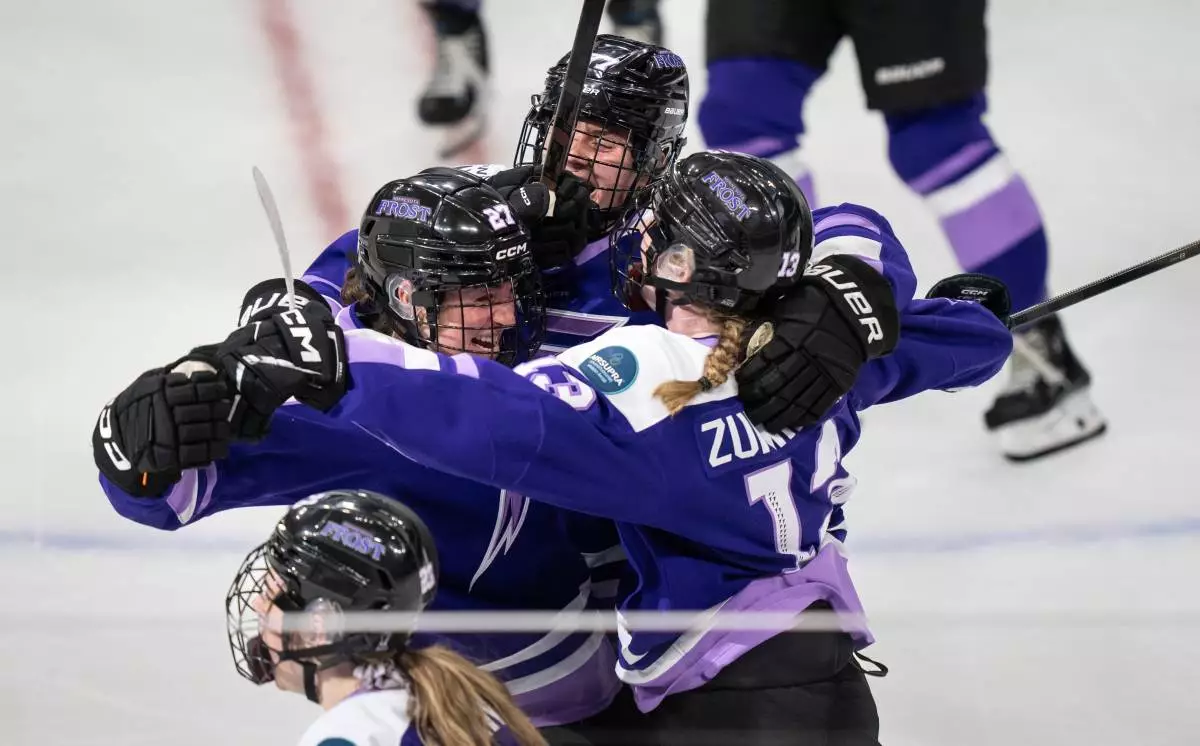
FILE - Minnesota Frost forward Taylor Heise (27), left, is surrounded by teammates, Minnesota Frost forward Britta Curl (77) and Minnesota Frost forward Grace Zumwinkle (13) after she scored the winning goal in overtime of the PWHL Walter Cup in St. Paul, Minn., Wednesday, May 14, 2025. (Renée Jones Schneider/Star Tribune via AP)
FILE - Minnesota Frost forward Taylor Heise (27), left, is surrounded by teammates, Minnesota Frost forward Britta Curl (77) and Minnesota Frost forward Grace Zumwinkle (13) after she scored the winning goal in overtime of the PWHL Walter Cup in St. Paul, Minn., Wednesday, May 14, 2025. (Renée Jones Schneider/Star Tribune via AP)

FILE - Aaliyah Edwards, right, drives past Napheesa Collier in the Unrivaled 1-on-1 basketball final, Friday, Feb. 14, 2025, in Medley, Fla. (AP Photo/Rebecca Blackwell, File)
FILE - Aaliyah Edwards, right, drives past Napheesa Collier in the Unrivaled 1-on-1 basketball final, Friday, Feb. 14, 2025, in Medley, Fla. (AP Photo/Rebecca Blackwell, File)

Mo'ne Davis, second from right, claps while watching other players drill during the first day of tryouts for the Women's Professional Baseball League, Friday, Aug. 22, 2025, at the Washington Nationals Youth Baseball Academy in Washington. (AP Photo/Julia Demaree Nikhinson)
Mo'ne Davis, second from right, claps while watching other players drill during the first day of tryouts for the Women's Professional Baseball League, Friday, Aug. 22, 2025, at the Washington Nationals Youth Baseball Academy in Washington. (AP Photo/Julia Demaree Nikhinson)

Graphic looks at current women's pro team sports leagues and when they launched.
Graphic looks at current women's pro team sports leagues and when they launched.

Graphic looks at some of the women's pro team sports leagues by the numbers.
Graphic looks at some of the women's pro team sports leagues by the numbers.
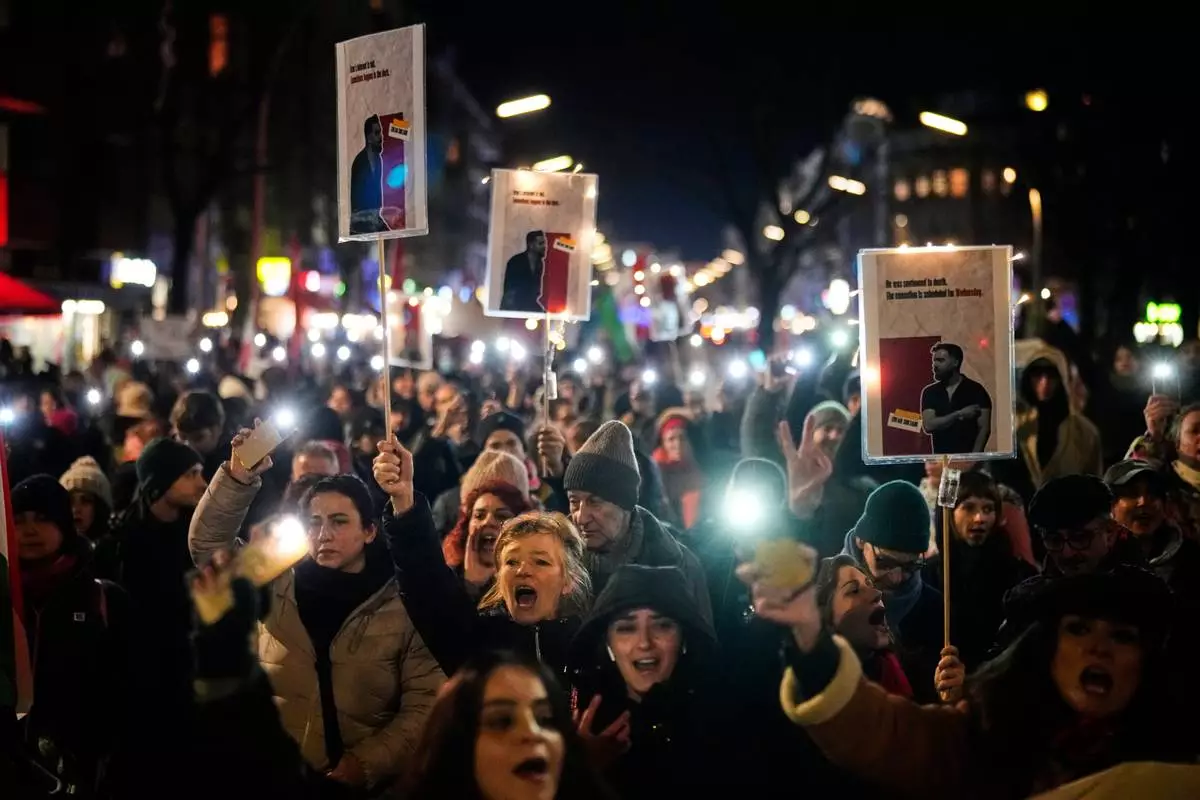
BERLIN (AP) — Standing on an open truck making its way through Berlin, Anahita Safarnejad turned to the crowd of Iranian protesters marching behind her and took the microphone.

“No more dictatorship in Iran, the mullahs must go!” she shouted. Hundreds of voices echoed her slogan with the same sense of urgency and desperation.

Across Europe, thousands of exiled Iranians have taken to the streets to shout out their rage at the government of the Islamic Republic which has cracked down on protests in their homeland, reportedly killing thousands of people.

Women have taken a prominent role in organizing the protests abroad, raising their voices against the theocratic government that discriminates against them.

But beyond the anger, there’s also a sense of fear and paralysis. Iran's government has been shutting down the internet and limiting phone calls for days, making it nearly impossible for Iranians in the diaspora to find out if their families back home are safe.

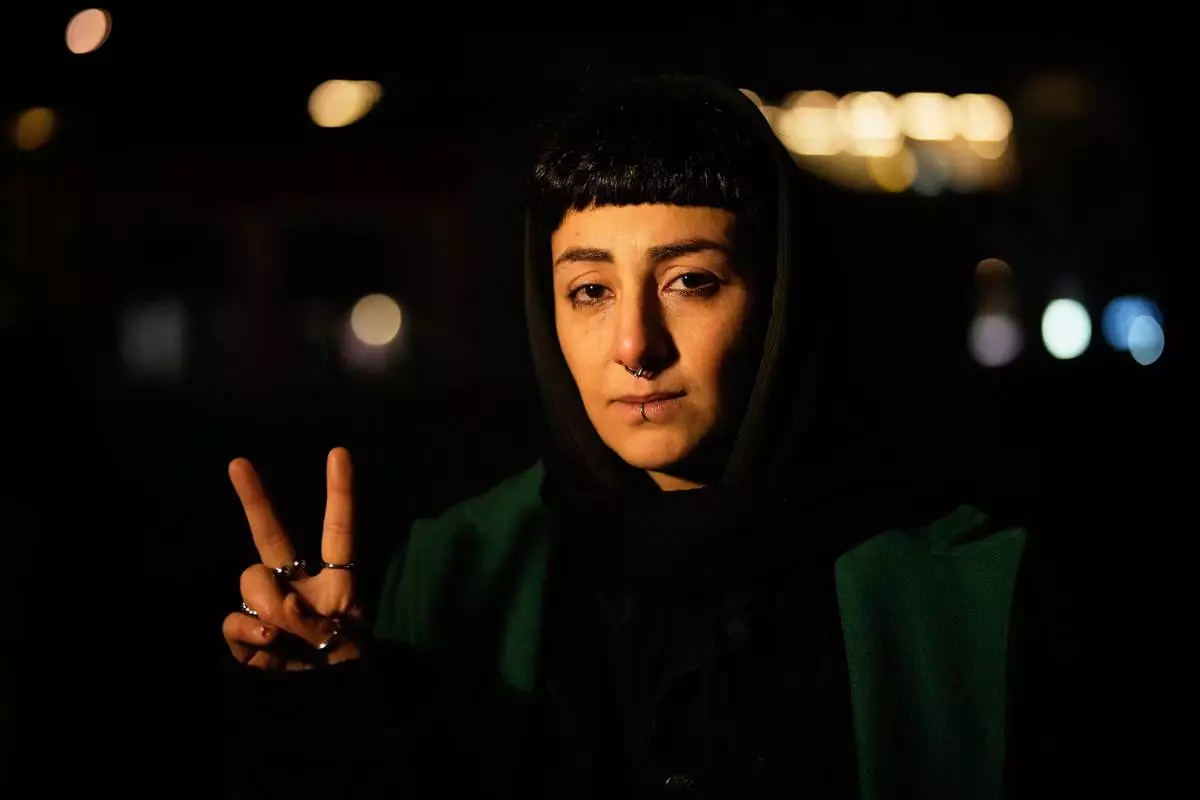
Safarnejad, 34, fled Iran seven years ago. She came to Berlin to study theater but now works in a bar when she's not attending one of the almost-daily protests in the German capital.

Since the demonstrations broke out in Iran in late December, Safarnejad said she's been living in two different realities that are almost impossible to combine. The easygoing hipster life of her new hometown is a jarring contrast to the bloody protests in Iran that she's been following every minute she doesn't have to work, glued to her phone for the latest updates.

While she was initially almost euphoric that the current uprising would finally bring freedom to Iran and she'd be able to go back home, her sense of hope has turned into horror.

Safarnejad hasn't spoken to her brother, also a protester, since communications with Iran were cut off. She's been scouring video on social media showing piles of dead bodies to see if he's among the corpses.

“I'm desperate and don't know how to keep going anymore,” she cried, tears rolling down her cheeks, as she spoke to The Associated Press during Wednesday's Berlin protest.

“I can’t really switch off. I can’t really stop reading the news either," she added, her voice breaking. “Because I’m waiting all the time for the internet to be available so I can get some answers from my family.”

The young woman's horror is felt by many of the more than 300,000 Iranians living in Germany — one of the biggest exile communities in Europe and similar in numbers to France and Britain. Many of them still have family ties to their homeland, even if they left decades ago.

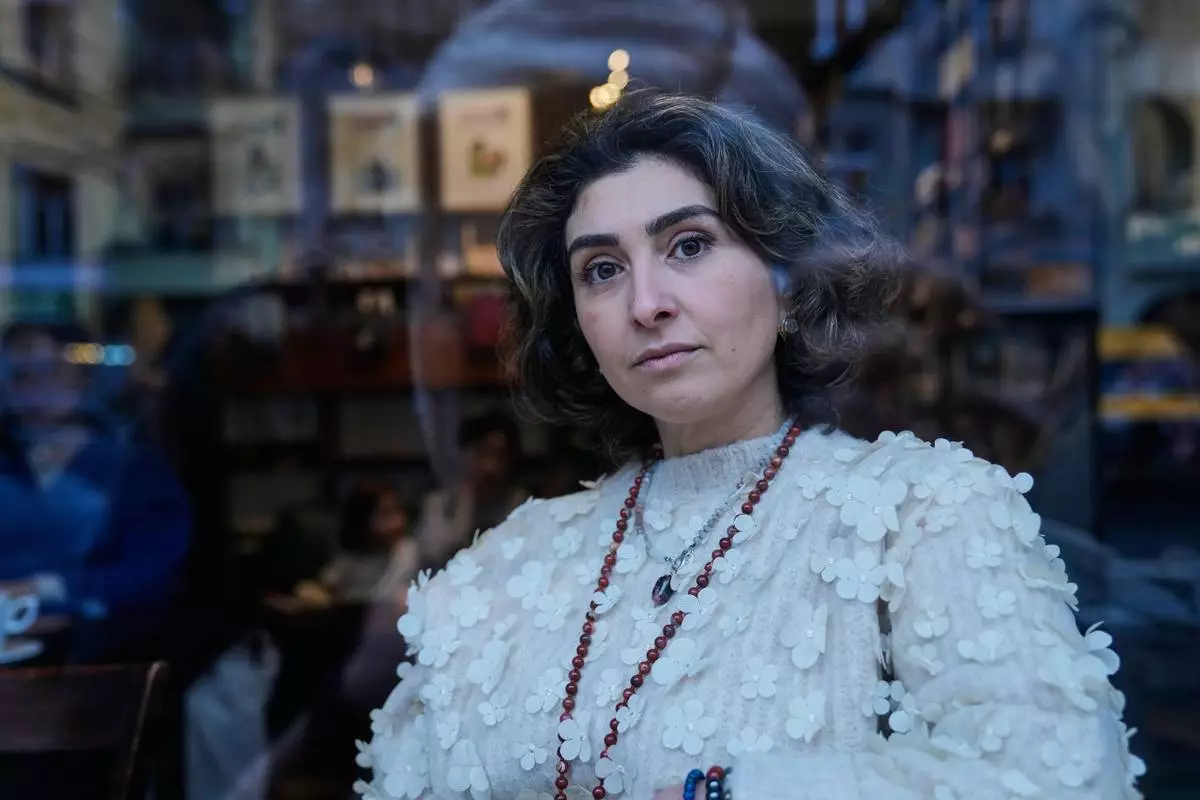
Mehregan Maroufi's Persian cafe and bookstore in Berlin has become a place of solace for Iranians to share their grief without many words — because they know they are all living through the same nightmare.

Maroufi, the daughter of the late Iranian author Abbas Maroufi, welcomes Iranians and everyone else at the Hedayat Cafe, where she serves Persian tea with sweets such as chocolate cake topped with barberries. She lends an ear to anyone who has to get worries off their chest.

“For some, the emotions are still too high and too strong, so to speak, and it’s impossible to talk," the 44-year-old says, adding that she, too, had to force herself to open the cafe on some mornings because the violent images coming out of Iran sucked away all her energy.

“But at least you can find compatriots here. You can talk to a little, and that helps,” she said.

She says she's been listening to and learning from the convictions her fellow Iranians express when they talk about their dreams of an Iran after Supreme Leader Ayatollah Ali Khamenei that — due to the uprising — now seems closer that ever before.

While most in the diaspora agree that the theocracy has to be toppled, ideas of what a new Iran should look like differ widely.

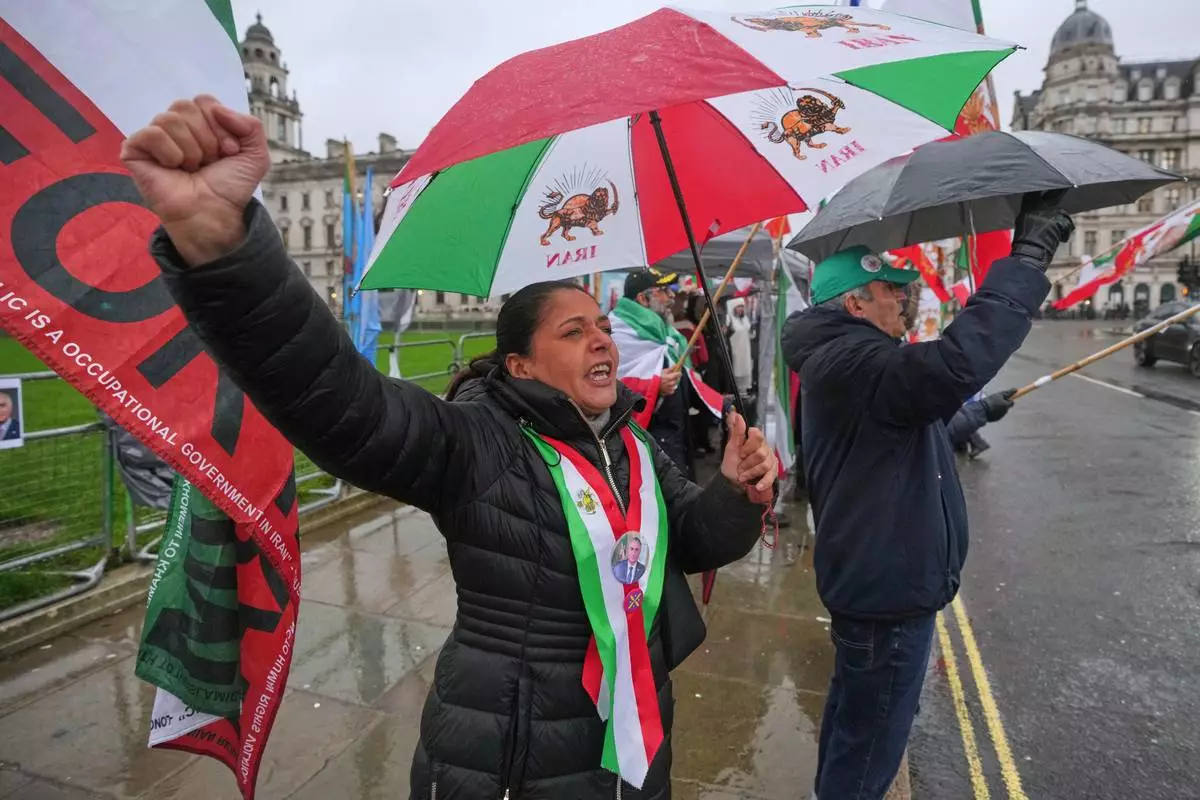
Adeleh Tavakoli, 62, joined a demonstration outside Britain’s Parliament in London earlier this week. She hasn't been back to Iran in 17 years but has spent decades protesting from afar against the Islamic Republic.

But with the latest wave of protests, she hopes that the Iran’s exiled Crown Prince Reza Pahlavi, the son of the shah ousted by the Islamic Revolution in 1979, will return to power. If he does, she said, she has her bag packed and is ready to get on the first flight.

“For 47 years, our country has been captured by a terrorist regime,” she said. “We’ve been the voice of Iran. All we want is our freedom and to get rid of this horrible dictatorship.”

For Maral Salmassi, who came to Germany as a child in the 1980s, history explains the calls by exiled Iranians for Pahlavi to lead the country.

“As an Iranian, as someone who comes from this culture and knows its culture and history, I can only say that we have had kings and queens for thousands of years. It is our culture," said Salmassi. She is the chairwoman and founder of the Zera Institute think tank in Berlin, which researches democracy, radicalization and extremism.

She added that Iranians make up a multi-ethnic country and "to bring them all together again, we need a constitutional monarchy that symbolically and traditionally represents our identity and reunites everyone ... and then a democratic, federal parliament where everyone is represented equally.”

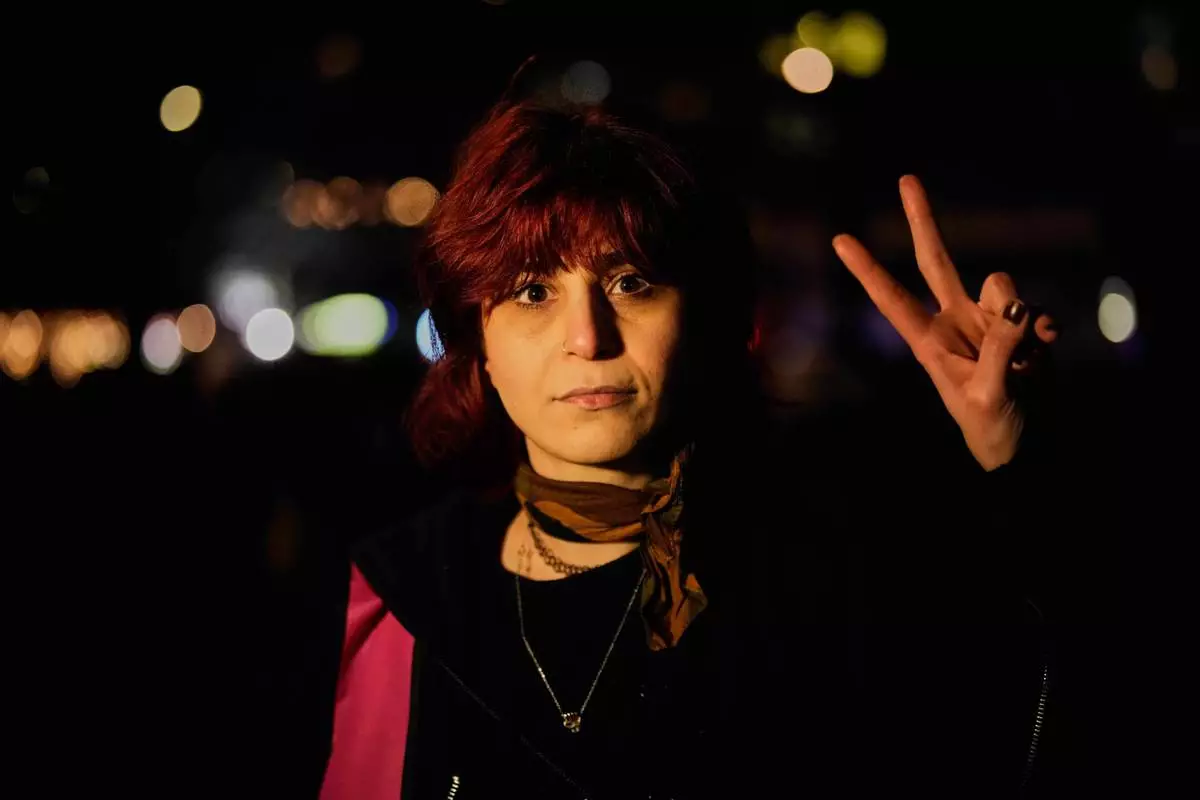
However, not everyone is convinced by Pahlavi. Maryam Nejatipur, 32, who also joined the protest in Berlin, thinks her country should avoid a cult of personality.

“We don’t need something like Khamenei again. We don’t need one person,” to lead us, she said, as she burnt a portrait of the Ayatollah and used the flames to light a cigarette — an act that's become a symbol of Iranian resistance.

Safarnejad, who led the recent Berlin protest, agrees.

“I don’t belong to the left, I’m not a liberal, I’m not a monarchist,” she stressed. “I’ve been there for women’s rights, I’m for human rights, I’m for freedom.”

Fanny Brodersen and Ebrahim Noroozi, in Berlin, and Brian Melley in London contributed reporting.

Protester Adeleh Tavakoli, left, demonstrates outside the House of Parliament, in London, Tuesday, Jan. 13, 2026. (AP Photo/Kin Cheung)

Protester Adeleh Tavakoli, left, demonstrates outside the House of Parliament, in London, Tuesday, Jan. 13, 2026. (AP Photo/Kin Cheung)

People take part in a rally in support of anti-government protests in Iran, Berlin Germany, Wednesday, June 14, 2026. (AP Photo/Ebrahim Noroozi)

People take part in a rally in support of anti-government protests in Iran, Berlin Germany, Wednesday, June 14, 2026. (AP Photo/Ebrahim Noroozi)

Iranian Mehregan Maroufi poses for a photo before an interview with the Associated Press in her cafe in Berlin, Germany, Thursday, Jan. 15, 2026. (AP Photo/Ebrahim Noroozi)

Iranian Mehregan Maroufi poses for a photo before an interview with the Associated Press in her cafe in Berlin, Germany, Thursday, Jan. 15, 2026. (AP Photo/Ebrahim Noroozi)

Iranian Maryam Nejatipur 32, poses for a photo after a demonstration in support of the nationwide mass protests in Iran against the government, in Berlin, Germany, Wednesday, Jan. 14, 2026. (AP Photo/Ebrahim Noroozi)

Iranian Maryam Nejatipur 32, poses for a photo after a demonstration in support of the nationwide mass protests in Iran against the government, in Berlin, Germany, Wednesday, Jan. 14, 2026. (AP Photo/Ebrahim Noroozi)

Iranian Anahita Safarnejad, 34, poses for a photo after a demonstration in support of the nationwide mass protests in Iran against the government, in Berlin, Germany, Wednesday, Jan. 14, 2026. (AP Photo/Ebrahim Noroozi)

Iranian Anahita Safarnejad, 34, poses for a photo after a demonstration in support of the nationwide mass protests in Iran against the government, in Berlin, Germany, Wednesday, Jan. 14, 2026. (AP Photo/Ebrahim Noroozi)

Recommended Articles