|
Companies aim to merge AI accelerators, quantum computers, and high-performance computing to help solve a wide range of the world's most difficult problems
YORKTOWN HEIGHTS, N.Y. and AUSTIN, Texas, Aug. 26, 2025 /PRNewswire/ -- Today, IBM (NYSE: IBM) and AMD (NASDAQ: AMD) announced plans to develop next-generation computing architectures based on the combination of quantum computers and high-performance computing, known as quantum-centric supercomputing. AMD and IBM are collaborating to develop scalable, open-source platforms that could redefine the future of computing, leveraging IBM's leadership in developing the world's most performant quantum computers and software, and AMD's leadership in high-performance computing and AI accelerators.
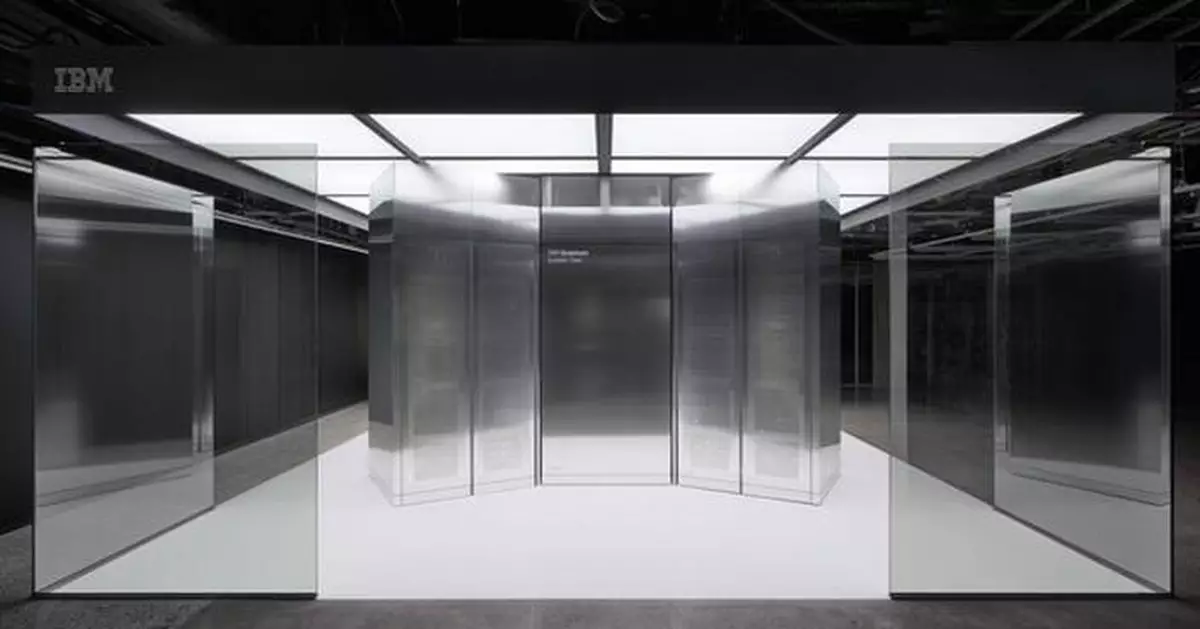
IBM Quantum System Two
Quantum computing is a completely different way to represent and process information. While classical computers use bits that can only be either a zero or one, quantum computers' qubits represent information according to the quantum mechanical laws of nature. These properties enable a much richer computational space to explore solutions to complex problems beyond the reach of classical computing alone, including in fields such as drug discovery, materials discovery, optimization, and logistics.
"Quantum computing will simulate the natural world and represent information in an entirely new way," said Arvind Krishna, Chairman and CEO, IBM. "By exploring how quantum computers from IBM and the advanced high-performance compute technologies of AMD can work together, we will build a powerful hybrid model that pushes past the limits of traditional computing."
"High-performance computing is the foundation for solving the world's most important challenges," said Dr. Lisa Su, Chair and CEO of AMD. "As we partner with IBM to explore the convergence of high-performance computing and quantum technologies, we see tremendous opportunities to accelerate discovery and innovation."
In a quantum-centric supercomputing architecture, quantum computers work in tandem with powerful high-performance computing and AI infrastructure, which are typically supported by CPUs, GPUs and other compute engines. In this hybrid approach, different components of a problem are tackled by the paradigm best suited to solve them. For example, in the future, quantum computers could simulate the behavior of atoms and molecules, while classical supercomputers powered by AI could handle massive data analysis. Together, these technologies could tackle real-world problems at unprecedented speed and scale.
AMD and IBM are exploring how to integrate AMD CPUs, GPUs, and FPGAs with IBM quantum computers to efficiently accelerate a new class of emerging algorithms, which are outside the current reach of either paradigm working independently. The proposed effort could also help progress IBM's vision to deliver fault-tolerant quantum computers by the end of this decade. AMD technologies offer promise for providing real-time error correction capabilities, a key element of fault-tolerant quantum computing.
The teams are planning an initial demonstration later this year to show how IBM quantum computers can work in tandem with AMD technologies to deploy hybrid quantum-classical workflows. The companies also plan to explore how open-source ecosystems, such as Qiskit, could catalyze the development and adoption of new algorithms that leverage quantum-centric supercomputing.
IBM has already initiated the first steps towards a vision in which quantum and classical computing are seamlessly integrated, including a recent partnership with RIKEN to deploy and directly connect IBM's modular quantum computer, IBM Quantum System Two, with Fugaku, one of the world's fastest classical supercomputers; as well as work with industry leaders such as Cleveland Clinic, the Basque Government, and Lockheed Martin to demonstrate how combining quantum and classical resources could return valuable results for difficult problems, beyond what classical computers can do on their own.
AMD CPUs and GPUs power Frontier at the U.S. Department of Energy's Oak Ridge National Laboratory—the first supercomputer in history to officially break the exascale barrier. Today, AMD EPYC™ CPUs and AMD Instinct™ GPU technology also drive El Capitan at Lawrence Livermore National Laboratory, giving AMD the distinction of powering the two fastest supercomputers in the world, according to the TOP500 list. Beyond high-performance computing, AMD CPUs, GPUs and open-source software also power numerous generative AI solutions for leading enterprises and cloud providers around the world.
About IBM
IBM is a leading provider of global hybrid cloud and AI, and consulting expertise. We help clients in more than 175 countries capitalize on insights from their data, streamline business processes, reduce costs and gain the competitive edge in their industries. Thousands of governments and corporate entities in critical infrastructure areas such as financial services, telecommunications and healthcare rely on IBM's hybrid cloud platform and Red Hat OpenShift to affect their digital transformations quickly, efficiently and securely. IBM's breakthrough innovations in AI, quantum computing, industry-specific cloud solutions and consulting deliver open and flexible options to our clients. All of this is backed by IBM's long-standing commitment to trust, transparency, responsibility, inclusivity and service. Visit ibm.com for more information.
About AMD
For more than 55 years AMD has driven innovation in high-performance computing, graphics and visualization technologies. Billions of people, leading Fortune 500 businesses and cutting-edge scientific research institutions around the world rely on AMD technology daily to improve how they live, work and play. AMD employees are focused on building leadership high-performance and adaptive products that push the boundaries of what is possible. For more information about how AMD is enabling today and inspiring tomorrow, visit the AMD (NASDAQ: AMD) website, blog, LinkedIn, Facebook and X pages.
Media Contacts:
IBM
Brittany Forgione, IBM Communications
Brittany.forgione@ibm.com
AMD
Aaron Grabein, AMD Communications
Aaron.Grabein@amd.com
IBM Quantum System Two (interior render) is the company’s first modular quantum computer and cornerstone of IBM’s quantum-centric supercomputing architecture. Credit: IBM
Companies aim to merge AI accelerators, quantum computers, and high-performance computing to help solve a wide range of the world's most difficult problems
YORKTOWN HEIGHTS, N.Y. and AUSTIN, Texas, Aug. 26, 2025 /PRNewswire/ -- Today, IBM (NYSE: IBM) and AMD (NASDAQ: AMD) announced plans to develop next-generation computing architectures based on the combination of quantum computers and high-performance computing, known as quantum-centric supercomputing. AMD and IBM are collaborating to develop scalable, open-source platforms that could redefine the future of computing, leveraging IBM's leadership in developing the world's most performant quantum computers and software, and AMD's leadership in high-performance computing and AI accelerators.
Quantum computing is a completely different way to represent and process information. While classical computers use bits that can only be either a zero or one, quantum computers' qubits represent information according to the quantum mechanical laws of nature. These properties enable a much richer computational space to explore solutions to complex problems beyond the reach of classical computing alone, including in fields such as drug discovery, materials discovery, optimization, and logistics.
"Quantum computing will simulate the natural world and represent information in an entirely new way," said Arvind Krishna, Chairman and CEO, IBM. "By exploring how quantum computers from IBM and the advanced high-performance compute technologies of AMD can work together, we will build a powerful hybrid model that pushes past the limits of traditional computing."
"High-performance computing is the foundation for solving the world's most important challenges," said Dr. Lisa Su, Chair and CEO of AMD. "As we partner with IBM to explore the convergence of high-performance computing and quantum technologies, we see tremendous opportunities to accelerate discovery and innovation."
In a quantum-centric supercomputing architecture, quantum computers work in tandem with powerful high-performance computing and AI infrastructure, which are typically supported by CPUs, GPUs and other compute engines. In this hybrid approach, different components of a problem are tackled by the paradigm best suited to solve them. For example, in the future, quantum computers could simulate the behavior of atoms and molecules, while classical supercomputers powered by AI could handle massive data analysis. Together, these technologies could tackle real-world problems at unprecedented speed and scale.
AMD and IBM are exploring how to integrate AMD CPUs, GPUs, and FPGAs with IBM quantum computers to efficiently accelerate a new class of emerging algorithms, which are outside the current reach of either paradigm working independently. The proposed effort could also help progress IBM's vision to deliver fault-tolerant quantum computers by the end of this decade. AMD technologies offer promise for providing real-time error correction capabilities, a key element of fault-tolerant quantum computing.
The teams are planning an initial demonstration later this year to show how IBM quantum computers can work in tandem with AMD technologies to deploy hybrid quantum-classical workflows. The companies also plan to explore how open-source ecosystems, such as Qiskit, could catalyze the development and adoption of new algorithms that leverage quantum-centric supercomputing.
IBM has already initiated the first steps towards a vision in which quantum and classical computing are seamlessly integrated, including a recent partnership with RIKEN to deploy and directly connect IBM's modular quantum computer, IBM Quantum System Two, with Fugaku, one of the world's fastest classical supercomputers; as well as work with industry leaders such as Cleveland Clinic, the Basque Government, and Lockheed Martin to demonstrate how combining quantum and classical resources could return valuable results for difficult problems, beyond what classical computers can do on their own.
AMD CPUs and GPUs power Frontier at the U.S. Department of Energy's Oak Ridge National Laboratory—the first supercomputer in history to officially break the exascale barrier. Today, AMD EPYC™ CPUs and AMD Instinct™ GPU technology also drive El Capitan at Lawrence Livermore National Laboratory, giving AMD the distinction of powering the two fastest supercomputers in the world, according to the TOP500 list. Beyond high-performance computing, AMD CPUs, GPUs and open-source software also power numerous generative AI solutions for leading enterprises and cloud providers around the world.
About IBM
IBM is a leading provider of global hybrid cloud and AI, and consulting expertise. We help clients in more than 175 countries capitalize on insights from their data, streamline business processes, reduce costs and gain the competitive edge in their industries. Thousands of governments and corporate entities in critical infrastructure areas such as financial services, telecommunications and healthcare rely on IBM's hybrid cloud platform and Red Hat OpenShift to affect their digital transformations quickly, efficiently and securely. IBM's breakthrough innovations in AI, quantum computing, industry-specific cloud solutions and consulting deliver open and flexible options to our clients. All of this is backed by IBM's long-standing commitment to trust, transparency, responsibility, inclusivity and service. Visit ibm.com for more information.
About AMD
For more than 55 years AMD has driven innovation in high-performance computing, graphics and visualization technologies. Billions of people, leading Fortune 500 businesses and cutting-edge scientific research institutions around the world rely on AMD technology daily to improve how they live, work and play. AMD employees are focused on building leadership high-performance and adaptive products that push the boundaries of what is possible. For more information about how AMD is enabling today and inspiring tomorrow, visit the AMD (NASDAQ: AMD) website, blog, LinkedIn, Facebook and X pages.
Media Contacts:
IBM
Brittany Forgione, IBM Communications
Brittany.forgione@ibm.com
AMD
Aaron Grabein, AMD Communications
Aaron.Grabein@amd.com
** The press release content is from PR Newswire. Bastille Post is not involved in its creation. **

IBM and AMD Join Forces to Build the Future of Computing

IBM and AMD Join Forces to Build the Future of Computing
SAN MATEO, Calif., Dec. 13, 2025 /PRNewswire/ -- AI infrastructure company EverMind has recently released EverMemOS, an open-source Memory Operating System designed to address one of artificial intelligence's most profound challenges: equipping machines with scalable, long-term memory.
The Memory Bottleneck
For years, large language models (LLMs) have been constrained by fixed context windows, a limitation that causes "forgetfulness" in long-term tasks. This results in broken context, factual inconsistencies, and an inability to deliver deep personalization or maintain knowledge coherence. The issue extends beyond technical hurdles; it represents an evolutionary bottleneck for AI. An entity without memory cannot exhibit behavioral consistency or initiative, let alone achieve self-evolution. Personalization, consistency, and proactivity, which are considered the hallmarks of intelligence, all depend on a robust memory system.
There is a consensus that memory is becoming the core competitive edge and defining boundary of future AI. Yet existing solutions, such as Retrieval-Augmented Generation (RAG) and fragmented memory systems, remain limited in scope, failing to support both 1-on-1 companion use cases and complex multi-agent enterprise collaboration. Few meet the standard of precision, speed, usability, and adaptability required for widespread adoption. Equipping large models with a high-performance, pluggable memory module remains a core unmet demand across AI applications.
Discoverative Intelligence
"Discoverative Intelligence" is a concept proposed in late 2025 by entrepreneur and philanthropist Chen Tianqiao. Unlike generative AI, which mimics human output by processing existing data, Discoverative Intelligence describes an advanced AI form that actively asks questions, forms testable hypotheses, and discovers new scientific principles. It prioritizes understanding causality and underlying principles over statistical patterns, a shift Chen argues is essential to achieving Artificial General Intelligence (AGI).
Chen contrasted two dominant AI development paths: the "Scaling Path," which relies on expanding parameters, data, and compute power to extrapolate within a search space, and the "Structural Path," which focuses on the "cognitive anatomy" of intelligence and how systems operate over time.
Discoverative Intelligence falls into the latter category, built on a brain-inspired model called Structured Temporal Intelligence (STI) that requires five core capabilities in a closed loop: neural dynamics (sustained, self-organizing activity to keep systems "alive"), long-term memory (storing and selectively forgetting experiences to build knowledge), causal reasoning (inferring "why" events occur), world modeling (an internal simulation of reality for prediction), and metacognition & intrinsic motivation (curiosity-driven exploration, not just external rewards).
Among these capabilities, long-term memory serves as the vital link between time and intelligence, highlighting its indispensable role in the path toward achieving true AGI.
EverMind's Answer
EverMemOS is EverMind's answer to this need: an open-source Memory Operating System designed as foundational technology for Discoverative Intelligence. Inspired by the hierarchical organization of the human memory system, EverMemOS features a four-layer architecture analogous to key brain regions: an Agentic Layer (task planning, mirroring the prefrontal cortex), a Memory Layer (long-term storage, like cortical networks), an Index Layer (associative retrieval, drawing from the hippocampus), and an API/MCP Interface Layer (external integration, serving as AI's "sensory interface").
The system delivers breakthroughs in both scenario coverage and technical performance. It is the first memory system capable of supporting both 1-on-1 conversation use cases and complex multi-agent enterprise collaboration. On technical benchmarks, EverMemOS achieved 92.3% accuracy on LoCoMo (a long-context memory evaluation) and 82% on LongMemEval-S (a suite for assessing long-term memory retention), significantly surpassing prior state-of-the-art results and setting a new industry standard.
The open-source version of EverMemOS is now available on GitHub, with a cloud service version to be launched late this year. The dual-track model, combining open collaboration with managed cloud services, aims to drive industry-wide evolution in long-term memory technology, inviting developers, enterprises, and researchers to contribute to and benefit from the system.
About EverMind
EverMind is redefining the future of AI by solving one of its most fundamental limitations: long-term memory. Its flagship platform, EverMemOS, introduces a breakthrough architecture for scalable and customizable memory systems, enabling AI to operate with extended context, maintain behavioral consistency, and improve through continuous interaction.
To learn more about EverMind and EverMemOS, please visit:
Website: https://evermind.ai/
GitHub: https://github.com/EverMind-AI/EverMemOS
X: https://x.com/EverMindAI
Reddit: https://www.reddit.com/r/EverMindAI/
** The press release content is from PR Newswire. Bastille Post is not involved in its creation. **

AI Infrastructure Company EverMind Released EverMemOS, Responding to Profound Challenges in AI