MINNEAPOLIS--(BUSINESS WIRE)--Aug 26, 2025--
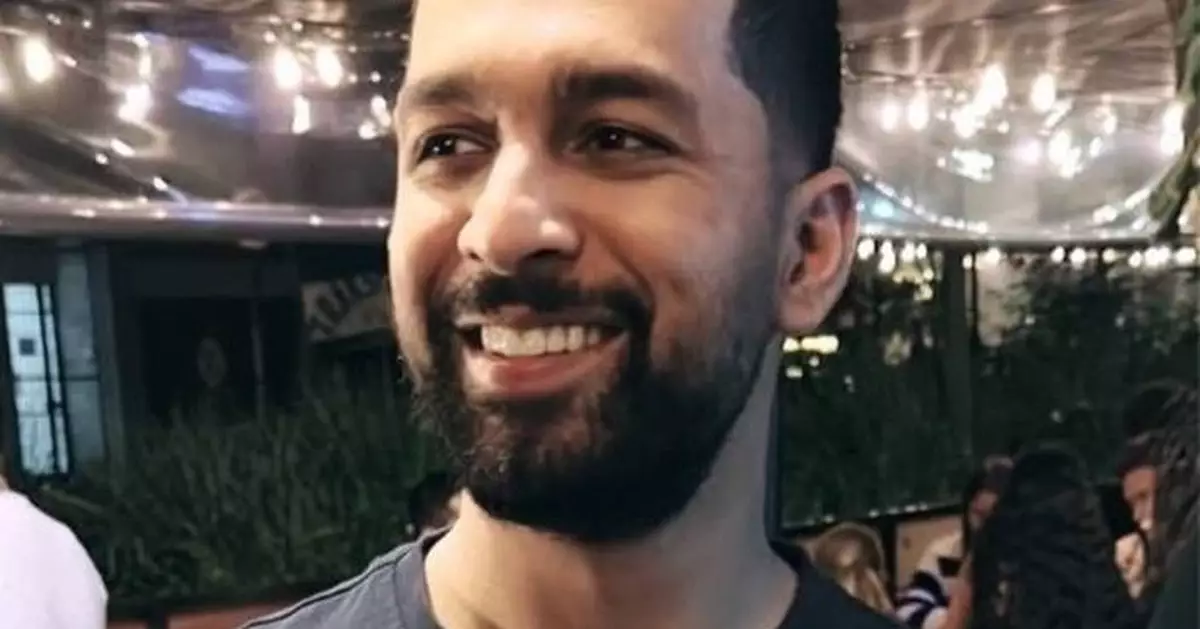
Infios, the global leader in intelligent supply chain execution, today announced the appointment of Aadil Kazmi as Head of Artificial Intelligence (AI). In this new role, Aadil will lead the next chapter of Infios's long-standing commitment to AI-driven innovation–shaping strategy, governance and product advancement as we continue our mission to relentlessly make supply chains better.
This press release features multimedia. View the full release here: https://www.businesswire.com/news/home/20250825681482/en/
Aadil will drive strategy focused on building natively integrated AI agents that unify and connect supply chain workflows from order and purchase to delivery. With experience spanning the founding of a Shopify-backed startup to leading AI deployments for Fortune 100 companies, including managing large-scale data pipelines at Amazon, he brings significant expertise across AI and supply chain execution.
“When supply chain disruption is inevitable, execution is non-negotiable. Technology that further advances intelligent, adaptive and self-healing supply chains is fundamental to our mission to relentlessly make supply chains better,” said Ed Auriemma, Chief Executive Officer at Infios. “By combining AI and accelerators that deliver intelligent supply chain execution, we give our customers the ability to anticipate change, adapt without disruption and achieve measurable results that drive lasting success.”
As Head of AI, Aadil will guide the AI roadmap across Infios’s modular portfolio of Order Management, Warehouse Management and Transportation Management solutions. His work will center on advancing agentic AI, predictive orchestration and cross-pillar intelligence, areas where Infios is already pushing the boundaries of what’s possible in supply chain execution. Aadil’s focus will be on scaling these innovations, turning complex data into real-time insights and delivering intelligent automation that adapts and learns across every layer of the supply chain.
"Supply chain leaders need more than automation and dashboards. GenAI lets us rethink workflows and define what ‘AI‑native’ really means,” said Aadil Kazmi, Head of AI at Infios. “The best supply chains run intelligently—connected to apps and, more importantly, to people where they work. We’re closing the gap between insight and execution, giving organizations the intelligence and the ability to execute with AI agents that dynamically adjust their behavior, adapting in real-time to deliver on promises."
About Infios
Infios is a global leader in intelligent supply chain execution, relentlessly making supply chains better - every single day. With a portfolio of adaptable solutions, we empower businesses of all sizes to simplify operations, optimize efficiency, and drive measurable impact. Infios serves more than 5,000 customers across 70 countries, delivering adaptable and innovative technologies that evolve with changing business needs. Our deep expertise and commitment to purposeful innovation help businesses turn supply chains into a competitive advantage, building resilience and shaping a more sustainable future. Infios is a joint venture of international technology provider Körber and global investment firm KKR.
Learn more at www.infios.com.
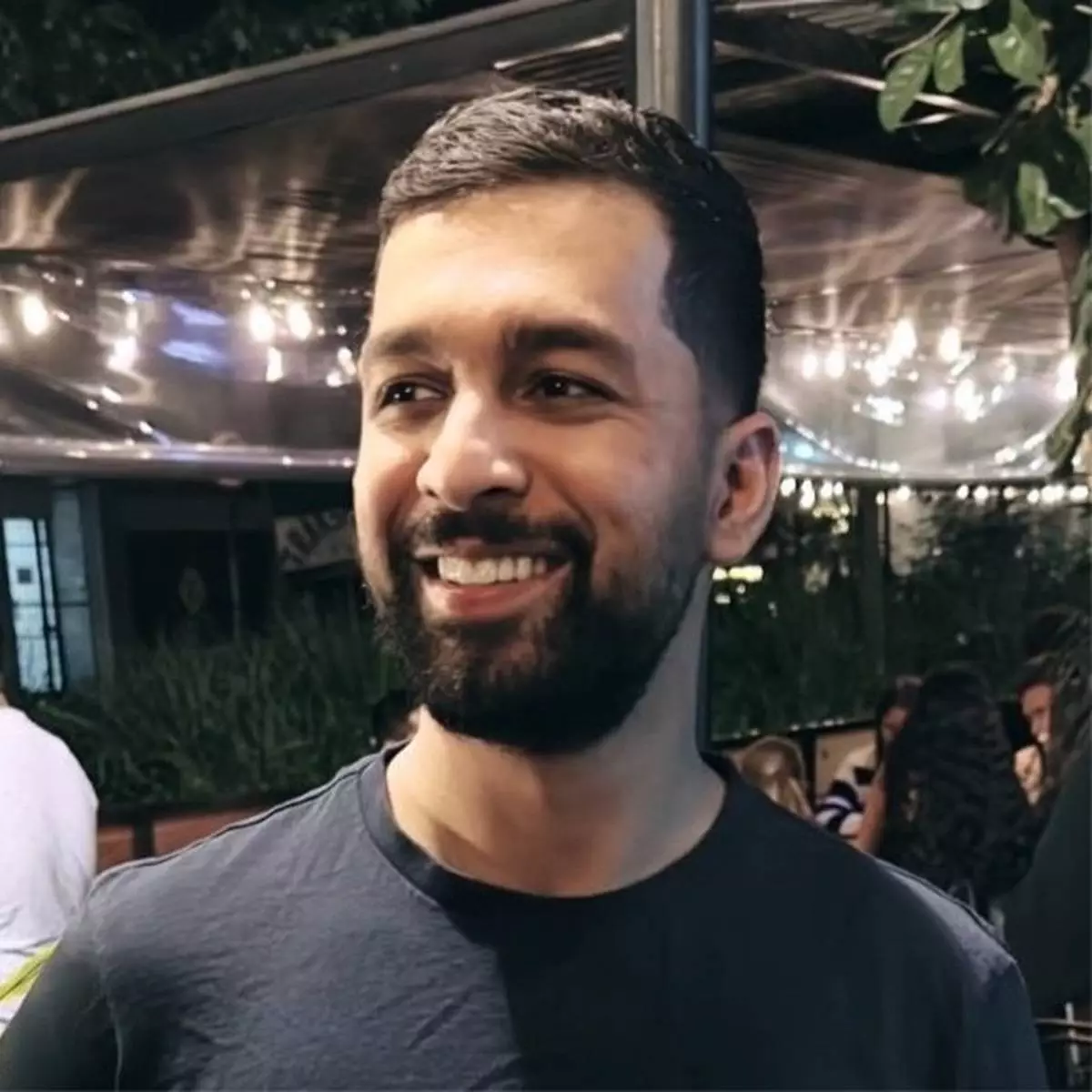
Aadil Kazmi, Head of Artificial Intelligence, Infios
Iran's top judge hinted at fast trials and executions for those who were detained in nationwide protests against the country's theocracy, even as activists said Wednesday that the death toll rose to levels unseen in decades with at least 2,572 people killed so far.
Iran’s judiciary chief Gholamhossein Mohseni-Ejei made the comments about trials and executions in a video Tuesday, despite a warning from U.S. President Donald Trump that he would “take very strong action” if executions take place.
The U.S.-based Human Rights Activists News Agency said the number of dead climbed to at least 2,571 early Wednesday. The figure dwarfs the death toll from any other round of protest or unrest in Iran in decades and recalls the chaos surrounding the country’s 1979 Islamic Revolution.
After Trump was informed on the number of deaths, he warned Iran's leaders that he was terminating any negotiations and would “act accordingly.”
Details of the crackdown began emerging Tuesday as Iranians made phone calls abroad for the first time in days after authorities severed communications countrywide when the protests broke out.
Here is the latest:
India's Embassy in Tehran urged Wednesday all Indian nationals to leave Iran, citing what it called an “evolving situation” in the Islamic Republic.
The statement, posted on X, also advised Indian citizens to remain highly vigilant and avoid protest areas.
German police said Wednesday the two climbed over a fence into embassy grounds and tore down an Iranian flag. Both wanted to hoist two pre-Islamic Republic flags but failed, German news agency dpa reported.
They left the grounds when guards used pepper spray and were detained on the sidewalk outside.
The incident happened late Tuesday.
Major Middle East governments were discouraging the Trump administration from waging a war with Iran, fearing “unprecedented consequences” in the volatile region, an Arab Gulf diplomat said Wednesday.
The Cairo-based diplomat, who was given anonymity because he wasn't authorized to speak to the media, said major governments in the region including Turkey, Egypt, Saudi Arabai and Pakistan have been “in constant contact” with the U.S. administration over a potential American strike on Iran that could explode into a “full-blown war.”
Such a war will “certainly” have dire repercussions “not only on the Middle East but also on the global economy," he said.
Iranian state television said Wednesday’s mass funeral in Tehran would include 300 bodies of security force members and civilians. The funeral is expected to take place at Tehran University under heavy security.
The Human Rights Activists News Agency, which is tracking the death toll, said more than 2,550 people have been killed, 2,403 protesters and 147 government-affiliated.
Twelve children were killed, along with nine civilians it said were not taking part in protests. More than 18,100 people have been detained, the group said.
Gauging the demonstrations and the death toll from abroad has grown more difficult and The Associated Press has been unable to independently assess the toll given the communications being disrupted in the country.
Melanie Lidman contributed from Jerusalem.
Trump’s decision to impose a 25% tariff on countries that trade with Iran could impact India, an expert said, as New Delhi already faces existing 50% U.S. trade levies due its purchases of Russian oil.
Abhijit Mukhopadhyay, a senior economist at the Chintan Research Foundation in New Delhi, said the bigger risk is not India-Iran trade, but India’s access to the U.S. market as its exports to Iran are modest.
India mainly exports rice, tea, sugar, pharmaceuticals and electrical machinery to Iran, while importing dry fruits and chemical products. Textiles and garments, gems and jewelry and engineering goods are likely to be the most vulnerable sectors, he said.
Trump’s latest move also could affect India’s investments in Iran including the strategically important Chabahar port, which gives India a trade route to Afghanistan, Central Asia and Europe while bypassing Pakistan, Mukhopadhyay said.
Iran’s judiciary chief signals fast trials and executions for those detained in nationwide protests.
Gholamhossein Mohseni-Ejei made the comment in a video shared by Iranian state television on Wednesday.
He emphasized the need for swift action, saying delays would lessen the impact.
His remarks challenge Trump, who warned Iran about executions in an interview aired Tuesday.
Trump stated the U.S. would take strong action if Iran proceeded with executions. The situation highlights escalating tensions between the two countries over the handling of the protests.
Dozens of Pakistani students studying in Iran have returned home through a remote southwestern border crossing, a Pakistani immigration official said Wednesday.
Federal Investigation Agency spokesperson in Quetta city, Samina Raisani, said about 60 students crossed into Pakistan on Tuesday through Gabd border in Balochistan province with valid travel documents.
More students were expected to return through the same crossing later Wednesday, she said.
Mudassir Tipu, Pakistan’s ambassador to Iran, said Tuesday that Iranian universities had rescheduled exams and permitted international students to leave the country.
The satellite internet provider Starlink now offers free service in to people Iran who have access to the company's receivers, activists said Wednesday.
Mehdi Yahyanejad, a Los Angeles-based activist who helped get the units into Iran, told The Associated Press that the free service had started. Other activists also confirmed in messages online that the service was free.
Starlink has been the only way for Iranians to communicate with the outside world since authorities shut down the internet Thursday night as nationwide protests swelled and they began a bloody crackdown against demonstrators.
Starlink did not immediately acknowledge the decision.

This frame grab from videos taken between Jan. 9 and Jan. 11, 2026, and circulating on social media purportedly shows images from a morgue with dozens of bodies and mourners after crackdown on the outskirts of Iran's capital, in Kahrizak, Tehran Province. (UGC via AP)