PORT-AU-PRINCE, Haiti (AP) — Police in Haiti announced Tuesday that they regained control of a critical telecommunications hub that heavily armed gangs had seized last week, briefly disrupting air traffic and internet connections.
The takeover was a rare success for Haitian authorities and a U.N.-backed mission led by Kenyan police that have struggled to push back powerful gangs seeking full control of the capital, Port-au-Prince.
The police operation at the Téléco site in the once peaceful community of Kenscoff began before dawn on Monday and lasted about two hours, according to Michel-Ange Louis Jeune, spokesperson for Haiti’s National Police.
“This is a strong message that the new police chief sent,” he said, referring to André Jonas Vladimir Paraison, who was appointed to the post earlier this month.
Jeune did not take questions during the news conference and did not say how many people, if any, were killed during the operation.
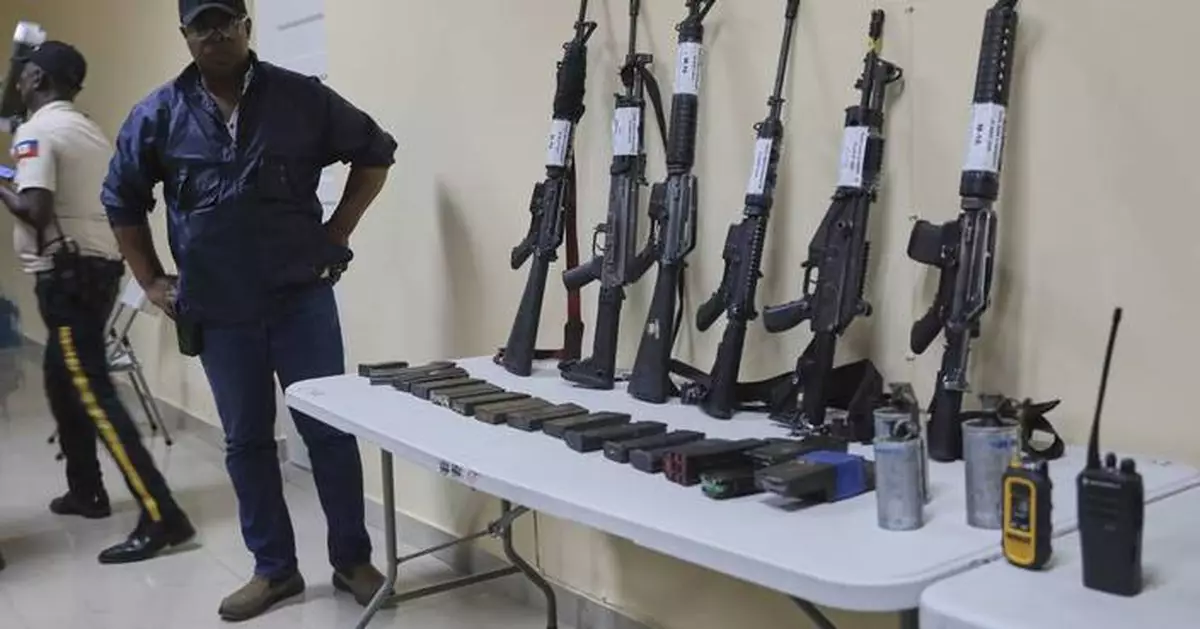
He said police found numerous guns, including automatic weapons with scratched-out serial numbers, and more than 1,000 bullets.
“When the population is sleeping, the police are not sleeping. They are working to ensure that people can sleep,” he said.
Last week, gangs filmed themselves taking over the Téléco site, telling the government it had less than a week to start negotiations. The person in the video did not say what, if anything, the gangs were demanding.
“You see, this is not a rumor. I am in Téléco,” a gang member who goes by the name of Didi says in the video. “If I don’t receive any calls from you guys, I’m going to get my clan to come burn the whole system now, and there won’t be any communications.”
In another video, one gang member is seen apparently switching off multiple buttons on a large server and using a screwdriver to disassemble another server as the room he’s in stops humming. He later stacks several motherboards outside and films them as he says, “I’m taking everything.”
Two days after the takeover, Haiti’s civil aviation agency condemned the action but noted that it only caused minor disruptions since it was able to implement certain measures to circumvent the crisis.
The attack was blamed on Viv Ansanm, a powerful gang federation that struck other key government infrastructure last year and was designated as a foreign terror organization by the U.S. earlier this year. Early last year, gunmen forced Haiti’s main international airport to close for nearly three months and raided the country’s two biggest prisons, releasing some 4,000 inmates.
In the video where gunmen raided Téléco last week, Didi called on the government to hand out bullets to police so they could come and go after gang members.
Godfrey Otunge, the Kenyan commander of the multinational force in Haiti, was present at Tuesday’s news conference but spoke only briefly.
“Be patient; you will see results,” he said as the police spokesperson promised similar raids in other gang-controlled areas.
Téléco is located in the same community as an orphanage that gangs raided earlier this month. They kidnapped eight people, including an Irish missionary and a 3-year-old child, who remain missing.
Gangs are estimated to control about 90% of Port-au-Prince, and they have repeatedly attacked Kenscoff this year to try and take over the area.
Experts say they are concerned about a recent video posted on social media in which Jimmy Chérizier, best known as Barbecue and one of the leaders of Viv Ansanm, is seen having a friendly chat with Kempes Sanon, who used to be one of his fiercest rivals.
Sanon is the leader of Haut Belair/Les Argentins, an armed group that was a member of G- Pèp, a gang federation that used to clash heavily with Chérizier’s G9 coalition.
“It was a bit unusual,” Diego Da Rin, an analyst with the International Crisis Group, said of the video, noting it’s the first time Sanon publicly shows his face in that manner.
Both Chérizier and Sanon used to be police officers, and experts wonder what the apparent new friendship might bode for Haiti.
Coto reported from San Juan, Puerto Rico.
Follow AP’s coverage of Latin America and the Caribbean at https://apnews.com/hub/latin-america
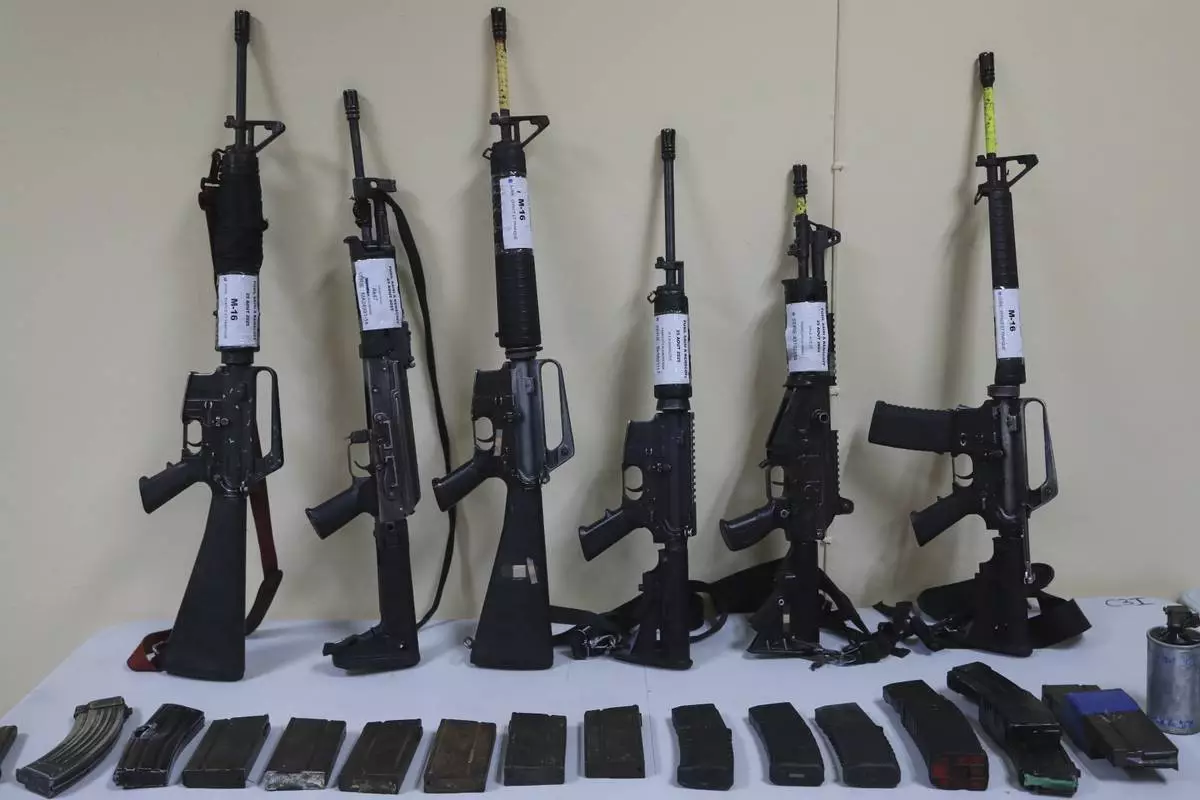
Weapons that police say were seized from alleged gang members sit on display for the media during a press conference at police headquarters in Port-au-Prince, Haiti, Tuesday, Aug. 26, 2025.(AP Photo/Odelyn Joseph)
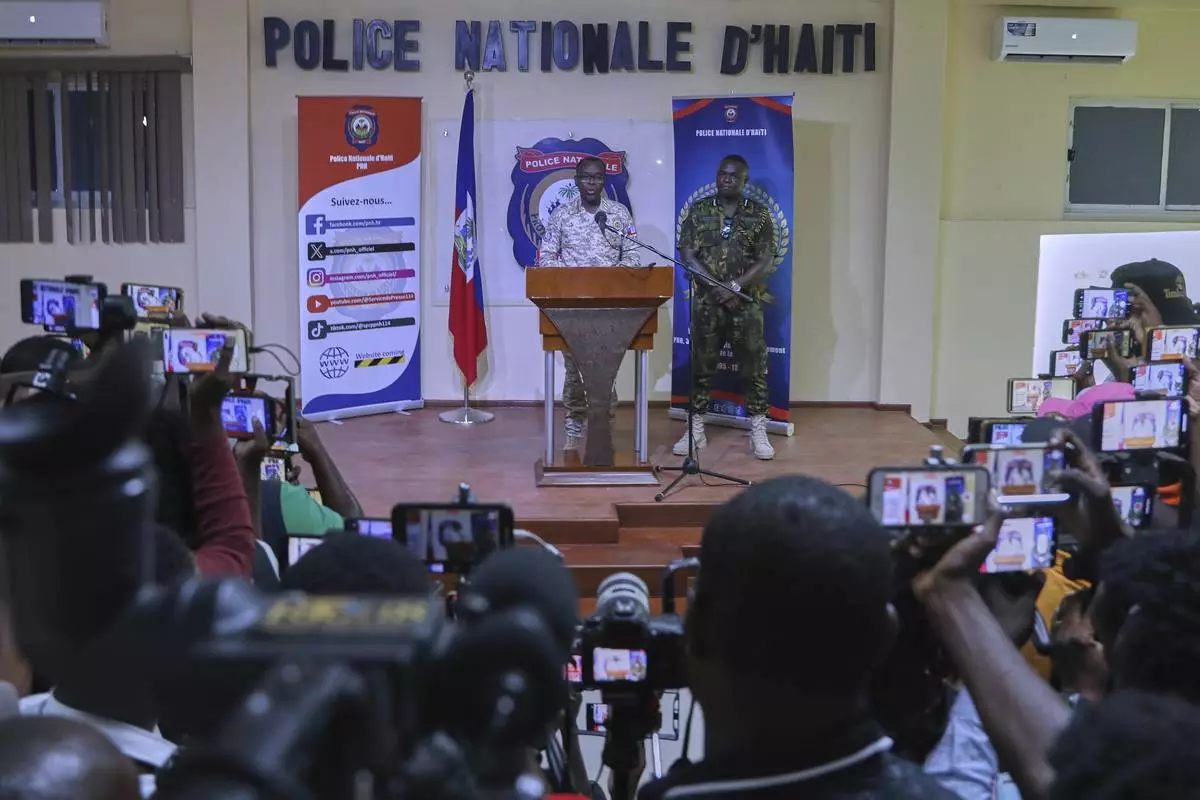
Haitian National Police spokesperson Michel-Ange Louis Jeune and Kenyan police spokesperson Jack Ombaka, right, hold a press conference at the police headquarters in Port-au-Prince, Haiti, Tuesday, Aug. 26, 2025.(AP Photo/Odelyn Joseph)
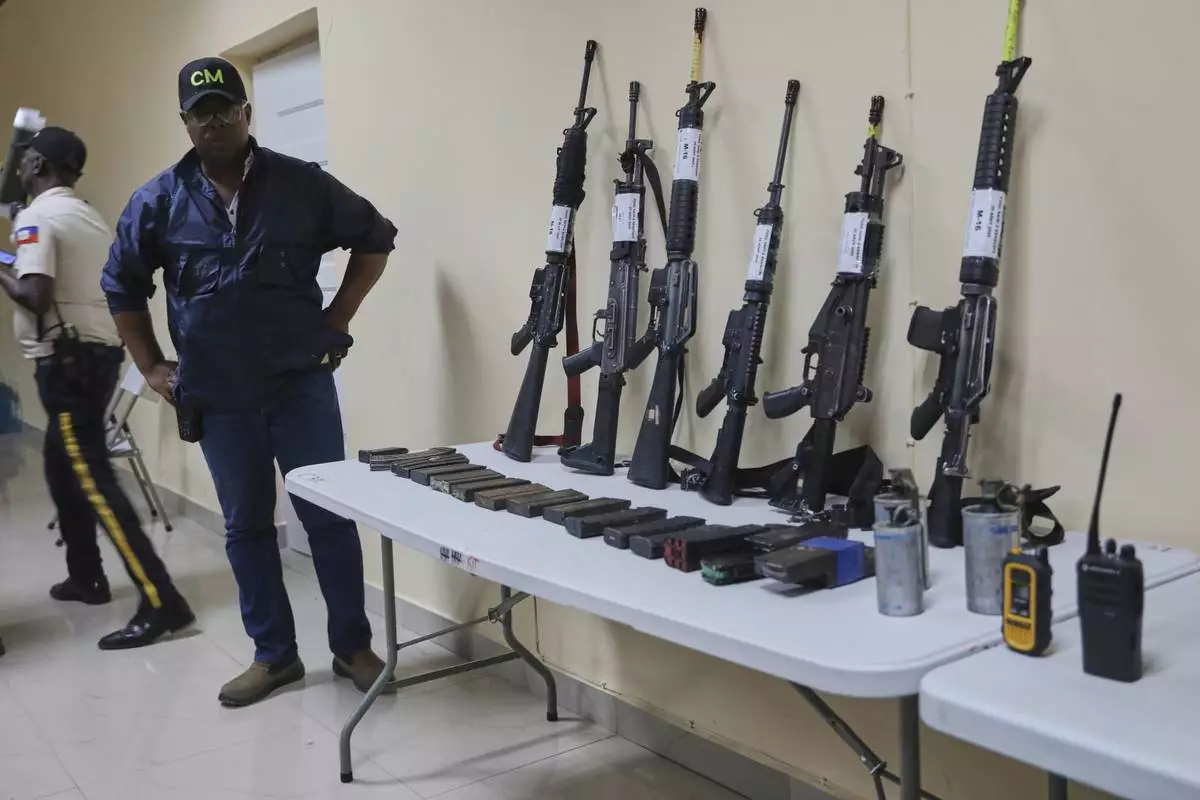
Weapons that police say were seized from alleged gang members sit on display for the media during a press conference at police headquarters in Port-au-Prince, Haiti, Tuesday, Aug. 26, 2025.(AP Photo/Odelyn Joseph)
KAMPALA, Uganda (AP) — One figure looms large ahead of Uganda's elections Thursday, although he is not on the ballot: the president's son and military commander, Muhoozi Kainerugaba.
Kainerugaba, long believed to be the eventual successor, stood down for his father, President Yoweri Museveni, who is seeking a seventh term that would bring him closer to five decades in power.
Yet Kainerugaba, a four-star general, remains a key figure in Ugandan politics as the chief enforcer of his father’s rule in this east African country. He is the top military commander, appointed by his father nearly two years ago after Kainerugaba told a political rally he was ready to lead.
Kainerugaba’s appointment as army chief put his political campaign on hold — a least, critics say, for as long as Museveni still wants to stay.
Many Ugandans are now resigned to the prospect of hereditary rule, once vehemently denied by government officials who said claims of a secret “Muhoozi Project” for leadership were false and malicious.
Kainerugaba himself has been honest about his presidential hopes since at least 2023 and openly says he expects to succeed his father.
“I will be President of Uganda after my father,” he said in 2023, writing on social platform X. “Those fighting the truth will be very disappointed.”
The president’s son is more powerful than ever, his allies strategically deployed in command positions across the security services. As the presumed heir to the presidency, he is the recipient of loyalty pledges from candidates seeking minor political offices.
Kainerugaba joined the army in the late 1990s, and his fast rise to the top of the armed forces proved controversial.
In February 2024, a month before Kainerugaba was named army chief, the president officially delegated some of his authority as commander-in-chief to the head of the military.
Exercising authority previously reserved for the president, including promoting army officers of high rank and creating new army departments, Kainerugaba is more powerful than any army chief before him, said Mwambutsya Ndebesa, a political historian at Uganda’s Makerere University, adding that family rule appears inevitable.
“Honestly, I don’t see a way out through constitutional means,” he said.
Elections, he said, “is just wasting time, legitimizing authority but not intended as a democratic goal... Any change from Museveni will be determined by the military high command.”
With Museveni not saying when he would retire, a personality cult around Kainerugaba has emerged. Some Ugandans stage public celebrations of his birthday. Campaign posters of many seeking parliamentary seats often feature the emblem of Kainerugaba’s political group, the Patriotic League of Uganda. Speaker of Parliament Anita Among last year called Kainerugaba “God the Son."
The speaker's comments underscored the political rise of Kainerugaba in a country where the military is the most powerful institution and Museveni has no recognizable successors in the upper ranks of his party, the National Resistance Movement.
Some believe Kainerugaba is poised to take over in the event of a disorderly transition from Museveni, who is 81. One critic, ruminating on Kainerugaba’s military rank, has been urging the son to depose his father.
“I have endlessly appealed to Muhoozi Kainerugaba to, at least, pretend to coup his dad, become the opposition hero, and accuse the old man of all the crimes the general Kampala public accuses him of,” Yusuf Serunkuma, an academic and independent analyst, wrote in the local Observer newspaper last year.
“Sadly, Kainerugaba hasn’t heeded my calls thus far. That he is being pampered by his father to the presidency doesn’t look good at all.”
Kainerugaba’s supporters say he is humble in private and critical of the corruption that has plagued the Museveni government. They also say he offers Uganda the opportunity of a peaceful transfer of political power in a country that has not had one since independence from British colonial rule in 1962.
In addition to opposing family rule, his critics point out that Kainerugaba has behaved badly in recent years as the author of often-offensive tweets.
He has threatened to behead Bobi Wine, a presidential candidate who is the most prominent opposition figure in Uganda. He has said the opposition figure Kizza Besigye, jailed over alleged treason charges, should be hanged "in broad daylight” for allegedly plotting to kill Museveni. And he has appeared to confound even his father, who briefly removed him from his military duties in 2022 when Kainerugaba threatened on X to capture the Kenyan capital of Nairobi in two weeks.
Wine said in a recent interview with The Associated Press that Kainerugaba's army "has largely taken over the election.” Wine said his supporters are the victims of violence, including beatings, perpetrated by soldiers.
In its most recent dispatch ahead of voting, Amnesty International said the security forces were engaging in a “brutal campaign of repression.” It cited one event at a rally by Wine’s party, the National Unity Platform, in eastern Uganda on Nov. 28, when one man died after the military blocked an exit and open fired on the crowd.
It was not possible to get a comment from Kainerugaba, who rarely gives interviews.
Frank Gashumba, a Kainerugaba ally and vice chairman of the Patriotic League of Uganda, said Wine was exaggerating the threat against him. “Nobody is touching him,” he said. “He’s lacking the limelight.”
Only one senior member of the president’s party has publicly pushed back against hereditary rule.
Kahinda Otafiire, a retired major general who is among those who were by Museveni’s side when he first took power by force after a guerrilla war in 1986, has urged Kainerugaba to seek leadership on his own merits rather than as his father’s son.
“If you say so-and-so’s son should take over from the father, his son will also want to take over from his grandfather. Then there will be Sultan No. 1, Sultan No. 2, and then the whole essence of democracy, for which we fought, will be lost," Otafiire, who serves as Uganda's interior minister, told local broadcaster NBS last year.
"Let there be fair competition, including Gen. Muhoozi. Let him prove to Ugandans that he is capable, not as Museveni’s son but as he, Muhoozi, who is competent to manage the country.”
Follow AP’s Africa coverage at: https://apnews.com/hub/africa
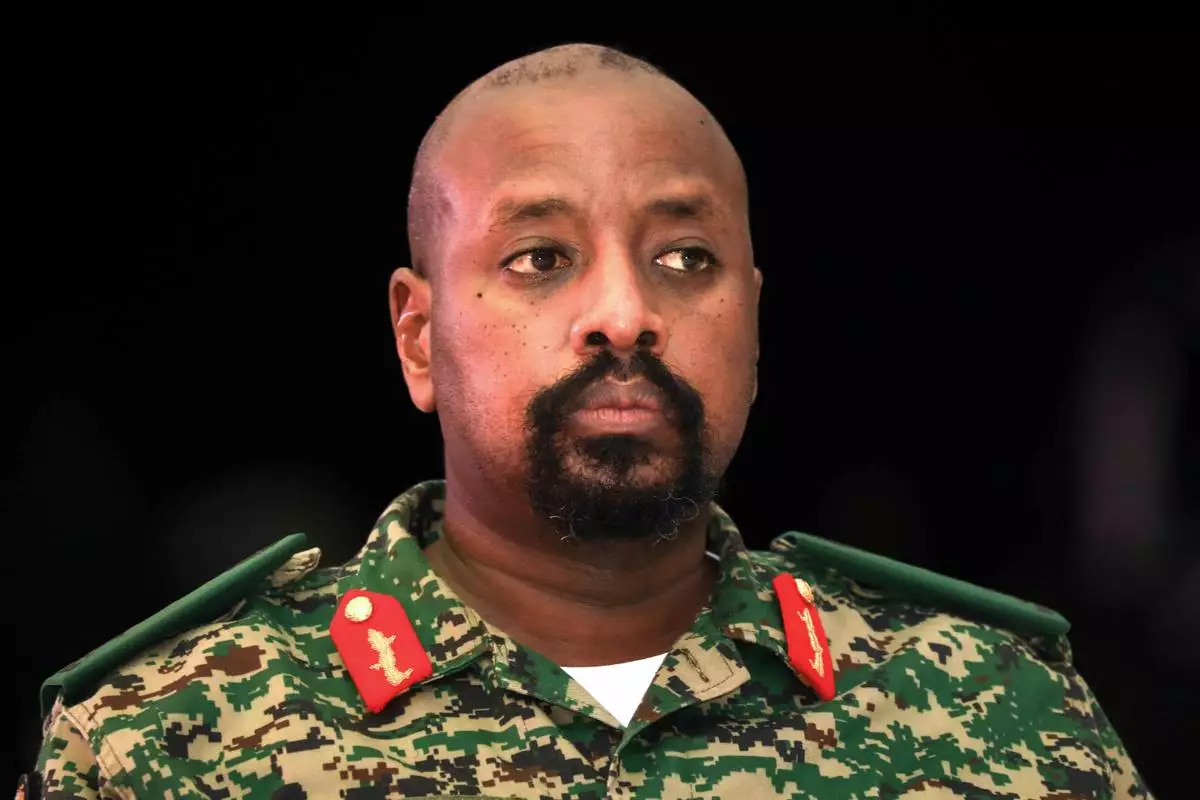
FILE - Lt. Gen. Muhoozi Kainerugaba, son of Uganda's President Yoweri Museveni, attends a "thanksgiving" ceremony in Entebbe, Uganda, May 7, 2022. (AP Photo/Hajarah Nalwadda, File)