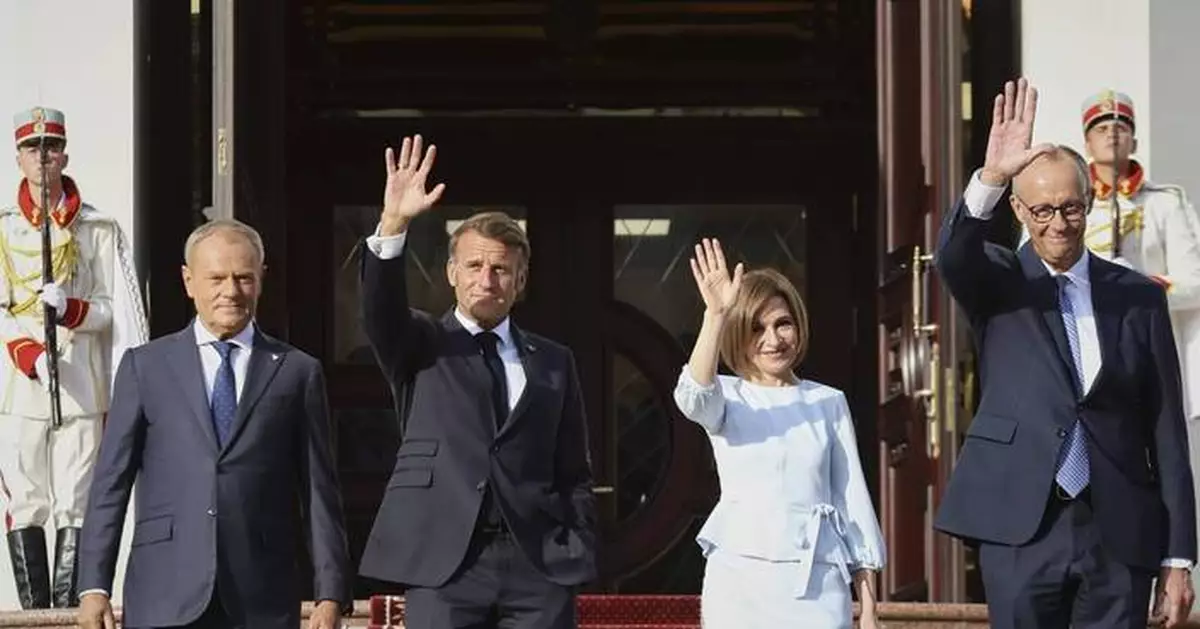
CHISINAU, Moldova (AP) — The leaders of France, Germany, and Poland traveled Wednesday to Moldova to mark the country’s 34 years of independence from the Soviet Union, a month before it holds parliamentary elections that its president warns could draw Russian interference.
France’s President Emmanuel Macron, Germany’s Chancellor Friedrich Merz, and Poland’s Prime Minister Donald Tusk arrived in the capital of the European Union-candidate country for talks with pro-Western Moldovan President Maia Sandu. The leaders will also attend a public celebration to mark Independence Day, which Moldova proclaimed on August 27, 1991.
Macron said in Chisinau that the visit aims to show that “Moldova matters and that its future lies with Europe and the European Union."
The European leaders' visit comes a month after Sandu warned that Russia is preparing an “unprecedented interference” campaign to undermine a parliamentary vote scheduled for Sep. 28, saying “it poses a direct threat to our national security, sovereignty, and our country’s European future.”
Russia has denied meddling in Moldova.
“Your presence here — France, Germany, Poland — shows not only your support for Moldova, but that the European project is alive, and that we are part of it,” Sandu said on Wednesday. “And let me say this clearly: There is no alternative to Europe. Without the European Union, Moldova will remain trapped in the past.”
“Today, our independence, our sovereignty, our peace are tested more than ever,” she added, reiterating the many ways Russia is allegedly trying to undermine her country. “These are immense pressures. But it is up to us whether they divide us or stop us on our path.”
Brussels agreed to open accession negotiations with Moldova for EU membership last year after granting official candidate status in 2022, the same day as neighboring Ukraine. Last year, Moldovans voted narrowly in favor of securing the country’s EU path. The same day, a presidential election was held, which secured Sandu a second term. But those two votes were overshadowed by widespread claims of Russian meddling, which Moscow denied.
Moldova’s staunchly pro-European path in recent years has drawn the ire of Moscow. Moldovan authorities have long accused Moscow of conducting a sprawling “hybrid war” against it — spreading disinformation, vote-buying, paid protests — to destabalize the country and to try and derail its EU path.
Macron said France will continue to provide strong support to Moldova during the next stages of Moldova's journey towards EU membership, a process that will likely take years.
“While a few hundred kilometers from your capital, Russia’s war of aggression against Ukraine continues to rage, it is also essential to remember that European integration is a clear choice from Moldova in favor of peace and justice,” Macron said. “Kremlin propaganda claims that Europeans are prolonging the war and that the European Union oppresses peoples. These are lies ... the European Union is not the Soviet Union.”
Germany's Merz also emphasized Europe’s solidarity with Moldova and warned that “every day, Russia works tirelessly to disrupt and undermine freedom, prosperity, and peace” in the former Soviet republic.
“In the run-up to the upcoming parliamentary elections in this country, not a day goes by without massive hybrid attacks from Russia,” Merz said. “Moldova’s democracy is in the crosshairs, both online and offline. A free, open, liberal society is in the crosshairs.”
“That is why Germany is helping. And that is why Europe is helping. We are supporting Moldova in the fight against disinformation and in the fight against cyber campaigns,” the chancellor added. “We are helping by strengthening their security forces."
Moldova’s governing pro-Western Party of Action and Solidarity, or PAS, has been in power since 2021, and risks losing its majority in the upcoming fall election, with no clear pro-European alternatives on the ballot.
Cristian Cantir, a Moldovan associate professor of international relations at Oakland University, told The Associated Press that “most Moldovans understand that the visit is essentially a show of support for Moldova’s pro-European path.”
“There really is no other kind of viable pro-European or pro-Western party,” he said, adding that if PAS fails to win a majority, “things get very complicated because every other party is not as pro-European, and is much more committed to reconciliation or some sort of rapprochement with Russia.”
—
Stephen McGrath reported from Leamington Spa, U.K; Kirsten Grieshaber contributed from Berlin, and Sylvie Corbet from Paris.
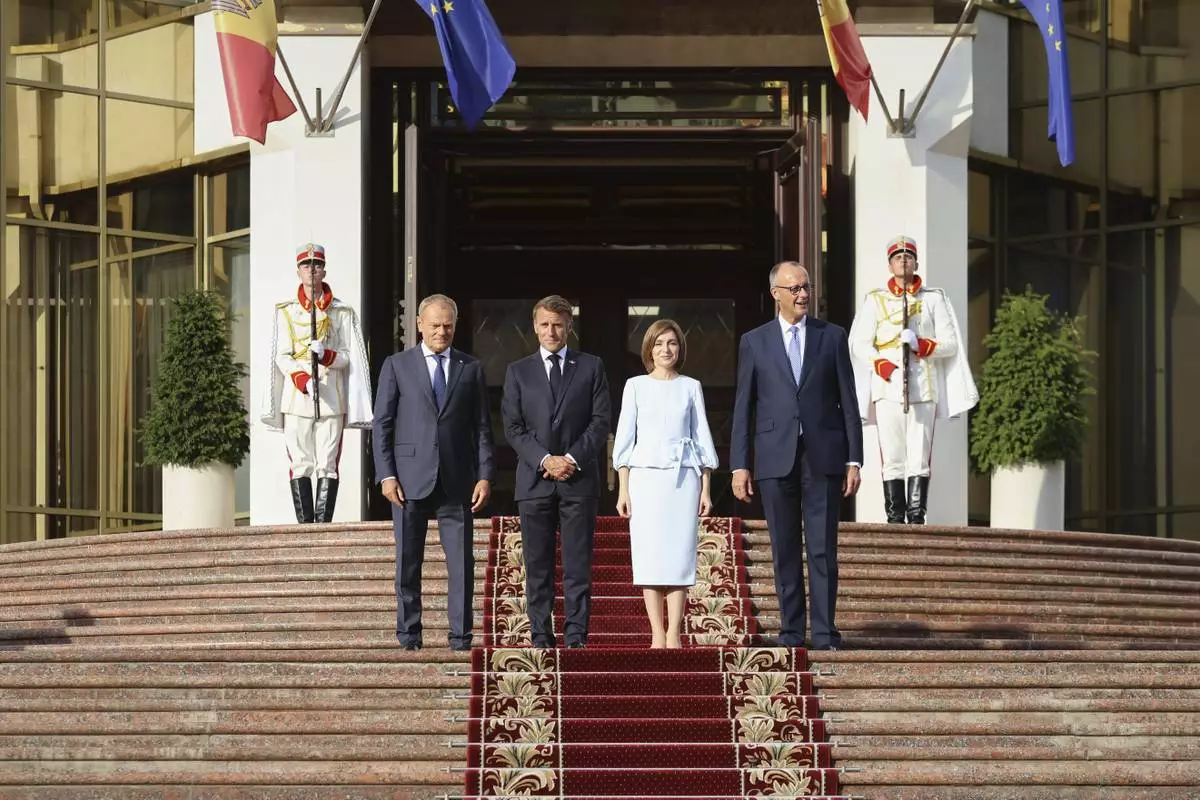
From left, Polish Prime Minister Donald TUsk, French President Emmanuel Macron, Moldova's President Maia Sandu and German Chancellor Friedrich Merz pose outside the country's presidency headquarters in Chisinau, Moldova, Wednesday, Aug. 27, 2025. (AP Photo/Aurel Obreja)
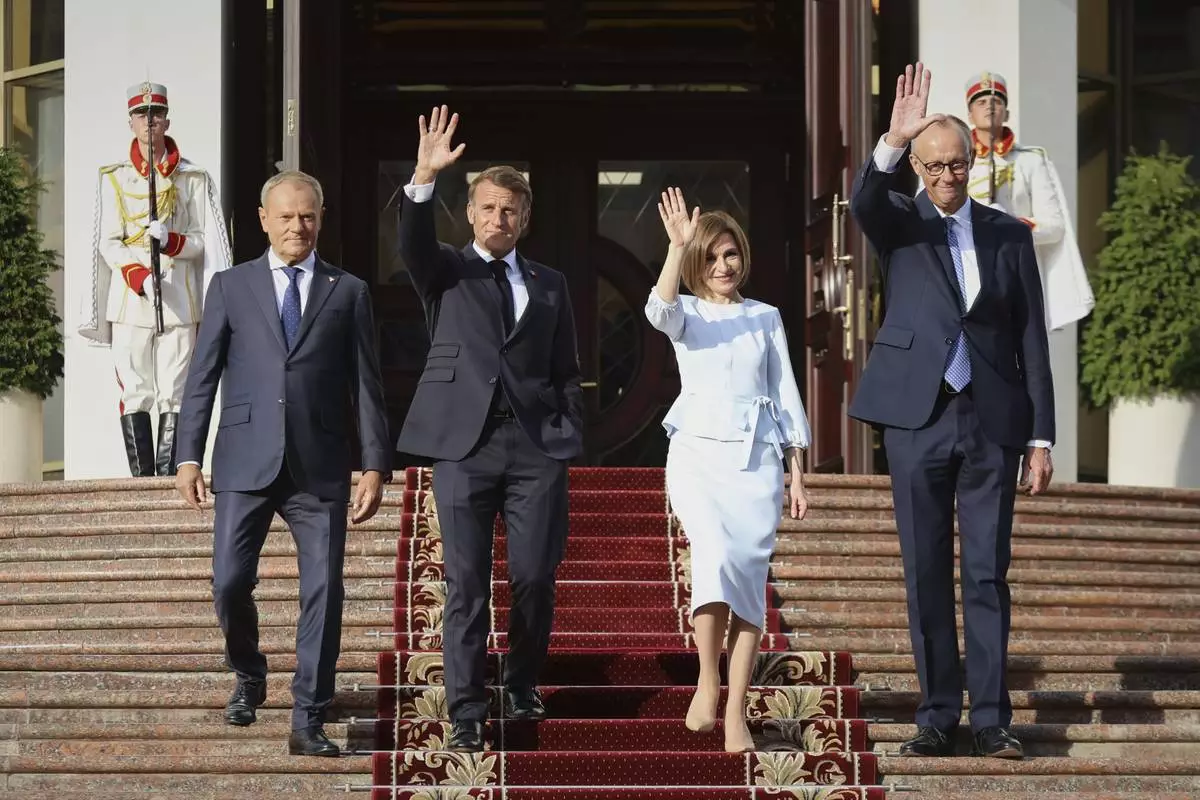
From left, Polish Prime Minister Donald TUsk, French President Emmanuel Macron, Moldova's President Maia Sandu and German Chancellor Friedrich Merz leave the country's presidency headquarters in Chisinau, Moldova, Wednesday, Aug. 27, 2025. (AP Photo/Aurel Obreja)

From left, Polish Prime Minister Donald TUsk, French President Emmanuel Macron, Moldova's President Maia Sandu and German Chancellor Friedrich Merz leave the country's presidency headquarters in Chisinau, Moldova, Wednesday, Aug. 27, 2025. (AP Photo/Aurel Obreja)
MADRID (AP) — Venezuelans living in Spain are watching the events unfold back home with a mix of awe, joy and fear.
Some 600,000 Venezuelans live in Spain, home to the largest population anywhere outside the Americas. Many fled political persecution and violence but also the country’s collapsing economy.
A majority live in the capital, Madrid, working in hospitals, restaurants, cafes, nursing homes and elsewhere. While some Venezuelan migrants have established deep roots and lives in the Iberian nation, others have just arrived.
Here is what three of them had to say about the future of Venezuela since U.S. forces deposed Nicolás Maduro.
David Vallenilla woke up to text messages from a cousin on Jan. 3 informing him “that they invaded Venezuela.” The 65-year-old from Caracas lives alone in a tidy apartment in the south of Madrid with two Daschunds and a handful of birds. He was in disbelief.
“In that moment, I wanted certainty,” Vallenilla said, “certainty about what they were telling me.”
In June 2017, Vallenilla’s son, a 22-year-old nursing student in Caracas named David José, was shot point-blank by a Venezuelan soldier after taking part in a protest near a military air base in the capital. He later died from his injuries. Video footage of the incident was widely publicized, turning his son’s death into an emblematic case of the Maduro government’s repression against protesters that year.
After demanding answers for his son’s death, Vallenilla, too, started receiving threats and decided two years later to move to Spain with the help of a nongovernmental organization.
On the day of Maduro’s capture, Vallenilla said his phone was flooded with messages about his son.
“Many told me, ‘Now David will be resting in peace. David must be happy in heaven,’” he said. “But don't think it was easy: I spent the whole day crying.”
Vallenilla is watching the events in Venezuela unfold with skepticism but also hope. He fears more violence, but says he has hope the Trump administration can effect the change that Venezuelans like his son tried to obtain through elections, popular protests and international institutions.
“Nothing will bring back my son. But the fact that some justice has begun to be served for those responsible helps me see a light at the end of the tunnel. Besides, I also hope for a free Venezuela.”
Journalist Carleth Morales first came to Madrid a quarter-century ago when Hugo Chávez was reelected as Venezuela's president in 2000 under a new constitution.
The 54-year-old wanted to study and return home, taking a break of sorts in Madrid as she sensed a political and economic environment that was growing more and more challenging.
“I left with the intention of getting more qualified, of studying, and of returning because I understood that the country was going through a process of adaptation between what we had known before and, well, Chávez and his new policies," Morales said. "But I had no idea that we were going to reach the point we did.”
In 2015, Morales founded an organization of Venezuelan journalists in Spain, which today has hundreds of members.
The morning U.S. forces captured Maduro, Morales said she woke up to a barrage of missed calls from friends and family in Venezuela.
“Of course, we hope to recover a democratic country, a free country, a country where human rights are respected,” Morales said. “But it’s difficult to think that as a Venezuelan when we’ve lived through so many things and suffered so much.”
Morales sees it as unlikely that she would return home, having spent more than two decades in Spain, but she said she hopes her daughters can one day view Venezuela as a viable option.
“I once heard a colleague say, ‘I work for Venezuela so that my children will see it as a life opportunity.’ And I adopted that phrase as my own. So perhaps in a few years it won’t be me who enjoys a democratic Venezuela, but my daughters.”
For two weeks, Verónica Noya has waited for her phone to ring with the news that her husband and brother have been freed.
Noya’s husband, Venezuelan army Capt. Antonio Sequea, was imprisoned in 2020 after having taken part in a military incursion to oust Maduro. She said he remains in solitary confinement in the El Rodeo prison in Caracas. For 20 months, Noya has been unable to communicate with him or her brother, who was also arrested for taking part in the same plot.
“That’s when my nightmare began,” Noya said.
Venezuelan authorities have said hundreds of political prisoners have been released since Maduro's capture, while rights groups have said the real number is a fraction of that. Noya has waited in agony to hear anything about her four relatives, including her husband's mother, who remain imprisoned.
Meanwhile, she has struggled with what to tell her children when they ask about their father's whereabouts. They left Venezuela scrambling and decided to come to Spain because family roots in the country meant that Noya already had a Spanish passport.
Still, she hopes to return to her country.
“I’m Venezuelan above all else,” Noya said. “And I dream of seeing a newly democratic country."
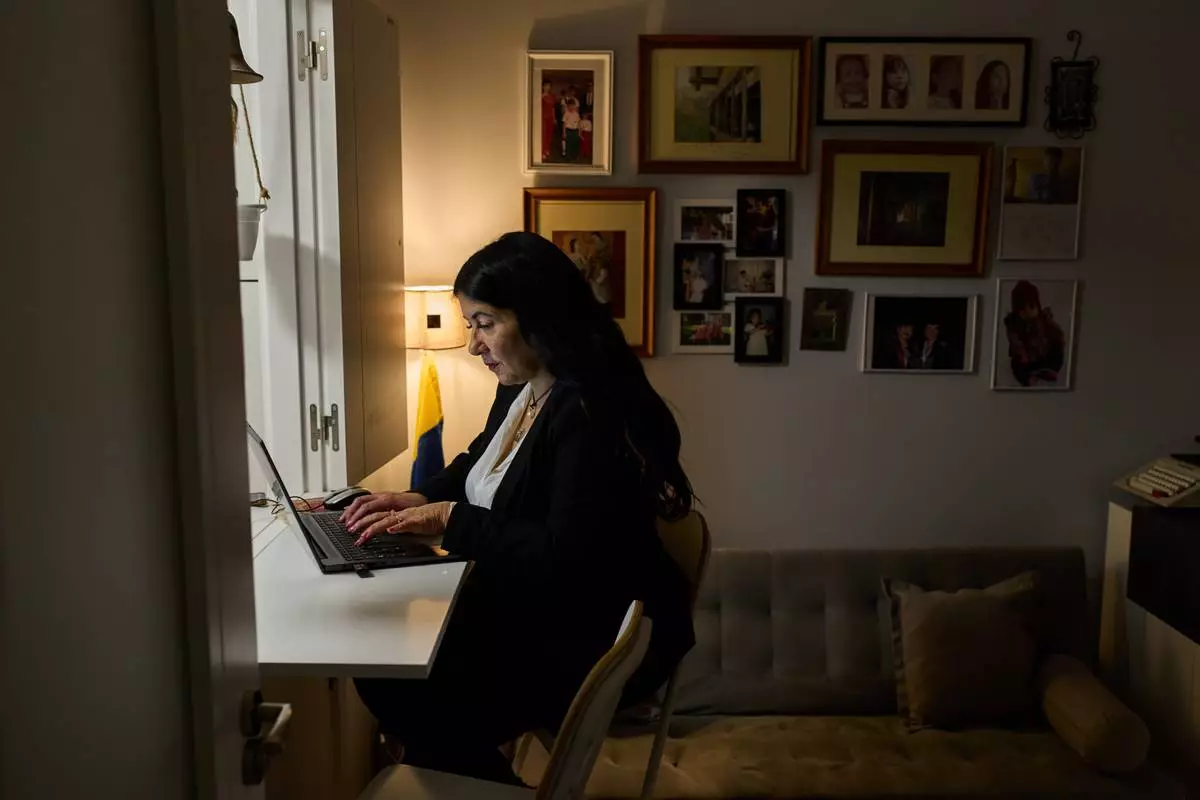
Venezuelan journalist Caleth Morales works in her apartment's kitchen in Madrid, Wednesday, Jan. 14, 2026. (AP Photo/Bernat Armangue)
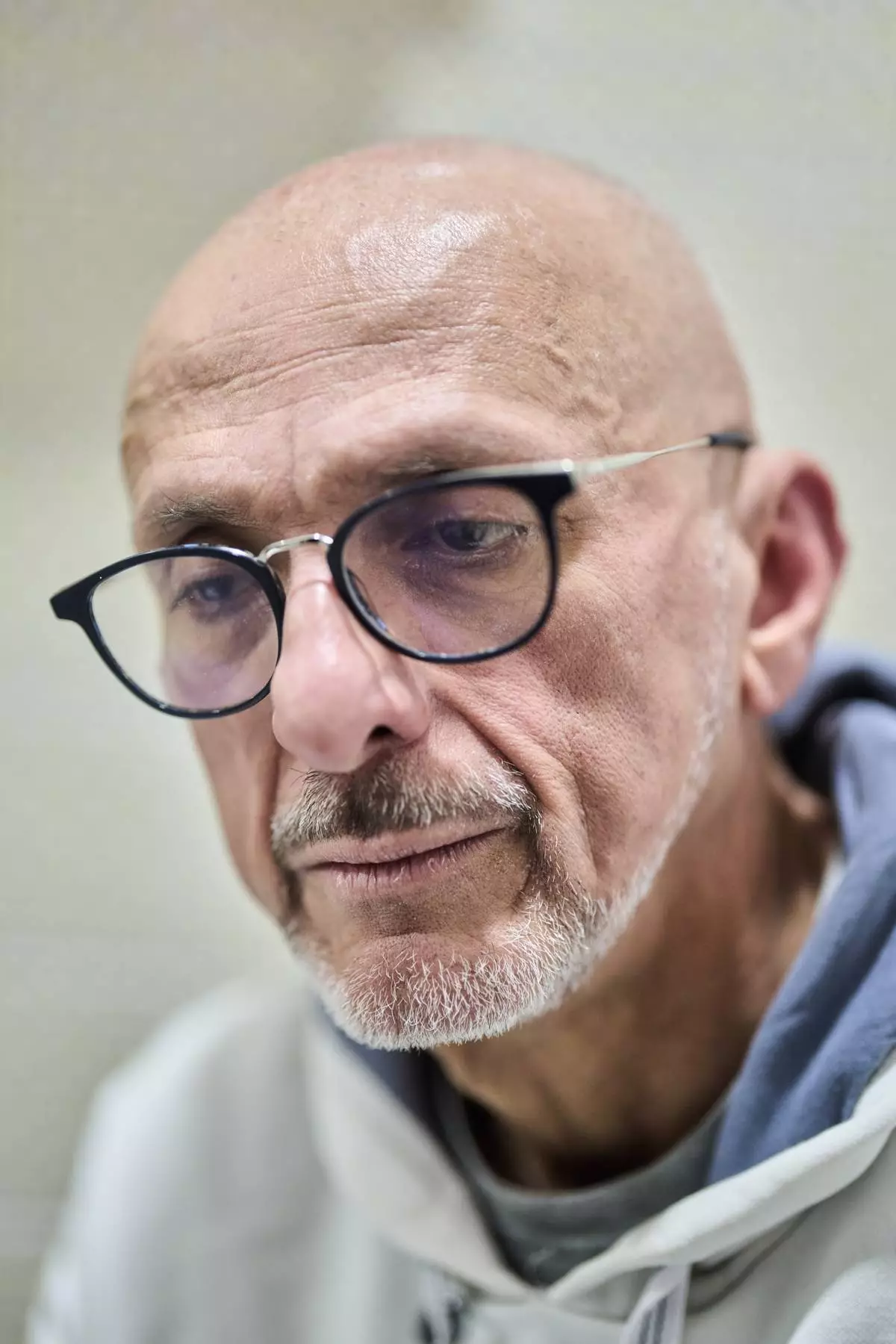
David Vallenilla, father of the late David José Vallenilla Luis, sits in his apartment's kitchen in Madrid, Tuesday, Jan. 13, 2026. (AP Photo/Bernat Armangue)
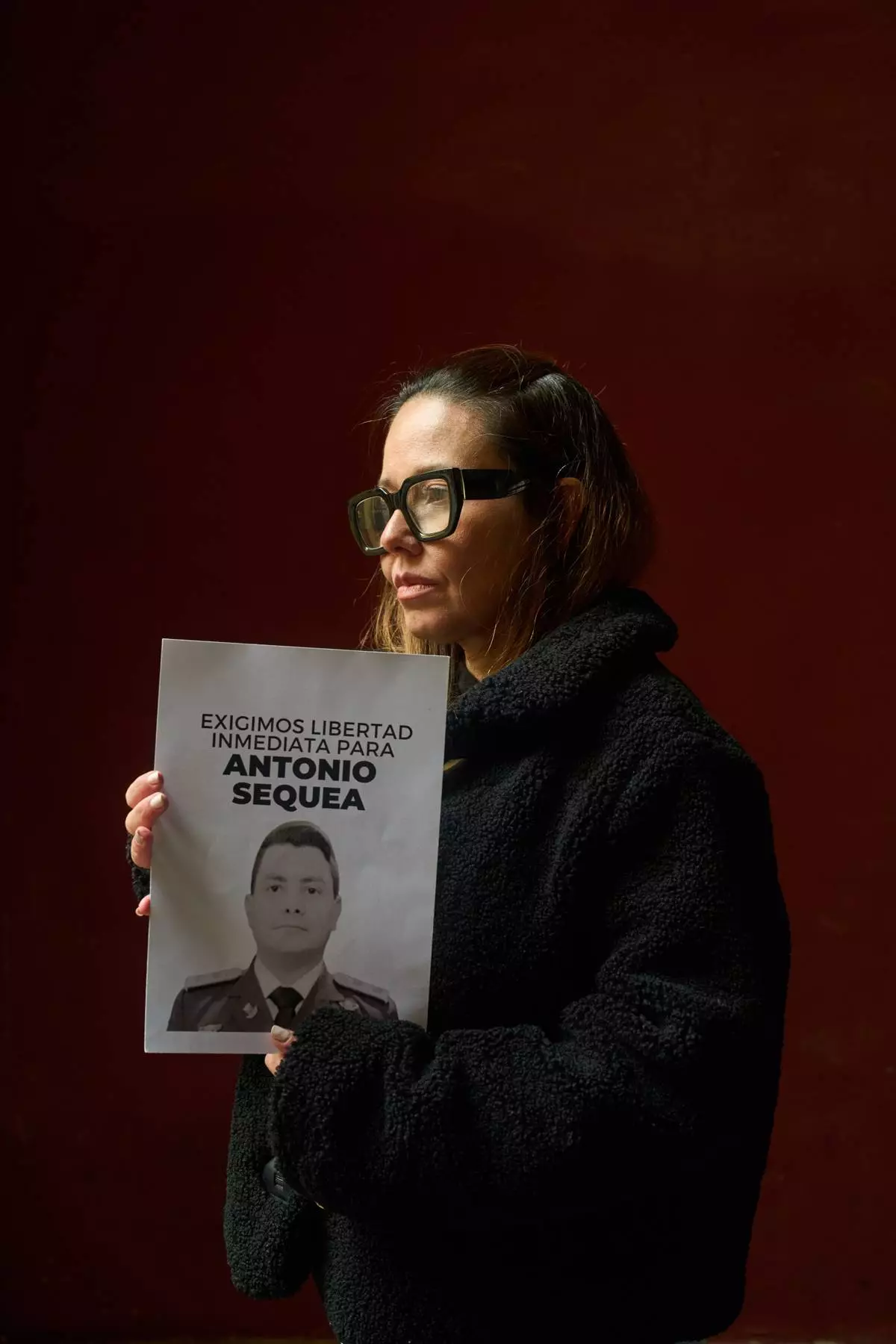
Veronica Noya holds a picture of her husband Antonio Sequea in Madrid, Thursday, Jan. 15, 2026. (AP Photo/Bernat Armangue)
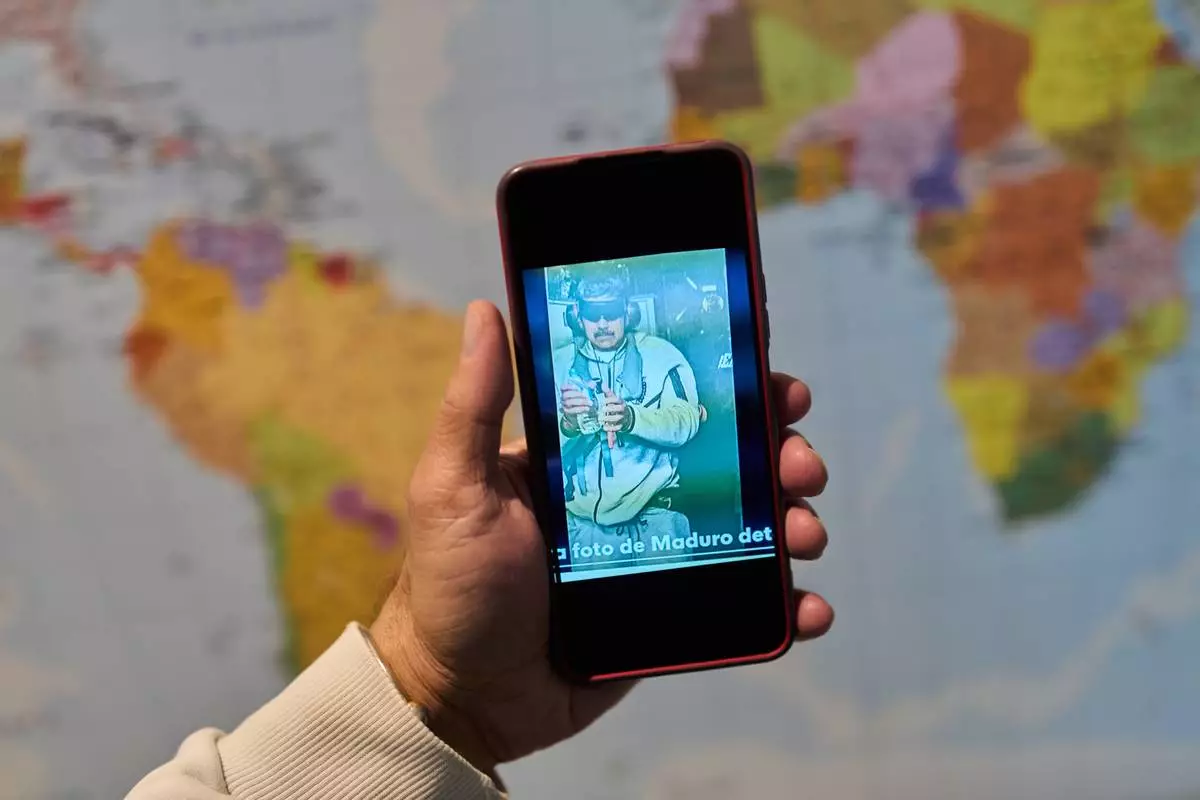
David Vallenilla holds a picture of deposed President Nicolas Maduro, blindfolded and handcuffed, during an interview with The Associated Press at his home in Madrid, Tuesday, Jan. 13, 2026. (AP Photo/Bernat Armangue)
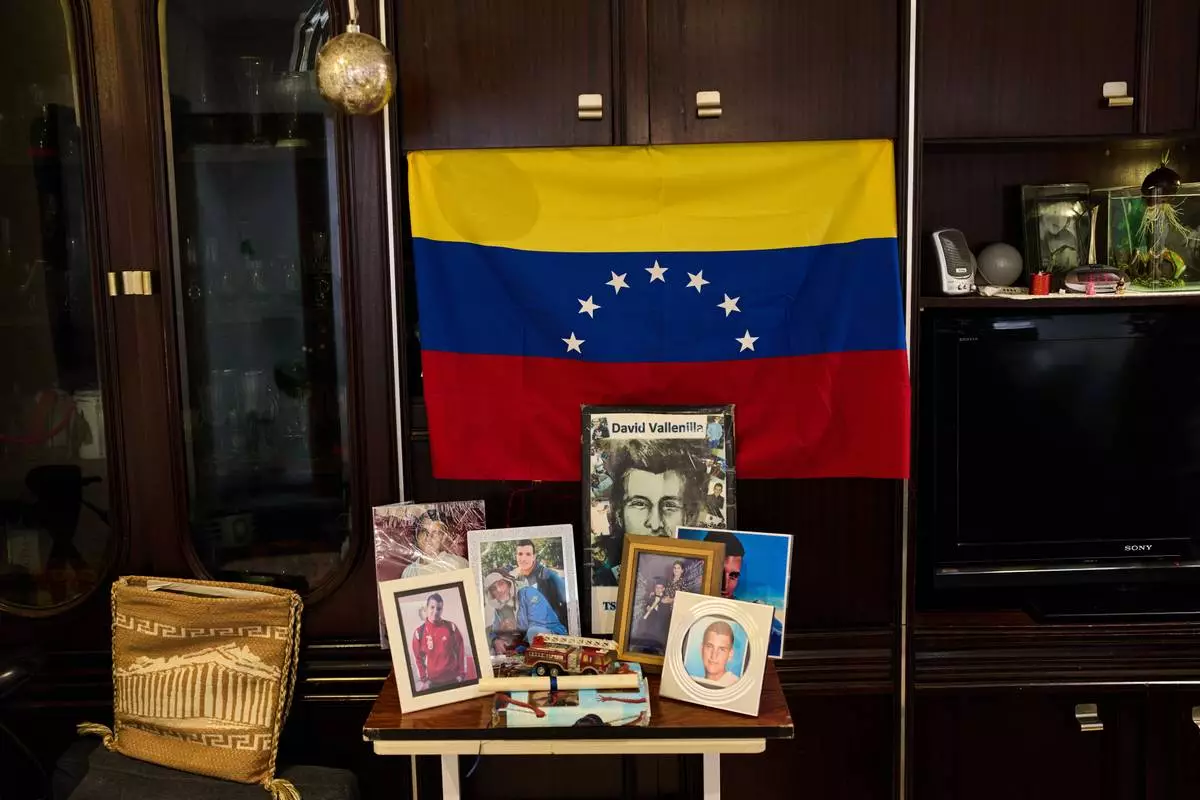
Pictures of the late David José Vallenilla Luis are placed in the living room of his father, David José Vallenilla, in Madrid, Tuesday, Jan. 13, 2026. (AP Photo/Bernat Armangue)