Skip to Content Facebook Feature Image

China's total social logistics value surpasses 200 trl yuan in first 7 months

China

China

China

China's total social logistics value surpasses 200 trl yuan in first 7 months

2025-08-28 17:19 Last Updated At:18:07

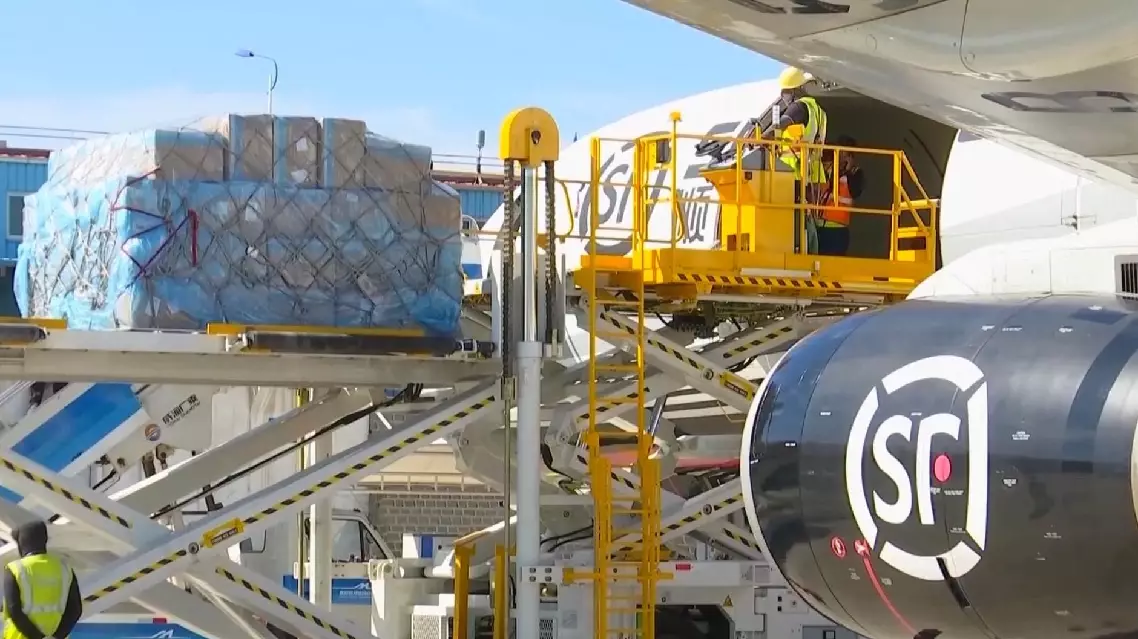
China's logistics sector continued steady growth in the first seven months of the year, with the total value exceeding 200 trillion yuan (about 28 trillion U.S. dollars) and rising demand in high-end manufacturing and green, low-carbon fields, according to data released on Thursday by the China Federation of Logistics and Purchasing (CFLP).

From January to July, China's total social logistics value reached 201.9 trillion yuan (about 28.2 trillion U.S. dollars), up 5.2 percent year on year. Structural analysis shows that industrial goods logistics value rose 5.7 percent, with 35 industries registering growth, covering over 85 percent of the sector. Demand from high-end manufacturing showed particularly strong momentum.

Logistics demand from institutions and households also saw sound growth, climbing 6.2 percent year on year, 0.1 percentage points higher than in the first half. Consumption-driven demand continued to recover, with logistics of home appliances, audio and video equipment, and telecommunication equipment boosted by the continued trade-in policies, a nationwide initiative to stimulate consumption.

Regarding management and profitability, China's key logistics firms recorded an average profit margin of 3.4 percent, 0.3 percentage points higher than in the first half. Based on the growing trend, the total business activity expectation index in July is expected to stand at 55.6 percent, reflecting upbeat market sentiment. Emerging sectors such as low-altitude logistics, integrated supply chains, and cross-border e-commerce logistics are showing significantly faster growth than the industry average.

CFLP's survey of key logistics firms found business revenue up 4.8 percent year on year in the first seven months, alongside faster turnover and lower costs. For every 100 yuan (about 14 U.S. dollars) in revenue, average costs declined by 0.2 yuan (about 0.028 U.S. dollars).

"China's business environment sees steady improvement under the supportive policies. The market demand is recovering and stabilizing amid price fluctuation. Companies are also strengthening their professionalism and services, enhancing profitability," said He Hui, vice president of CFLP.
China's total social logistics value surpasses 200 trl yuan in first 7 months
China's total social logistics value surpasses 200 trl yuan in first 7 months
Li Li, a deputy to the National People's Congress (NPC) from southwest China's Guizhou Province, has made it her mission to preserve and promote the rich cultural heritage of the Buyi people, particularly their traditional clothing.

Born and raised in a village of Qinglong County, Qianxinan Buyei and Miao Autonomous Prefecture, Li began learning the intricate handicrafts of the Buyi people from her mother at a young age.

After spending over a decade working away from home, she felt a strong calling to return and safeguard her cultural roots. In 2015, she returned to her roots to start a business with the vision to revitalize Buyi clothing.

"Starting my own business was really tough in the beginning. If you want to make a Western-style suit, you could just buy some fabric and copy an existing design. But ethnic clothing is different. It requires constant innovation, and that takes a huge amount of time. Traditional fabrics tend to fade, and I spent months just trying to figure out how to fix the color. This problem had kept me up for a long time. But eventually, I tackled the challenges one by one," Li said.

Her persistence has paid off. This year, Li's team tapped into the cultural symbolism of the Year of the Horse, creating a range of horse-themed products that have quickly gained popularity.

"This year is the Year of the Horse, so we created a lot of horse-themed items. They are very popular and orders have been pouring in. Every year, we design our cultural products and clothing based on what the market wants. We started with a 300-square-meter workshop, and now we have our own intangible cultural heritage center. Over the years, we've trained more than a thousand embroiderers," she said.

As a grassroots NPC deputy, Li prioritizes listening to the voices of ordinary people. During work sessions with embroiderers, she takes time to listen to their concerns and offers flexible schedules for those with special needs.

The preservation of ethnic clothing and culture has always been at the heart of her work.

"During this year's 'two sessions', I will continue to focus on the preservation of ethnic clothing and culture. I want to encourage more young people to get involved in cultural inheritance. For example, I've been going to schools to teach students because I hope that intangible cultural heritage can take root in children's hearts from an early age. I want them to grow up knowing how remarkable our ethnic culture is and to develop a strong sense of cultural pride," Li said.

The "two sessions" refer to the annual meetings of the National People's Congress, China's top legislature, and the National Committee of the Chinese People's Political Conference, China's top political advisory body,which usually convene in early March.

NPC deputy from Guizhou revitalizes Buyi culture through inheritance and innovation

NPC deputy from Guizhou revitalizes Buyi culture through inheritance and innovation

Recommended Articles