BANJUL, Gambia (AP) — Kawsu Leigh writhed in pain on the fishing boat, his burned skin as mottled as the paint on the deck beneath him. Raw and slick, the burns covered large parts of his upper body.
His day began as normal, with a shift on one of the foreign-owned vessels that carry out commercial fishing in waters off West Africa. It ended with him so badly injured from an arson attack that he struggles to recover a year later.
Click to Gallery
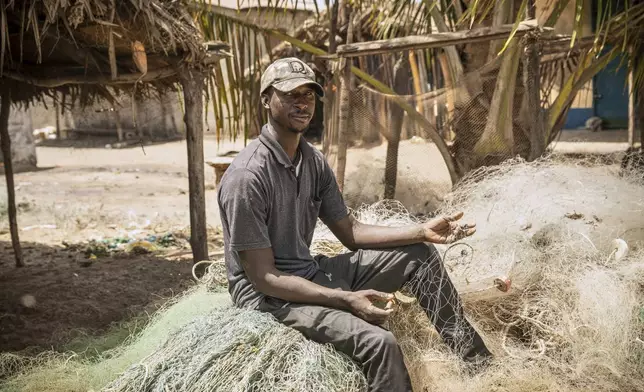
CORRECTS SPELLING TO NDURE NOT NUDURE Fisherman Salif Ndure shows some of his unusable nets damaged by trawlers, at Gunjur, Gambia, on March 23, 2025. (AP Photo/Grace Ekpu)
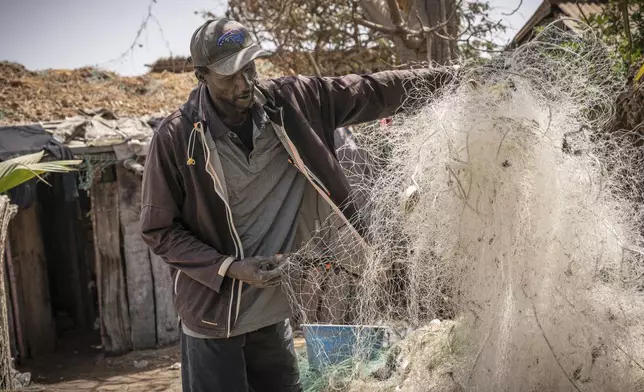
CORRECTS SPELLING TO NDURE NOT NUDURE Famara Ndure, a fisherman for more than 40 years, inspects what is left of his fishing nets which were damaged at sea by trawlers, in Gunjur, Gambia, on March 23, 2025. (AP Photo/Grace Ekpu)
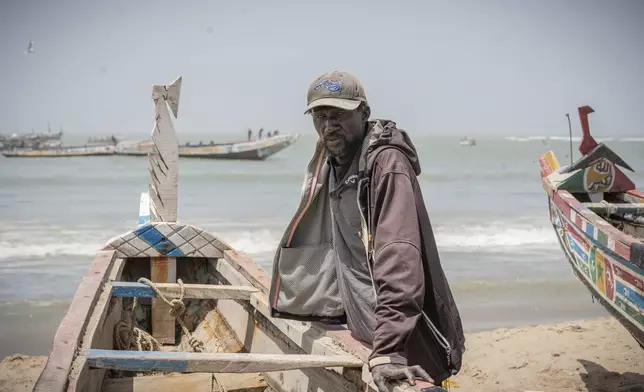
CORRECTS SPELLING TO NDURE NOT NUDURE Famara Ndure, a fisherman for more than 40 years, leans against his boat in Gunjur, Gambia, after a day of work, on March 23, 2025. (AP Photo/Grace Ekpu)
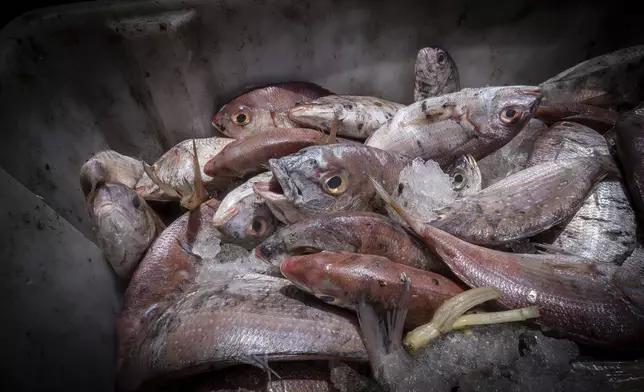
Freshly-caught red snapper fish caught off the coast of Gambia are offloaded from a fishing vessel in the port of Banjul, Gambia, on March 26, 2025. (AP Photo/Grace Ekpu)
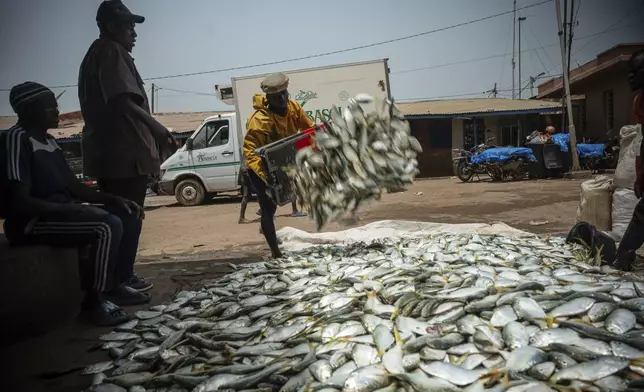
Workers gather freshly caught fish at the fish landing site in Tanji, Gambia, on March 25, 2025. (AP Photo/Grace Ekpu)
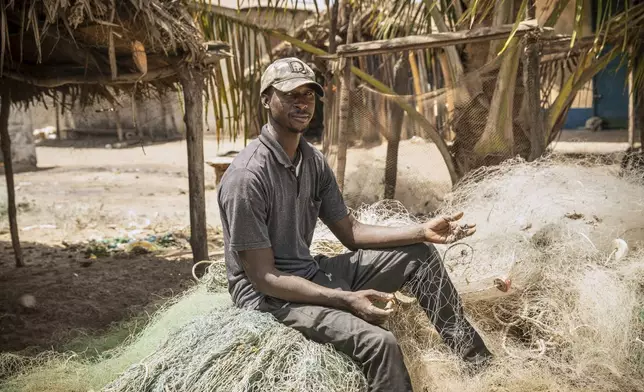
Fisherman Salif Nudure shows some of his unusable nets damaged by trawlers, at Gunjur, Gambia, on March 23, 2025. (AP Photo/Grace Ekpu)
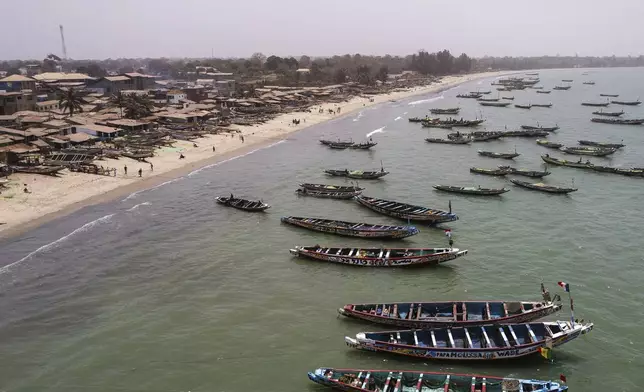
Artisanal fishing boats sit in the water outside the fish landing site in Tanji, Gambia, on March 25, 2025. (AP Photo/Grace Ekpu)

Artisanal fishing boats sit in the water outside the fish landing site in Tanji, Gambia, on March 25, 2025. (AP Photo/Grace Ekpu)
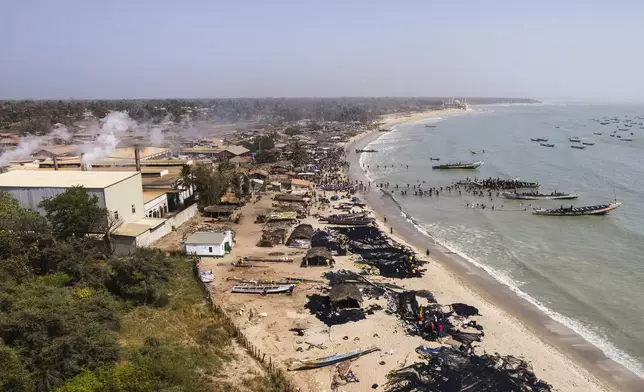
Artisanal fishermen on the shore of Gunjur, Gambia, on March 23, 2025. (AP Photo/Grace Ekpu)
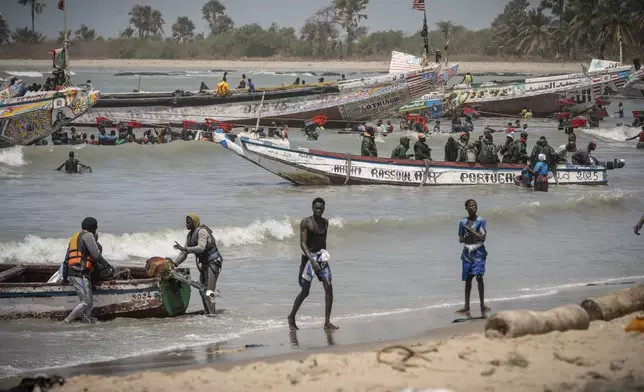
Artisanal fishermen sell their catch from boats to local fishmongers at the coastal community of Gunjur, Gambia, on March 23, 2025. (AP Photo/Grace Ekpu)
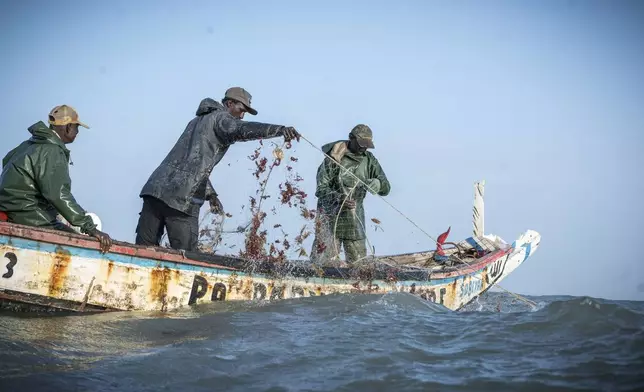
Artisanal fishermen cast their nets in the waters off the coast of Gambia, on March 26, 2025. (AP Photo/Grace Ekpu)
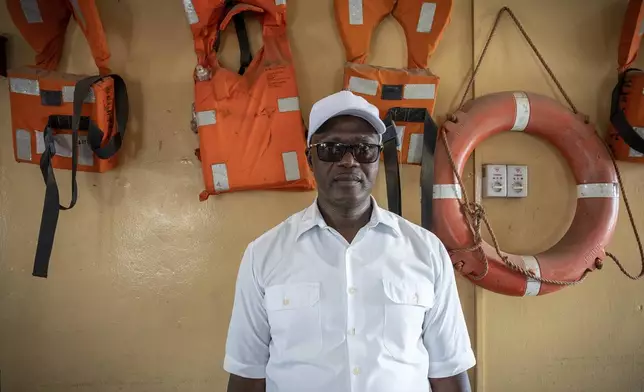
Abdou Sanyang, secretary general of the Association of Gambia Sailors, stands for a portrait in his office in Banjul, Gambia, on March 24, 2025. (AP Photo/Grace Ekpu)
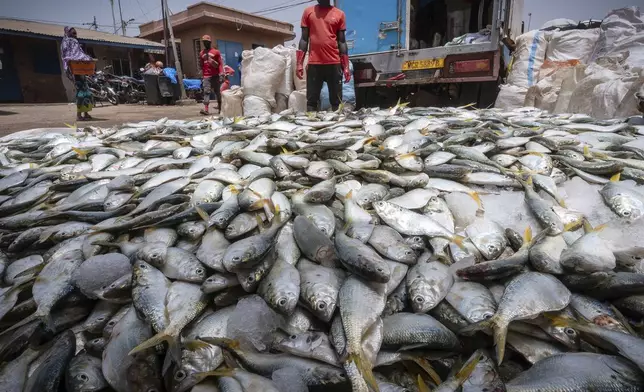
Workers pack and ice fresh caught fish at the fish landing site in Tanji, Gambia, on March 25, 2025. (AP Photo/Grace Ekpu)
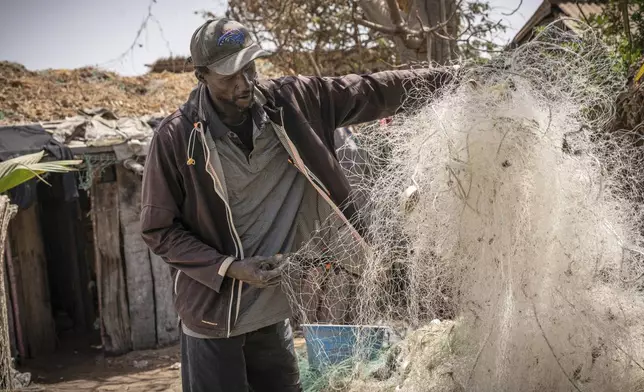
Famara Nudure, a fisherman for more than 40 years, inspects what is left of his fishing nets which were damaged at sea by trawlers, in Gunjur, Gambia, on March 23, 2025. (AP Photo/Grace Ekpu)
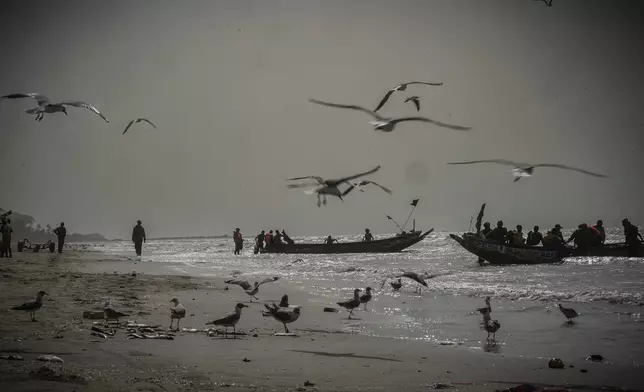
Artisanal fishermen head out to fish in their boats at dusk from Brufut beach, Gambia, on March 25, 2025. (AP Photo/Grace Ekpu)
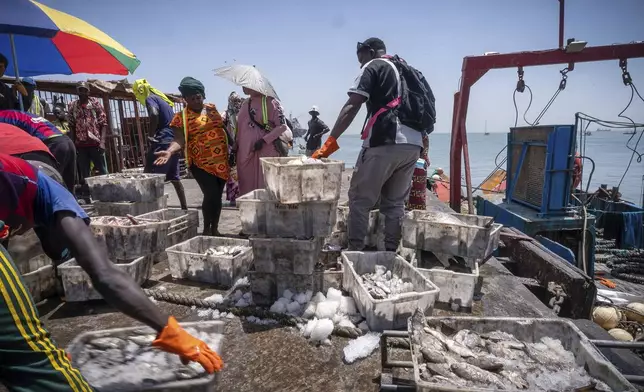
Workers offload fish from a industrial fishing vessel at the port of Banjul, Gambia, on March 26, 2025. (AP Photo/Grace Ekpu)
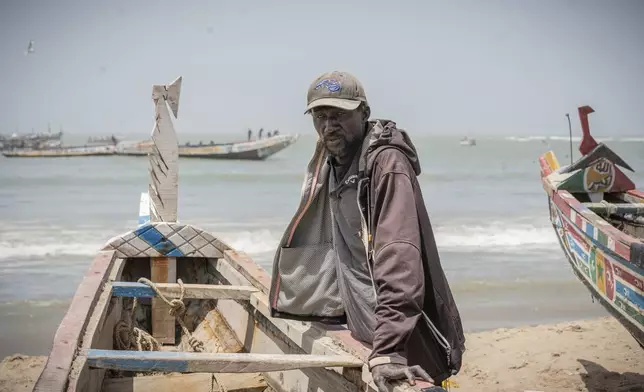
Famara Nudure, a fisherman for more than 40 years, leans against his boat in Gunjur, Gambia, after a day of work, on March 23, 2025. (AP Photo/Grace Ekpu)
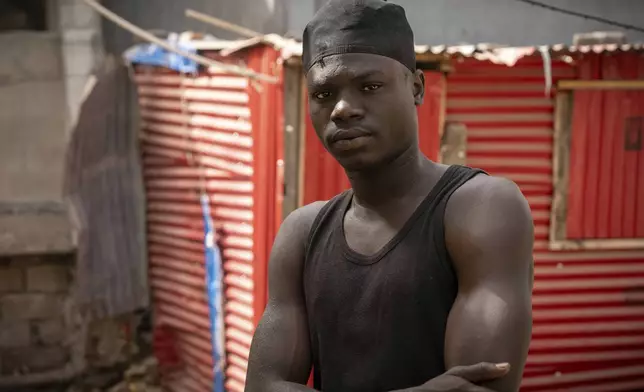
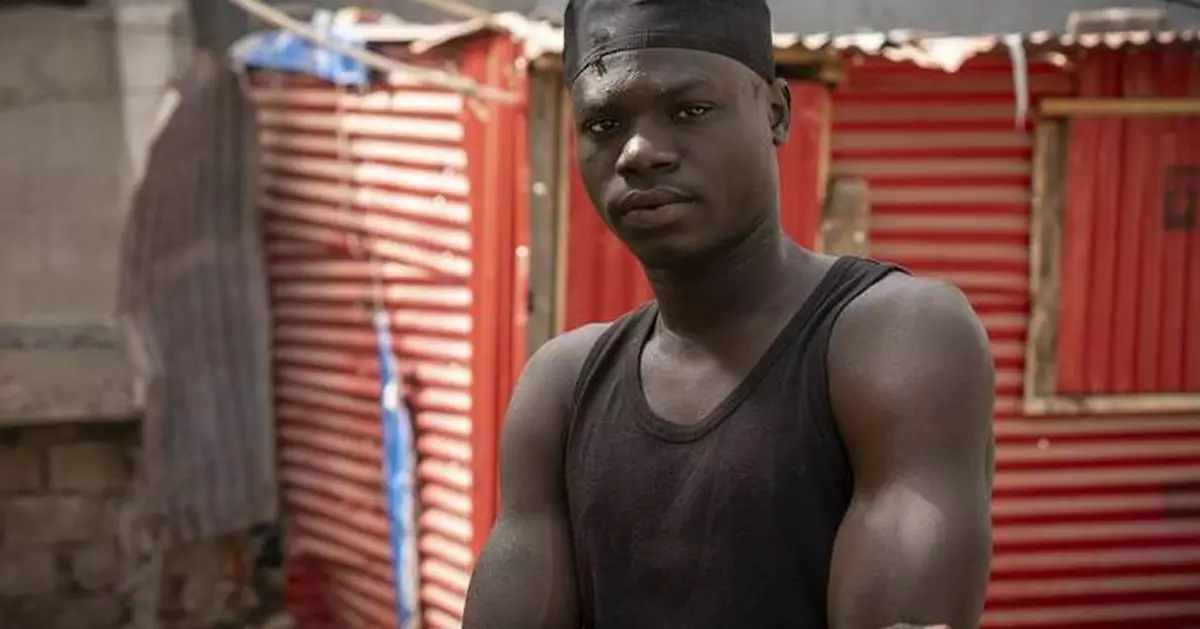
Kawsu Leigh, a fisherman who was injured in a seabound arson attack, stands for a portrait at his home in Banjul, Gambia, on March 25, 2025, almost a year after an attack on the foreign-owned vessel Abu Islam where he was working. (AP Photo/Grace Ekpu)
Local fishermen, angered by what they call illegal encroachment and sabotage by the foreign vessels off Gambia, had again confronted one of the boats, the Egyptian-owned Abu Islam.
But Leigh was a local sailor, too. Video of the attack, exclusively obtained by The Associated Press, documents an emerging problem in the fight for dominance in West African waters. Gambians are now fighting Gambians at sea, driven by market forces — and foreign appetites – beyond their control.
The problem came from attempted reforms. To give locals more say, and pay, in commercial fishing, Gambia’s government now requires foreign vessels operating offshore to carry a certain percentage of Gambian crew.
Those locals have become accidental targets of an anger they understand well, after trying to compete with the Chinese-owned and other foreign vessels with little more than small wooden boats and their bare hands.
The video was shared by the Association of Gambia Sailors, filmed minutes after the arson attack. The AP reviewed more than 20 such videos from various sources showing confrontations since 2023. Leigh said he is surprised to have survived, and unhappy that Gambians have been made into rivals.
Other clashes in the waters off Gambia have been deadly, with at least 11 local fishermen reportedly killed over the past 15 years.
“It’s like most of them, when they are going for fishing, it’s as if they’re going for war,” said Abdou Sanyang, secretary general of the Association of Gambia Sailors.
The fighting threatens to tear fishing communities apart, while overfishing to supply seafood buyers around the world undermines livelihoods for everyone. There are concerns that the fish population off Gambia could collapse in the coming years. That would be a business and environmental disaster in a small country with two main economic drivers: tourism and seafood.
For generations, Gambia’s fishermen have known no other work. Now, the financial pressures of competing with foreign-owned vessels are leading some to give up. They are tempted to sell their boats for use in another growing industry: migration toward Europe through the risky Atlantic waters.
Some of the fishermen become migrants themselves, hoping for another kind of good fortune at sea. Leigh, unable to support his family, is considering that now.
Famara and Salif Ndure are brothers in the fishing community of Gunjur. They say they have lost more than half of their fishing nets to foreign trawlers that pull at the nets and damage them.
“You see them cutting your net, but you cannot do anything, because two men cannot go against 20 to 30 men in the sea,” Famara said. The brothers said they oppose attacking vessels with their countrymen aboard.
They said the foreign vessels have become increasingly aggressive during the current government of President Adama Barrow, who took over after the ouster of former dictator Yahya Jammeh in 2017. Gambia reopened its waters to foreign-owned vessels that year.
Famara said fishing nets are often cut at night, when the foreign vessels go beyond authorized zones to fish. Local fishermen have exclusive fishing rights within 9 nautical miles from shore, but they claim the trawlers come as close as 5. That has made clashes at sea inevitable.
“Anywhere they want, they come and feast. That’s why we’re suffering,” Famara said.
He and his brother once had 15 nets. Those have been reduced to three. A single net line can cost $100, making replacement almost impossible in a country where the per capita income is under $1,000.
Compensation from the government for the loss of a net requires the reporting of a violation by an observer with the fisheries ministry who is stationed on a foreign vessel — another attempted reform.
The brothers feel helpless. The trawlers are “destroying the nation,” they said, asserting that incidents are reported but nothing gets done. They think the money the government makes from the licensing of foreign trawlers is the reason. Licensing fees vary, with some vessels paying the equivalent of $275 per ton.
“They tell us that what the trawlers pay, we small boats don’t pay it,” Famara said.
Gambia's government did not respond to questions from the AP.
Most of the foreign trawlers operate without proper documentation and with unauthorized gear, asserted Lamin Jassey, president of the Gunjur Conservationists and Ecotourism Association. The local group works on marine conservation and advocates for better fisheries policy.
The violations are so blatant that the foreign vessels hardly hide their presence when they violate local waters at night, said Omar Gaye with a local cooperative of nongovernmental fisheries groups.
“You even think that here is a town because of the lights,” he said.
One of the brothers, Salif, even went to sea last year with a Gambian naval officer to report a foreign trawler after a confrontation over its alleged encroachment. No action was taken.
He ended up filming what happened at sea and posted it online, hoping for an official response someday.
One significant case has reached court in Gambia over fishing conflicts, and another is being prepared. One is the arson attack involving Leigh’s vessel. The other is a collision last year between a foreign trawler, identified by local fishermen as the Majilac 6, and a local vessel that killed three local fishermen.
They are rare cases in a country where the pursuit of justice takes time and cash that many people don’t have.
Gaye expressed his frustration with the Majilac 6, which he claimed was fishing too close to shore, and with Gambian authorities, who he said are not adequately investigating the deaths.
“We don’t know why till now this thing is pending. No one is talking about it. And this is a criminal case, this is a crime against the state!” he said of the case. Authorities haven’t visited the families of the dead or offered restitution, he said.
Omar Abdullah Jagne, the managing director of the Majilac Group of vessels — whose owners come from various countries — did not respond to AP questions. The owner of the Majilac 6 was not clear.
Maget Mbye and his wife, Fatou Jobe, lost their 22-year-old son in the collision.
“This is very painful, and nothing can pay us for his soul," Mbye said. “They are continuing to work as if nothing happened … We want the government to help.”
The government has been trying to patrol the seas.
In March last year, before the deadly collision, armed maritime interdiction units with Gambia’s navy detained eight foreign trawlers for offenses including fishing in protected waters, fishing without a valid license, misreporting catches and using undersized mesh, which collects fish smaller than allowed. Almost all were accused of fishing inside the area reserved for local fishermen.
It was a rare deployment. Gambia’s poorly resourced navy has relied on international support from nonprofit organizations to watch its waters.
The Majilac 6 was among the vessels detained.
The vessels soon returned to sea, and locals say they continued to fish in Gambian waters.
Gaye and others were angered to learn that the Majilac 6 was blamed in the deadly collision. He said such collisions have killed at least 11 local fishermen over the past decade and a half.
He also noted a double standard in enforcement, saying the case of last year's arson attack on the Egyptian-owned vessel was quickly resolved. “When it is the artisanal fishermen, there is no justice. But when this is industrial fishing vessels, immediate effect, there will be justice," he said.
Fines for offenses are not fixed and can be negotiated. Repeat offenders face little punishment. Jassey said many Gambian fishermen believe the trawlers are often tipped off in advance of maritime interdiction unit deployments.
Because Gambia is so small, foreign vessels often dock in neighboring Senegal instead of in Gambia’s capital, meaning fewer chances for local authorities to confront them at all.
But last month, Gambia's military said the navy had detained three vessels for violations including fishing without authorization and the use of illegal fishing gear. One was another vessel with the Majilac Group.
Outside observers of Gambia’s fishing industry are few to none, and data collection is sparse. Sea Shepherd, a nonprofit conservation group, has an agreement with Gambia to jointly patrol the country’s waters but did not visit last year as part of its mission to combat illegal fishing off West Africa.
The Association of Gambia Sailors now encourages fishermen to capture alleged violations by foreign vessels, and violent confrontations, on video. Film, don’t fight, it says.
The same association also provides the foreign trawlers with the government-required local crew members. In the past two years, Gambia’s government has increased the quota from 20% to at least 30% — meaning more potential for Gambians fighting Gambians.
Those fishermen receive no training on what to expect, or on how to protect themselves from what the head of the association, Sanyang, called a “sea war."
The conflict at sea off Gambia is occurring as fish stocks decline. Fish including grouper, cuttlefish, sardinella and bonga are over-exploited, according to an Amnesty International report in May 2023 on the human cost of overfishing there.
The sailors association believes that the foreign vessels eventually will move into the waters of nearby countries like Sierra Leone and Guinea Bissau, seeking more fish and less local opposition.
Declining fish stocks have affected food security in Gambia. Prices have risen, putting fish out of reach even for many people who pull them from the sea.
Instead, the majority of Gambians "depend on chicken that is imported from the world, which is very sad,” Jassey said.
He called the situation for local fishermen “very fragile.” Competition with foreign trawlers has left many unable to afford the work.
Human traffickers are buying their boats.
“These agents have a lot of money. They can buy the fishing boat, like three to four hundred, five hundred thousand dalasi, you know, from the fisherman who is sitting for like six to seven months without fishing,” Jassey said. “So that is very, very serious. That is why we’re losing a lot of our young people.”
The 24-year-old Leigh, still recovering from last year’s arson attack, has spent the money he received from the foreign trawler as compensation -- 51,000 dalasi – along with three months of his 17,000-dalasi salary. He spent it all on medication.
Now he considers giving up fishing and taking his chances on migrating to Europe.
“I just want to work for me and my family to survive,” he said.
Associated Press writer Mustapha Manneh in Banjul, Gambia, contributed.
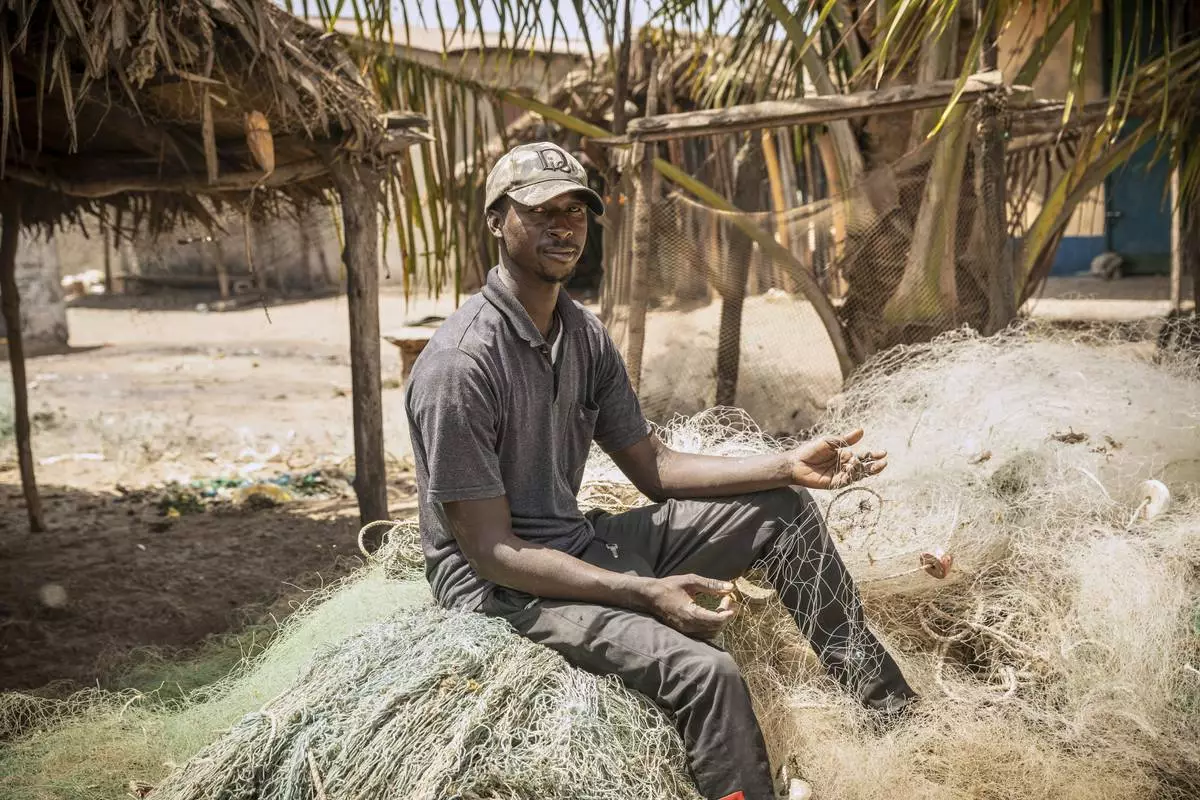
CORRECTS SPELLING TO NDURE NOT NUDURE Fisherman Salif Ndure shows some of his unusable nets damaged by trawlers, at Gunjur, Gambia, on March 23, 2025. (AP Photo/Grace Ekpu)
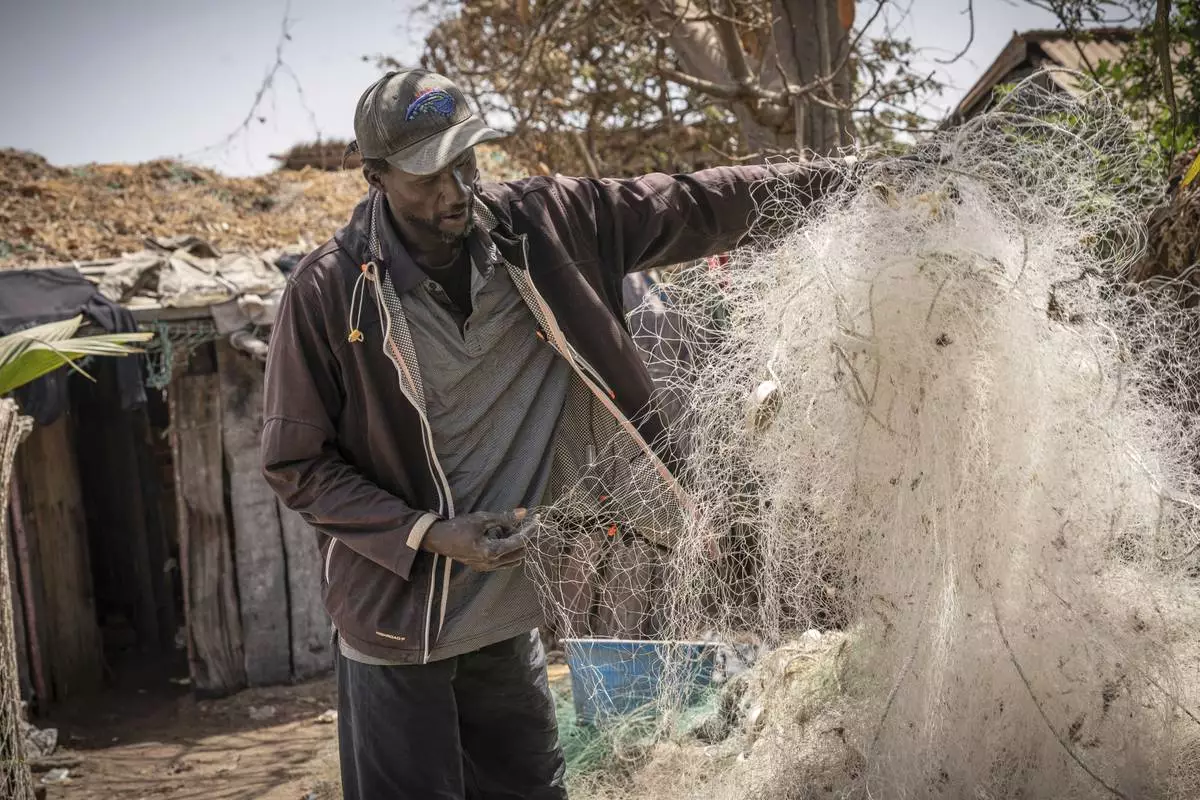
CORRECTS SPELLING TO NDURE NOT NUDURE Famara Ndure, a fisherman for more than 40 years, inspects what is left of his fishing nets which were damaged at sea by trawlers, in Gunjur, Gambia, on March 23, 2025. (AP Photo/Grace Ekpu)
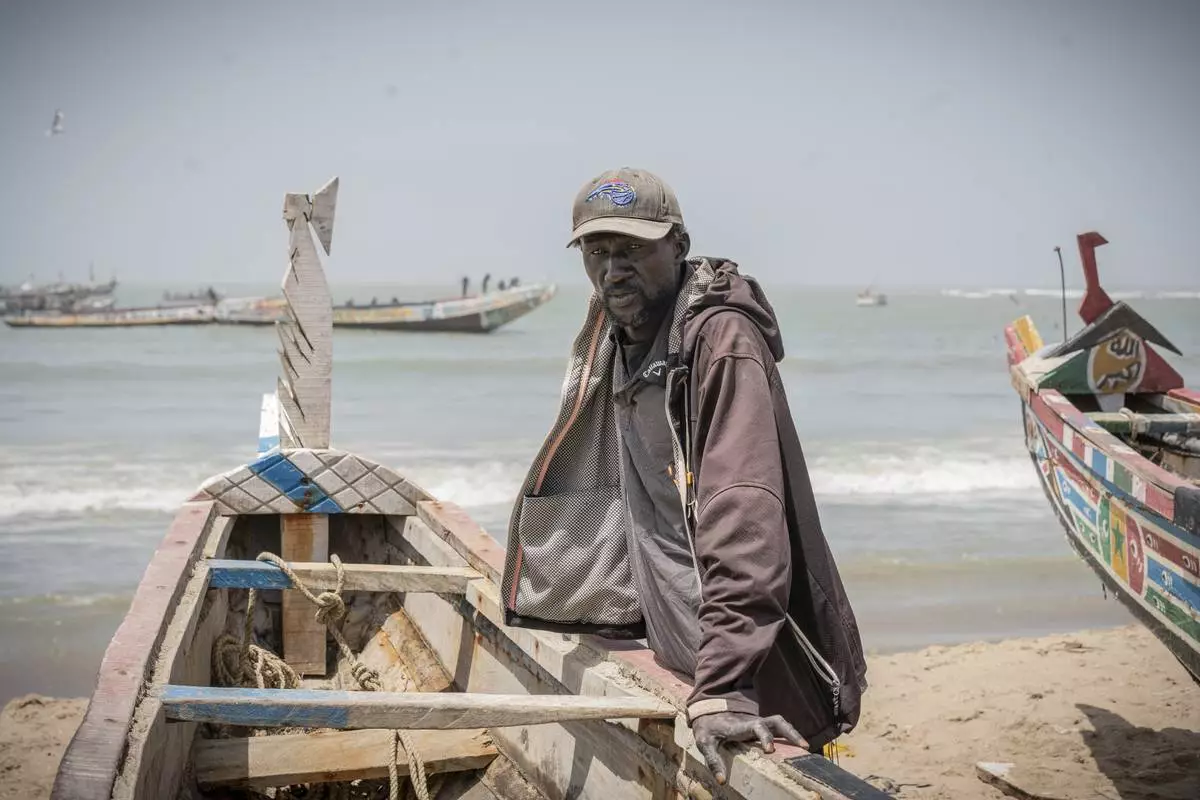
CORRECTS SPELLING TO NDURE NOT NUDURE Famara Ndure, a fisherman for more than 40 years, leans against his boat in Gunjur, Gambia, after a day of work, on March 23, 2025. (AP Photo/Grace Ekpu)
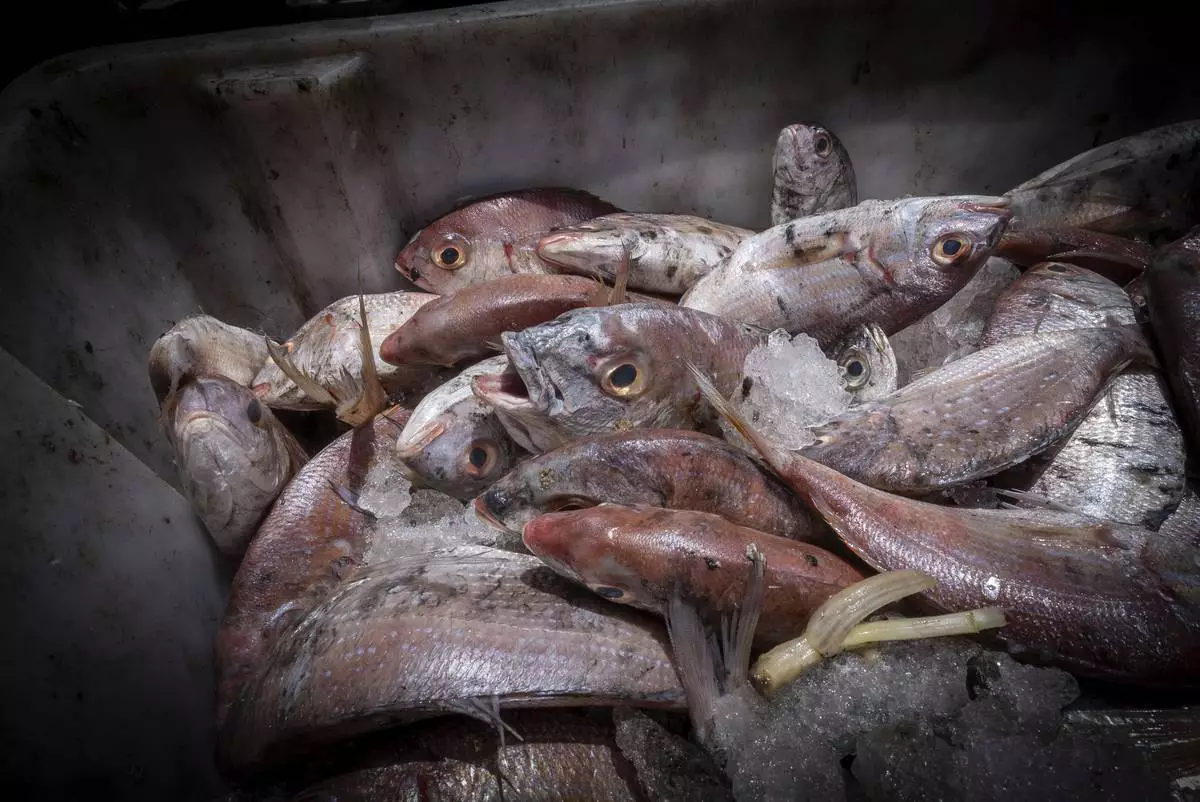
Freshly-caught red snapper fish caught off the coast of Gambia are offloaded from a fishing vessel in the port of Banjul, Gambia, on March 26, 2025. (AP Photo/Grace Ekpu)
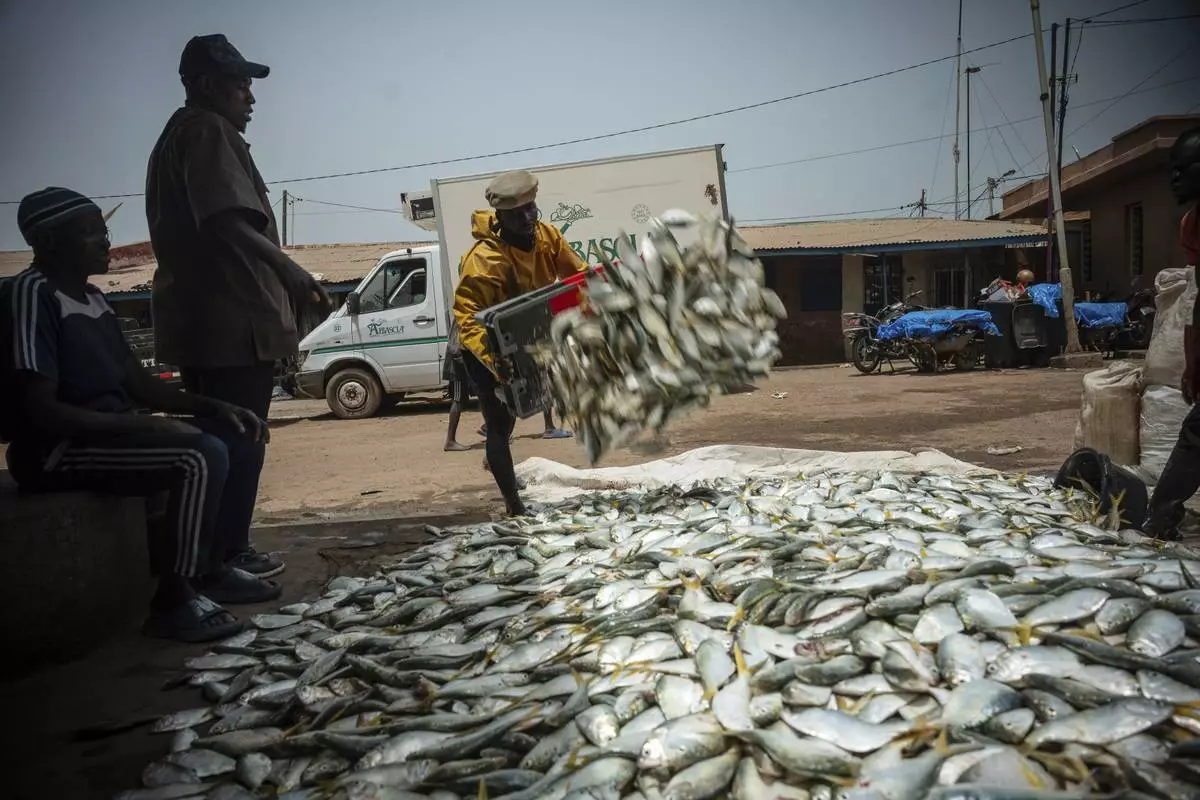
Workers gather freshly caught fish at the fish landing site in Tanji, Gambia, on March 25, 2025. (AP Photo/Grace Ekpu)
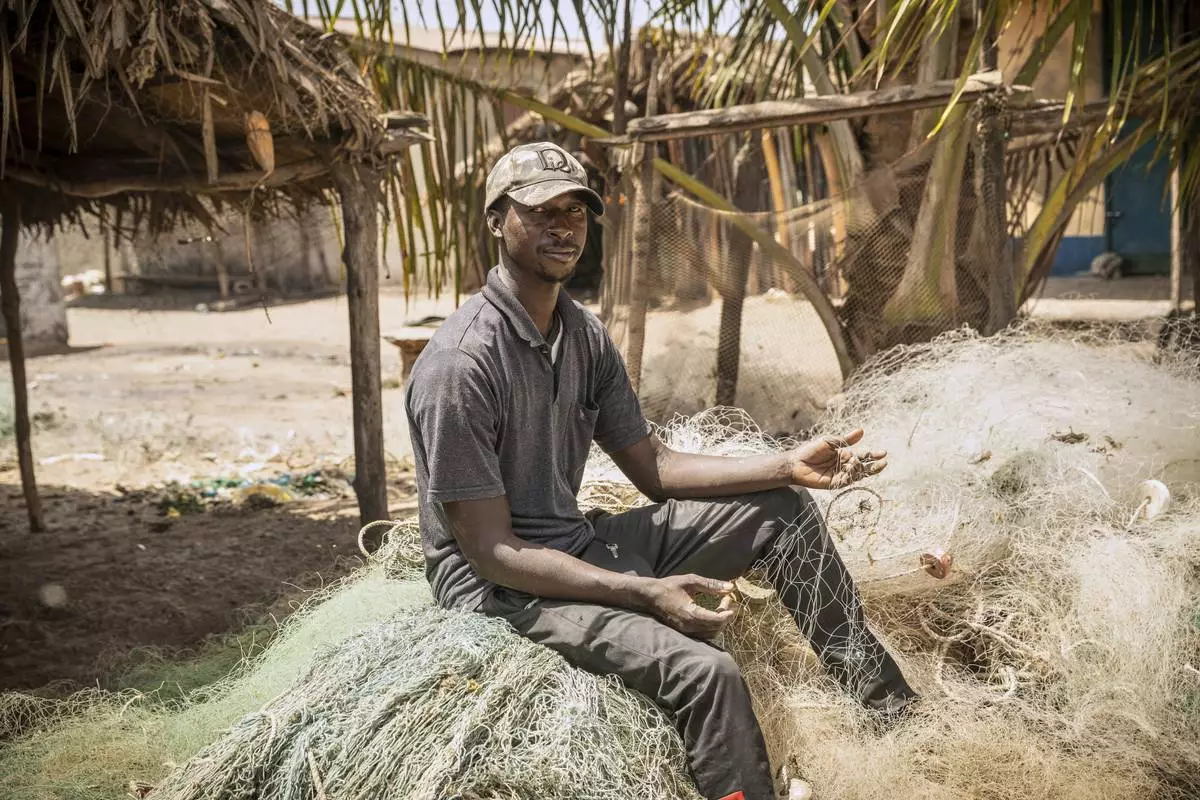
Fisherman Salif Nudure shows some of his unusable nets damaged by trawlers, at Gunjur, Gambia, on March 23, 2025. (AP Photo/Grace Ekpu)
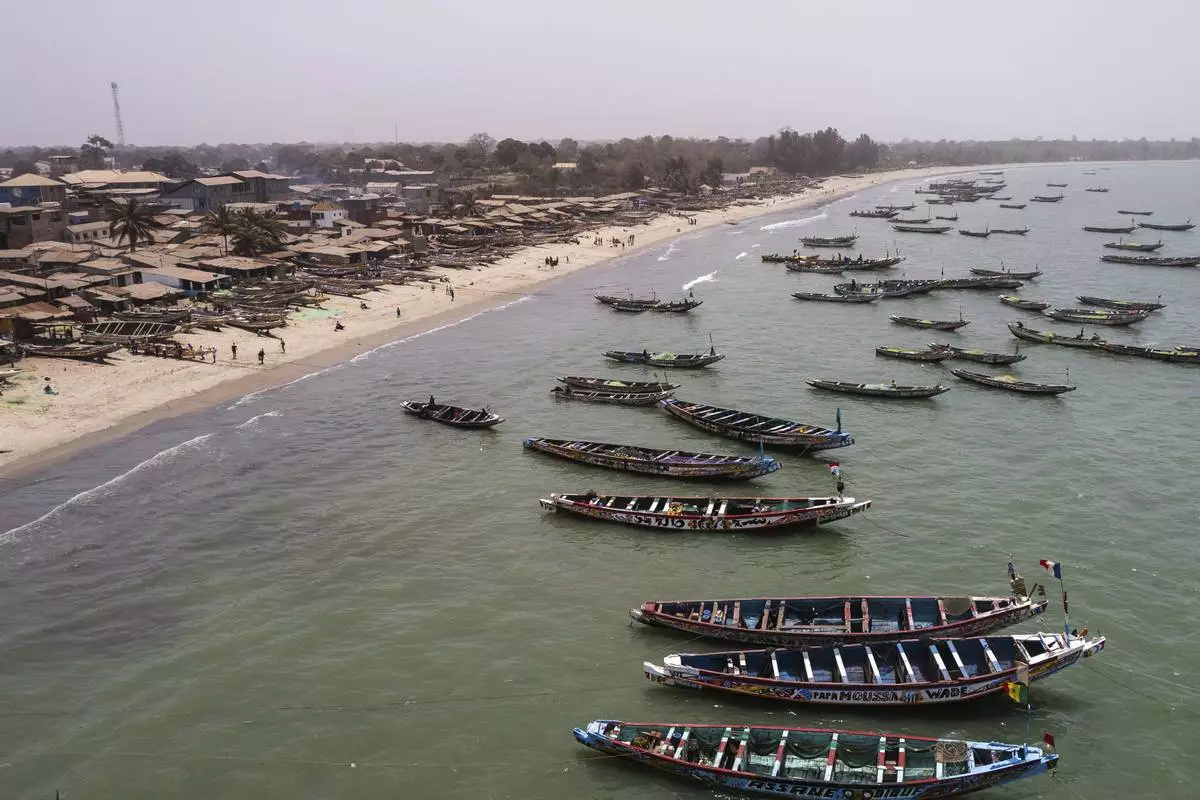
Artisanal fishing boats sit in the water outside the fish landing site in Tanji, Gambia, on March 25, 2025. (AP Photo/Grace Ekpu)
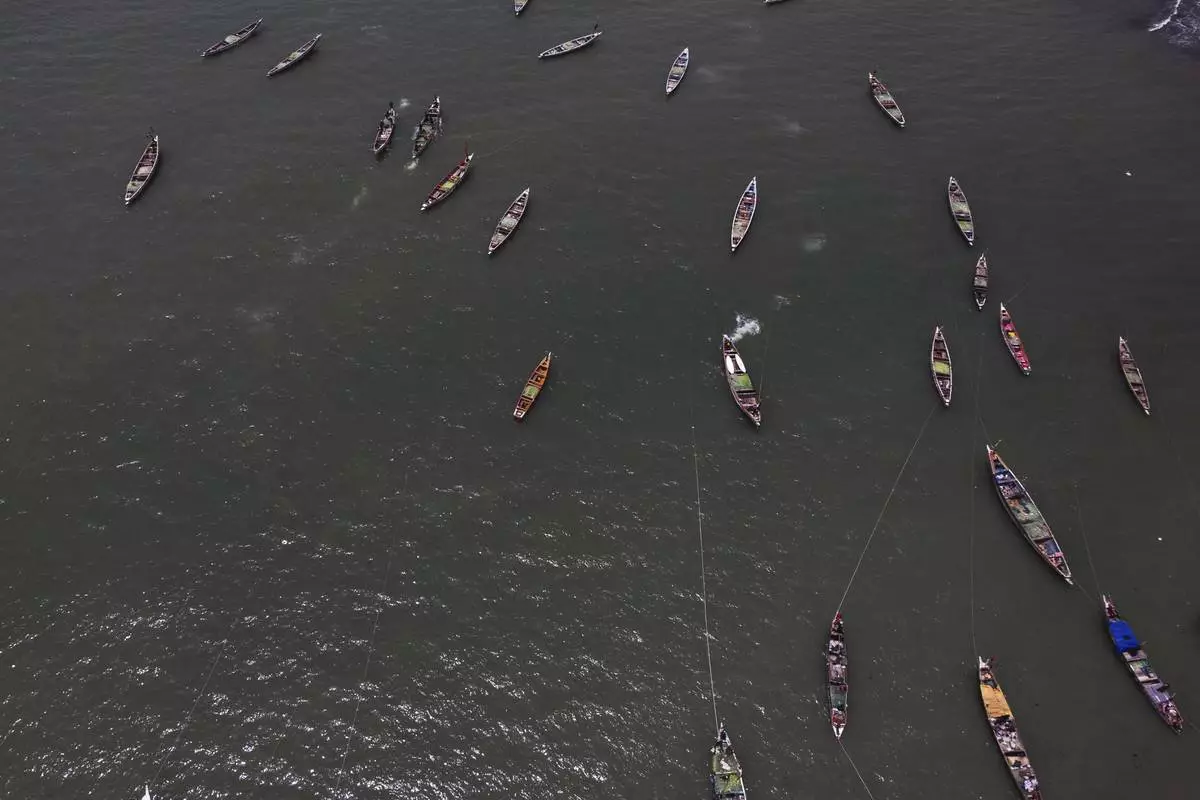
Artisanal fishing boats sit in the water outside the fish landing site in Tanji, Gambia, on March 25, 2025. (AP Photo/Grace Ekpu)
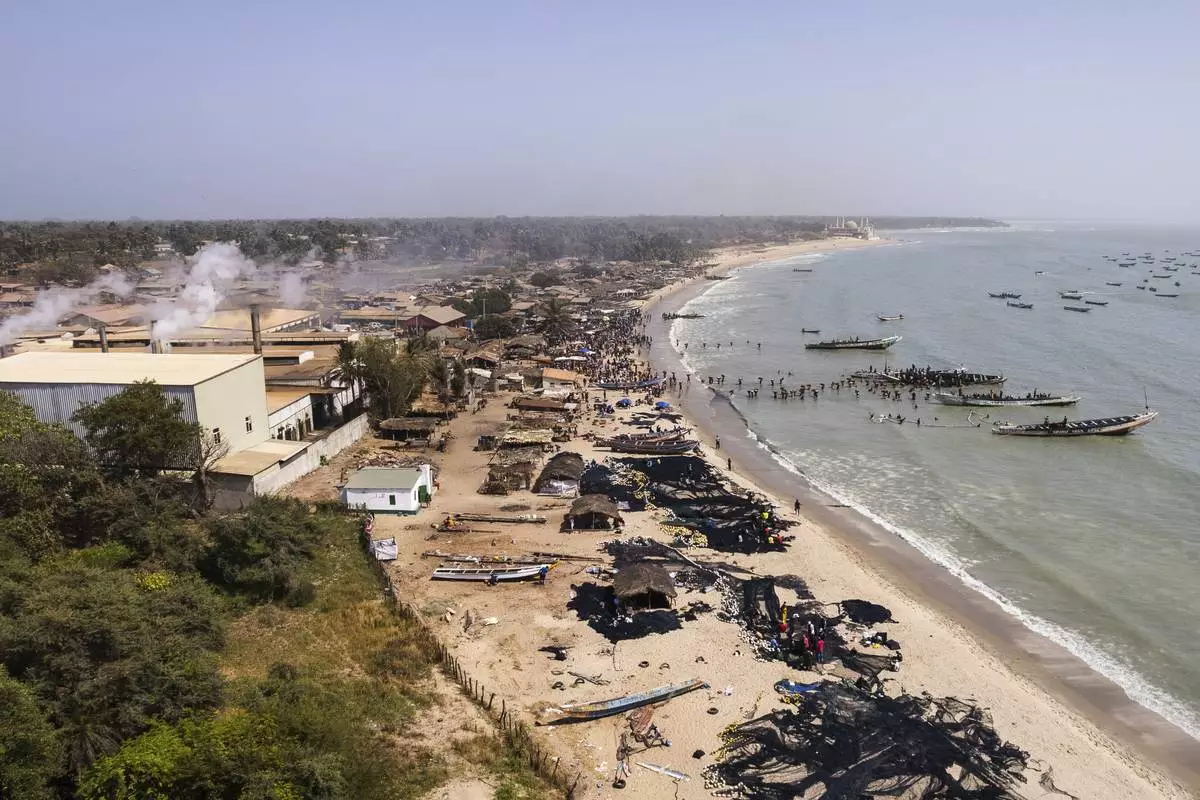
Artisanal fishermen on the shore of Gunjur, Gambia, on March 23, 2025. (AP Photo/Grace Ekpu)
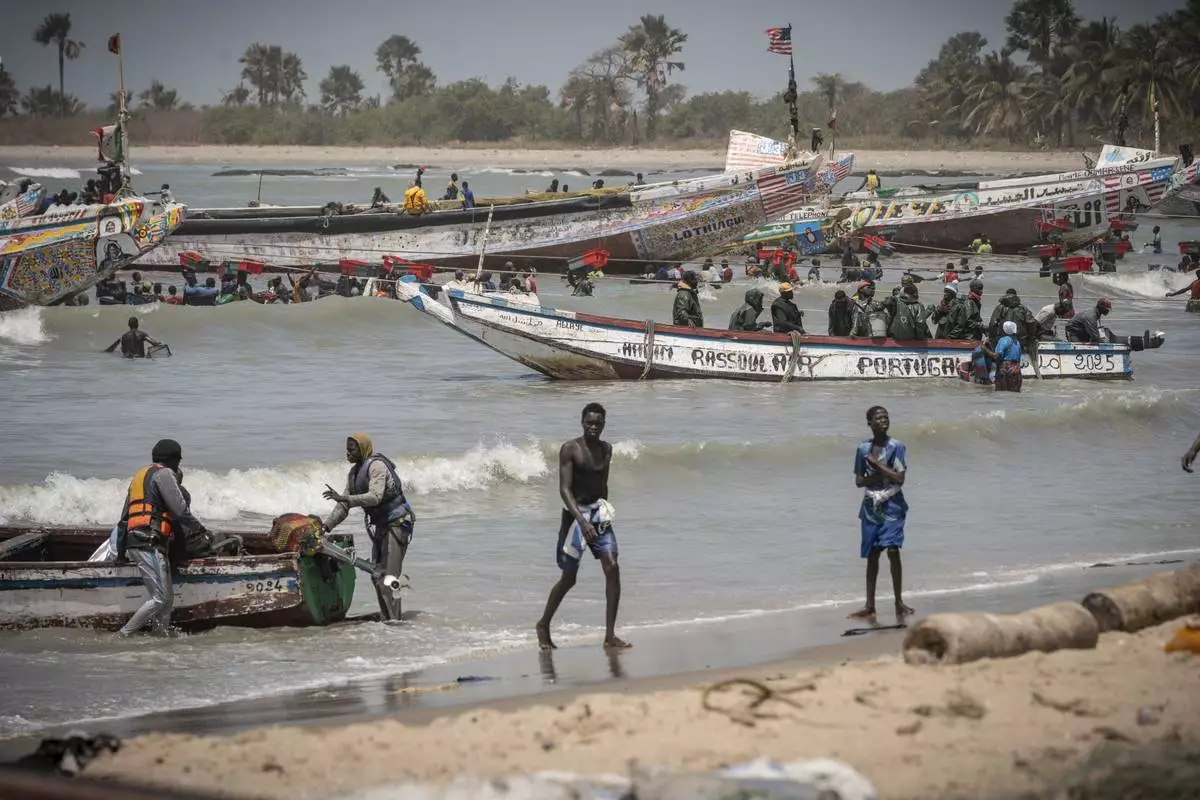
Artisanal fishermen sell their catch from boats to local fishmongers at the coastal community of Gunjur, Gambia, on March 23, 2025. (AP Photo/Grace Ekpu)
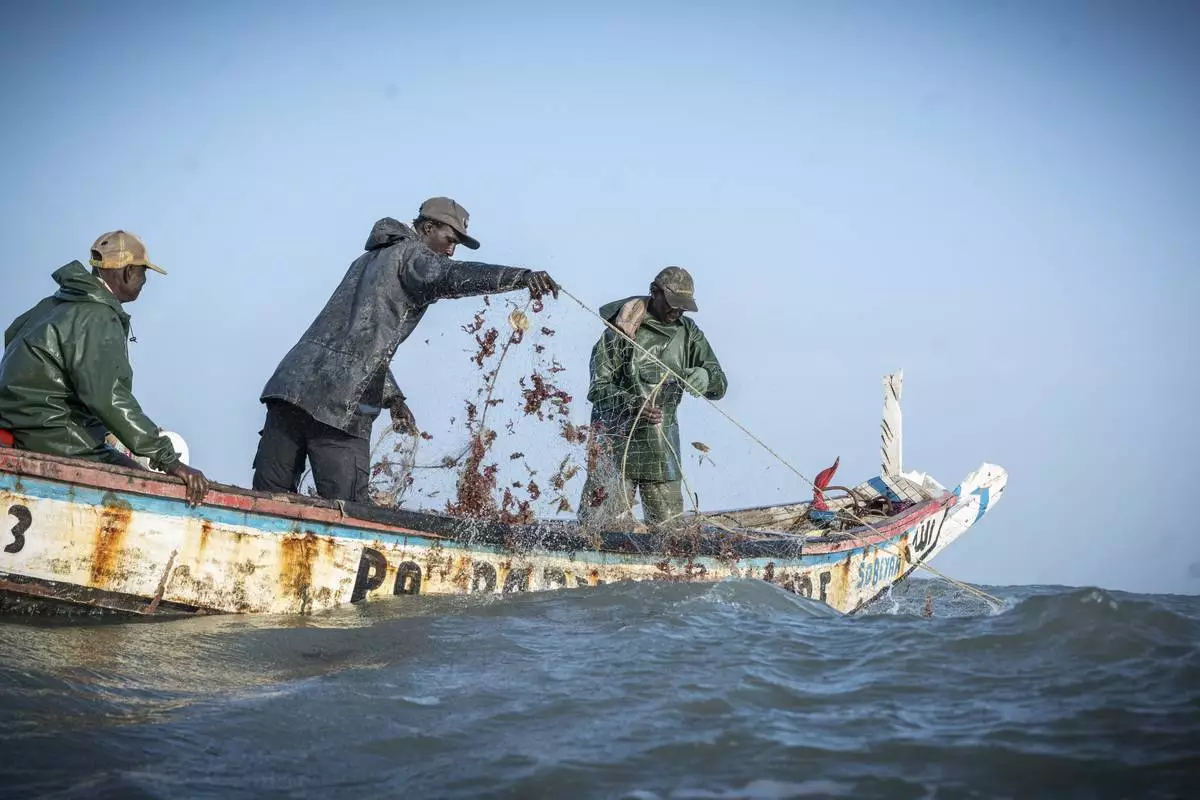
Artisanal fishermen cast their nets in the waters off the coast of Gambia, on March 26, 2025. (AP Photo/Grace Ekpu)
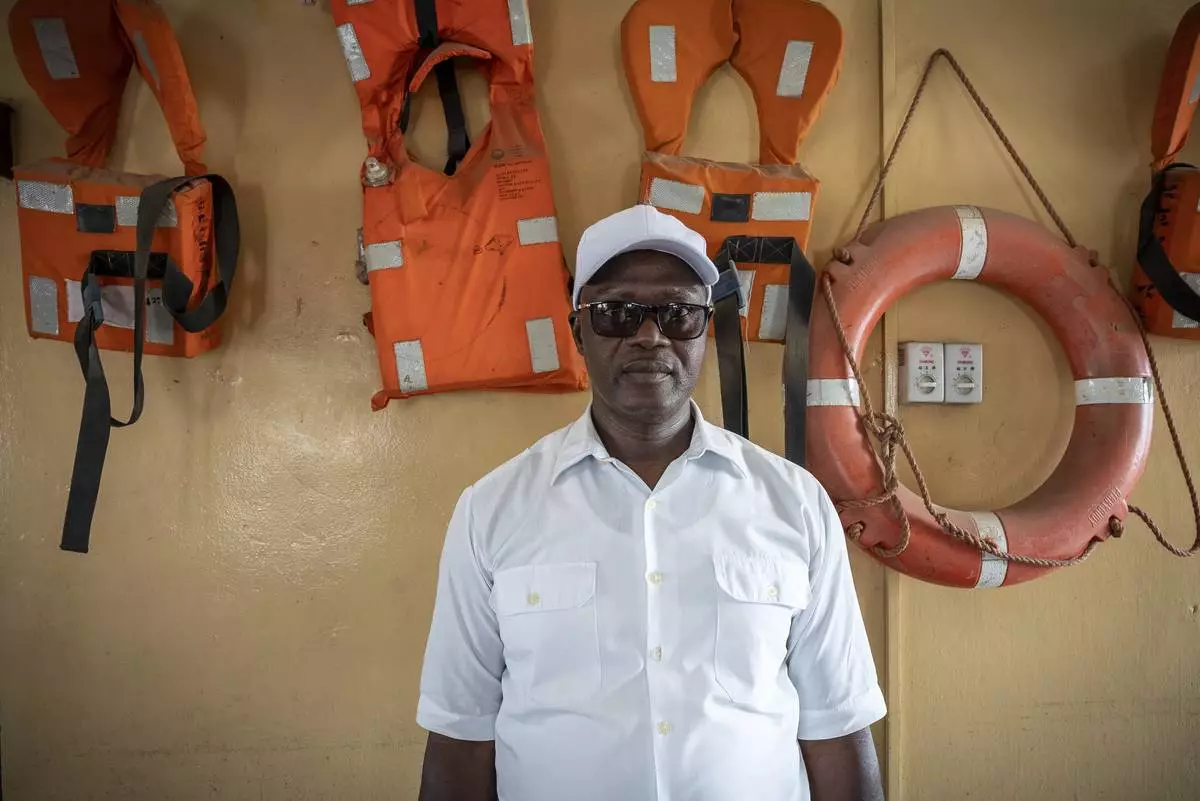
Abdou Sanyang, secretary general of the Association of Gambia Sailors, stands for a portrait in his office in Banjul, Gambia, on March 24, 2025. (AP Photo/Grace Ekpu)
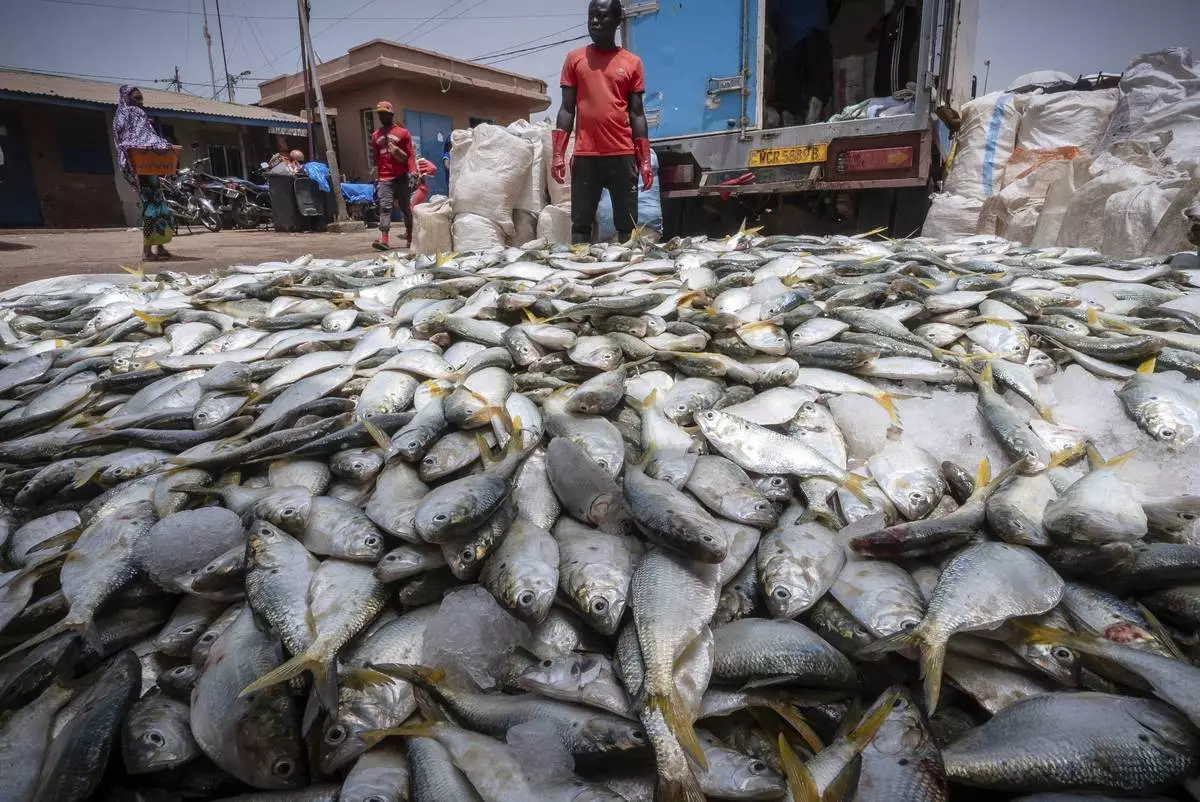
Workers pack and ice fresh caught fish at the fish landing site in Tanji, Gambia, on March 25, 2025. (AP Photo/Grace Ekpu)
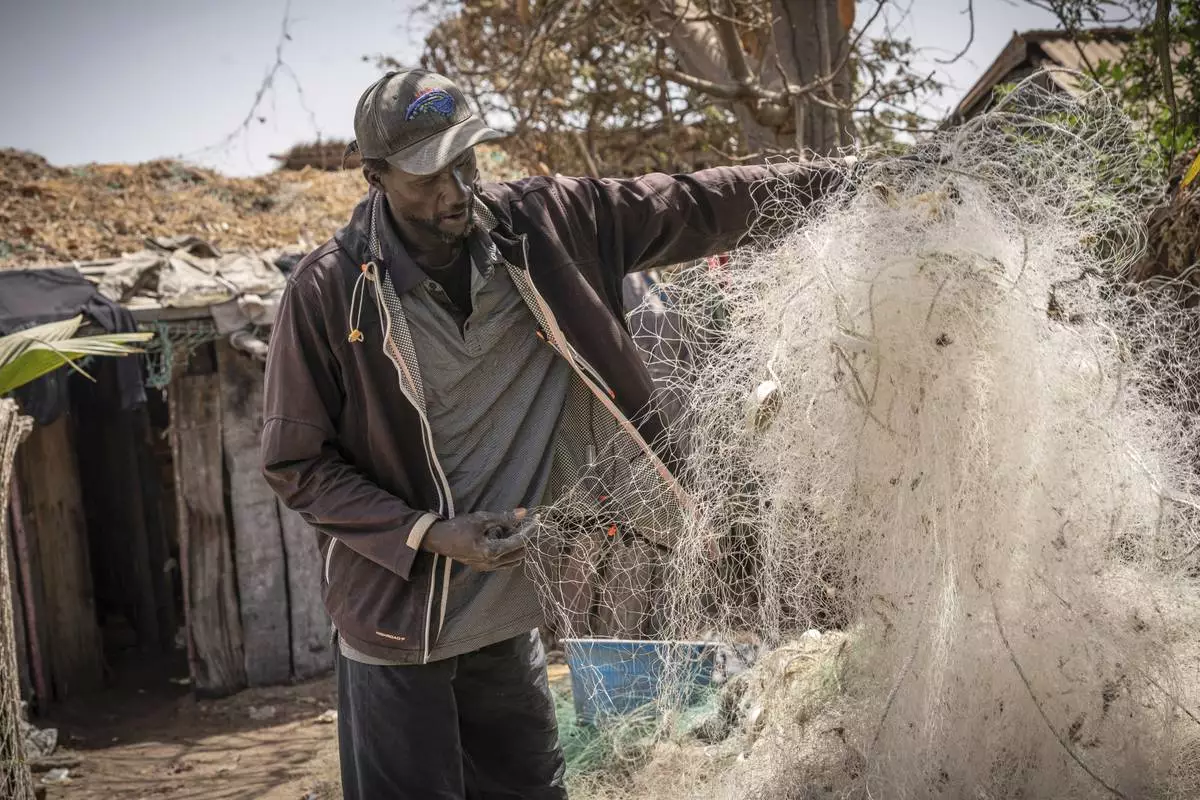
Famara Nudure, a fisherman for more than 40 years, inspects what is left of his fishing nets which were damaged at sea by trawlers, in Gunjur, Gambia, on March 23, 2025. (AP Photo/Grace Ekpu)
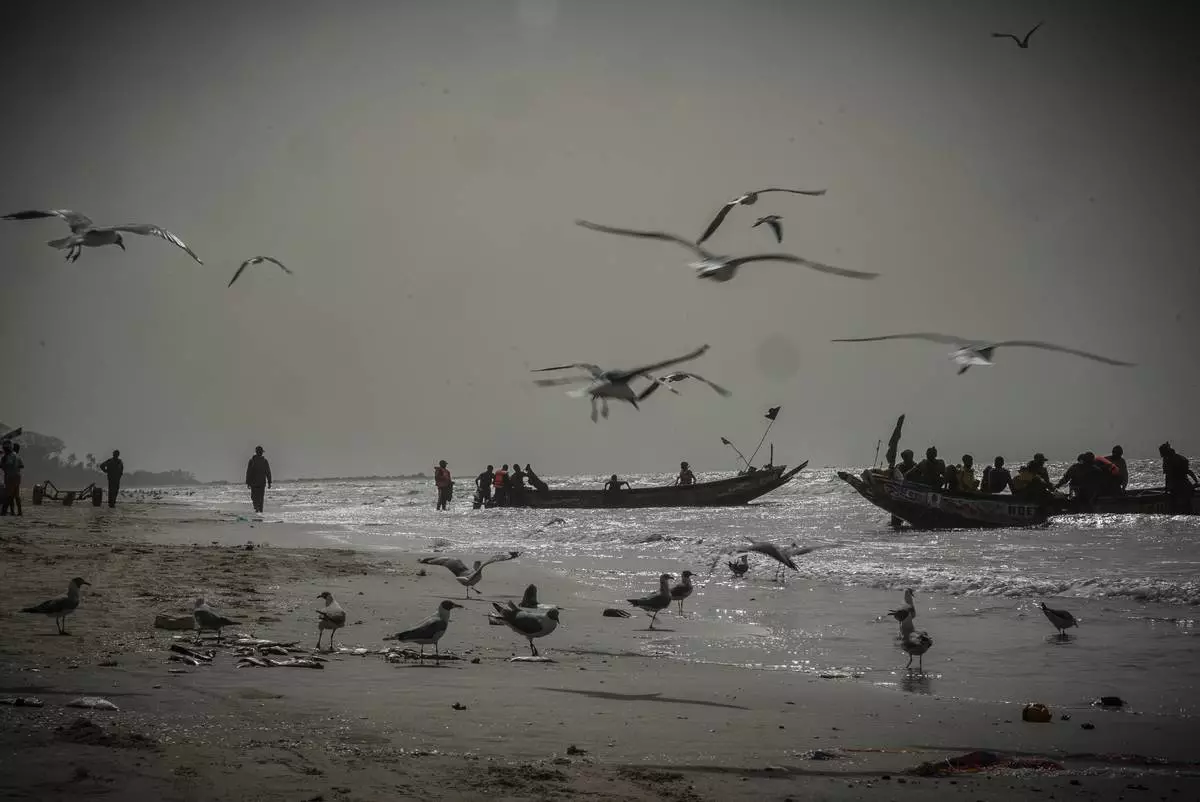
Artisanal fishermen head out to fish in their boats at dusk from Brufut beach, Gambia, on March 25, 2025. (AP Photo/Grace Ekpu)
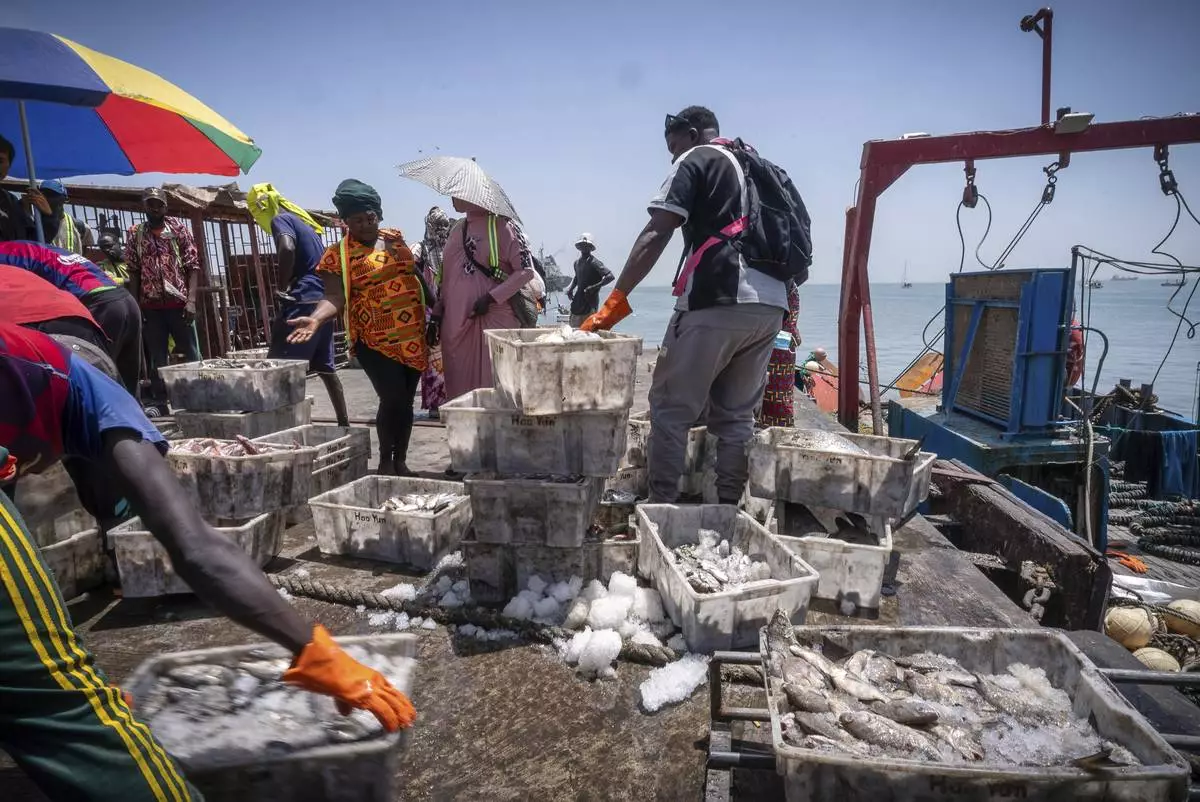
Workers offload fish from a industrial fishing vessel at the port of Banjul, Gambia, on March 26, 2025. (AP Photo/Grace Ekpu)
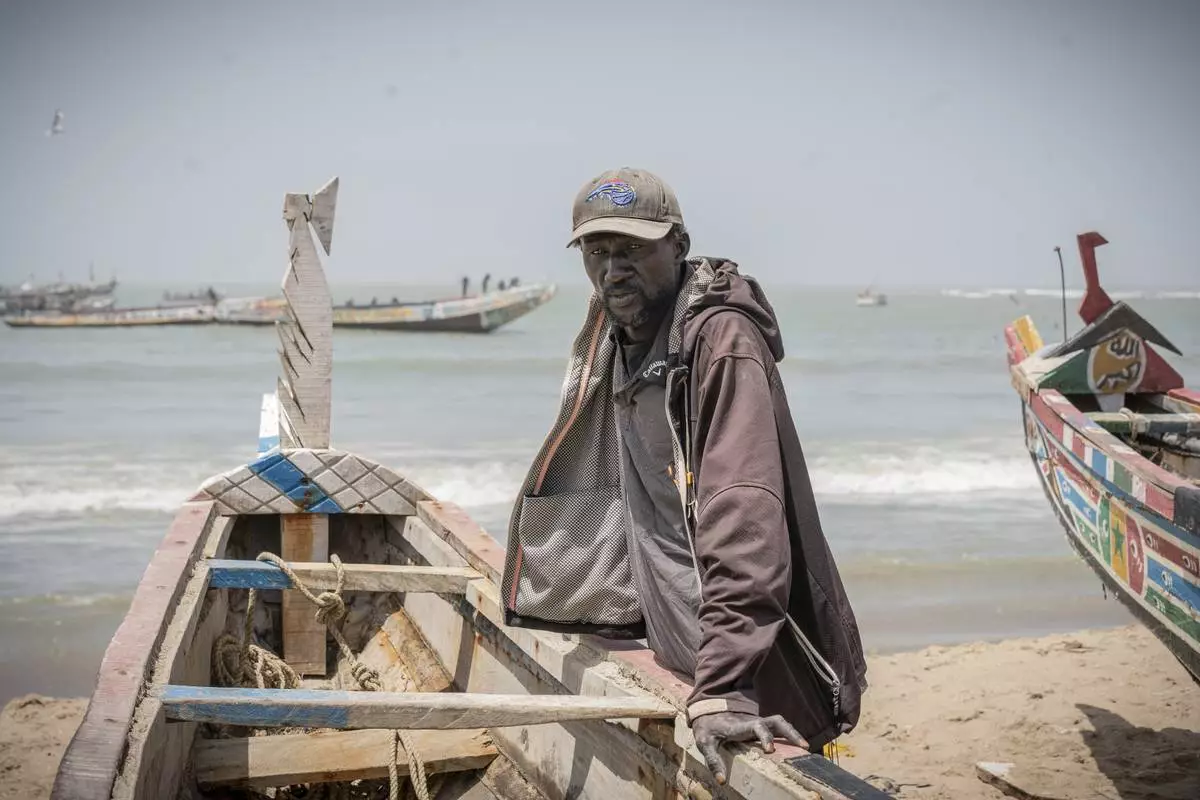
Famara Nudure, a fisherman for more than 40 years, leans against his boat in Gunjur, Gambia, after a day of work, on March 23, 2025. (AP Photo/Grace Ekpu)
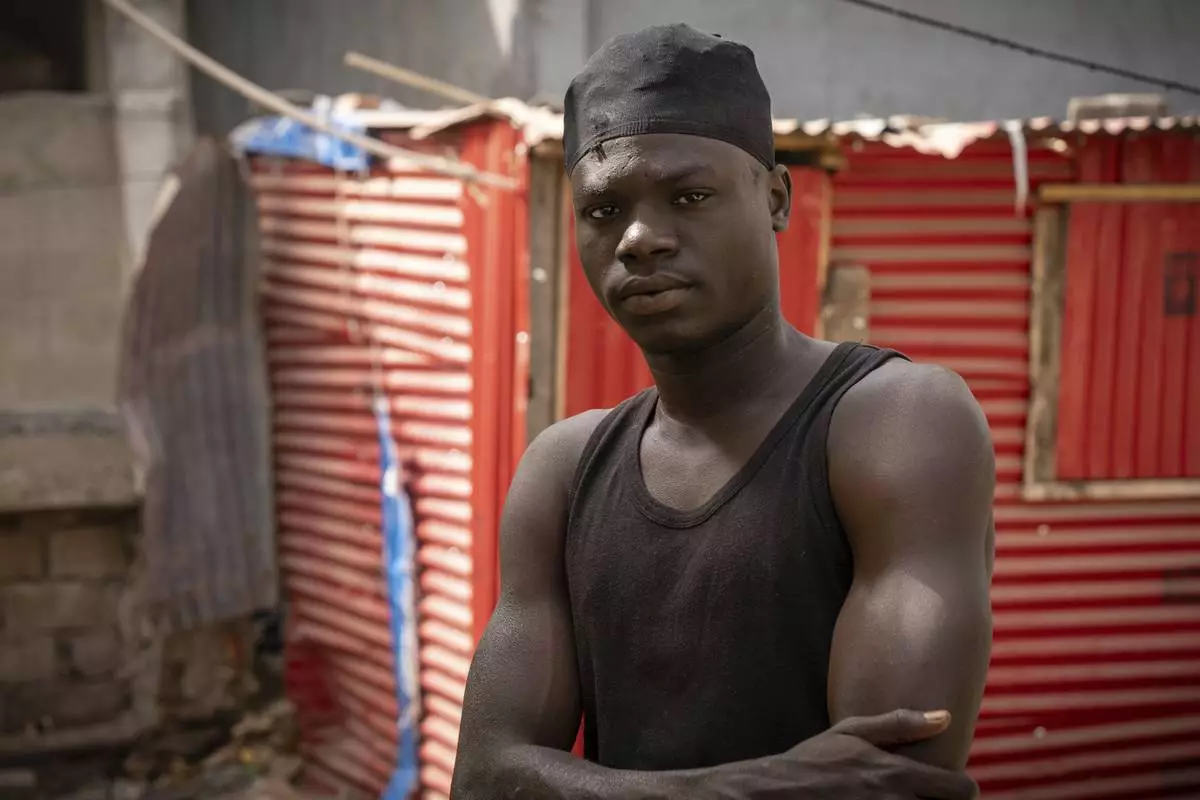
Kawsu Leigh, a fisherman who was injured in a seabound arson attack, stands for a portrait at his home in Banjul, Gambia, on March 25, 2025, almost a year after an attack on the foreign-owned vessel Abu Islam where he was working. (AP Photo/Grace Ekpu)