The power of place is real.
In an increasingly virtual world, the physical spots where momentous things happened remain potent — and able to evoke some of our deepest-cutting moments.
Click to Gallery
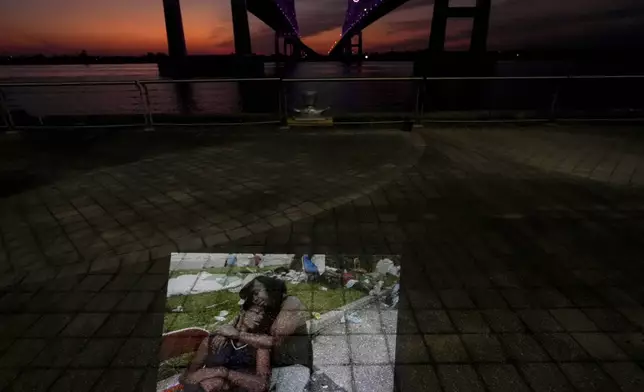
This photo showing flood victims sitting at the Ernest N. Morial Convention Center where they had been waiting for days to be evacuated in the aftermath of Hurricane Katrina in New Orleans, taken by AP photographer Eric Gay, is projected Tuesday, Aug. 26, 2025, along the Mississippi River behind the convention center. (AP Photo/Gerald Herbert)
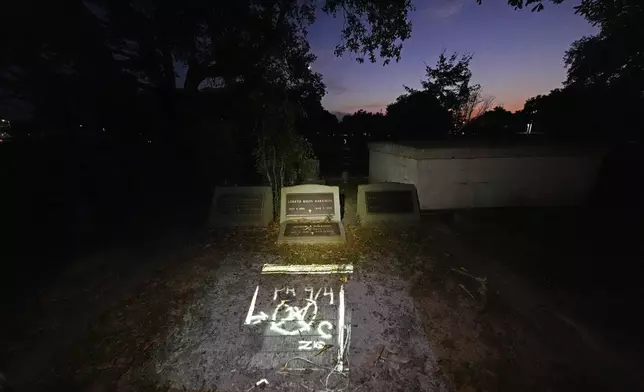
This photo of the FEMA markings indicating a deceased victim in the home of Michael Harrison, who died inside during Hurricane Katrina in Bay St. Louis, Miss., taken by AP photographer Gerald Herbert, nephew of Harrison, is projected Tuesday, Aug. 26, 2025, onto his grave in Pass Christian, Miss. (AP Photo/Gerald Herbert)
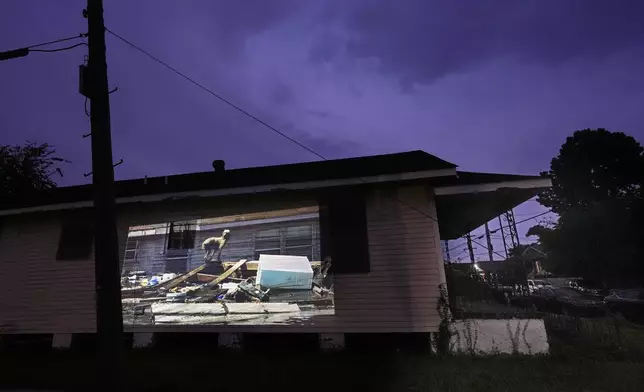
This photo of a poodle perching itself precariously upon a pile of trash while surrounded by floodwaters in the aftermath of Hurricane Katrina in New Orleans, taken by AP photographer Rick Bowmer, is projected Thursday, Aug. 21, 2025, onto a house in a neighborhood that was flooded by the storm. (AP Photo/Gerald Herbert)
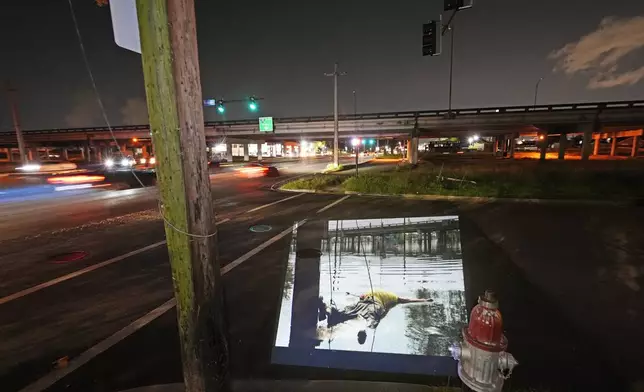
This photo showing the body of a flood victim tied to a telephone pole in the aftermath of Hurricane Katrina in New Orleans, taken by AP photographer Steven Senne, is projected Monday, Aug. 18, 2025, onto the same spot the original photo was taken. (AP Photo/Gerald Herbert)
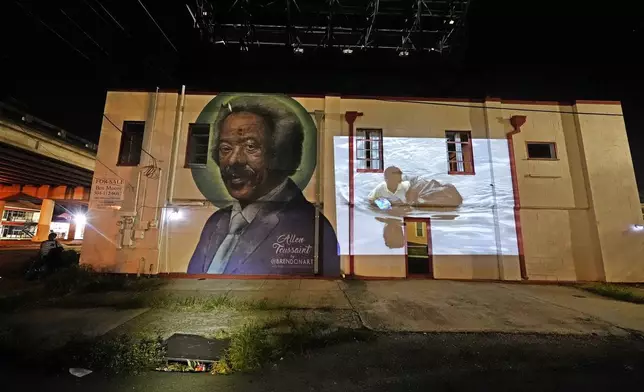
This photo of a young man wading through chest-deep floodwaters in the aftermath of Hurricane Katrina in New Orleans, taken by AP photographer Dave Martin, is projected Monday, Aug. 25, 2025, next to a mural of New Orleans music legend Allen Toussaint, below the overpass where the original photo was made. (AP Photo/Gerald Herbert)
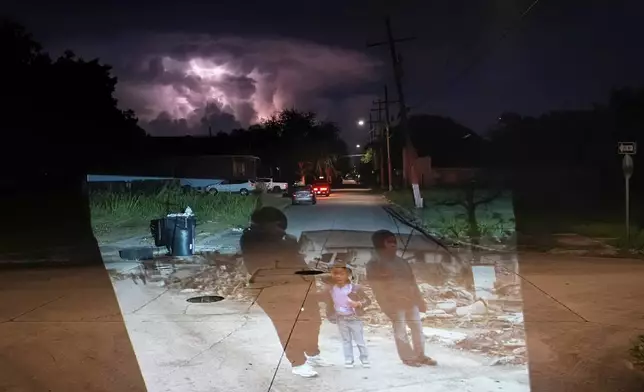
This photo of Valerie Thomas and her nieces Shante Fletcher, 6, and Sarine Fletcher, 11, viewing the destruction of her brother’s home in the aftermath of Hurricane Katrina in the Lower Ninth Ward of New Orleans, taken by AP photographer Gerald Herbert, is projected Wednesday, Aug. 13, 2025, onto the same block, while a heat lightning storm illuminates the clouds. (AP Photo/Gerald Herbert)
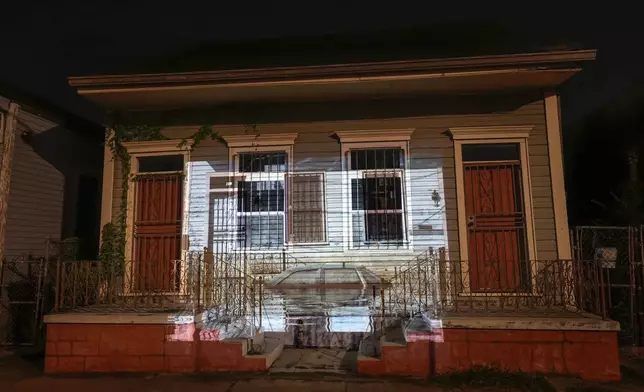
This photo of receding floodwaters leaving their mark on a house and automobile on Orleans Avenue in the aftermath of Hurricane Katrina in New Orleans, taken by AP photographer Ric Francis, is projected Wednesday, Aug. 20, 2025, onto the same house. (AP Photo/Gerald Herbert)
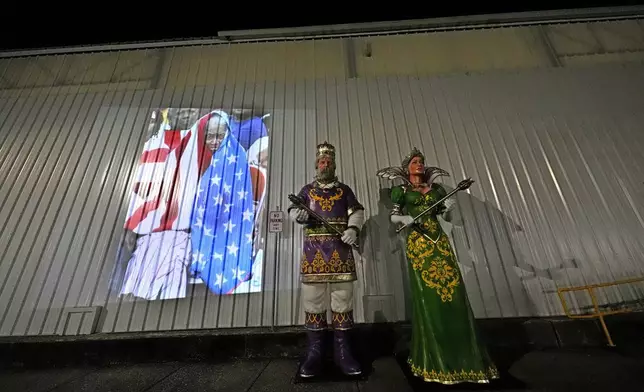
This photo of Milvertha Hendricks, 84, waiting in the rain with other flood victims outside the Ernest N. Morial Convention Center in New Orleans in the aftermath of Hurricane Katrina, taken by AP photographer Eric Gay, is projected Monday, Aug. 25, 2025, next to statues of the king and queen of Mardi Gras next to the center. (AP Photo/Gerald Herbert)
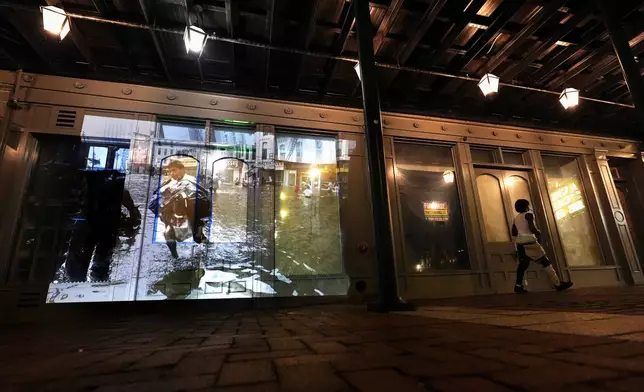
This photo of people taking goods from stores on Canal Street in downtown New Orleans in the aftermath of Hurricane Katrina, taken by AP photographer Eric Gay, is projected Wednesday, Aug. 20, 2025, onto a storefront in the same location. (AP Photo/Gerald Herbert)
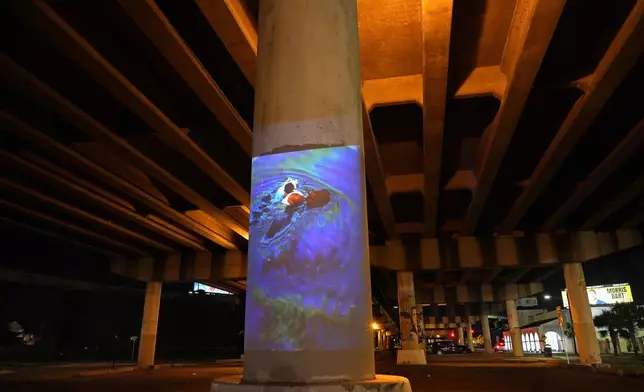
This photo of a New Orleans resident walking through floodwaters coated with a fine layer of oil in the aftermath of Hurricane Katrina, taken by AP photographer Bill Haber, is projected Thursday, Aug. 14, 2025, in New Orleans, underneath the same overpass where photo was made. (AP Photo/Gerald Herbert)
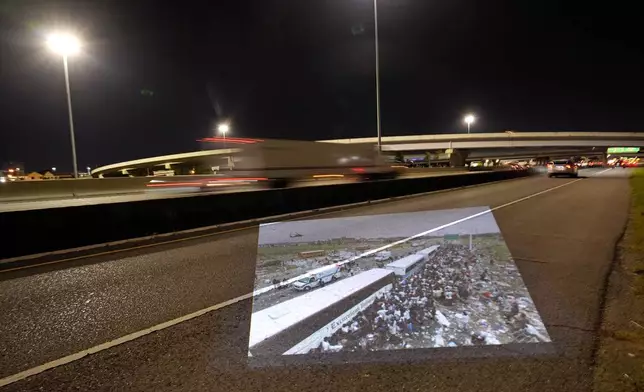
This photo showing throngs of New Orleans residents gathering at a evacuation staging area along Interstate 10 in Metairie, La., in the aftermath of Hurricane Katrina, taken by AP photographer Dave Martin, is projected Wednesday, Aug. 20, 2025, onto the same roadway. (AP Photo/Gerald Herbert)
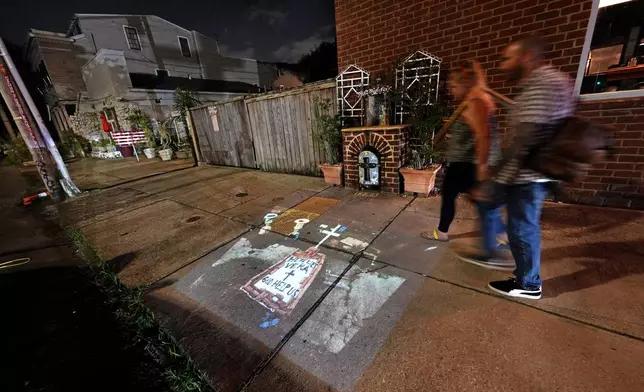
This photo of a makeshift tomb at a New Orleans street corner, concealing a body that had been lying on the sidewalk for days in the wake of Hurricane Katrina, taken by AP photographer Dave Martin, is projected onto the same sidewalk Tuesday, Aug. 19, 2025, in New Orleans. (AP Photo/Gerald Herbert)
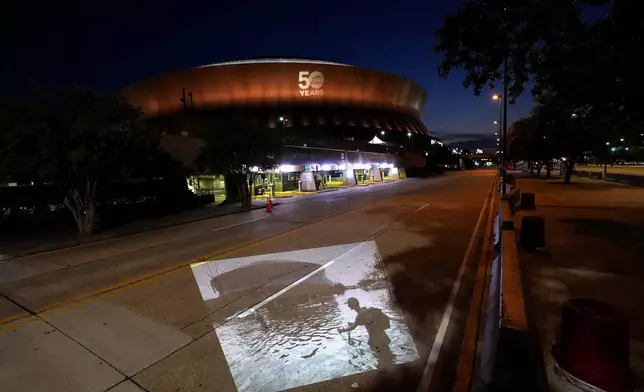
This photo of a man pushing his bicycle through floodwaters near the Superdome in the aftermath of Hurricane Katrina, taken by AP photographer Eric Gay, is projected Wednesday, Aug. 20, 2025, onto the same spot in New Orleans. (AP Photo/Gerald Herbert)
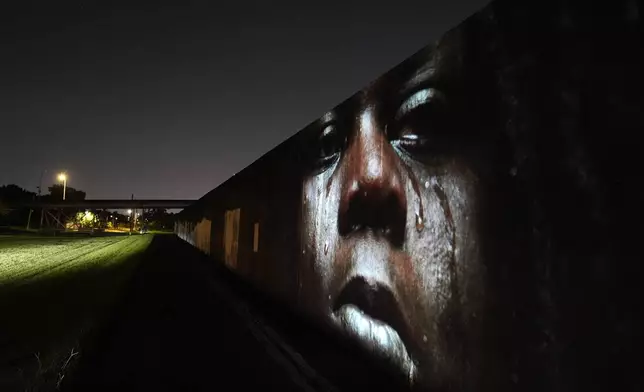
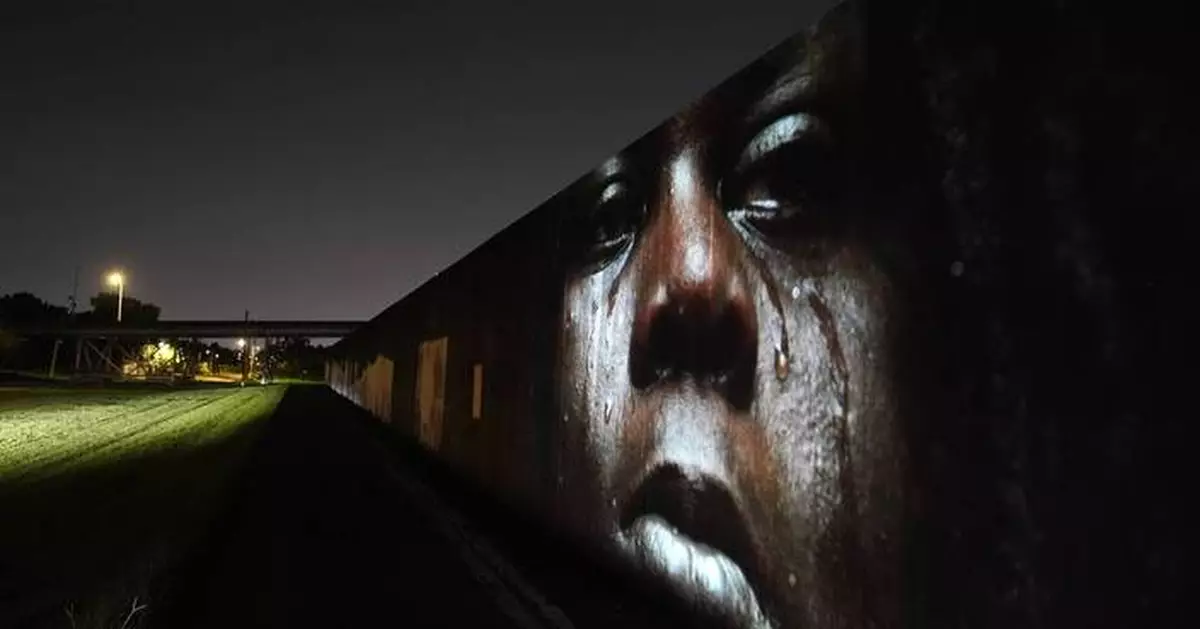
This photo of Leonard Thomas, 23, crying in the aftermath of Hurricane Katrina in New Orleans, taken by AP photographer Rick Bowmer, is projected Wednesday, Aug. 13, 2025, onto the flood wall in the Lower Ninth Ward, which was breached, flooding major parts of the city. (AP Photo/Gerald Herbert)
That was the thinking behind these photos from New Orleans on the 20th anniversary of Hurricane Katrina. By projecting images of places at some of their worst moments onto the way those places and neighborhoods appear now, something of a rudimentary visual time machine emerges.
The photos haunt. They bring back the chaos and fear of those jumbled days two decades ago. Images of moments captured and gone — water pushing up against buildings, makeshift memorials, empty roads with the projection of the days when people were using them in desperate bids to get out.
In one frame, the wreckage and rubble outside a house in 2005 is projected, at night, against the house as it stands today. In another, a woman, huddled up, wrapped in an American flag, braces herself against the elements and the world around him. Today, projected against a building, it is a phantom portal into another era.
Photography freezes and preserves moments. By having those moments touch time — reappearing in the city, in the spots where they happened in the first place — the power of the photos is magnified.
Remembering history is grounded in summoning the past in vivid and relevant ways. By bringing August 2005 in New Orleans to August 2025, a generation later, these photos show not only what disaster looked like, but what recovery and moving on look like as well.
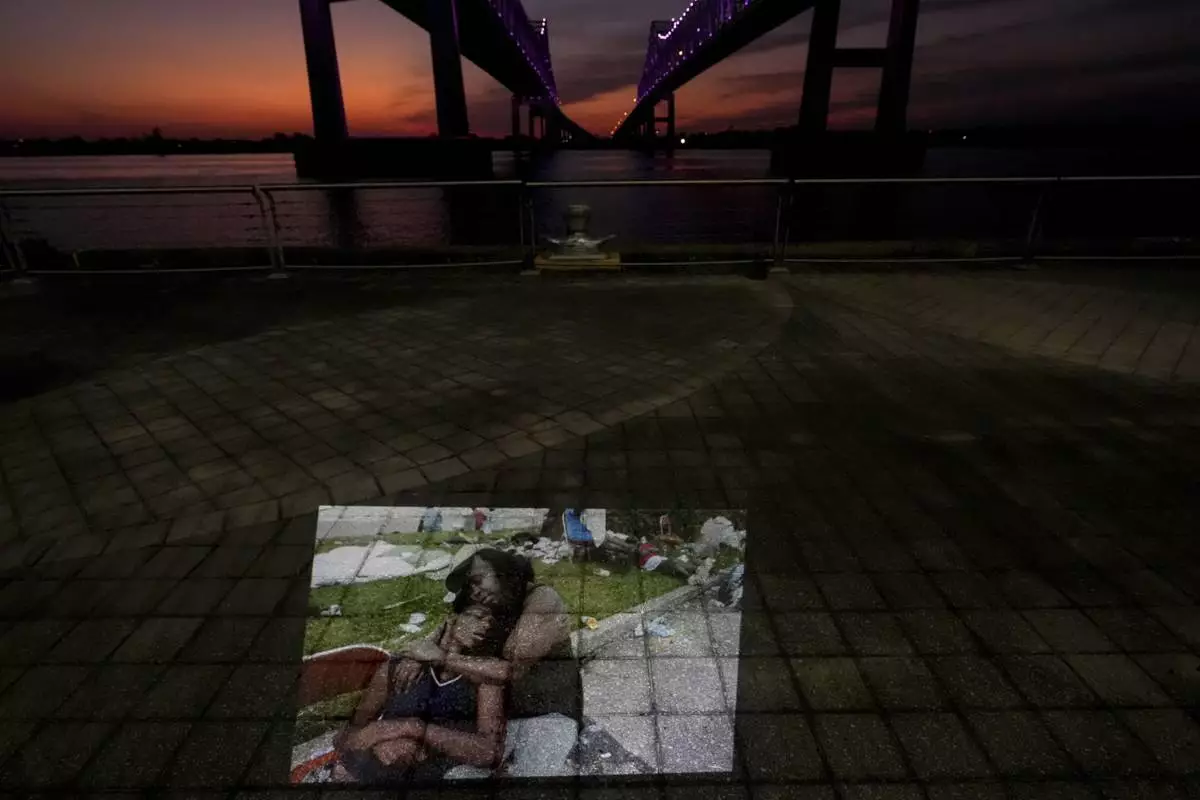
This photo showing flood victims sitting at the Ernest N. Morial Convention Center where they had been waiting for days to be evacuated in the aftermath of Hurricane Katrina in New Orleans, taken by AP photographer Eric Gay, is projected Tuesday, Aug. 26, 2025, along the Mississippi River behind the convention center. (AP Photo/Gerald Herbert)
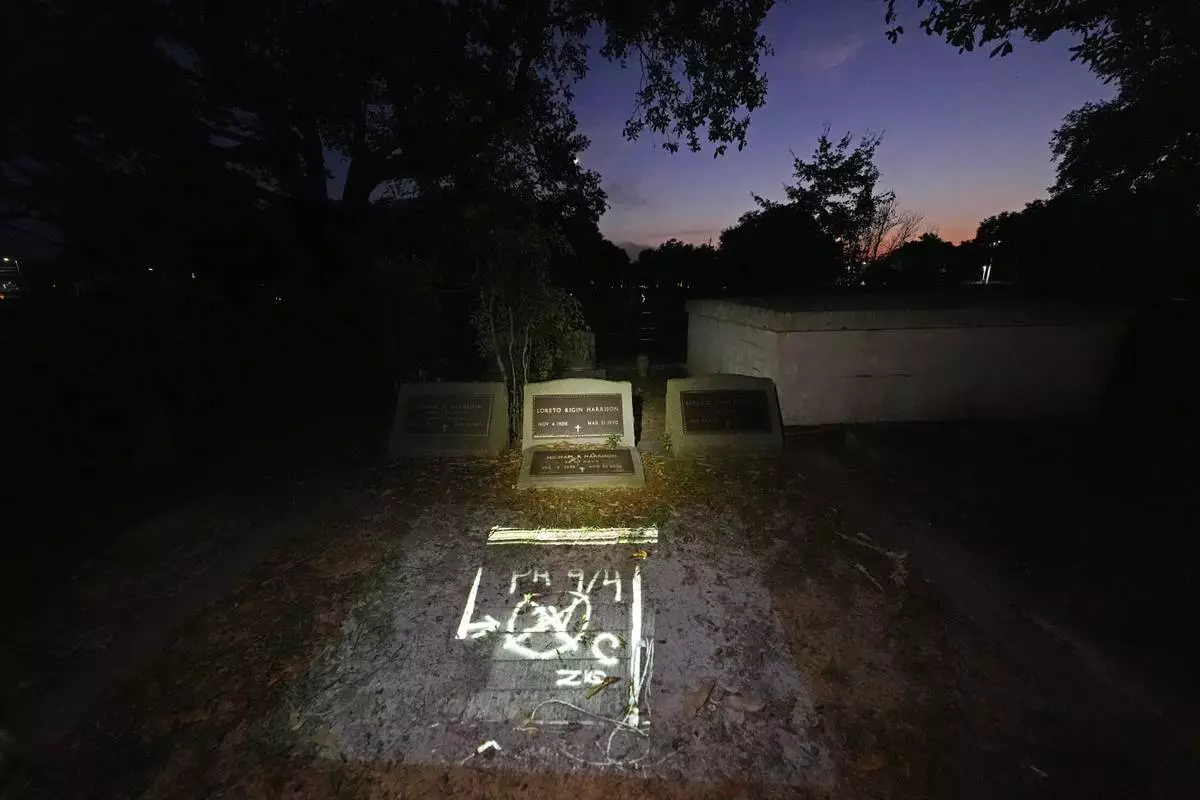
This photo of the FEMA markings indicating a deceased victim in the home of Michael Harrison, who died inside during Hurricane Katrina in Bay St. Louis, Miss., taken by AP photographer Gerald Herbert, nephew of Harrison, is projected Tuesday, Aug. 26, 2025, onto his grave in Pass Christian, Miss. (AP Photo/Gerald Herbert)
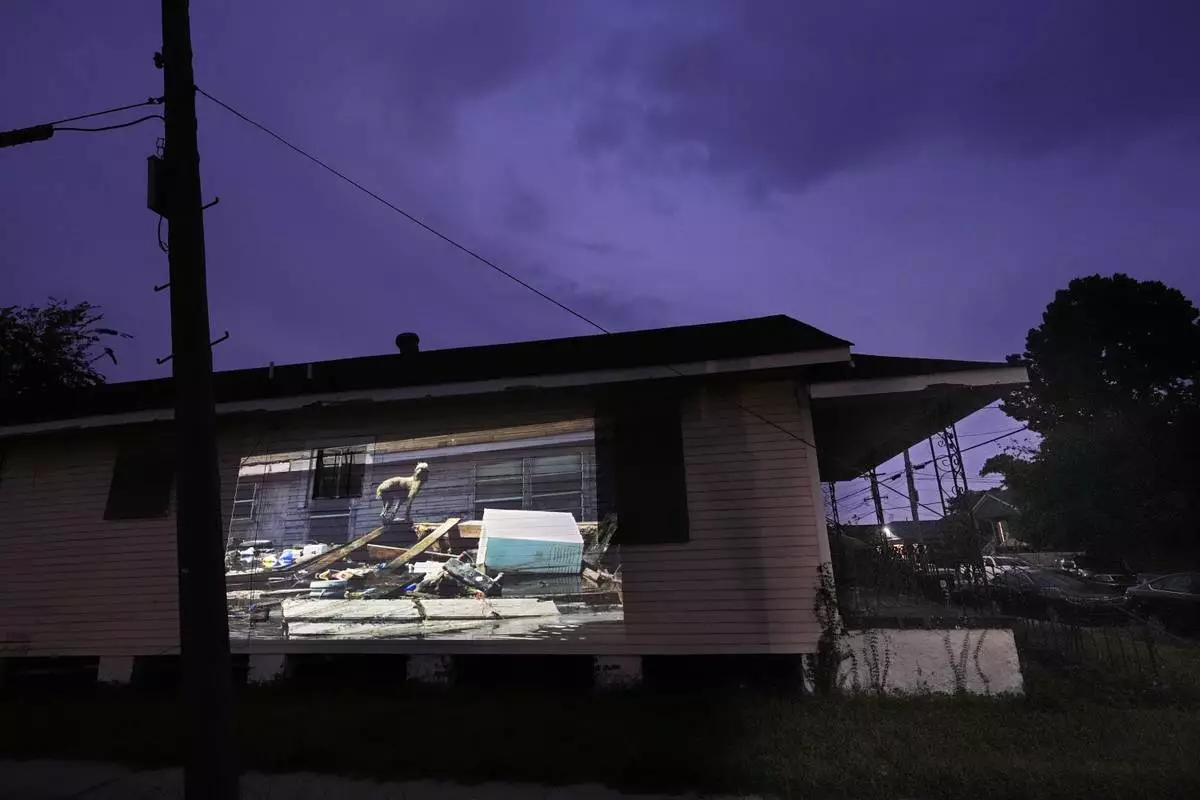
This photo of a poodle perching itself precariously upon a pile of trash while surrounded by floodwaters in the aftermath of Hurricane Katrina in New Orleans, taken by AP photographer Rick Bowmer, is projected Thursday, Aug. 21, 2025, onto a house in a neighborhood that was flooded by the storm. (AP Photo/Gerald Herbert)
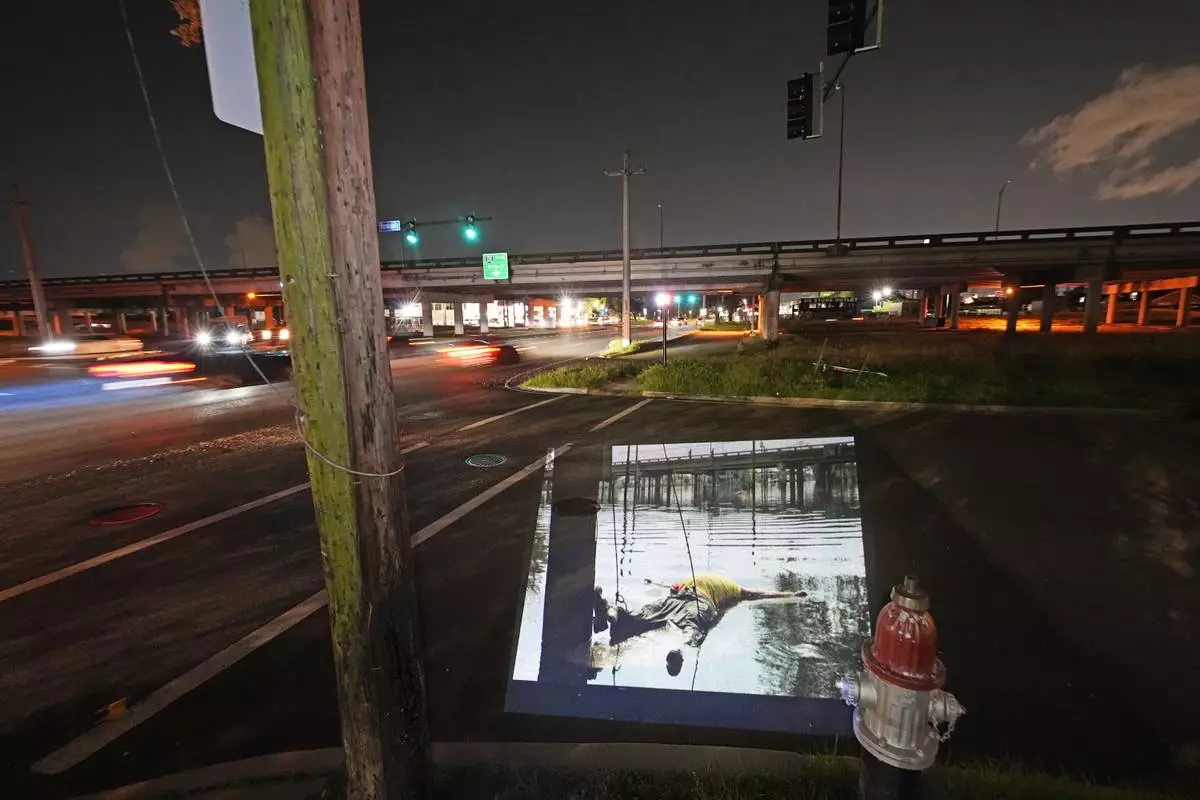
This photo showing the body of a flood victim tied to a telephone pole in the aftermath of Hurricane Katrina in New Orleans, taken by AP photographer Steven Senne, is projected Monday, Aug. 18, 2025, onto the same spot the original photo was taken. (AP Photo/Gerald Herbert)
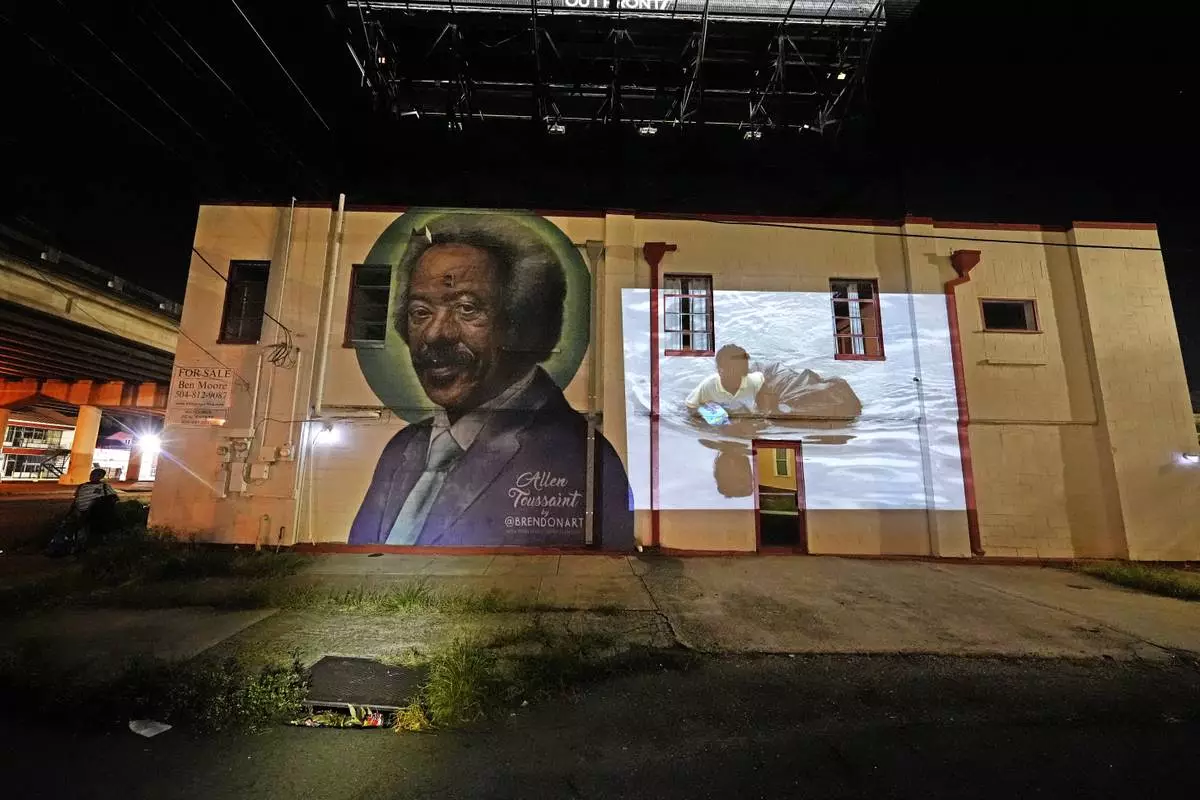
This photo of a young man wading through chest-deep floodwaters in the aftermath of Hurricane Katrina in New Orleans, taken by AP photographer Dave Martin, is projected Monday, Aug. 25, 2025, next to a mural of New Orleans music legend Allen Toussaint, below the overpass where the original photo was made. (AP Photo/Gerald Herbert)
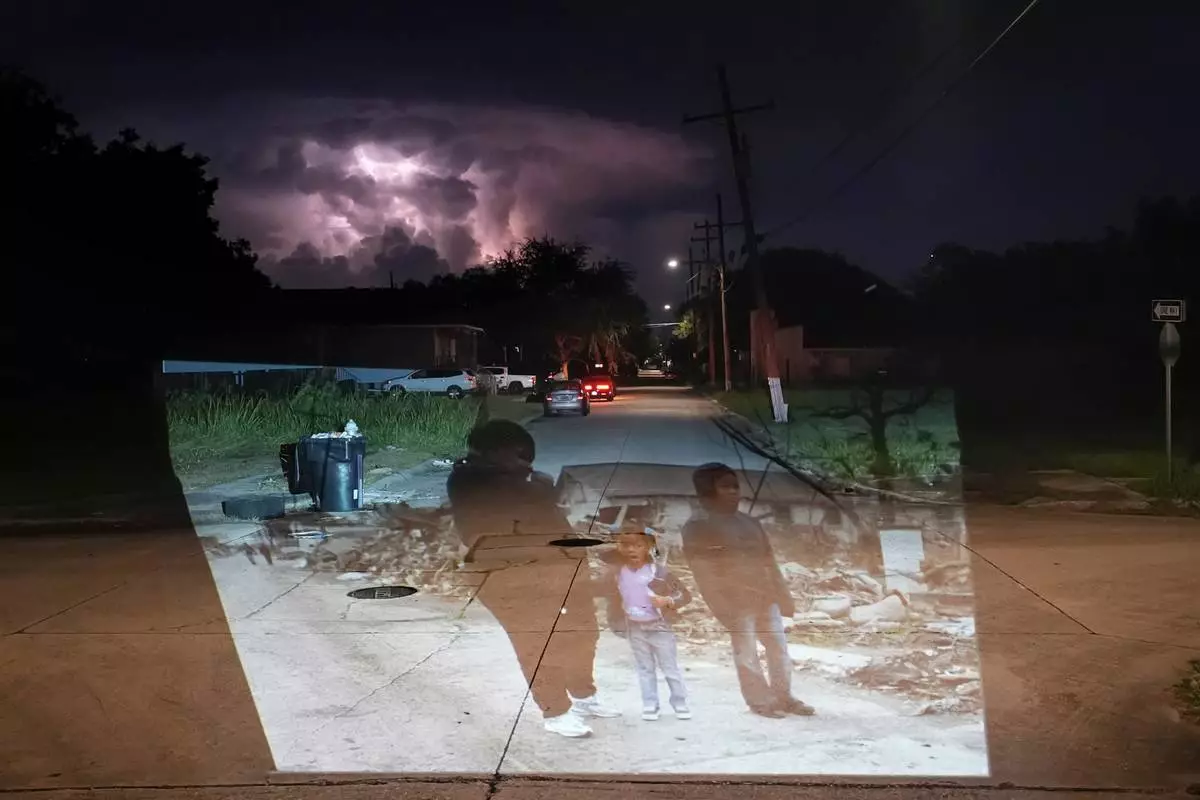
This photo of Valerie Thomas and her nieces Shante Fletcher, 6, and Sarine Fletcher, 11, viewing the destruction of her brother’s home in the aftermath of Hurricane Katrina in the Lower Ninth Ward of New Orleans, taken by AP photographer Gerald Herbert, is projected Wednesday, Aug. 13, 2025, onto the same block, while a heat lightning storm illuminates the clouds. (AP Photo/Gerald Herbert)
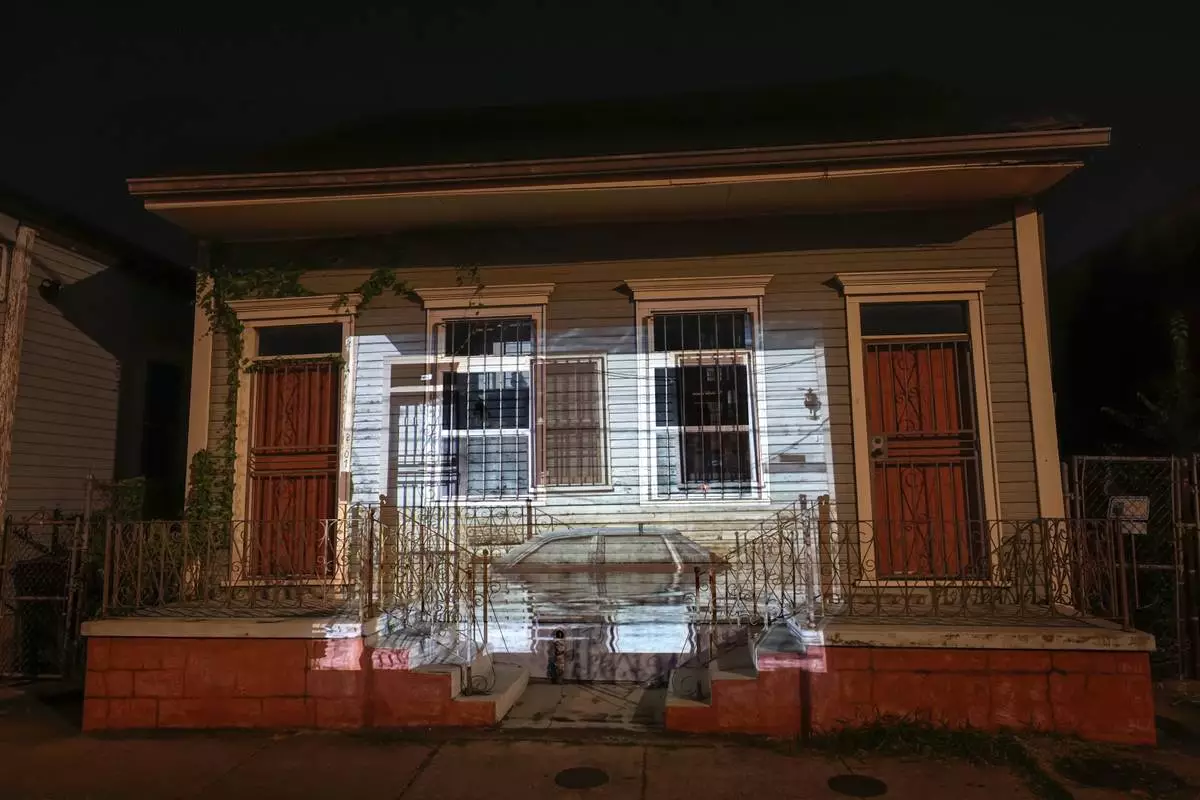
This photo of receding floodwaters leaving their mark on a house and automobile on Orleans Avenue in the aftermath of Hurricane Katrina in New Orleans, taken by AP photographer Ric Francis, is projected Wednesday, Aug. 20, 2025, onto the same house. (AP Photo/Gerald Herbert)
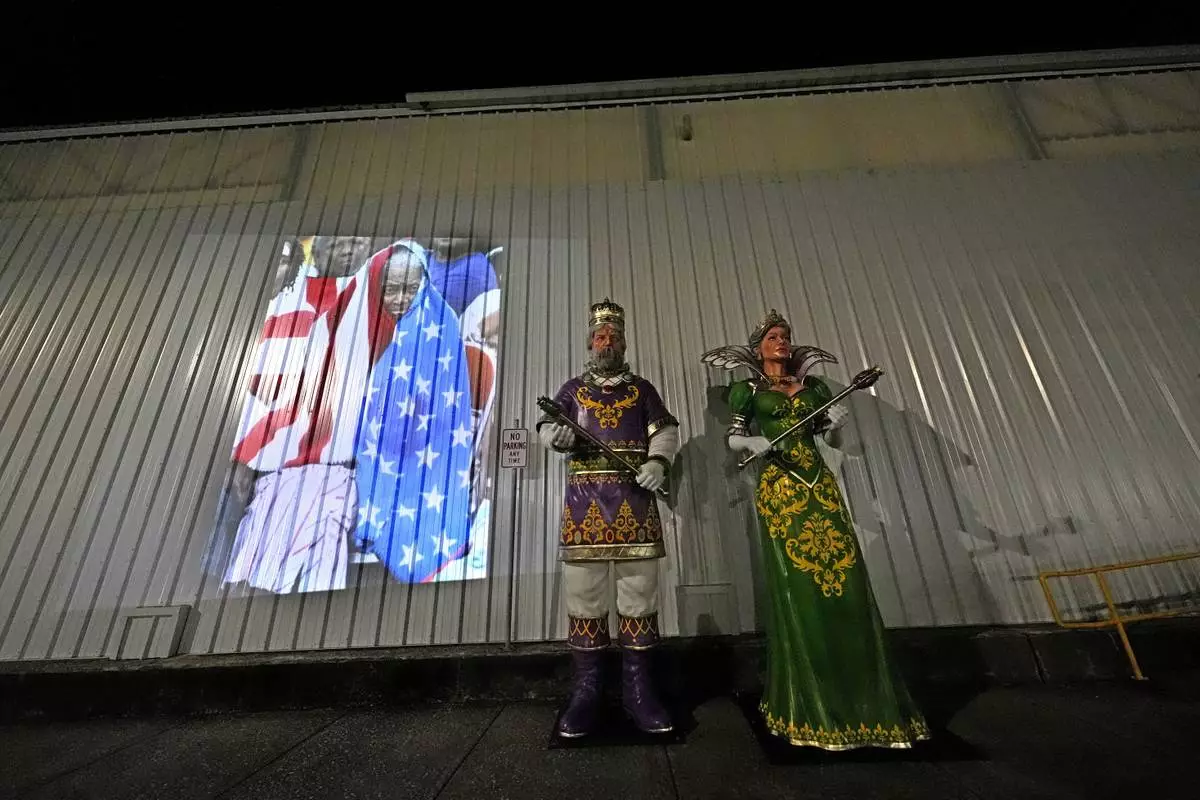
This photo of Milvertha Hendricks, 84, waiting in the rain with other flood victims outside the Ernest N. Morial Convention Center in New Orleans in the aftermath of Hurricane Katrina, taken by AP photographer Eric Gay, is projected Monday, Aug. 25, 2025, next to statues of the king and queen of Mardi Gras next to the center. (AP Photo/Gerald Herbert)
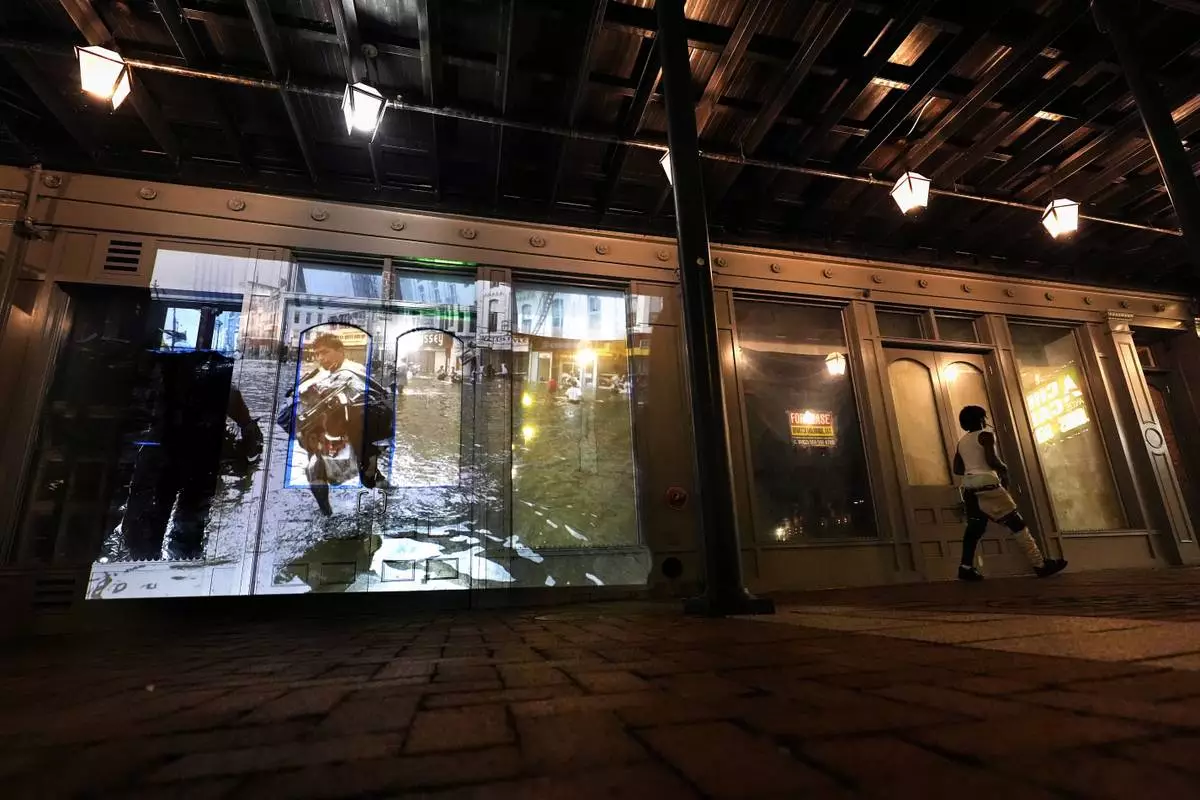
This photo of people taking goods from stores on Canal Street in downtown New Orleans in the aftermath of Hurricane Katrina, taken by AP photographer Eric Gay, is projected Wednesday, Aug. 20, 2025, onto a storefront in the same location. (AP Photo/Gerald Herbert)
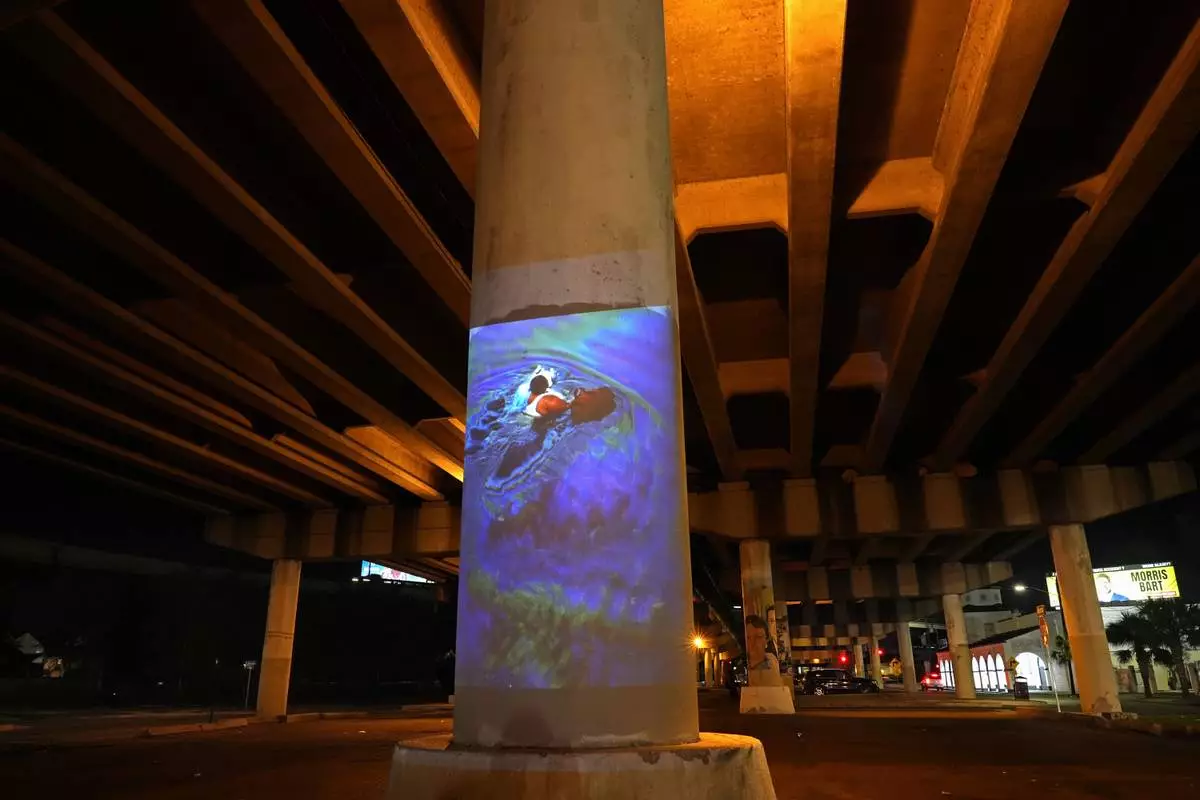
This photo of a New Orleans resident walking through floodwaters coated with a fine layer of oil in the aftermath of Hurricane Katrina, taken by AP photographer Bill Haber, is projected Thursday, Aug. 14, 2025, in New Orleans, underneath the same overpass where photo was made. (AP Photo/Gerald Herbert)
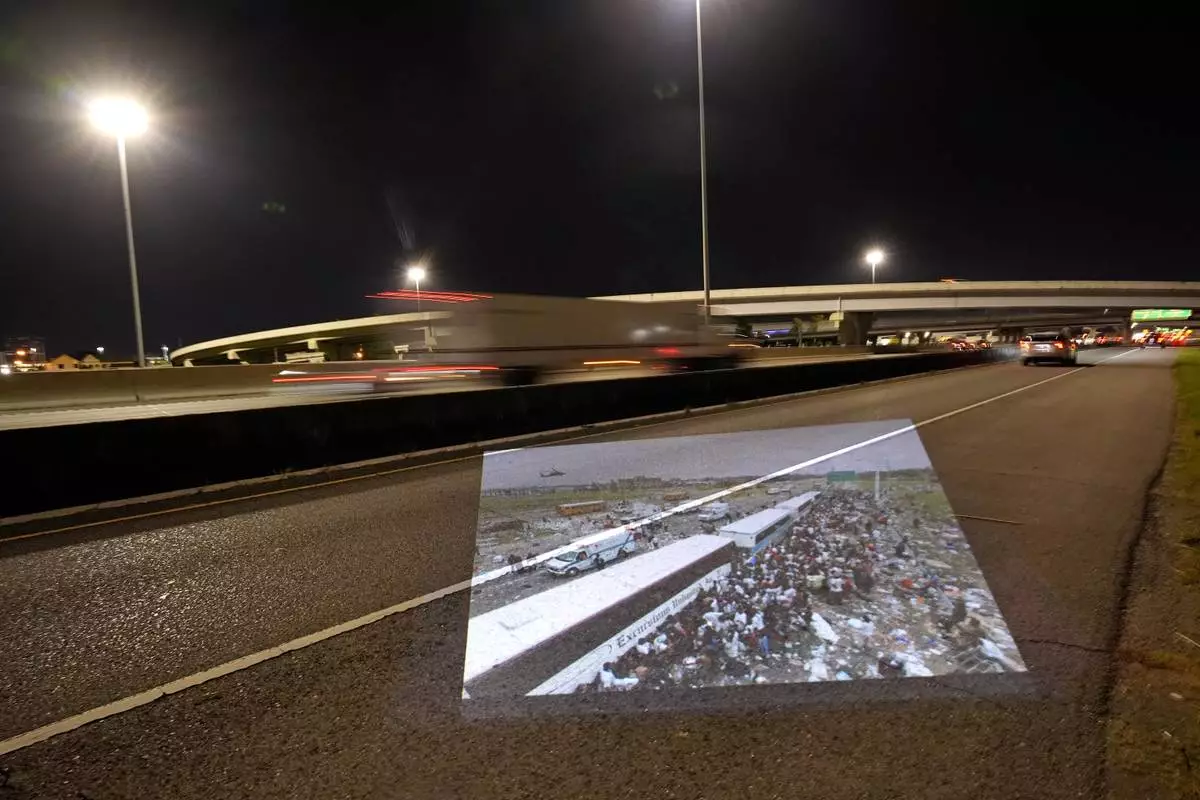
This photo showing throngs of New Orleans residents gathering at a evacuation staging area along Interstate 10 in Metairie, La., in the aftermath of Hurricane Katrina, taken by AP photographer Dave Martin, is projected Wednesday, Aug. 20, 2025, onto the same roadway. (AP Photo/Gerald Herbert)
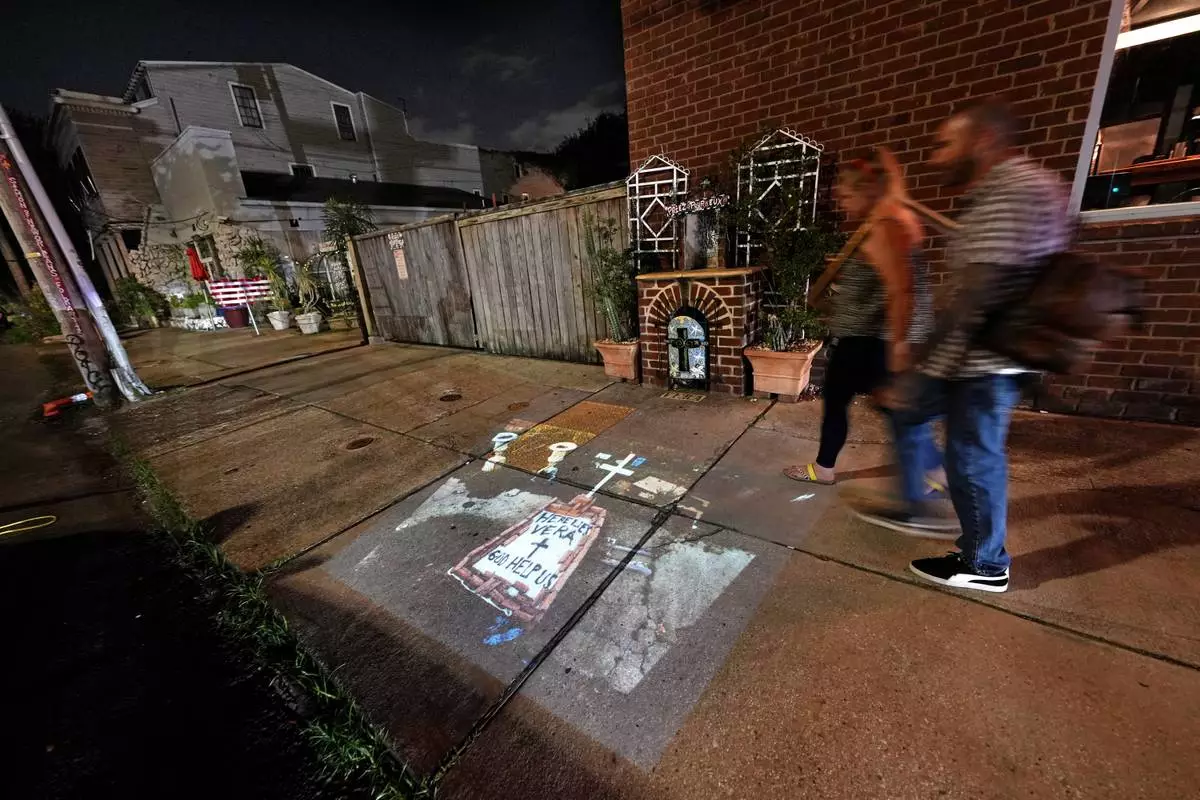
This photo of a makeshift tomb at a New Orleans street corner, concealing a body that had been lying on the sidewalk for days in the wake of Hurricane Katrina, taken by AP photographer Dave Martin, is projected onto the same sidewalk Tuesday, Aug. 19, 2025, in New Orleans. (AP Photo/Gerald Herbert)
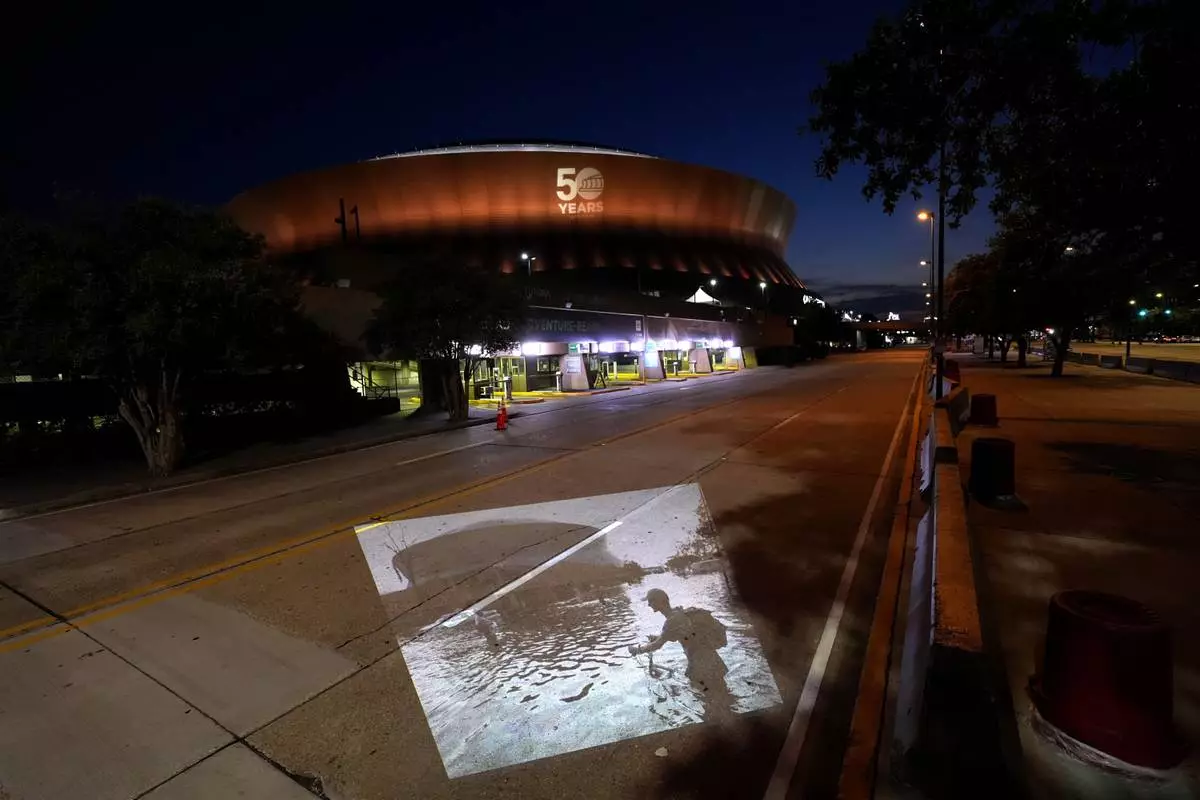
This photo of a man pushing his bicycle through floodwaters near the Superdome in the aftermath of Hurricane Katrina, taken by AP photographer Eric Gay, is projected Wednesday, Aug. 20, 2025, onto the same spot in New Orleans. (AP Photo/Gerald Herbert)
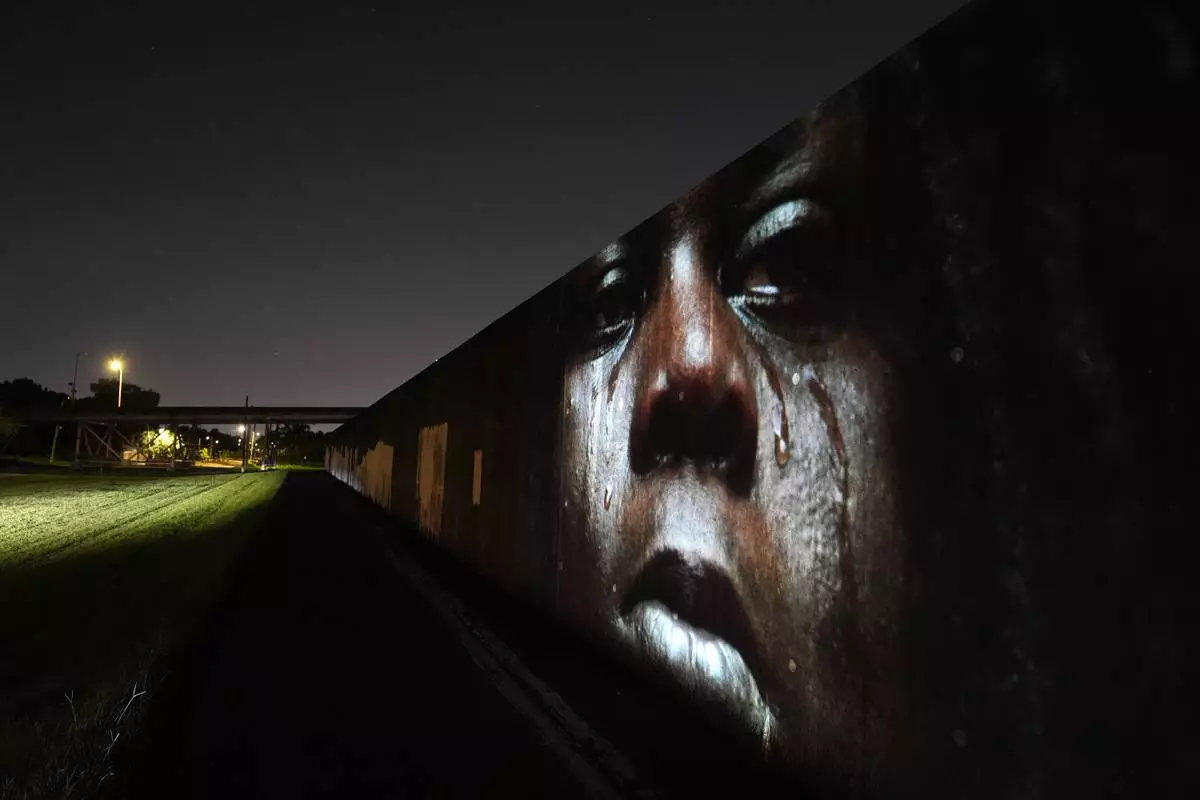
This photo of Leonard Thomas, 23, crying in the aftermath of Hurricane Katrina in New Orleans, taken by AP photographer Rick Bowmer, is projected Wednesday, Aug. 13, 2025, onto the flood wall in the Lower Ninth Ward, which was breached, flooding major parts of the city. (AP Photo/Gerald Herbert)